
Winterizing Electrical Connections with Wire Nuts

Introduction
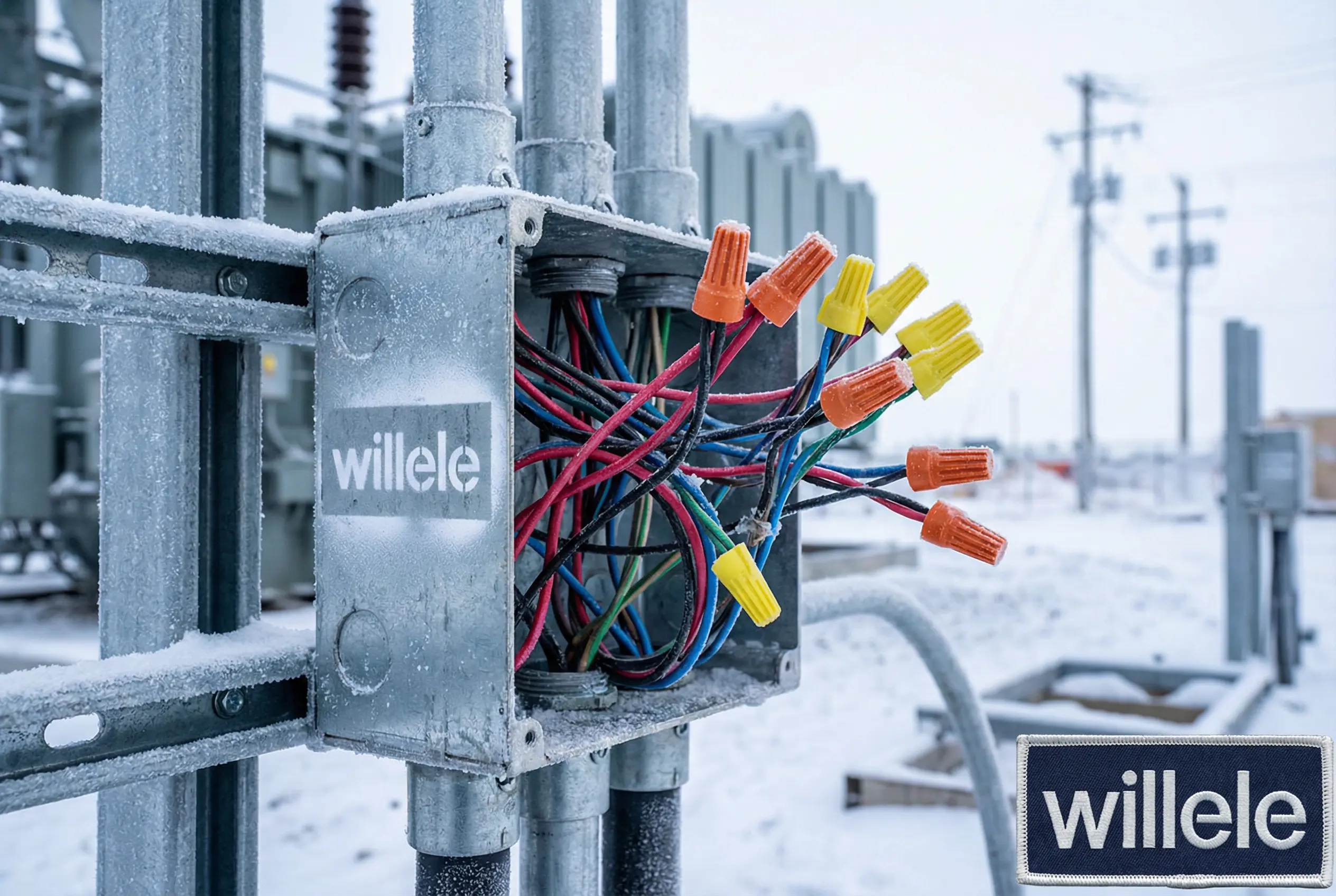
Winterizing electrical connections with wire nuts is a critical process for maintaining reliable electrical systems in cold weather environments. As temperatures drop and moisture accumulates, unprotected wire connections face increased risks of corrosion, conductivity loss, and complete failure. For industrial facilities, outdoor installations, and commercial electrical systems, proper winterization isn’t just a best practice—it’s essential for safety, compliance, and operational continuity.
Wire nuts, also known as twist-on wire connectors, serve as the backbone of countless electrical connections across industries. However, their performance in harsh winter conditions depends heavily on proper protection methods. This comprehensive guide explores proven techniques for winterizing electrical connections with wire nuts, with special emphasis on heat shrink tube applications that provide superior moisture barriers and temperature resistance.
Understanding Winter Challenges for Electrical Connections
Temperature-Related Issues
Extreme cold affects electrical connections through multiple mechanisms. Metal conductors contract at different rates than insulating materials, potentially creating gaps that allow moisture infiltration. Standard wire nuts, while effective in controlled environments, may lose their grip on contracted wires, leading to increased resistance and potential arcing.
Moisture and Condensation
Winter conditions create unique moisture challenges. Snow accumulation, ice formation, and freeze-thaw cycles introduce water directly to junction boxes and connection points. Even more problematic is condensation that forms when temperature differentials occur between day and night operations. This moisture accelerates corrosion and can create dangerous short-circuit conditions.
Mechanical Stress Factors
Cold weather increases material brittleness. Plastic wire nut housings become more susceptible to cracking, while frozen moisture can physically damage connection integrity. Vibration from equipment operation, wind loads, and thermal cycling compounds these stresses throughout the winter season.
Wire Nut Fundamentals for Winter Applications
Wire Nut Construction and Materials
Modern wire nuts consist of a threaded metal coil spring encased in a thermoplastic shell. The spring mechanism grips twisted conductors, maintaining electrical contact through mechanical pressure. For winterization applications, material selection becomes crucial:
| Material Type | Temperature Range | Winter Suitability | Key Characteristics |
|---|---|---|---|
| Standard Polypropylene | -20°C to 80°C | Moderate | Cost-effective, adequate for mild winters |
| High-Impact Nylon | -40°C to 105°C | Good | Superior cold resistance, reduced brittleness |
| Flame-Retardant Polymer | -30°C to 90°C | Good | Enhanced safety ratings, moderate cold tolerance |
| Silicone-Enhanced Compound | -50°C to 150°C | Excellent | Premium cold weather performance |
Capacity and Sizing Specifications
Proper wire nut selection requires matching connector capacity to wire gauge and count. Undersized connectors fail to provide adequate mechanical grip, while oversized units allow wire movement within the connection.
| Wire Nut Size | Wire Gauge Range (AWG) | Maximum Conductor Count | Minimum Torque (in-lbs) |
|---|---|---|---|
| Small (Yellow) | 22-16 | 2-3 | 3.5 |
| Medium (Red) | 18-12 | 2-4 | 8.0 |
| Large (Blue) | 14-10 | 2-5 | 12.0 |
| Extra Large (Orange) | 12-6 | 2-6 | 18.0 |
| Jumbo (Gray) | 8-2 | 2-4 | 35.0 |
Comprehensive Winterization Techniques
Method 1: Heat Shrink Tube Protection
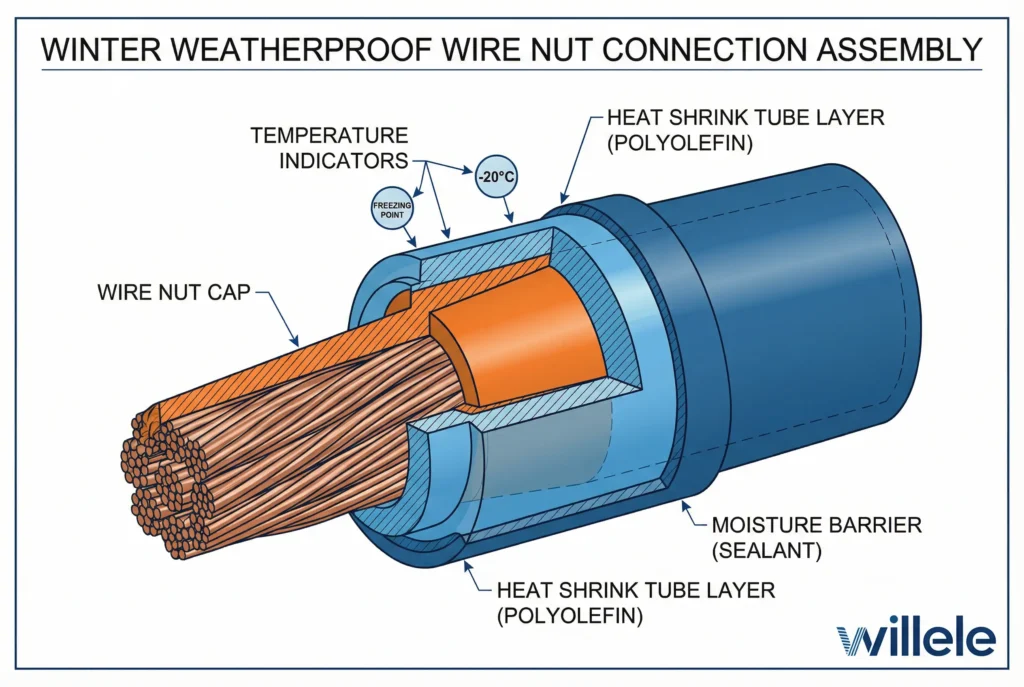
Heat shrink tubing represents the gold standard for winterizing electrical connections with wire nuts. willele Electric specializes in premium heat shrink solutions specifically engineered for harsh environmental conditions. The process involves:
- Pre-installation preparation: Select appropriate diameter heat shrink tubing that accommodates the wire nut diameter plus 30% expansion allowance
- Application technique: Slide tubing over conductors before making wire nut connection
- Heat activation: Apply controlled heat (typically 120-150°C) using a heat gun to shrink tubing firmly around the connection
- Sealing verification: Ensure complete encapsulation with no gaps or exposed areas
Method 2: Waterproof Sealant Integration
Silicone-based or polyurethane sealants provide additional moisture barriers when combined with mechanical protection. Apply sealant before installing wire nuts, ensuring complete conductor coverage. This method works exceptionally well in conjunction with heat shrink tubes for multi-layer protection.
Method 3: Junction Box Environmental Control
Housing connections within rated junction boxes adds crucial environmental protection. For winter applications, specify boxes with:
- NEMA 4X or IP66 minimum ratings
- Sealed cable entry points with strain relief
- Condensation drain provisions
- UV-resistant materials for outdoor exposure
Comparative Analysis of Winterization Methods
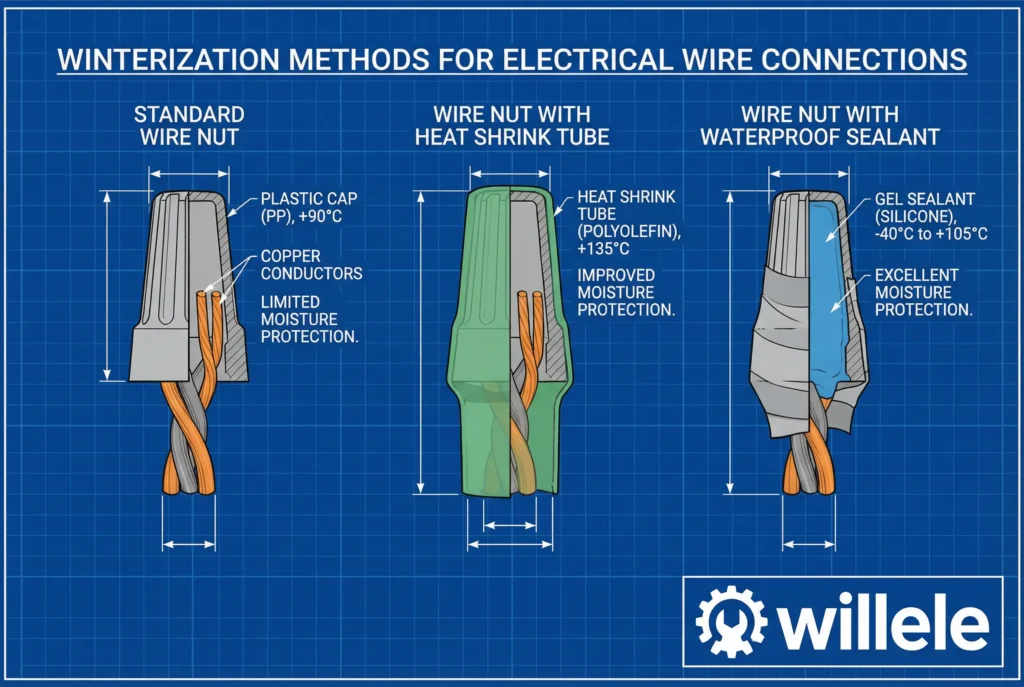
| Protection Method | Moisture Resistance | Temperature Range | Installation Complexity | Lifespan | Cost Factor |
|---|---|---|---|---|---|
| Standard Wire Nut Only | Poor | Limited | Low | 2-3 years | $ |
| Wire Nut + Electrical Tape | Fair | Moderate | Low | 3-5 years | $ |
| Wire Nut + Liquid Sealant | Good | Good | Medium | 5-8 years | $$ |
| Wire Nut + Heat Shrink Tube | Excellent | Excellent | Medium | 10-15 years | $$$ |
| Wire Nut + Heat Shrink + Junction Box | Superior | Extended | High | 15-20+ years | $$$$ |
Advanced Heat Shrink Tube Applications
Dual-Wall Heat Shrink Solutions
willele Electric’s dual-wall heat shrink products feature an inner adhesive layer that melts during heat application, creating a hermetic seal around wire connections. This technology offers:
- Complete moisture barrier formation
- Enhanced mechanical protection
- Self-sealing properties around irregular shapes
- Superior long-term reliability in extreme conditions
Temperature-Rated Heat Shrink Selection
| Heat Shrink Type | Operating Temperature | Shrink Ratio | Wall Thickness | Primary Application |
|---|---|---|---|---|
| Standard Polyolefin | -55°C to 125°C | 2:1 | 0.5mm | General winterization |
| Cross-Linked Polyolefin | -75°C to 150°C | 3:1 | 0.8mm | Extreme cold environments |
| Fluoropolymer (FEP/PTFE) | -200°C to 200°C | 1.6:1 | 0.3mm | Arctic/specialized applications |
| Elastomeric | -60°C to 175°C | 4:1 | 1.2mm | High-vibration installations |
Installation Best Practices and Procedures
Pre-Installation Inspection Protocol
Before winterizing electrical connections with wire nuts, conduct thorough assessments:
- Conductor condition check: Examine wires for corrosion, fraying, or damage requiring replacement
- Wire nut integrity verification: Inspect for cracks, deformation, or contamination
- Environmental assessment: Identify moisture sources, temperature extremes, and mechanical stress factors
- Material compatibility review: Confirm all components meet temperature and chemical resistance requirements
Step-by-Step Winterization Process
Phase 1: Connection Preparation
- Strip wire insulation to manufacturer specifications (typically 3/4 inch)
- Clean conductor surfaces with approved electrical contact cleaner
- Ensure all strands are straight and parallel, with no fraying
- Pre-install heat shrink tubing on one conductor before connection
Phase 2: Wire Nut Installation
- Align conductor ends flush with each other
- Insert wires into wire nut until resistance is felt
- Twist clockwise with firm pressure until tight (typically 3-5 full rotations)
- Verify no exposed conductor remains visible beyond wire nut skirt
- Perform pull test with 20-30 pounds force to confirm mechanical integrity
Phase 3: Heat Shrink Application
- Slide pre-installed tubing to cover entire wire nut and extend onto conductor insulation
- Position tubing to overlap conductor insulation by minimum 1 inch
- Apply heat evenly using quality heat gun, starting at center and working outward
- Continue heating until tubing conforms tightly with no air gaps or wrinkles
- Allow complete cooling (3-5 minutes) before handling
Phase 4: Final Protection Measures
- Apply secondary sealant if specified for extreme conditions
- Install connection within rated junction box
- Seal all box entry points with appropriate grommets or fittings
- Label connections clearly for future maintenance reference
- Document installation date and materials used
Quality Control Checkpoints
| Checkpoint | Acceptance Criteria | Rejection Criteria |
|---|---|---|
| Wire Strip Length | 0.75″ ± 0.125″ | >0.125″ deviation |
| Conductor Alignment | All ends flush within 1/16″ | Any strand protruding beyond wire nut |
| Wire Nut Torque | Passes 25-lb pull test | Any conductor movement under load |
| Heat Shrink Coverage | Complete encapsulation, 1″ overlap minimum | Any gaps, wrinkles, or exposed areas |
| Seal Integrity | No visible moisture paths | Any openings or incomplete adhesion |
Material Selection for Extreme Winter Conditions
Environmental Rating Requirements
For winterizing electrical connections with wire nuts in demanding environments, material specifications must address multiple factors:
Temperature Cycling Resistance: Components must withstand repeated freeze-thaw cycles without degradation. willele’s advanced heat shrink formulations maintain flexibility and seal integrity through hundreds of thermal cycles between -40°C and +80°C.
UV Stability: Outdoor installations require UV-resistant materials that prevent photodegradation. UV-stabilized heat shrink tubes maintain mechanical properties for 10+ years of continuous sun exposure.
Chemical Resistance: Industrial environments may expose connections to oils, solvents, cleaning agents, and de-icing chemicals. Select heat shrink materials compatible with anticipated chemical exposure:
| Chemical Class | Recommended Heat Shrink Type | Resistance Rating |
|---|---|---|
| Petroleum Products | Cross-linked polyolefin | Excellent |
| Road Salts/De-icers | Fluoropolymer | Superior |
| Alkaline Cleaners | Elastomeric | Good |
| Aromatic Solvents | Fluoropolymer | Excellent |
| Acids (mild) | Cross-linked polyolefin | Good |
Maintenance and Inspection Protocols
Seasonal Inspection Requirements
Winterized electrical connections require periodic verification to ensure continued protection:
Pre-Winter Inspection (Late Fall)
- Visual examination of all heat shrink coverings for cracks, splits, or displacement
- Thermal imaging to identify hot spots indicating connection degradation
- Continuity testing to verify electrical integrity
- Junction box seal verification and gasket replacement if needed
Mid-Winter Audit (January-February)
- Ice and snow accumulation removal from junction boxes
- Condensation drainage verification
- Emergency response readiness for weather-related failures
Post-Winter Assessment (Early Spring)
- Comprehensive inspection of all connections exposed to winter conditions
- Documentation of any failures or degradation for root cause analysis
- Preventive replacement of any questionable components before next season
Troubleshooting Common Winter Connection Issues
| Symptom | Probable Cause | Corrective Action |
|---|---|---|
| Intermittent connectivity | Wire nut loosening due to thermal cycling | Re-terminate connection, upgrade to heat shrink protection |
| Corrosion visible on conductors | Moisture infiltration | Complete replacement, ensure proper sealing |
| Heat shrink cracking | UV degradation or material incompatibility | Replace with UV-stabilized or higher-grade heat shrink |
| Connection overheating | Inadequate wire nut size or loose connection | Upsize wire nut, verify proper installation torque |
| Junction box water accumulation | Seal failure or missing drain provisions | Reseal box, add drain fittings |
Regulatory Compliance and Standards
Applicable Code Requirements
Winterizing electrical connections with wire nuts must comply with relevant electrical codes and standards:
- National Electrical Code (NEC) Article 110.3: Listed and labeled equipment requirements
- NEC Article 300.5: Underground installations and moisture protection
- NEC Article 314: Junction box specifications and ratings
- UL 486C: Splicing wire connectors standard
- CSA C22.2 No. 65: Canadian equivalent standard for wire connectors
Industry-Specific Requirements
Different industries impose additional standards for winterized electrical connections:
Telecommunications: TIA-758 standards for outside plant installations
Transportation: Federal Highway Administration specifications for traffic signal connections
Oil & Gas: API RP 14F for electrical installations in classified locations
Renewable Energy: IEC 62852 for photovoltaic module connectors
Cost-Benefit Analysis of Winterization Investment
Direct Cost Comparison
| Scenario | Initial Cost per Connection | Annual Maintenance Cost | 10-Year Total Cost | Failure Rate |
|---|---|---|---|---|
| No winterization | $2 | $150 | $1,502 | 45% |
| Basic electrical tape | $3 | $80 | $803 | 28% |
| Quality heat shrink | $8 | $15 | $158 | 5% |
| Premium dual-wall + junction box | $25 | $5 | $75 | <1% |
Return on Investment Factors
Beyond direct material costs, proper winterization delivers substantial value:
- Reduced downtime: Each connection failure averages 4-8 hours of productivity loss
- Labor efficiency: Preventive winterization costs 75% less than emergency repairs
- Safety improvements: Properly protected connections eliminate electrical hazards
- Asset longevity: Extended equipment lifespan through reliable power delivery
- Insurance considerations: Demonstrated preventive maintenance may reduce premiums
Frequently Asked Questions
Q: How long does heat shrink tube protection last on wire nut connections in winter conditions?
A: Quality heat shrink tubing from manufacturers like willele Electric typically provides 10-15 years of reliable protection in normal winter conditions. Premium dual-wall adhesive-lined heat shrink can extend this to 15-20 years. Actual lifespan depends on UV exposure, temperature extremes, and mechanical stress factors. Regular inspections help identify any degradation before failure occurs.
Q: Can I winterize existing wire nut connections, or do they need to be re-made?
A: Existing connections can be winterized if they’re in good condition and properly made. However, you cannot slide heat shrink tubing over completed connections—you’ll need to either disconnect one wire to thread the tubing, or use split-design protective boots. For optimal results, especially in critical applications, consider re-making connections with proper heat shrink installation from the start.
Q: What’s the minimum temperature rating needed for outdoor electrical connections in winter climates?
A: For most North American winter applications, components rated to -40°C (-40°F) provide adequate protection. However, in extreme northern regions or mountainous areas, consider materials rated to -55°C or lower. willele Electric’s cross-linked polyolefin heat shrink maintains flexibility and seal integrity to -75°C, offering significant safety margins for the most demanding environments.
Q: Do I need special tools for winterizing electrical connections with heat shrink tubes?
A: Basic winterization requires only a quality heat gun capable of controlled temperatures between 120-150°C. Professional installations benefit from adjustable heat guns with temperature displays, infrared thermometers for verification, and proper safety equipment. Avoid using open flames or excessive heat, which can damage wire insulation or create safety hazards.
Q: How do heat shrink tubes compare to self-sealing tape for winterization?
A: While self-sealing tape offers convenience and lower initial cost, heat shrink tubes provide superior long-term protection. Heat shrink creates a permanent, custom-fitted seal that won’t unravel or degrade from UV exposure. Self-sealing tape may work for temporary or indoor applications, but heat shrink tubing is the professional standard for permanent outdoor winterization, offering better moisture barriers, mechanical protection, and temperature resistance.
Conclusion
Winterizing electrical connections with wire nuts represents a critical investment in system reliability, safety, and longevity. While basic wire nuts serve adequately in controlled environments, winter conditions demand enhanced protection through proper materials and techniques. Heat shrink tube applications, particularly willele Electric’s advanced dual-wall solutions, provide the most effective and cost-efficient long-term protection against moisture, temperature extremes, and mechanical stress.
By following the best practices outlined in this guide—from proper material selection and installation procedures to regular maintenance protocols—facility managers and electrical contractors can ensure their electrical systems maintain optimal performance throughout the harshest winter conditions. The investment in quality winterization materials and proper installation techniques pays dividends through reduced failures, lower maintenance costs, and enhanced safety for decades to come.
For industrial facilities, commercial installations, and critical infrastructure, partnering with reputable heat shrink tube manufacturers like willele Electric ensures access to proven materials backed by technical expertise and industry-leading specifications. Proper winterization isn’t just about protecting connections—it’s about ensuring continuous operation, safety, and reliability when systems are needed most.
