
Low Voltage Busbar Insulators for Switchgear Applications: Complete Guide

Introduction
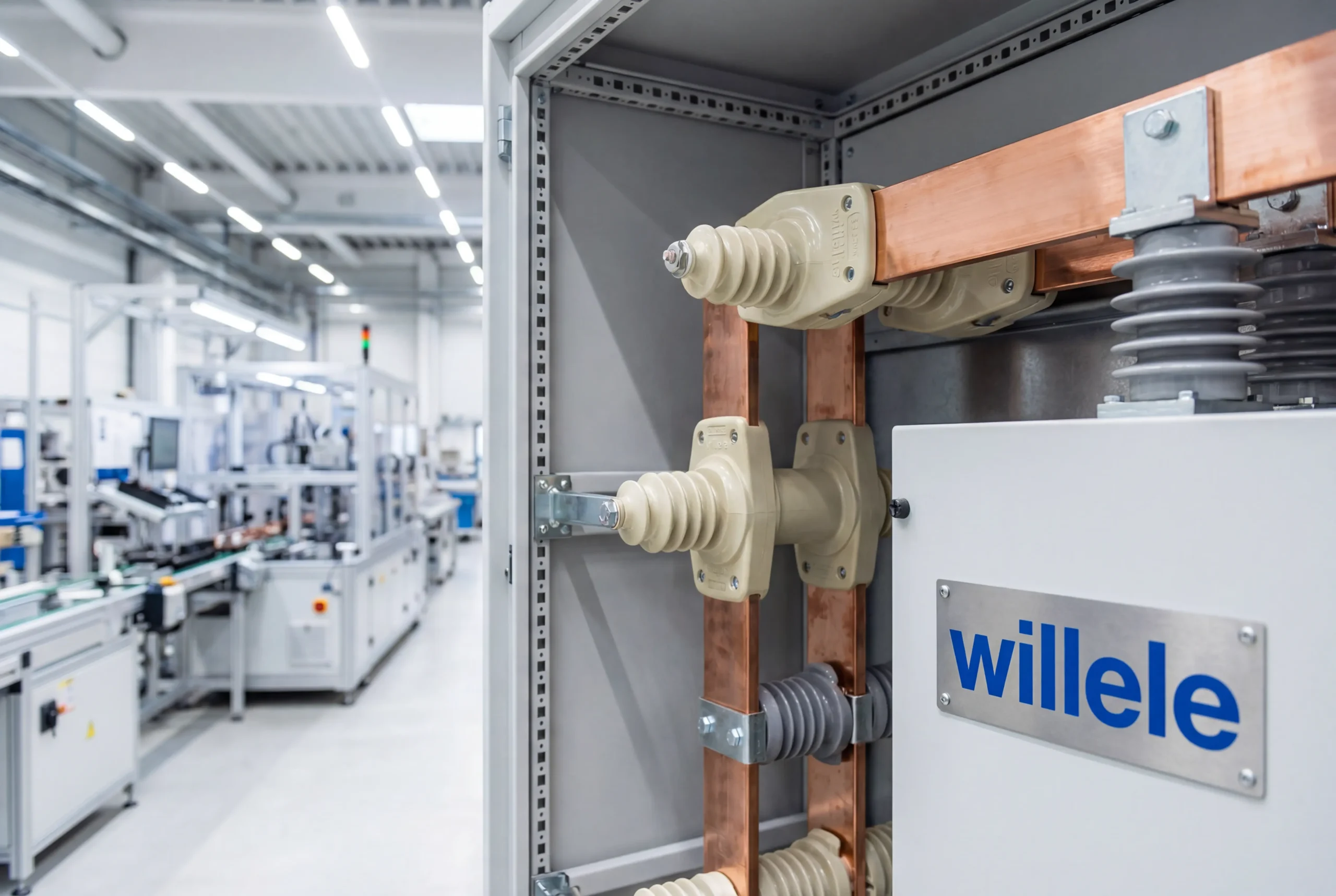
In modern electrical distribution systems, the reliability and safety of switchgear installations depend critically on proper insulation solutions. Low voltage busbar insulators for switchgear applications serve as the foundation for secure electrical separation, preventing short circuits and ensuring operational continuity. At willele Electric, we specialize in manufacturing premium electrical insulation solutions, including advanced heat shrink tubes and busbar insulation systems designed specifically for demanding B2B applications.
This comprehensive guide explores everything you need to know about low voltage busbar insulators for switchgear applications, from material selection to installation best practices, helping engineers and procurement professionals make informed decisions for their electrical infrastructure projects.
What Are Low Voltage Busbar Insulators?
Low voltage busbar insulators are specialized electrical insulation components designed to support and isolate current-carrying busbars within switchgear assemblies. These insulators prevent electrical contact between conductors and grounded enclosures while providing mechanical support for busbar systems operating typically at voltages up to 1000V AC or 1500V DC.
Key Functions
The primary functions of busbar insulators in switchgear applications include:
- Electrical Isolation: Maintaining adequate clearance and creepage distances between live conductors and earthed metalwork
- Mechanical Support: Providing robust structural support for heavy copper or aluminum busbars
- Arc Resistance: Withstanding electrical arcing and preventing arc propagation
- Environmental Protection: Resisting moisture, dust, chemicals, and temperature extremes
- Vibration Dampening: Absorbing mechanical vibrations and reducing stress on connections
Types of Low Voltage Busbar Insulators for Switchgear
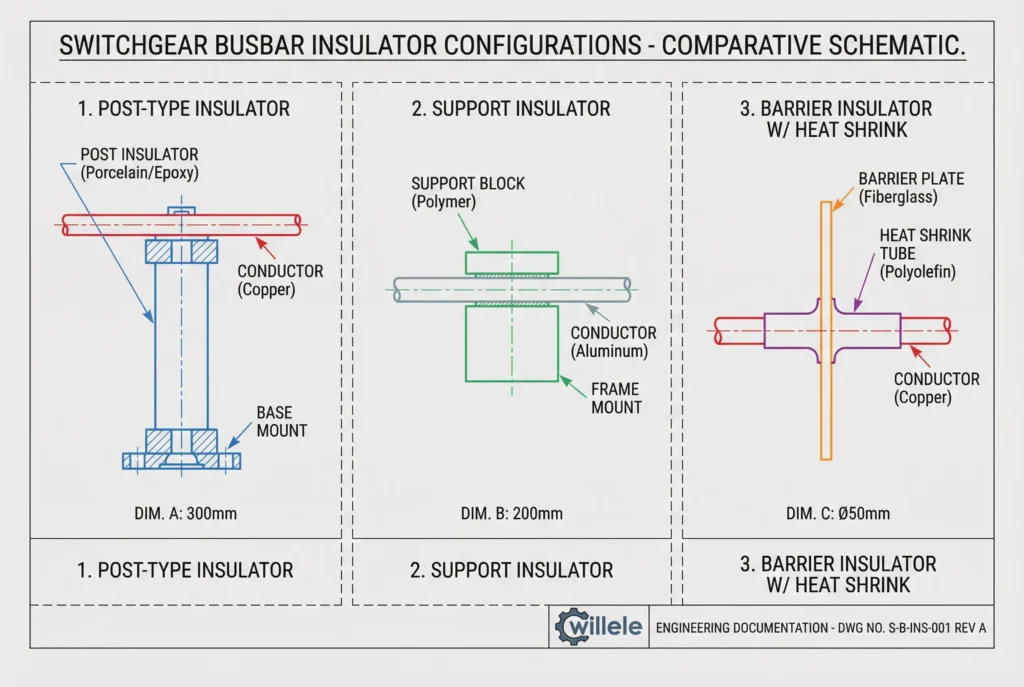
Post-Type Insulators
Post-type insulators are vertical support structures that elevate busbars from mounting surfaces. These are commonly used in low voltage switchgear for main distribution busbars and offer excellent mechanical strength with predictable electrical properties.
Support Insulators
Support insulators are horizontal mounting components that secure busbars to panel walls or framework. They typically feature mounting brackets with insulating spacers and are essential for maintaining proper phase spacing in multi-conductor installations.
Barrier Insulators
Barrier insulators create physical and electrical separation between different phases or voltage sections within the same enclosure. These components are critical for safety and often incorporate heat shrink tube applications for additional protection at connection points.
Heat Shrink Tube Enhanced Insulators
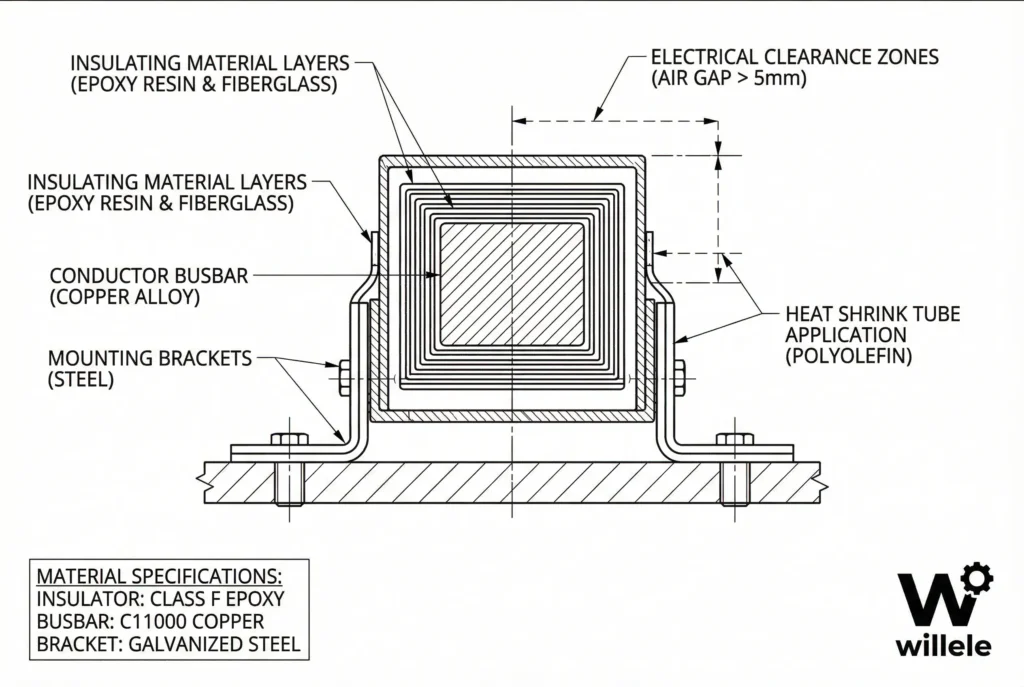
willele Electric specializes in busbar insulation solutions that incorporate advanced heat shrink tube technology. These systems provide superior moisture resistance, mechanical protection, and color-coding capabilities for phase identification while maintaining excellent dielectric properties.
Insulator Materials and Properties
The selection of appropriate insulation materials directly impacts the performance, longevity, and safety of switchgear installations. Below is a comprehensive comparison of common materials used in low voltage busbar insulators:
| Material | Dielectric Strength (kV/mm) | Temperature Range (°C) | Tracking Resistance | Mechanical Strength | Cost Factor | Best Applications |
|---|---|---|---|---|---|---|
| Epoxy Resin | 16-20 | -40 to +155 | Excellent | Very High | Medium | High-current applications, outdoor switchgear |
| Polyester (DMC/SMC) | 15-18 | -40 to +130 | Very Good | High | Low-Medium | General purpose, cost-sensitive projects |
| Phenolic Resin | 12-15 | -60 to +150 | Good | Medium-High | Low | Legacy systems, high-temperature environments |
| Polyamide (Nylon) | 18-22 | -40 to +120 | Good | Medium | Medium | Indoor switchgear, lightweight applications |
| Cross-linked Polyethylene | 20-25 | -55 to +105 | Very Good | Medium | Medium-High | Heat shrink applications, moisture-prone areas |
| Silicone Rubber | 20-30 | -60 to +200 | Excellent | Low-Medium | High | High-temperature zones, flexible connections |
Material Selection Criteria
When selecting insulator materials for switchgear applications, consider:
- Operating voltage and current requirements
- Ambient temperature and thermal cycling
- Environmental conditions (humidity, pollution, chemicals)
- Mechanical loading and vibration exposure
- Maintenance accessibility and lifecycle costs
- Regulatory compliance and safety standards
Voltage Ratings and Application Guide
Understanding the relationship between voltage ratings and appropriate insulator specifications is essential for safe switchgear design. The following table provides guidance for low voltage busbar insulator selection:
| Rated Voltage (VAC) | Minimum Creepage Distance (mm/kV) | Minimum Air Gap (mm) | Recommended Insulator Type | Typical Applications |
|---|---|---|---|---|
| 230V Single Phase | 2.5 | 3 | Support insulators with heat shrink tubes | Residential distribution, small commercial panels |
| 400V Three Phase | 2.5 | 5 | Post-type or support insulators | Commercial buildings, light industrial |
| 690V Three Phase | 3.0 | 8 | Heavy-duty post insulators | Industrial machinery, motor control centers |
| 1000V AC | 3.5 | 10 | Reinforced epoxy post insulators | High-power industrial systems, renewable energy |
Installation Clearances
Proper clearance distances are critical for safety and compliance with IEC 61439 and other relevant standards:
- Phase-to-Phase Clearance: Minimum 12mm for 400V systems, 20mm for 1000V systems
- Phase-to-Earth Clearance: Minimum 10mm for 400V systems, 16mm for 1000V systems
- Creepage Distance: Must account for pollution degree (1-4) of installation environment
Selection Criteria for Switchgear Applications
Environmental Considerations
- Indoor vs. Outdoor Installation: Outdoor applications require UV-resistant materials and enhanced moisture protection
- Pollution Degree: Industrial environments may require insulators with extended creepage paths
- Temperature Cycling: Consider thermal expansion coefficients when sizing mounting provisions
- Chemical Exposure: Select materials resistant to oils, cleaning agents, and industrial chemicals
Electrical Parameters
- Short-circuit current rating: Insulators must withstand electromagnetic forces during fault conditions
- Impulse withstand voltage: Critical for installations subject to lightning or switching surges
- Power frequency withstand voltage: Verify adequate safety margin above system operating voltage
- Partial discharge resistance: Essential for long-term reliability in sealed enclosures
Mechanical Requirements
- Load-bearing capacity: Calculate static and dynamic loads from busbar weight and electromagnetic forces
- Vibration resistance: Particularly important for installations near rotating machinery
- Mounting flexibility: Consider ease of installation and maintenance access
- Seismic qualification: May be required for critical infrastructure in seismic zones
Heat Shrink Tube Applications in Busbar Insulation
willele Electric’s expertise in heat shrink tube technology provides significant advantages for busbar insulation in switchgear applications:
Primary Applications
- Connection Point Protection: Heat shrink tubes seal and insulate busbar joints, preventing moisture ingress and contamination
- Phase Identification: Color-coded heat shrink tubes simplify installation and maintenance while ensuring safety
- Mechanical Abrasion Protection: Protecting busbars from edge contact with enclosure walls during thermal expansion
- Retrofit Insulation Enhancement: Adding insulation layers to existing installations without complete disassembly
Advantages of Heat Shrink Technology
- Conformable fit: Shrinks uniformly to busbar geometry, eliminating air gaps
- Moisture barrier: Forms hermetic seal protecting against corrosion
- Flame retardant: Meets UL 224 and other fire safety standards
- Long service life: Resistant to aging, UV exposure, and thermal cycling
- Quick installation: Significantly faster than traditional taping methods
Installation Best Practices
Pre-Installation Checklist
Before installing low voltage busbar insulators in switchgear:
- Surface Preparation: Clean all mounting surfaces to remove oil, dust, and oxidation
- Inspection: Verify insulators are free from cracks, voids, or surface contamination
- Dimensional Verification: Confirm clearance distances meet design specifications and standards
- Hardware Check: Ensure all mounting hardware is appropriate for the load and material
Installation Procedure
- Positioning: Mount insulators according to manufacturer specifications and electrical design drawings
- Torque Control: Apply proper torque to fasteners (typically 8-12 Nm for M6 hardware)
- Busbar Mounting: Install busbars with appropriate flat washers to distribute load
- Heat Shrink Application: Apply willele heat shrink tubes to connections using controlled heat source
- Final Inspection: Verify clearances, tightness, and absence of sharp edges
Common Installation Mistakes to Avoid
- Overtightening: Causes stress cracks in insulator material
- Inadequate support spacing: Results in excessive busbar sag and potential contact
- Misaligned mounting: Creates uneven load distribution and premature failure
- Contaminated surfaces: Reduces tracking resistance and long-term reliability
Benefits of Quality Busbar Insulation Systems
Investing in premium low voltage busbar insulators for switchgear applications delivers multiple benefits:
Safety Enhancement
- Reduces risk of electric shock and arc flash incidents
- Provides reliable protection even under abnormal operating conditions
- Enables safe maintenance with clearly marked phase segregation
Operational Reliability
- Minimizes unplanned downtime due to insulation failures
- Extends service life of switchgear equipment
- Maintains consistent performance across wide temperature ranges
Cost Efficiency
- Lower total cost of ownership through reduced maintenance requirements
- Enables higher current ratings in compact enclosures
- Simplifies troubleshooting with color-coded heat shrink identification
Compliance and Quality Assurance
- Meets international standards (IEC, UL, CSA)
- Facilitates third-party certification and inspection
- Demonstrates commitment to safety and professional standards
Why Choose willele Electric for Busbar Insulation Solutions
willele Electric brings specialized expertise in manufacturing electrical insulation products for B2B applications, with particular strength in heat shrink tube technology. Our low voltage busbar insulators for switchgear applications offer:
- Material Excellence: Premium-grade insulation materials with certified electrical and mechanical properties
- Custom Solutions: Tailored insulator designs and heat shrink tube specifications for unique project requirements
- Technical Support: Expert engineering assistance from specification through installation
- Quality Assurance: Comprehensive testing and documentation meeting international standards
- Reliable Supply Chain: Consistent product availability and competitive lead times for project scheduling
Frequently Asked Questions
Q: What is the typical service life of low voltage busbar insulators in switchgear?
A: Quality busbar insulators typically provide 20-30 years of reliable service when properly specified and installed. Environmental factors, operating temperature, and electrical stress significantly impact longevity. willele Electric’s heat shrink tube enhanced solutions offer extended service life through superior moisture and contamination resistance.
Q: How do I determine the correct creepage distance for my application?
A: Creepage distance depends on system voltage and pollution degree. For 400V systems in industrial environments (pollution degree 3), minimum creepage is typically 10mm per kV. Consult IEC 61439-1 Table D.1 for specific requirements, or contact willele technical support for application-specific guidance.
Q: Can heat shrink tubes replace traditional busbar insulation methods?
A: Heat shrink tubes provide excellent supplementary insulation, particularly at connection points and for phase identification. For primary structural support, dedicated busbar insulators remain necessary. The optimal solution combines post or support insulators with heat shrink tube enhancement at critical locations.
Q: What testing should be performed on busbar insulators before commissioning?
A: Minimum testing includes visual inspection, insulation resistance measurement (typically >1000 MΩ), and verification of mounting torque. For critical installations, consider dielectric withstand testing at 2.5x rated voltage for 1 minute. Always follow manufacturer recommendations and applicable standards.
Q: Are there special considerations for busbar insulators in high-current applications?
A: High-current installations (>1000A) require careful attention to electromagnetic forces during short circuits, thermal expansion management, and contact pressure maintenance. Select insulators with adequate mechanical strength and consider using multiple support points. Heat shrink tubes can help manage thermal cycling effects on connections.
Q: How do I retrofit existing switchgear with improved insulation?
A: Retrofitting typically involves adding heat shrink tube protection to exposed busbar sections and connection points. willele Electric offers heat shrink tubes in various sizes and shrink ratios to accommodate existing installations. For structural insulator replacement, verify mounting compatibility and clearance distances before proceeding.
Conclusion
Low voltage busbar insulators for switchgear applications represent a critical component in electrical distribution system safety and reliability. Proper selection, quality materials, and professional installation directly impact operational performance and long-term cost efficiency.
willele Electric’s comprehensive range of insulation solutions, combining traditional insulator designs with advanced heat shrink tube technology, provides the reliability and performance demanded by modern B2B electrical installations. Our commitment to quality manufacturing, technical expertise, and customer support ensures your switchgear projects meet the highest standards of safety and functionality.
For technical specifications, custom solutions, or expert consultation on your busbar insulation requirements, contact willele Electric today. Our team is ready to support your electrical infrastructure projects with proven insulation technology and responsive service.
