
Low Voltage Busbar Insulators in Building Automation Systems

Introduction
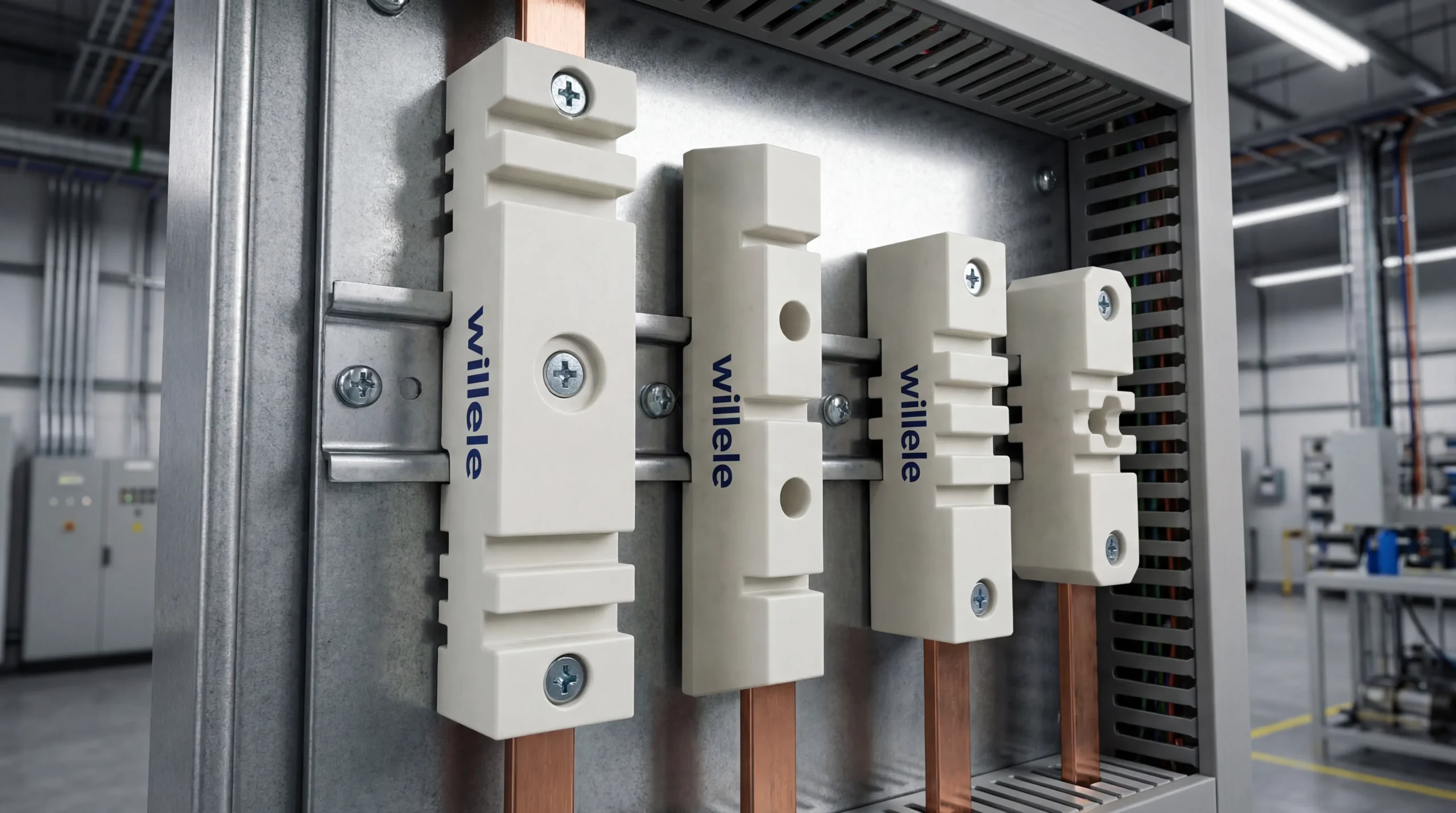
Low voltage busbar insulators in building automation systems represent a critical component in modern electrical infrastructure, ensuring safe and efficient power distribution across commercial and industrial facilities. As building automation systems become increasingly sophisticated, the demand for reliable electrical insulation solutions has never been greater. Willele Electric, a leading B2B manufacturer specializing in advanced electrical equipment and heat shrink technology, offers comprehensive busbar insulation solutions designed to meet the stringent requirements of contemporary building management systems.
These specialized insulators serve as the backbone of electrical safety, preventing short circuits, reducing energy losses, and maintaining optimal system performance. In an era where building automation systems control everything from HVAC to lighting and security, the integrity of low voltage busbar insulators directly impacts operational efficiency, safety compliance, and long-term cost management.
Understanding Low Voltage Busbar Insulators
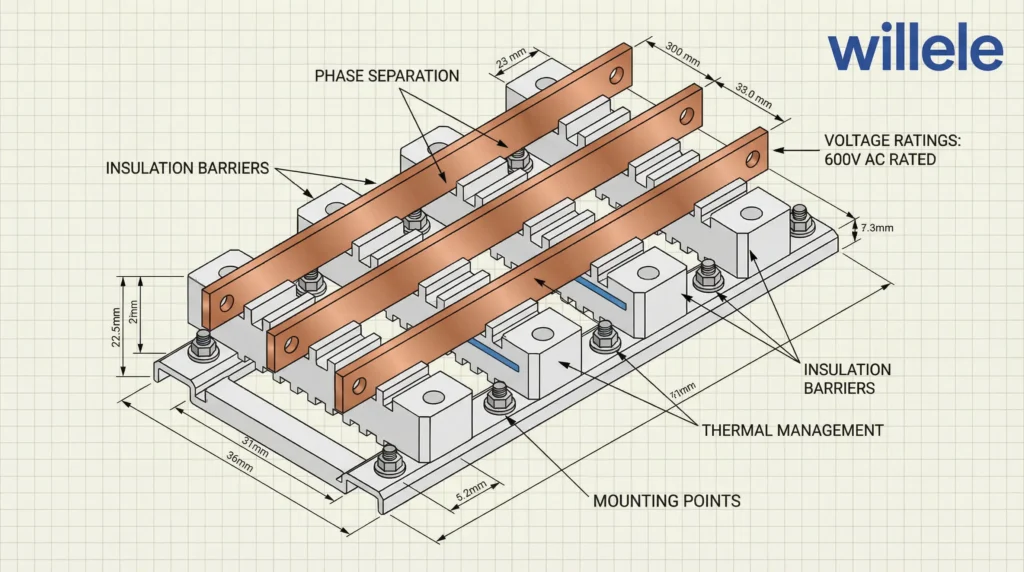
Low voltage busbar insulators are engineered components designed to electrically isolate conductive busbars while providing mechanical support and thermal management. These insulators typically operate within voltage ranges of 50V to 1000V AC or 120V to 1500V DC, making them ideal for building automation applications where multiple electrical circuits converge.
The primary function of these insulators extends beyond simple electrical isolation. They provide:
- Dielectric barriers between phases and grounded components
- Mechanical stability for busbar arrangements
- Thermal dissipation pathways to prevent overheating
- Arc resistance to enhance system safety
- Dimensional precision for consistent installation
Willele’s busbar insulators incorporate advanced polymer compounds that deliver superior insulation properties while maintaining structural integrity under varying environmental conditions. The manufacturing process ensures each component meets rigorous quality standards essential for building automation reliability.
The Critical Role in Building Automation Systems
Building automation systems (BAS) rely on stable, uninterrupted power distribution to manage diverse subsystems. Low voltage busbar insulators play several indispensable roles within these complex networks:
Power Distribution Integrity
In modern BAS architectures, busbars distribute power to multiple automation controllers, sensors, actuators, and communication devices. Insulators prevent electrical leakage between phases and ensure that each circuit receives the intended voltage and current without interference. This isolation is crucial for sensitive electronic components that govern building operations.
System Segmentation
Building automation systems often require electrical segmentation to isolate different functional zones—HVAC controls, lighting management, access control, and fire safety systems. Busbar insulators enable this segmentation by providing clear electrical boundaries while maintaining physical connectivity within the distribution panel.
Safety and Compliance
Electrical codes and safety standards mandate specific insulation requirements for low voltage systems. Willele’s busbar insulators are engineered to exceed international standards including IEC 61439, UL 891, and EN 60439, ensuring compliance across various markets and applications.
Environmental Protection
Building automation equipment operates in diverse environments—from climate-controlled data centers to industrial facilities with temperature fluctuations and humidity variations. High-performance insulators protect against moisture ingress, dust accumulation, and thermal cycling that could compromise electrical integrity.
Key Features and Technical Benefits
Willele’s low voltage busbar insulators incorporate several advanced features that distinguish them in the building automation sector:
Material Excellence
Manufactured from high-grade thermoplastic polymers including polyamide (PA), polyethylene terephthalate (PET), and specialized composites, these insulators offer exceptional dielectric strength. The material selection ensures:
- High insulation resistance (>10^12 Ω)
- Flame retardancy (UL94 V-0 rating)
- Chemical resistance against cleaning agents and industrial atmospheres
- Dimensional stability across temperature ranges from -40°C to +120°C
- UV resistance for exposed installations
Precision Engineering
Each insulator features precision-molded construction with tight tolerances ensuring consistent performance. The design incorporates:
- Multiple mounting holes for flexible installation configurations
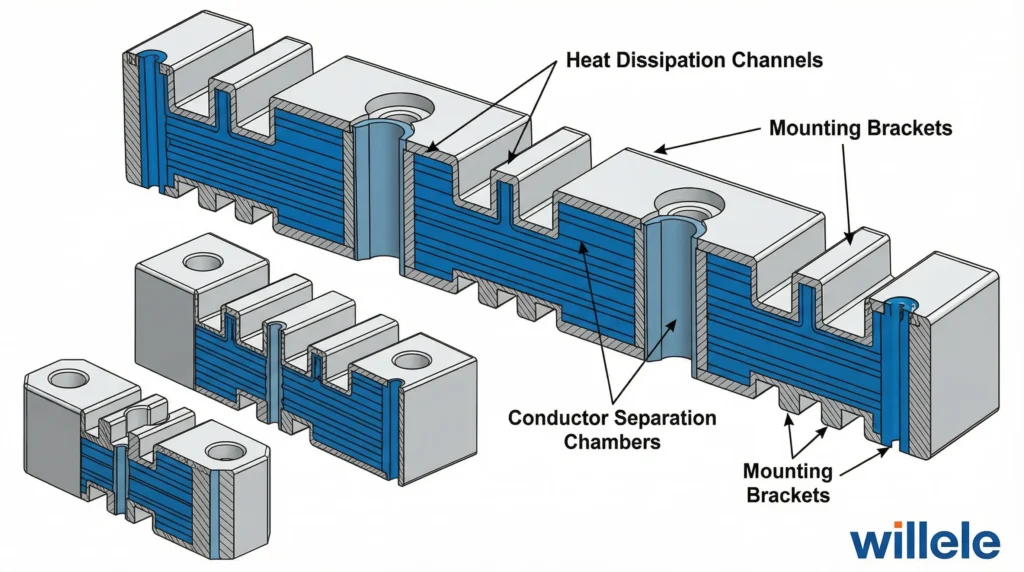
- Grooved surfaces to increase creepage distance
- Reinforced sections at stress concentration points
- Standardized dimensions compatible with industry-standard busbars
Thermal Management
Effective heat dissipation prevents hotspot formation that can lead to insulation degradation. Willele insulators feature optimized geometry that promotes natural convection while maintaining electrical isolation. The thermal conductivity is carefully balanced to dissipate heat without creating thermal bridges.
Mechanical Robustness
Building automation systems may experience vibration, mechanical stress during installation, and long-term loading. These insulators provide:
- High compressive strength (>80 MPa)
- Impact resistance meeting IEC 62262 IK08 standards
- Low creep characteristics for dimensional stability over decades
- Secure busbar retention without mechanical fastener degradation
Technical Specifications and Standards Compliance
Comparative Material Properties
| Material Property | Polyamide (PA) | PET Composite | DMC (Dough Molding Compound) | Phenolic Resin |
|---|---|---|---|---|
| Dielectric Strength (kV/mm) | 18-25 | 20-28 | 15-20 | 12-18 |
| Volume Resistivity (Ω·cm) | 10^14 | 10^15 | 10^13 | 10^12 |
| Tensile Strength (MPa) | 75-85 | 60-70 | 55-65 | 45-55 |
| Temperature Rating (°C) | -40 to +120 | -30 to +130 | -40 to +140 | -40 to +110 |
| Flame Rating | UL94 V-0 | UL94 V-0 | UL94 V-0 | UL94 HB |
| Moisture Absorption (%) | 1.5-2.0 | 0.1-0.3 | 0.2-0.4 | 0.3-0.5 |
| Relative Cost | Medium | High | Medium-High | Low |
Willele primarily utilizes advanced polyamide and PET composite formulations, balancing performance with cost-effectiveness for building automation applications.
Electrical Performance Standards
| Specification Parameter | Value/Rating | Test Standard |
|---|---|---|
| Rated Insulation Voltage | 1000V AC | IEC 60664-1 |
| Impulse Withstand Voltage | 8 kV | IEC 60664-1 |
| Comparative Tracking Index (CTI) | >400 (Material Group I) | IEC 60112 |
| Insulation Resistance (at 500V DC) | >1000 MΩ | IEC 61439-1 |
| Power Frequency Withstand Voltage | 3 kV, 60 seconds | IEC 60947-1 |
| Temperature Rise (at rated current) | <45K | IEC 61439-1 |
| IP Protection Rating | IP40 (standard) to IP54 (optional) | IEC 60529 |
| Flammability Classification | V-0 (self-extinguishing) | UL94 |
These specifications ensure that Willele low voltage busbar insulators meet or exceed requirements for building automation systems worldwide, providing engineers and system integrators with confidence in long-term reliability.
Installation Guidelines and Best Practices
Proper installation of low voltage busbar insulators is crucial for optimal building automation system performance. Following these guidelines ensures maximum service life and electrical safety:
Pre-Installation Inspection
Before installation, inspect each insulator for:
- Surface damage or cracks
- Dimensional consistency
- Cleanliness of mounting surfaces
- Proper insulator selection for the intended voltage and current ratings
Mounting Procedures
- Surface Preparation: Ensure mounting surfaces are clean, dry, and free from contaminants
- Torque Specifications: Apply mounting hardware with specified torque values (typically 2-4 N·m for M4-M6 fasteners)
- Busbar Alignment: Verify proper busbar alignment before securing to prevent mechanical stress
- Clearance Verification: Maintain minimum clearance distances as specified in IEC 60664-1 based on voltage rating and pollution degree
Electrical Considerations
- Verify phase sequence and polarity before energizing
- Ensure adequate creepage and clearance distances between live parts
- Implement proper grounding and bonding per local electrical codes
- Label all phases clearly for maintenance personnel
Maintenance Protocols
Regular maintenance extends insulator life and prevents system failures:
- Visual Inspection: Quarterly inspection for cracks, discoloration, or contamination
- Cleaning: Annual cleaning with approved dielectric cleaners (avoid petroleum-based solvents)
- Thermal Imaging: Biannual thermographic inspection to identify hot spots
- Insulation Resistance Testing: Annual megger testing (typically 500V DC for 60 seconds)
- Torque Verification: Check fastener torque annually, retighten as necessary
Willele provides comprehensive installation and maintenance documentation with each product delivery, ensuring customers have the technical guidance needed for optimal implementation.
Applications in Building Automation Systems
Low voltage busbar insulators find extensive application across various building automation subsystems:
HVAC Control Systems
Heating, ventilation, and air conditioning systems represent the largest energy consumers in commercial buildings. Busbar insulators distribute power to:
- Variable frequency drives (VFDs) for motors and compressors
- Control panels for temperature and humidity sensors
- Zone controllers for individual space management
- Energy monitoring equipment
Lighting Management
Modern lighting automation requires reliable power distribution for:
- DMX controllers and LED drivers
- Occupancy sensors and daylight harvesting systems
- Emergency lighting circuits with battery backup
- Wireless control gateways
Security and Access Control
Building security infrastructure depends on stable electrical distribution:
- Card reader networks and biometric scanners
- Electronic locks and magnetic hold-open devices
- Video surveillance power supplies
- Intrusion detection panels
Energy Management Systems
Smart buildings utilize comprehensive energy monitoring:
- Power quality analyzers
- Submetering equipment
- Renewable energy integration points
- Load management controllers
Communication Infrastructure
Building automation communication relies on properly isolated power:
- BACnet, Modbus, and LonWorks controllers
- Network switches and routers
- Wireless access points
- Building management system servers
Comparison: Traditional vs. Modern Insulator Technologies
| Feature | Traditional Porcelain/Ceramic | Modern Polymer (Willele) |
|---|---|---|
| Weight | Heavy (300-500g per unit) | Lightweight (50-150g per unit) |
| Installation Time | 15-20 minutes per assembly | 5-8 minutes per assembly |
| Break Resistance | Brittle, prone to cracking | High impact resistance |
| Design Flexibility | Limited shapes | Complex geometries possible |
| Cost per Unit | Low material cost | Competitive installed cost |
| Thermal Expansion | Very low | Controlled, predictable |
| Moisture Resistance | Excellent | Excellent with proper material |
| Maintenance Frequency | Low | Very low |
| Replacement Cost | High (due to breakage risk) | Low (durable, less frequent) |
| Environmental Impact | Energy-intensive manufacturing | Lower carbon footprint |
The transition from traditional ceramic insulators to modern polymer solutions reflects the evolving demands of building automation systems, where weight reduction, installation efficiency, and design flexibility provide significant advantages.
Frequently Asked Questions
What voltage range qualifies as “low voltage” for busbar insulators in building automation?
Low voltage busbar insulators typically operate in the range of 50-1000V AC or 120-1500V DC. In building automation systems, the most common voltage levels are 24V DC (control systems), 120/208V AC, 230/400V AC (power distribution), and 480V AC (industrial applications). Willele insulators are rated and tested for these standard voltage ranges with appropriate safety margins.
How do I determine the correct insulator size for my busbar system?
Insulator selection depends on several factors: busbar dimensions (width and thickness), current rating (which affects heat dissipation requirements), voltage rating (which determines minimum creepage distances), and mounting configuration. Willele provides detailed selection guides and engineering support to ensure proper sizing. Generally, the insulator should provide mechanical support while maintaining minimum clearance of 10mm per kilovolt of operating voltage.
Can busbar insulators be used in outdoor or harsh environment applications?
While standard busbar insulators are designed for indoor use in controlled environments typical of building automation systems, Willele offers enhanced versions with IP54 or higher protection ratings suitable for semi-outdoor or industrial environments. For fully outdoor applications exposed to direct sunlight, rain, and extreme temperatures, specialized UV-stabilized compounds and sealed designs are recommended. Consult Willele’s technical team for environment-specific recommendations.
What is the expected service life of polymer busbar insulators?
Under normal operating conditions with proper installation and maintenance, high-quality polymer busbar insulators like those manufactured by Willele can provide 25-30 years of reliable service. Factors affecting lifespan include operating temperature (elevated temperatures accelerate aging), electrical stress (voltage and current), environmental contamination, and mechanical loading. Regular inspections and insulation resistance testing help predict remaining service life.
Are special tools required for installation of busbar insulators?
Basic installation requires only standard tools: screwdrivers or nut drivers for mounting hardware, and a torque wrench to ensure proper fastener tightness (typically 2-4 N·m depending on fastener size). For busbar preparation, you may need cutting tools, deburring equipment, and cleaning materials. No specialized or proprietary tools are required for Willele busbar insulators, reducing installation complexity and cost.
How do busbar insulators contribute to energy efficiency in building automation?
While insulators themselves don’t directly reduce energy consumption, they contribute to overall system efficiency in several ways: preventing leakage current that wastes energy, maintaining proper electrical isolation that ensures optimal equipment operation, enabling proper thermal management that reduces resistive losses, and supporting system reliability that prevents costly downtime and emergency power consumption. High-quality insulators also reduce maintenance requirements, indirectly contributing to the building’s operational efficiency.
Conclusion
Low voltage busbar insulators in building automation systems represent a critical investment in electrical infrastructure reliability, safety, and long-term operational efficiency. As building automation technology continues to advance, the demands placed on electrical distribution components intensify, requiring insulation solutions that combine superior electrical performance, mechanical durability, and environmental resilience.
Willele Electric’s comprehensive range of busbar insulators addresses these evolving requirements through advanced material science, precision manufacturing, and rigorous quality control. Whether designing new building automation installations or upgrading existing systems, specifying high-performance insulators ensures compliance with international standards while minimizing lifecycle costs.
The integration of proper insulation technology within building automation systems delivers measurable benefits: reduced downtime, enhanced safety for maintenance personnel, simplified installation procedures, and confidence in long-term system reliability. As buildings become smarter and electrical systems more complex, the role of quality busbar insulators becomes increasingly significant.
Partner with Willele Electric for your building automation electrical infrastructure needs. Our technical team provides comprehensive support from product selection through installation guidance, ensuring your systems benefit from decades of manufacturing expertise and innovation in electrical insulation technology. Contact us today to discuss your specific requirements and discover how our busbar insulator solutions can enhance your building automation projects.
