
Commercial Building Electrical Systems: Low Voltage Busbar Insulator Solutions

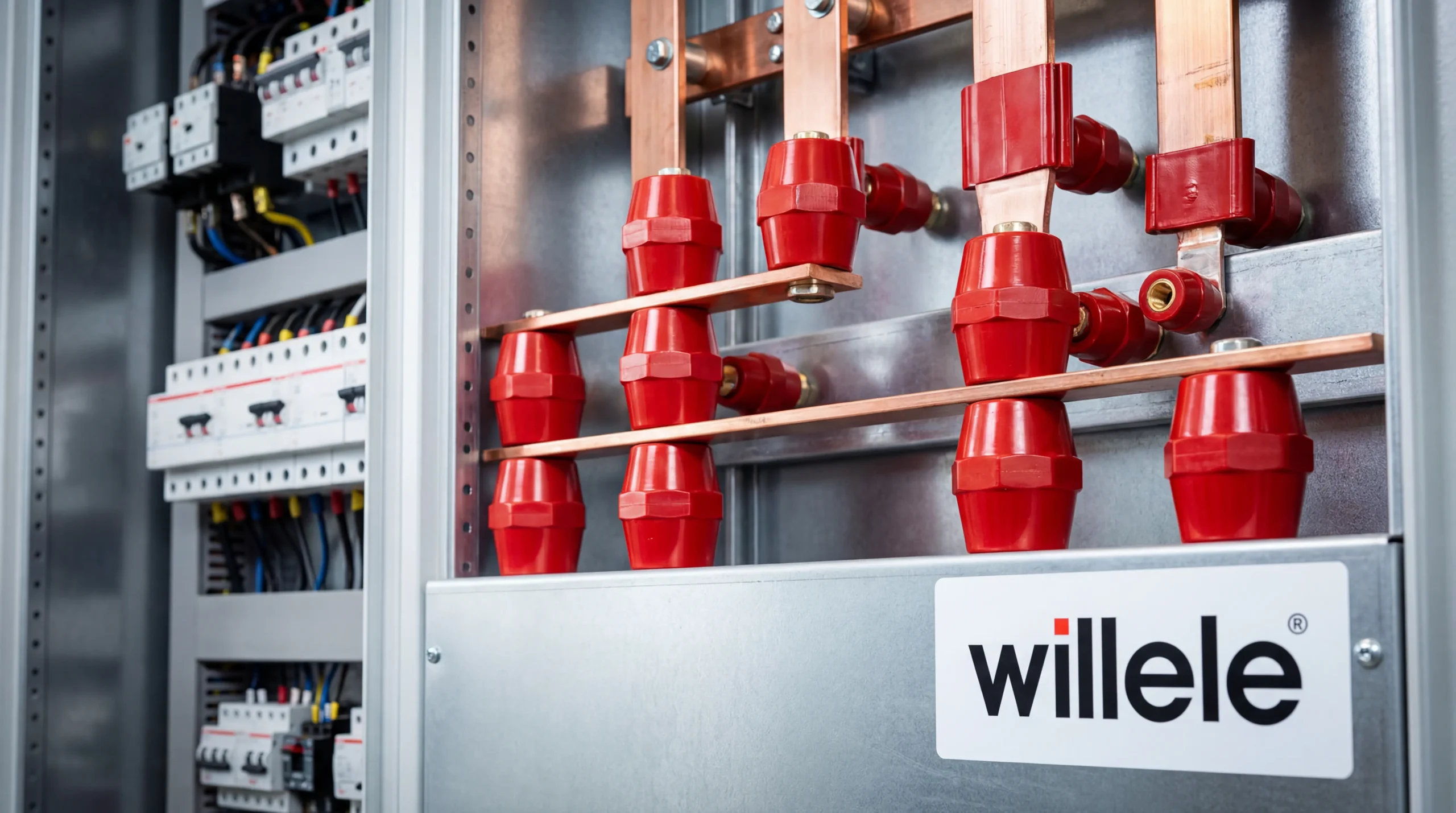
In the complex infrastructure of modern urban development, Commercial Building Electrical Systems form the critical backbone that ensures operational continuity, safety, and efficiency. As buildings become smarter and power demands escalate, the reliability of electrical distribution components becomes paramount. Among these components, low voltage busbar insulator solutions play a decisive role in preventing arc faults, reducing clearance requirements, and ensuring the longevity of switchgear assemblies.
For electrical contractors, facility managers, and engineers, selecting the right insulation solution is not just about compliance—it is about optimizing the performance of the entire electrical distribution network. Willele, a leader in electrical protection manufacturing, provides advanced heat shrink technologies designed to meet the rigorous demands of today’s commercial infrastructure.
The Role of Low Voltage Busbar Insulators in Commercial Systems
A robust Commercial Building Electrical System relies on the efficient distribution of power through main switchboards and distribution panels. Busbars—the metallic strips or bars that conduct electricity—are central to this distribution. However, without proper insulation, these conductors pose significant risks, including short circuits, accidental contact, and flashovers caused by environmental contaminants or pests.
Low voltage busbar insulators serve as the primary defense mechanism. They provide the necessary dielectric strength to isolate live conductors from each other and from the grounded enclosure. In modern commercial applications, heat shrink busbar tubing has emerged as the preferred solution over rigid insulation methods due to its versatility and superior protective properties.
Key Functions
- Flashover Prevention: Significantly reduces the risk of arc flash incidents in compact switchgear.
- Space Optimization: Allows for reduced spacing between busbars, enabling smaller, more compact cabinet designs.
- Environmental Protection: Shields copper or aluminum bars from corrosion, moisture, and dust accumulation.
Technical Specifications and Heat Shrink Technology
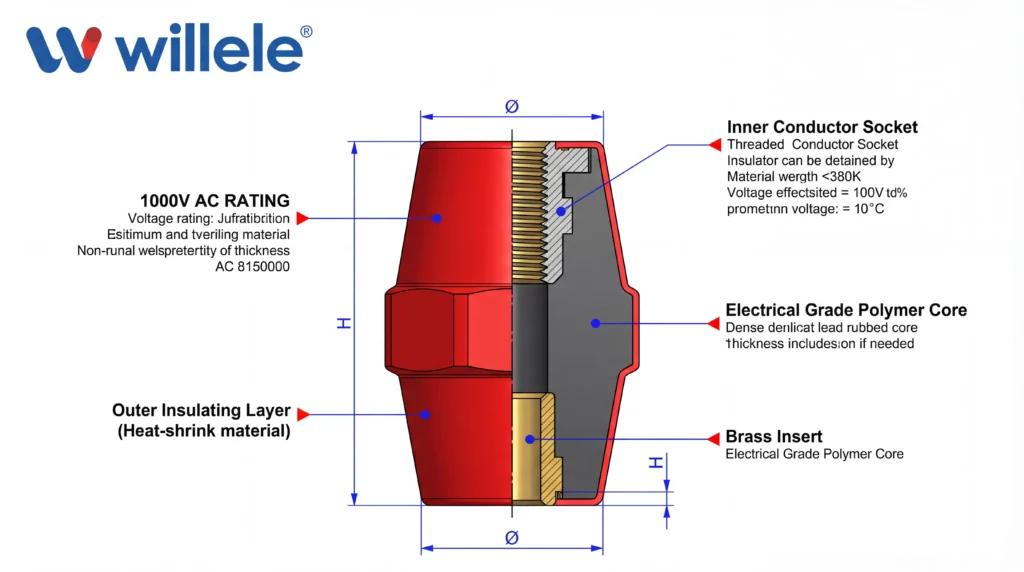
At Willele, we leverage advanced polymer science to create busbar insulation solutions that exceed standard industry requirements. Unlike traditional rigid bulk molding compound (BMC) insulators, heat shrink technology offers a conformal coating that adapts to complex busbar geometries.
Our electrical grade heat shrink tubing is engineered from cross-linked polyolefin. This material structure provides exceptional resistance to tracking and erosion while maintaining flexibility.
Material Advantages
The core differentiator of Willele’s solutions lies in the cross-linking process. This process creates a molecular memory that allows the tubing to shrink tightly around the busbar profile when heated, ensuring no air gaps exist where partial discharge could occur.
Comparison: Insulation Material Types
| Feature | Willele Heat Shrink Tubing | Rigid BMC/Epoxy Insulators | PVC Tape / Dip Coating |
|---|---|---|---|
| Dielectric Strength | High (>20 kV/mm) | High | Moderate |
| Flexibility | Excellent (Conforms to bends) | Brittle (Rigid) | Moderate |
| Installation Speed | Fast (Heat application) | Slow (Bolting required) | Slow (Wrapping/Dipping) |
| Space Saving | Maximizes space | Bulky | Varies |
| Thermal Cycling | Resistant to cracking | Prone to stress fractures | Can loosen over time |
Applications in Commercial Building Electrical Systems
The versatility of low voltage busbar insulators makes them indispensable across various segments of a building’s power infrastructure.
1. Main Switchboards and Switchgear
In the main electrical room, high-current busbars distribute power to the entire building. Willele’s insulators protect these critical junctions, preventing catastrophic failures that could lead to building-wide blackouts.
2. Motor Control Centers (MCCs)
Commercial buildings often house extensive HVAC systems and pumps controlled by MCCs. The vibration inherent in these environments demands insulation that will not crack or dislodge. The flexible nature of heat shrink tubing absorbs vibration, maintaining system integrity.
3. Data Centers and UPS Systems
For mission-critical facilities where uptime is non-negotiable, the insulation must provide absolute reliability. Our high-grade insulation materials are halogen-free, ensuring that in the event of a fire, no corrosive or toxic gases are released into sensitive server environments.
Installation Guidelines for Optimal Performance
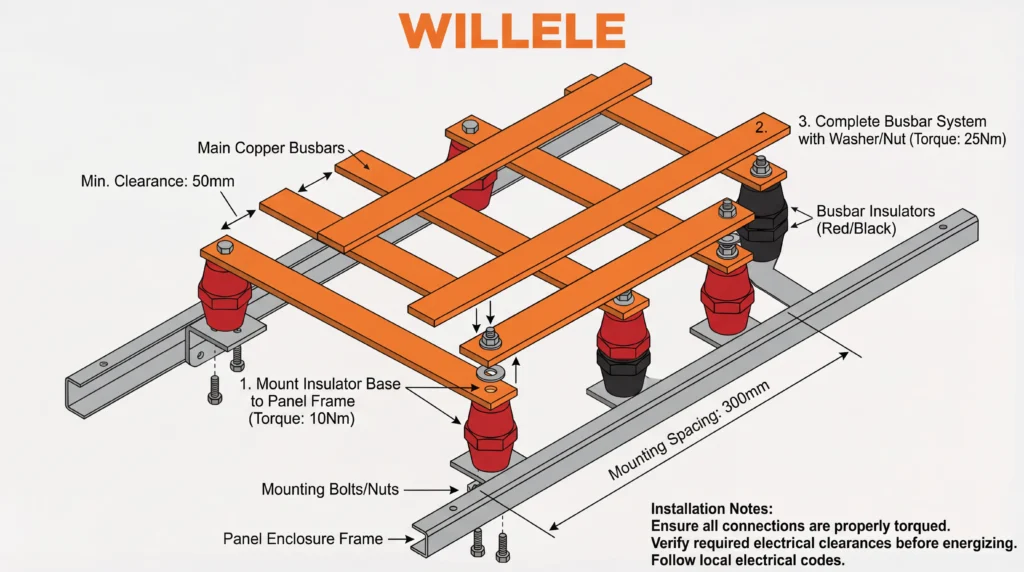
Proper installation is crucial for the longevity of Commercial Building Electrical Systems. While heat shrink solutions simplify the process, adhering to specific protocols ensures the rated dielectric strength is achieved.
Installation Steps
- Surface Preparation: Clean the busbars thoroughly to remove grease, oil, and sharp edges that could puncture the insulation.
- Sizing: Select the correct tubing size. The supplied diameter should be slightly larger than the busbar, and the recovered (shrunk) diameter must be smaller than the busbar to ensure a tight fit.
- Positioning: Slide the tubing over the busbar. For bends and angles, ensure the tubing is positioned without kinks.
- Heating: Using a heat gun or oven, apply heat evenly from the center outwards to prevent air entrapment. The material will shrink and conform to the busbar profile.
- Cooling: Allow the assembly to cool to room temperature before mechanical stress is applied.
Voltage Rating and Clearance Reduction
Using Willele’s advanced insulation allows engineers to reduce the air clearance distance between phases.
| Voltage Rating | Standard Air Clearance | Reduced Clearance with Willele Insulation | Space Saving |
|---|---|---|---|
| 12 kV | 120 mm | 55 mm | ~54% |
| 24 kV | 220 mm | 120 mm | ~45% |
| 36 kV | 320 mm | 200 mm | ~37% |
Note: Table values are indicative. Always refer to specific local standards (IEC/UL) for final design compliance.
Safety Standards and Compliance
In the realm of Commercial Building Electrical Systems, adherence to standards is not optional. Willele products are manufactured under strict quality control processes to meet global safety benchmarks.
- UL Certification: Our materials are recognized for flammability and dielectric performance.
- IEC Compliance: Meets IEC 60664 requirements for insulation coordination.
- RoHS & REACH: Environmentally compliant, free from hazardous heavy metals and substances.
Ensuring your busbar insulation meets these standards is critical for passing building inspections and maintaining insurance validity for commercial properties.
Why Choose Willele for Your Electrical Distribution Needs?
Willele stands at the intersection of innovation and reliability. As a dedicated B2B manufacturer, we understand the specific challenges faced by panel builders and electrical engineers.
- Customization: We offer heat shrink solutions in various colors for phase identification (Red, Yellow, Blue, Black, Green/Yellow).
- Durability: Our products are UV resistant and designed to withstand the thermal cycling typical in heavy-load commercial environments.
- Technical Support: We provide comprehensive documentation and engineering support to ensure our products integrate seamlessly into your designs.
By choosing Willele, you are reinforcing your Commercial Building Electrical Systems with protection that lasts as long as the building itself.
Frequently Asked Questions (FAQ)
What is the primary benefit of using heat shrink tubing over rigid insulators?
Heat shrink tubing provides a continuous, conformal insulation layer that eliminates air gaps and allows for a significant reduction in the spacing required between busbars, enabling more compact switchgear designs.
Can Willele busbar insulators be used for outdoor applications?
Yes, our specific weather-resistant grades are designed with UV stabilizers and track-resistant materials suitable for outdoor switchgear and transformers.
How do I determine the correct size of insulation for my busbars?
You should select a tubing size where the “expanded” diameter is large enough to slide over the busbar, and the “recovered” (shrunk) diameter is smaller than the busbar’s perimeter to ensure a tight, void-free fit.
What voltage ranges do Willele low voltage insulators cover?
While termed “low voltage” in some contexts, our standard commercial range covers up to 1kV (1000V) for LV applications, and we offer medium voltage solutions capable of insulating up to 36kV.
Does the insulation affect the current carrying capacity (ampacity) of the busbar?
Insulation can slightly reduce heat dissipation. However, Willele’s materials are designed with high thermal conductivity relative to standard plastics to minimize this derating effect. We provide derating factors in our technical datasheets.
Are Willele products halogen-free?
Yes, we offer a specialized line of halogen-free heat shrink tubing specifically designed for commercial buildings with high occupancy, such as airports, hospitals, and shopping malls, to ensure safety in case of fire.
