Heat Shrink Sleeve for High Voltage Cable Termination

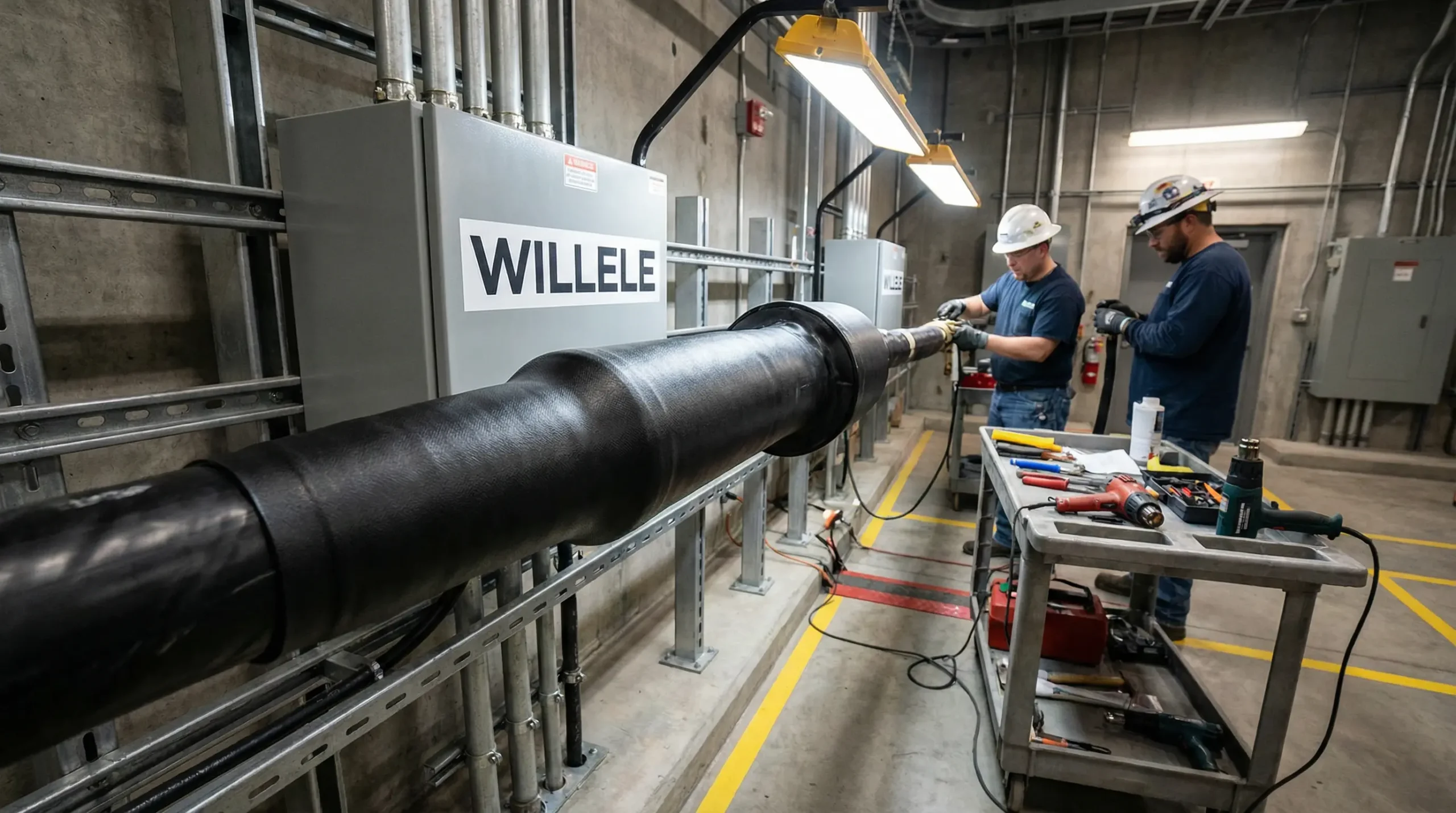
In the complex infrastructure of modern power distribution, the reliability of the network is often defined by its connection points. Among the most critical components in this ecosystem is the Heat Shrink High Voltage Cable Termination. For electrical engineers and procurement specialists at Willele Electric, understanding the technical nuances of these components is essential for ensuring grid stability and operational safety.
This comprehensive guide explores the engineering, application, and advantages of heat shrink technology in high voltage (HV) environments, demonstrating why Willele stands at the forefront of B2B electrical manufacturing.
The Critical Role of Cable Terminations in High Voltage Systems
High voltage cables are the arteries of industrial power, but where cables end—at switchgear, transformers, or overhead lines—the electrical stress is at its peak. A cable termination must perform several vital functions simultaneously: it must provide electrical insulation, mechanical protection, environmental sealing, and, most importantly, electrical stress control.
Without proper termination, the abrupt end of the cable’s insulation shield would cause a concentration of electric field lines, leading to immediate dielectric breakdown and catastrophic failure.
Understanding Heat Shrink Technology for HV Applications
A Heat Shrink Sleeve for High Voltage Cable Termination is a multi-layered, engineered thermoplastic system designed to be shrunk onto a cable end using heat. Unlike low-voltage solutions, HV terminations (typically rated from 11kV up to 72.5kV and beyond) require specialized materials capable of handling extreme electrical stress.
At Willele, our heat shrink sleeves are manufactured using cross-linked polyolefin. This material possesses “memory,” allowing it to return to its original smaller diameter when heated, creating a tight, void-free interface with the cable.
Core Functions of Willele HV Terminations:
- Stress Control: Regulating the electric field at the cutback of the semiconductor screen.
- Anti-Tracking: Resisting the formation of conductive paths (carbon tracks) on the surface caused by leakage currents.
- Weather Resistance: Withstanding UV radiation, ozone, and industrial pollution.
- Sealing: Preventing moisture ingress, which is the leading cause of cable failure.
Technical Composition and Anatomy
To understand the superior performance of a Heat Shrink High Voltage Cable Termination, one must look beneath the surface. A high-quality termination is not a single tube but a composite system.
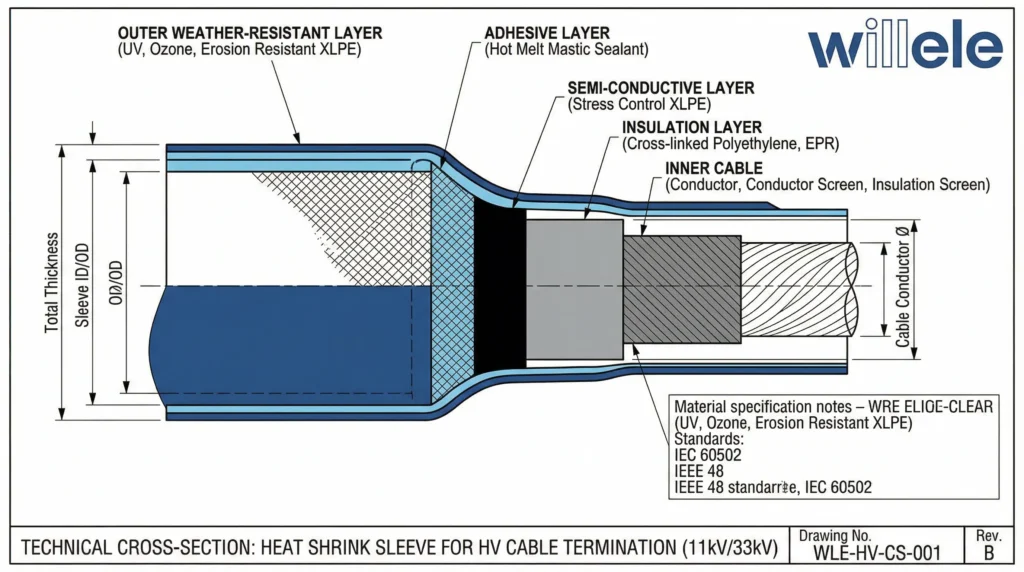
As illustrated in the Willele technical diagram above, the structure typically includes:
- Outer Anti-Tracking Tube: A specialized red or black insulation layer heavily modified with metal oxide fillers to resist erosion and tracking.
- Stress Control Tube: Placed directly over the insulation screen cutback, this layer has specific impedance characteristics to smooth out electrical stress lines.
- Sealant Mastic: High-grade adhesives applied at the top and bottom to bond with the cable lug and outer sheath, ensuring a hermetic seal.
- Rain Skirts (Sheds): For outdoor terminations, these extend the creepage distance, preventing flashover during wet or polluted conditions.
Material Specifications Table
| Feature | Specification Standard | Willele Performance |
|---|---|---|
| Material Base | Cross-linked Polyolefin | Radiation Cross-linked Modified Polyolefin |
| Dielectric Strength | > 20 kV/mm | > 25 kV/mm |
| Volume Resistivity | > 10^13 Ohm-cm | 1 x 10^14 Ohm-cm |
| Tensile Strength | > 12 MPa | 14.5 MPa |
| Water Absorption | < 0.5% | 0.1% |
| Operating Temp | -40°C to +100°C | -55°C to +125°C |
Installation Guidelines and Best Practices
The performance of a Heat Shrink High Voltage Cable Termination is heavily dependent on the quality of installation. While Willele products are designed for forgiveness and ease of use, adherence to protocol is mandatory.
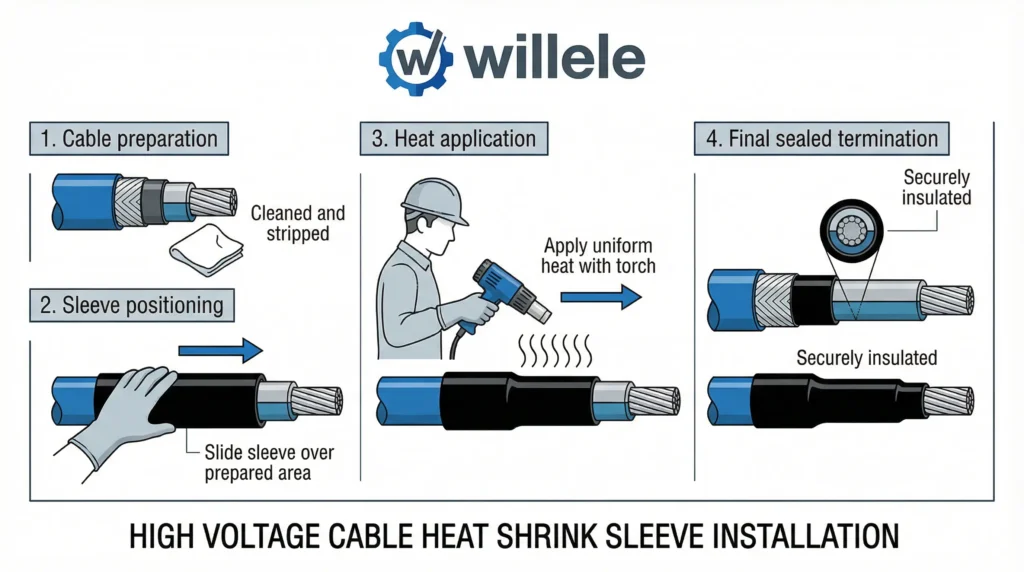
Step-by-Step Application Process:
- Cable Preparation: Strip the outer sheath, armor, and insulation screen according to the dimensional drawing. Cleanliness is paramount; use approved solvents to remove all grease and semi-con residue.
- Stress Control Application: Apply the stress control mastic or tube over the screen cutback. This is the most critical step for electrical grading.
- Heat Application: Slide the Willele heat shrink sleeve over the cable. Using a soft-flame gas torch, begin shrinking from the bottom (cable side) moving upward. This prevents air entrapment.
- Shed Installation: For outdoor units, shrink the rain sheds at specific intervals to maximize creepage distance.
- Final Sealing: Ensure the top seal around the cable lug is robust to prevent moisture entry into the conductor strands.
Comparative Analysis: Heat Shrink vs. Alternatives
In the B2B market, engineers often choose between Heat Shrink, Cold Shrink, and Slip-on terminations. Below is a comparison to help determine the best fit for your project.
| Feature | Heat Shrink (Willele) | Cold Shrink | Push-On / Slip-On |
|---|---|---|---|
| Installation Method | Gas Torch / Heat Gun | Removal of support core | Physical force / Lubricant |
| Shelf Life | Unlimited (if stored correctly) | Limited (rubber memory fades) | Unlimited |
| Range Taking | Excellent (High shrink ratio covers multiple cable sizes) | Moderate | Limited (Size specific) |
| Mechanical Strength | Very High (Rigid when cooled) | Flexible (Rubber-like) | Flexible |
| Cost Efficiency | Most Cost-Effective | Expensive | Moderate to High |
| Environmental Seal | Mastic melts and bonds | Pressure seal only | Interference fit |
Industry Applications
Willele’s Heat Shrink High Voltage Cable Termination kits are deployed across diverse sectors globally:
- Renewable Energy: Connecting wind turbine generators and solar inverters to the collection grid (11kV – 33kV).
- Substations: Interconnecting switchgear and transformers in distribution networks.
- Heavy Industry: Powering motors, pumps, and furnaces in mining, oil & gas, and petrochemical facilities.
- Railway Electrification: Traction power substations and trackside signaling power.
Quality Standards and Certifications
In the high voltage domain, compliance is non-negotiable. Willele electrical products are rigorously tested to meet and exceed international standards:
- IEC 60502-4: Accessories for power cables for rated voltages from 6 kV up to 30 kV.
- CENELEC HD 629.1: Test requirements on accessories for use on power cables.
- IEEE 48: Standard Test Procedures and Requirements for Alternating-Current Cable Terminations Used on Shielded Cables.
Every batch undergoes partial discharge testing and AC withstand voltage testing before leaving the Willele manufacturing floor.
Why Choose Willele Electric?
Sourcing Heat Shrink High Voltage Cable Termination products from Willele offers distinct advantages for B2B partners:
- Direct Manufacturer: We are not a trading company. We control the formulation of our polyolefin and the cross-linking process, ensuring consistent quality.
- Customization: We can tailor kit contents (lugs, grounding braids) to specific project requirements.
- Global Logistics: With a robust supply chain, we deliver to project sites worldwide with reduced lead times.
- Technical Support: Our engineering team provides direct support for installation training and troubleshooting.
FAQ: Heat Shrink High Voltage Terminations
Q1: What is the shelf life of Willele heat shrink terminations?
A: Unlike cold shrink products which are under constant tension, Willele heat shrink products have a virtually unlimited shelf life when stored in a cool, dry environment below 50°C.
Q2: Can Willele terminations be used on both single-core and three-core cables?
A: Yes. We offer specific breakout boots and kits designed for 3-core cables that convert them into effectively three single cores for termination.
Q3: What requires more skill to install: Heat Shrink or Cold Shrink?
A: Heat shrink requires a gas torch and some skill to ensure even heating. However, it is more forgiving regarding cable diameter tolerances compared to cold shrink.
Q4: Are these terminations suitable for highly polluted industrial areas?
A: Absolutely. Our anti-tracking material is specifically designed for heavy pollution classes. For extreme environments, we recommend our outdoor kits which feature extended creepage distance via additional rain sheds.
Q5: Can I use a heat gun instead of a gas torch?
A: For smaller sizes (low voltage), a heavy-duty industrial heat gun works. However, for High Voltage Cable Termination, a propane gas torch with a soft yellow flame is recommended to provide sufficient heat output for proper shrinking and adhesive activation.
Q6: How do I choose the correct size kit?
A: Selection is based on the system voltage (kV) and the cross-sectional area of the cable conductor (mm²). Willele provides a detailed selection chart to match our part numbers to your cable specs.
For technical inquiries or to request a quote for your next high voltage project, contact the Willele engineering team today.
