
Thermal Expansion Properties of Different Heat Shrink Materials

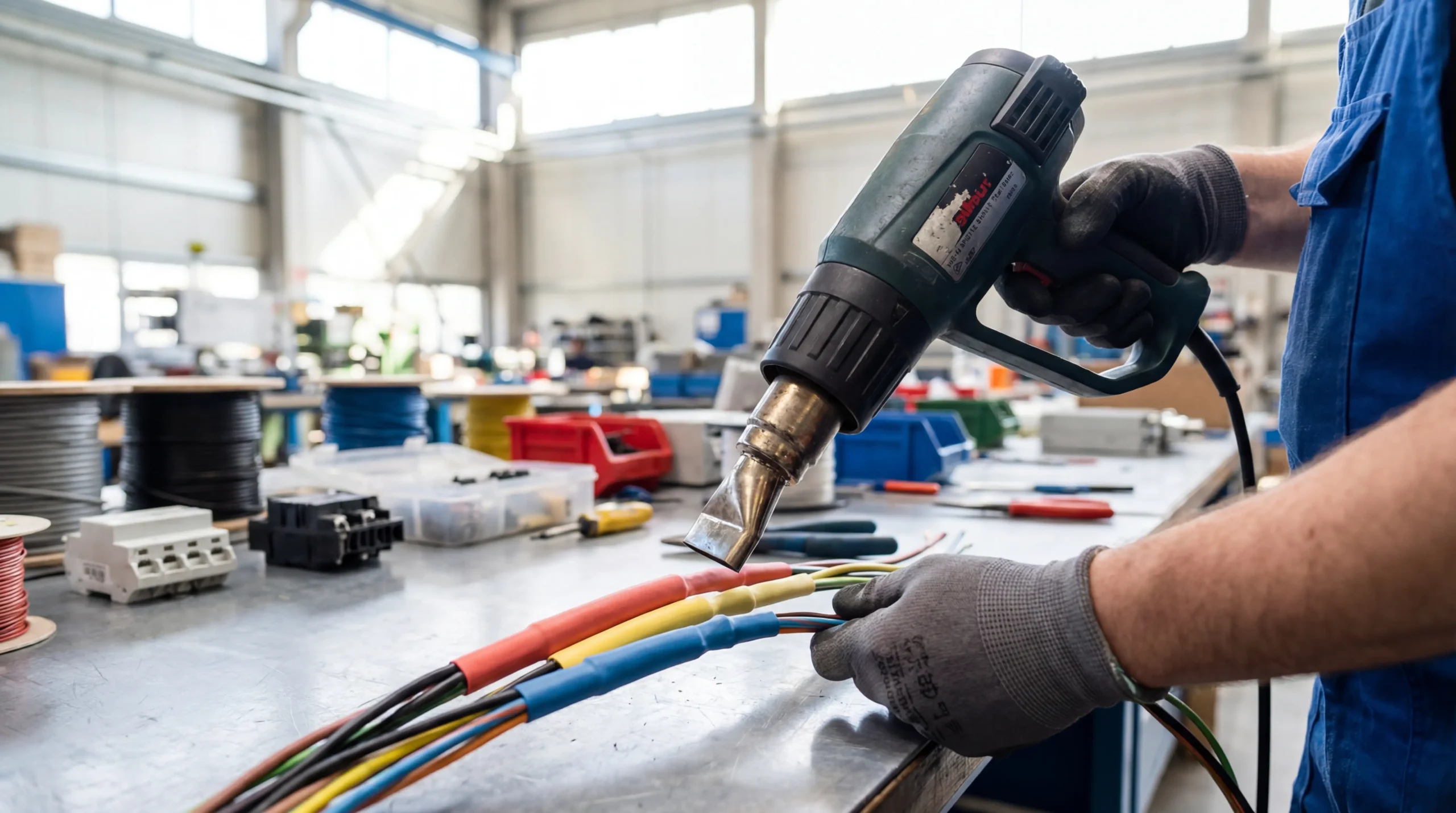
Understanding the Thermal Expansion Properties of Different Heat Shrink Materials is critical for engineers and procurement specialists selecting insulation for high-performance applications. In the electrical manufacturing sector, the reliability of a connection often depends not just on the conductivity of the metal, but on the integrity of the protective sleeve surrounding it.
At Willele Electric, we specialize in manufacturing precision heat shrink tubing designed to withstand rigorous thermal cycling. This guide provides a technical deep dive into how different polymers behave under heat, ensuring you choose the right material for your specific engineering requirements.
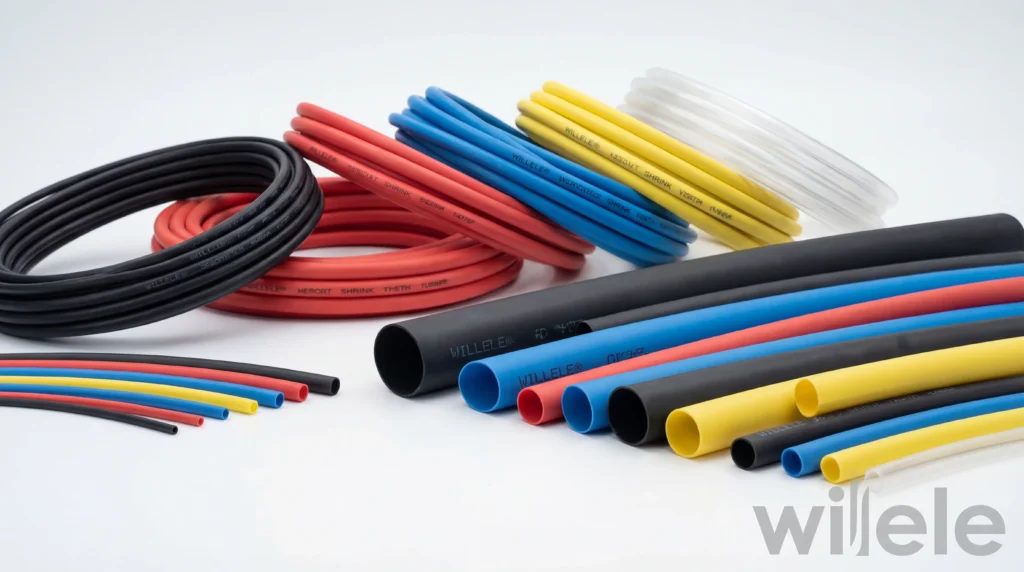
What is Thermal Expansion in Heat Shrink Tubing?
Thermal expansion refers to the tendency of matter to change its shape, area, volume, and density in response to a change in temperature. However, in the context of heat shrink tubing, the conversation is twofold: it involves both the Coefficient of Thermal Expansion (CTE) during normal operation and the unique elastic memory mechanism activated during the shrinking process.
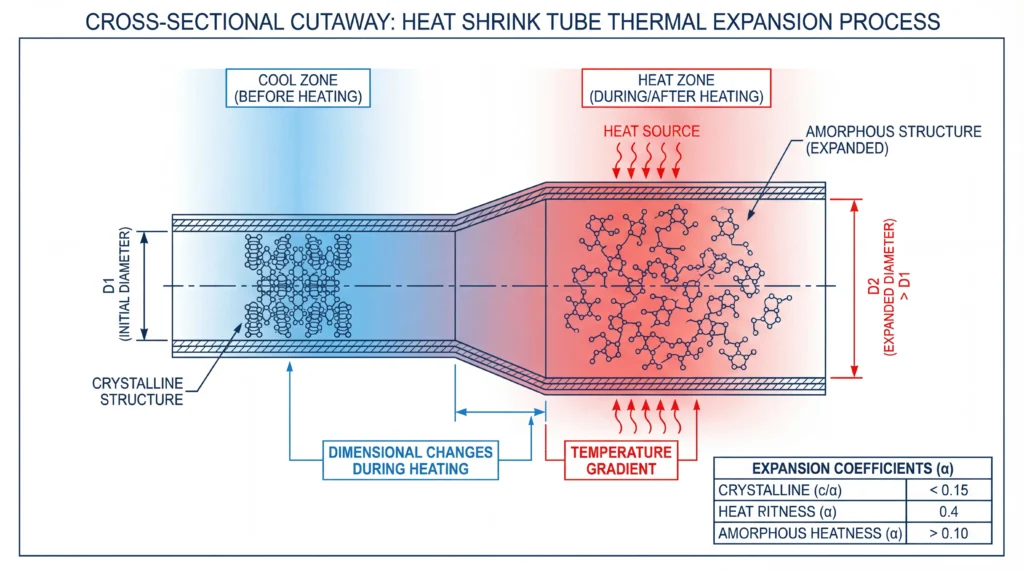
Heat shrink tubing functions based on the principle of radiation cross-linking. During manufacturing, the polymer is extruded, cross-linked (creating a 3D network of chemical bonds), heated to its crystalline melting point, expanded, and then cooled in this expanded state. When the end-user applies heat, the material “remembers” its original state and shrinks back.
Understanding the Thermal Expansion Properties of Different Heat Shrink Materials allows engineers to predict how the tubing will behave not just during installation, but throughout the lifecycle of the component, especially in environments with extreme temperature fluctuations.
Key Thermal Metrics for Engineering Selection
When evaluating materials, three specific thermal properties are paramount:
- Coefficient of Linear Thermal Expansion (CLTE): This measures the fractional change in length per degree of temperature change. A high CLTE means the material expands and contracts significantly with temperature shifts, which can cause stress on the underlying component or seal failure.
- Shrink Ratio: The ratio of the expanded diameter to the recovered diameter (e.g., 2:1, 3:1, 4:1). While not strictly “expansion,” this property dictates the material’s ability to conform to irregular shapes.
- Longitudinal Shrinkage: Often overlooked, this is the percentage the tubing shortens in length during the recovery process. High-quality manufacturing at Willele ensures this is minimized (typically <5%) to prevent exposure of the underlying cable.
Comparative Analysis of Heat Shrink Materials
Different polymers exhibit vastly different thermal expansion properties. Below is a detailed breakdown of the most common materials used in the industry.
1. Polyolefin (PO)
Polyolefin is the industry standard for general-purpose insulation. It offers a balanced profile of thermal stability and flexibility.
- Thermal Behavior: It has a moderate thermal expansion coefficient. Cross-linked polyolefin is stable up to 135°C.
- Best For: General electrical insulation, wire bundling, and color coding.
2. Polyvinyl Chloride (PVC)
PVC is a cost-effective option often used where high flexibility and lower shrink temperatures are required.
- Thermal Behavior: PVC typically has a higher thermal expansion rate than polyolefin. It is sensitive to extreme heat and can become brittle in freezing temperatures.
- Best For: Low-voltage applications, battery packs, and cost-sensitive consumer electronics.
3. Fluoropolymers (PTFE, FEP, PVDF)
For extreme environments, fluoropolymers are the superior choice.
- PTFE (Teflon): Offers the lowest coefficient of friction and exceptional thermal stability (up to 260°C). It is very stiff and difficult to shrink.
- FEP: Similar to PTFE but with a lower shrink temperature, making it easier to process while maintaining high thermal resistance.
- PVDF (Kynar): Known for high mechanical strength and abrasion resistance. It is semi-rigid and maintains its dimensions well under thermal stress.
- Best For: Aerospace, automotive engine compartments, and medical devices requiring sterilization.
4. Silicone Rubber
Silicone is unique due to its extreme flexibility and wide operating temperature range.
- Thermal Behavior: Silicone has a relatively high coefficient of thermal expansion compared to rigid plastics, but it remains elastomeric (flexible) across a massive temperature range (-75°C to 200°C).
- Best For: High-voltage insulation and environments requiring flexibility at low temperatures.
Technical Comparison Tables
To assist in material selection, we have compiled the Thermal Expansion Properties of Different Heat Shrink Materials into the following reference tables.
Table 1: Thermal Expansion Coefficients & Operating Temperatures
| Material | Operating Temp Range (°C) | Shrink Temp (°C) | Approx. CTE ($10^{-5}$/K) | Thermal Stability |
|---|---|---|---|---|
| Polyolefin (Flexible) | -55 to +135 | 90 – 100 | 10 – 15 | Good |
| PVC | -30 to +105 | 100 | 7 – 25 | Moderate |
| PVDF (Kynar) | -55 to +175 | 175 | 8 – 14 | Excellent |
| FEP | -55 to +200 | 176 | 8 – 10 | Excellent |
| PTFE | -65 to +260 | 327 – 340 | 10 – 16 | Superior |
| Silicone | -75 to +200 | 135 | 25 – 30 | Very Good |
Table 2: Application Suitability Matrix
| Feature | Polyolefin | PVC | PVDF | PTFE | Silicone |
|---|---|---|---|---|---|
| Cost | Low | Very Low | High | Very High | High |
| Flexibility | High | High | Low (Semi-rigid) | Low (Rigid) | Very High |
| Chemical Resistance | Good | Fair | Excellent | Superior | Good |
| UV Resistance | Good (Black) | Fair | Excellent | Excellent | Excellent |
Factors Affecting Thermal Performance
The performance of heat shrink tubing is not solely defined by the raw material properties. Manufacturing quality plays a pivotal role. At Willele Electric, we utilize advanced extrusion and cross-linking technology to ensure consistent wall thickness and uniform expansion properties.
1. Wall Thickness Uniformity
If the tubing wall is uneven, thermal expansion and contraction will be non-uniform. This creates “hot spots” or weak points where the tubing may split during the shrinking process or fail during thermal cycling in the field.
2. Cross-Linking Density
The degree of radiation cross-linking determines the material’s elastic memory. Insufficient cross-linking results in tubing that melts rather than shrinks, or fails to exert enough recovery force to seal tightly around the substrate.
3. Recovery Force
Different materials exert different pressures as they shrink. High-expansion materials like PVDF exert significant force, which is excellent for mechanical strain relief but could crush delicate components like fiber optic cables.
Applications and Selection Criteria
Choosing the right material involves balancing the Thermal Expansion Properties of Different Heat Shrink Materials against the environmental demands of the application.
Automotive and Aerospace
In these sectors, components are subjected to rapid thermal cycling (e.g., an engine heating up and cooling down). Materials with low CTE and high thermal stability, such as PVDF or chemically resistant Polyolefin, are preferred to prevent the tubing from loosening over time.
Electrical Infrastructure
For busbar insulation and switchgear, the primary concern is dielectric strength and longevity. Heavy-wall Polyolefin with high shrink ratios is often used here to accommodate large size differences between connectors and cables.
Sensitive Electronics
When insulating delicate sensors, the high recovery force of rigid materials can be damaging. Silicone or flexible Polyolefin are ideal choices here as they conform gently without crushing the component.

FAQ: Common Questions on Heat Shrink Thermal Properties
Q1: Why does my heat shrink tubing split when heated?
A: This often happens if the heat is applied unevenly or if the temperature exceeds the material’s rating. It can also occur if the wrong size is selected (forcing a tube to shrink beyond its maximum recoverability).
Q2: Does heat shrink tubing provide thermal insulation?
A: Yes, plastics are poor conductors of heat. However, their primary purpose is electrical insulation and environmental sealing. For thermal protection, specialized fiberglass or silicone-coated sleeves are better suited.
Q3: What is “Longitudinal Shrinkage” and why does it matter?
A: This is the percentage the tube shortens in length while shrinking in diameter. If you cut a tube to the exact length of a splice, longitudinal shrinkage might leave the ends exposed after heating. Always account for 5-10% extra length or check the spec sheet.
Q4: Can I use a standard hair dryer to shrink high-temperature materials like PTFE?
A: No. PTFE requires temperatures exceeding 325°C to shrink, which is far beyond the capacity of a hair dryer. An industrial heat gun or tunnel oven is required.
Q5: How does cold weather affect heat shrink performance?
A: Standard PVC can become brittle and crack in freezing temperatures. For outdoor or cold-storage applications, Polyolefin or Silicone are recommended due to their low-temperature flexibility.
Q6: What is the difference between 2:1 and 4:1 shrink ratio regarding thermal expansion?
A: The shrink ratio defines the mechanical capability to cover size transitions. Higher ratios (3:1, 4:1) generally require more precise control of cross-linking during manufacturing to ensure the material doesn’t tear during the extensive expansion and recovery process.
Conclusion
Selecting the correct insulation requires a thorough understanding of the Thermal Expansion Properties of Different Heat Shrink Materials. Whether you need the cost-effectiveness of PVC, the versatility of Polyolefin, or the extreme durability of PTFE, matching the material’s thermal coefficients to your application environment is key to preventing failure.
At Willele Electric, we are committed to providing high-quality, precision-manufactured heat shrink solutions for the B2B market. Our rigorous quality control ensures that every batch meets strict thermal and mechanical standards.
Ready to source high-performance heat shrink tubing? Contact the Willele engineering team today to discuss your specifications or request a sample kit.
