
Junction Box Solutions for Offshore and Marine Applications

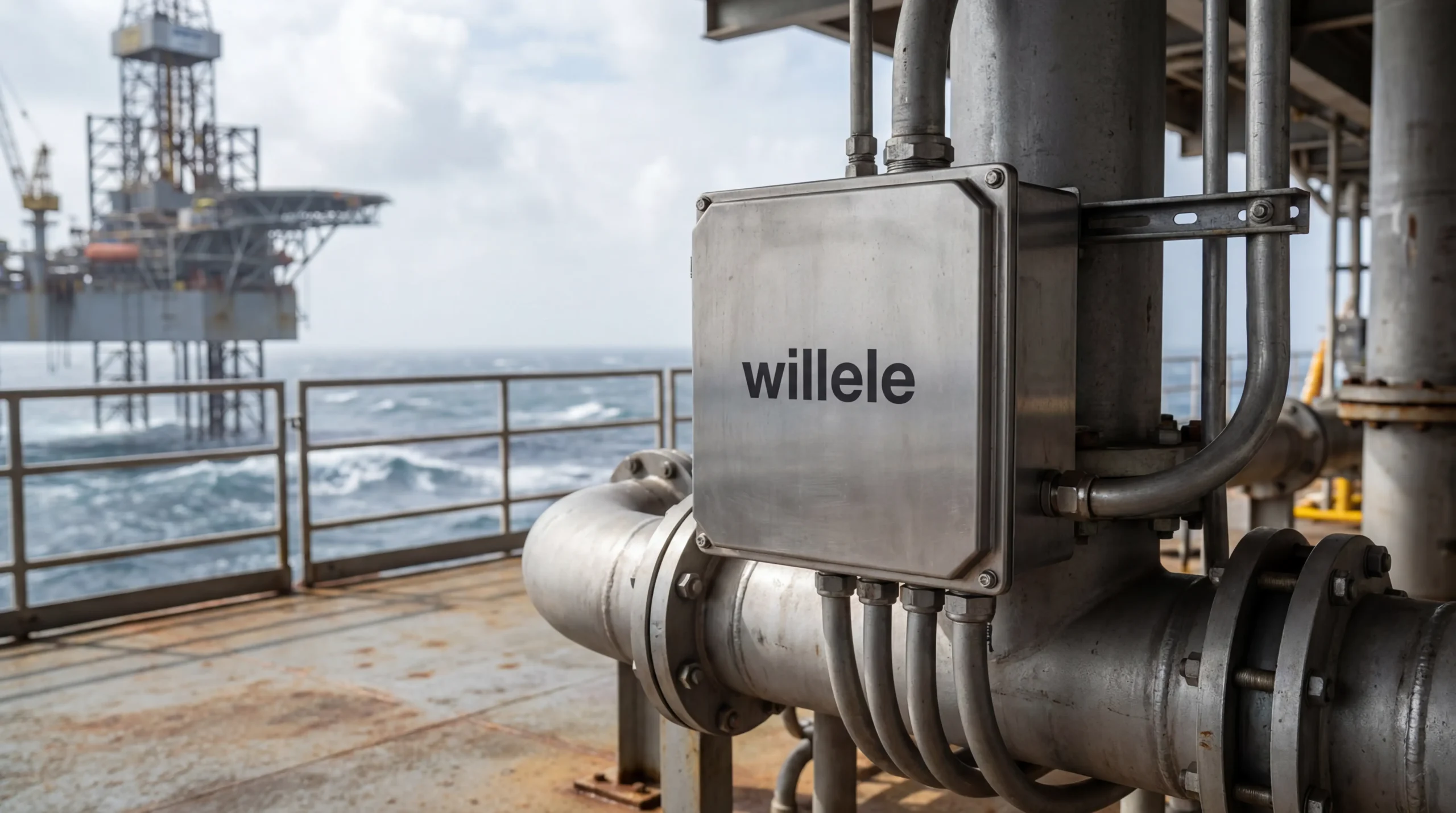
In the demanding world of offshore oil and gas exploration, renewable energy, and maritime logistics, the reliability of electrical infrastructure is non-negotiable. Junction Box Solutions for Offshore and Marine Applications represent a critical line of defense, ensuring power distribution and signal transmission continue uninterrupted despite the harshest environmental conditions on Earth.
At Willele Electric, we specialize in manufacturing high-performance electric equipment and insulation solutions, including marine-grade junction boxes and heat shrink tubes designed to withstand the corrosive fury of the open ocean. This guide explores the engineering, selection, and maintenance of junction boxes tailored for offshore platforms and marine vessels.
The Unforgiving Nature of Marine Environments
Offshore environments present a unique convergence of destructive forces that standard electrical enclosures cannot survive. Engineers must account for several critical factors when specifying equipment for these zones.
1. Salt Spray and Corrosion
The primary enemy of offshore equipment is saltwater. The constant presence of saline mist creates a highly corrosive atmosphere that rapidly degrades standard carbon steel and aluminum. This leads to structural failure and compromised ingress protection.
2. Extreme Weather and UV Exposure
From the freezing temperatures of the North Sea to the scorching sun of the Persian Gulf, marine junction boxes must endure extreme thermal cycling. Additionally, intense UV radiation can degrade seals and plastic enclosures over time, leading to brittleness and cracking.
3. Vibration and Mechanical Shock
Vessels and drilling rigs are subject to constant vibration from engines, waves, and drilling operations. Electrical connections inside a junction box must be secure, and the enclosure itself must be robust enough to resist mechanical fatigue.
Material Selection for Offshore Junction Boxes
Selecting the right material is the first step in ensuring longevity. At Willele Electric, we prioritize materials that offer the best balance of corrosion resistance, mechanical strength, and cost-efficiency.
Material Comparison Table
| Material | Corrosion Resistance | Mechanical Strength | Weight | Cost | Recommended Application |
|---|---|---|---|---|---|
| Stainless Steel (316L) | Excellent | High | Heavy | High | Exposed decks, splash zones, critical infrastructure |
| GRP (Glass Reinforced Polyester) | Excellent | Medium | Light | Medium | General deck areas, corrosive chemical storage |
| Marine Grade Aluminum | Good (with coating) | Medium | Light | Low-Medium | Sheltered areas, control rooms |
| Painted Carbon Steel | Poor (requires maintenance) | High | Heavy | Low | Indoor, dry marine environments only |
Stainless Steel 316L is the gold standard for Junction Box Solutions for Offshore and Marine Applications. Its molybdenum content provides superior resistance to pitting and crevice corrosion caused by chlorides.
Understanding Ingress Protection (IP) Ratings
In marine applications, keeping water out is paramount. The IP rating system classifies the degree of protection provided against intrusion.
IP Rating Guide for Marine Use
| IP Rating | Dust Protection | Water Protection | Suitability for Offshore |
|---|---|---|---|
| IP56 | Dust Protected | Powerful water jets | Minimum requirement for sheltered decks |
| IP66 | Dust Tight | Powerful water jets | Standard for exposed deck equipment |
| IP67 | Dust Tight | Immersion up to 1m | Required for flood-prone areas |
| IP68 | Dust Tight | Continuous immersion | Subsea applications or bilge areas |
For most topside offshore applications, IP66 is the industry standard, ensuring the box can withstand heavy seas and high-pressure cleaning.
Technical Design and Internal Components
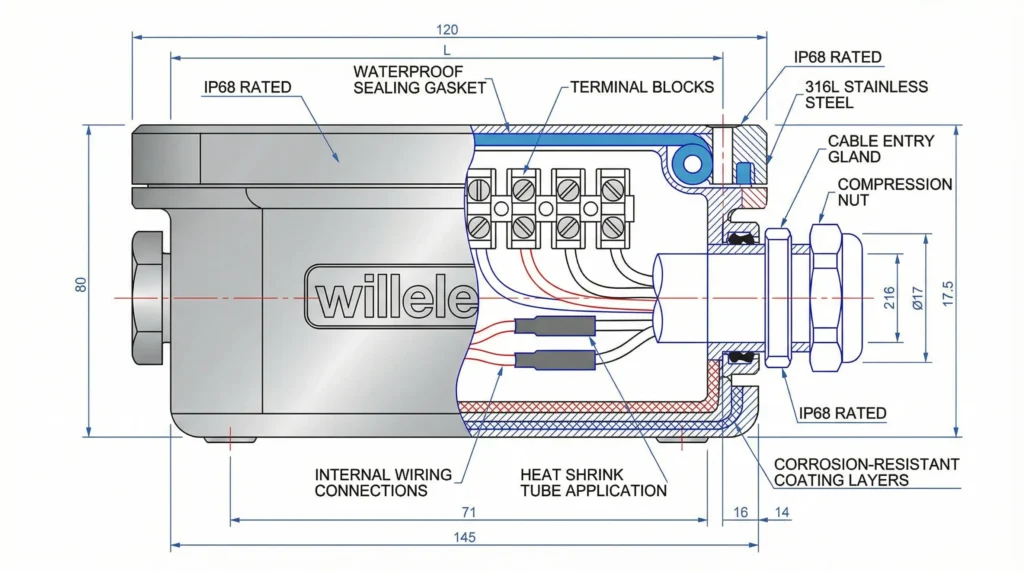
A robust exterior is useless if the internal components cannot handle the environment. Willele Electric junction boxes are engineered with internal redundancy and protection in mind.
Critical Design Features
- Captive Screws: Lid screws should be captive to prevent loss during maintenance on high platforms or over water.
- Silicone Gaskets: Unlike neoprene, silicone retains flexibility across a wider temperature range (-50°C to +180°C), ensuring the seal remains intact during thermal cycling.
- Earthing Studs: External and internal earth studs are essential for safety and preventing static buildup.
The Role of Heat Shrink Tubes in Marine Sealing
While the junction box provides the primary barrier, the cable entry points are often the weak link. This is where Willele Electric’s expertise in heat shrink technology becomes vital.
Using high-quality, adhesive-lined heat shrink tubes on cable glands and terminations adds a secondary layer of defense.
- Strain Relief: Reduces mechanical stress on the cable entry.
- Moisture Barrier: The hot-melt adhesive flows into voids, preventing moisture wicking even if the cable gland loosens slightly due to vibration.
- Insulation: Heavy-wall heat shrink tubes protect exposed conductors from accidental bridging caused by salt condensation inside the box.
Types of Marine Junction Boxes
Different zones on a rig require different certifications.
Comparison of Junction Box Types
| Type | Designation | Protection Method | Typical Use |
|---|---|---|---|
| General Purpose | Industrial | Weatherproof (IP66) | Accommodation modules, non-hazardous storage |
| Increased Safety | Ex e | Prevents arcs/sparks | Zone 1 & 2 Hazardous Areas (Lighting, Power) |
| Flameproof | Ex d | Contains explosion | Zone 1 & 2 Hazardous Areas (Switchgear, Sparking components) |
| Intrinsically Safe | Ex i | Limits energy | Instrumentation, Sensors |
For hazardous areas where explosive gases may be present (common on oil rigs), Ex e (Increased Safety) boxes made of GRP or Stainless Steel are frequently preferred over heavy Ex d boxes due to ease of installation and maintenance.
Installation Best Practices
Even the highest quality junction box will fail if installed incorrectly. Follow these guidelines to ensure system integrity:
- Correct Gland Selection: Always use marine-grade cable glands (brass or stainless steel) compatible with the cable type (armored vs. non-armored).
- Looping Cables: Create a “drip loop” in the cable before it enters the gland. This ensures water runs off the cable rather than pooling at the seal.
- Breather Drains: In environments with high humidity and temperature fluctuation, condensation will form inside the box. Install an IP66-rated breather drain at the lowest point to allow moisture to escape.
- Torque Settings: Adhere strictly to the manufacturer’s torque specifications for lid screws and terminals. Over-tightening can crush gaskets; under-tightening compromises the seal.
Maintenance and Inspection
Regular maintenance is crucial for offshore assets.
- Visual Inspection: Check for corrosion on the enclosure and salt buildup on glands.
- Seal Integrity: Inspect the gasket for cracks or compression set. Replace if necessary.
- Tightness Check: Verify terminal connections are tight to prevent hotspots, which are a fire risk.
Frequently Asked Questions (FAQ)
1. What is the difference between 304 and 316 stainless steel for marine junction boxes?
While both are stainless steel, 316 grade contains molybdenum, which drastically improves resistance to chlorides (salt). Grade 304 will eventually corrode and pit in marine environments, making 316 the mandatory choice for offshore use.
2. Can I use a standard plastic junction box on a boat?
Generally, no. Standard PVC boxes often lack UV stability and may become brittle and crack under sun exposure. For marine use, choose UV-stabilized GRP (Glass Reinforced Polyester) or Polycarbonate boxes rated for outdoor use.
3. How often should offshore junction boxes be inspected?
It depends on the classification society and company policy, but generally, a visual inspection should occur every 6 to 12 months, with a detailed close-up inspection every 3 to 4 years.
4. Why is a breather drain necessary in a waterproof box?
A completely sealed box can accumulate water due to “pumping” caused by temperature changes (air expands and contracts, drawing in moist air). A breather drain allows the pressure to equalize and condensed water to drain out while maintaining the IP rating.
5. Does Willele Electric provide custom-sized junction boxes?
Yes, Willele Electric specializes in custom manufacturing. We can provide junction boxes tailored to specific dimensions, with pre-drilled gland plates and custom terminal configurations to suit your project requirements.
6. What certifications should I look for in hazardous area junction boxes?
For international offshore waters, look for IECEx and ATEX certifications. These ensure the equipment complies with rigorous safety standards for explosive atmospheres.
Willele Electric is committed to powering the marine industry with robust, certified, and engineered solutions. Whether you need stainless steel enclosures for a drilling rig or heat shrink solutions for subsea cabling, our team is ready to assist. Contact us today to discuss your offshore project requirements.
