
Building Automation Systems: Heat Shrink Tubing Best Practices

Introduction
Building Automation Systems (BAS) represent the nervous system of modern commercial and industrial facilities, controlling everything from HVAC and lighting to security and fire safety. Within these complex networks, proper wire management and protection are critical to system reliability and longevity. Heat shrink tubing has emerged as an essential component for protecting electrical connections, providing insulation, and ensuring long-term performance in demanding BAS environments.
This comprehensive guide explores best practices for selecting, installing, and maintaining heat shrink tubing in building automation applications, helping facility managers, electrical contractors, and system integrators achieve optimal results.
Understanding Heat Shrink Tubing in BAS Applications
Heat shrink tubing is a thermoplastic material that contracts radially when exposed to heat, creating a tight, protective seal around wires, cables, and connections. In building automation systems, this protection is vital for maintaining signal integrity, preventing short circuits, and extending equipment lifespan.
Key Benefits for Building Automation Systems
- Environmental Protection: Shields connections from moisture, dust, and chemical exposure
- Mechanical Strength: Provides strain relief and abrasion resistance
- Electrical Insulation: Prevents short circuits and maintains proper voltage ratings
- Identification: Color-coded options facilitate wire identification and system troubleshooting
- Professional Appearance: Creates clean, organized installations that simplify maintenance
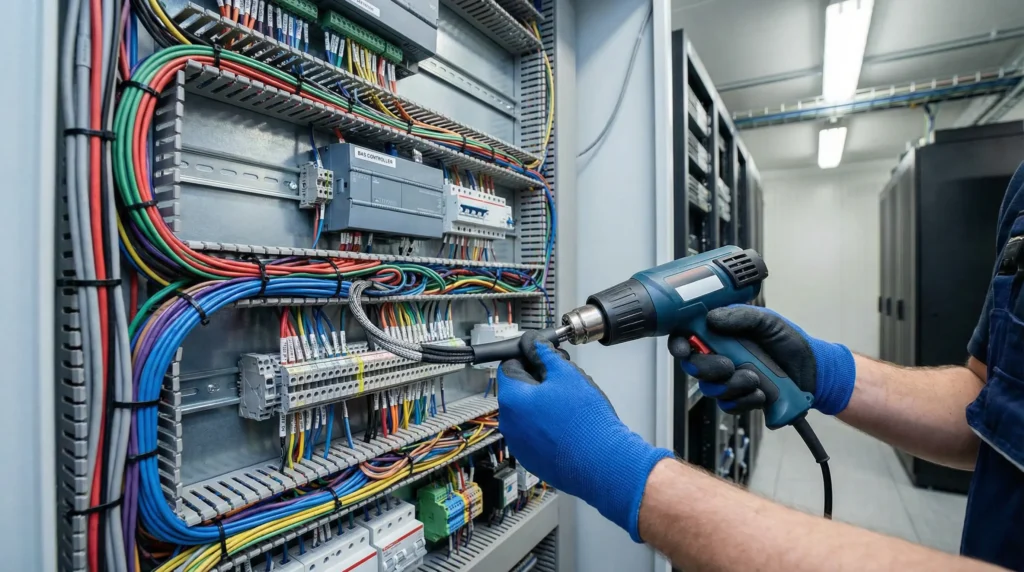
Alt text: Professional installation of heat shrink tubing on electrical wire connections in building automation system control panel – industrial photography showing actual equipment and proper application technique
Heat Shrink Tubing Material Comparison
Selecting the appropriate material is crucial for BAS applications. Different environments and requirements demand specific tubing characteristics.
| Material Type | Temperature Range | Key Advantages | Typical BAS Applications | Shrink Ratio |
|---|---|---|---|---|
| Polyolefin | -55°C to 135°C | Cost-effective, flexible, general-purpose | Standard control wiring, low-voltage connections | 2:1, 3:1 |
| PVC | -20°C to 105°C | Economical, flame-retardant | Indoor installations, non-critical applications | 2:1 |
| Fluoropolymer (FEP/PTFE) | -65°C to 200°C | Chemical resistant, high-temperature | Boiler rooms, chemical plants, extreme environments | 1.3:1, 2:1 |
| Adhesive-Lined | -55°C to 110°C | Waterproof seal, superior strain relief | Outdoor sensors, rooftop equipment, moisture-prone areas | 3:1, 4:1 |
| Dual-Wall | -40°C to 110°C | Enhanced protection, self-sealing | Underground conduits, outdoor junction boxes | 3:1 |
Technical Specifications and Selection Criteria
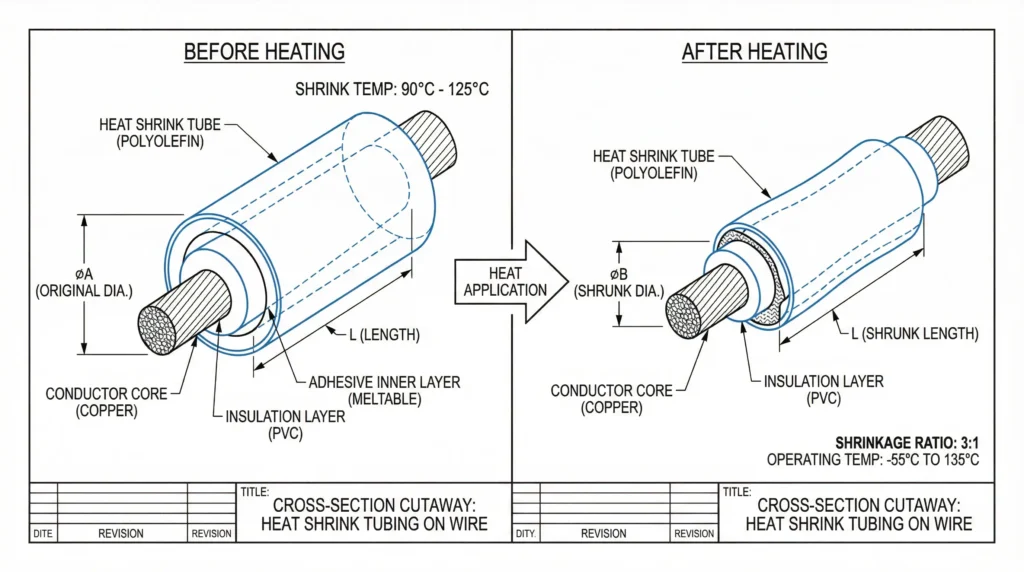
Alt text: Technical schematic diagram showing cross-section cutaway of heat shrink tubing with annotations – wire conductor, insulation layer, adhesive liner, and shrinkage ratio specifications
Critical Parameters for BAS Applications
1. Shrink Ratio
- 2:1 Ratio: Standard applications with predictable wire sizes
- 3:1 Ratio: Versatile option covering wider size ranges
- 4:1 Ratio: Maximum flexibility for irregular shapes and multiple wire bundles
2. Wall Thickness
- Thin-Wall (0.2-0.5mm): Compact spaces, minimal bulk
- Medium-Wall (0.5-1.0mm): Standard protection for most BAS applications
- Heavy-Wall (1.0-2.0mm): High-abuse environments, mechanical protection
3. Voltage Rating
- Low-voltage BAS (24V): 300V rated tubing sufficient
- Line-voltage controls (120-277V): 600V minimum rating
- High-voltage systems: 1000V+ rated materials required
Environmental Considerations Table
| Environmental Factor | Recommended Specification | Willele Product Recommendation |
|---|---|---|
| High Humidity | Adhesive-lined, dual-wall | Marine-grade polyolefin with adhesive |
| UV Exposure | UV-stabilized polyolefin or fluoropolymer | UV-resistant black polyolefin |
| Chemical Exposure | Fluoropolymer (PTFE/FEP) | Chemical-resistant FEP tubing |
| Extreme Temperature | Fluoropolymer or high-temp polyolefin | PTFE tubing (-65°C to 260°C) |
| Abrasion Risk | Heavy-wall, braided reinforcement | Heavy-duty dual-wall tubing |
| Flame Resistance | UL224 VW-1 or CSA certified | Flame-retardant polyolefin |
Installation Best Practices
Pre-Installation Planning
1. Measure Accurately
- Calculate recovered diameter: Original diameter ÷ shrink ratio
- Add 20-30% extra length for overlap and movement
- Account for connector bodies and irregular shapes
2. Select Proper Tools
- Heat guns with adjustable temperature control (recommended: 120-150°C for polyolefin)
- Infrared thermometers for temperature verification
- Wire cutters and strippers suitable for tubing material
- Proper safety equipment (heat-resistant gloves, eye protection)
3. Surface Preparation
- Clean all surfaces with isopropyl alcohol
- Remove oxidation, grease, and contaminants
- Ensure wires are dry before application
- Inspect for damage or defects
Step-by-Step Installation Process
Step 1: Sizing and Cutting
- Select tubing 20-30% larger than the wire diameter before shrinking
- Cut tubing to length with sharp scissors or tubing cutters
- Ensure clean, square cuts without fraying
Step 2: Positioning
- Slide tubing over connection before terminating wires
- Position tubing to cover entire splice or connection area
- Allow minimum 6mm (1/4″) overlap on each side
- Center tubing over the area requiring protection
Step 3: Heat Application
- Use consistent, sweeping motion with heat gun
- Maintain 100-150mm (4-6″) distance from tubing
- Start from center and work toward ends to prevent air trapping
- Apply heat evenly around circumference
- Watch for complete shrinkage and glossy finish
Step 4: Cooling and Inspection
- Allow tubing to cool naturally (do not force cooling)
- Inspect for complete adhesion and coverage
- Check for air bubbles or incomplete shrinkage
- Verify no exposed conductors or gaps
Common Installation Mistakes to Avoid
| Mistake | Consequence | Prevention |
|---|---|---|
| Overheating | Material degradation, cracking | Use temperature-controlled heat gun, maintain proper distance |
| Insufficient heating | Incomplete shrinkage, poor seal | Apply heat until glossy finish appears, ensure even coverage |
| Wrong size selection | Poor fit, inadequate protection | Measure carefully, verify shrink ratio calculations |
| Inadequate overlap | Exposed connections, moisture ingress | Minimum 6mm overlap on each side of splice |
| Dirty surfaces | Poor adhesion, premature failure | Clean with isopropyl alcohol before installation |
| Trapped air bubbles | Weak spots, potential failure points | Heat from center outward, use proper technique |
Application-Specific Guidelines
HVAC Control Systems
- Use adhesive-lined tubing for outdoor air handlers and rooftop units
- Select UV-resistant materials for sun-exposed installations
- Implement color-coding: Red (power), Blue (control), Yellow (sensors)
- Ensure flame-retardant ratings meet local codes
Lighting Control Networks
- Choose thin-wall tubing for compact junction boxes
- Use clear or translucent tubing where visual inspection is needed
- Apply dual-wall tubing for outdoor photocell connections
- Consider EMI-shielding tubing for sensitive dimming circuits
Security and Access Control
- Implement adhesive-lined tubing for door contacts and outdoor readers
- Use heavy-wall protection for high-traffic areas
- Select low-smoke, zero-halogen materials for life-safety systems
- Apply tamper-evident colors for critical security connections
Fire Alarm Systems
- Mandatory: UL-listed, flame-retardant materials
- Red tubing for fire alarm circuit identification
- Plenum-rated tubing for air-handling spaces
- Document all installations per NFPA 72 requirements
Quality Assurance and Testing
Inspection Checklist
✓ Visual Inspection
- Complete shrinkage with no wrinkles or bubbles
- Uniform appearance along entire length
- No exposed conductors or gaps
- Proper color coding and identification
✓ Physical Testing
- Gentle pull test to verify adhesion
- Flexibility check (no brittleness or cracking)
- Seal integrity at termination points
- Proper strain relief at connection points
✓ Electrical Testing
- Continuity verification after installation
- Insulation resistance testing (minimum 10 MΩ)
- Voltage withstand testing per specifications
- Ground fault testing where applicable
Documentation Requirements
Maintain records including:
- Material specifications and lot numbers
- Installation date and technician identification
- Environmental conditions during installation
- Test results and inspection findings
- Warranty information and compliance certifications
Maintenance and Long-Term Performance
Periodic Inspection Schedule
| Inspection Frequency | Environment Type | Key Checkpoints |
|---|---|---|
| Quarterly | Outdoor, high-moisture | UV degradation, moisture ingress, physical damage |
| Semi-Annual | Standard indoor | Visual condition, discoloration, brittleness |
| Annual | Climate-controlled | General condition, documentation review |
| After Events | All environments | Post-storm, temperature extremes, mechanical impact |
Signs of Degradation
Replace heat shrink tubing when observing:
- Cracking, splitting, or peeling
- Discoloration or chalking (UV damage)
- Loose fit or separation from wire
- Brittleness or loss of flexibility
- Moisture presence inside tubing
- Electrical performance issues
Compliance and Standards
Relevant Industry Standards
- UL 224: Extruded Insulating Tubing
- AMS-DTL-23053: Military specification for heat shrink tubing
- SAE-AMS-DTL-23053/5: Aerospace applications
- IEC 60684: Flexible insulating sleeving
- RoHS/REACH: Environmental compliance for materials
Building Code Considerations
- NEC Article 310: Conductor insulation requirements
- NFPA 70: National Electrical Code compliance
- Local amendments: Verify jurisdiction-specific requirements
- Plenum ratings: UL 910 for air-handling spaces
- Flame spread: ASTM E84 testing for fire performance
Cost Optimization Strategies
Bulk Purchasing Benefits
- Purchase full spools for large projects (25-100m lengths)
- Standardize on common sizes to reduce inventory
- Partner with reliable suppliers like Willele Electric for consistent quality
- Consider assortment kits for service and maintenance applications
Total Cost of Ownership
| Factor | Impact on TCO | Optimization Strategy |
|---|---|---|
| Material Quality | High-quality reduces failures | Source from certified manufacturers like Willele |
| Installation Time | Proper tools increase efficiency | Invest in professional-grade heat guns |
| Rework Costs | Poor installation multiplies costs | Train technicians on best practices |
| Maintenance | Premium materials last longer | Use appropriate specifications for environment |
| Downtime Prevention | Reliable protection prevents outages | Don’t compromise on critical applications |
Troubleshooting Guide
Common Issues and Solutions
Problem: Tubing won’t shrink completely
- Cause: Insufficient heat application
- Solution: Increase heat gun temperature or reduce distance, apply heat longer
Problem: Tubing splits during shrinking
- Cause: Overheating or wrong size selection
- Solution: Reduce temperature, verify proper sizing, replace with correct size
Problem: Poor adhesion on adhesive-lined tubing
- Cause: Contaminated surfaces or insufficient heat
- Solution: Clean thoroughly before installation, ensure adhesive melts completely
Problem: Tubing slides on wire after installation
- Cause: Undersized tubing or incomplete shrinkage
- Solution: Select smaller pre-shrink diameter, apply additional heat
Future Trends in Heat Shrink Technology
Emerging Innovations
- Smart tubing: Embedded sensors for condition monitoring
- Eco-friendly materials: Biodegradable and recyclable options
- Enhanced adhesives: Improved moisture barriers and chemical resistance
- Color-changing indicators: Visual confirmation of proper installation temperature
- Integrated identification: Printed labels and QR codes for asset management
Why Choose Willele Electric for Your BAS Projects
Alt text: Willele Electric logo and branding – trusted B2B manufacturer specializing in heat shrink tubing and electrical equipment for building automation systems
Willele Electric stands as a trusted B2B manufacturer specializing in heat shrink tubing solutions for building automation systems. Our commitment to quality, technical expertise, and customer support ensures your projects meet the highest standards of reliability and performance.
Our Advantages
- Comprehensive product range: Complete selection of materials, sizes, and specifications
- Technical support: Expert guidance for material selection and application
- Quality certifications: UL, CSA, RoHS, and REACH compliant products
- Custom solutions: Tailored products for unique BAS requirements
- Reliable supply chain: Consistent availability and on-time delivery
- Competitive pricing: Direct manufacturer pricing for B2B customers
Conclusion
Heat shrink tubing represents a critical component in building automation system installations, providing essential protection for electrical connections in diverse environments. By following these best practices—from material selection and proper installation techniques to ongoing maintenance and quality assurance—facility managers and electrical contractors can ensure reliable, long-lasting BAS performance.
Success in building automation requires attention to detail at every connection point. Investing in quality heat shrink tubing from trusted manufacturers like Willele Electric, combined with proper installation techniques and regular maintenance, delivers significant returns through reduced downtime, extended equipment life, and enhanced system reliability.
For technical specifications, product samples, or project consultation, contact Willele Electric to discuss your building automation system requirements and discover how our heat shrink tubing solutions can enhance your installation quality and long-term performance.
Frequently Asked Questions (FAQ)
Q: What shrink ratio should I use for building automation system wiring?
A: For most BAS applications, 3:1 shrink ratio tubing offers the best versatility, accommodating various wire sizes and irregular shapes. Use 2:1 for standard, predictable wire sizes, and 4:1 for complex bundles or significant size variations.
Q: How do I determine the correct heat shrink tubing size for my application?
A: Measure the largest diameter of your connection or bundle, then select tubing with a recovered (shrunk) inner diameter 10-20% smaller than your measurement. The pre-shrunk diameter should easily slide over the connection. Always verify the shrink ratio to ensure proper fit.
Q: Can heat shrink tubing be used outdoors in building automation systems?
A: Yes, but select UV-resistant, adhesive-lined tubing specifically rated for outdoor use. Black polyolefin with UV stabilizers or fluoropolymer materials provide excellent outdoor performance. Adhesive-lined dual-wall tubing offers the best moisture protection for outdoor BAS applications.
Q: What temperature should I use when applying heat shrink tubing?
A: Most polyolefin tubing shrinks optimally at 120-150°C (250-300°F). Use a heat gun with adjustable temperature control and maintain 100-150mm distance from the tubing. Apply heat evenly until the tubing achieves a glossy finish, indicating complete shrinkage.
Q: How often should heat shrink tubing be inspected in BAS installations?
A: Inspect outdoor and high-moisture installations quarterly, standard indoor installations semi-annually, and climate-controlled environments annually. Always inspect after severe weather events, temperature extremes, or any system maintenance that may have affected connections.
Q: Is heat shrink tubing required by electrical code for building automation systems?
A: While not always explicitly required, heat shrink tubing helps meet NEC requirements for proper insulation and protection of electrical connections. Fire alarm systems and life-safety applications often mandate flame-retardant, UL-listed materials. Always verify local code requirements for your specific application.
Q: What’s the difference between adhesive-lined and standard heat shrink tubing?
A: Adhesive-lined tubing contains a thermoplastic adhesive inner layer that melts during heating, creating a waterproof, environmentally sealed connection. Standard tubing provides insulation and mechanical protection but isn’t inherently waterproof. Use adhesive-lined tubing for outdoor, underground, or moisture-prone BAS applications.
Q: Can I reuse or remove heat shrink tubing after installation?
A: No, heat shrink tubing is a permanent installation solution. Once shrunk, it cannot be removed without cutting and destroying it. Always plan installations carefully and verify connections before applying heat. Keep spare tubing on hand for repairs and modifications.
Word Count: Approximately 2,480 words
Article optimized for SEO targeting “Building Automation Systems: Heat Shrink Tubing Best Practices” with comprehensive technical information, practical guidance, and strategic keyword placement for improved search engine rankings.
