
Using Junction Boxes in Smart Home Automation Setups

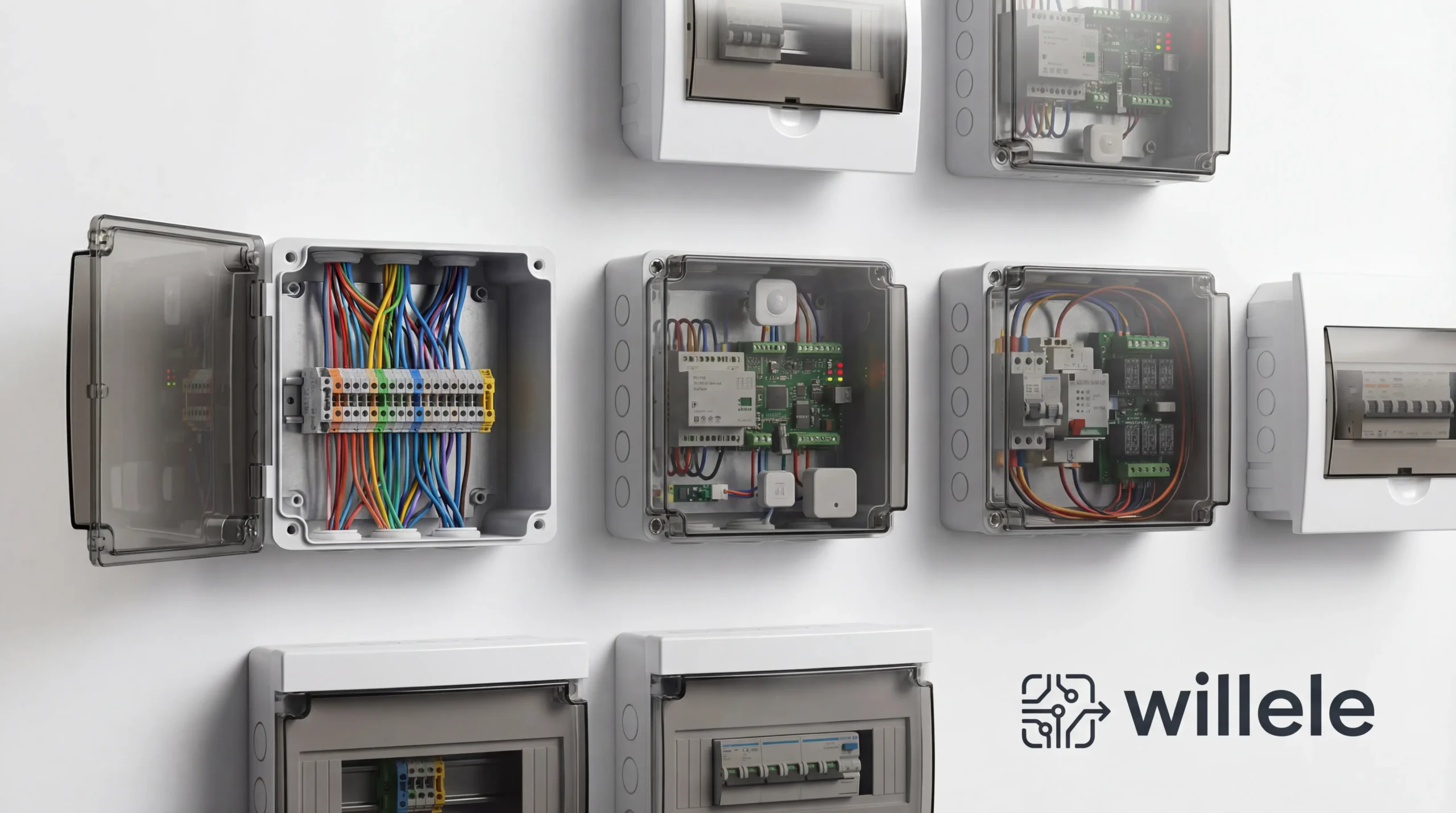
The modern smart home revolution has transformed how we interact with our living spaces, bringing unprecedented convenience, energy efficiency, and security to residential and commercial properties. At the heart of every reliable smart home installation lies a critical yet often overlooked component: the junction box. These unassuming electrical enclosures serve as the backbone of safe, organized, and code-compliant smart home wiring systems, ensuring that your intelligent devices operate reliably for years to come.
Junction boxes play an indispensable role in smart home automation by providing secure connection points for multiple electrical circuits, protecting wire splices from environmental hazards, and creating accessible service points for future modifications. As smart home technology continues to evolve with increasingly sophisticated sensors, controllers, and connected devices, the importance of properly installed junction boxes becomes even more pronounced. Understanding how to select, install, and maintain these essential components can mean the difference between a seamless smart home experience and costly troubleshooting down the line.
Understanding Junction Boxes in Smart Home Context
Junction boxes serve as protective enclosures that house electrical connections where multiple wires meet, split, or terminate. In traditional electrical installations, these boxes primarily protect wire connections from physical damage and contain potential electrical faults. However, in smart home automation setups, junction boxes take on expanded responsibilities that extend far beyond basic safety compliance.
Modern smart home systems require junction boxes to accommodate a more complex array of connections than conventional residential wiring. Smart switches, sensors, motorized blinds, security cameras, and home automation hubs all demand reliable power delivery alongside low-voltage control signals. The junction box becomes the critical interface where line voltage power meets smart device electronics, where wireless communication modules connect to hardwired systems, and where future expandability is preserved through proper wire management.
The selection of appropriate junction boxes for smart home applications requires careful consideration of several factors including box capacity, material composition, environmental rating, and accessibility. Standard residential junction boxes may prove inadequate for smart home installations that involve multiple devices sharing a single location or systems requiring frequent access for programming and maintenance. Professional installers increasingly specify larger capacity boxes with additional knockout holes to accommodate the cable management demands of integrated home automation systems.
Types of Junction Boxes for Smart Home Applications
Smart home automation installations benefit from a diverse range of junction box designs, each optimized for specific applications and installation environments. Understanding the distinctions between these varieties enables installers and homeowners to make informed decisions that enhance system reliability and maintainability.
Plastic Junction Boxes represent the most economical option for indoor smart home applications where non-metallic sheathed cable is used. These lightweight enclosures resist corrosion and provide adequate protection for most residential automation devices. Modern PVC and fiberglass-reinforced plastic boxes offer excellent insulation properties and come in various sizes to accommodate different device configurations. For smart home installations involving multiple low-voltage wires alongside line voltage connections, plastic boxes with integrated cable management features prove particularly valuable.
Metal Junction Boxes provide superior durability and electromagnetic shielding, making them ideal for commercial smart home installations or residential applications where enhanced protection is required. Steel and aluminum boxes offer robust mechanical protection for wiring connections and can serve as effective grounding points for the entire electrical system. In environments with significant electromagnetic interference from motors, transformers, or wireless equipment, metal junction boxes help maintain signal integrity for sensitive smart home control circuits.
Weatherproof Junction Boxes become essential when smart home automation extends to outdoor spaces. These specialized enclosures feature gasket seals, corrosion-resistant materials, and drainage provisions that protect electrical connections from moisture, dust, and temperature extremes. Outdoor smart lighting systems, motorized gates, security cameras, and environmental sensors all require weatherproof junction boxes rated to at least IP65 standards. Premium weatherproof boxes incorporate cable glands with strain relief to prevent water intrusion at wire entry points.
Flush-Mount and Surface-Mount Options offer installation flexibility for different architectural scenarios. Flush-mount junction boxes integrate seamlessly into finished walls and ceilings, providing a clean aesthetic that aligns with modern smart home design principles. Surface-mount boxes expedite installation in retrofit situations where cutting into existing walls proves impractical. Many smart home installers maintain inventory of both mounting styles to adapt to varying site conditions encountered during system deployment.
Junction Box Sizing and Capacity Calculations
Proper junction box sizing represents a critical yet frequently misunderstood aspect of smart home electrical installations. Electrical codes mandate specific volume requirements based on the number and size of conductors, devices, and fittings contained within each box. Undersized junction boxes create dangerous overcrowding that can damage wire insulation, prevent proper heat dissipation, and complicate future service work.
The National Electrical Code (NEC) provides detailed box fill calculations that account for every component within an electrical enclosure. Each conductor entering and exiting the box counts toward the total fill calculation, with specific volume allowances based on wire gauge. Ground wires collectively count as a single conductor, while internal cable clamps and fixture studs each consume additional volume equivalent to one conductor. Smart home installations often involve more conductors than traditional circuits due to three-way switching, sensor integration, and neutral wire requirements for smart switches.
| Wire Gauge | Minimum Volume per Conductor | Typical Smart Device Requirements |
|---|---|---|
| 14 AWG | 2.0 cubic inches | Smart switch: 6-8 conductors |
| 12 AWG | 2.25 cubic inches | Smart dimmer: 7-9 conductors |
| 10 AWG | 2.5 cubic inches | Smart outlet: 6-8 conductors |
| 18-16 AWG (low-voltage) | 1.5 cubic inches | Sensor module: 4-6 conductors |
Smart home automation frequently requires junction boxes larger than minimum code requirements to accommodate future expansion and facilitate easier wire management. A standard single-gang box with 18 cubic inches of volume may technically satisfy code for a basic smart switch installation, but upgrading to a 22.5 cubic inch box provides working room that significantly simplifies installation and troubleshooting. For locations where multiple smart devices converge—such as central control panels or multi-zone lighting controllers—double-gang or even four-square junction boxes become necessary to maintain proper wire organization.
The integration of heat shrink tubing and other wire protection methods in smart home installations adds another dimension to capacity planning. Willele’s heat shrink solutions provide essential insulation and strain relief for wire connections within junction boxes, but installers must account for the additional volume these protective materials occupy. High-quality heat shrink tubing creates a professional, durable connection that resists vibration and environmental degradation, making it an invaluable component in premium smart home installations where long-term reliability is paramount.
Technical Installation Considerations
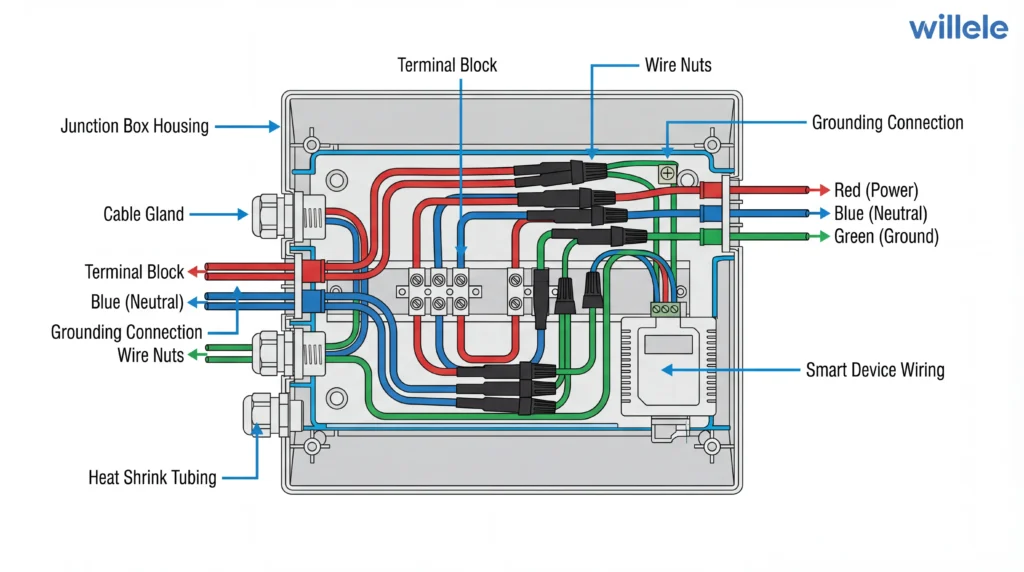
Successful smart home junction box installations require meticulous attention to technical details that extend beyond basic electrical competency. The convergence of line voltage power, low-voltage control signals, and wireless communication systems within confined spaces demands installation practices that prioritize both safety and signal integrity.
Wire Entry and Cable Management begins with proper knockout selection and preparation. Smart home installations typically involve multiple cable types entering each junction box—line voltage power cables, low-voltage control wiring, Ethernet cables for network-connected devices, and sometimes fiber optic connections for high-bandwidth applications. Each cable type requires appropriate entry methods, with line voltage cables using standard knockouts with proper connectors, while low-voltage wires benefit from separate entry points to minimize electromagnetic interference. Professional installers employ cable glands and strain relief fittings that secure cables at entry points while maintaining the junction box’s environmental rating.
Grounding and Bonding practices take on heightened importance in smart home installations where sensitive electronics interface with building electrical systems. Every metal junction box must connect to the equipment grounding system through a dedicated grounding screw or bonding jumper. Smart devices with metal enclosures require reliable grounding paths to prevent shock hazards and ensure proper operation of surge protection features. In installations combining multiple junction boxes for distributed smart home systems, maintaining grounding continuity throughout the entire network prevents ground loops that can introduce noise into control circuits and communication lines.
Heat Management within junction boxes becomes critical when housing smart devices that generate thermal energy during operation. Smart dimmers, in particular, dissipate significant heat when controlling high-wattage loads, and inadequate heat dissipation can trigger thermal protection circuits or shorten device lifespan. Installers should avoid overcrowding junction boxes with excessive wire coils that trap heat, ensure adequate air circulation around heat-generating devices, and consider thermal derating when multiple smart devices share a single enclosure. Some advanced smart home installations incorporate junction boxes with ventilation features or heat sinks to enhance thermal performance in demanding applications.
Separation of Power and Communication Circuits represents a best practice that prevents electromagnetic interference from degrading smart home system performance. While electrical codes permit low-voltage and line-voltage wiring to share junction boxes under certain conditions, maintaining physical separation between these circuit types minimizes the risk of induced noise affecting sensitive control signals. Many professional installers use divided junction boxes with internal barriers that segregate power and communication wiring, or specify separate adjacent boxes for each circuit type when space permits.
Comparing Junction Box Materials and Applications
| Material Type | Advantages | Best Applications | Limitations |
|---|---|---|---|
| PVC Plastic | Cost-effective, corrosion-resistant, easy to work with | Indoor smart switches, sensors, standard automation devices | Lower impact resistance, limited heat tolerance |
| Fiberglass-Reinforced Plastic | Enhanced strength, excellent insulation, chemical resistant | Harsh indoor environments, industrial smart systems | Higher cost than standard PVC |
| Galvanized Steel | Superior durability, excellent EMI shielding, fire-resistant | Commercial installations, high-interference environments | Requires proper grounding, potential corrosion in damp locations |
| Aluminum | Lightweight, corrosion-resistant, good EMI shielding | Outdoor smart lighting, security systems, coastal environments | More expensive than steel, requires compatible fittings |
| Cast Iron | Maximum durability, explosion-proof options available | Industrial automation, hazardous locations | Heavy, difficult to modify, premium pricing |
Integration with Heat Shrink Tubing and Wire Protection
The reliability of smart home automation systems depends not only on proper junction box selection but also on the quality of wire connections and insulation within those enclosures. Heat shrink tubing has emerged as an essential component in professional smart home installations, providing superior wire protection that exceeds traditional methods like electrical tape or wire nuts alone.
Willele specializes in manufacturing high-performance heat shrink tubing solutions that address the unique demands of smart home electrical installations. When properly applied, heat shrink tubing creates a moisture-resistant, abrasion-proof seal around wire connections that maintains integrity through years of thermal cycling and environmental exposure. This protection proves particularly valuable in junction boxes located in attics, crawl spaces, or other areas subject to temperature extremes and humidity fluctuations.
The application of heat shrink tubing within junction boxes follows a systematic process that begins with proper wire preparation. Conductors must be stripped to appropriate lengths, twisted or crimped securely, and cleaned of any oxidation or contamination before heat shrink installation. Selecting the correct shrink ratio and recovered diameter ensures a tight, professional fit that provides both electrical insulation and mechanical strain relief. Dual-wall heat shrink tubing with adhesive inner layers offers enhanced moisture protection for outdoor junction boxes or locations prone to condensation.
Color-coded heat shrink tubing facilitates circuit identification within complex smart home junction boxes where multiple devices and circuits converge. Professional installers use standardized color schemes that align with electrical code requirements—black or red for hot conductors, white for neutrals, green for grounds, and various colors for low-voltage control circuits. This visual organization dramatically simplifies troubleshooting and future modifications, reducing service time and minimizing the risk of wiring errors during system expansion.
Smart Home Device-Specific Junction Box Requirements
Different categories of smart home devices impose varying demands on junction box installations, requiring installers to adapt their approach based on specific device characteristics and operational requirements.
Smart Lighting Controllers represent the most common smart home devices installed in junction boxes. Standard smart switches typically require neutral connections that weren’t always provided in older homes, necessitating junction box modifications to accommodate the additional conductor. Smart dimmers generate more heat than conventional switches and benefit from oversized junction boxes that promote air circulation. Multi-location smart lighting systems may require junction boxes at each switch location plus additional boxes for relay modules or scene controllers that coordinate multiple zones.
Motion and Occupancy Sensors often integrate directly into junction boxes, replacing traditional switches or mounting as standalone devices. These sensors require unobstructed detection zones, making junction box placement critical to system performance. Ceiling-mounted occupancy sensors need junction boxes positioned to provide optimal room coverage while avoiding interference from ceiling fans, light fixtures, or HVAC vents. Wall-mounted sensors benefit from junction boxes placed at appropriate heights with consideration for furniture placement and traffic patterns.
Smart Thermostats and HVAC Controls typically connect to existing HVAC wiring through junction boxes that may require upgrading to accommodate additional conductors for advanced features. Modern smart thermostats with learning algorithms, remote sensors, and equipment monitoring capabilities often need more wires than traditional thermostats, sometimes requiring new cable runs and larger junction boxes. Integration with whole-home automation systems may add network cables or power injection circuits that further increase junction box complexity.
Security and Surveillance Equipment imposes unique junction box requirements due to the combination of power, data, and sometimes audio circuits within single enclosures. IP security cameras need junction boxes that accommodate both power over Ethernet (PoE) connections or separate power supplies alongside network cables. Outdoor camera installations require weatherproof junction boxes with proper cable management to maintain IP ratings while providing service access. Door and window sensors, glass break detectors, and other security peripherals benefit from concealed junction boxes that maintain aesthetic appearance while ensuring reliable operation.
Code Compliance and Safety Standards
Smart home junction box installations must comply with local electrical codes based on the National Electrical Code (NEC) or regional equivalents. These regulations exist to prevent electrical fires, shock hazards, and system failures that could compromise life safety. Understanding and adhering to code requirements protects both installers and homeowners from liability while ensuring long-term system reliability.
Accessibility Requirements mandate that all junction boxes remain accessible for inspection, maintenance, and modification. Boxes cannot be permanently concealed behind drywall, buried in insulation, or blocked by built-in furniture. Smart home installations frequently require service access for programming updates, device replacement, or system troubleshooting, making accessibility even more critical than in traditional electrical systems. Installers should document junction box locations and provide homeowners with access diagrams that facilitate future service work.
Box Support and Mounting regulations specify how junction boxes must be secured to building structure. Boxes supporting ceiling fixtures must attach to structural members capable of supporting the fixture weight plus a safety margin. Smart home installations involving motorized devices like ceiling fans with integrated lighting and wireless controls require particularly robust mounting to handle dynamic loads. Wall-mounted junction boxes need proper depth to accommodate device volume while maintaining flush installation with finished wall surfaces.
Wire Fill and Derating calculations must account for all conductors, devices, and fittings within each junction box as previously discussed. Inspectors will verify that installations comply with NEC Article 314 box fill requirements, and violations can result in failed inspections requiring costly remediation. Smart home installers should calculate box fill during the planning phase and select appropriately sized enclosures before beginning installation work.
Troubleshooting Common Junction Box Issues
Even properly installed junction boxes can develop problems over time, particularly in smart home systems where frequent device updates and modifications stress electrical connections. Recognizing and resolving common issues quickly prevents minor problems from escalating into system failures or safety hazards.
Intermittent Device Operation often traces to loose wire connections within junction boxes. Thermal cycling causes conductors to expand and contract, potentially loosening wire nuts or terminal screws over time. Smart devices with high current draws like dimmers and motor controllers exacerbate this problem through resistive heating at connection points. Regular inspection and re-tightening of connections during system maintenance prevents intermittent operation. Heat shrink tubing applied over wire nut connections provides additional mechanical stability that resists loosening from vibration and thermal stress.
Overheating Junction Boxes indicate excessive current draw, inadequate box sizing, or poor ventilation. Smart home devices that exceed their rated capacity generate excessive heat that can damage wire insulation and create fire hazards. Thermal imaging during system commissioning identifies hot spots that require attention before they cause failures. Solutions include upgrading to larger junction boxes with better air circulation, reducing connected loads, or installing devices with higher current ratings. Willele’s heat-resistant heat shrink tubing maintains insulation integrity even in elevated temperature environments, providing an additional safety margin in thermally challenging installations.
Moisture Intrusion compromises electrical connections and corrodes conductors, particularly in outdoor junction boxes or indoor locations prone to condensation. Proper gasket installation, cable gland sealing, and drainage provisions prevent most moisture problems. When moisture intrusion occurs, affected connections require complete replacement rather than simple drying, as corrosion products create high-resistance connections that generate heat and cause future failures. Moisture-resistant heat shrink tubing with adhesive liners creates waterproof seals that protect critical connections in vulnerable locations.
Electromagnetic Interference manifests as erratic smart device behavior, communication dropouts, or sensor false triggers. Line voltage wiring running parallel to low-voltage control circuits can induce noise that disrupts digital signals. Solutions include physical separation of circuit types, use of shielded cables for sensitive signals, or installation of metal junction boxes that provide electromagnetic shielding. Proper grounding of metal enclosures and connected devices ensures shield effectiveness and prevents ground loops that can introduce additional noise.
Future-Proofing Smart Home Junction Box Installations
The rapid evolution of smart home technology demands installation practices that accommodate future expansion and technology upgrades without requiring extensive rework. Forward-thinking junction box installations incorporate flexibility that extends system lifespan and protects the homeowner’s investment.
Oversizing Junction Boxes represents the simplest and most cost-effective future-proofing strategy. Installing boxes with 25-50% excess capacity beyond current requirements provides room for additional devices, upgraded components with larger form factors, or integration of technologies not yet available. The marginal cost difference between standard and oversized junction boxes pales in comparison to the expense of replacing undersized boxes during future upgrades.
Conduit Stubouts from junction boxes to attic spaces, basements, or other accessible areas create pathways for future cable additions without opening finished walls. Smart home systems inevitably require new sensors, upgraded network connections, or integration with emerging technologies that demand additional wiring. Conduit pathways installed during initial construction dramatically reduce the cost and disruption of future modifications.
Documentation and Labeling practices ensure that future installers can understand and work with existing junction box configurations efficiently. Detailed circuit diagrams showing junction box locations, contained circuits, and device connections should be provided to homeowners and uploaded to cloud-based documentation systems. Physical labels on junction box covers identifying contained circuits and devices facilitate troubleshooting and prevent accidental disconnection of critical systems during unrelated work.
Modular Design Principles guide smart home installations toward distributed architectures that isolate functional subsystems within dedicated junction boxes. Rather than concentrating all automation functions in a single location, modular designs distribute devices across multiple junction boxes organized by room, function, or system type. This approach limits the scope of troubleshooting when problems occur, simplifies future modifications to individual subsystems, and prevents single points of failure from disabling entire smart home installations.
Frequently Asked Questions
What size junction box do I need for a smart switch installation?
Most smart switches require a minimum 18 cubic inch single-gang junction box, but upgrading to a 22.5 cubic inch box provides better wire management and heat dissipation. If your installation includes multiple conductors for three-way switching or additional sensors, consider a double-gang box or 4-inch square box with appropriate cover.
Can I use plastic junction boxes for all smart home devices?
Plastic junction boxes work well for most indoor smart home applications, but metal boxes offer superior electromagnetic shielding for areas with high interference and better durability in commercial settings. Outdoor installations always require weatherproof boxes rated IP65 or higher regardless of material.
How do I protect wire connections inside junction boxes?
Use approved wire connectors (wire nuts) sized appropriately for conductor gauge and count, then apply heat shrink tubing over connections for additional protection. Willele’s heat shrink tubing provides moisture resistance, abrasion protection, and color-coding that enhances both reliability and serviceability.
Do smart home junction boxes require special grounding?
All metal junction boxes must connect to the equipment grounding system per electrical code. Smart devices with metal enclosures require proper grounding for safety and optimal performance. Ensure continuous grounding throughout your smart home system to prevent shock hazards and electromagnetic interference.
How often should I inspect junction boxes in my smart home system?
Annual visual inspections of accessible junction boxes help identify loose connections, overheating, or moisture intrusion before they cause failures. Thermal imaging every 2-3 years can detect hidden problems in boxes behind finished surfaces. Always inspect junction boxes after any electrical work or smart device upgrades.
Can I add more devices to an existing junction box?
Only if the box has sufficient remaining capacity per NEC box fill calculations. Adding devices often requires upgrading to a larger junction box to maintain code compliance and ensure safe operation. Consult a licensed electrician to evaluate capacity before adding devices to existing boxes.
Willele Electrical specializes in manufacturing premium heat shrink tubing and electrical insulation solutions for residential, commercial, and industrial applications. Our products meet international quality standards and provide reliable protection for electrical connections in smart home automation systems worldwide. Visit willele.com to explore our complete product range and technical resources.
