
Environmental Considerations When Installing Waterproof Wire Nuts

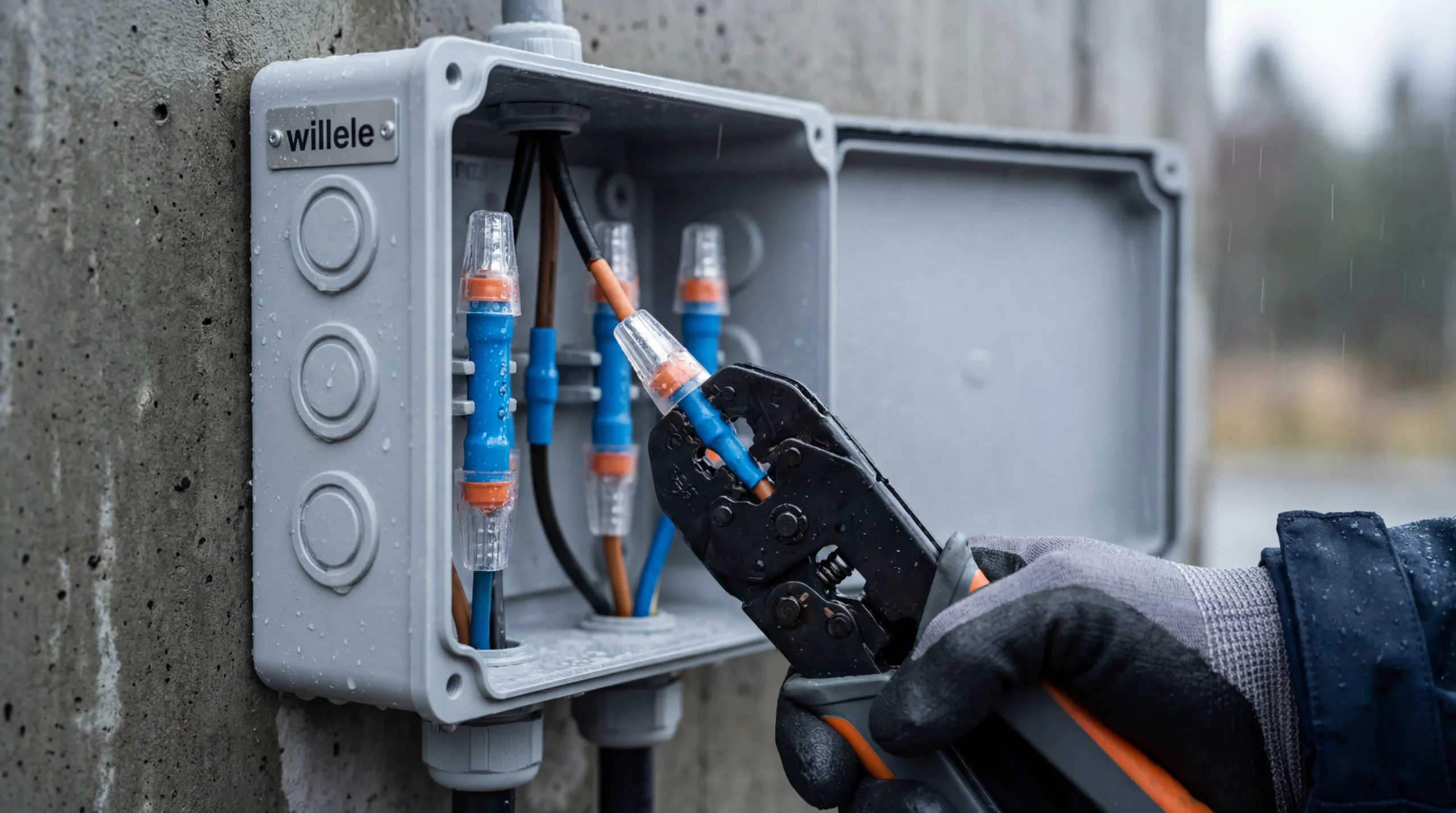
Waterproof wire nuts represent a critical advancement in electrical connection technology, particularly for applications where environmental factors pose significant challenges to system reliability and safety. As electrical installations increasingly extend into outdoor, underground, and moisture-prone environments, understanding the environmental considerations during installation becomes essential for ensuring long-term performance and preventing costly failures. This comprehensive guide examines the key environmental factors that influence waterproof wire nut installation, helping electrical professionals and contractors make informed decisions that protect both their installations and their investments.
Understanding Waterproof Wire Nuts and Environmental Protection
Waterproof wire nuts are specialized electrical connectors engineered with integrated moisture barriers that seal wire connections against water, humidity, dust, and environmental contaminants. Unlike standard wire nuts designed exclusively for dry, indoor environments, waterproof variants incorporate advanced sealing technologies—including silicone gel filling, adhesive-lined heat shrink tubing, or grease barriers—that create robust protection against moisture ingress and corrosion.
The environmental protection capabilities of these connectors are typically measured using Ingress Protection (IP) ratings, which quantify their resistance to solid particles and liquids. Professional-grade waterproof wire nuts commonly feature IP65, IP67, or IP68 ratings, indicating their suitability for outdoor installations, damp locations, and even temporary submersion scenarios. The selection of appropriate connectors with adequate environmental ratings directly impacts installation longevity, with properly specified and installed waterproof connections eliminating up to 85% of moisture-related electrical failures.
Critical Environmental Factors Affecting Installation
Temperature Extremes and Thermal Cycling
Temperature represents one of the most significant environmental stressors affecting waterproof wire nut performance. Quality waterproof connectors must withstand temperature ranges from -40°F to 400°F (-40°C to 204°C), accommodating both extreme cold and heat exposure. However, the challenge extends beyond static temperature tolerance to include thermal cycling—the repeated expansion and contraction that occurs as temperatures fluctuate throughout daily and seasonal cycles.
During installation, contractors must consider the ambient temperature at the time of connection and the expected operational temperature range. Heat shrink waterproof connectors require proper heat application during installation, typically between 200-300°F (93-149°C), using temperature-controlled heat guns rather than open flames to prevent damage to the sealing components. In cold weather installations, additional heating time may be necessary to achieve proper adhesive activation, particularly when working on heat-sinking surfaces or in sub-freezing conditions.
Thermal expansion and contraction affect not only the connector materials but also the wire conductors themselves. Selecting connectors sized appropriately for the wire gauge ensures adequate accommodation for thermal movement without compromising the seal integrity. For installations in regions experiencing extreme temperature variations, oversizing the connector slightly can provide additional tolerance for thermal expansion while maintaining proper sealing performance.
Moisture and Humidity Exposure
Moisture represents the primary environmental threat that waterproof wire nuts are designed to combat, yet the specific nature of moisture exposure varies significantly across applications. Installations may face direct water exposure from rain or irrigation systems, high humidity environments, condensation formation, or even temporary submersion in flooding scenarios. Each moisture exposure type requires specific installation considerations to ensure effective protection.
The internal sealing mechanism—whether silicone gel, dielectric grease, or adhesive lining—must completely encapsulate the wire connection to prevent moisture infiltration. During installation, ensuring that wires are properly stripped to the manufacturer’s specified length (typically 1/4″ to 3/8″) allows the sealant to fully surround the exposed conductors. Insufficient stripping leaves inadequate contact area, while excessive stripping creates potential short circuit points that compromise both safety and environmental protection.
Gel-filled waterproof wire nuts offer superior performance in continuously humid environments and are particularly effective in marine and coastal applications where salt-laden moisture accelerates corrosion. The gel material displaces any residual moisture from the connection area and maintains its protective properties throughout the connector’s service life. However, these connectors should not be pre-twisted, as the twisting action can displace the gel and create voids where moisture can accumulate.
UV Radiation and Sunlight Exposure
For outdoor installations, ultraviolet radiation from sunlight poses a significant degradation threat to connector materials. Standard plastic wire nuts not designed for outdoor use can become brittle, crack, and lose their sealing properties when exposed to prolonged UV radiation. Professional waterproof wire nuts incorporate UV-resistant materials—typically UV-stabilized polyolefin or silicone compounds—that maintain their mechanical properties and sealing effectiveness despite continuous sun exposure.
The UV resistance of waterproof wire nuts becomes particularly critical in applications such as outdoor lighting systems, solar panel installations, and exposed conduit runs where connectors remain visible and unprotected from direct sunlight. When specifying connectors for these applications, verifying UV resistance ratings ensures that the environmental protection remains effective throughout the expected service life, which can range from 5 to 20 years depending on exposure intensity and material quality.
Installation practices should also consider UV protection through proper enclosure selection. Even UV-resistant connectors benefit from installation within weatherproof junction boxes that provide additional shielding from direct sunlight. When junction boxes must be positioned in full sun exposure, selecting light-colored enclosures reduces heat absorption and minimizes thermal stress on both the connectors and the enclosed wiring.
Chemical Exposure and Corrosive Environments
Certain installation environments expose waterproof wire nuts to chemicals, oils, fuels, or corrosive substances that can degrade connector materials and compromise sealing effectiveness. Industrial facilities, agricultural operations, and marine environments present particularly challenging chemical exposure scenarios that require careful connector selection and installation practices.
Heat shrink waterproof connectors with adhesive linings typically offer excellent resistance to oils, fuels, and common industrial chemicals, making them ideal for automotive, machinery, and industrial applications. The cross-linked polyolefin materials used in premium heat shrink tubing resist chemical attack while maintaining their sealing properties. However, specific chemical compatibility should be verified against manufacturer specifications when installations involve exposure to aggressive solvents, acids, or alkalis.
Marine and coastal environments present unique corrosion challenges due to salt spray and high humidity. In these applications, selecting connectors specifically rated for marine use—often featuring enhanced corrosion-resistant materials and superior gel formulations—prevents the accelerated degradation that standard waterproof connectors might experience. The installation process should include thorough cleaning of wire ends to remove any existing corrosion or contamination before making connections, ensuring optimal contact and sealing performance.
Environmental Rating Systems and Selection Criteria
IP Rating Interpretation for Installation Environments
| IP Rating | Solid Particle Protection | Liquid Protection | Suitable Environments | Installation Considerations |
|---|---|---|---|---|
| IP65 | Dust-tight (complete protection) | Protected against water jets from any direction | Outdoor lighting, exposed conduit, above-ground installations | Requires weatherproof enclosure; orient connectors downward to prevent water pooling |
| IP67 | Dust-tight (complete protection) | Protected against temporary immersion (up to 1 meter for 30 minutes) | Underground wiring, landscape lighting, irrigation systems | Must be installed below frost line; use direct burial-rated connectors |
| IP68 | Dust-tight (complete protection) | Protected against continuous submersion (depth specified by manufacturer) | Pool equipment, fountain wiring, marine applications, flood-prone areas | Verify maximum submersion depth; ensure proper cable entry sealing |
Understanding IP ratings enables contractors to match connector specifications to actual environmental conditions. The first digit indicates solid particle protection (dust, dirt, debris), while the second digit specifies liquid ingress protection. For most outdoor electrical installations, IP65 represents the minimum acceptable rating, while underground and wet location applications require IP67 or IP68 ratings.
Temperature Rating Comparison
| Connector Type | Operating Temperature Range | Shrink/Activation Temperature | Best Applications | Environmental Limitations |
|---|---|---|---|---|
| Silicone-sealed wire nuts | -40°F to 400°F (-40°C to 204°C) | N/A (twist-on installation) | High-temperature environments, outdoor lighting, general outdoor use | May require larger installation space |
| Gel-filled wire nuts | -40°F to 185°F (-40°C to 85°C) | N/A (twist-on installation) | Underground wiring, continuously humid environments, marine applications | Not suitable for high-heat applications |
| Heat shrink with adhesive lining | -55°F to 221°F (-48°C to 105°C) | 200-300°F (93-149°C) for installation | Automotive, industrial machinery, vibration-prone installations | Requires heat gun for installation; not field-repairable |
| Grease-filled wire nuts | -40°F to 176°F (-40°C to 80°C) | N/A (twist-on installation) | Temporary installations, connections requiring frequent access | Grease can migrate over time; periodic inspection recommended |
Temperature ratings must account for both the ambient installation environment and any heat generated by current flow through the conductors. In high-current applications, derating calculations should consider the additional thermal load to ensure connector materials remain within their specified operating ranges.
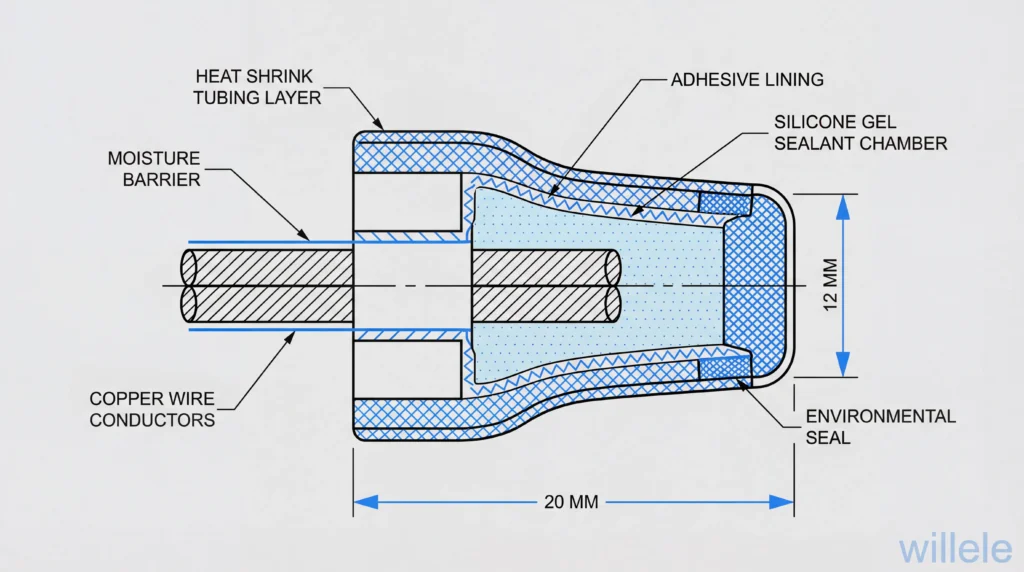
Detailed cross-section of waterproof wire nut construction showing environmental sealing mechanisms and internal component arrangement
Installation Best Practices for Environmental Protection
Pre-Installation Environmental Assessment
Before beginning installation, conducting a thorough environmental assessment ensures appropriate connector selection and installation techniques. This assessment should document the expected moisture exposure levels, temperature extremes, UV exposure intensity, potential chemical contacts, and mechanical stresses such as vibration or physical impact. Understanding these factors enables contractors to select connectors with appropriate ratings and implement installation practices that maximize environmental protection.
Site-specific factors also influence installation decisions. Underground installations must consider soil conditions, drainage patterns, and frost line depth. Coastal installations require evaluation of salt spray exposure and prevailing wind directions. Industrial environments necessitate assessment of chemical exposure risks and temperature extremes from nearby equipment. Documenting these environmental factors creates a foundation for proper connector specification and installation planning.
Wire Preparation and Connection Techniques
Proper wire preparation represents a critical step in achieving effective environmental sealing. Wires must be stripped to the exact length specified by the connector manufacturer—typically between 1/4″ and 3/8″ of exposed conductor. Using calibrated wire strippers matched to the wire gauge prevents damage to conductor strands while achieving consistent stripping lengths. Damaged or nicked conductors should be re-stripped to ensure optimal electrical contact and mechanical strength.
Before insertion into waterproof connectors, wire ends should be cleaned to remove any oxidation, dirt, or contamination that could compromise both electrical conductivity and sealing effectiveness. In corrosive environments, applying a thin coat of dielectric grease to cleaned wire ends before connection provides additional corrosion protection, though this should only be done when compatible with the connector’s internal sealing compound.
For gel-filled and grease-filled connectors, manufacturers typically recommend against pre-twisting the wires, as this practice can displace the sealing compound and create voids where moisture can accumulate. Instead, wires should be inserted straight into the connector, which is then twisted onto the wires to simultaneously create the electrical connection and distribute the sealing compound around the conductors. Heat shrink connectors require proper crimping before heat application, using crimping tools matched to the connector size to ensure adequate compression without damaging the conductors.
Orientation and Positioning for Moisture Management
Even with properly rated waterproof connectors, installation orientation significantly impacts long-term moisture protection. Whenever possible, connectors should be oriented with the wire entry points facing downward, preventing water from pooling around the connection point. This “drip loop” principle applies to both the connectors themselves and the wire routing leading to the connection, ensuring that gravity assists in moisture drainage rather than encouraging water accumulation.
In junction boxes and enclosures, positioning connectors away from potential water entry points and ensuring adequate drainage provisions prevents water accumulation that could overwhelm even high-quality waterproof seals. Junction boxes in wet locations must be weatherproof-rated and positioned to prevent water pooling, with drain holes or weep holes provided at the lowest points to allow any infiltrated moisture to escape.
Enclosure Selection and Environmental Integration
While waterproof wire nuts provide connection-level environmental protection, proper enclosure selection creates a comprehensive environmental protection system. Junction boxes for outdoor and wet location installations must carry appropriate NEMA or IP ratings matching or exceeding the environmental exposure levels. NEMA 3R enclosures provide basic rain protection for outdoor installations, while NEMA 4X enclosures offer superior protection against corrosion and are suitable for coastal or industrial environments.
Enclosure installation practices should ensure proper gasket sealing, secure cover attachment, and appropriate cable entry sealing. Cable glands or strain relief fittings at enclosure entry points prevent moisture infiltration along cable jackets and reduce mechanical stress on connections. In underground applications, enclosures should be installed in gravel-filled sumps that provide drainage and prevent water accumulation around the enclosure exterior.
Environmental Compliance and Code Requirements
NEC Requirements for Wet and Damp Locations
The National Electrical Code (NEC) establishes specific requirements for electrical connections in wet and damp locations that directly impact waterproof wire nut selection and installation. Article 110.14 mandates that all electrical connections must be suitable for the conditions of use, including moisture exposure levels. This requirement necessitates using properly rated waterproof connectors rather than standard wire nuts in any location where moisture exposure is anticipated.
Article 314 addresses junction boxes in wet locations, requiring weatherproof enclosures positioned to prevent water accumulation. Connectors within these enclosures must maintain their protective properties in the expected environmental conditions. Article 406 requires GFCI protection for outdoor receptacles and weatherproof covers, creating a comprehensive protection system that extends beyond the connectors themselves to encompass the entire circuit.
Local electrical codes may impose additional requirements beyond the NEC baseline, particularly in regions with extreme environmental conditions or specific safety concerns. Contractors should verify local code requirements and inspection procedures before beginning installation, as improper installation can void homeowner’s insurance coverage and create liability exposure.
Environmental Sustainability Considerations
Beyond immediate performance requirements, environmental sustainability considerations increasingly influence connector selection and installation practices. Heat shrink connectors with polyolefin tubing offer excellent recyclability compared to PVC-based alternatives, reducing environmental impact at end-of-life. Selecting connectors with longer service lives—typically 10-20 years for quality waterproof connectors—reduces replacement frequency and associated waste generation.
Installation practices that maximize connector longevity also contribute to environmental sustainability. Proper connector sizing, appropriate environmental rating selection, and correct installation techniques prevent premature failures that necessitate replacement. When installations do require maintenance or modification, selecting connectors that allow inspection without destruction—such as twist-on waterproof wire nuts rather than permanent heat shrink connections—enables verification of connection integrity without generating unnecessary waste.
Maintenance and Long-Term Environmental Performance
Inspection Protocols for Environmental Exposure
Even properly installed waterproof wire nuts require periodic inspection to verify continued environmental protection effectiveness. Inspection frequency should be determined by environmental exposure severity, with harsh environments requiring more frequent verification. Visual inspection should check for visible cracks in connector bodies, corrosion residue around connection points, discoloration indicating UV degradation, or signs of moisture infiltration such as water staining or mineral deposits.
For accessible connections, periodic electrical testing verifies connection integrity and can identify developing problems before complete failure occurs. Infrared thermography can detect connections developing excessive resistance due to corrosion or poor contact, allowing preventive replacement before service interruption. In critical applications, implementing a documented inspection schedule with recorded findings creates a maintenance history that supports predictive replacement strategies.
Environmental Failure Indicators and Replacement Criteria
Waterproof wire nuts should be replaced immediately upon observing specific failure indicators. Visible cracks in the connector body or sealing components compromise environmental protection and create shock hazards. White or green corrosion residue around connection points indicates that moisture has infiltrated the seal and is attacking the copper conductors. Discolored or brittle connector materials suggest UV degradation or chemical attack that has compromised material properties.
Electrical symptoms also indicate environmental protection failure. Intermittent circuit operation, particularly correlated with weather conditions, suggests moisture infiltration affecting connection integrity. Increased circuit resistance or voltage drop across connections indicates corrosion development. In outdoor lighting applications, flickering or premature lamp failure often results from corroded connections creating voltage instability.
Comparative Analysis: Waterproof Wire Nut Technologies
| Feature | Silicone-Sealed Wire Nuts | Gel-Filled Wire Nuts | Heat Shrink with Adhesive | Grease-Filled Wire Nuts |
|---|---|---|---|---|
| Installation Method | Twist-on (no tools required) | Twist-on (no tools required) | Crimp then heat (requires tools) | Twist-on (no tools required) |
| Environmental Sealing | Excellent | Superior | Excellent | Good |
| Temperature Range | -40°F to 400°F | -40°F to 185°F | -55°F to 221°F | -40°F to 176°F |
| UV Resistance | Excellent | Good | Excellent | Fair |
| Chemical Resistance | Good | Excellent | Superior | Fair |
| Vibration Resistance | Good | Good | Superior | Fair |
| Reusability | No | No | No | Limited |
| Cost per Unit | Moderate | Moderate to High | Moderate | Low to Moderate |
| Best Applications | General outdoor, high-temp | Marine, underground, high-humidity | Automotive, industrial, vibration | Temporary, accessible connections |
| Service Life Expectancy | 10-20 years | 15-25 years | 10-20 years | 5-10 years |
This comparative analysis demonstrates that no single waterproof wire nut technology optimally serves all environmental conditions. Selection should be based on the specific environmental stressors present in each application, with particular attention to the dominant environmental challenge—whether temperature extremes, continuous moisture exposure, chemical contact, or mechanical stress.
Frequently Asked Questions
Q: Can I use standard wire nuts in a weatherproof junction box for outdoor installations?
A: No. Even within a weatherproof junction box, standard wire nuts lack the internal sealing compounds necessary to protect against moisture infiltration. Weatherproof boxes reduce but do not eliminate moisture exposure, and condensation can form inside enclosures due to temperature changes. Always use properly rated waterproof wire nuts for any outdoor or damp location installation to ensure code compliance and long-term reliability.
Q: How do I know if my waterproof wire nuts are properly sealed after installation?
A: For gel-filled and silicone-sealed connectors, you should see the sealing compound visible at the wire entry points after twisting the connector onto the wires. For heat shrink connectors, the tubing should appear slightly opaque after heating, with adhesive visible at the seams. The connector should feel firmly attached to the wires without movement. If uncertain, gently tug on individual wires—they should not pull free from a properly installed connector.
Q: What’s the difference between waterproof and water-resistant wire nuts?
A: Water-resistant wire nuts are designed for damp locations and protection against condensation and occasional moisture exposure, but they are not rated for continuous submersion or direct burial. Waterproof connectors (typically IP67 or IP68 rated) provide protection against temporary immersion and are suitable for underground installations. Always verify the specific IP rating matches your environmental exposure requirements rather than relying on general terminology.
Q: Do waterproof wire nuts require special tools for installation?
A: This depends on the connector type. Silicone-sealed, gel-filled, and grease-filled waterproof wire nuts install with the same twist-on method as standard wire nuts and require no special tools beyond wire strippers. Heat shrink waterproof connectors require a crimping tool matched to the connector size and a temperature-controlled heat gun (not a hair dryer or open flame) for proper installation. Investment in quality tools ensures reliable connections and long-term environmental protection.
Q: How often should I inspect waterproof wire nut connections in outdoor installations?
A: For general outdoor installations in moderate climates, annual inspection is typically sufficient. Harsh environments—including coastal areas with salt spray, industrial locations with chemical exposure, or regions with extreme temperature variations—warrant semi-annual or quarterly inspection. Critical safety applications such as outdoor lighting on stairs or walkways should be inspected more frequently. Always inspect connections after severe weather events that may have compromised environmental protection.
Q: Can waterproof wire nuts be reused if I need to modify a circuit?
A: Generally, no. The sealing compounds in waterproof wire nuts are designed for single-use installation. Removing and reinstalling connectors typically compromises the seal integrity, even if the connector appears undamaged. Heat shrink connectors cannot be removed without destruction. For installations requiring frequent access or modification, consider using waterproof terminal blocks or other reusable connection methods specifically designed for repeated connection cycles while maintaining environmental protection.
Conclusion
Environmental considerations fundamentally shape every aspect of waterproof wire nut installation, from initial connector selection through long-term maintenance strategies. Success in outdoor, underground, and wet location electrical installations requires understanding the specific environmental stressors present in each application and implementing appropriate protection measures that address those challenges. Temperature extremes, moisture exposure, UV radiation, chemical contact, and mechanical stress each demand specific connector technologies and installation techniques to ensure reliable, long-lasting connections.
The investment in properly specified and correctly installed waterproof wire nuts delivers substantial returns through reduced service calls, eliminated moisture-related failures, and extended system service life. By conducting thorough environmental assessments, selecting connectors with appropriate ratings, implementing proper installation techniques, and maintaining regular inspection schedules, electrical professionals create installations that withstand environmental challenges while maintaining safety and reliability throughout their intended service lives. As electrical systems continue expanding into increasingly challenging environments, mastering these environmental considerations becomes essential for every contractor and installer committed to delivering quality, lasting electrical installations.
willele Electric specializes in manufacturing high-quality heat shrink tubes and waterproof electrical connection solutions for B2B applications. Our products are engineered to withstand the most demanding environmental conditions while delivering reliable performance throughout extended service lives. For technical specifications, product selection guidance, or custom solutions for challenging installation environments, contact our engineering team.
