
Indoor vs. Outdoor Low Voltage Busbar Insulators: Selection Criteria

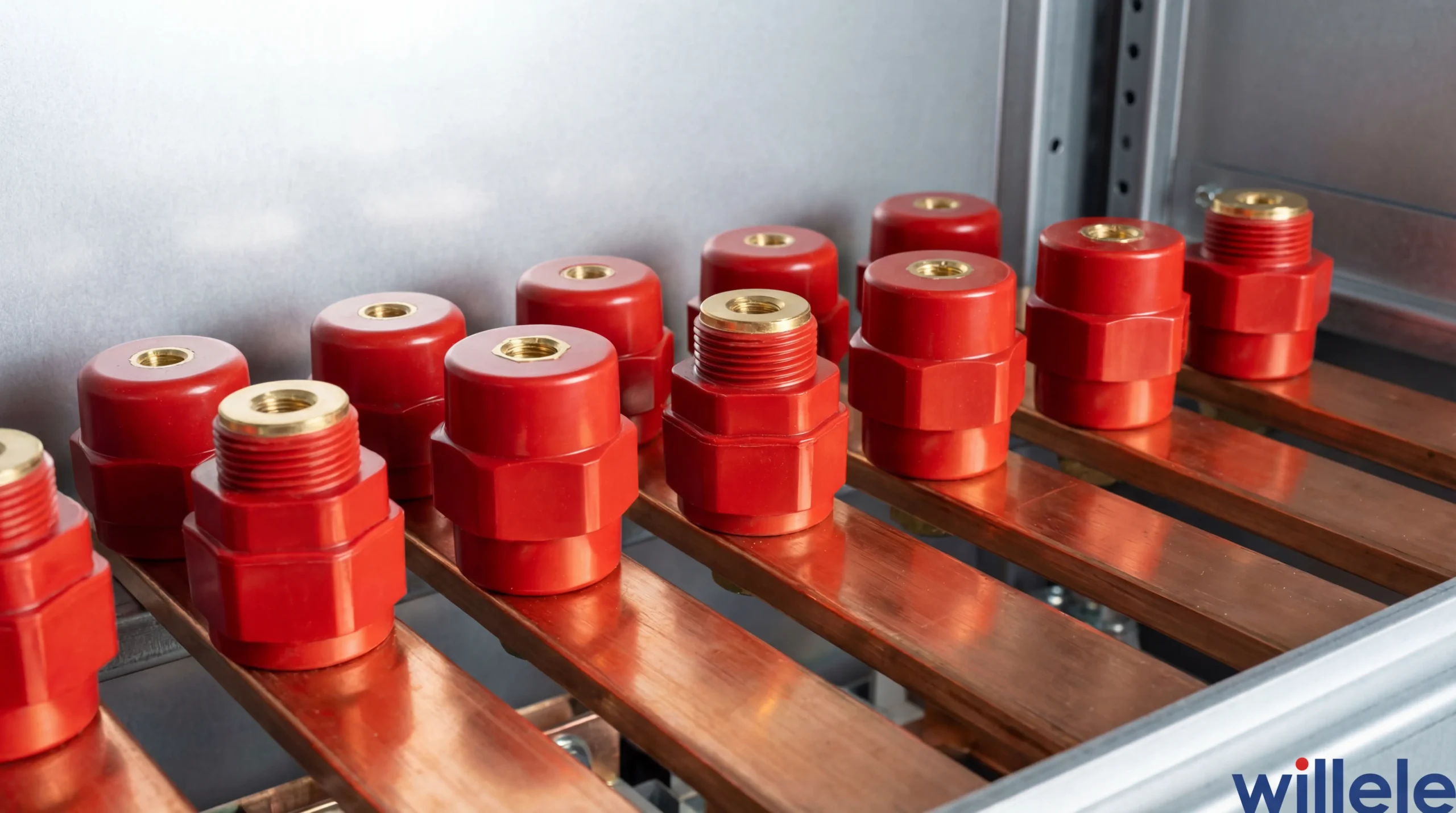
Low voltage busbar insulators serve as critical safety components in electrical distribution systems, preventing unintended current flow while providing structural support for conductive busbars. The selection between indoor and outdoor insulators requires careful consideration of environmental stressors, material properties, and compliance standards. This comprehensive guide examines the key criteria for specifying busbar insulators in different installation environments.
Understanding Low Voltage Busbar Insulators
Busbar insulators function as both electrical barriers and mechanical supports in power distribution assemblies rated up to 1000V AC. These components prevent short circuits between energized conductors and grounded enclosures while withstanding significant mechanical forces from thermal expansion, electromagnetic stress, and vibration. Modern insulators must balance dielectric strength with thermal management capabilities, particularly in high-current applications where heat dissipation becomes critical.
The fundamental difference between indoor and outdoor insulators lies in their ability to resist environmental degradation. Indoor units operate in controlled conditions with minimal temperature fluctuation and pollution exposure, while outdoor insulators must endure UV radiation, moisture ingress, temperature cycling, and atmospheric contaminants that accelerate material breakdown.
Environmental Operating Conditions
Indoor Installation Requirements
Indoor busbar insulators typically operate within temperature ranges of -5°C to +40°C in environments with controlled humidity levels below 85% relative humidity. These installations benefit from protection against direct weather exposure, reducing stress on insulating materials. However, indoor environments present unique challenges including industrial pollution from metallic dust, chemical vapors, and conductive particulates that can create surface tracking paths.
Pollution degree classification according to IEC 60664-1 significantly impacts insulator selection for indoor applications. Clean environments like residential switchgear require basic insulation distances, while heavy industrial facilities with conductive dust necessitate increased creepage distances or protective coatings. Indoor insulators must also accommodate electromagnetic interference and mechanical vibration from adjacent equipment, particularly in data centers and manufacturing facilities with high-frequency switching loads.
Outdoor Installation Challenges
Outdoor busbar insulators face substantially harsher operating conditions with temperature extremes ranging from -40°C to +70°C depending on geographic location. These units must resist degradation from multiple simultaneous stressors including direct sunlight exposure delivering UV radiation doses exceeding 2000 hours annually, precipitation creating wet surface conditions, and freeze-thaw cycling that can induce mechanical cracking in susceptible materials.
Coastal installations present additional challenges from salt fog exposure, which creates conductive surface films that reduce flashover voltage. Testing per IEC 62217 demonstrates that advanced polymer formulations with hydrophobic additives maintain erosion rates below 0.1 mm/year under 1000-hour salt fog exposure. Industrial outdoor environments compound these stresses with airborne pollutants including sulfur dioxide, nitrogen oxides, and particulate matter that accumulate on insulator surfaces.
Material Selection Criteria
Common Insulator Materials
The selection of insulator material fundamentally determines performance characteristics and service life. Each material category offers distinct advantages for specific operating environments:
Thermosetting Polymers (BMC/DMC/SMC): Bulk molding compound (BMC) and sheet molding compound (SMC) insulators dominate low voltage applications due to excellent dimensional stability, high tracking resistance (CTI >600V), and cost-effectiveness. These thermoset materials maintain dielectric properties across temperature ranges of -40°C to +155°C while offering superior arc resistance compared to thermoplastics. Advanced formulations incorporate thermally conductive fillers achieving thermal conductivity of 1.2 W/m·K, dissipating 30% more heat than standard grades in high-current applications.
Epoxy Resin Systems: Epoxy-based insulators provide exceptional mechanical strength with tensile strength exceeding 80 MPa and flexural strength above 120 MPa. These materials excel in applications requiring precise dimensional tolerances and resistance to chemical exposure. Epoxy insulators demonstrate minimal water absorption (typically <0.3%) and maintain insulation resistance above 10^12 ohms even in humid conditions. The material’s high glass transition temperature (>150°C) ensures stable performance in thermally demanding environments.
Polyester and Glass-Reinforced Composites: Glass fiber reinforced polyester insulators offer an optimal balance of mechanical strength and electrical performance for outdoor applications. These composite materials resist UV degradation through incorporated stabilizers while maintaining tracking resistance under wet conditions. The glass reinforcement provides mechanical strength comparable to ceramic materials while eliminating brittleness concerns during installation and seismic events.
Ceramic and Porcelain: Traditional ceramic insulators maintain relevance in extreme outdoor environments due to superior UV resistance, zero moisture absorption, and exceptional long-term stability. Porcelain insulators withstand surface contamination better than early polymer designs, though modern polymer formulations have largely closed this performance gap. Ceramic materials remain preferred for coastal installations with severe salt fog exposure and industrial sites with aggressive chemical atmospheres.
Material Performance Comparison
| Property | BMC/SMC | Epoxy Resin | Glass-Reinforced Polyester | Ceramic/Porcelain |
|---|---|---|---|---|
| Dielectric Strength | 18-22 kV/mm | 20-25 kV/mm | 16-20 kV/mm | 10-15 kV/mm |
| Tracking Resistance (CTI) | 600+ V | 600+ V | 400-600 V | N/A (non-tracking) |
| Temperature Range | -40°C to +155°C | -40°C to +180°C | -40°C to +130°C | -40°C to +200°C |
| Water Absorption | <0.5% | <0.3% | 0.5-1.0% | 0% |
| UV Resistance | Good (with stabilizers) | Moderate | Excellent | Excellent |
| Mechanical Strength | High | Very High | High | Moderate (brittle) |
| Thermal Conductivity | 0.8-1.2 W/m·K | 0.6-0.8 W/m·K | 0.4-0.6 W/m·K | 1.0-1.5 W/m·K |
| Cost Effectiveness | Excellent | Moderate | Good | Low |
| Typical Application | Indoor/Outdoor General | Indoor High-Performance | Outdoor Standard | Outdoor Extreme |
Electrical Performance Requirements
Voltage Rating and Dielectric Strength
Insulator voltage rating must exceed maximum system voltage with appropriate safety margins accounting for transient overvoltages. For low voltage systems up to 1000V AC, insulators typically carry ratings of 1.5-2.5 kV to withstand power-frequency withstand testing per IEC 61439-1. The dielectric strength of the insulating material must prevent breakdown under both continuous operating voltage and temporary overvoltage conditions caused by switching transients or lightning-induced surges.
Creepage distance and clearance requirements increase significantly for outdoor installations due to surface contamination reducing effective insulation. IEC 60664-1 specifies minimum clearances of 10mm and creepage distances of 14mm for systems up to 690V in clean environments, with these values increasing to 18mm clearance and 22mm creepage for 1000V systems. Outdoor and high-pollution environments require additional safety margins, often necessitating 50-100% increases in creepage distances or application of hydrophobic surface coatings.
Tracking Resistance and Surface Properties
Comparative Tracking Index (CTI) measures material resistance to electrical tracking under wet contaminated conditions, making it a critical specification for outdoor insulators. Materials with CTI values above 600V demonstrate excellent tracking resistance suitable for severe outdoor environments, while CTI 400-600V materials suffice for protected outdoor or industrial indoor applications. Surface hydrophobicity significantly impacts tracking performance, with hydrophobic materials shedding water and preventing continuous conductive films from forming.
Modern polymer insulators incorporate hydrophobic additives that migrate to the surface, maintaining water-repellent properties even after surface erosion from electrical discharge activity. This self-healing hydrophobicity extends service life in outdoor installations by preventing wet flashover conditions. Testing protocols per IEC 60587 evaluate tracking resistance under simulated pollution and moisture conditions, providing comparative data for material selection.
Mechanical and Structural Considerations
Load-Bearing Capacity
Busbar insulators must withstand multiple mechanical stress categories including static loads from busbar weight, dynamic forces from thermal expansion, and extreme short-circuit electromagnetic forces. A standard support insulator rated for low voltage applications typically withstands axial tensile forces up to 4000N and bending loads of 5000N while maintaining alignment tolerances within ±0.5mm. High-current applications exceeding 2000A require reinforced insulator designs with support spacing reduced from standard 500mm intervals to 300mm or less.
Short-circuit conditions generate electromagnetic forces proportional to the square of fault current, potentially exceeding 100 times normal operating forces. Insulators must maintain structural integrity during these transient events to prevent busbar displacement that could cause phase-to-phase or phase-to-ground faults. Compliance with IEC/TR 61641 internal arc fault testing ensures insulators can withstand both mechanical forces and thermal effects of arc flash events.
Thermal Expansion Compatibility
Differential thermal expansion between copper or aluminum busbars and insulating materials creates significant mechanical stress during temperature cycling. Copper expands at approximately 17×10^-6 /°C while typical polymer insulators expand at 30-50×10^-6 /°C, creating potential for loosening of mechanical connections or stress concentration at mounting interfaces. Insulator designs must accommodate this differential expansion through appropriate mounting configurations and material selection.
Outdoor installations experience wider temperature swings than indoor applications, with daily cycles potentially spanning 40-50°C in direct sunlight exposure. This cycling accelerates fatigue in both the insulating material and mechanical fasteners. Glass-reinforced composites with thermal expansion coefficients closer to metallic conductors demonstrate superior long-term dimensional stability in outdoor environments compared to unreinforced polymers.
IP Rating and Environmental Protection
Ingress Protection Requirements
IP (Ingress Protection) rating per IEC 60529 defines the degree of protection against solid objects and liquids. Indoor switchgear typically requires IP54 or IP55 protection, preventing dust accumulation and protecting against water spray from any direction. Outdoor installations demand higher protection levels, with IP65 or IP66 ratings standard for exposed busbar systems to ensure complete dust-tight seals and protection against powerful water jets or heavy seas.
The insulator design must maintain IP rating integrity at all mounting interfaces and through-conductor penetrations. Gasketed designs with compression seals provide reliable long-term protection, while relying solely on material contact interfaces often results in degraded protection as materials age and thermal cycling creates gaps. Outdoor insulators should incorporate drainage features preventing water accumulation in recessed areas where freeze-thaw cycling could cause mechanical damage.
Condensation and Moisture Management
Indoor installations in humid environments face condensation challenges when equipment temperatures drop below dew point. Insulators must maintain electrical performance under surface moisture conditions, requiring materials with high surface resistivity even when wet. Tracking-resistant formulations and increased creepage distances mitigate condensation-related flashover risks in indoor applications with poor ventilation or high humidity levels.
Outdoor insulators encounter more severe moisture exposure from direct precipitation, fog, and dew formation. Hydrophobic surface treatments cause water to bead and run off rather than forming continuous conductive films. However, surface contamination from dust and pollution can compromise hydrophobicity over time, necessitating periodic cleaning in heavily polluted environments or selection of materials with self-cleaning properties enhanced by rain washing.
Thermal Management Requirements
Heat Dissipation Considerations
Electrical resistance at busbar-to-insulator interfaces generates heat that must dissipate to prevent insulation degradation and maintain connection integrity. High-current applications above 1000A create substantial thermal loads, with I²R losses at connections potentially exceeding 100W per joint. Insulators must not create thermal bottlenecks that trap heat in conductor assemblies, requiring materials with adequate thermal conductivity and designs that maximize surface area for convective cooling.
Thermally conductive BMC formulations achieving 1.2 W/m·K thermal conductivity improve heat dissipation by 30% compared to standard insulating materials. Some advanced designs incorporate active cooling features such as water channels molded into epoxy supports for extreme high-current applications exceeding 2000A. Temperature rise testing per IEC 61439-1 verifies that complete assemblies maintain temperatures below material limits under rated current conditions, with typical limits of 90-105°C for busbar connections.
Temperature Rating Selection
Insulator temperature rating must exceed maximum expected operating temperature with appropriate safety margin. For typical indoor low voltage applications, insulators rated 130-155°C provide adequate margin above the 90-105°C temperature rise limits specified in IEC 61439-1 Table 6. Outdoor installations in hot climates or high-current systems require 155-180°C rated materials to accommodate solar heating combined with electrical heating effects.
Material degradation accelerates exponentially with temperature, following Arrhenius relationship principles. Operating an insulator continuously at temperatures approaching its rating significantly reduces service life through accelerated oxidation, loss of mechanical properties, and degradation of dielectric strength. Selecting materials with temperature ratings 20-30°C above expected operating conditions ensures adequate service life of 20+ years in normal operating conditions.
Standards Compliance and Testing
Applicable International Standards
Low voltage busbar insulator selection must comply with multiple international standards governing electrical safety, mechanical performance, and environmental durability:
IEC 61439 Series: Defines requirements for low-voltage switchgear and controlgear assemblies, including temperature rise limits, short-circuit withstand capability, and dielectric testing requirements. IEC 61439-1 establishes general rules while IEC 61439-6 specifically addresses busbar trunking systems with detailed requirements for joints, tap-offs, and mechanical endurance.
IEC 60664-1: Specifies insulation coordination for equipment within low-voltage systems, defining clearance and creepage distances based on rated voltage, pollution degree, and material group. This standard provides the foundation for determining minimum electrical spacing in both indoor and outdoor installations.
IEC 60529: Defines IP rating classification and testing methods for degrees of protection provided by enclosures. Compliance verification requires testing against solid object probes and water spray/jet testing at specified pressures and durations.
IEC 62217: Establishes testing protocols for polymeric insulators under outdoor conditions, including UV exposure, salt fog testing, and tracking resistance evaluation. This standard provides comparative performance data essential for outdoor insulator selection.
Testing and Verification Requirements
Comprehensive testing validates insulator performance across electrical, mechanical, and environmental parameters:
Dielectric Testing: Power-frequency withstand testing at 1.5-2.5 kV for 60 seconds verifies insulation integrity between live parts and ground. Impulse voltage testing simulates lightning and switching transients to ensure adequate clearances for transient overvoltage protection.
Thermal Testing: Temperature rise testing under rated current conditions confirms that insulators do not create excessive thermal resistance in the current path. Long-term thermal aging tests at elevated temperatures predict service life under continuous operating conditions.
Mechanical Testing: Tensile and bending load testing verifies structural capacity under static loads, while dynamic testing simulates short-circuit electromagnetic forces. Vibration testing ensures insulators maintain integrity in environments with mechanical vibration from adjacent equipment.
Environmental Testing: Salt fog testing per IEC 62217 evaluates corrosion resistance and tracking performance under coastal conditions. UV exposure testing quantifies degradation from sunlight exposure, while thermal cycling tests assess dimensional stability and mechanical integrity under repeated temperature swings.
Indoor vs. Outdoor Selection Matrix
Decision Framework
The selection between indoor and outdoor insulators follows a systematic evaluation of operating environment, electrical requirements, and mechanical constraints:
| Selection Criteria | Indoor Specification | Outdoor Specification |
|---|---|---|
| Temperature Range | -5°C to +40°C | -40°C to +70°C |
| Humidity Exposure | <85% RH, controlled | 0-100% RH, uncontrolled |
| UV Resistance | Not required | Essential (UV stabilizers) |
| IP Rating | IP54-IP55 | IP65-IP66 |
| Material Preference | BMC/SMC, Epoxy | Glass-reinforced polyester, Ceramic |
| Creepage Distance | Standard per IEC 60664-1 | 50-100% increase over standard |
| CTI Requirement | 400-600V | 600V+ |
| Hydrophobic Surface | Optional | Highly recommended |
| Cost Factor | Lower | Higher (20-40% premium) |
| Maintenance Interval | 5-10 years | 3-5 years (inspection/cleaning) |
Application-Specific Recommendations
Commercial Buildings and Light Industrial: Indoor BMC/SMC insulators with IP54 rating and standard creepage distances provide cost-effective solutions for switchgear and distribution panels in controlled environments. Temperature ratings of 130-155°C accommodate typical load profiles with adequate safety margin.
Heavy Industrial Facilities: Indoor installations in environments with metallic dust, chemical vapors, or high humidity require increased creepage distances and materials with CTI >600V. Epoxy insulators with enhanced tracking resistance and sealed designs maintaining IP55 protection ensure reliable operation in polluted indoor atmospheres.
Outdoor Substations and Distribution: Glass-reinforced polyester or ceramic insulators with IP65-IP66 protection and hydrophobic surface treatments withstand weather exposure and pollution. Increased creepage distances per pollution degree classification and UV-stabilized materials ensure 20+ year service life in outdoor environments.
Coastal and Marine Applications: Ceramic insulators or advanced polymer formulations with proven salt fog resistance per IEC 62217 testing provide optimal performance in coastal installations. Hydrophobic surface treatments and regular inspection/cleaning protocols maintain electrical performance under severe contamination conditions.
Data Centers and Critical Infrastructure: Indoor installations requiring maximum reliability benefit from epoxy insulators with superior dimensional stability and low moisture absorption. Laminated busbar systems with integrated insulators minimize inductance for high-frequency applications while maintaining compact footprints.
Installation and Maintenance Considerations
Proper Installation Practices
Correct installation procedures significantly impact insulator performance and service life. Mounting surfaces must be clean, flat, and free from burrs that could create stress concentrations or compromise IP rating seals. Torque specifications for fasteners should follow manufacturer recommendations, with typical values ranging from 4-8 N·m for M6 fasteners to 15-25 N·m for M10 fasteners on low voltage insulators.
Busbar-to-insulator interfaces require careful attention to ensure proper electrical contact and heat dissipation. Contact surfaces should be cleaned to remove oxidation and coated with appropriate contact enhancement compounds for aluminum conductors. Insulator spacing along busbar runs must account for mechanical deflection under electromagnetic fault forces, typically requiring 300-500mm spacing for horizontal copper busbars depending on current rating and fault level.
Maintenance and Inspection Protocols
Indoor insulators in clean environments require minimal maintenance beyond periodic visual inspection during scheduled equipment outages. Inspection should identify signs of tracking (carbon paths on surfaces), mechanical damage, or loose connections that could compromise performance. Thermal imaging during energized operation identifies hot spots indicating connection degradation requiring attention.
Outdoor insulators demand more frequent inspection and maintenance due to environmental exposure. Annual inspection should assess surface contamination levels, check for UV-induced surface degradation, and verify IP rating seal integrity. Cleaning protocols using deionized water and soft brushes remove conductive contamination without damaging hydrophobic surface treatments. Heavily polluted environments may require semi-annual cleaning to maintain electrical performance.
Cost-Benefit Analysis
Initial Cost Considerations
Outdoor-rated insulators typically command 20-40% price premiums over equivalent indoor units due to enhanced materials, UV stabilization, and higher IP ratings. However, this initial cost differential must be evaluated against total lifecycle costs including installation, maintenance, and replacement expenses. Specifying indoor-rated insulators for outdoor applications creates false economy through premature failure and unplanned downtime costs far exceeding initial savings.
Material selection within indoor or outdoor categories also impacts costs, with ceramic insulators commanding premium pricing over polymer alternatives. However, ceramic units may prove more economical in severe outdoor environments where polymer insulators require frequent replacement. Lifecycle cost analysis should consider expected service life, maintenance requirements, and failure consequences when evaluating material options.
Long-Term Value Proposition
Properly specified insulators deliver value through reliable operation over 20+ year service lives with minimal maintenance intervention. Premature insulator failure creates costs beyond replacement parts, including labor for emergency repairs, production downtime in industrial facilities, and potential damage to adjacent equipment from fault conditions. The cost of a single unplanned outage in critical infrastructure often exceeds the total installed cost of the busbar system.
Investing in appropriate insulator specifications for the operating environment reduces long-term maintenance costs and extends equipment service life. Outdoor installations using properly rated insulators with hydrophobic treatments require less frequent cleaning and maintain electrical performance longer than underspecified alternatives. This reliability translates to reduced lifecycle costs and improved system availability.
Emerging Technologies and Future Trends
Smart Insulator Systems
Integration of sensing technologies into busbar insulators enables condition monitoring and predictive maintenance strategies. Embedded temperature sensors provide real-time thermal monitoring, identifying developing connection problems before failure occurs. Some advanced designs incorporate partial discharge sensors detecting insulation degradation in early stages, allowing proactive replacement before catastrophic failure.
Wireless communication capabilities enable remote monitoring of distributed busbar systems, particularly valuable in outdoor substations and renewable energy installations. These smart insulators transmit temperature, humidity, and partial discharge data to centralized monitoring systems, supporting data-driven maintenance decisions and optimizing inspection schedules based on actual operating conditions rather than fixed intervals.
Advanced Material Development
Ongoing material research focuses on developing insulators with enhanced multifunctional properties. Nanocomposite materials incorporating ceramic nanoparticles in polymer matrices demonstrate improved tracking resistance, thermal conductivity, and mechanical strength compared to conventional formulations. These advanced materials may enable single insulator designs suitable for both indoor and outdoor applications, simplifying specification and inventory management.
Self-healing insulator materials under development incorporate microcapsules containing healing agents that release when surface damage occurs, automatically repairing minor defects before they propagate. These materials could significantly extend service life in harsh outdoor environments by continuously repairing UV and electrical discharge damage.
Technical Specifications and Design Features
Understanding the internal construction of busbar insulators helps engineers specify appropriate components for specific applications. The cross-sectional view reveals critical design elements that determine electrical and mechanical performance.
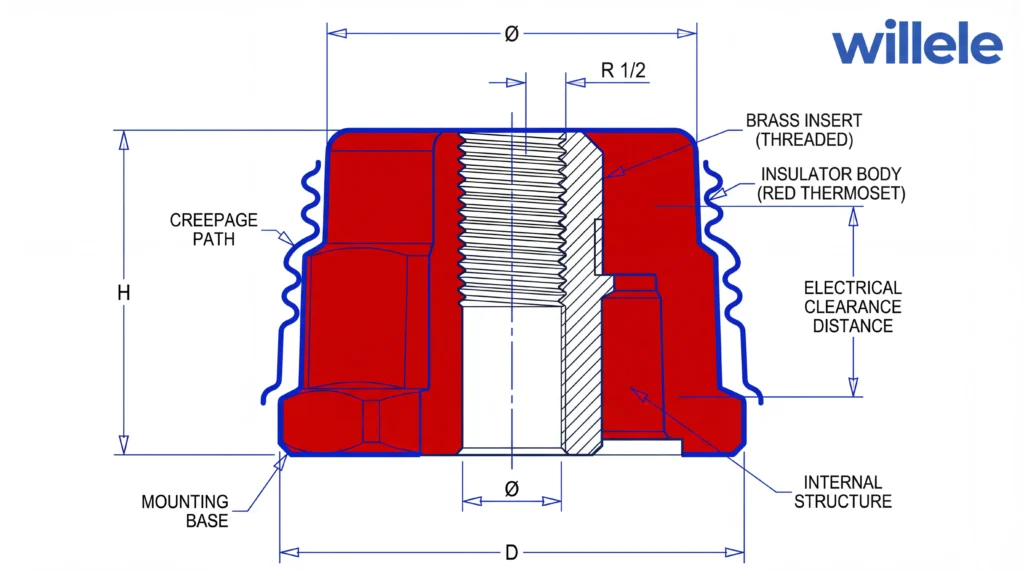
Figure 2: Technical cross-section diagram illustrating key design features including dielectric material composition, threaded brass insert, mounting interface, and critical electrical clearance dimensions
Frequently Asked Questions
Q: What is the primary difference between indoor and outdoor busbar insulators?
A: Outdoor insulators feature enhanced UV resistance, higher IP ratings (IP65-IP66 vs. IP54-IP55), increased creepage distances, and materials specifically formulated to withstand temperature extremes, moisture, and atmospheric pollution. They typically cost 20-40% more than indoor equivalents but provide necessary durability for weather exposure.
Q: How do I determine the appropriate IP rating for my application?
A: Indoor controlled environments typically require IP54-IP55 protection against dust and water spray. Outdoor installations need IP65-IP66 ratings for complete dust-tight seals and protection against water jets. Consider the most severe exposure conditions including cleaning procedures when selecting IP ratings.
Q: What CTI value should I specify for outdoor insulators?
A: Outdoor insulators should have Comparative Tracking Index (CTI) values of 600V or higher to resist electrical tracking under wet contaminated conditions. Indoor applications in clean environments can use materials with CTI 400-600V, while polluted indoor environments benefit from CTI >600V materials.
Q: How often should outdoor busbar insulators be inspected and cleaned?
A: Annual inspection is recommended for most outdoor installations, with semi-annual inspection and cleaning in heavily polluted environments such as coastal areas or industrial sites with airborne contaminants. Use deionized water and soft brushes to avoid damaging hydrophobic surface treatments.
Q: Can indoor-rated insulators be used in outdoor applications with protective enclosures?
A: If the enclosure maintains controlled environmental conditions equivalent to indoor specifications (temperature range, humidity control, IP rating), indoor insulators may be acceptable. However, verify that enclosure protection remains effective throughout the insulator service life, considering seal degradation and condensation within enclosures.
Q: What temperature rating should I select for high-current applications?
A: Select insulators with temperature ratings at least 20-30°C above expected operating conditions. For typical low voltage applications, 130-155°C ratings suffice. High-current systems (>630A) or installations in hot environments require 155-180°C rated materials to ensure adequate service life.
Q: How do I calculate required insulator spacing along busbar runs?
A: Spacing depends on busbar material, current rating, and fault current levels. General guidelines suggest 300-500mm spacing for horizontal copper busbars up to 100A, with reduced spacing for higher currents. Consult manufacturer load tables or perform finite element analysis for currents exceeding 400A or applications with high fault current levels.
Q: Are ceramic insulators still relevant compared to modern polymer materials?
A: Ceramic insulators remain optimal for extreme outdoor environments with severe UV exposure, coastal salt fog, or aggressive chemical atmospheres. Modern polymer formulations have closed the performance gap for most applications, but ceramics offer superior long-term stability in the harshest conditions despite higher initial costs and brittleness concerns.
Conclusion
Selecting appropriate busbar insulators for indoor versus outdoor applications requires comprehensive evaluation of environmental conditions, electrical requirements, mechanical constraints, and lifecycle costs. Indoor installations benefit from cost-effective polymer insulators with standard specifications, while outdoor applications demand enhanced materials, increased creepage distances, and superior environmental protection.
The key to successful insulator selection lies in accurately characterizing the operating environment and specifying materials with appropriate safety margins for temperature, pollution exposure, and mechanical stress. Investing in properly rated insulators delivers long-term value through reliable operation, reduced maintenance requirements, and extended equipment service life. As electrical systems evolve toward higher currents and more demanding applications, advanced insulator materials and smart monitoring technologies will continue enhancing performance and reliability in both indoor and outdoor installations.
For B2B manufacturers and electrical contractors, understanding these selection criteria enables specification of optimal insulator solutions that balance initial costs against long-term performance and reliability requirements. Whether designing indoor switchgear for commercial buildings or outdoor substations for utility applications, proper insulator selection remains fundamental to electrical system safety and longevity.
