
Waterproof Wire Nuts for Telecommunications Infrastructure

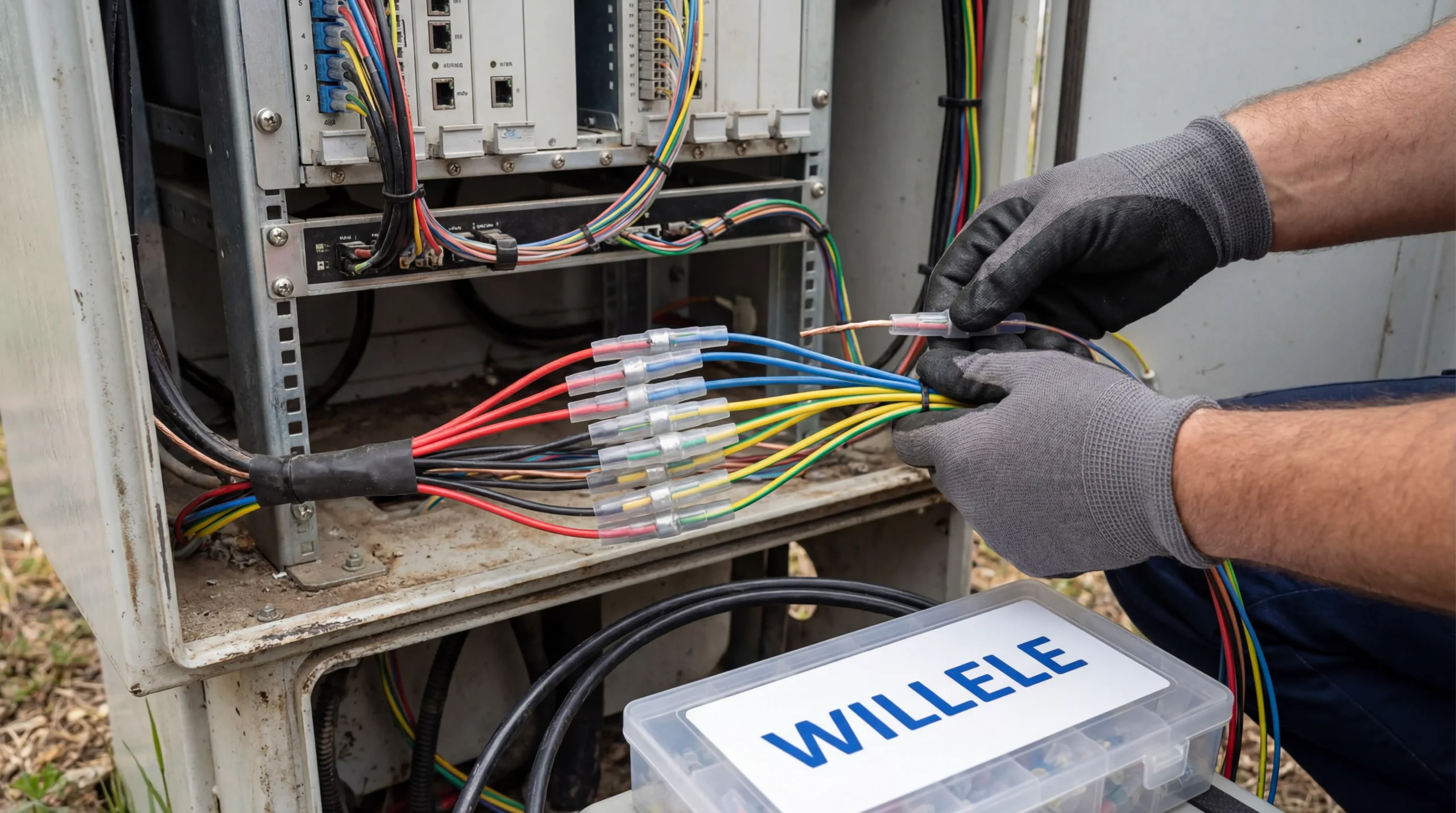
Telecommunications infrastructure demands reliable connections that withstand harsh environmental conditions while maintaining signal integrity and electrical continuity. Waterproof wire nuts have emerged as essential components in outdoor telecommunications installations, protecting critical wire connections from moisture ingress, corrosion, and environmental degradation. This comprehensive guide explores the specifications, applications, and selection criteria for waterproof wire nuts specifically engineered for telecommunications networks.
Understanding Waterproof Wire Nuts in Telecommunications
Waterproof wire nuts serve as protective enclosures for wire splices in telecommunications systems, combining mechanical connection strength with environmental sealing. Unlike standard wire nuts designed for indoor residential use, telecommunications-grade waterproof connectors must meet stringent requirements for moisture resistance, temperature stability, and long-term reliability in exposed outdoor environments.
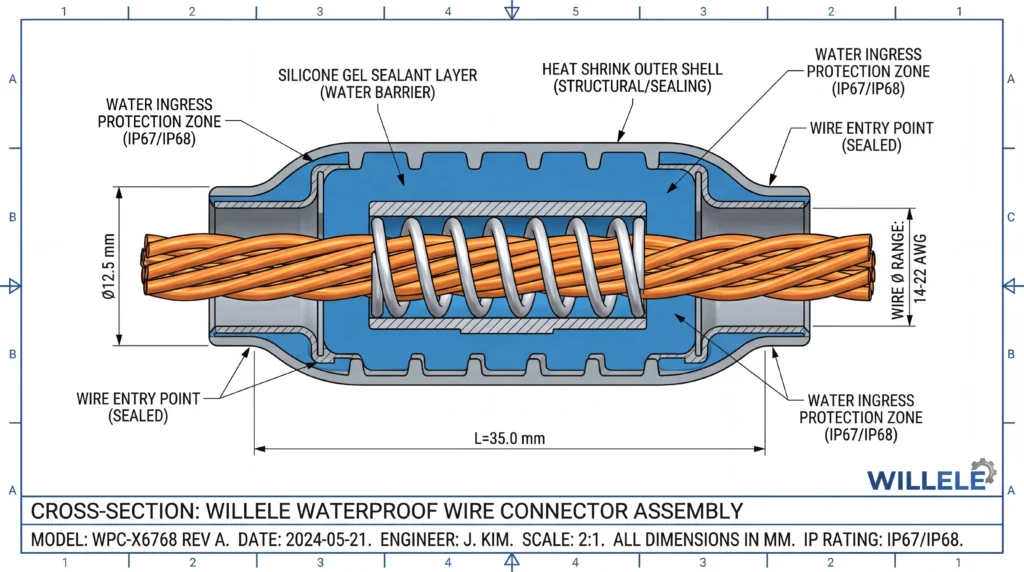
Modern waterproof wire nuts integrate multiple protection technologies: heat shrink outer shells provide conforming environmental barriers, silicone gel compounds fill internal cavities to exclude moisture, and spring-loaded contact mechanisms maintain consistent electrical pressure across temperature cycles. This multi-layer approach ensures connection integrity throughout the infrastructure’s operational lifetime, typically 20-30 years for telecommunications installations.
The telecommunications industry faces unique challenges that standard connectors cannot address. Outdoor cabinets experience temperature fluctuations from -40°C to +85°C, direct exposure to rain and humidity, salt spray in coastal installations, and UV radiation that degrades conventional materials. Waterproof wire nuts engineered for these conditions incorporate specialized materials and design features that maintain performance under continuous environmental stress.
Key Performance Requirements for Telecommunications Applications
Telecommunications waterproof wire nuts must satisfy multiple performance criteria simultaneously, balancing electrical characteristics, mechanical strength, and environmental protection. Understanding these requirements guides proper product selection and ensures installation success.
Ingress Protection (IP) ratings quantify the connector’s resistance to solid particles and water penetration. Telecommunications applications typically require minimum IP67 rating, indicating complete dust protection and submersion resistance to 1 meter depth for 30 minutes. Premium installations in flood-prone areas or underground vaults specify IP68 rating, providing protection against continuous submersion under pressure.
Electrical performance parameters include contact resistance, current carrying capacity, and voltage rating. Quality waterproof wire nuts maintain contact resistance below 5 milliohms throughout their service life, preventing voltage drop and heat generation. Current capacity must accommodate circuit requirements with adequate derating for elevated temperatures inside sealed enclosures. Voltage ratings typically range from 600V to 1000V for telecommunications power distribution circuits.
Temperature performance encompasses both operating range and thermal cycling resistance. Connectors must function reliably across -40°C to +85°C ambient temperature range while withstanding daily thermal cycles that cause expansion and contraction. The sealing materials must remain flexible at low temperatures and resist degradation at elevated temperatures, maintaining waterproof integrity throughout these extremes.
Chemical resistance protects against environmental contaminants including salt spray, industrial pollutants, cleaning agents, and petroleum products. Telecommunications sites near coastal areas, highways, or industrial facilities face accelerated corrosion without proper material selection. Silicone gel fillers and heat shrink materials must resist these chemicals while maintaining sealing properties.
Types of Waterproof Wire Nuts for Telecommunications
Different telecommunications applications require specialized connector designs optimized for specific installation conditions and performance requirements. Understanding the available types enables proper selection for each application scenario.
Gel-Filled Wire Nuts with Heat Shrink Jackets
This design represents the most common waterproof solution for telecommunications splices, combining internal gel sealing with external heat shrink protection. The connector body contains pre-filled silicone gel that flows around inserted wires, filling all air spaces and creating a moisture barrier. After wire insertion and mechanical connection, the heat shrink outer jacket contracts over the assembly, providing additional environmental protection and strain relief.
Gel-filled connectors excel in applications requiring tool-free installation and accommodation of wire size variations. The gel compound self-heals around wire penetrations and compensates for minor installation imperfections. Heat shrink activation requires only a heat gun, making field installation practical without specialized equipment.
Spring-Loaded Waterproof Connectors
Spring-loaded designs incorporate internal spring mechanisms that maintain constant contact pressure on wire connections regardless of temperature-induced expansion or contraction. This technology prevents connection loosening that causes increased resistance and potential failure in conventional wire nuts subjected to thermal cycling.
The spring mechanism typically consists of stainless steel or phosphor bronze elements that retain tension across the operating temperature range. Combined with gel filling and heat shrink jackets, spring-loaded connectors provide superior long-term reliability in applications experiencing significant temperature variations or mechanical vibration.
Multi-Port Waterproof Junction Boxes
For complex telecommunications installations requiring multiple wire splices in close proximity, multi-port junction boxes offer integrated waterproof protection for several connections within a single enclosure. These assemblies incorporate multiple wire nut positions, gel-filled cavities, and gasket-sealed covers providing IP67 or IP68 protection.
Junction box designs streamline installation in crowded cabinets and provide organized wire management. The sealed enclosure protects all connections simultaneously while allowing individual splice access for maintenance or modifications. Premium versions include transparent covers enabling visual inspection without breaking the environmental seal.
Material Selection and Construction Standards
The materials used in waterproof wire nut construction directly determine performance, longevity, and environmental resistance. Telecommunications-grade connectors employ specialized materials engineered for outdoor infrastructure applications.
| Component | Material Options | Key Properties | Application Suitability |
|---|---|---|---|
| Heat Shrink Jacket | Cross-linked polyolefin | UV resistant, flame retardant, -55°C to +135°C | General outdoor telecommunications |
| Heat Shrink Jacket | Fluoropolymer (PVDF) | Superior chemical resistance, -70°C to +175°C | Harsh chemical environments |
| Gel Sealant | Silicone gel | Hydrophobic, -40°C to +200°C, self-healing | Standard telecommunications applications |
| Gel Sealant | Polyurethane gel | Enhanced mechanical strength, -40°C to +125°C | High vibration environments |
| Contact Spring | Stainless steel 301 | Corrosion resistant, maintains tension | Coastal and high-humidity installations |
| Contact Spring | Phosphor bronze | Excellent conductivity, good spring properties | Standard telecommunications circuits |
| Wire Connector Body | Polycarbonate | Impact resistant, transparent options available | Above-ground installations |
| Wire Connector Body | Nylon 66 | High strength, chemical resistant | Underground and harsh environments |
Cross-linked polyolefin heat shrink materials provide the optimal balance of properties for most telecommunications applications. The cross-linking process creates three-dimensional molecular bonds that enhance thermal stability, chemical resistance, and mechanical strength compared to non-cross-linked alternatives. These materials maintain flexibility at low temperatures while resisting degradation from UV exposure and elevated temperatures.
Silicone gel compounds offer superior performance across extreme temperature ranges while maintaining hydrophobic properties that actively repel moisture. The gel remains semi-liquid throughout its service life, continuously filling any gaps created by thermal expansion or mechanical movement. Premium formulations incorporate corrosion inhibitors that protect copper conductors from oxidation even if minor moisture penetration occurs.
Installation Best Practices for Maximum Reliability
Proper installation technique significantly impacts waterproof wire nut performance and service life. Following manufacturer procedures and industry best practices ensures the connection achieves its rated environmental protection and electrical characteristics.
Pre-installation preparation begins with wire selection and preparation. Strip wire insulation to the manufacturer’s specified length, typically 10-15mm for telecommunications wire gauges. Remove oxidation from copper conductors using abrasive pads or wire brushes, ensuring bright, clean metal surfaces for optimal electrical contact. Avoid excessive stripping that exposes bare conductor beyond the connector body, creating potential corrosion sites.
Wire insertion and connection requires attention to proper wire arrangement and insertion depth. Twist solid conductors together clockwise before insertion to promote mechanical stability. For stranded wires, maintain parallel alignment without pre-twisting to allow the spring mechanism to engage all strands uniformly. Insert wires fully into the connector until they bottom out against the internal stop, ensuring complete engagement with the contact mechanism.
Heat shrink activation demands controlled heat application to achieve complete shrinkage without material damage. Use a heat gun with temperature control set to 120-150°C for polyolefin materials. Apply heat evenly around the connector circumference, starting from the center and working toward the ends to drive trapped air out of the assembly. Continue heating until the heat shrink conforms tightly to the wire insulation and connector body, with gel visible at both ends indicating complete filling.
Quality verification steps confirm successful installation:
| Verification Step | Acceptance Criteria | Rejection Indicators |
|---|---|---|
| Visual Inspection | Heat shrink fully conformed, no wrinkles or gaps | Bridging, incomplete shrinkage, exposed wires |
| Gel Seal Verification | Gel visible at both wire entry points | No gel visible, air pockets present |
| Pull Test | Wires withstand 20N force without movement | Wire slippage or connector separation |
| Electrical Continuity | Resistance <5 milliohms across connection | Open circuit or high resistance |
| Insulation Resistance | >100 MΩ at 500V DC between circuits | Low resistance indicating moisture or contamination |
Document installation details including connector type, wire gauges, installation date, and technician identification. This documentation supports maintenance planning and troubleshooting if connection issues arise during the infrastructure’s operational life.
Performance Comparison: Waterproof vs. Standard Wire Nuts
Understanding the performance differences between waterproof and standard wire nuts justifies the additional cost and installation complexity of waterproof solutions in telecommunications applications.
| Performance Metric | Standard Wire Nuts | Waterproof Wire Nuts | Performance Advantage |
|---|---|---|---|
| Ingress Protection Rating | IP20 (indoor only) | IP67 to IP68 | 100% moisture exclusion |
| Operating Temperature Range | -10°C to +60°C | -40°C to +85°C | 125°C wider range |
| UV Resistance | Poor – degrades in 6-12 months | Excellent – 20+ years outdoor | 20x longer service life |
| Corrosion Protection | None – exposed to atmosphere | Complete – gel sealed | Eliminates corrosion failures |
| Contact Resistance Stability | Increases over time | Stable throughout life | Consistent electrical performance |
| Vibration Resistance | Loosens under vibration | Spring maintains pressure | Prevents connection failure |
| Salt Spray Resistance | Fails within weeks | Passes 1000+ hour testing | Suitable for coastal installations |
| Installation Time | 30 seconds | 2-3 minutes | Trade-off for reliability |
| Cost per Connection | $0.50 – $1.00 | $3.00 – $8.00 | 6-8x higher initial cost |
| Lifecycle Cost (20 years) | High – frequent replacement | Low – install once | 50-70% lower total cost |
The performance data demonstrates that waterproof wire nuts deliver substantially superior environmental protection and long-term reliability despite higher initial costs. For telecommunications infrastructure designed for 20-30 year service life, the elimination of premature connection failures and associated maintenance costs justifies the investment in waterproof technology.
Application-Specific Selection Guidelines
Different telecommunications applications present unique environmental challenges and performance requirements that influence optimal waterproof wire nut selection.
Outdoor telecommunications cabinets house critical network equipment in weather-resistant enclosures mounted on poles, buildings, or ground pads. These installations experience direct weather exposure, temperature extremes, and potential water ingress through cable entry points. Select IP67-rated gel-filled wire nuts with UV-resistant heat shrink jackets for power and signal connections. Spring-loaded designs provide additional reliability in locations experiencing significant temperature cycling.
Underground telecommunications vaults face continuous high humidity and potential flooding during heavy rain or groundwater infiltration. These harsh conditions require IP68-rated connectors capable of withstanding temporary submersion. Choose waterproof wire nuts with enhanced gel formulations and fluoropolymer heat shrink materials for maximum moisture protection. Consider multi-port junction boxes for complex splice arrangements in vault environments.
Aerial telecommunications cables suspended between poles encounter UV exposure, temperature extremes, wind-induced vibration, and ice loading in winter climates. Wire nuts for aerial applications must provide excellent UV resistance and vibration tolerance while maintaining flexibility at low temperatures. Specify cross-linked polyolefin heat shrink materials with UV stabilizers and spring-loaded contact mechanisms to prevent loosening from cable movement.
Coastal telecommunications installations face accelerated corrosion from salt spray and high humidity. Standard materials corrode rapidly in these environments, causing connection failures within months. Select waterproof wire nuts with stainless steel spring contacts, silicone gel containing corrosion inhibitors, and fluoropolymer heat shrink jackets for maximum corrosion resistance. Increase inspection frequency to verify seal integrity in these challenging conditions.
Fiber optic telecommunications systems require waterproof protection for copper power and ground connections while maintaining separation from fiber optic splices. Use color-coded waterproof wire nuts to distinguish power circuits from signal circuits, preventing installation errors. Ensure selected connectors accommodate the smaller wire gauges typically used in fiber optic cabinet power distribution.
Quality Standards and Certification Requirements
Telecommunications waterproof wire nuts must comply with industry standards and undergo certification testing to verify performance claims. Understanding relevant standards ensures product selection meets project specifications and regulatory requirements.
International standards governing waterproof connector performance include:
| Standard | Scope | Key Requirements | Relevance to Telecommunications |
|---|---|---|---|
| IEC 60529 | Ingress Protection (IP) Rating | Defines IP67/IP68 test procedures | Verifies waterproof performance claims |
| UL 486D | Wire Connectors and Soldering Lugs | Electrical and mechanical testing | Required for North American installations |
| IEC 60512 | Connectors for Electronic Equipment | Environmental and durability testing | Validates long-term reliability |
| ASTM B117 | Salt Spray (Fog) Testing | Corrosion resistance verification | Critical for coastal installations |
| IEC 60068-2-14 | Environmental Testing – Temperature Change | Thermal cycling performance | Ensures temperature stability |
| TIA-968-A | Telecommunications Cabling Guidelines | Installation practices and performance | Industry-specific requirements |
Certification marks from recognized testing laboratories provide independent verification of product compliance. Look for UL, CSA, CE, or equivalent markings indicating third-party testing and approval. Manufacturers should provide test reports documenting IP rating verification, temperature cycling performance, and salt spray resistance for telecommunications applications.
Quality assurance documentation should include material certifications, manufacturing process controls, and batch testing records. Request certificates of compliance for critical installations or projects with stringent quality requirements. Premium manufacturers maintain ISO 9001 quality management systems ensuring consistent product quality across production runs.
Common Installation Mistakes and Prevention
Even experienced telecommunications technicians encounter challenges when installing waterproof wire nuts. Understanding common errors and prevention strategies improves installation success rates and long-term reliability.
Insufficient wire stripping leaves excessive insulation inside the connector, preventing proper contact engagement and reducing current capacity. Always strip wire to the manufacturer’s specified length, typically marked on the connector body or packaging. Use wire stripping tools calibrated for telecommunications wire gauges to ensure consistent strip length across multiple connections.
Contaminated wire surfaces introduce corrosion and increase contact resistance. Copper oxidation, dirt, or oil from handling compromises electrical performance and accelerates degradation. Clean all wire surfaces with isopropyl alcohol before connection, and wear clean gloves during installation to prevent contamination transfer from hands.
Incomplete heat shrink activation results from inadequate heating or uneven heat application. Partially shrunk connectors allow moisture ingress and provide insufficient strain relief. Apply heat systematically around the entire circumference, maintaining the heat gun 50-100mm from the surface. Continue heating until gel appears at both wire entry points, confirming complete internal filling.
Over-heating damage occurs when excessive temperature or prolonged heating melts internal components or degrades material properties. Maintain heat gun temperature within manufacturer specifications, typically 120-150°C for polyolefin materials. Avoid concentrating heat in one location; keep the heat gun moving to distribute thermal energy evenly.
Inadequate wire insertion depth prevents proper mechanical and electrical connection. Wires must bottom out against the internal stop to engage the spring mechanism fully. Apply firm insertion force and verify wires cannot be withdrawn with moderate pulling force before heat shrink activation.
Mixing incompatible wire types creates galvanic corrosion at dissimilar metal interfaces. Avoid connecting copper and aluminum wires in the same connector without proper anti-oxidant compounds. Use connectors specifically rated for aluminum wire when required, or maintain separate connections for different conductor materials.
Maintenance and Inspection Protocols
While waterproof wire nuts provide long-term protection, periodic inspection ensures continued performance throughout the telecommunications infrastructure’s operational life. Establishing maintenance protocols identifies developing issues before they cause service interruptions.
Visual inspection intervals depend on environmental severity and installation criticality. Standard telecommunications installations require annual visual inspection, while harsh environments or critical circuits warrant semi-annual or quarterly inspection. Examine heat shrink jackets for cracking, discoloration, or physical damage indicating UV degradation or mechanical stress.
Thermal imaging surveys identify connections developing elevated resistance before failure occurs. Conduct thermal scans during peak load conditions when current flow generates maximum heating. Connections exhibiting temperature 10°C or more above adjacent connections require investigation and potential replacement.
Electrical testing verifies connection integrity and insulation resistance. Measure voltage drop across connections during load conditions; excessive voltage drop indicates increased resistance requiring attention. Test insulation resistance between circuits annually using a 500V megohmmeter; readings below 100 MΩ suggest moisture ingress or insulation degradation.
Replacement indicators requiring immediate action include:
- Visible cracks or splits in heat shrink jacket
- Gel leakage or discoloration
- Corrosion visible at wire entry points
- Elevated temperature during thermal imaging
- Insulation resistance below 10 MΩ
- Physical damage from external impact or rodent activity
Document all inspection findings and maintenance actions in the telecommunications infrastructure maintenance database. Trend analysis of inspection data identifies systematic issues requiring design changes or material upgrades in future installations.
Cost-Benefit Analysis for Telecommunications Infrastructure
Evaluating waterproof wire nut economics requires lifecycle cost analysis rather than simple initial cost comparison. The total cost of ownership includes material costs, installation labor, maintenance expenses, and failure-related service interruptions.
Initial cost components:
| Cost Element | Standard Wire Nuts | Waterproof Wire Nuts | Differential |
|---|---|---|---|
| Material Cost per Connection | $0.75 | $5.00 | +$4.25 |
| Installation Time | 0.5 minutes | 3 minutes | +2.5 minutes |
| Installation Labor Cost | $0.50 | $3.00 | +$2.50 |
| Total Initial Cost per Connection | $1.25 | $8.00 | +$6.75 |
Lifecycle cost analysis (20-year period):
| Cost Element | Standard Wire Nuts | Waterproof Wire Nuts | Savings |
|---|---|---|---|
| Initial Installation | $1.25 | $8.00 | -$6.75 |
| Replacement Frequency | Every 3-5 years (5 replacements) | Once (no replacement) | – |
| Replacement Material Costs | $3.75 (5 × $0.75) | $0 | +$3.75 |
| Replacement Labor Costs | $15.00 (5 × $3.00) | $0 | +$15.00 |
| Service Interruption Costs | $50.00 (estimated) | $5.00 (minimal) | +$45.00 |
| Total 20-Year Cost | $70.00 | $13.00 | +$57.00 (81% savings) |
The lifecycle cost analysis demonstrates that waterproof wire nuts deliver substantial cost savings despite higher initial investment. The elimination of premature failures and associated replacement costs produces 80% or greater total cost reduction over the infrastructure’s operational life. Service interruption costs, while difficult to quantify precisely, often represent the largest component of total ownership cost for telecommunications providers.
Frequently Asked Questions
Q: Can waterproof wire nuts be reused if I need to modify a connection?
A: Waterproof wire nuts are designed for single-use installation. The heat shrink jacket cannot be removed without destruction, and the internal gel loses sealing effectiveness once disturbed. If connection modification is required, cut the wires beyond the connector and install a new waterproof wire nut. Attempting to reuse connectors compromises waterproof integrity and creates potential failure points.
Q: What is the maximum number of wires I can connect in a single waterproof wire nut?
A: Wire capacity depends on the specific connector model and wire gauges being joined. Most telecommunications waterproof wire nuts accommodate 2-6 wires ranging from 26 AWG to 12 AWG. Always consult the manufacturer’s specifications for your specific combination of wire sizes. Exceeding rated capacity prevents proper contact engagement and may compromise waterproof sealing.
Q: How do I know if the gel filling is adequate after installation?
A: Properly installed waterproof wire nuts exhibit visible gel at both wire entry points after heat shrink activation. The gel should appear as a continuous bead around each wire where it enters the connector. If no gel is visible, insufficient filling has occurred, indicating potential moisture ingress paths. Reject and reinstall connections lacking visible gel seals.
Q: Are waterproof wire nuts suitable for fiber optic cable connections?
A: Waterproof wire nuts are designed for copper conductor electrical connections, not fiber optic splices. Fiber optic cables require specialized fusion splicing or mechanical splicing techniques with dedicated fiber-optic splice enclosures. However, waterproof wire nuts are appropriate for copper power and ground connections within fiber optic telecommunications cabinets.
Q: What causes waterproof wire nuts to fail prematurely in telecommunications installations?
A: The most common failure causes include improper installation (incomplete heat shrink activation, contaminated wires, insufficient insertion depth), physical damage from external impact or rodent activity, and material degradation from UV exposure in installations using non-UV-resistant materials. Following proper installation procedures and selecting appropriate materials for the specific environment prevents the majority of premature failures.
