
Marine Electrical Systems: Choosing the Right Cable Lugs for Boats


A reliable marine electrical system is the heartbeat of any vessel, powering everything from navigation electronics and communication equipment to lighting and propulsion systems. At the center of these electrical connections are cable lugs—small but critical components that ensure safe, corrosion-resistant, and durable terminations. Choosing the right cable lugs for boats requires understanding the unique challenges of the marine environment, including saltwater exposure, vibration, and temperature fluctuations. This comprehensive guide will help you select the optimal cable lugs for your marine applications, ensuring long-term reliability and safety on the water.
Understanding the Marine Environment
Marine electrical systems operate under some of the most demanding conditions imaginable. Saltwater is inherently corrosive, accelerating the degradation of unprotected metals. Constant vibration from engines and wave action can loosen connections over time. Temperature variations between hot engine compartments and cold water exposure cause thermal expansion and contraction, stressing electrical terminations. UV radiation from prolonged sun exposure degrades insulation materials. Understanding these factors is essential when choosing the right cable lugs for boats, as substandard components can lead to voltage drops, overheating, and potentially dangerous electrical failures.
Why Cable Lugs Matter in Marine Applications
Cable lugs serve as the interface between electrical cables and connection points such as batteries, bus bars, switches, and equipment terminals. In marine environments, they perform three critical functions: conducting electrical current with minimal resistance, providing mechanical strain relief for the cable, and preventing moisture ingress that leads to corrosion. A poorly chosen or improperly installed cable lug can create high-resistance connections that generate heat, waste power, and potentially cause fires. The right cable lug ensures consistent electrical performance, withstands environmental stressors, and maintains safety throughout the vessel’s service life.
Types of Cable Lugs for Marine Use
Tinned Copper Lugs
Tinned copper lugs represent the gold standard for marine electrical applications. The tin plating provides excellent corrosion resistance against saltwater and atmospheric moisture while maintaining high electrical conductivity. Pure copper lugs without tin plating develop verdigris (copper oxide) quickly in marine environments, creating high-resistance connections. Tinned lugs cost slightly more but deliver significantly longer service life, making them the preferred choice for critical marine connections.
Bare Copper Lugs
Bare copper lugs offer the highest electrical conductivity but lack corrosion protection. While suitable for protected interior applications with minimal moisture exposure, bare copper lugs are generally not recommended for marine use unless properly sealed with marine-grade heat shrink tubing. When budget constraints exist and the installation location remains completely dry, bare copper lugs can perform adequately if protected with appropriate sealing methods.
Compression Lugs
Compression lugs use mechanical force to create a secure connection between the cable and the lug barrel. These lugs accommodate a range of cable sizes and can be installed with standard crimping tools. Marine-grade compression lugs feature tinned copper construction and seamless barrels that prevent moisture ingress. They are versatile, cost-effective, and suitable for most general marine wiring applications.
Solder Lugs
Solder lugs require the cable to be soldered into the barrel, creating an excellent electrical and mechanical connection. While providing superior conductivity and vibration resistance, solder lugs demand skilled installation and appropriate soldering equipment. The heat required during installation can damage nearby heat-sensitive materials, and cold solder joints can create failures. Solder lugs see limited use in modern marine electrical systems, primarily in specialized applications.
Mechanical Lugs
Mechanical lugs use screws, bolts, or set screws to secure the cable without crimping or soldering. These lugs allow for easy installation and removal, making them suitable for temporary connections or applications requiring frequent disassembly. However, mechanical lugs are generally not recommended for marine applications where vibration can loosen screws over time, unless equipped with locking mechanisms and regularly inspected.
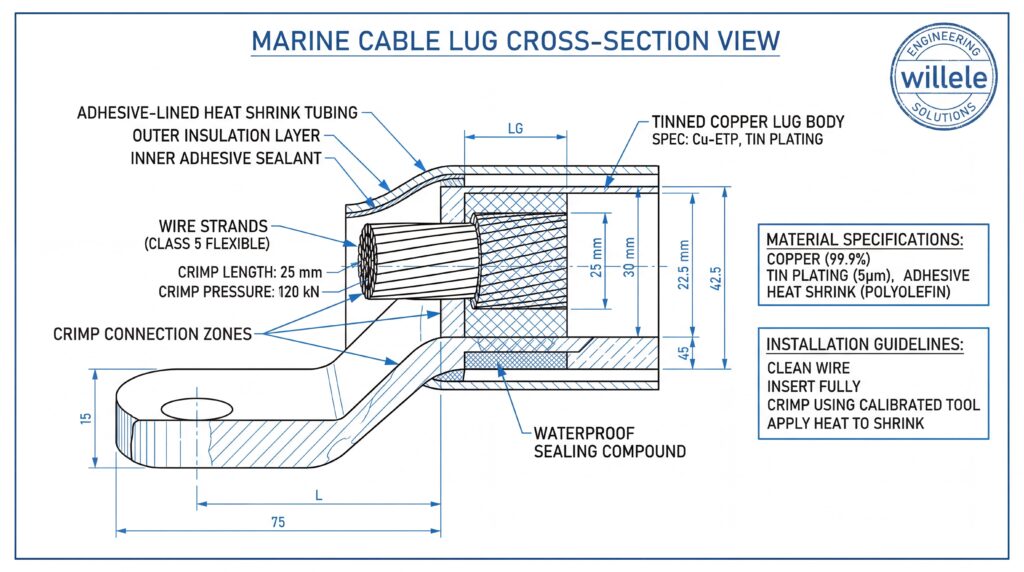
Figure 2: Technical cross-section diagram showing proper cable lug installation with adhesive-lined heat shrink tubing for waterproof sealing
Key Selection Criteria
Material Specifications
The choice of material significantly impacts cable lug performance in marine environments. Marine-grade cable lugs should use high-conductivity copper (typically 99.9% pure) with electro-tin plating thickness of at least 1 micron. The tin plating must be uniform and free from porosity to ensure complete corrosion protection. Barrel construction should be seamless or brazed to prevent moisture penetration. Stud holes should be precision-machined for proper fit with terminal hardware.
Current Rating and Sizing
Proper sizing ensures the cable lug can handle the electrical load without overheating. Cable lugs are sized according to the conductor gauge they accommodate (AWG or metric mm²) and the current they must carry. Undersized lugs create resistance and heat; oversized lugs may not fit properly or may require excessive crimping force. Always match the lug size to the cable size according to manufacturer specifications, and ensure the current rating exceeds the maximum expected load by at least 25% for safety margin.
Connection Type Compatibility
Cable lugs feature various stud hole sizes to match different terminal configurations. Common marine stud sizes include M6 (1/4 inch), M8 (5/16 inch), M10 (3/8 inch), and M12 (1/2 inch). Selecting the correct stud size ensures proper contact surface area and secure fastening. Some applications require ring terminals (complete circle), while others use fork terminals (open-ended) for easier installation. Ring terminals provide more secure connections and are preferred for critical marine applications.
Insulation and Sealing
Bare metal connections in marine environments inevitably corrode. Quality cable lug installations incorporate insulation and sealing to prevent moisture ingress. Heat shrink tubing with adhesive lining provides the most reliable seal, creating a waterproof barrier around the connection. The tubing should be marine-grade, UV-resistant, and sized appropriately for the cable and lug combination. Proper shrinking technique using a heat gun ensures the adhesive flows and creates a complete environmental seal.
Comparison of Marine Cable Lug Types
| Feature | Tinned Copper Compression | Bare Copper Compression | Mechanical Lugs | Solder Lugs |
|---|---|---|---|---|
| Corrosion Resistance | Excellent | Poor (requires sealing) | Fair | Good |
| Electrical Conductivity | Excellent | Excellent | Good | Excellent |
| Vibration Resistance | Excellent | Excellent | Poor | Excellent |
| Installation Skill Required | Moderate | Moderate | Low | High |
| Cost | Moderate | Low | Moderate | Low |
| Removability | No | No | Yes | No |
| Recommended for Marine Use | Yes | With proper sealing | Limited | Specialized use |
| Typical Lifespan | 10+ years | 2-5 years (unsealed) | Variable | 10+ years |
Cable Lug Sizing Guide for Common Marine Applications
| Application | Typical Wire Size | Recommended Lug Size | Stud Hole Size | Current Rating |
|---|---|---|---|---|
| Battery Main Positive | 2/0 AWG (67mm²) | 2/0 AWG Ring Terminal | 3/8″ (M10) | 300A+ |
| Battery Main Negative | 2/0 AWG (67mm²) | 2/0 AWG Ring Terminal | 3/8″ (M10) | 300A+ |
| Engine Starter Circuit | 1/0 AWG (53mm²) | 1/0 AWG Ring Terminal | 5/16″ (M8) | 250A+ |
| Bilge Pump | 14 AWG (2.5mm²) | 14 AWG Ring Terminal | #8 (M4) | 15A |
| Navigation Lights | 16 AWG (1.5mm²) | 16 AWG Ring Terminal | #8 (M4) | 10A |
| VHF Radio | 12 AWG (4mm²) | 12 AWG Ring Terminal | #10 (M5) | 25A |
| Inverter (Small) | 4 AWG (25mm²) | 4 AWG Ring Terminal | 1/4″ (M6) | 100A |
| Inverter (Large) | 2/0 AWG (67mm²) | 2/0 AWG Ring Terminal | 3/8″ (M10) | 300A+ |
| Solar Panel Wiring | 10 AWG (6mm²) | 10 AWG Ring Terminal | 1/4″ (M6) | 30A |
| Windlass | 2 AWG (35mm²) | 2 AWG Ring Terminal | 5/16″ (M8) | 150A |
Installation Best Practices
Proper Crimping Technique
A proper crimp creates a metallurgical bond between the cable and lug with low resistance and high mechanical strength. Use a ratchet-type crimping tool designed for the specific lug type and cable size. Position the lug barrel in the correct crimping die and apply full pressure until the ratchet releases. The crimp should compress the barrel uniformly without cracking or splitting. Avoid using pliers, hammers, or improper tools that create unreliable connections.
Heat Shrink Application
Marine-grade adhesive-lined heat shrink tubing provides waterproof sealing and strain relief. Cut tubing lengths approximately 1.5 times the lug barrel length. Slide tubing onto the cable before crimping the lug. After crimping, position the tubing to cover the entire barrel and extend slightly onto the cable insulation. Apply heat evenly using a heat gun, starting from the center and working outward. The adhesive will flow from the tubing ends, indicating a proper seal. Never use open flame, which can damage the materials and create fire hazards.
Torque Specifications
Proper torque ensures good electrical contact without damaging components. Overtightening can strip threads, crack lugs, or damage battery terminals. Undertightening creates high-resistance connections that overheat. Follow manufacturer torque specifications for all connections, using a calibrated torque wrench when possible. After installation, verify connections are secure but not over-tightened. Re-check torque after the first few hours of operation and periodically thereafter, as thermal cycling can loosen connections.
Strain Relief and Support
Cables should be supported along their length to prevent movement and vibration from stressing the lug connections. Use cable ties, clamps, or loom to secure cables at regular intervals. Ensure adequate strain relief near connection points so that cable movement does not transfer directly to the lug. Avoid sharp bends that can damage conductors and create stress points. Proper cable management extends the life of both cables and lugs while maintaining electrical reliability.
Common Installation Mistakes to Avoid
Mismatched Components
Using lugs designed for automotive or industrial applications in marine environments often leads to premature failure. Automotive lugs typically lack adequate tin plating and corrosion protection. Industrial lugs may not have the waterproof sealing features necessary for marine use. Always specify marine-grade or tinned copper lugs for boat applications, even when alternatives appear physically compatible.
Inadequate Sealing
Failing to properly seal crimped connections with heat shrink tubing leaves bare metal exposed to corrosive marine atmospheres. Even in seemingly dry locations, condensation and humidity cause corrosion over time. Always use adhesive-lined heat shrink tubing over crimped connections, extending the seal beyond the lug barrel onto the cable insulation. This small additional step dramatically extends connection lifespan.
Improper Crimping
Using the wrong crimping tool or die size creates connections with high resistance and poor mechanical strength. Avoid multi-purpose tools not specifically designed for cable lugs. Never solder lugs after crimping, as this creates brittle connections prone to cracking. Do not attempt to crimp oversized lugs onto undersized cables by folding conductors or using filler material. Proper tools and technique are essential for reliable connections.
Neglecting Maintenance
Marine electrical systems require periodic inspection and maintenance. Connections should be checked for corrosion, looseness, and heat damage at least annually. Corroded lugs should be replaced rather than cleaned, as corrosion often penetrates beneath the surface. Maintaining detailed records of installation dates and components helps track system age and plan proactive replacements before failures occur.
Testing and Verification
After installation, verify cable lug connections using appropriate testing methods. Visual inspection should show proper crimp compression, complete heat shrink coverage, and tight terminal connections. A gentle tug test confirms mechanical security—properly crimped lugs should not move or separate from the cable under moderate pulling force. Continuity testing with a multimeter verifies low-resistance electrical connection. Thermal imaging during system operation can identify high-resistance connections that generate excess heat. Regular testing as part of preventive maintenance catches developing problems before they cause failures.
Integration with Heat Shrink Systems
As a manufacturer specializing in heat shrink solutions, we emphasize the critical relationship between cable lugs and protective tubing. Quality cable lugs must work seamlessly with adhesive-lined heat shrink products to create complete environmental sealing. The combination of tinned copper lugs and properly applied marine-grade heat shrink tubing provides the most reliable termination system for marine electrical applications. This integrated approach ensures corrosion resistance, mechanical protection, and long-term reliability in the demanding marine environment.
Regulatory Standards and Compliance
Marine electrical installations must comply with applicable standards such as ABYC (American Boat and Yacht Council) E-11, ISO 10133, and NFPA 302. These standards specify requirements for cable sizing, overcurrent protection, and connection methods. Cable lugs should meet or exceed the conductivity and durability requirements specified in these standards. Using compliant components and installation methods ensures safety, insurance coverage, and resale value. Professional marine electricians follow these standards rigorously, and DIY installers should reference them for guidance.
Cost Considerations and Value
While marine-grade cable lugs cost more than general-purpose alternatives, the price difference is minimal compared to the potential costs of electrical failures. A failed connection can result in navigation equipment shutdown, battery drain, or in worst cases, electrical fires. Quality cable lugs properly installed provide decades of reliable service, making them an excellent investment in vessel safety and reliability. The small additional cost of tinned copper lugs and marine-grade heat shrink tubing is insignificant compared to the protection they provide for expensive electrical systems.
Environmental and Sustainability Factors
Modern marine electrical components increasingly consider environmental impact. Tinned copper lugs are fully recyclable at end of life. Proper installation that extends component lifespan reduces waste and replacement frequency. Heat shrink tubing products are available with reduced environmental impact formulations. Specifying quality components that last the lifetime of the vessel represents the most sustainable approach to marine electrical system construction.
FAQ
Q: Can I use automotive cable lugs on my boat?
A: While physically possible, automotive lugs lack the corrosion resistance required for marine environments. Marine-grade tinned copper lugs are specifically designed to withstand saltwater exposure and provide reliable long-term performance. The small additional cost is justified by significantly longer service life and improved safety.
Q: How do I determine the correct cable lug size for my application?
A: Match the lug to your cable’s AWG or metric size, then select the appropriate stud hole diameter for your terminal hardware. Ensure the lug’s current rating exceeds your maximum expected load by at least 25%. When in doubt, consult a marine electrical professional or refer to ABYC standards for guidance.
Q: Is crimping or soldering better for marine cable lugs?
A: For most marine applications, properly crimped tinned copper lugs with heat shrink sealing provide the best combination of reliability, ease of installation, and service life. Soldering requires significant skill to avoid cold joints and can damage nearby materials with heat. Crimping, when done correctly with proper tools, creates excellent connections that withstand marine environments.
Q: How often should marine cable lugs be inspected?
A: Inspect all electrical connections at least annually as part of routine maintenance. High-current connections, such as battery terminals and engine starters, should be checked more frequently—ideally every three to six months. Look for corrosion, discoloration, loose connections, or heat damage during inspections.
Q: Can I reuse cable lugs when replacing cables?
A: Generally, cable lugs are designed for single-use installation. Once crimped, the barrel deforms to match the specific cable. Removing and reusing lugs creates unreliable connections with potential resistance and mechanical problems. Always use new lugs when replacing cables to ensure proper performance and safety.
Q: What temperature rating should marine cable lugs have?
A: Marine cable lugs should be rated for at least 105°C (221°F) to handle the temperature extremes found in engine compartments and electrical panels. Higher temperature ratings (125°C or 150°C) provide additional safety margin for high-current applications and hot environments.
Q: How do I prevent cable lug corrosion in saltwater environments?
A: Use tinned copper lugs exclusively, seal all connections with adhesive-lined marine-grade heat shrink tubing, and apply marine terminal protector spray after installation. Regular inspection and maintenance help catch developing corrosion before it causes failures. Proper installation technique that prevents moisture ingress is the most effective corrosion prevention method.
