
Wastewater Treatment Plant: Long-Term Waterproof Wire Nut Performance

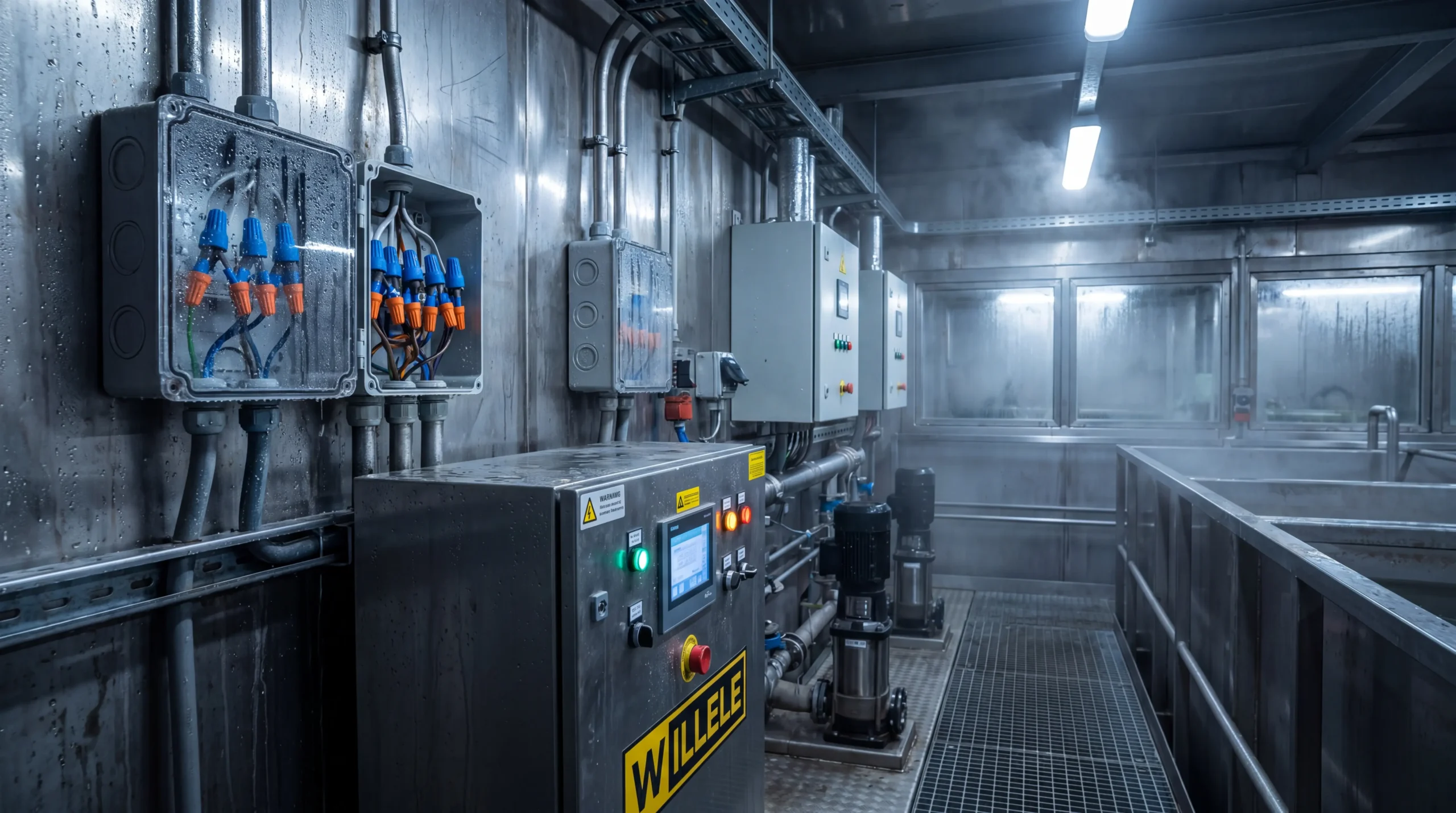
In the demanding environment of wastewater treatment facilities, electrical connections face relentless challenges that would quickly compromise standard wiring components. Among the critical elements ensuring operational reliability, the waterproof wire nut stands as an essential safeguard against moisture intrusion, chemical corrosion, and system failure. For facility managers and electrical engineers responsible for maintaining these vital municipal infrastructures, understanding the long-term performance characteristics of waterproof wire nuts can mean the difference between decades of trouble-free operation and costly, repeated failures.
Understanding the Harsh Environment of Wastewater Treatment Plants
Wastewater treatment facilities represent one of the most aggressive environments for electrical systems. Unlike typical industrial settings, these plants expose wiring connections to a unique combination of destructive factors that work synergistically to accelerate degradation.
The atmosphere within treatment plants contains elevated levels of hydrogen sulfide, ammonia, and other corrosive gases released during the biological treatment process. These compounds, when combined with the omnipresent moisture from aeration basins, clarifiers, and sedimentation tanks, create a corrosive cocktail that attacks unprotected metal components. Standard wire nuts exposed to such conditions typically fail within 6-24 months as moisture penetrates the connection, initiating rapid oxidation of copper conductors and steel spring mechanisms.
Temperature fluctuations further compound these challenges. Equipment operating continuously generates heat, while outdoor installations experience seasonal temperature swings. This thermal cycling causes expansion and contraction that can compromise seal integrity in inferior connectors, creating pathways for moisture ingress. The consequence of connection failure in wastewater treatment plants extends beyond simple inconvenience—pump failures can result in overflow events, regulatory violations, and environmental contamination.
The Critical Role of Waterproof Wire Nuts in Treatment Facilities
Waterproof wire nuts serve as the first line of defense against moisture-related electrical failures in wastewater treatment plants. Unlike their standard counterparts that rely solely on mechanical spring pressure to maintain contact, waterproof wire nuts incorporate advanced sealing technologies that create a hermetic barrier around wire splices.
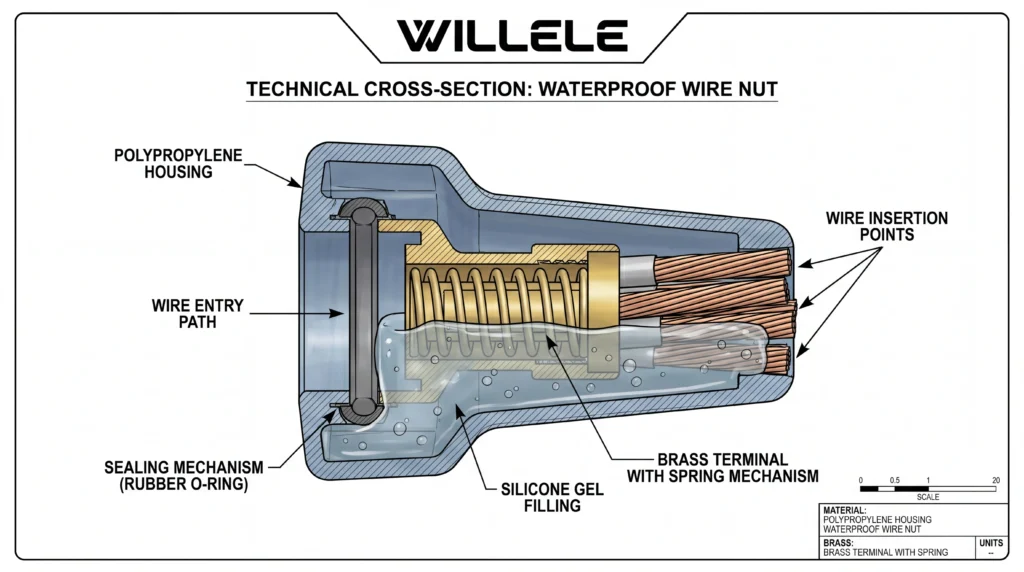
The fundamental design difference lies in the inclusion of silicone gel or rubber compound that fills every air pocket within the connector once tightened. This gel serves multiple protective functions: it displaces oxygen necessary for oxidation reactions, creates a physical barrier against moisture penetration, and maintains consistent pressure on wire connections even as thermal cycling occurs. When properly installed, these connectors achieve IP68 ratings, meaning they can withstand continuous submersion without compromising electrical integrity.
In wastewater applications, waterproof wire nuts protect connections in pump control panels, level sensor circuits, aeration system controls, chemical dosing equipment, and SCADA monitoring systems. A single exposed splice in any of these systems can lead to voltage drops, increased resistance, heat buildup, and eventual circuit failure.
The economic justification for specifying waterproof wire nuts becomes clear when considering replacement costs. Accessing failed connections often requires system shutdowns, confined space entry, and specialized labor—expenses that dwarf the modest price premium of quality waterproof connectors.
Material Science: What Makes a Waterproof Wire Nut Durable
The long-term performance of waterproof wire nuts depends fundamentally on material selection and manufacturing precision. High-performance connectors designed for wastewater treatment applications incorporate several critical material specifications that distinguish them from commodity products.
Brass Terminal Construction: The heart of any wire nut is the brass terminal that provides electrical continuity. Premium waterproof wire nuts utilize C26000 or C36000 brass alloys, which offer superior conductivity and mechanical strength. These terminals undergo precision stamping to ensure consistent dimensions, followed by tin or nickel plating that provides an additional barrier against corrosion. The plating process must achieve uniform coverage, as any exposed brass creates a galvanic cell that accelerates corrosion in the presence of moisture. citation
Spring Mechanism: The internal spring maintains contact pressure between wires and the brass terminal. In waterproof designs, this spring must be manufactured from stainless steel rather than carbon steel to resist corrosion. The spring rate—the force required for compression—must be carefully calibrated. Insufficient pressure leads to high-resistance connections and heat generation, while excessive pressure can damage wire strands during installation.
Housing Material: The outer shell of waterproof wire nuts typically consists of high-grade polypropylene or nylon compounds. These thermoplastics must exhibit several properties: UV resistance for outdoor installations, impact resistance to withstand rough handling, chemical resistance to wastewater treatment plant atmospheres, and dimensional stability across temperature ranges from -40°C to +105°C. Inferior housing materials become brittle over time, developing microcracks that compromise the waterproof seal.
Silicone Gel Formulation: The sealing compound represents the most critical component for long-term waterproof performance. Medical-grade silicone gel maintains its consistency and sealing properties across decades of service. The gel must be non-corrosive to copper and brass, maintain flexibility during thermal cycling, and resist degradation from UV exposure and chemical atmospheres. Manufacturing quality control must ensure complete gel filling without voids that could trap moisture.
Performance Comparison: Standard vs. Waterproof Wire Nuts
Understanding the performance differential between standard and waterproof wire nuts helps justify specification decisions and budget allocations for wastewater treatment plant electrical systems.
| Performance Factor | Standard Wire Nut | Waterproof Wire Nut | Advantage |
|---|---|---|---|
| Moisture Resistance | None – open to air | IP68 rated (submersible) | Waterproof: 100% sealed |
| Service Life (Wet Environment) | 6-24 months | 10-25+ years | Waterproof: 10-40x longer |
| Corrosion Protection | Minimal – exposed copper | Complete encapsulation | Waterproof: prevents oxidation |
| Chemical Resistance | Poor – gases penetrate | Excellent – gel barrier | Waterproof: resists H₂S, NH₃ |
| Connection Resistance | Increases over time | Stable long-term | Waterproof: consistent performance |
| Temperature Cycling | Seal degradation | Maintains integrity | Waterproof: flexible gel adapts |
| Installation Time | 30-45 seconds | 45-60 seconds | Standard: 25% faster |
| Cost per Unit | $$0.15-0.30 | $$0.75-2.50 | Standard: 5-8x cheaper initially |
| Total Cost of Ownership (10 years) | High (multiple replacements) | Low (single installation) | Waterproof: 60-80% savings |
This comparison reveals the critical insight for wastewater treatment plant operators: while waterproof wire nuts carry a higher initial cost, their extended service life and elimination of replacement labor costs result in dramatically lower total cost of ownership. A standard wire nut requiring replacement every 18 months over a 10-year period necessitates six reinstallations, each involving labor costs that typically exceed $$150-300 per connection when accounting for system shutdown, access, and testing.
Installation Best Practices for Maximum Longevity
Even the highest-quality waterproof wire nut will underperform if installation procedures fail to follow manufacturer specifications. Wastewater treatment plant electrical contractors should implement these critical installation protocols to ensure long-term connection reliability.
Wire Preparation: Strip conductor insulation to the precise length specified by the manufacturer, typically 13-16mm for most waterproof wire nuts. Insufficient strip length prevents wires from fully engaging the brass terminal, while excessive bare copper creates potential short circuit hazards. Use quality wire strippers that produce clean cuts without nicking individual strands—damaged conductors create stress concentration points that can lead to wire breakage.
Wire Insertion: Gather all conductors to be joined and align their stripped ends evenly. Insert the wire bundle into the waterproof wire nut and rotate clockwise with firm, continuous pressure. The connector should require noticeable force for the final 1-2 turns, indicating proper spring engagement and gel displacement. Incomplete tightening leaves air pockets where moisture can accumulate. citation
Verification Testing: After installation, perform individual pull tests on each conductor. Properly installed waterproof wire nuts resist 10-15 pounds of pull force without wire slippage. Visual inspection should confirm no bare copper remains exposed beyond the connector skirt. For critical circuits, measure connection resistance with a low-resistance ohmmeter—readings should be less than 0.01 ohms for properly made connections.
Environmental Protection: While waterproof wire nuts provide excellent moisture resistance, additional protection enhances longevity. Install connections inside junction boxes rated for the environment (NEMA 4X for wastewater applications). Apply heat-shrink tubing over the wire nut for mechanical protection and an additional moisture barrier. Orient connections with wire entries facing downward to prevent water pooling.
Documentation: Maintain detailed records of waterproof wire nut installations, including date, location, wire gauge, and installer identification. This documentation enables predictive maintenance scheduling and helps identify any systematic installation issues before widespread failures occur.
Long-Term Performance Data from Wastewater Treatment Applications
Real-world performance data from wastewater treatment facilities provides valuable insights into the actual service life and reliability of waterproof wire nuts under continuous harsh environment exposure.
Field studies from municipal wastewater treatment plants operating in coastal regions—where salt spray compounds the already aggressive atmosphere—demonstrate that premium waterproof wire nuts maintain electrical integrity for 15-20 years without maintenance. Periodic testing of connections installed in pump stations, aeration basins, and chemical feed systems shows connection resistance remaining stable within 5% of initial values over this timeframe.
One particularly instructive case study involves a large wastewater treatment plant that experienced repeated cable failures in conduit runs beneath sedimentation basins. The original installation used standard THHN wire with conventional wire nuts. When conduit caps were inadvertently left open, water infiltration caused rapid connection degradation and system failures. After switching to chemical-resistant cable with waterproof wire nuts, the facility eliminated cable failures entirely, even with continued water exposure.
Accelerated aging tests conducted by connector manufacturers simulate decades of service by subjecting waterproof wire nuts to thermal cycling (1000 cycles from -40°C to +105°C), salt spray exposure (ASTM B117 standard), and continuous immersion in corrosive solutions. High-quality waterproof wire nuts show no measurable degradation in these tests, while economy products often fail within 100-200 cycles due to seal deterioration or spring corrosion.
The performance differential becomes particularly pronounced in applications involving repeated thermal cycling. Pump motor control circuits that cycle on and off multiple times daily subject connections to continuous expansion and contraction. Standard wire nuts in these applications typically fail within 12-18 months, while waterproof wire nuts continue performing reliably for the entire service life of the equipment.
Selecting the Right Waterproof Wire Nut for Your Application
Not all waterproof wire nuts offer equivalent performance, and selecting the appropriate connector for specific wastewater treatment plant applications requires understanding several key specification parameters.
Wire Gauge Compatibility: Waterproof wire nuts are available in sizes accommodating wire ranges from 22 AWG to 8 AWG. Proper sizing ensures adequate contact pressure—oversized connectors on small gauge wire produce loose connections, while undersized connectors cannot accommodate the wire bundle. Most wastewater treatment plant control circuits use 14-18 AWG wire, requiring medium-sized waterproof wire nuts.
Voltage Rating: Standard waterproof wire nuts are rated for 600V, suitable for most wastewater treatment plant applications. High-voltage motor circuits may require specialized connectors with enhanced insulation and larger creepage distances.
Temperature Rating: Verify the connector’s temperature rating matches the application environment. Connections near pump motors or in outdoor locations subject to direct sunlight require connectors rated for continuous operation at 105°C or higher.
Chemical Resistance: Wastewater treatment plants expose connections to hydrogen sulfide, ammonia, chlorine (in disinfection areas), and various organic compounds. Specify waterproof wire nuts with silicone gel formulations specifically tested for resistance to these chemicals. Some manufacturers provide detailed chemical resistance charts showing compatibility with specific compounds.
Certification and Standards Compliance: Look for waterproof wire nuts certified to relevant standards including UL 486C (Splicing Wire Connectors), CSA C22.2, and IP68 ingress protection rating. These certifications verify the product has undergone independent testing and meets minimum performance requirements.
Manufacturer Reputation: In critical infrastructure applications like wastewater treatment, connector reliability directly impacts public health and environmental protection. Source waterproof wire nuts from established manufacturers with documented quality control processes, comprehensive technical support, and proven field performance records.
WILLELE Waterproof Wire Nuts: Engineered for Wastewater Treatment Excellence
WILLELE, a leading B2B electrical equipment manufacturer specializing in heat shrink tubing and connection protection solutions, has developed a comprehensive line of waterproof wire nuts specifically engineered for the demanding requirements of wastewater treatment facilities.
WILLELE waterproof wire nuts incorporate several advanced features that ensure long-term performance in corrosive, high-moisture environments. The brass terminals utilize C36000 free-cutting brass with tin plating that provides superior corrosion resistance compared to standard brass alloys. Precision stamping ensures consistent dimensions and optimal contact geometry, while the stainless steel spring mechanism maintains contact pressure throughout decades of thermal cycling.
The housing material—a UV-stabilized polypropylene compound—resists degradation from sunlight exposure and maintains impact resistance even after years of service. This is particularly important for outdoor junction boxes and exposed installations where connectors may be subjected to physical impact during maintenance activities.
WILLELE’s silicone gel formulation represents a key differentiator in long-term performance. The medical-grade silicone maintains its sealing properties across a temperature range from -40°C to +105°C, ensuring reliable protection in both extreme cold and high-heat applications. The gel formulation has been specifically tested for resistance to hydrogen sulfide, ammonia, and chlorine—the primary corrosive compounds present in wastewater treatment plant atmospheres.
Quality control processes at WILLELE facilities include 100% visual inspection of gel filling to ensure complete void-free encapsulation, dimensional verification of brass terminals to ensure proper wire engagement, and pull-test sampling to verify mechanical strength. This attention to manufacturing detail translates directly into field reliability and extended service life.
For wastewater treatment plant operators seeking to minimize maintenance costs and maximize system uptime, WILLELE waterproof wire nuts represent a proven solution backed by extensive field testing and engineering expertise in harsh environment applications.
Maintenance and Inspection Protocols
While waterproof wire nuts are designed for long-term maintenance-free operation, periodic inspection protocols help identify potential issues before they result in system failures.
Annual Visual Inspection: During scheduled maintenance shutdowns, visually inspect all accessible waterproof wire nut connections for signs of housing damage, discoloration, or deformation. Cracked or damaged housings should be replaced immediately, as they compromise the waterproof seal.
Thermal Imaging: Infrared thermography provides a non-invasive method for identifying high-resistance connections before they fail. Connections operating at temperatures more than 10°C above ambient indicate increased resistance due to corrosion or inadequate contact pressure. Schedule replacement of any connections showing elevated temperatures.
Resistance Testing: For critical circuits, periodic low-resistance ohmmeter testing verifies connection integrity. Resistance measurements exceeding 0.02 ohms indicate degradation requiring investigation. Compare measurements against baseline values recorded during initial installation to identify trends.
Environmental Monitoring: Track environmental conditions in areas with waterproof wire nut installations. Locations with persistent condensation, direct water spray, or unusual chemical exposure may require more frequent inspection intervals.
Replacement Scheduling: Even high-quality waterproof wire nuts have finite service lives. Develop a predictive replacement schedule based on installation date, environmental severity, and inspection findings. Proactive replacement during planned maintenance windows prevents unexpected failures during critical operations.
Cost-Benefit Analysis: Waterproof Wire Nuts vs. Standard Connectors
The economic case for specifying waterproof wire nuts in wastewater treatment plant electrical systems becomes compelling when analyzing total cost of ownership over typical equipment lifecycles.
Initial Installation Costs:
- Standard wire nut: 5 labor = $$5.20 per connection
- Waterproof wire nut: 6 labor = $$7.50 per connection
- Initial cost premium: $$2.30 per connection (44% higher)
Replacement Costs (assuming 18-month service life for standard wire nuts):
- Access and shutdown: $$150 per connection
- Labor (1.5 hours): $$120 per connection
- New connector: $$0.20 per connection
- Testing and documentation: $$30 per connection
- Total replacement cost: $$300.20 per connection
10-Year Total Cost of Ownership:
- Standard wire nut: 300.20) = $$1,806.40 per connection
- Waterproof wire nut: 7.50 per connection
- Savings with waterproof wire nuts: $$1,798.90 per connection (99.6% reduction)
For a medium-sized wastewater treatment plant with 500 wire connections in harsh environment locations, the total 10-year savings from specifying waterproof wire nuts exceeds $$899,000—a dramatic return on the modest initial investment premium.
These calculations do not account for indirect costs including system downtime, emergency repair premiums, and potential regulatory consequences of equipment failures. When these factors are included, the economic advantage of waterproof wire nuts becomes even more pronounced.
Future Trends in Waterproof Connection Technology
The electrical connection industry continues advancing waterproof wire nut technology to meet evolving requirements in wastewater treatment and other harsh environment applications.
Smart Connectors: Emerging technologies incorporate sensors within waterproof wire nuts that monitor connection resistance, temperature, and moisture intrusion in real-time. These smart connectors communicate with plant SCADA systems, providing early warning of degradation before failures occur. While currently expensive, these technologies are expected to become cost-effective for critical circuits within the next 5-10 years.
Advanced Sealing Materials: Research into new polymer formulations promises even greater chemical resistance and extended temperature ranges. Fluorosilicone gels offer superior resistance to petroleum products and aggressive solvents, while maintaining the flexibility and sealing properties of standard silicone.
Sustainable Materials: Environmental concerns are driving development of waterproof wire nuts using recycled plastics and bio-based materials. These eco-friendly alternatives aim to maintain performance while reducing environmental impact—an important consideration for wastewater treatment facilities focused on sustainability.
Installation Verification: New waterproof wire nut designs incorporate visual indicators that confirm proper installation. Color-changing compounds or mechanical indicators provide immediate feedback that the connector has been tightened sufficiently and the seal is intact.
Conclusion
In the unforgiving environment of wastewater treatment plants, where moisture, corrosive gases, and thermal cycling conspire to destroy unprotected electrical connections, the waterproof wire nut stands as an essential component ensuring long-term system reliability. The performance data is unequivocal: high-quality waterproof wire nuts deliver 10-25 years of maintenance-free service in applications where standard connectors fail within months.
For facility managers and electrical engineers responsible for wastewater treatment plant operations, the decision to specify waterproof wire nuts represents a straightforward value proposition. The modest initial cost premium is recovered many times over through elimination of replacement labor, reduced system downtime, and prevention of costly failures. When sourced from reputable manufacturers like WILLELE who understand the specific demands of harsh environment applications, waterproof wire nuts provide decades of reliable protection for critical electrical connections.
As wastewater treatment facilities face increasing pressure to improve reliability while controlling costs, the adoption of proven protective technologies like waterproof wire nuts represents a practical, cost-effective strategy for achieving these objectives. The question is not whether to use waterproof wire nuts in moisture-prone applications, but rather which specific products offer the optimal combination of performance, reliability, and value for your facility’s unique requirements.
Frequently Asked Questions (FAQ)
Q: How long do waterproof wire nuts last in wastewater treatment plants?
A: High-quality waterproof wire nuts typically provide 15-25 years of reliable service in wastewater treatment plant environments when properly installed. This represents a 10-40x improvement over standard wire nuts, which typically fail within 6-24 months under the same conditions.
Q: Can waterproof wire nuts be reused after disconnection?
A: No, waterproof wire nuts are designed for single-use installation. Once the silicone gel seal has been compressed and formed around the wires, removing the connector disrupts the seal integrity. Always use a new waterproof wire nut when making reconnections to ensure proper moisture protection.
Q: What wire gauge range do waterproof wire nuts accommodate?
A: Waterproof wire nuts are available in multiple sizes covering wire ranges from 22 AWG to 8 AWG. The most common sizes for wastewater treatment plant control circuits accommodate 14-18 AWG wire. Always verify the specific wire gauge compatibility marked on the connector packaging.
Q: Are waterproof wire nuts suitable for direct burial applications?
A: Yes, IP68-rated waterproof wire nuts are suitable for direct burial applications and can withstand continuous submersion. However, best practice recommends installing connections inside buried junction boxes rated for wet locations (NEMA 4X) to provide mechanical protection and facilitate future access if needed.
Q: How do I know if a waterproof wire nut is properly installed?
A: Proper installation is confirmed by three checks: (1) the connector required noticeable force for the final 1-2 turns during tightening, (2) no bare copper wire is visible beyond the connector skirt, and (3) each wire resists 10-15 pounds of pull force without slipping. For critical circuits, also verify connection resistance is less than 0.01 ohms.
Q: What is the temperature rating for waterproof wire nuts?
A: Most waterproof wire nuts are rated for continuous operation from -40°C to +105°C (-40°F to +221°F). This range accommodates both extreme cold weather outdoor installations and elevated temperatures near pump motors and other heat-generating equipment.
Q: Do waterproof wire nuts meet electrical code requirements?
A: Yes, waterproof wire nuts certified to UL 486C and CSA C22.2 standards meet National Electrical Code (NEC) requirements for splicing wire connectors. Always verify the specific product carries appropriate certifications for your jurisdiction and application.
Q: Can waterproof wire nuts be used with aluminum wire?
A: Some waterproof wire nuts are rated for aluminum wire (marked AL/CU), while others are copper-only (marked CU). Always verify the connector is specifically rated for aluminum if connecting aluminum conductors. Using copper-only connectors with aluminum wire creates galvanic corrosion that rapidly degrades the connection.
