
Electric Vehicle Battery Systems: Fire Safety Heat-Shrink Solutions

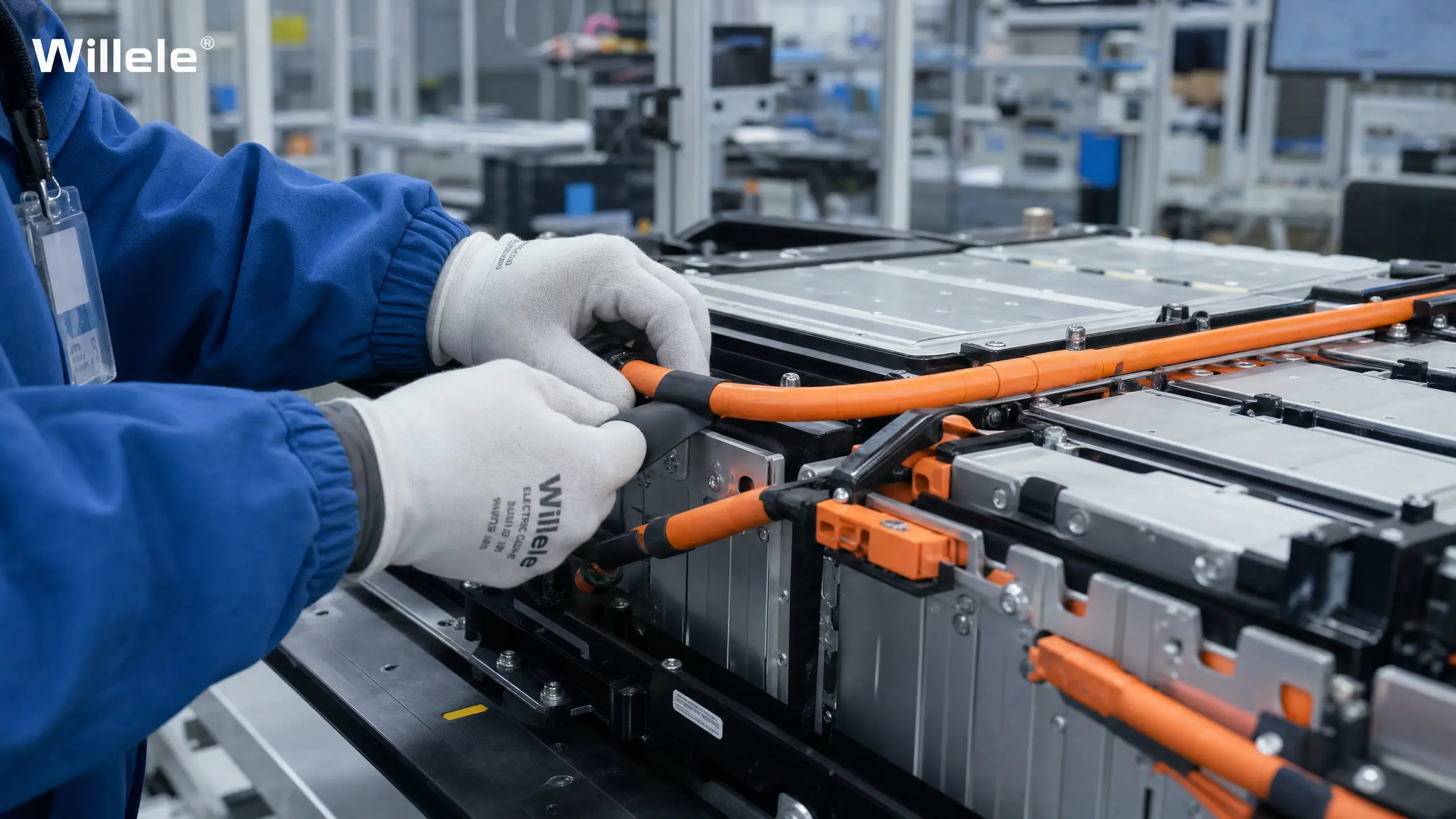
The rapid expansion of electric vehicle adoption has brought unprecedented attention to battery safety, particularly concerning thermal runaway and fire hazards. As lithium-ion battery packs store enormous amounts of energy in compact spaces, the electrical connections within these systems require robust fire safety protection. Fire safety heat-shrink tubing has emerged as a critical component in EV battery design, providing essential insulation, environmental sealing, and flame-retardant protection that can prevent catastrophic failures.
The Critical Role of Fire Safety Heat-Shrink in EV Battery Systems
Electric vehicle battery systems operate at voltages ranging from 400V to over 800V in modern platforms, with currents exceeding 500 amperes during rapid charging and high-performance driving. These extreme electrical conditions generate significant heat, create potential arc flash hazards, and demand insulation materials that can withstand both normal operating stresses and emergency fault conditions.
Fire safety heat-shrink tubing serves multiple essential functions in EV battery assemblies. It provides high-voltage insulation that prevents electrical shorts between adjacent conductors, creates environmental barriers against moisture and contaminants that could compromise battery performance, and most critically, incorporates flame-retardant properties that can contain electrical fires before they propagate throughout the battery pack.
The consequences of inadequate fire protection in EV battery systems extend beyond individual vehicle safety. High-profile battery fires have resulted in massive recalls, damaged brand reputations, and heightened regulatory scrutiny across the automotive industry. Fire safety heat-shrink solutions represent a proactive engineering approach that addresses these risks at the component level.
Understanding Thermal Runaway and Fire Propagation
Thermal runaway represents the most severe failure mode in lithium-ion battery systems. This chain reaction occurs when a battery cell experiences internal short circuits, mechanical damage, or thermal abuse that causes rapid temperature increase. Once initiated, thermal runaway in a single cell can reach temperatures exceeding 800°C, generating flammable gases and potentially igniting adjacent cells in a cascading failure.
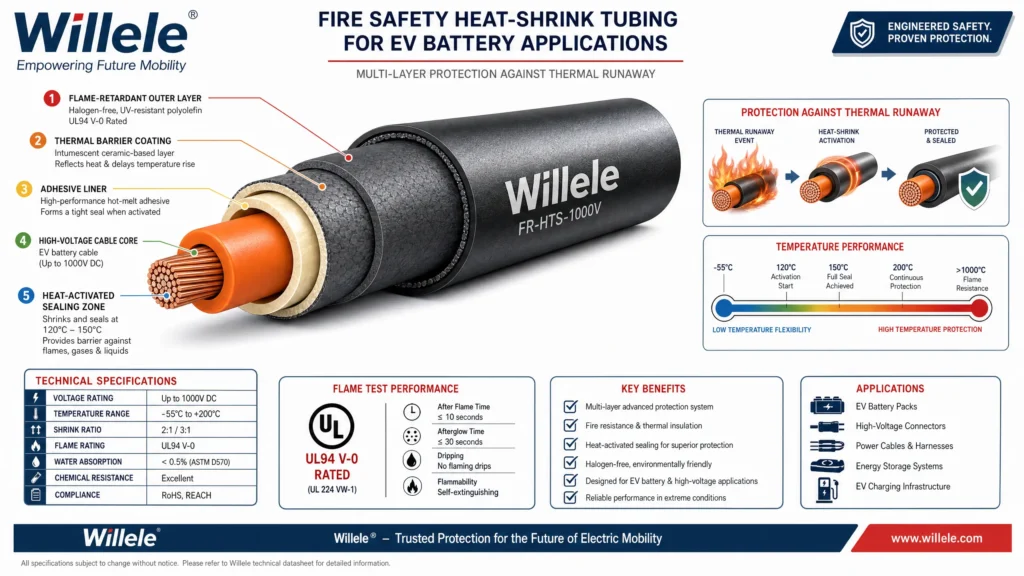
Fire safety heat-shrink tubing plays a crucial role in breaking this propagation chain. When applied to battery interconnects, busbars, and high-voltage cabling, fire safety heat-shrink creates thermal barriers that slow heat transfer between cells and modules. The flame-retardant properties prevent electrical arcs from igniting battery electrolyte vapors, while the insulation integrity maintains electrical isolation even as temperatures rise.
Modern fire safety heat-shrink formulations incorporate intumescent additives that expand when exposed to extreme heat, forming insulating char layers that provide additional thermal protection. This active response mechanism can provide critical seconds or minutes that allow battery management systems to detect faults, isolate affected modules, and activate cooling systems before catastrophic failure occurs.
High-Voltage Applications in EV Battery Packs
Battery Module Interconnections
Individual battery cells are connected in series and parallel configurations to achieve the voltage and capacity requirements of EV battery packs. These interconnections utilize busbars, flexible cables, and welded tabs that must maintain perfect electrical contact while remaining completely isolated from adjacent connections.
Fire safety heat-shrink tubing protects these critical junctions by providing multiple layers of defense. The primary insulation layer prevents phase-to-phase and phase-to-ground faults that could trigger short circuits. The flame-retardant properties ensure that any electrical arcing that does occur cannot ignite surrounding materials. The environmental sealing prevents electrolyte leakage from compromising electrical integrity.
High-shrink-ratio tubing (3:1 or 4:1) proves particularly valuable in battery module applications, as it can accommodate the irregular geometries of busbar connections while shrinking down to provide tight seals around smaller wire terminations. This versatility reduces inventory requirements and simplifies assembly processes in high-volume manufacturing environments.
High-Voltage Cable Assemblies
The main battery cables connecting the battery pack to the inverter, charging port, and auxiliary systems carry the highest currents in the vehicle. These cables typically use orange insulation as a safety identifier and require additional protection at termination points, splice locations, and wherever the cable passes through structural elements.
Fire safety heat-shrink tubing at these locations provides strain relief that prevents mechanical stress from compromising electrical connections, creates waterproof seals that maintain insulation resistance in wet conditions, and offers flame-retardant protection that can contain arc flash events. Heavy-wall fire safety heat-shrink variants provide impact resistance that protects cables from road debris, manufacturing handling, and service operations.
Adhesive-lined fire safety heat-shrink tubing delivers superior performance in high-voltage cable applications. The hot-melt adhesive inner layer flows during heat application, completely filling voids and creating hermetic seals that prevent moisture ingress. This moisture barrier proves essential for maintaining the megohm-level insulation resistance required for high-voltage safety.
Battery Management System Connections
Battery management systems (BMS) monitor individual cell voltages, temperatures, and currents throughout the battery pack, providing the data necessary for safe operation. The sensor wiring and communication cables connecting the BMS to individual cells and modules must maintain signal integrity while operating in the electrically noisy environment of a high-power battery system.
Fire safety heat-shrink tubing protects these low-voltage connections from electromagnetic interference, physical damage, and thermal exposure. While the voltage levels are lower than main power connections, the consequences of BMS failures can be equally severe, as loss of monitoring capability prevents detection of developing faults.
Specialized fire safety heat-shrink tubing with conductive layers provides EMI shielding for sensitive BMS communication lines, ensuring reliable data transmission even during high-current charging and discharging operations. This shielding capability prevents false readings that could trigger unnecessary safety shutdowns or, worse, mask genuine fault conditions.
Material Technologies for EV Fire Safety Applications
Polymer Selection for High-Voltage Environments
Fire safety heat-shrink tubing for EV battery applications utilizes advanced polymer systems engineered to meet the unique demands of high-voltage, high-temperature automotive environments:
Cross-Linked Polyolefin Systems: Modified polyolefin formulations with enhanced flame retardancy represent the most common material for EV battery applications. These materials offer excellent electrical properties, flexibility across automotive temperature ranges (-40°C to +125°C), and cost-effectiveness for high-volume production. Halogen-free flame retardant additives ensure low smoke generation and reduced toxicity.
Fluoropolymer Systems: For applications requiring extreme temperature capability or superior chemical resistance, fluoropolymer fire safety heat-shrink provides unmatched performance. These materials maintain electrical properties at temperatures exceeding 200°C, resist battery electrolyte exposure, and generate minimal smoke during combustion. The higher cost limits fluoropolymer use to critical applications where standard materials cannot meet requirements.
Elastomeric Systems: Silicone rubber fire safety heat-shrink combines flexibility, thermal stability, and excellent flame resistance. These materials prove particularly valuable for applications requiring flexibility during installation around complex battery geometries or where thermal cycling demands materials that maintain properties across repeated expansion and contraction cycles.
Flame-Retardant Mechanisms and Testing
Fire safety heat-shrink tubing for EV applications must meet stringent flammability standards including UL 94 V-0, ISO 6722, and automotive OEM specifications. These standards mandate self-extinguishing behavior, limited flame spread, and controlled smoke generation.
Multiple flame-retardant mechanisms work synergistically in advanced fire safety heat-shrink formulations:
Phosphorus-Based Systems: Phosphorus compounds promote char formation that insulates underlying material from heat and oxygen. These halogen-free systems address environmental concerns while providing effective flame retardancy.
Nitrogen-Based Systems: Melamine and other nitrogen-containing additives release inert gases during combustion, diluting flammable gases and cooling the combustion zone.
Mineral Fillers: Aluminum trihydrate and magnesium hydroxide release water vapor when heated, providing endothermic cooling and diluting combustible gases. These inorganic fillers also contribute to char formation and structural integrity at elevated temperatures.
Intumescent Additives: These specialized compounds expand dramatically when exposed to flames, creating thick insulating layers that protect underlying materials and slow fire propagation.
Performance Requirements and Industry Standards
| Specification | Fire Safety Heat-Shrink (EV Grade) | Standard Heat-Shrink | Critical Difference |
|---|---|---|---|
| Voltage Rating | 600V to 1200V | 300V to 600V | High-voltage insulation capability |
| Temperature Range | -40°C to +150°C continuous | -20°C to +105°C | Extended automotive temperature range |
| Flame Resistance | UL 94 V-0, self-extinguishing <10 sec | UL 94 HB or V-2 | Superior flame retardancy |
| Dielectric Strength | >20 kV/mm | >15 kV/mm | Enhanced electrical insulation |
| Smoke Generation | Low smoke, halogen-free | Standard smoke levels | Critical for enclosed battery packs |
| Thermal Shock | -40°C to +150°C, 10 cycles | Limited thermal cycling | Automotive durability requirement |
| Fluid Resistance | Resistant to coolants, oils, electrolytes | Limited chemical resistance | Essential for battery environment |
| Shrink Ratio | 2:1, 3:1, 4:1 available | Typically 2:1 | Versatility for complex geometries |
| Wall Thickness | 0.5mm to 3.0mm | 0.3mm to 1.5mm | Enhanced mechanical protection |
| Insulation Resistance | >10,000 MΩ at rated voltage | >1,000 MΩ | Critical for high-voltage safety |
Installation Best Practices for EV Battery Manufacturing
Quality Control in High-Volume Production
EV battery manufacturing demands consistent, repeatable installation of fire safety heat-shrink tubing across thousands of connections per vehicle. Automated and semi-automated installation systems ensure quality while meeting production rate requirements.
Automated heat-shrink application systems utilize precision cut-to-length tubing, robotic positioning, and controlled hot-air shrinking to achieve consistent results. Vision systems verify proper positioning before heat application, while temperature monitoring ensures complete shrinkage without overheating. These systems can process multiple connections simultaneously, meeting the throughput demands of modern EV production lines.
For manual installation operations, detailed work instructions, calibrated heat guns with temperature feedback, and go/no-go gauges ensure operator consistency. Training programs emphasize the critical safety role of fire safety heat-shrink protection, motivating careful attention to installation quality.
Verification and Testing Protocols
Every EV battery pack undergoes rigorous electrical testing before installation in vehicles. High-voltage insulation resistance testing verifies that all connections maintain megohm-level isolation, confirming proper fire safety heat-shrink installation. Dielectric withstand testing applies voltages exceeding normal operating levels to verify insulation integrity under stress conditions.
Visual inspection protocols identify incomplete shrinkage, adhesive flow deficiencies (for lined tubing), physical damage, and contamination. Automated optical inspection systems can detect defects that might escape manual inspection, particularly in high-volume production environments.
Pull testing on sample connections verifies mechanical strength, ensuring that fire safety heat-shrink provides adequate strain relief. Thermal cycling testing subjects completed assemblies to repeated temperature extremes, validating long-term reliability under automotive operating conditions.
Traceability and Documentation
Automotive quality systems require complete traceability of all materials used in safety-critical applications. Fire safety heat-shrink tubing lot numbers are recorded during installation, enabling correlation between material properties and field performance. If quality issues emerge, traceability systems identify affected vehicles for targeted inspection or recall.
Material certifications documenting compliance with automotive specifications, test reports confirming electrical and mechanical properties, and installation records proving proper procedures were followed create the documentation foundation for automotive quality assurance.
Emerging Technologies and Future Developments
Next-Generation Fire Suppression Materials
Research into active fire suppression materials promises enhanced protection for future EV battery systems. Fire safety heat-shrink tubing incorporating microencapsulated fire suppressants can release flame-inhibiting chemicals when exposed to elevated temperatures, providing additional protection beyond passive flame retardancy.
Phase-change materials embedded in fire safety heat-shrink tubing can absorb large amounts of thermal energy during melting transitions, slowing thermal runaway propagation. These materials act as thermal buffers that provide critical time for battery management systems to respond to developing faults.
Smart Monitoring Integration
Integration of temperature and voltage sensors directly into fire safety heat-shrink tubing enables real-time monitoring of connection health. These smart materials can detect developing hot spots, insulation degradation, or mechanical damage before failures occur, enabling predictive maintenance and preventing catastrophic events.
Color-changing indicators that reveal exposure to excessive temperature provide visual confirmation of thermal events during manufacturing, service operations, or accident investigations. This capability supports quality control and failure analysis efforts.
Sustainable Material Development
Environmental concerns drive development of bio-based and recyclable fire safety heat-shrink materials. Polymers derived from renewable resources, recyclable thermoplastic formulations, and materials compatible with battery pack recycling processes address end-of-life considerations while maintaining safety performance.
Reduced-thickness materials that maintain electrical and mechanical properties while using less material support lightweighting initiatives that extend vehicle range. Every gram removed from battery pack components contributes to improved energy efficiency.
Selecting Fire Safety Heat-Shrink for EV Applications
Choosing appropriate fire safety heat-shrink solutions for electric vehicle battery systems requires careful evaluation of multiple factors:
Voltage Requirements: Select tubing with voltage ratings exceeding the maximum system voltage by appropriate safety margins. For 400V systems, 600V-rated tubing provides adequate margin; 800V systems require 1000V or 1200V ratings.
Temperature Exposure: Consider both continuous operating temperatures and potential fault condition temperatures. Battery pack locations near cooling system components may experience lower temperatures than areas adjacent to high-current busbars.
Mechanical Protection: Evaluate abrasion resistance, impact protection, and flexibility requirements based on installation location and expected service conditions. Connections subject to vibration require materials with superior fatigue resistance.
Chemical Compatibility: Ensure compatibility with battery coolants, thermal interface materials, and potential electrolyte exposure. Material testing with actual fluids used in the battery system prevents unexpected degradation.
Manufacturing Compatibility: Consider installation methods, production rates, and automation requirements. Materials must be compatible with available heat application equipment and production processes.
Regulatory Compliance: Verify compliance with applicable automotive standards, OEM specifications, and regional safety regulations. Documentation requirements vary by market and manufacturer.
Frequently Asked Questions
Why is fire safety heat-shrink tubing essential for EV battery systems?
Fire safety heat-shrink tubing provides critical protection against thermal runaway propagation, electrical short circuits, and arc flash hazards in high-voltage battery systems. The flame-retardant properties can contain electrical fires before they spread throughout the battery pack, while high-voltage insulation prevents the short circuits that often initiate thermal runaway events. This multi-layer protection is essential for EV safety.
What voltage rating should be specified for EV battery applications?
Voltage ratings should exceed the maximum battery system voltage by appropriate safety margins. For 400V nominal systems (with maximum voltages around 450V), 600V-rated fire safety heat-shrink provides adequate protection. Modern 800V systems (with maximum voltages approaching 900V) require 1000V or 1200V-rated materials to ensure safe operation under all conditions including transient voltage spikes.
How does fire safety heat-shrink tubing prevent thermal runaway propagation?
Fire safety heat-shrink tubing creates thermal barriers that slow heat transfer between battery cells and modules during thermal runaway events. The flame-retardant properties prevent electrical arcs from igniting battery electrolyte vapors, while intumescent additives expand to form insulating char layers at elevated temperatures. This combination of passive and active protection mechanisms provides critical time for battery management systems to isolate affected areas.
Can fire safety heat-shrink tubing withstand automotive temperature extremes?
High-quality fire safety heat-shrink tubing designed for EV applications maintains performance across the full automotive temperature range from -40°C to +150°C. Materials undergo thermal cycling testing to verify properties remain stable through repeated temperature extremes encountered during vehicle operation, including cold starts in winter climates and high-temperature exposure during rapid charging or sustained high-power driving.
What standards govern fire safety heat-shrink tubing for electric vehicles?
EV battery fire safety heat-shrink must comply with multiple standards including UL 94 V-0 for flammability, ISO 6722 for automotive cables, and various OEM-specific requirements. Testing includes flame resistance, smoke generation, dielectric strength, thermal aging, and chemical resistance. Compliance with these standards ensures materials meet the stringent safety requirements of automotive applications.
