
High-Rise Building Wiring: Flame-Retardant Heat-Shrink Requirements

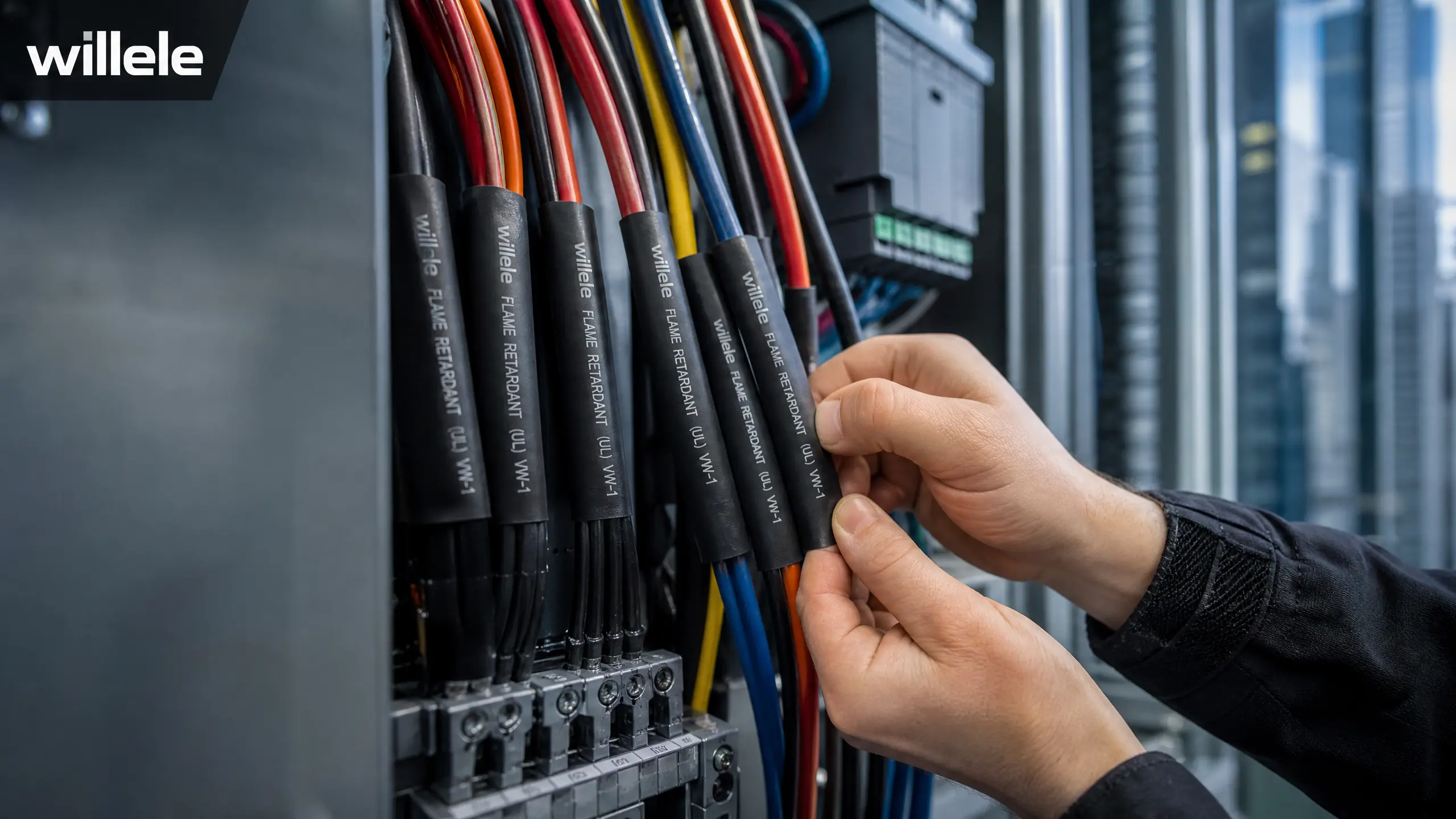
When electrical fires occur in high-rise buildings, the consequences can be catastrophic. In 2017, the Grenfell Tower fire in London claimed 72 lives, with inadequate fire-resistant materials identified as a contributing factor. For electrical contractors, facility managers, and building engineers working on vertical construction projects, understanding flame-retardant heat-shrink requirements isn’t just about code compliance—it’s about life safety.
Flame-retardant heat-shrink tubing serves as a critical protective barrier in high-rise electrical systems, providing insulation, environmental protection, and most importantly, fire resistance that can prevent electrical faults from escalating into building-wide disasters. This comprehensive guide examines the technical standards, material specifications, and installation requirements that govern flame-retardant heat-shrink applications in high-rise building wiring.
Why Flame-Retardant Heat-Shrink Matters in Vertical Construction
High-rise buildings present unique fire safety challenges that distinguish them from low-rise structures. Vertical shafts act as chimneys, accelerating flame spread through the stack effect. Evacuation takes longer, and firefighting operations become exponentially more complex above the seventh floor. In this environment, every component of the electrical system must be engineered to resist ignition and limit flame propagation.
Standard heat-shrink tubing, while excellent for mechanical protection and moisture resistance, can actually fuel fires when exposed to electrical arcing or external flame sources. Non-flame-retardant polyethylene materials will continue burning after the ignition source is removed, producing toxic smoke and contributing to rapid fire spread through cable trays and conduit systems.
Flame-retardant heat-shrink tubing, by contrast, is formulated with additives that interrupt the combustion process. When exposed to flame, these materials self-extinguish within seconds of the ignition source being removed, dramatically reducing the risk of sustained fire development in electrical distribution systems.
Critical Standards for Flame-Retardant Heat-Shrink
UL 224: The North American Benchmark
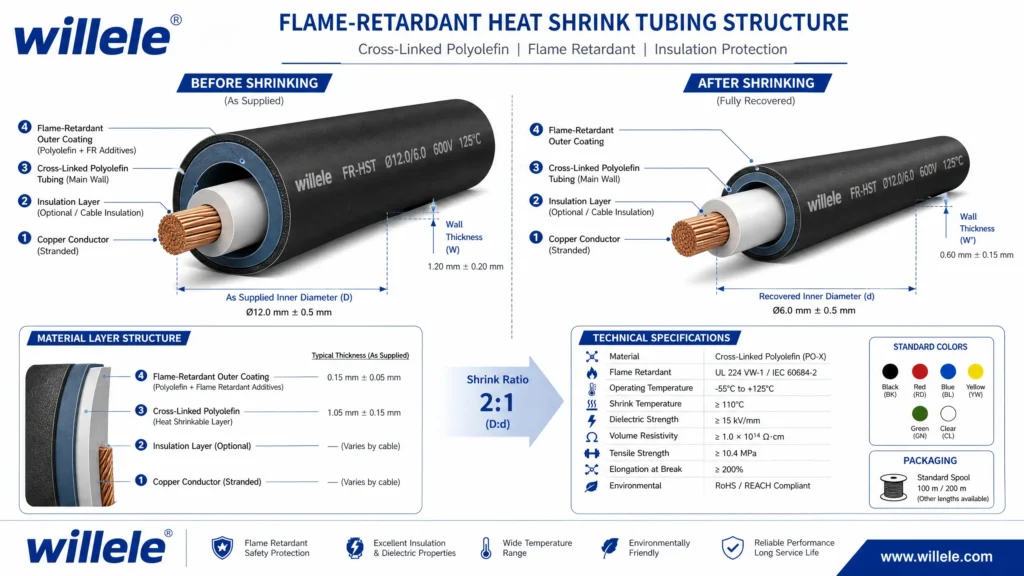
UL 224 represents the harmonized standard for extruded insulating tubing in the United States and Canada, covering both heat-shrinkable and non-heat-shrinkable electrical insulation. For high-rise applications, the VW-1 (Vertical Wire) flame rating within UL 224 is the minimum acceptable specification.
The VW-1 test subjects a vertical wire sample wrapped in the tubing material to a controlled flame for 15 seconds, repeated five times. To pass, the material must self-extinguish within 60 seconds after each flame application, with no burning drips and limited char length. This test simulates the real-world scenario of electrical arcing or external flame impingement on vertical cable runs—exactly the conditions present in high-rise riser shafts.
UL 224 also specifies voltage ratings (150V, 300V, or 600V depending on wall thickness) and temperature ratings (typically 105°C or 125°C for polyolefin materials). For high-rise building wiring, 600V-rated tubing with VW-1 flame certification provides the necessary safety margin for both normal operation and fault conditions.
National Electrical Code (NEC) Requirements
The National Electrical Code imposes specific requirements for cables and cable protection materials in different building zones. Section 800.154 addresses communications cables, while Articles 725 and 760 cover power-limited and fire alarm circuits commonly found in high-rise buildings.
Of particular importance is the NEC’s treatment of plenum spaces—the air-handling areas above suspended ceilings and in HVAC return paths that are ubiquitous in modern high-rise construction. The code requires that exposed cables and cable protection materials in plenums possess adequate fire-resistant and low-smoke-producing characteristics.
While heat-shrink tubing is typically applied to individual conductors or small harnesses rather than entire cable assemblies, any tubing exposed in plenum spaces must meet these enhanced requirements. This often necessitates halogen-free flame-retardant formulations that produce minimal smoke and toxic gas emissions during combustion.
International Standards: IEC and EN
For high-rise projects with international scope or in jurisdictions outside North America, IEC 60684 provides the global standard for flexible insulating sleeving. Part 3 of this standard specifies requirements for heat-shrinkable sleeving, including flame-retardant grades.
The EN 45545 standard, developed specifically for railway applications, has increasingly influenced high-rise building specifications due to its rigorous approach to fire safety. EN 45545 mandates high levels of flame retardancy combined with low toxicity and smoke production—requirements that align well with the life-safety priorities of vertical construction.
Material Selection: Matching Tubing to Application
Polyolefin: The Workhorse Material
Cross-linked polyolefin represents the most widely used material for flame-retardant heat-shrink in building wiring applications. When formulated with flame-retardant additives, polyolefin tubing achieves VW-1 certification while maintaining excellent flexibility, wide temperature range (-55°C to 125°C), and good electrical properties.
Polyolefin tubing typically offers 2:1 or 3:1 shrink ratios, allowing a single size to accommodate a range of conductor diameters. The material exhibits good resistance to common environmental factors including moisture, mild chemicals, and UV exposure, making it suitable for both indoor and outdoor high-rise applications.
PVC: High Flame Resistance
Cross-linked polyvinyl chloride (PVC) heat-shrink provides superior flame retardancy compared to polyolefin, making it the preferred choice for high-risk areas such as electrical rooms, transformer vaults, and generator facilities in high-rise buildings. PVC tubing is inherently flame-retardant due to its chlorine content, requiring fewer additives to achieve VW-1 certification.
However, PVC has limitations: narrower temperature range, reduced flexibility at low temperatures, and the production of hydrochloric acid gas during combustion. For these reasons, halogen-free alternatives are increasingly specified in occupied spaces and critical life-safety circuits.
Halogen-Free Materials: The Safety Evolution
Halogen-free flame-retardant (HFFR) heat-shrink tubing represents the current evolution in fire safety technology. These materials achieve flame retardancy through mineral fillers and phosphorus-based additives rather than halogenated compounds, resulting in dramatically reduced smoke density and toxic gas production during fire conditions.
HFFR tubing is particularly important in high-rise applications where evacuation routes may be compromised by smoke. Studies have shown that smoke inhalation, rather than direct flame exposure, accounts for the majority of fire fatalities in building fires. By specifying halogen-free materials throughout the electrical system, building designers can significantly improve occupant survivability during fire events.
Technical Specifications Comparison
| Parameter | Standard Polyolefin | Flame-Retardant Polyolefin | PVC | Halogen-Free FR |
|---|---|---|---|---|
| Flame Rating | Non-rated | VW-1 per UL 224 | VW-1 per UL 224 | VW-1 + Low Smoke |
| Operating Temp | -55°C to 105°C | -55°C to 125°C | -20°C to 105°C | -40°C to 125°C |
| Shrink Ratio | 2:1 or 3:1 | 2:1 or 3:1 | 2:1 | 2:1 or 3:1 |
| Voltage Rating | 300V-600V | 600V | 600V | 600V |
| Flexibility | Excellent | Excellent | Good | Very Good |
| Smoke Production | High | Moderate | Very High | Very Low |
| Toxic Gas | Moderate | Moderate | High (HCl) | Very Low |
| UV Resistance | Good | Good | Fair | Excellent |
| Cost (Relative) | 1.0x | 1.3x | 1.5x | 2.0x |
Installation Requirements for High-Rise Applications
Pre-Installation Verification
Before applying flame-retardant heat-shrink tubing in high-rise electrical systems, verify that the product carries the appropriate certifications. Look for UL 224 listing marks, VW-1 flame rating, and voltage rating clearly printed on the tubing. Counterfeit or substandard materials represent a significant risk in the supply chain, and the consequences of using non-compliant tubing in life-safety systems can be severe.
Store tubing in a clean, dry environment away from direct sunlight and extreme temperatures. While heat-shrink materials have excellent shelf life, prolonged UV exposure or heat can degrade the polymer structure and compromise flame-retardant properties.
Sizing and Fit
Proper sizing is critical for both electrical performance and flame retardancy. The tubing’s recovered (shrunk) inside diameter should provide a snug fit over the conductor or splice without excessive compression. Undersized tubing may not fully recover, leaving gaps that compromise insulation. Oversized tubing may not shrink sufficiently, resulting in loose fit and reduced flame protection.
For high-rise applications involving multiple conductors, consider dual-wall adhesive-lined tubing. The inner adhesive layer melts during shrinking to create a moisture-proof seal, providing enhanced environmental protection in the humid conditions often present in mechanical and electrical rooms.
Heat Application Technique
Apply heat evenly using a professional heat gun, moving continuously to avoid hot spots that could damage the tubing or underlying insulation. For critical installations, use a heat gun with temperature control set to the manufacturer’s recommended range (typically 120°C to 150°C for polyolefin materials).
In confined spaces such as electrical closets and riser shafts, ensure adequate ventilation during installation. While the tubing itself is non-toxic during normal shrinking operations, the heat application process can release trace amounts of processing aids.
Overlap and Coverage
When protecting splices or terminations, extend the tubing at least 6mm beyond the connection point on each side. For multi-layer applications (such as covering a splice that already has individual conductor insulation), ensure the outer layer completely covers the inner protection with adequate overlap.
In vertical riser applications, consider the mechanical stresses imposed by cable weight and building movement. Use heavy-wall flame-retardant tubing (minimum 0.8mm recovered wall thickness) for large conductor bundles, and ensure proper strain relief at termination points.
Application-Specific Considerations
Fire Alarm and Life Safety Circuits
Fire alarm circuits in high-rise buildings must remain operational during fire conditions to support evacuation and firefighting operations. NEC Article 760 requires that these circuits use fire-resistant cables or be installed in fire-rated assemblies.
When flame-retardant heat-shrink is used to protect fire alarm circuit splices or terminations, specify materials that meet or exceed the flame resistance of the circuit conductors themselves. Halogen-free formulations are strongly recommended to ensure that the protection system doesn’t become a source of toxic smoke during the very conditions it’s designed to address.
Emergency Power Distribution
High-rise buildings rely on emergency generators and battery backup systems to maintain critical loads during power outages and fire events. The wiring connecting these systems to emergency lighting, fire pumps, and pressurization fans represents the building’s lifeline during crisis conditions.
All heat-shrink protection on emergency power circuits should carry 600V rating and VW-1 flame certification as a minimum. Consider upgrading to heavy-wall dual-wall tubing with adhesive lining for splice protection in generator rooms and electrical equipment spaces where environmental conditions are harsh and reliability is paramount.
Elevator Machine Rooms and Hoistways
Elevator systems present unique challenges in high-rise buildings. The traveling cables that supply power and control signals to elevator cabs must flex millions of times over their service life while maintaining electrical integrity and flame resistance.
When heat-shrink tubing is used to protect splices in elevator machine rooms or hoistway junction boxes, select materials rated for continuous flexing service. Standard flame-retardant polyolefin may crack under repeated bending; specify flexible flame-retardant formulations designed for dynamic applications.
Inspection and Maintenance
Flame-retardant heat-shrink tubing, once properly installed, requires minimal maintenance. However, periodic inspection is essential to verify continued protection, particularly in high-vibration areas such as mechanical equipment rooms and rooftop installations.
During routine electrical inspections, examine heat-shrink installations for:
- Cracking or splitting of the tubing material
- Discoloration indicating heat damage or UV degradation
- Looseness suggesting incomplete shrinking or material degradation
- Contamination from oils, solvents, or other chemicals
Any compromised tubing should be replaced immediately. The cost of replacement tubing is negligible compared to the risk of electrical failure or fire in a high-rise environment.
Cost-Benefit Analysis
Flame-retardant heat-shrink tubing typically costs 30-100% more than non-flame-retardant alternatives, depending on the specific material and certification level. For a typical high-rise building with thousands of electrical connections, this premium can represent a significant line item in the electrical budget.
However, the cost must be evaluated against the potential consequences of fire. A single electrical fire in a high-rise building can result in:
- Loss of life and injury to occupants
- Property damage ranging from thousands to millions of dollars
- Business interruption costs for commercial tenants
- Liability exposure for building owners and contractors
- Regulatory penalties for code violations
From this perspective, the incremental cost of flame-retardant materials represents one of the most cost-effective fire protection investments available. Unlike active fire suppression systems that require ongoing maintenance and may fail when needed, properly installed flame-retardant heat-shrink provides passive protection that functions automatically without human intervention or mechanical systems.
Frequently Asked Questions
Q: Is flame-retardant heat-shrink tubing required by code for all high-rise building wiring?
A: While building codes don’t universally mandate flame-retardant heat-shrink for all applications, the NEC requires that materials in certain locations (particularly plenum spaces) possess adequate fire-resistant characteristics. Most electrical engineers specify VW-1 rated tubing as standard practice for high-rise projects to ensure consistent fire safety throughout the electrical system.
Q: Can I use standard heat-shrink tubing if the cables themselves are flame-retardant?
A: This approach is not recommended. Electrical fires often originate at connection points where conductor insulation has been stripped away. Using non-flame-retardant tubing at these vulnerable locations creates a weak point in your fire protection strategy. The modest cost savings are not worth the increased risk.
Q: How do I verify that heat-shrink tubing is genuinely flame-retardant?
A: Look for UL 224 listing marks and VW-1 flame rating printed directly on the tubing. Reputable manufacturers like Willele provide certification documentation with each shipment. Be wary of unmarked tubing or products that claim flame retardancy without third-party certification—counterfeit materials are a significant problem in the electrical supply chain.
Q: What’s the difference between flame-retardant and flame-resistant?
A: Flame-retardant materials are designed to slow ignition and self-extinguish when the flame source is removed (like UL 94 and VW-1 rated materials). Flame-resistant materials are designed to resist ignition entirely and are typically used for textiles and personal protective equipment. For heat-shrink tubing applications, flame-retardant is the correct specification.
Q: Does flame-retardant heat-shrink tubing have a shelf life?
A: When stored properly (cool, dry, away from direct sunlight), flame-retardant heat-shrink tubing maintains its properties for many years. However, once installed, UV exposure and environmental factors can gradually degrade the material. Outdoor installations should be inspected periodically and protected from direct sunlight where possible.
Q: Are halogen-free materials worth the extra cost for high-rise applications?
A: For occupied spaces, egress routes, and life-safety circuits, halogen-free flame-retardant materials provide a significant safety advantage by reducing toxic smoke production during fire conditions. The premium cost (typically 50-100% over standard flame-retardant materials) is justified by the improved survivability for building occupants during evacuation. For back-of-house electrical rooms and equipment spaces, standard VW-1 rated materials may be adequate.
