
Ultimate Guide to Nylon Cable Ties: Types, Sizes & Applications

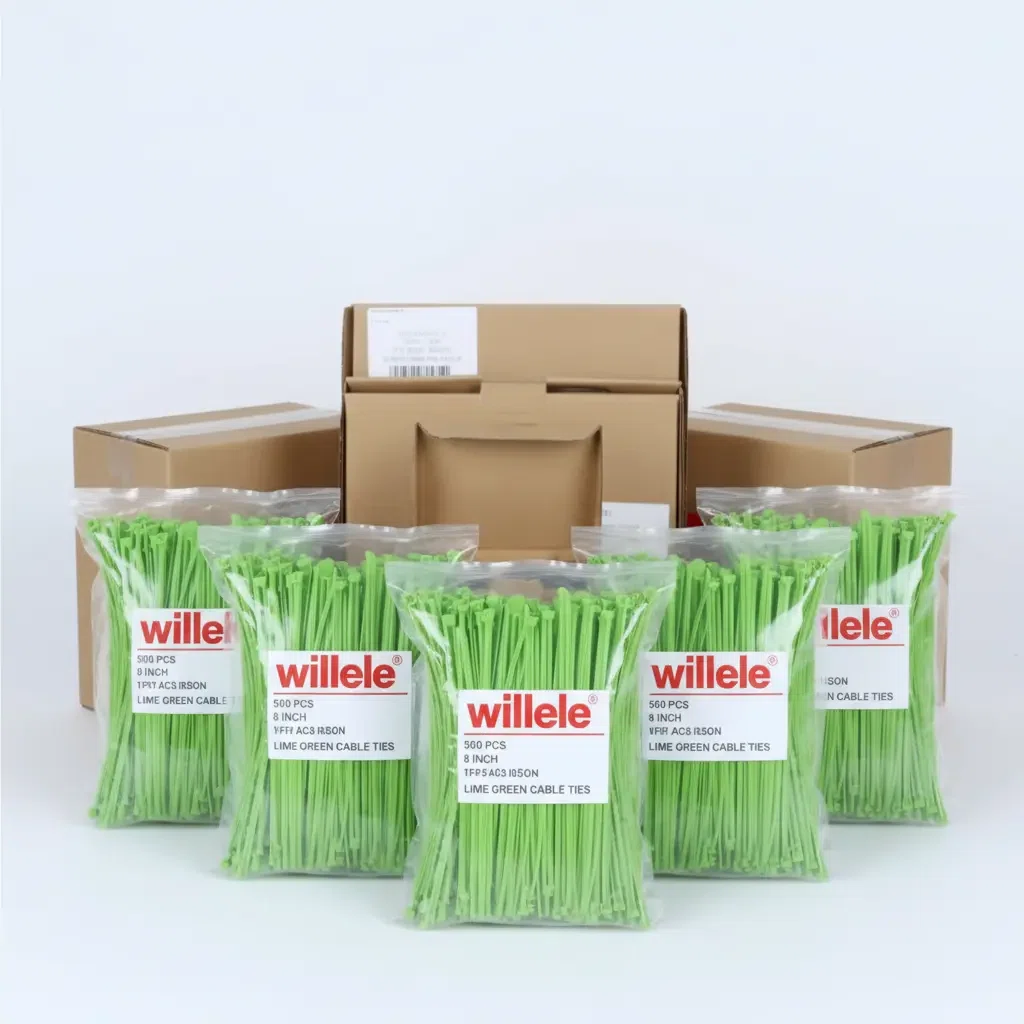
In modern manufacturing, electrical work, and industrial assembly, few components are as ubiquitous yet critical as the nylon cable tie. Often referred to as nylon zip ties or plastic cable ties, these simple fasteners are the unsung heroes of wire management and bundling. For B2B professionals, selecting the right cable tie isn’t just a matter of convenience; it’s a decision that impacts safety, efficiency, and long-term reliability.
As a leading manufacturer of high-performance electrical equipment, WILLELE Electric understands the importance of quality components. This guide provides a definitive overview of nylon cable ties, covering material science, available types, sizing standards, and critical applications to help you make informed purchasing decisions for your projects.
What Are Nylon Cable Ties? The Science of Secure Fastening
A nylon cable tie is a self-locking fastener, typically consisting of a flexible nylon tape with an integrated gear rack, and a pawl in a small open case at one end. The design is simple but ingenious: once the pointed tip of the tie is pulled through the case and past the pawl, it is prevented from being pulled back.
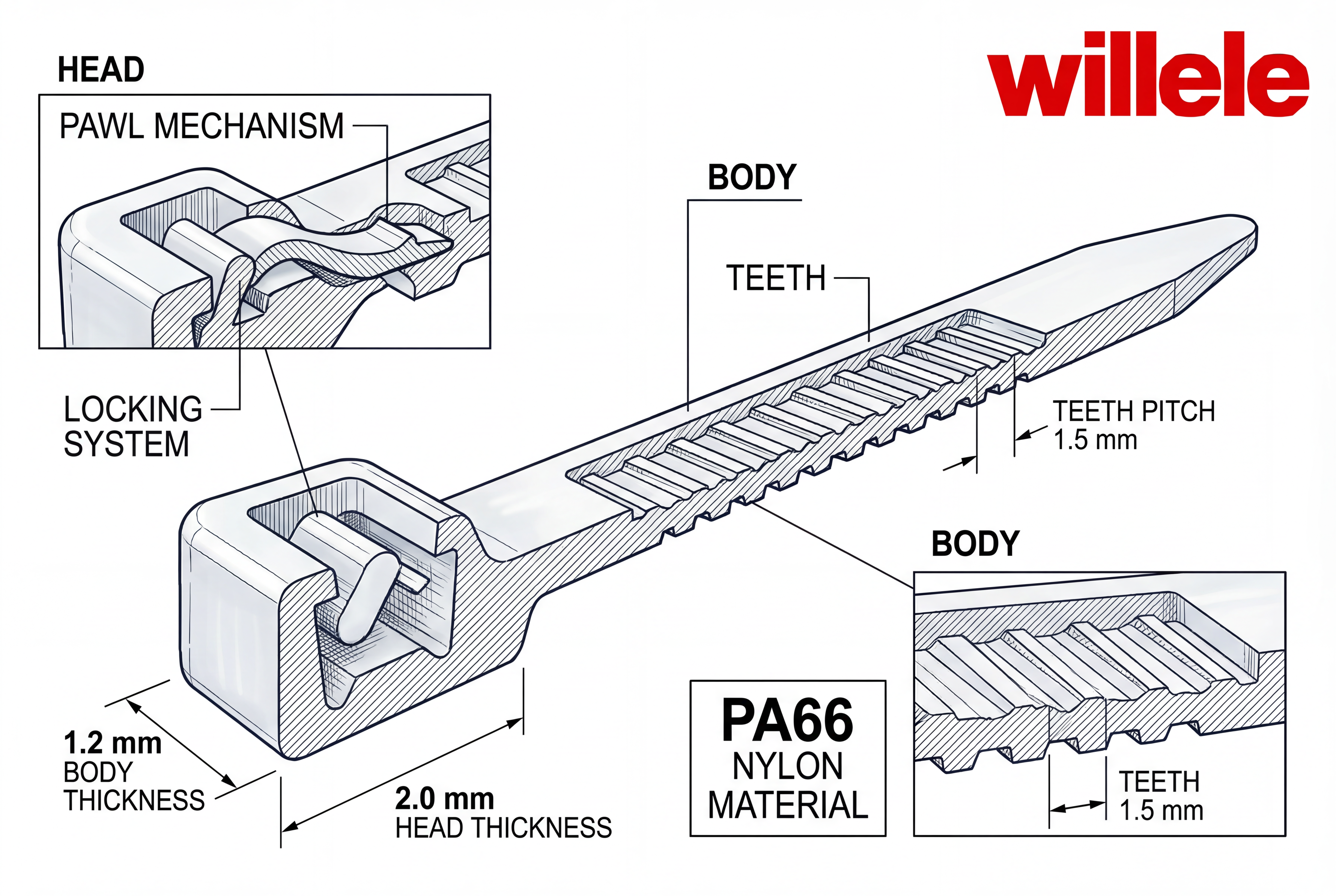
The vast majority of high-quality plastic cable ties are made from nylon, specifically Polyamide 66 (PA66), a material chosen for its exceptional balance of strength, flexibility, and resistance to temperature and chemicals.
Material Deep Dive: Polyamide 66 (PA66) vs. Polyamide 6 (PA6)
While they sound similar, PA66 and PA6 have distinct properties that make PA66 the superior choice for most professional and industrial cable tie applications. WILLELE Electric exclusively uses high-grade PA66 to ensure maximum performance and reliability.
| Feature | Polyamide 66 (PA66) | Polyamide 6 (PA6) | WILLELE’s Recommendation |
|---|---|---|---|
| Tensile Strength | Higher; more rigid and crystalline structure | Lower; more flexible | PA66 for superior strength and durability. |
| Temperature Resistance | Higher melting point (approx. 255-265°C) | Lower melting point (approx. 215-225°C) | PA66 for better performance in demanding heat environments. |
| Moisture Absorption | Lower rate of water absorption | Higher rate of water absorption, can affect dimensions | PA66 for greater dimensional stability and consistent performance. |
| UV Resistance | Good (Excellent when carbon black is added) | Fair (More susceptible to degradation) | PA66 (UV Stabilized) for all outdoor applications. |
| Cost | Slightly higher | Lower | The performance benefits of PA66 far outweigh the minor cost difference. |
A Comprehensive Guide to Cable Tie Types
The term “nylon cable tie” encompasses a wide range of designs, each engineered for specific tasks. Understanding the different cable tie types is crucial for optimizing your application for security, ease of use, and longevity.
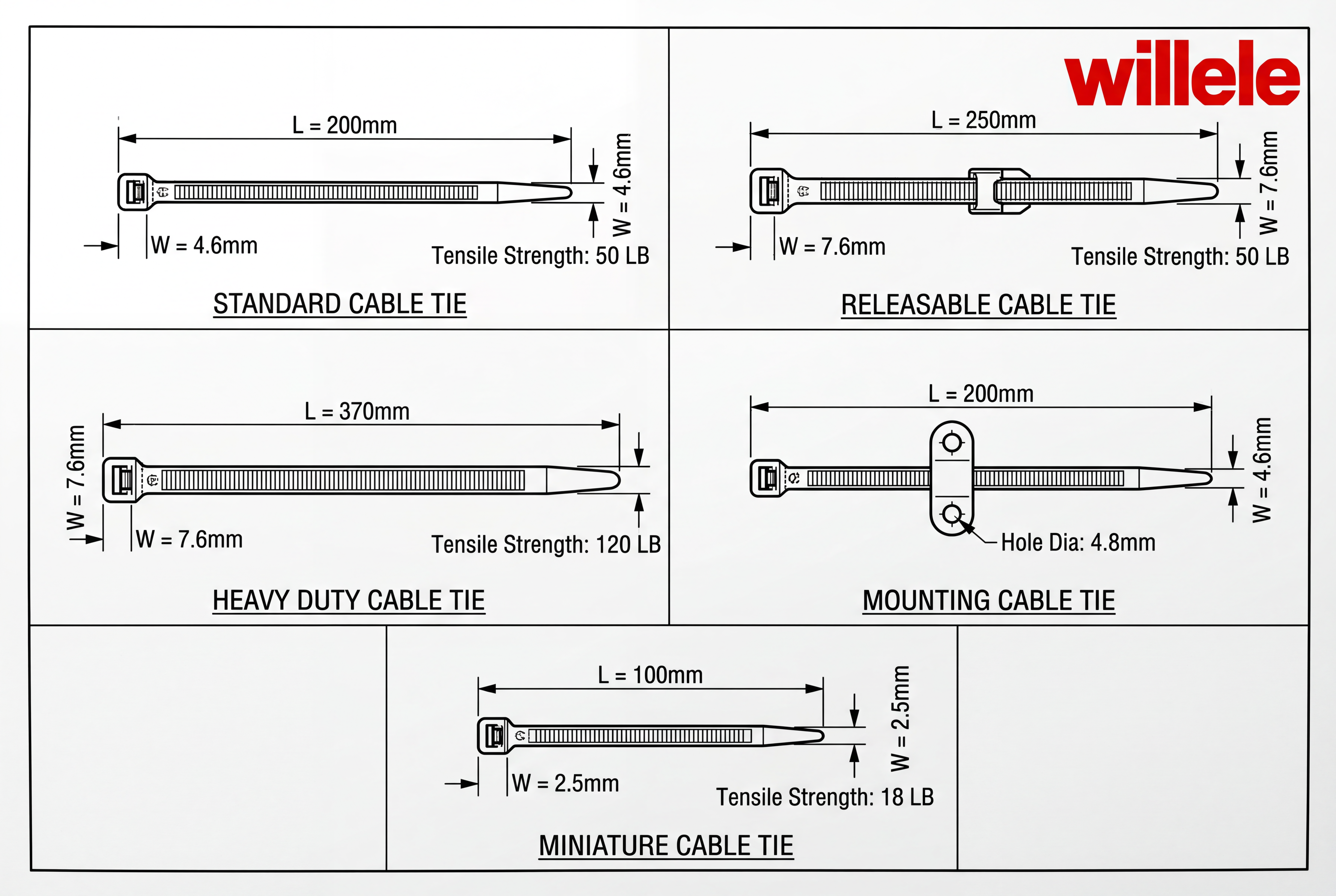
Here is a breakdown of the most common varieties manufactured by WILLELE.
| Cable Tie Type | Key Feature | Best For |
|---|---|---|
| Standard Cable Ties | Versatile, one-piece, self-locking design. | General-purpose wire bundling, cable management, and securing lightweight items. |
| Heavy-Duty Cable Ties | Wider, thicker body for significantly higher tensile strength. | Securing large, heavy cable bundles, HVAC ductwork, and industrial applications. |
| Releasable Cable Ties | Feature a tab or lever to release the locking pawl. | Prototyping, temporary installations, and applications requiring frequent changes. |
| Mounting Head Ties | Incorporate a screw or push-mount hole in the head. | Securing wire bundles directly to a chassis, wall, or panel for a fixed installation. |
| UV Resistant Ties | Made from PA66 with carbon black additive. | Outdoor applications, solar panel installations, and exposure to direct sunlight. |
| Identification Ties | Include a flat, enlarged area for writing or applying a label. | Identifying and organizing complex wiring harnesses in data centers and control panels. |
| Colored Cable Ties | Available in a spectrum of colors. | Color-coding different circuits, cable types, or systems for quick identification. |
| Miniature Cable Ties | Smallest profile and lowest tensile strength. | Small-scale electronics, securing delicate wires, and applications with limited space. |
Understanding Nylon Cable Tie Sizes
Choosing the correct cable tie size is determined by two primary factors: the diameter of the bundle you are securing and the tensile strength required to hold it.
- Bundle Diameter: This is the maximum diameter a cable tie can securely loop around. Always choose a tie with a maximum bundle diameter larger than your intended application.
- Tensile Strength: Measured in Pounds (lbs) or Newtons (N), this is the maximum force the tie can withstand before breaking. This is the most critical specification for ensuring a secure, long-lasting hold.
Standard Cable Tie Sizes & Specifications
As a manufacturer, WILLELE Electric produces a vast range of cable tie sizes. The table below outlines common industry sizes and their typical specifications.
| Tensile Strength | Length Range (in) | Width (in) | Max Bundle Diameter (in) | Strength (lbs / N) | Common Use |
|---|---|---|---|---|---|
| Miniature | 3″ – 5″ | ~0.10″ | 0.6″ – 1.0″ | 18 lbs / 80 N | Small electronics, tagging |
| Intermediate | 5″ – 8″ | ~0.14″ | 1.2″ – 2.0″ | 40 lbs / 178 N | Data cables, general wiring |
| Standard | 8″ – 15″ | ~0.19″ | 2.0″ – 4.0″ | 50 lbs / 222 N | Most common electrical/industrial |
| Heavy-Duty | 15″ – 36″ | ~0.30″ | 4.0″ – 10.0″ | 120 lbs / 534 N | Large bundles, HVAC, outdoor |
| Extra Heavy-Duty | 24″ – 48″ | ~0.35″ | 6.0″ – 14.0″ | 175 lbs / 778 N | Major industrial, construction |
Key Applications Across Industries
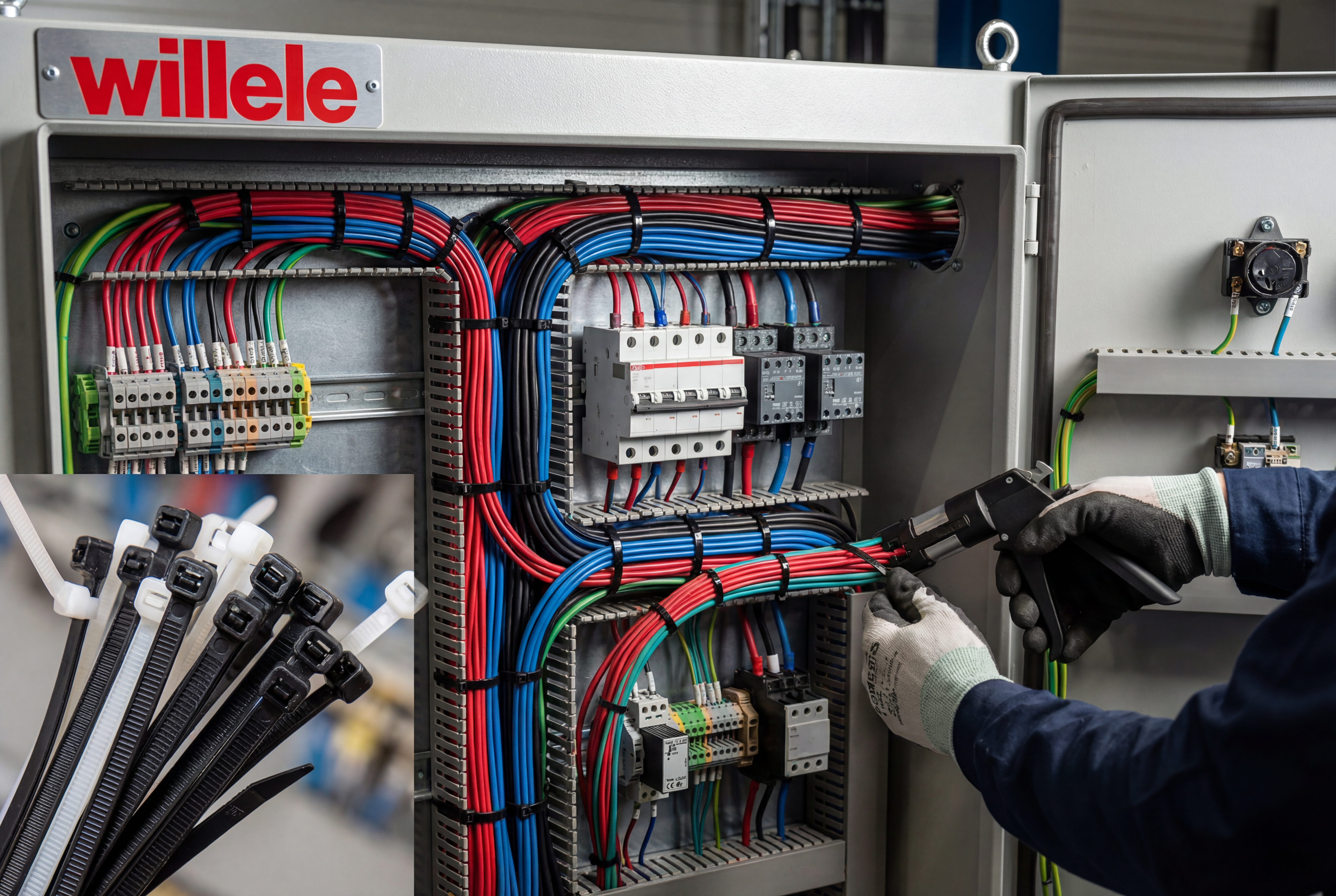
The versatility of nylon zip ties makes them indispensable across virtually every industry. Their reliability ensures safety and organization in critical systems.
Application-Based Selection Guide
| Industry | Recommended Tie Type(s) | Key Considerations |
|---|---|---|
| Electrical & Control Panels | Standard, Mounting Head, Identification | Organization, secure mounting, flammability rating (UL 94V-2). |
| Automotive & Transportation | Heavy-Duty, UV Resistant, Mounting Head | Vibration resistance, temperature fluctuations (-40°C to 85°C), fluid resistance. |
| Data Centers & Telecom | Colored, Identification, Standard | Color-coding for network management, preventing over-tightening on data cables. |
| HVAC & Construction | Heavy-Duty, Extra Heavy-Duty | High tensile strength for securing ductwork, plenums, and temporary structures. |
| Outdoor & Solar | UV Resistant (Black) | Must withstand long-term sun exposure and weather without becoming brittle. |
| General Manufacturing | Standard, Releasable | Securing hoses, component assembly, and temporary bundling during production. |
How to Choose the Right Nylon Cable Tie for Your Project
Selecting the ideal cable tie from the vast array of types and sizes can be simplified by answering four key questions:
- What is the Environment? Will the tie be indoors or outdoors? Exposed to chemicals, vibrations, or extreme temperatures? For outdoor use, UV-resistant ties are mandatory. For harsh chemical environments, specialized materials may be needed.
- What is the Maximum Bundle Diameter? Measure the diameter of the largest bundle you need to secure and choose a tie with a corresponding maximum bundle diameter. A good rule of thumb is to have at least an inch or two of excess tail after tightening.
- What is the Required Tensile Strength? Consider the weight and importance of the bundle. Is it a heavy power cable or a lightweight data line? Always err on the side of a higher tensile strength for critical applications.
- Is a Specialty Feature Needed? Do you need to mount the bundle to a panel (Mounting Head Tie)? Will you need to reopen the bundle (Releasable Tie)? Do you need to label the wires (Identification Tie)?
Installation Best Practices for Maximum Reliability
Proper installation is just as important as selecting the right tie. Improper use can lead to premature failure and safety hazards.
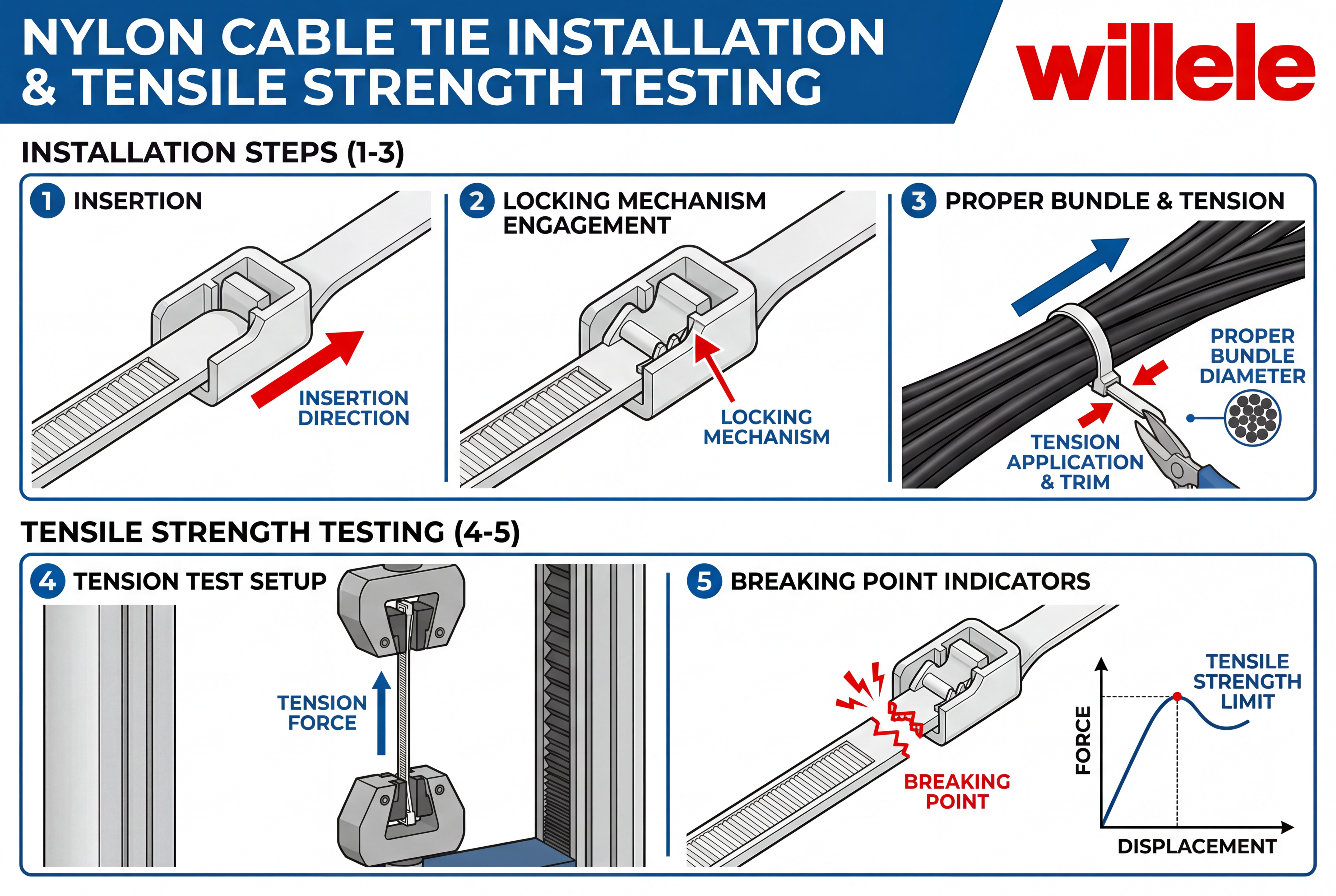
- Hand Tighten First: Loop the tie around the bundle and pull it snug by hand. Ensure the cables are neat and not twisted.
- Use an Installation Tool: For professional and repeatable results, use a cable tie tensioning tool. These tools tighten the tie to a preset tension and automatically cut the tail flush with the head, preventing sharp edges.
- Avoid Over-Tensioning: Cranking down too hard can damage the insulation of sensitive data cables or even break the tie. Use the correct tension setting on your tool.
- Cut Flush: Always trim the excess tail flush with the head. Leaving a sharp “tail” creates a dangerous snag and cut hazard for anyone working in the panel later.
- Proper Storage: Store nylon cable ties in a sealed bag away from direct sunlight and heat sources. This prevents the nylon from drying out and losing its flexibility and strength.
As a dedicated B2B partner, WILLELE Electric provides not only a superior product but also the expertise to ensure it’s used correctly. By following these guidelines, you can ensure your projects benefit from the full strength and reliability of high-quality nylon cable ties.
Frequently Asked Questions (FAQ) about Nylon Cable Ties
1. What is the difference between nylon 6 and nylon 6/6 (PA66) cable ties?\
Nylon 6/6 (PA66) has a higher melting point, greater tensile strength, and better resistance to acids and chemicals than Nylon 6. It is the industry standard for high-performance, professional-grade cable ties, and it’s the primary material used by WILLELE.
2. Why do nylon cable ties become brittle?\
Brittleness is usually caused by two factors: UV exposure or moisture loss. Standard natural-colored ties will degrade in sunlight. For outdoor use, always use black, UV-stabilized ties. Storing ties in an open bag in a dry, heated environment can also cause them to lose essential moisture, making them brittle.
3. Are all black cable ties UV resistant?\
No. While UV-resistant ties are almost always black, not all black ties are UV-resistant. The black color must come from a precise amount of carbon black additive to provide UV protection. Always verify with the manufacturer, like WILLELE, that you are purchasing true UV-resistant ties for outdoor applications.
4. Can I reuse a standard cable tie?\
Standard cable ties are designed for single-use applications. Attempting to release the pawl will likely damage the locking mechanism, compromising its strength if reused. If you need to reopen a bundle, use a specifically designed “releasable” cable tie.
5. What does the UL 94V-2 flammability rating mean?\
This is a safety standard from Underwriters Laboratories. A V-2 rating means that on a vertical specimen, burning stops within 30 seconds, and flaming drips are allowed. This is a critical safety feature for cable ties used in electrical enclosures and control panels.
Conclusion: Quality Nylon Cable Ties for Professional Applications
Selecting the right nylon cable tie is a critical decision that impacts the safety, efficiency, and longevity of your electrical and industrial installations. From understanding the superior properties of PA66 nylon material to choosing the appropriate size and type for your specific application, this guide has covered the essential considerations for professional cable tie selection.
Whether you require standard cable ties for general wire bundling, heavy-duty solutions for industrial environments, or specialized UV-resistant ties for outdoor applications, the key is to partner with a manufacturer that prioritizes quality and performance. WILLELE Electric’s commitment to using premium PA66 nylon and maintaining rigorous quality standards ensures that every cable tie delivers reliable, long-lasting performance in even the most demanding conditions.
For B2B professionals seeking dependable cable tie solutions, proper specification and installation are paramount. By following the guidelines outlined in this article—from material selection and tensile strength calculations to proper installation techniques—you can ensure optimal results for your projects.
Ready to source high-quality nylon cable ties for your business? Contact WILLELE Electric today to discuss your specific requirements, request samples, or learn more about our comprehensive range of cable management solutions. Our technical team is ready to help you find the perfect fastening solution for your application.
