
Agricultural Equipment: Durable Heat Shrink Tubing Solutions

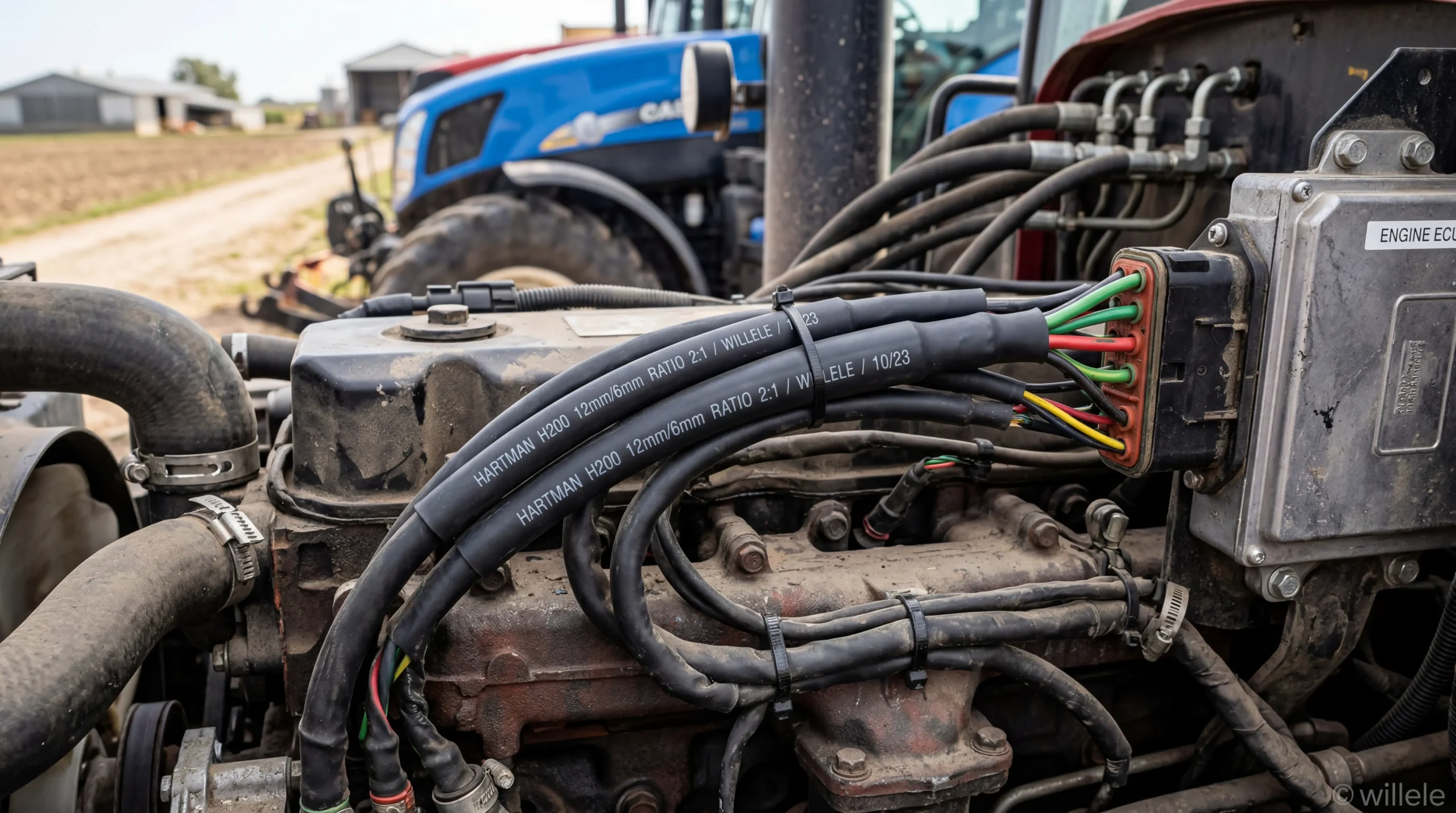
In the demanding world of agricultural equipment, electrical systems face constant exposure to harsh environmental conditions. From extreme temperatures and moisture to chemical exposure and mechanical stress, protecting wiring harnesses and electrical connections is not just important—it’s essential for operational reliability. Heat shrink tubing has emerged as the gold standard for agricultural equipment protection, offering unmatched durability and performance in the field.
Understanding Heat Shrink Tubing Technology
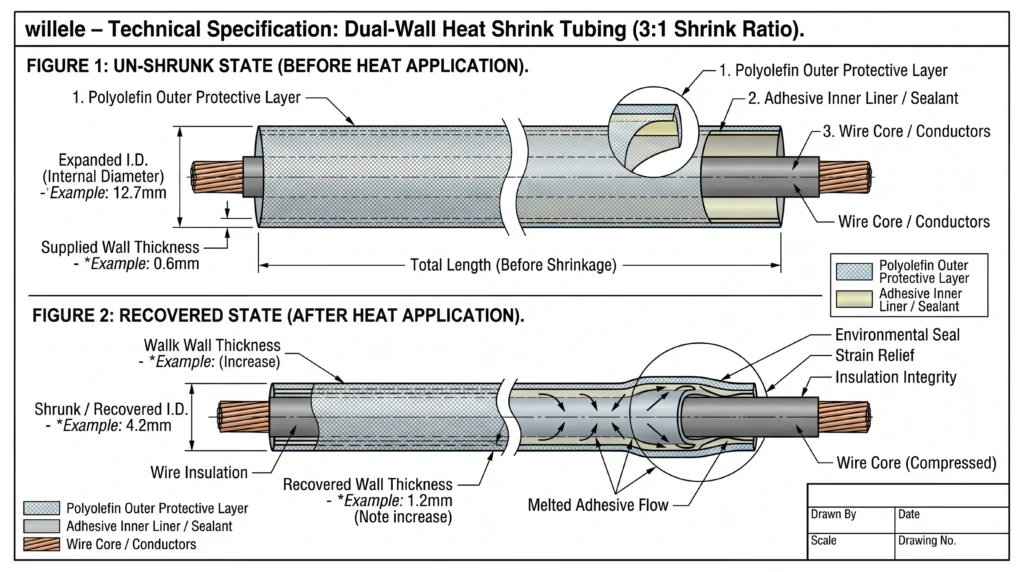
Heat shrink tubing is a specialized thermoplastic material engineered to contract radially when exposed to heat, creating a tight, protective seal around wires, cables, and connectors. The technology relies on polymer memory—during manufacturing, the tubing is expanded and then rapidly cooled to lock in this expanded state. When heat is applied during installation, the material returns to its original, smaller diameter, conforming precisely to the substrate beneath.
Modern agricultural heat shrink solutions incorporate advanced materials science, combining polyolefin, fluoropolymer, or elastomeric compounds with adhesive linings to create multi-layer protection systems. This engineering approach addresses the unique challenges agricultural equipment faces: prolonged UV exposure in open fields, temperature fluctuations from sub-zero winters to scorching summers, vibration from heavy machinery operation, and contact with fertilizers, pesticides, and other agricultural chemicals.
Critical Applications in Agricultural Equipment
Tractor and Harvester Wiring Protection
Modern tractors and harvesters contain sophisticated electronic control systems managing everything from engine performance to GPS-guided precision agriculture. These systems require hundreds of electrical connections, each vulnerable to environmental damage. Heat shrink tubing provides comprehensive protection for:
Engine Compartment Wiring: High-temperature resistant heat shrink protects sensor wiring and fuel injection harnesses exposed to engine heat, oil mist, and vibration. Dual-wall adhesive-lined tubing creates hermetic seals that prevent moisture ingress and corrosion, extending sensor life and maintaining accurate engine management.
Cab Electronics: Climate control systems, infotainment displays, and operator interface controls require clean, organized wiring with protection against wear and accidental damage. Thin-wall heat shrink provides insulation and strain relief without adding bulk, maintaining the ergonomic design of modern tractor cabs.
Hydraulic System Sensors: Position sensors, pressure transducers, and flow meters in hydraulic systems face constant exposure to hydraulic fluid and high-pressure spray. Chemical-resistant heat shrink tubing prevents fluid penetration that would cause sensor failure and system malfunctions.
Irrigation System Electrical Protection
Automated irrigation systems represent a significant investment in agricultural infrastructure, with electrical components distributed across vast field areas. Heat shrink tubing protects these systems from their greatest enemy—water itself:
Solenoid Valve Connections: Valve actuators buried underground or mounted in valve boxes experience constant moisture exposure. Heavy-wall adhesive-lined heat shrink creates waterproof seals on wire splices and terminations, preventing the corrosion that causes valve failures during critical irrigation periods.
Control Panel Wiring: Central irrigation controllers contain complex wiring connecting zone controls, rain sensors, and communication modules. Color-coded heat shrink tubing provides both protection and wire identification, simplifying troubleshooting and maintenance.
Field Sensor Connections: Soil moisture sensors, weather stations, and flow meters require reliable connections in harsh field environments. UV-resistant heat shrink maintains integrity through years of sun exposure, eliminating the need for frequent replacement.
Livestock Facility Electrical Systems
Barns, milking parlors, and automated feeding systems create uniquely challenging environments combining high humidity, ammonia exposure, and frequent washdowns:
Automated Feeding Equipment: Motor connections, limit switches, and control wiring in automated feeding systems face daily exposure to moisture and feed dust. Heat shrink tubing rated for agricultural environments resists the corrosive effects of ammonia while maintaining flexibility in cold barn conditions.
Milking System Electronics: Vacuum sensors, pulsation controls, and milk meter connections require protection from moisture and cleaning chemicals. Medical-grade heat shrink tubing provides the chemical resistance and cleanliness required in dairy operations.
Environmental Control Systems: Ventilation fans, heaters, and lighting controls maintain optimal livestock conditions. Heat shrink protection ensures these critical systems operate reliably, preventing equipment failures that could compromise animal welfare.
Material Selection for Agricultural Durability
Choosing the appropriate heat shrink material determines long-term performance in agricultural applications. Each material offers distinct advantages for specific environmental challenges:
Polyolefin Heat Shrink
Polyolefin represents the most versatile and cost-effective option for general agricultural applications. This material offers excellent electrical insulation, good chemical resistance, and operating temperatures from -55°C to 135°C. Cross-linked polyolefin provides enhanced mechanical strength and temperature resistance, making it ideal for engine compartment applications and areas subject to mechanical stress.
The material’s flexibility at low temperatures ensures it remains effective during winter operations, while its resistance to common agricultural chemicals—including diesel fuel, hydraulic oil, and most fertilizers—provides comprehensive protection. Polyolefin heat shrink also offers superior UV resistance when formulated with appropriate stabilizers, essential for outdoor agricultural equipment exposed to constant sunlight.
Adhesive-Lined Heat Shrink
For applications requiring absolute moisture protection, adhesive-lined heat shrink tubing provides unmatched sealing performance. A thermoplastic adhesive inner layer melts during heat application, flowing to fill gaps and creating a hermetic seal around the protected substrate. This dual-wall construction combines the mechanical protection of the outer polyolefin layer with the sealing performance of the adhesive liner.
Agricultural applications particularly benefit from this technology in underground wiring, outdoor connections, and any environment where moisture ingress could cause corrosion or electrical failure. The adhesive layer also provides strain relief, absorbing mechanical stress that would otherwise transfer to wire terminations and potentially cause connection failures.
Fluoropolymer Heat Shrink
When agricultural equipment operates in extreme chemical environments or requires the highest temperature resistance, fluoropolymer heat shrink provides superior performance. Materials like PTFE (polytetrafluoroethylene) and FEP (fluorinated ethylene propylene) offer chemical resistance to virtually all agricultural chemicals, including strong acids, bases, and solvents.
Temperature resistance extending to 200°C or higher makes fluoropolymer heat shrink essential for exhaust system sensors, turbocharger wiring, and other high-temperature applications. While more expensive than polyolefin alternatives, fluoropolymer tubing delivers unmatched longevity in the most demanding agricultural environments.
Performance Comparison: Heat Shrink vs. Traditional Protection Methods
| Protection Method | Moisture Resistance | Chemical Resistance | Temperature Range | Installation Time | Lifespan | Cost |
|---|---|---|---|---|---|---|
| Adhesive-Lined Heat Shrink | Excellent (Hermetic seal) | Excellent | -55°C to 135°C | 2-3 minutes | 10-15 years | Medium |
| Standard Heat Shrink | Good | Good | -55°C to 135°C | 1-2 minutes | 8-12 years | Low |
| Electrical Tape | Poor (Degrades) | Poor | -18°C to 80°C | 3-5 minutes | 1-3 years | Very Low |
| Liquid Electrical Tape | Fair | Fair | -30°C to 85°C | 5-10 minutes (drying) | 3-5 years | Medium |
| Wire Loom/Conduit | Fair (Not sealed) | Good | Varies | 10-15 minutes | 5-8 years | High |
This comparison reveals why heat shrink tubing has become the preferred solution for agricultural equipment protection. While electrical tape offers the lowest initial cost, its poor environmental resistance and short lifespan result in frequent replacement and higher long-term costs. The combination of superior protection, reasonable installation time, and extended service life makes heat shrink tubing the most cost-effective solution over the equipment’s operational lifetime.
Installation Best Practices for Maximum Durability
Proper installation technique directly impacts heat shrink tubing performance and longevity. Following established procedures ensures optimal protection:
Surface Preparation
Clean, dry surfaces are essential for adhesive-lined heat shrink performance. Remove oil, grease, dirt, and oxidation from wires and connectors using isopropyl alcohol or approved electrical cleaners. For critical applications, light abrasion with fine sandpaper improves adhesive bonding to smooth metal surfaces. Ensure complete drying before heat shrink installation—trapped moisture will cause corrosion regardless of tubing quality.
Sizing and Positioning
Select heat shrink tubing with a recovered diameter 10-20% smaller than the substrate diameter for optimal grip without excessive stress. Position tubing to extend beyond connection points, providing complete coverage with overlap onto intact insulation. For wire splices, center the tubing over the connection with equal coverage on both sides. In multi-wire harnesses, consider using larger diameter tubing to encapsulate the entire bundle rather than individual wires.
Heat Application Technique
Apply heat evenly using a professional heat gun, starting from one end and moving systematically toward the other to prevent air entrapment. Maintain the heat gun 6-8 inches from the tubing, using a sweeping motion to distribute heat uniformly. For adhesive-lined tubing, continue heating until adhesive flows from both ends, confirming complete seal formation. Avoid overheating, which can degrade material properties and cause discoloration or bubbling.
In field conditions without electrical power, butane heat tools or heat shrink torches provide portable alternatives. These tools require careful flame control to prevent localized overheating. For large-scale installations, convection ovens or infrared heating systems offer consistent, controlled heat application with minimal operator skill requirements.
Willele Heat Shrink Solutions for Agricultural Equipment
As a specialized B2B electrical equipment manufacturer, Willele has developed comprehensive heat shrink tubing solutions specifically engineered for agricultural equipment challenges. Our product line addresses the complete spectrum of agricultural applications, from compact tractors to large-scale irrigation systems.
Agricultural-Grade Polyolefin Tubing
Willele’s agricultural polyolefin heat shrink incorporates enhanced UV stabilizers providing superior outdoor durability. Accelerated weathering tests demonstrate performance retention exceeding 10 years under continuous UV exposure, significantly outperforming standard industrial heat shrink. The material formulation resists common agricultural chemicals including glyphosate, 2,4-D, ammonium nitrate, and urea-based fertilizers, maintaining insulation integrity even after prolonged chemical contact.
Available in sizes from 1.6mm to 152mm diameter, our polyolefin tubing accommodates everything from individual sensor wires to large cable harnesses. Standard shrink ratios of 2:1 and 3:1 provide flexibility for various applications, while 4:1 shrink ratio tubing handles irregular shapes and large diameter variations. Color-coding options include standard black, plus red, blue, yellow, green, and white for circuit identification.
Heavy-Duty Adhesive-Lined Tubing
For applications requiring absolute moisture protection, Willele’s dual-wall adhesive-lined heat shrink provides military-grade sealing performance. The hot-melt adhesive inner layer creates hermetic seals tested to IP67 and IP68 standards, preventing moisture ingress even under complete submersion. This performance level is essential for underground irrigation wiring, outdoor sensor connections, and any application where water exposure could cause equipment failure.
Our adhesive-lined tubing features a thick-wall construction providing superior mechanical protection against abrasion, impact, and crushing forces common in agricultural environments. The robust design withstands the rigors of field installation and years of service without cracking or splitting. Temperature performance from -55°C to 110°C ensures reliable operation across all agricultural climate zones.
Specialized Agricultural Solutions
Recognizing unique agricultural challenges, Willele offers specialized heat shrink products including:
High-Temperature Engine Harness Tubing: Fluoropolymer-based materials rated to 200°C for exhaust sensors, turbocharger wiring, and engine compartment applications where standard polyolefin cannot survive.
Flexible Low-Temperature Tubing: Elastomeric formulations maintaining flexibility to -70°C for equipment operating in extreme cold climates, preventing the brittleness that causes standard heat shrink to crack during winter operations.
Large-Diameter Harness Tubing: Sizes up to 152mm for complete harness encapsulation, providing organized, protected cable routing in complex agricultural machinery.
Pre-Cut Kit Assortments: Convenient assortments of commonly used sizes and colors, packaged for field service and maintenance operations, reducing inventory complexity for agricultural service providers.
Cost-Benefit Analysis for Agricultural Operations
Implementing quality heat shrink tubing protection requires upfront investment, but the long-term financial benefits far exceed initial costs. Consider a typical 250-horsepower agricultural tractor with an electrical system containing approximately 200 connections subject to environmental exposure:
Traditional Protection Approach: Using electrical tape for connection protection requires annual replacement due to environmental degradation. Material cost averages $0.50 per connection, totaling $100 annually. Labor for replacement at 15 minutes per connection equals 50 hours annually. At $75/hour shop rate, annual labor cost reaches $3,750. Over a 10-year equipment lifespan, total cost exceeds $38,500.
Heat Shrink Protection Approach: Quality adhesive-lined heat shrink tubing costs approximately $2.00 per connection for materials. Initial installation requires 20 minutes per connection (including proper surface preparation), totaling 67 hours at $75/hour ($5,025). Total initial investment: $5,425. With proper installation, heat shrink protection lasts the equipment’s entire service life without replacement, saving over $33,000 compared to electrical tape.
This analysis excludes the most significant cost factor—unplanned downtime. Electrical failures during critical agricultural periods (planting, harvesting) can cost thousands of dollars per day in lost productivity. Heat shrink tubing’s superior reliability dramatically reduces failure rates, providing additional savings that dwarf material cost differences.
Environmental Considerations and Sustainability
Modern agricultural operations increasingly prioritize environmental sustainability, and heat shrink tubing contributes to these goals through multiple mechanisms:
Reduced Waste: The extended lifespan of heat shrink protection eliminates the recurring waste stream generated by electrical tape and other short-lived alternatives. A single heat shrink installation replacing annual tape applications prevents dozens of tape rolls from entering landfills over equipment life.
Chemical Resistance: By preventing electrical failures that could disable environmental monitoring systems, heat shrink tubing supports precision agriculture practices that minimize chemical usage and environmental impact.
Energy Efficiency: Reliable electrical connections maintained by heat shrink protection ensure agricultural equipment operates at designed efficiency levels, reducing fuel consumption and associated emissions.
Recyclability: Polyolefin heat shrink tubing can be recycled through specialized programs, and Willele actively supports recycling initiatives for end-of-life electrical components.
Quality Standards and Certifications
Agricultural equipment manufacturers and service providers should specify heat shrink tubing meeting recognized quality standards:
UL 224: Underwriters Laboratories standard for extruded insulating tubing, ensuring consistent electrical insulation properties and flame resistance.
AMS-DTL-23053: Military specification for heat shrink tubing, guaranteeing performance under extreme conditions including temperature cycling, fluid resistance, and mechanical stress.
SAE AS23053: Aerospace standard adapted for agricultural applications requiring the highest reliability levels.
RoHS Compliance: Restriction of Hazardous Substances compliance ensures heat shrink materials contain no lead, mercury, or other restricted substances, supporting environmental regulations.
Willele heat shrink products meet or exceed these standards, with comprehensive testing documentation available for quality assurance and regulatory compliance purposes.
Future Trends in Agricultural Heat Shrink Technology
The agricultural equipment industry continues evolving toward increased automation, electrification, and connectivity. Heat shrink tubing technology advances to meet these emerging requirements:
Smart Agriculture Integration: As precision agriculture systems incorporate more sensors and data communication networks, heat shrink solutions are evolving to provide EMI/RFI shielding, protecting signal integrity in electrically noisy agricultural environments.
Electric Equipment Transition: The shift toward electric tractors and implements requires heat shrink solutions for high-voltage battery systems and power electronics, with enhanced dielectric strength and arc resistance.
Autonomous Equipment Protection: Self-driving agricultural equipment relies on numerous sensors and communication systems requiring ultra-reliable protection. Advanced heat shrink formulations with enhanced UV resistance and extended service life support the 15-20 year operational expectations for autonomous systems.
Sustainable Materials: Development of bio-based polyolefin materials and recyclable fluoropolymer alternatives addresses agricultural industry sustainability goals while maintaining performance standards.
Frequently Asked Questions
Q: How long does heat shrink tubing last on agricultural equipment?
A: Quality heat shrink tubing properly installed typically lasts 10-15 years in agricultural applications, often matching or exceeding the equipment’s service life. Adhesive-lined tubing in protected locations can last even longer, while exposed outdoor applications may see 8-12 years depending on UV exposure intensity.
Q: Can heat shrink tubing be installed in field conditions?
A: Yes, heat shrink tubing is ideal for field installation using portable butane heat tools or battery-powered heat guns. Ensure surfaces are clean and dry before installation, and protect the work area from wind that can interfere with proper heating.
Q: What size heat shrink tubing should I use for wire repairs?
A: Select tubing with a recovered (shrunk) diameter 10-20% smaller than the wire or connector diameter. For a 10mm cable, choose tubing with a 8-9mm recovered diameter. When in doubt, slightly oversized tubing is preferable to undersized, which may not shrink adequately.
Q: Is heat shrink tubing resistant to diesel fuel and hydraulic oil?
A: Yes, polyolefin and adhesive-lined heat shrink tubing offers excellent resistance to diesel fuel, hydraulic oil, engine oil, and most petroleum-based fluids common in agricultural equipment. For extreme chemical exposure, fluoropolymer heat shrink provides superior resistance.
Q: Can I use a lighter or open flame to shrink heat shrink tubing?
A: While possible in emergency situations, open flames risk overheating and material damage. Professional heat guns or butane heat tools provide controlled, even heating for optimal results. If using open flame, keep it moving constantly and maintain distance to prevent scorching.
Q: Does heat shrink tubing provide waterproof protection?
A: Standard heat shrink provides good moisture resistance but is not fully waterproof. Adhesive-lined heat shrink tubing creates hermetic seals rated to IP67/IP68 standards, providing complete waterproof protection suitable for underground or submerged applications.
Q: How do I remove heat shrink tubing if I need to access the wire underneath?
A: Carefully cut along the tubing length using a sharp utility knife, taking care not to damage the wire insulation beneath. For adhesive-lined tubing, gentle heating can soften the adhesive, making removal easier. Heat shrink tubing cannot be reused after removal.
Q: What’s the difference between 2:1 and 3:1 shrink ratio?
A: The shrink ratio indicates how much the tubing contracts. 2:1 tubing shrinks to half its original diameter, while 3:1 shrinks to one-third. Higher ratios accommodate larger size variations and irregular shapes but may be more expensive. For most agricultural applications, 2:1 or 3:1 ratios are appropriate.
