
Bridge Lighting Installation: Waterproof Wire Nut Performance Analysis

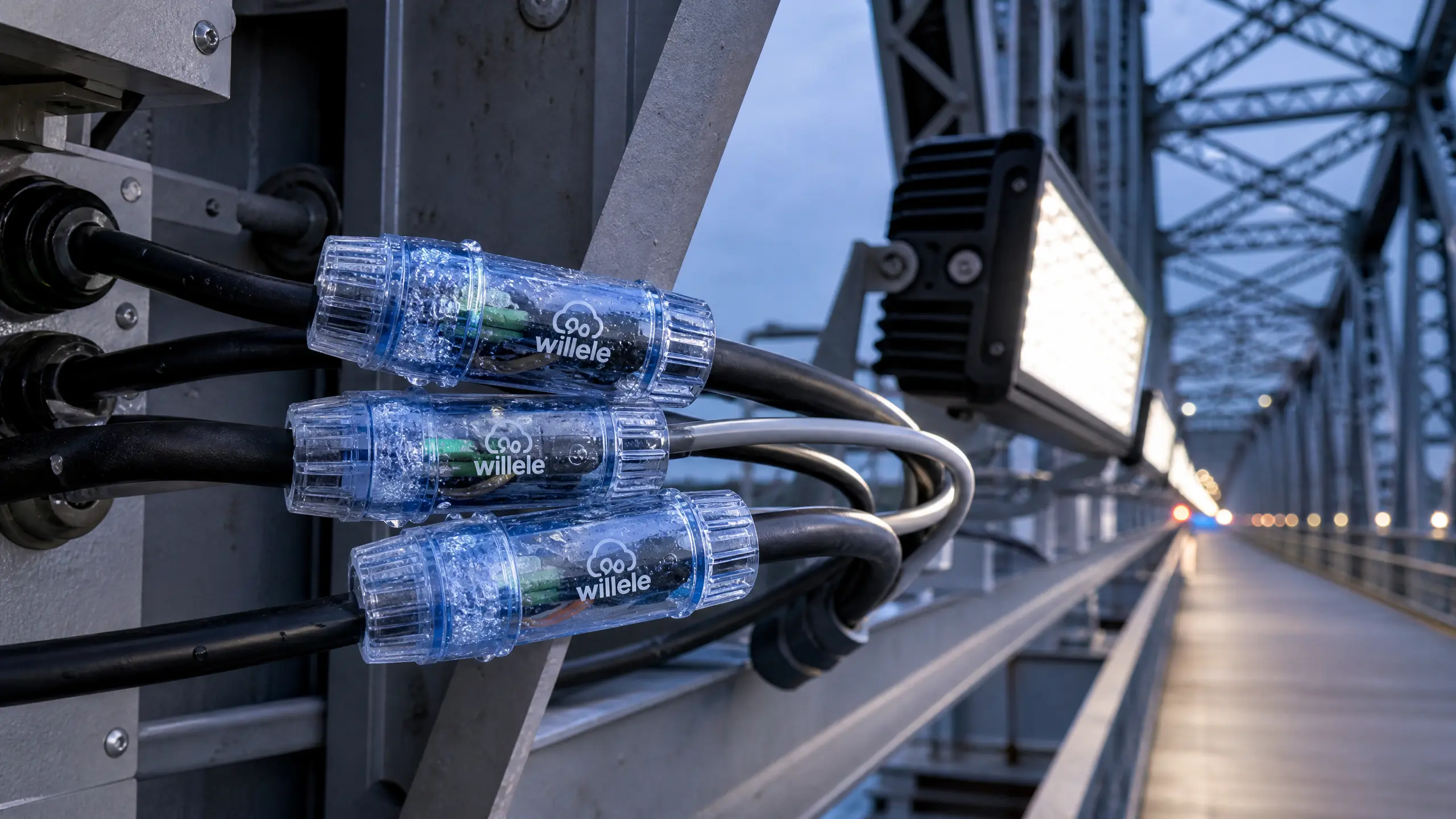
Bridge lighting installations represent one of the most demanding applications for electrical connection systems. Exposed to extreme weather conditions, temperature fluctuations, moisture ingress, and structural vibration, these installations require connection solutions that deliver unwavering reliability over decades of service life. Waterproof wire nuts have emerged as the critical component ensuring long-term performance in these challenging environments. This comprehensive analysis examines the performance characteristics, technical specifications, and selection criteria for waterproof wire nuts in bridge lighting applications.
Understanding Bridge Lighting Environmental Challenges
Bridge structures create uniquely hostile environments for electrical connections. Unlike standard outdoor lighting installations, bridge-mounted fixtures face constant exposure to wind-driven rain, temperature cycling, structural movement, and in coastal areas, corrosive salt spray. The electrical connections supporting these systems must maintain integrity through conditions that would rapidly degrade standard wire connectors.
Temperature extremes present the first major challenge. Bridge surfaces can reach 140°F (60°C) under direct summer sun, then plunge below freezing during winter nights. This thermal cycling causes expansion and contraction in both the bridge structure and electrical components, creating mechanical stress on wire connections. Standard wire nuts lack the material properties to maintain secure connections through these cycles, leading to loosening, arcing, and eventual failure
Moisture ingress represents an even more critical threat. Bridge lighting connections face not just occasional rain but persistent humidity, condensation, and in some locations, direct water spray from passing vehicles or river mist. When moisture penetrates electrical connections, it initiates corrosion processes that increase resistance, generate heat, and ultimately cause complete connection failure. The consequences extend beyond simple lighting outages—corroded connections can create fire hazards and compromise entire lighting circuits
Technical Performance Requirements for Bridge Applications
Waterproof wire nuts designed for bridge lighting must meet stringent performance criteria that exceed standard outdoor lighting requirements. The Ingress Protection (IP) rating system provides the internationally recognized standard for evaluating connector performance against solid particle and liquid ingress.
IP Rating Requirements
For bridge lighting installations, IP67 represents the minimum acceptable protection level for above-deck connections, while ground-level or below-deck installations demand IP68-rated components. The distinction carries significant practical implications. IP67-rated connectors withstand temporary immersion up to 1 meter depth for 30 minutes, providing adequate protection against heavy rain and spray. IP68-rated connectors offer continuous submersion protection beyond 1 meter, essential for connections that may experience flooding or direct water accumulation citation citation.
The table below compares IP rating requirements for different bridge lighting zones:
| Installation Zone | Minimum IP Rating | Environmental Exposure | Recommended Connector Type |
|---|---|---|---|
| Upper deck lighting | IP67 | Wind-driven rain, spray | Gel-filled wire nuts |
| Mid-span fixtures | IP67 | Rain, humidity, temperature extremes | Silicone-filled connectors |
| Under-deck lighting | IP68 | Potential water accumulation, flooding | Submersion-rated gel connectors |
| Ground-level approach | IP68 | Standing water, vehicle spray | Heavy-duty gel-filled units |
| Coastal installations | IP68 | Salt spray, high humidity | Corrosion-resistant sealed connectors |
Material and Construction Standards
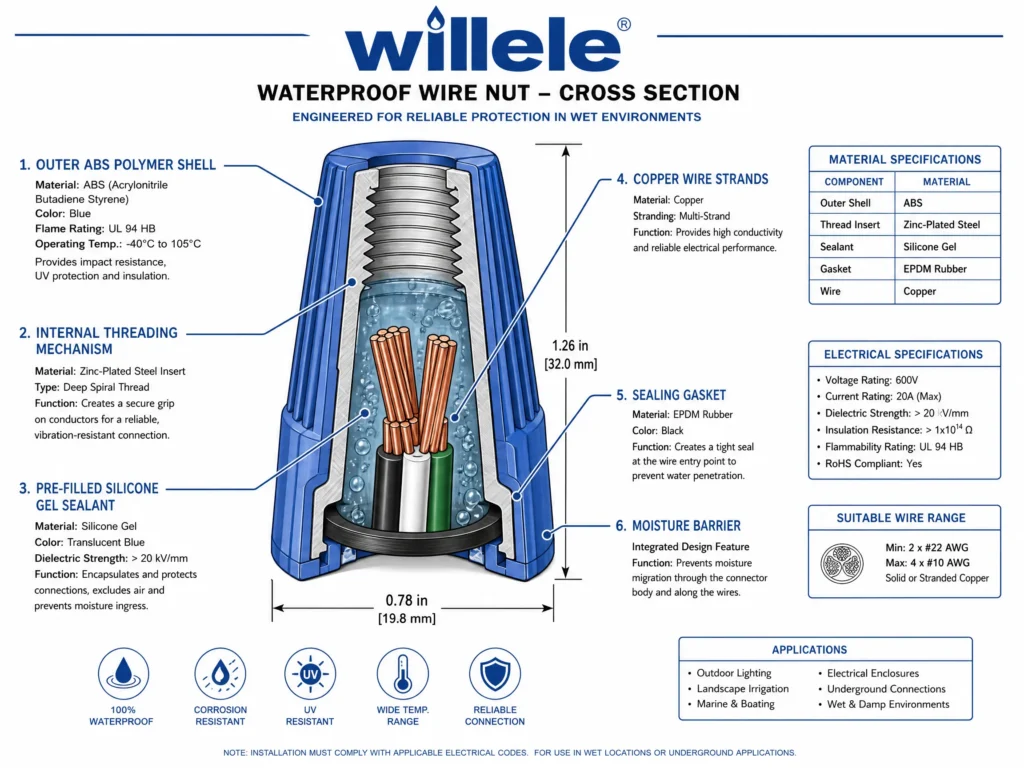
High-performance waterproof wire nuts utilize specialized materials engineered for extreme environment durability. The outer shell typically consists of UV-stabilized ABS polymer or polycarbonate, materials that resist degradation from sunlight exposure while maintaining structural integrity across temperature ranges from -45°F to 400°F (-43°C to 204°C). This temperature tolerance proves essential for bridge applications where black connector housings can reach extreme temperatures under direct sun
The internal sealing mechanism represents the critical performance differentiator. Premium waterproof wire nuts employ pre-filled silicone gel or dielectric grease that completely displaces air and moisture from the connection chamber. Unlike empty connectors that require field-applied sealant, pre-filled units ensure consistent seal quality regardless of installer technique. The silicone gel remains stable across the full operating temperature range, never hardening in cold or liquefying in heat
Performance Analysis: Waterproof vs. Standard Wire Nuts
The performance gap between waterproof and standard wire nuts becomes dramatically apparent in bridge lighting applications. Standard wire nuts, designed for protected indoor environments, fail rapidly when exposed to bridge conditions.
Comparative Performance Metrics
| Performance Factor | Standard Wire Nuts | Waterproof Wire Nuts | Performance Advantage |
|---|---|---|---|
| Moisture resistance | None—open vents | IP67/IP68 sealed | 100% moisture exclusion |
| Corrosion protection | Minimal | Complete isolation | Eliminates corrosion failures |
| Temperature range | 32°F to 176°F | -45°F to 400°F | 2.5× wider operating range |
| Service life (outdoor) | 1-3 years | 15-25 years | 8× longer lifespan |
| Connection resistance | Increases over time | Remains stable | Maintains electrical efficiency |
| Vibration resistance | Moderate | High | Prevents loosening from structural movement |
| UV degradation | Rapid shell breakdown | UV-stabilized materials | No degradation over decades |
The extended service life of waterproof wire nuts delivers substantial economic benefits beyond the initial cost premium. While waterproof connectors may cost 3-5 times more than standard units, their 15-25 year service life in bridge applications versus 1-3 years for standard connectors results in lower total lifecycle costs. More significantly, waterproof connectors eliminate the labor costs and traffic disruption associated with frequent maintenance interventions to replace failed connections
Electrical Performance Under Environmental Stress
Connection resistance represents a critical performance metric that directly impacts lighting system efficiency and reliability. Standard wire nuts experience progressive resistance increases as moisture penetrates the connection and initiates corrosion. Even minor corrosion creates resistance that generates heat, accelerating the degradation process in a destructive feedback loop.
Waterproof wire nuts maintain stable connection resistance throughout their service life by completely excluding moisture and oxygen from the connection interface. This stable resistance ensures consistent voltage delivery to lighting fixtures, preventing the dimming and flickering that characterize corroded connections. For LED bridge lighting systems, stable connections prove particularly important because LEDs require precise voltage regulation for optimal performance and longevity
Installation Best Practices for Bridge Lighting
Proper installation technique determines whether waterproof wire nuts achieve their rated performance in bridge applications. Even premium connectors will fail if installation procedures compromise the seal integrity.
Wire Preparation and Connection Sequence
Wire preparation begins with proper stripping—remove only enough insulation to allow the conductors to fully engage the connector’s internal spring mechanism, typically 0.5 to 0.75 inches. Excessive stripping leaves bare conductor exposed outside the connector, creating a corrosion initiation point. Insufficient stripping prevents the wires from fully engaging, resulting in high-resistance connections.
For stranded conductors common in bridge lighting installations, twist the strands together before insertion to prevent stray wire ends from escaping the connector. Clean the stripped conductors with a wire brush or abrasive pad to remove any oxidation or contamination that could compromise the connection.
Insert the prepared conductors into the pre-filled connector and rotate clockwise with firm pressure until the internal spring mechanism fully engages all conductors. The rotation should require moderate force—if the connector spins freely, the wires have not properly engaged. Continue rotating until resistance increases significantly, indicating the spring has compressed and locked the conductors together.
Seal Verification and Protection
After completing the connection, verify that silicone gel has been displaced to completely fill the connector chamber and that excess gel has been forced out around the wire entry points. This gel displacement confirms that all air has been evacuated and the seal is complete. Wipe away excess gel from the connector exterior to prevent dirt accumulation.
For connections in particularly exposed locations, apply an additional layer of self-fusing silicone tape over the completed connection. This secondary barrier provides extra protection against water intrusion and mechanical damage. Never use standard electrical tape as a waterproofing measure—it degrades rapidly in outdoor environments and can actually trap moisture against the connection
Common Installation Errors and Prevention
Even experienced installers make mistakes that compromise waterproof wire nut performance. Understanding these common errors enables prevention through proper technique and quality control procedures.
Critical Installation Mistakes
Insufficient Torque: Failing to fully tighten the connector leaves gaps in the seal and prevents the internal spring from adequately compressing the conductors. This error occurs most frequently when installers work in awkward positions on bridge structures where achieving proper leverage proves difficult. Solution: Use connector installation tools that provide mechanical advantage and ensure consistent torque application.
Wrong IP Rating Selection: Specifying IP65 splash-resistant connectors for applications requiring IP68 submersion protection represents a fundamental specification error. This mistake often occurs when purchasing decisions prioritize cost over performance requirements. The resulting failures necessitate complete reinstallation with properly rated components
Mixing Conductor Types: Connecting aluminum and copper conductors in the same wire nut creates galvanic corrosion that rapidly degrades the connection. Bridge lighting installations must use connectors specifically rated for aluminum conductors when connecting to aluminum infrastructure wiring, or use copper-to-aluminum transition connectors designed to prevent galvanic reaction.
Inadequate Wire Gauge Capacity: Overloading connectors by inserting more or larger conductors than the rated capacity prevents proper seal engagement and compromises the mechanical connection. Always verify that the total conductor cross-sectional area falls within the connector’s rated range, typically AWG #22 to #8 for standard waterproof wire nuts
Long-Term Performance Monitoring and Maintenance
While waterproof wire nuts require minimal maintenance compared to standard connectors, periodic inspection ensures continued performance throughout the bridge lighting system’s service life.
Inspection Protocols
Annual visual inspections should examine connector housings for physical damage, UV degradation, or signs of water intrusion. Discoloration or cracking of the connector shell indicates UV damage requiring replacement. Any evidence of moisture inside the connector housing—visible water droplets, corrosion on exposed conductor portions, or green copper oxide deposits—signals seal failure and necessitates immediate replacement.
Thermal imaging provides a powerful diagnostic tool for identifying problematic connections before complete failure occurs. Connections with elevated resistance due to corrosion or loosening generate excess heat visible in thermal scans. Conducting thermal surveys during peak load conditions reveals connections requiring attention before they cause lighting outages.
Electrical testing using a low-resistance ohmmeter can quantify connection resistance and identify degrading connections. Resistance measurements exceeding 0.1 ohms for properly sized connections indicate problems requiring investigation. Trending resistance measurements over time provides early warning of developing issues.
Selecting Waterproof Wire Nuts for Bridge Projects
Specifying appropriate waterproof wire nuts for bridge lighting installations requires evaluating multiple factors beyond basic IP rating and wire gauge capacity.
Selection Criteria Matrix
Environmental Severity: Coastal bridges exposed to salt spray require connectors with enhanced corrosion resistance, typically featuring stainless steel internal components and specialized gel formulations. Inland bridges in moderate climates may perform adequately with standard silicone-filled connectors.
Service Life Requirements: Major bridge structures with 50-75 year design lives require electrical components with comparable longevity. Premium waterproof wire nuts from manufacturers offering 20-25 year warranties align with these extended service requirements. Budget connectors with 5-year ratings prove inadequate for permanent installations.
Certification and Compliance: Bridge lighting installations must comply with National Electrical Code (NEC) requirements for wet locations. NEC Article 110.14(B) mandates that all connections in wet locations use weatherproof or waterproof methods specifically listed for the application. Verify that specified connectors carry UL listing and CSA certification confirming code compliance
Conductor Compatibility: Bridge lighting systems may incorporate various conductor types including solid copper, stranded copper, and aluminum infrastructure wiring. Select connectors rated for all conductor types present in the installation, or specify separate connector types for different conductor combinations.
Willele’s Advanced Waterproof Connection Solutions
As a specialized manufacturer of heat shrink tubing and electrical connection products, Willele brings deep materials science expertise to waterproof wire nut design. Our bridge lighting connectors incorporate advanced polymer formulations and precision-engineered sealing systems that deliver superior performance in the most demanding applications.
Willele waterproof wire nuts feature proprietary silicone gel formulations that maintain consistent viscosity and sealing performance across extreme temperature ranges. Unlike commodity gels that can separate or degrade, our advanced formulations remain homogeneous and effective throughout decades of thermal cycling. The gel chemistry provides excellent dielectric properties, preventing voltage tracking even in contaminated environments.
Our connector housings utilize UV-stabilized polymer compounds developed specifically for long-term outdoor exposure. Accelerated aging testing confirms that Willele connector shells maintain structural integrity and sealing performance after the equivalent of 25 years of outdoor exposure, significantly exceeding industry standard requirements.
Frequently Asked Questions
Q: Can waterproof wire nuts be reused after disconnection?
A: No. Waterproof wire nuts are designed for permanent, single-use installation. The silicone gel seal cannot be restored after the connection is opened, and the internal spring mechanism may be damaged during removal. Always use new connectors when modifying or repairing connections.
Q: What is the difference between gel-filled and grease-filled wire nuts?
A: Gel-filled connectors use silicone gel that remains stable across wider temperature ranges and provides superior dielectric properties. Grease-filled units use petroleum-based compounds that may separate or migrate at temperature extremes. For bridge lighting applications, gel-filled connectors offer superior long-term performance.
Q: How many conductors can a single waterproof wire nut accommodate?
A: Capacity varies by connector size, but most bridge lighting applications use connectors rated for 2-6 conductors in the AWG #14 to #10 range. Always verify that the total conductor cross-sectional area falls within the connector’s rated capacity. Overloading compromises both the mechanical connection and the waterproof seal.
Q: Do waterproof wire nuts require additional sealing with tape or sealant?
A: No. Properly installed waterproof wire nuts provide complete sealing without additional materials. Adding tape or sealant does not improve performance and may actually trap moisture against the connector. In extremely exposed locations, self-fusing silicone tape may be applied as secondary protection, but this is not typically necessary.
Q: What causes waterproof wire nuts to fail in bridge applications?
A: The most common failure modes are improper installation (insufficient torque, wrong IP rating, conductor overloading), physical damage from maintenance activities or debris impact, and UV degradation of low-quality connector shells. Proper specification, installation, and periodic inspection prevent most failures.
Q: Are waterproof wire nuts required by electrical code for bridge lighting?
A: Yes. NEC Article 110.14(B) requires weatherproof or waterproof connection methods for all wet locations. Bridge lighting installations clearly qualify as wet locations, making waterproof connectors mandatory for code compliance. Standard wire nuts do not meet this requirement.
