
Busbar Insulators in Data Center Power Distribution Systems

Introduction
In modern data center infrastructure, reliable power distribution is the backbone of uninterrupted operations. As data centers scale to meet increasing computational demands, busbar insulators in data center power distribution systems have become critical components for ensuring electrical safety, system reliability, and operational efficiency. These specialized insulation solutions protect high-current conductors while maintaining compact footprints essential for space-constrained environments.
Busbar insulators serve as the protective barrier between energized conductors and grounded surfaces, preventing electrical faults, reducing maintenance costs, and extending equipment lifespan. With data centers operating at increasingly higher power densities—often exceeding 20kW per rack—the role of advanced insulation technologies, particularly heat shrink tube applications, has never been more crucial.
What Are Busbar Insulators?
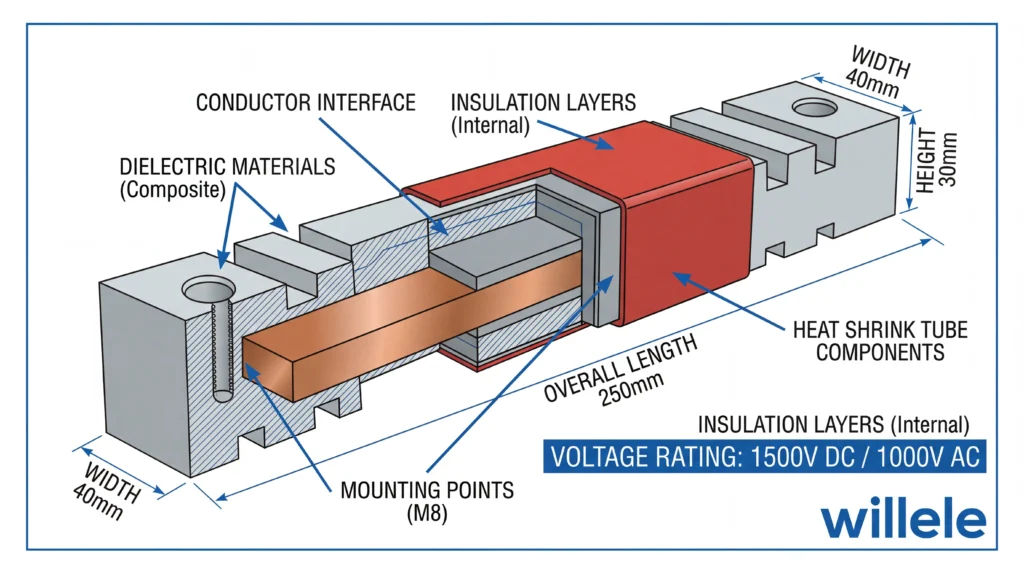
Busbar insulators are specialized electrical insulation products designed to protect rigid or semi-rigid conductor bars (busbars) used in power distribution systems. Unlike traditional wire insulation, busbar insulators must accommodate the unique geometric and thermal requirements of flat or shaped metal conductors carrying substantial electrical current.
These insulators perform several critical functions:
- Electrical isolation: Preventing phase-to-phase and phase-to-ground faults
- Mechanical protection: Shielding busbars from physical damage and environmental contaminants
- Thermal management: Dissipating heat while maintaining dielectric integrity
- Arc flash mitigation: Reducing incident energy during fault conditions
- Environmental sealing: Protecting against moisture, dust, and chemical exposure
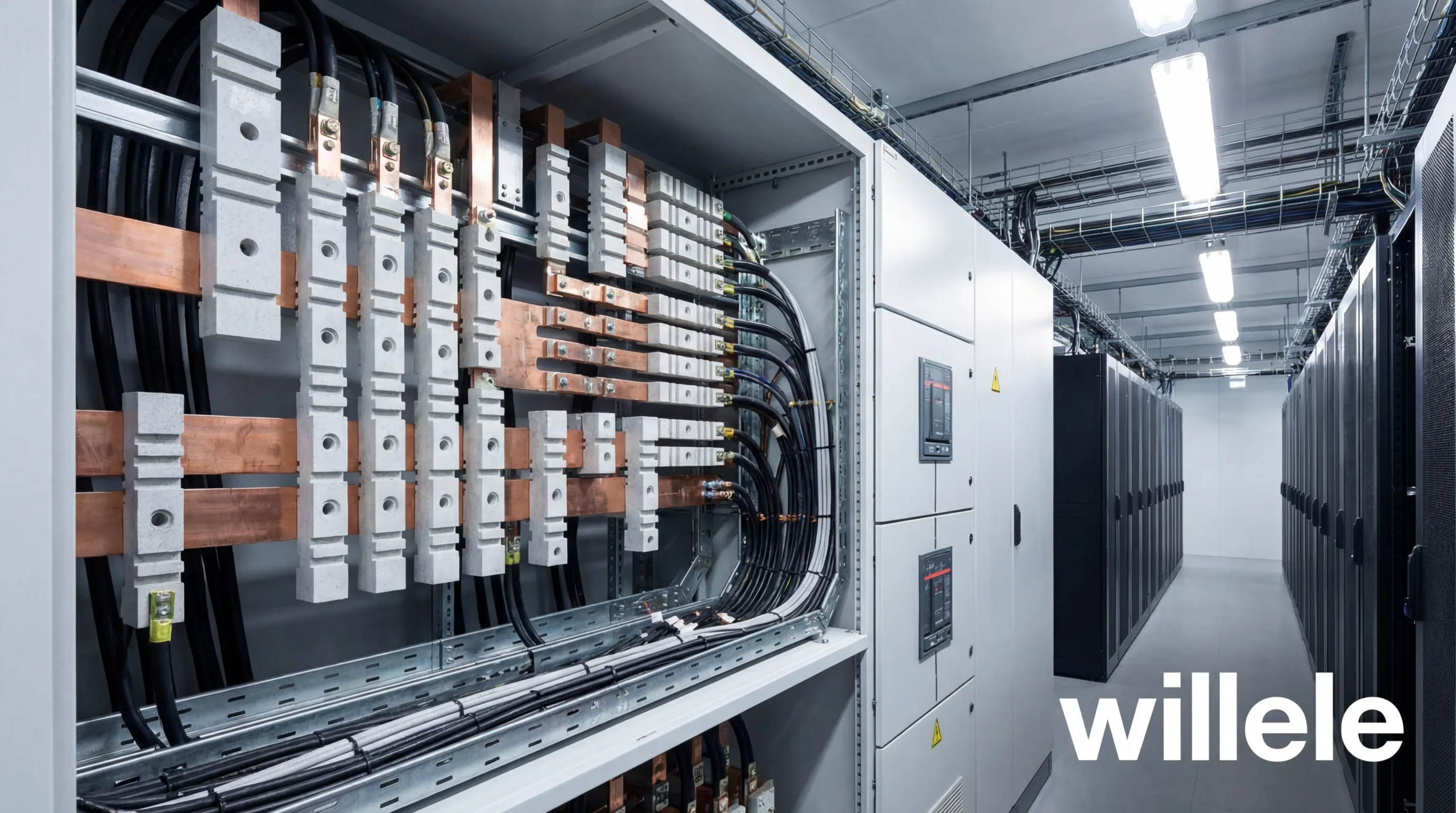
In data center applications, busbar insulators typically cover main distribution busbars, panelboard connections, and transformer secondary terminals where high current densities require robust insulation solutions.
Types of Busbar Insulation Materials
Selecting appropriate insulation materials is paramount for optimal performance in data center power distribution systems. The following table compares common busbar insulation materials:
| Material Type | Temperature Rating | Dielectric Strength | Flexibility | Flame Rating | Primary Applications |
|---|---|---|---|---|---|
| Polyolefin Heat Shrink | -55°C to 135°C | 19 kV/mm | Excellent | UL94 V-0 | General busbar coverage, tight-fit applications |
| PVC Tubing | -10°C to 105°C | 15 kV/mm | Good | UL94 V-0 | Low-voltage distribution, cost-sensitive projects |
| Silicone Rubber | -60°C to 200°C | 20 kV/mm | Superior | UL94 V-0 | High-temperature zones, flexible connections |
| Polyester Film | -40°C to 150°C | 17 kV/mm | Limited | UL94 VTM-0 | Wrap-around insulation, irregular shapes |
| Cross-linked Polyolefin | -55°C to 150°C | 22 kV/mm | Excellent | UL94 V-0 | Premium applications, harsh environments |
| EPDM Rubber | -50°C to 150°C | 18 kV/mm | Superior | UL94 V-0 | Weather-exposed installations, vibration resistance |
Heat shrink tube technology offers distinct advantages for busbar insulation in data centers, providing a conforming, sealed barrier that eliminates air gaps and ensures consistent dielectric performance across the entire conductor length.
Key Benefits of Busbar Insulators in Data Centers
Enhanced Electrical Safety
Busbar insulators in data center power distribution systems significantly reduce the risk of electrical shock, arc flash incidents, and equipment damage. By providing reliable insulation barriers rated for voltage levels exceeding operational requirements, these components create essential safety margins for maintenance personnel and equipment.
Space Optimization
Modern data centers face constant pressure to maximize computing density within limited facility footprints. Insulated busbars occupy less space than equivalent cable installations while delivering higher current capacity, enabling more efficient power distribution architectures.
Improved System Reliability
Quality busbar insulation protects against environmental factors that degrade electrical performance, including:
- Moisture ingress causing tracking and corrosion
- Dust accumulation creating conductive paths
- Temperature cycling inducing material fatigue
- Chemical exposure from cleaning agents or fire suppression systems
Reduced Installation Time
Heat shrink busbar insulators install rapidly compared to tape-wrap or molded boot alternatives, reducing labor costs and project timelines. A single heat shrink component replaces multiple layers of tape, accelerating commissioning schedules.
Long-term Cost Efficiency
Though initial material costs may exceed basic insulation options, busbar insulators deliver superior lifecycle value through:
- Extended service life (25+ years in controlled environments)
- Minimal maintenance requirements
- Reduced downtime from electrical faults
- Lower insurance premiums due to improved safety ratings
Installation Best Practices
Proper installation techniques maximize the performance and longevity of busbar insulators. The following table outlines critical installation parameters:
| Installation Factor | Specification | Best Practice |
|---|---|---|
| Surface Preparation | Clean, dry, oxide-free | Abrasive cleaning + solvent wipe; remove sharp edges |
| Shrink Temperature | 120°C – 150°C (material dependent) | Use calibrated heat gun; maintain 75-100mm distance |
| Shrink Ratio | 2:1 to 4:1 | Select ratio providing 20-30% post-shrink compression |
| Overlap Requirements | 25-50mm minimum | Greater overlap for high-voltage applications |
| Cooling Time | 5-15 minutes | Allow complete cooling before energizing |
| Environmental Conditions | 10°C – 30°C ambient | Avoid installation in extreme temperatures |
| Inspection Criteria | Visual + electrical testing | Check for voids, wrinkles, exposed conductor |
Step-by-Step Installation Process
- Measure and cut: Size heat shrink tubing to provide specified overlap beyond insulation requirements
- Prepare busbar surface: Remove oxidation, burrs, and contaminants; ensure surface smoothness
- Position tubing: Center over area requiring insulation; verify coverage of all exposed conductor
- Apply heat uniformly: Begin at center and work toward ends; rotate busbar if possible for even shrinkage
- Verify seal integrity: Inspect for complete adhesion, absence of air pockets, and proper conductor coverage
- Document installation: Record material type, installation date, and inspection results
Standards and Compliance
Busbar insulators in data center power distribution systems must comply with multiple industry standards ensuring safety, performance, and reliability:
| Standard | Issuing Body | Key Requirements | Application |
|---|---|---|---|
| IEC 60439-1/-2 | International Electrotechnical Commission | Temperature rise limits, short-circuit withstand | Busbar system design and testing |
| UL 857 | Underwriters Laboratories | Dielectric strength, flame resistance, mechanical properties | Busbar insulation product certification |
| NEMA PB 2.2 | National Electrical Manufacturers Association | Construction standards for busway systems | Manufacturing specifications |
| IEEE 605 | Institute of Electrical and Electronics Engineers | Design, testing, and installation practices | Power distribution assembly |
| ASTM D876 | American Society for Testing and Materials | Rigid PVC compounds testing procedures | Material qualification |
| RoHS / REACH | European Union | Hazardous substance restrictions | Environmental compliance |
| NEC Article 368 | National Fire Protection Association | Installation requirements for busways | Code compliance for installations |
Data center operators should verify that specified busbar insulators carry appropriate certifications and that installation practices align with applicable codes and standards for their jurisdiction.
Willele’s Heat Shrink Solutions for Busbar Insulation
Willele Electric specializes in advanced heat shrink tube technology engineered specifically for demanding electrical applications, including busbar insulators in data center power distribution systems. Our product portfolio addresses the unique challenges of high-current, high-reliability environments.
Product Advantages
Superior Material Properties: Willele heat shrink insulators utilize cross-linked polyolefin formulations delivering exceptional dielectric strength (>22 kV/mm), wide temperature performance (-55°C to 150°C), and outstanding flame retardancy (UL94 V-0 rating).
Precision Manufacturing: Advanced extrusion and irradiation processes ensure consistent wall thickness, uniform shrink ratios, and predictable performance across production batches, critical for large-scale data center deployments.
Custom Engineering: Willele provides tailored solutions including:
- Non-standard sizes for unique busbar geometries
- Dual-wall constructions with adhesive liners for enhanced sealing
- Color-coded options for phase identification
- Pre-cut kits with installation accessories
Technical Support: Our engineering team assists with material selection, installation specification development, and compliance documentation, ensuring optimal performance throughout the project lifecycle.
Application-Specific Solutions
For data center power distribution, Willele offers:
- Main distribution busbars: Heavy-wall heat shrink up to 200mm diameter, rated for 1000V+ applications
- Panelboard connections: Medium-wall solutions balancing flexibility and protection
- Transformer terminals: High-temperature variants withstanding 150°C+ operating conditions
- Emergency power systems: Products meeting stringent flame spread requirements for critical infrastructure
Environmental Considerations
Modern data centers increasingly prioritize sustainability, and busbar insulation materials play a role in environmental performance:
- Energy efficiency: Reduced electrical losses compared to cable alternatives
- Material recyclability: Thermoplastic heat shrink components support end-of-life recycling
- Reduced waste: Precision-sized solutions minimize installation scrap
- Longevity: Extended service life reduces replacement frequency and associated environmental impacts
Willele’s commitment to environmental responsibility includes RoHS and REACH compliance, halogen-free formulations for sensitive applications, and ongoing research into bio-based polymer alternatives.
Conclusion
Busbar insulators in data center power distribution systems represent a critical investment in infrastructure reliability, safety, and operational efficiency. As facilities scale to support ever-increasing computational demands, the selection of appropriate insulation solutions—particularly advanced heat shrink tube technologies—becomes paramount.
Key considerations for data center designers and operators include material selection aligned with environmental conditions, proper installation techniques ensuring long-term performance, and compliance with evolving industry standards. Partnering with specialized manufacturers like Willele Electric provides access to engineered solutions backed by technical expertise and proven reliability.
The evolution of data center power distribution continues toward higher densities, improved efficiency, and enhanced safety. Busbar insulation technology advances in parallel, offering sophisticated solutions that protect critical infrastructure while enabling the compact, reliable designs modern facilities require.
For data centers seeking to optimize power distribution performance, investing in premium busbar insulators delivers measurable benefits: reduced installation time, improved safety margins, extended equipment lifespan, and enhanced system reliability—all contributing to lower total cost of ownership and superior operational outcomes.
Frequently Asked Questions
Q: What voltage ratings are required for busbar insulators in typical data center applications?
A: Most data center power distribution operates at 480V or less, requiring insulators rated for at least 600V (1000V preferred for safety margin). Critical applications may specify 5kV or higher ratings. Always consult electrical engineers and local codes for specific requirements.
Q: How do heat shrink busbar insulators compare to tape-wrap insulation?
A: Heat shrink provides superior performance: uniform coverage without air gaps, faster installation (60-70% time reduction), better environmental sealing, and consistent dielectric properties. Tape-wrap may loosen over time, create hotspots, and require periodic inspection/maintenance.
Q: Can busbar insulators be installed on energized equipment?
A: No. Busbar insulator installation must occur during scheduled maintenance with proper lockout/tagout procedures. Installing on energized equipment poses severe shock and arc flash hazards. Always follow NFPA 70E and facility safety protocols.
Q: What maintenance do busbar insulators require?
A: Quality heat shrink busbar insulators require minimal maintenance. Recommended practices include: annual visual inspection for physical damage, thermal imaging to detect hotspots indicating degradation, and dielectric testing during major maintenance intervals (every 5-10 years).
Q: Are there special considerations for busbar insulators in raised-floor data centers?
A: Yes. Underfloor power distribution may experience higher humidity, temperature variations, and mechanical stress from foot traffic. Specify insulators with enhanced moisture resistance, robust mechanical properties, and potentially dual-wall constructions with adhesive liners for superior environmental sealing.
Q: How does Willele support large-scale data center projects?
A: Willele provides comprehensive project support including: material selection consultation, custom product development, volume pricing, pre-cut kits with installation tools, on-site training, and technical documentation assistance. Our team works directly with contractors, engineers, and facility managers to ensure successful implementation.
