
Custom Junction Box Manufacturing: From Design to Production

Introduction to Custom Junction Box Manufacturing
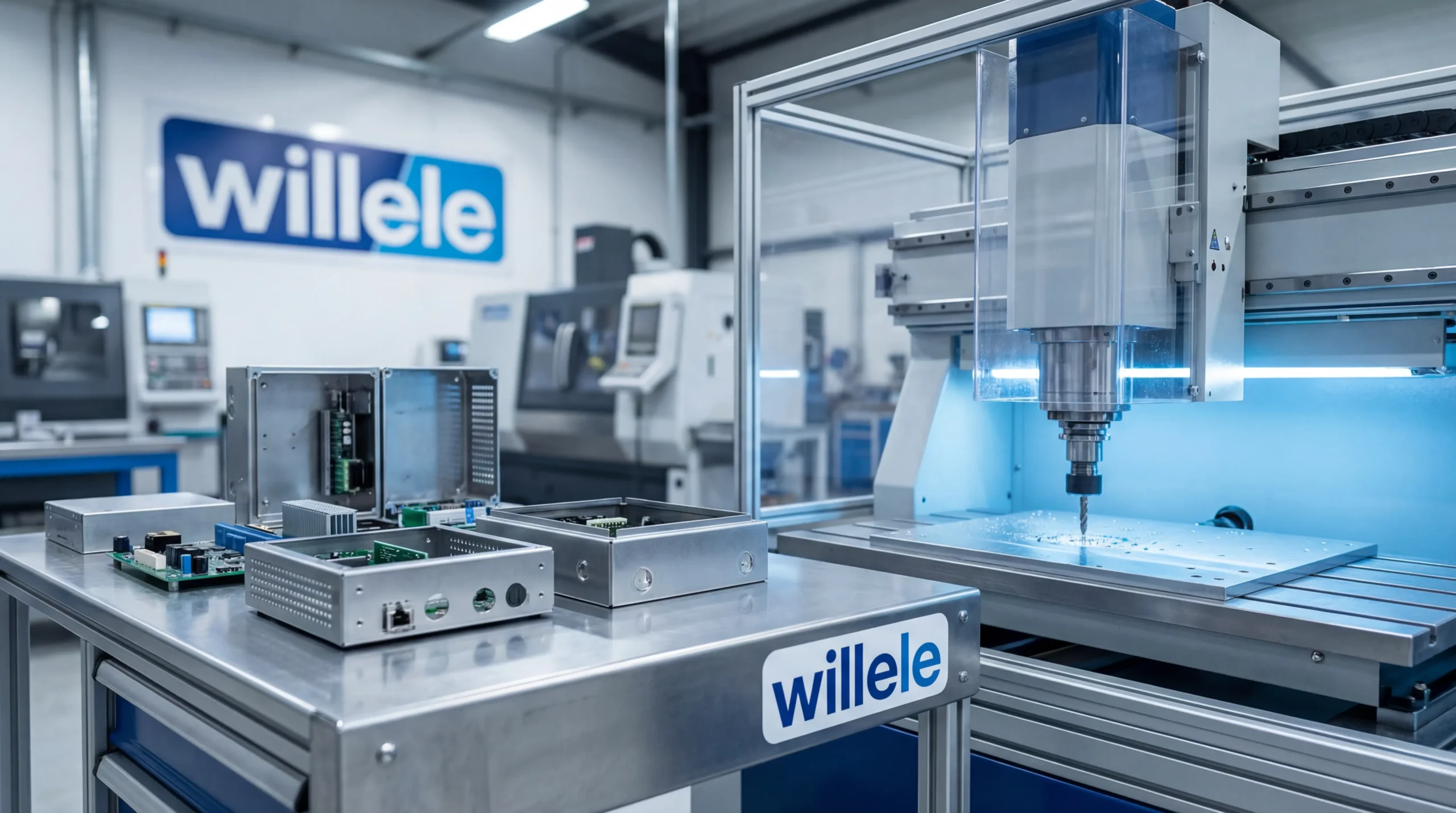
Custom junction box manufacturing represents a critical component in modern electrical infrastructure, providing tailored solutions for cable management, connection protection, and electrical system integration. As industrial automation, renewable energy, and smart infrastructure continue to expand, the demand for specialized junction boxes designed to meet specific environmental, dimensional, and performance requirements has grown exponentially.
Unlike standard off-the-shelf enclosures, custom junction box manufacturing involves a comprehensive process from initial design consultation through final production, ensuring each unit meets exact specifications for voltage ratings, ingress protection (IP), material composition, and mounting configurations. This end-to-end manufacturing capability enables businesses to optimize their electrical installations while maintaining compliance with international safety standards.
The Design Phase: Engineering Custom Solutions
Requirements Analysis and Specification Development
The custom junction box manufacturing process begins with detailed requirements gathering. Engineers collaborate with clients to understand operating environments, electrical load specifications, cable entry requirements, and mounting constraints. This phase establishes critical parameters including:
- Environmental conditions: Temperature ranges, humidity levels, corrosive atmospheres, outdoor exposure
- Electrical specifications: Voltage ratings, current capacity, grounding requirements, isolation needs
- Physical dimensions: Space constraints, cable entry points, internal volume for connections
- Regulatory compliance: UL, CE, IEC, NEMA, or industry-specific certifications
| Design Consideration | Standard Options | Custom Capabilities |
|---|---|---|
| IP Rating | IP54, IP65 | IP20 to IP69K custom sealing |
| Material | Steel, Aluminum | Stainless steel, polycarbonate, fiberglass, specialized alloys |
| Size Range | Limited catalog sizes | Any dimension from 50mm to 2000mm+ |
| Cable Entries | Pre-drilled standard | Custom placement, size, and quantity |
| Mounting | Wall/DIN rail only | Floor, pole, pendant, custom brackets |
| Internal Layout | Fixed configuration | Custom terminal arrangements, DIN rails, component mounting |
CAD Modeling and Prototyping
Modern custom junction box manufacturing relies heavily on computer-aided design (CAD) to create precise 3D models before production begins. This digital prototyping phase allows for:
- Virtual fit testing with existing infrastructure
- Thermal analysis for heat dissipation
- Structural integrity simulation under load
- Manufacturing feasibility assessment
- Client approval before tooling investment
For complex projects, rapid prototyping through 3D printing or CNC machining produces physical samples for hands-on evaluation, reducing costly modifications during full-scale production.
Material Selection and Industry Standards
Comparative Material Properties
Material selection fundamentally impacts junction box performance, durability, and cost. The choice depends on application-specific requirements balanced against budget constraints.
| Material | Strengths | Weaknesses | Typical Applications |
|---|---|---|---|
| Cold-Rolled Steel | Cost-effective, strong, paintable | Requires coating, heavier weight | Indoor industrial, light commercial |
| Stainless Steel 304/316 | Corrosion resistance, hygienic | Higher cost, difficult machining | Food processing, marine, chemical |
| Aluminum Alloy | Lightweight, corrosion-resistant | Lower strength, EMI concerns | Outdoor, weight-sensitive installations |
| Polycarbonate/ABS | Impact-resistant, transparent options | UV degradation, lower temp rating | Electronics, control panels, residential |
| Fiberglass (GRP) | Chemical resistance, non-conductive | Higher cost, limited shapes | Chemical plants, offshore, high-voltage |
Standards Compliance in Manufacturing
Custom junction box manufacturing must adhere to multiple international and regional standards:
| Standard | Region | Focus Area | Key Requirements |
|---|---|---|---|
| IEC 60529 | International | IP Rating | Ingress protection testing protocols |
| UL 508A | North America | Industrial Control Panels | Enclosure construction, spacing, grounding |
| NEMA 250 | North America | Enclosure Types | Environmental protection classifications |
| IEC 61439 | International | Low-Voltage Switchgear | Assembly standards, temperature rise |
| ATEX/IECEx | International | Hazardous Areas | Explosion-proof certifications |
Manufacturing Processes: From Raw Material to Finished Product
Stage-by-Stage Production Flow
Custom junction box manufacturing involves multiple coordinated production stages, each requiring specialized equipment and skilled operators.
| Manufacturing Stage | Process Description | Equipment Used | Quality Checkpoints |
|---|---|---|---|
| Material Preparation | Sheet metal cutting to blank sizes | CNC laser cutters, shears, plasma cutters | Material certification, dimension verification |
| Forming & Bending | Creating box shapes and angles | CNC press brakes, roll forming | Angle accuracy, bend radius compliance |
| Joining & Assembly | Welding seams, attaching components | TIG/MIG welders, spot welders, riveting | Weld quality, structural integrity |
| Machining | Precise holes, threads, mounting features | CNC mills, drill presses, tapping machines | Dimension tolerance, thread quality |
| Surface Treatment | Corrosion protection, appearance | Powder coating, electroplating, painting | Coating thickness, adhesion, finish quality |
| Component Installation | Terminals, glands, hardware | Assembly lines, torque-controlled tools | Proper installation, torque verification |
| Cable Management | Heat shrink tube application, strain relief | Heat guns, cable management systems | Protection integrity, organization |
| Final Testing | Electrical safety, IP rating validation | Hipot testers, water spray chambers | Dielectric strength, ingress protection |
Advanced Manufacturing Technologies
Modern custom junction box manufacturing increasingly incorporates advanced technologies:
- Fiber laser cutting: Delivers clean edges and complex geometries with minimal heat-affected zones
- Robotic welding: Ensures consistent weld quality and reduces production time
- Automated powder coating: Provides uniform, durable finishes with excellent corrosion resistance
- CNC bending with automatic tool changing: Enables complex forms without manual intervention
Heat Shrink Tube Integration
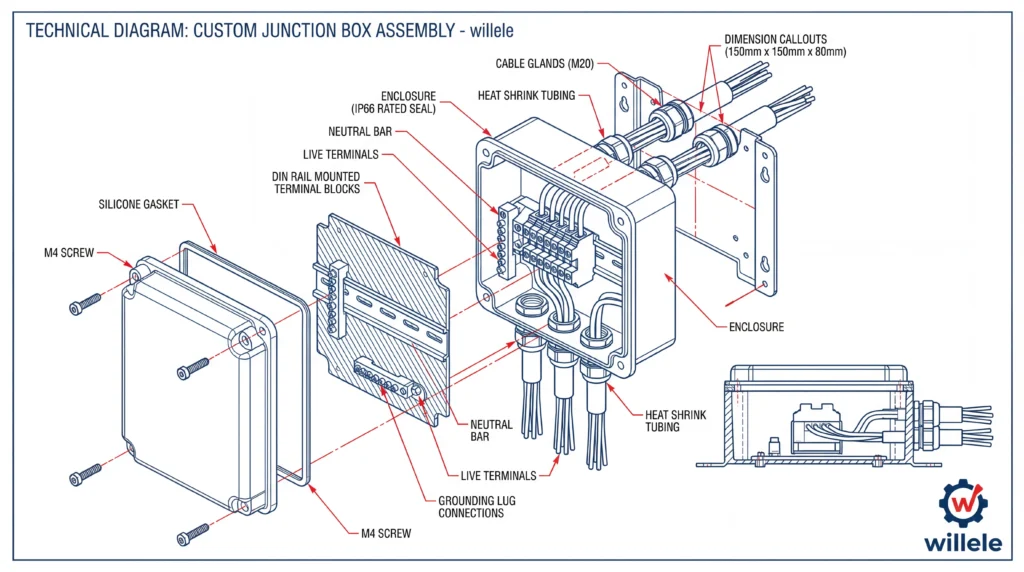
An often-overlooked aspect of professional custom junction box manufacturing involves proper cable management using heat shrink tubing. At willele Electric, our expertise in both junction box production and heat shrink tube manufacturing enables integrated solutions:
- Cable identification: Color-coded heat shrink markers for wire management
- Strain relief protection: Heat shrink boots at cable entry points prevent insulation damage
- Environmental sealing: Adhesive-lined heat shrink provides additional moisture barriers
- Insulation repair: Field-applicable heat shrink restores damaged cable jackets
This integrated approach ensures that internal cable connections remain organized, protected, and easily maintainable throughout the junction box’s service life.
Quality Control and Testing Protocols
Multi-Stage Inspection Process
Quality assurance in custom junction box manufacturing employs rigorous testing at multiple production stages:
Incoming Material Inspection
- Material certificates verification (mill test reports)
- Dimensional checks on raw materials
- Surface quality assessment
In-Process Quality Control
- First article inspection (FAI) for new production runs
- Statistical process control (SPC) monitoring
- Dimensional verification at critical stages
Final Product Testing
- Dielectric strength testing (hipot test) to verify electrical isolation
- IP rating validation through water spray or dust chamber testing
- Continuity and grounding resistance measurements
- Pull tests on cable glands and mounting hardware
- Coating thickness and adhesion testing
Performance Validation Standards
| Test Type | Standard | Pass Criteria | Frequency |
|---|---|---|---|
| Dielectric Strength | IEC 61439-1 | 2.5kV AC for 1 minute, no breakdown | Every unit or batch sampling |
| IP Rating Verification | IEC 60529 | No ingress per rating level | First article + periodic |
| Temperature Rise | IEC 61439-1 | <65K rise at rated current | Type testing + periodic |
| Short Circuit Rating | IEC 61439-1 | No hazardous damage | Type testing per design |
| Grounding Continuity | <0.1Ω resistance | Pass/fail | Every unit |
Applications Across Industries
Industry-Specific Requirements
Custom junction box manufacturing serves diverse sectors, each with unique demands:
Renewable Energy
- Solar combiner boxes with high UV resistance and heat dissipation
- Wind turbine nacelle enclosures with vibration resistance
- Battery storage system junction boxes with thermal management
Oil & Gas
- Explosion-proof junction boxes meeting ATEX/IECEx certifications
- Corrosion-resistant stainless steel for offshore platforms
- Hazardous area classifications (Zone 1, Zone 2, Division 1, Division 2)
Manufacturing & Automation
- Washdown-rated enclosures (IP69K) for food processing
- EMI/RFI shielded boxes for sensitive electronics
- Modular designs for flexible production line reconfiguration
Transportation Infrastructure
- Railway signal junction boxes with vibration and impact resistance
- Traffic control enclosures with vandal-resistant features
- Tunnel installations requiring fire-resistant materials
Marine & Offshore
- 316 stainless steel construction for saltwater environments
- Watertight cable glands with multiple seal layers
- Corrosion-resistant hardware and fasteners
The willele Electric Advantage
As a specialized B2B manufacturer of electrical equipment with deep expertise in heat shrink tube technology, willele Electric offers comprehensive custom junction box manufacturing solutions that integrate cable management excellence with precision enclosure fabrication. Our manufacturing capabilities include:
- Full design-to-production services with experienced engineering support
- Rapid prototyping for design validation and approval
- Flexible production volumes from small batches to large-scale orders
- Integrated cable management solutions combining junction boxes with heat shrink tube systems
- Quality certifications meeting international standards
- Global shipping with complete documentation for customs and compliance
Whether your project requires explosion-proof enclosures for hazardous environments, weatherproof boxes for outdoor installations, or specialized designs for unique applications, willele Electric’s custom junction box manufacturing expertise delivers reliable, compliant solutions tailored to your exact specifications.
Frequently Asked Questions
What is the typical lead time for custom junction box manufacturing?
Lead times vary based on complexity and quantity, but typically range from 2-4 weeks for design approval and prototyping, followed by 4-8 weeks for production tooling and manufacturing. Rush services may be available for urgent projects with simplified designs.
What is the minimum order quantity for custom junction boxes?
While this varies by manufacturer, many custom junction box manufacturers can accommodate orders starting from 10-50 units for specialized designs, though pricing becomes more economical at volumes of 100+ units. Prototype quantities of 1-5 units are typically available at premium pricing.
Can existing junction box designs be modified rather than creating completely new designs?
Yes, modification of existing designs is often the most cost-effective approach. Common modifications include adding cable entry points, changing dimensions, upgrading IP ratings, or incorporating additional mounting features while retaining the basic structure.
How do I determine the correct IP rating for my application?
IP rating selection depends on exposure to solid particles (first digit) and liquids (second digit). Indoor applications may only require IP54, outdoor installations typically need IP65 or higher, and washdown environments require IP66-IP69K. Consult with manufacturers to match environmental conditions to appropriate ratings.
What certifications are essential for custom junction boxes?
Essential certifications depend on your region and application. North American projects typically require UL or CSA listings, European markets need CE marking, and hazardous locations require ATEX (Europe) or IECEx (international) certifications. Industrial applications may also need specific compliance with IEC 61439 standards.
Can junction boxes be customized after initial production for field modifications?
Quality junction boxes should include provisions for reasonable field modifications such as additional cable entries (within structural limits), but significant alterations may compromise IP ratings, structural integrity, or safety certifications. Consult manufacturers before field modifications to maintain warranty and compliance.
What role do heat shrink tubes play in junction box installations?
Heat shrink tubes provide critical cable management functions including insulation restoration, strain relief, environmental sealing at cable entries, color-coded identification, and protection against abrasion. Professional installations integrate heat shrink solutions for enhanced reliability and maintainability.
Contact willele Electric today to discuss your custom junction box manufacturing requirements. Our engineering team is ready to transform your specifications into reliable, certified electrical enclosures that meet the most demanding applications.
