
Distinguishing and Understanding the Function of Flame Retardant Heat Shrinkable Tube

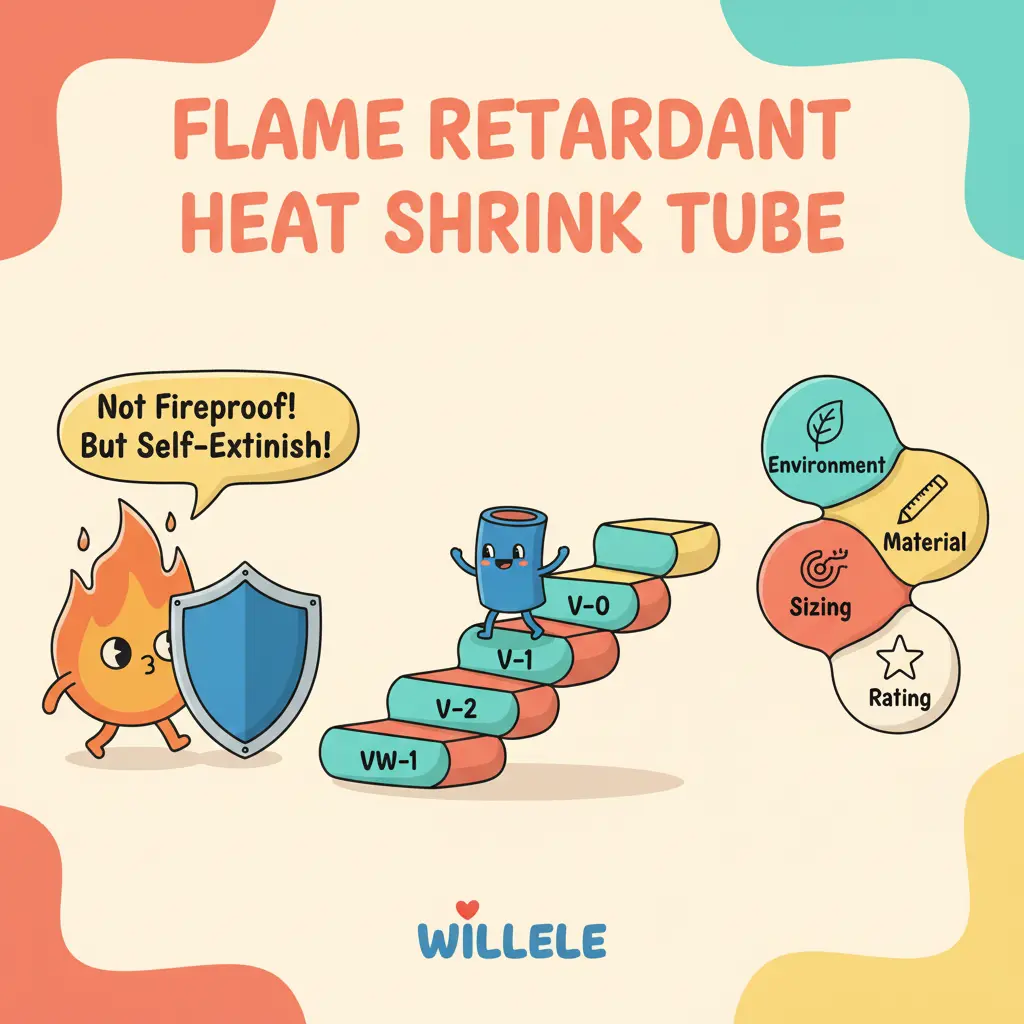
Distinguishing and Understanding the Function of Flame Retardant Heat Shrinkable Tube?Introduction: The Hidden Fire Risk in Plain Sight
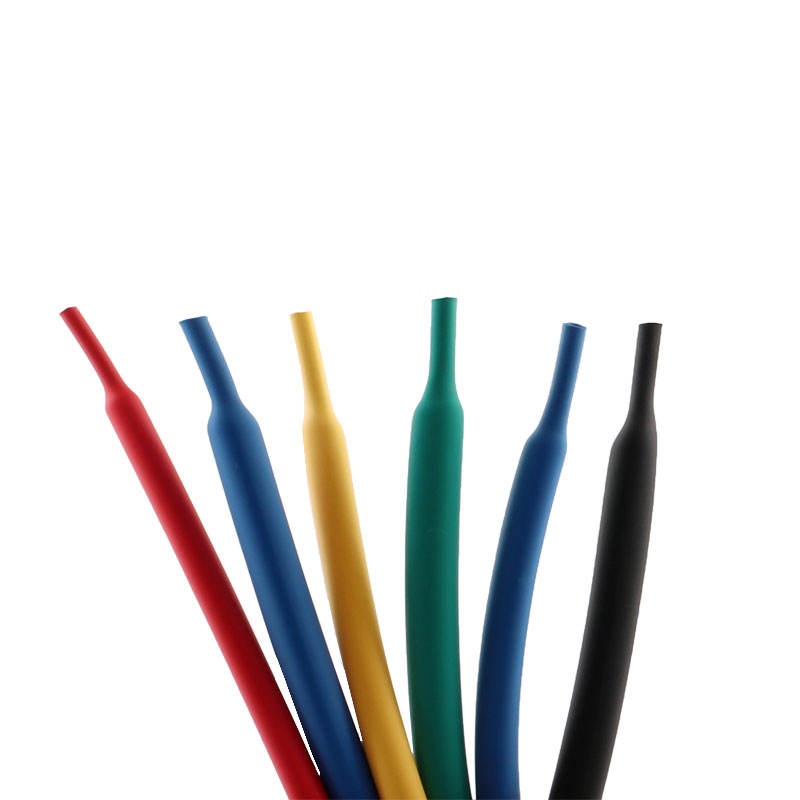
We see it all the time in failure analysis: a beautifully designed electrical assembly, built with premium components, that has suffered a catastrophic thermal event. The culprit is often not a primary component, but something as seemingly minor as a wire whose insulation was compromised. A poor connection, vibration-induced abrasion, or a simple overload can generate immense heat, leading to what some call a “glowing connection” . While the initial fault might be unavoidable, the real damage occurs when that heat ignites nearby materials, allowing a fire to propagate throughout a wire harness or enclosure.
This is where flame retardant heat shrinkable tubing proves its worth. It’s not just an insulator or a strain relief; it’s a critical line of defense. But the term “flame retardant” is widely used and often misunderstood. Choosing the right tubing requires moving beyond the label and understanding its true function under real-world failure conditions.
Key Takeaways
- Flame Retardant is Not “Fireproof”: It means the material is engineered to resist ignition and, most importantly, to self-extinguish quickly once the initial heat source is removed.
- Standards Aren’t Interchangeable: Flammability ratings like VW-1 and UL94 V-0 describe different performance levels under different test conditions. Understanding the difference is key to matching the tubing to your application’s risk profile.
- A Holistic Decision: The right choice depends on more than just a flammability rating. The base material (e.g., Polyolefin), construction (single vs. dual wall), and proper sizing are just as critical for overall system safety and reliability.
Part 1: What “Flame Retardant” Really Means
Think of it like the water resistance rating on a watch. A watch labeled “water-resistant” might survive a splash of rain, but you wouldn’t take it scuba diving. A certified 200M diver’s watch, however, is built and tested for a specific, harsh environment.
Similarly, not all flame retardant tubing is created equal. Its function in a fire event is threefold:
- Resist Ignition: The material is designed to not catch fire easily when exposed to a secondary flame or an intensely hot electrical fault.
- Self-Extinguish: This is the most critical property. Once the external heat source (the electrical arc, the short circuit) is gone, the tubing must stop burning on its own, and do so quickly.
- Prevent Flame Propagation: The tubing should not act as a fuse, carrying flame along a wire bundle to other components. A superior flame retardant tube will contain the thermal event to the point of failure.
A non-retardant tube may provide excellent insulation in normal operation, but during a fault, it can become fuel, turning a containable issue into a system-wide disaster.
Part 2: Deconstructing the Standards: From Test Labs to the Real World
To ensure predictable performance, various standards bodies have developed rigorous flammability tests. As manufacturers, we at WILLELE select and test our materials to these precise standards so you can design with confidence. Here are the most common ones you’ll encounter.
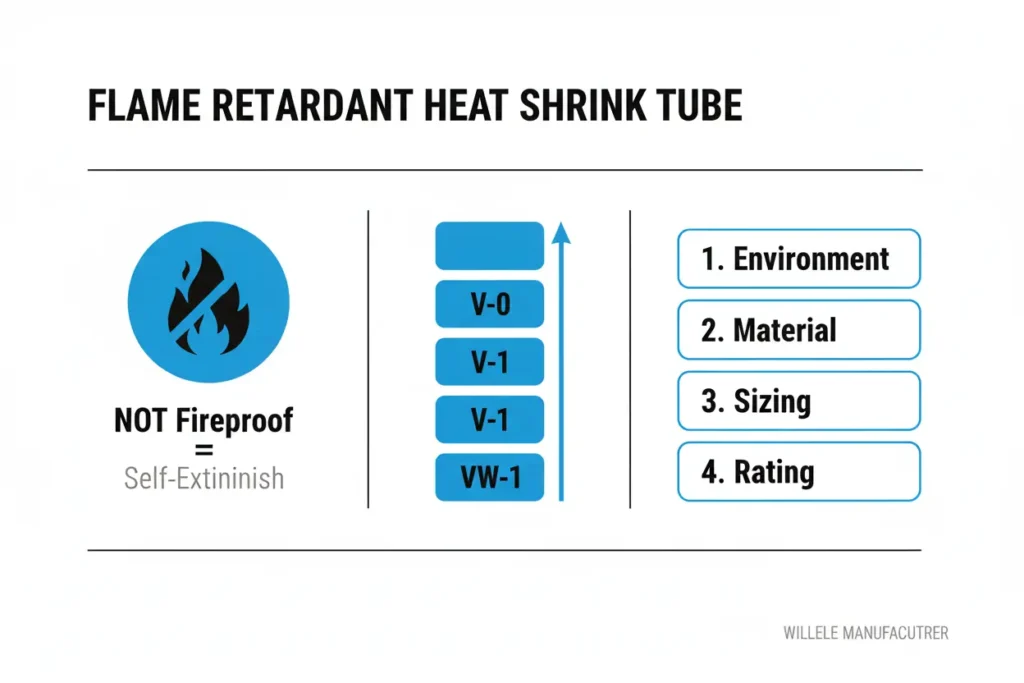
- VW-1 (Vertical Wire) Flame Test: This is a widely recognized baseline test from UL (Underwriters Laboratories). A vertical sample of the tubing is subjected to a flame for 15 seconds, repeated five times. To pass, the sample must self-extinguish within a set time, and any flaming drips cannot ignite a piece of cotton placed below . It’s a strong indicator of general flame resistance.
- UL 94 (Standard for Flammability of Plastic Materials): This standard is more comprehensive and provides a graded classification. For tubing, the vertical burn tests are most relevant:
- V-2: The sample self-extinguishes within 30 seconds, but flaming drips are permitted. This may be unsuitable if sensitive components are located below the wire harness.
- V-1: Self-extinguishes within 30 seconds, and while non-flaming drips are allowed, flaming drips are not. This offers a higher level of protection.
- V-0: This is the gold standard for many applications. The sample must self-extinguish within just 10 seconds, and no flaming drips are permitted. This rating significantly reduces the risk of fire spreading to adjacent areas.
- SAE AS23053: This is the aerospace specification for heat-shrinkable tubing . It includes stringent flammability testing and is a testament to the material’s reliability in extreme and mission-critical environments.
Knowing the difference between VW-1 and UL 94 V-0 allows you to make a more informed, risk-based decision for your design.
Part 3: The Engineer’s 4-Step Guide to Selecting the Right Tubing
Choosing the correct tubing is a systematic process. Here is a practical checklist to guide your selection.
Step 1: Define the Operating Environment
Before looking at flammability, define the tube’s everyday working conditions.
- Temperature: What is the continuous operating temperature?
- Chemicals & Fluids: Will it be exposed to oils, solvents, or cleaning agents?
- Mechanical Stress: Will it face high abrasion, vibration, or flexing?
- Environment: Will it be outdoors (requiring UV resistance) or need to be sealed against moisture?
Step 2: Match the Material to the Mission
The base material dictates the tubing’s properties.
- Flame-Retardant Polyolefin: This is the versatile workhorse for most industrial and commercial applications, offering a balanced profile of temperature resistance, flexibility, and excellent flame-retardant properties. It is the go-to choice for general-purpose wire harnessing and insulation.
- Dual-Wall (Adhesive-Lined) Flame-Retardant Tubing: For applications requiring an environmental seal, products like DWFR (Dual Wall Flame Retardant) tubing are ideal. The outer wall shrinks while an inner adhesive liner melts and flows, creating a watertight, protective barrier against moisture and contaminants that could cause shorts.
- Specialty Materials (PVDF, Fluoropolymers): For extreme environments—such as high temperatures or exposure to aggressive fuels and chemicals—specialty materials like Kynar® (PVDF) provide superior performance, though often at a higher cost.
Step 3: Ensure a Proper Fit (Sizing & Shrink Ratio)
An improper fit can compromise the entire assembly.
- Expanded ID: The tubing’s initial (expanded) inner diameter must be large enough to easily slide over the wire and any connectors.
- Recovered ID: The final (recovered) inner diameter must be smaller than the smallest part of the wire or component it needs to cover, ensuring a tight grip . A 3:1 shrink ratio is often more versatile than 2:1, as it can accommodate larger differences in diameter.
- Wall Thickness: Remember that the wall thickness decreases as the tubing shrinks over a large object. Ensure the final wall thickness provides sufficient insulation and abrasion protection.
Step 4: Verify the Rating
Don’t settle for a generic “flame retardant” claim. Ask for the specific standard it meets. Is it VW-1? Is it UL 94 V-0? The datasheet should clearly state the certification. This detail is essential for your risk assessment and technical documentation.
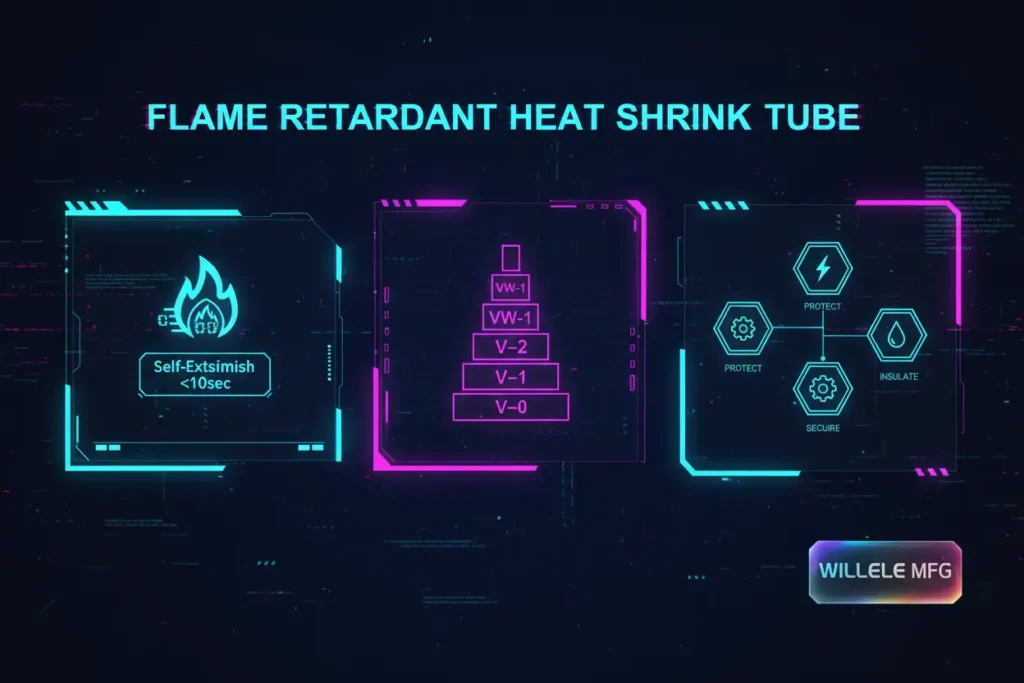
Conclusion: Building System-Level Reliability
Heat shrink tubing is more than just a commodity component. When chosen correctly, flame retardant tubing is an active safety device that can prevent a minor fault from escalating into a major failure. It enhances the reliability and safety of the entire system. By understanding the true meaning of flame retardancy, deconstructing the standards, and following a methodical selection process, you can design and build with a higher degree of confidence.
Selecting the right component is crucial. If you’re facing a challenging application or need to verify the best material for your design, contact the engineering team at WILLELE. We’re here to help you get it right.
