
Does Your Project Need Flame Retardant Heat Shrink Tubing?


Introduction: The Engineer’s Dilemma
Alex, a senior robotics engineer, stared at the wiring harness diagram for her team’s new automated warehouse droid. The design was sleek, compact, and powerful—but that power came at a cost: heat. The main power distribution node was nestled deep within the chassis, surrounded by hydraulic lines and close to the primary logic board. A short circuit here wasn’t just a risk of malfunction; it was a genuine fire hazard. The project’s safety review was next week, and she knew the first question would be about wire management and fire mitigation.
Her junior engineer had simply specified “heat shrink tubing” for all connections. Alex knew it wasn’t that simple. She needed something that provided insulation, strain relief, and abrasion resistance, but most importantly, it had to be flame retardant. A quick search revealed a dizzying array of options: Polyolefin, PVC, Kynar, VW-1 rated, UL94 V-0, MIL-SPEC… The wrong choice could lead to catastrophic failure, project delays, or worse.
This scenario is all too common for engineers and designers. The humble heat shrink tube is a critical component for safety and reliability, yet selecting the right one can feel like navigating a minefield of specifications. This guide is the resource Alex needed. It’s a comprehensive manual for understanding, selecting, and properly using flame-retardant heat shrink tubing.
First, let’s clarify a crucial point. “Flame retardant” does not mean “fireproof.” As experts point out, the purpose of flame-retardant material is to self-extinguish within a specific time after the ignition source is removed . It’s designed to prevent the spread of fire, not to be impervious to it. Think of it less like a brick wall and more like a firefighter’s specialized coat—it won’t stop the fire from existing, but it will stop it from propagating along the wire, buying critical time and containing the damage.
Chapter 1: Deconstructing the Tubing – A Material Science Primer
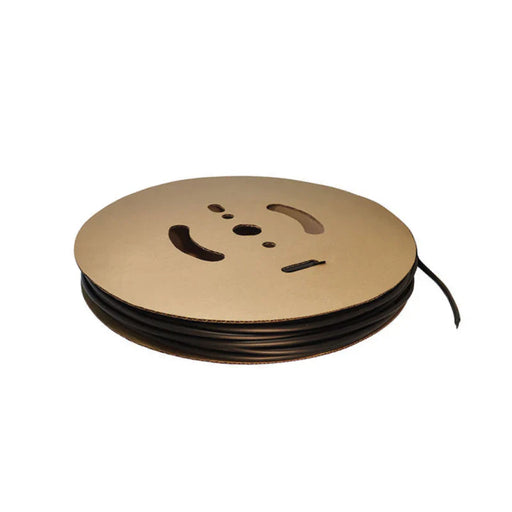
At its core, heat shrink tubing is a thermoplastic sleeve that has been cross-linked and expanded. When heated, its molecular memory forces it to shrink back to its original, smaller size, conforming tightly to the object it covers. The magic, however, lies in the specific raw materials used, as this dictates everything from temperature resistance to flexibility and, of course, flame retardancy.
There are four primary families of materials you will encounter. Understanding their fundamental trade-offs is the first step in making an informed decision.
| Material Family | Key Properties & Characteristics | Common Applications |
|---|---|---|
| Polyolefin | The workhorse of the industry. Excellent balance of temperature performance (>105°C), chemical resistance, and physical durability. Highly flame retardant formulations are common. Odorless and non-porous. | General-purpose wire insulation, cable bundling, strain relief, color-coding, and environmental sealing (dual-wall). |
| PVC (Polyvinyl Chloride) | A lower-cost alternative to Polyolefin. Known for vibrant colors and a smooth, glossy finish. However, it has a lower temperature limit (typically ≤105°C) and can become brittle in cold environments. | Consumer electronics, automotive applications where high temperatures are not a factor, and aesthetic-focused uses. |
| Fluoropolymer (e.g., PVDF, FEP) | The high-performance option. Characterized by extremely high temperature ratings (up to 200°C+), superior chemical and solvent resistance, and thin walls. Often used in aerospace and medical devices. | High-density electronics, downhole sensors in oil & gas, medical implants, and any environment with extreme heat or harsh chemicals. |
| Elastomer | Rubber-like flexibility, even at very low temperatures. Highly resistant to abrasion and common industrial fluids like diesel and hydraulic oils. Formulations can be tailored for specific resistances. | Military vehicles, heavy equipment harnesses, and applications requiring flexibility in extreme cold or exposure to fuels. |
The Power of Two: Single-Wall vs. Dual-Wall Tubing
Within these material families, you have another critical choice: single-wall or dual-wall tubing.
- Single-Wall Tubing: This is the standard product, a single layer of material that provides insulation and mechanical protection. It’s perfect for most common applications like wire bundling and strain relief.
- Dual-Wall Tubing: Also known as adhesive-lined tubing, this product features an outer, shrinkable jacket (typically polyolefin) and an inner liner of thermoplastic adhesive. When heated, the outer jacket shrinks while the inner liner melts and flows, creating a robust, waterproof, and corrosion-proof seal. This is the go-to choice for protecting connections from moisture, dirt, and chemicals.
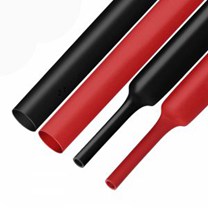
Key Takeaway: The choice of material is a fundamental trade-off between cost, temperature performance, and chemical resistance. Polyolefin is the versatile default, while PVC is for low-cost applications, and Fluoropolymers/Elastomers are for extreme environments.
Chapter 2: Decoding the Standards – The Compliance Alphabet Soup
If material science is the “what,” then compliance standards are the “how you prove it.” For an engineer like Alex, simply trusting a datasheet that says “flame retardant” is not enough. She needs to know what standard it meets, as this defines its performance under specific, repeatable test conditions. The three most common standards you’ll encounter are UL94, VW-1, and SAE AS23053.
UL94: The Material Flammability Standard
UL94 is a standard for the flammability of plastic materials themselves, not necessarily the final component . It involves testing a specimen of the plastic in either a horizontal or vertical orientation and observing its burning behavior. The ratings are a classification of how it responds to a flame.
| UL94 Rating | Test Orientation | Burning Behavior Criteria | Common Use Case |
|---|---|---|---|
| HB | Horizontal | Slow burning on a horizontal specimen; burning rate < 76 mm/min. | Least stringent rating. Not typically sufficient for high-risk applications. |
| V-2 | Vertical | Burning stops within 30 seconds. Flaming drips of plastic are permitted. | Better than HB, but the dripping flame can spread fire to materials below. |
| V-1 | Vertical | Burning stops within 30 seconds. Drips are permitted, but they must not be flaming. | A significant improvement over V-2 as it limits fire spread. |
| V-0 | Vertical | Burning stops within 10 seconds. Drips are permitted, but they must not be flaming. | This is the gold standard for many commercial electronics. Very quick self-extinguishing. |
| 5VA / 5VB | Vertical | A much more intense flame (5x) is applied. Burning stops within 60 seconds, no drips. 5VA allows no burn-through (no hole); 5VB permits a hole. | Highest rating, for materials in enclosures or applications requiring extreme fire resistance. |
VW-1: The Vertical Wire Flame Test
While UL94 tests the raw material, the VW-1 test is part of UL 224, the standard for Extruded Insulating Tubing. This is a component-level test that is more representative of a real-world wiring scenario 1.
In the VW-1 test, a piece of tubing is oriented vertically. A flame is applied for 15 seconds and then removed. This is repeated five times. To pass, the sample must self-extinguish within a set time, and it cannot ignite a piece of surgical cotton placed below it with flaming drips. A “VW-1” rating on a heat shrink tube is a strong indicator of good flame retardancy for general-purpose electronics.
SAE AS23053: The Aerospace & Military Standard
When reliability is absolutely non-negotiable, you enter the world of Aerospace and Military specifications. SAE AS23053 (formerly MIL-DTL-23053) is the general specification for heat shrinkable tubing used in aerospace applications 3. It’s not a single standard but a family of “slash sheets” (/5, /13, etc.) that define the exact material, properties, and performance requirements for specific use cases.
For example:
- AS23053/5 covers flexible, cross-linked polyolefin. It’s further broken down into classes: Class 1 is flame-resistant, and Class 3 is highly flame-resistant.
- AS23053/13 covers flexible fluoroelastomer tubing, designed for high-temperature and fluid-resistance applications.
This standard calls for flammability testing under ASTM D2671, which is an even more rigorous and controlled process than the commercial standards. If a product is certified to AS23053, it has undergone extensive qualification testing and is listed on a Qualified Products List (QPL), providing the highest level of assurance.
Key Takeaway: UL94 rates the plastic material, VW-1 rates the tubing in a vertical wire test, and AS23053 is the comprehensive military/aerospace standard. For critical applications, look for a V-0 rating or, even better, a VW-1 rating. For mission-critical systems, specifying a product from the AS23053 QPL is essential.
Chapter 3: The Engineer’s Selection Guide
With a solid understanding of materials and standards, we can now build a practical, step-by-step process for selecting the right tubing. For our engineer Alex, this is where theory turns into an actionable decision.
Step 1: Define the Operating Environment
Before looking at any product, first define its world.
- Temperature: What is the continuous operating temperature? Are there brief spikes to a higher temperature? Select a material with a continuous rating well above your maximum expected ambient temperature.
- Chemicals & Fluids: Will the tubing be exposed to oils, solvents, cleaning agents, or hydraulic fluid? If so, a standard polyolefin may not be enough. You may need to step up to a fluoropolymer or a specific elastomer.
- Abrasion & Mechanical Stress: Is the harness subject to vibration, rubbing against sharp edges, or frequent handling? A thicker-walled or more durable material like elastomer may be necessary.
- UV Exposure: If the application is outdoors, you need a UV-stabilized material, which is almost always black, as carbon black is an excellent UV inhibitor.
Step 2: Calculate the Required Size (Shrink Ratio)
Heat shrink tubing is defined by its supplied (expanded) diameter and its recovered (shrunk) diameter. The relationship between these is the shrink ratio.
- 2:1 Ratio: The most common. A 1/2″ tube will shrink to 1/4″. It’s a great general-purpose choice.
- 3:1 Ratio: Offers more flexibility. A 1/2″ tube will shrink to 1/6″. This is ideal for covering irregularly shaped objects or connectors where the diameter changes significantly.
- 4:1 Ratio or higher: High-ratio tubing is excellent for covering large connectors and then shrinking down to seal a much smaller cable jacket.
Rule of Thumb: Select a tube whose supplied diameter is at least 20% larger than the largest part you need to cover, and whose recovered diameter is at least 10% smaller than the smallest part you need to seal. This ensures it will slide on easily and provide a tight grip after shrinking.
Step 3: Determine the Certification Level
This is where you match your application’s risk profile to the standards we discussed.
- Hobbyist / Prototyping: For non-critical internal wiring in a prototype, a general-purpose polyolefin is likely fine.
- Commercial Electronics: For a product going to market, you should demand, at minimum, a UL94 V-0 rating, and preferably a VW-1 rating, to ensure product safety and limit liability.
- Industrial / Automotive: In environments with vibration, fluids, and wide temperature swings, a robust dual-wall polyolefin or an elastomer is often required. Certifications may be specific to the industry (e.g., Ford or GM specs).
- Aerospace / Medical / Military: There is no substitute. You must use a product certified to the relevant SAE AS23053 slash sheet and ensure it’s on the NAVAIR QPL .
To visualize this process, here are two decision-making flowcharts.
Mermaidgraph TD
    A[Start: Select Material] --> B{Harsh Environment?};
    B -- No --> C{Cost Sensitive?};
    B -- Yes --> D{High Temp or Chemicals?};
    C -- Yes --> E[PVC];
    C -- No --> F[Polyolefin];
    D -- Yes --> G[Fluoropolymer (PVDF/FEP)];
    D -- No --> H{Flexibility & Abrasion?};
    H -- Yes --> I[Elastomer];
    H -- No --> F;
MermaidAerospace/Military/MedicalCommercial ProductYesNoHobbyist/Internal ProtoStart: Select CertificationApplication Type?SAE AS23053Risk of Fire Spread?VW-1 RatedUL94 V-0 RatedGeneral Purpose/No specific cert
Key Takeaway: Follow a systematic process: 1. Analyze the environment. 2. Calculate the size and shrink ratio. 3. Match the application’s risk to the appropriate certification level. Do not choose a product before completing these three steps.
Conclusion: The Right Choice, The Safe Design
One week later, Alex walked into the safety review meeting with confidence. When the questions about the power distribution node came, she didn’t just say “we used heat shrink.” She explained her choice: “We selected a 3:1 shrink ratio, dual-wall polyolefin tubing, rated to UL94 V-0 and VW-1. The material provides 135°C continuous operation, well above our thermal model’s peak of 95°C. The dual-wall construction provides a complete environmental seal against any potential hydraulic fluid leaks, and the VW-1 rating ensures it will not propagate a flame in the event of a short circuit, protecting the nearby logic board.”
She had not only chosen a component; she had engineered a solution. By understanding the interplay of materials, standards, and application requirements, she transformed a point of failure into a pillar of reliability.
This is the power of informed selection. The humble heat shrink tube is more than just a piece of plastic; it’s a critical safety device. By taking the time to navigate the materials and decode the standards, you can ensure your designs are not only functional but robust, reliable, and, above all, safe.
Frequently Asked Questions (FAQ)
1. What’s the real difference between “flame retardant” and “flame resistant”? While often used interchangeably, “flame retardant” typically refers to materials treated to self-extinguish. “Flame resistant” often refers to materials that are inherently non-flammable. In the context of tubing, “flame retardant” is the more common and accurate term.
2. Can I use a lighter or torch to apply heat shrink tubing? While possible, it’s not recommended. A lighter provides uneven, concentrated heat that can easily scorch or burn the tubing, compromising its integrity. A professional heat gun with adjustable temperature and airflow is the proper tool. It provides consistent, controllable heat for a uniform shrink.
3. What does “halogen-free” mean and why is it important? Halogens (like chlorine in PVC) can release toxic, corrosive smoke when burned. In enclosed spaces like a subway, aircraft, or data center, this smoke can be more dangerous to people and electronics than the fire itself. Halogen-free (or zero-halogen) tubing is made from materials that do not release these toxic gases when burned .
4. Are black heat shrink tubes more flame retardant than colored ones? Often, yes. The carbon black added to make tubing black is an effective flame retardant in its own right. While colored flame-retardant tubing exists, it often requires a higher loading of other additives, and as a general rule, the black version of a given product line will have slightly better flame retardant properties .
5. How do I read a military part number like M23053/5-101-0? This code is descriptive. Following the format M23053/A–BCC–D:
/A(/5) is the specification sheet (flexible polyolefin).BCC(101) is the class and size identifier.D(0) is the color code (0 = Black). So, this part number specifies black, flexible polyolefin tubing of a specific size, qualified under sheet 5 of the AS23053 standard 3.
6. Does heat shrink tubing have a shelf life? Yes. Most manufacturers specify a shelf life of 1 to 5 years. Over time, the material can lose its ability to shrink fully or may become brittle. It’s best to store it in a cool, dark place and use older stock first.
7. When should I absolutely use dual-wall (adhesive-lined) tubing? Use dual-wall tubing whenever you need to protect a connection from the environment. This includes any outdoor application, automotive engine bays, marine electronics, or any situation where moisture, dirt, or chemicals could ingress and cause corrosion or a short.
8. Will the tubing shrink back to a solid rod? No. It will only shrink to its specified “recovered diameter.” A 1/2″ tube with a 2:1 shrink ratio will shrink to 1/4″, not to 0″. You must select a size where the recovered diameter is smaller than the object you are covering.
