
Entertainment Venues: Flame-Retardant Heat-Shrink for Stage Lighting

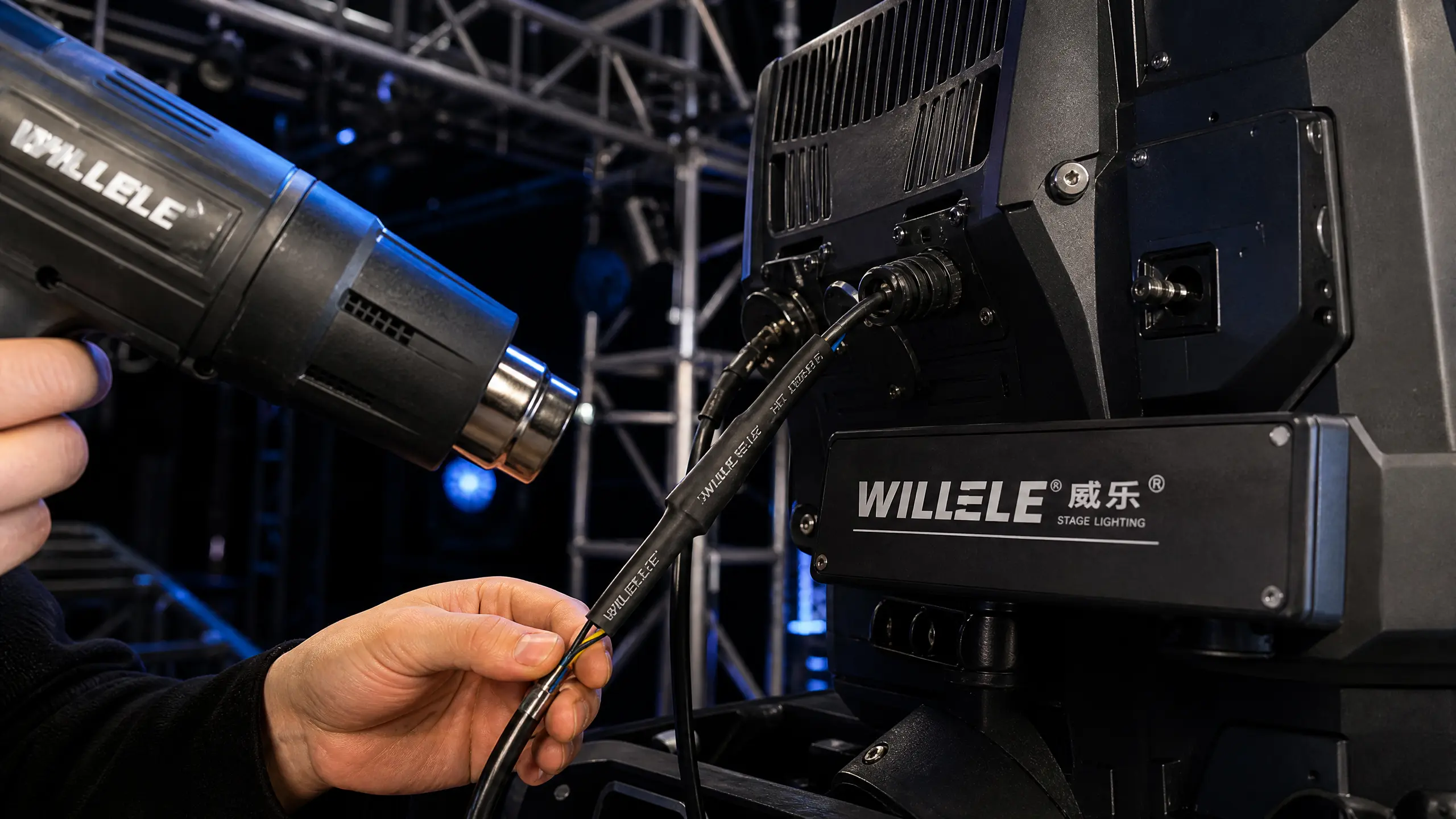
When the curtain rises and stage lights illuminate performers, few audience members consider the invisible safety infrastructure protecting everyone in the venue. Behind every spectacular lighting display lies a critical component: flame-retardant heat-shrink tubing that safeguards electrical connections from the intense heat and fire risks inherent in entertainment environments.
For theater operators, lighting technicians, and venue managers, understanding flame-retardant heat-shrink technology isn’t just about compliance—it’s about preventing catastrophic failures that have historically claimed lives. The Iroquois Theatre fire in Chicago and the Karamay fire in Xinjiang serve as stark reminders that stage environments, filled with high-power lighting fixtures and combustible materials, require the highest safety standards.
HEAT SHRINK TUBEWhy Entertainment Venues Demand Flame-Retardant Heat-Shrink
Stage lighting systems operate under extreme conditions. Professional theatrical fixtures can reach surface temperatures exceeding 200°C (392°F), while the electrical connections powering them carry substantial current loads. Standard heat-shrink tubing, though adequate for many applications, poses unacceptable risks in these fire-sensitive environments.
Flame-retardant heat-shrink tubing addresses three critical safety challenges specific to entertainment venues:
Fire propagation prevention: When exposed to ignition sources, flame-retardant materials self-extinguish within seconds after the heat source is removed, preventing small electrical faults from escalating into venue-wide disasters. Testing standards like UL 224 and ASTM D2671 verify that qualified tubing stops burning within 60 seconds, with char lengths not exceeding six inches.
Toxic smoke reduction: Modern halogen-free flame-retardant formulations eliminate the corrosive, toxic gases released by traditional halogenated materials during combustion. In enclosed venues where evacuation routes may be limited, this difference can mean the margin between safe egress and tragedy.
Electrical integrity under thermal stress: Cross-linked polyolefin materials maintain their insulating properties even when subjected to the radiant heat from nearby lighting instruments, preventing short circuits that could disable entire lighting rigs during performances.
Technical Specifications for Stage Lighting Applications
Selecting appropriate flame-retardant heat-shrink for entertainment venues requires understanding the specific technical parameters that ensure both safety and performance longevity.
Critical Performance Parameters
| Parameter | Specification | Relevance to Stage Lighting |
|---|---|---|
| Flame Retardant Rating | VW-1 or better | Self-extinguishing within 60 seconds; prevents fire spread along cable runs |
| Operating Temperature | -55°C to +135°C | Withstands radiant heat from theatrical fixtures without degradation |
| Shrink Ratio | 2:1 or 3:1 | Accommodates irregular splice geometries common in touring rig repairs |
| Dielectric Strength | ≥15 kV/mm | Prevents voltage breakdown in high-density cable bundles |
| Wall Thickness | 0.5mm – 1.5mm | Balances mechanical protection with flexibility for tight routing |
| Halogen Content | Halogen-free preferred | Reduces toxic emissions; meets venue insurance requirements |
Material Composition and Cross-Linking
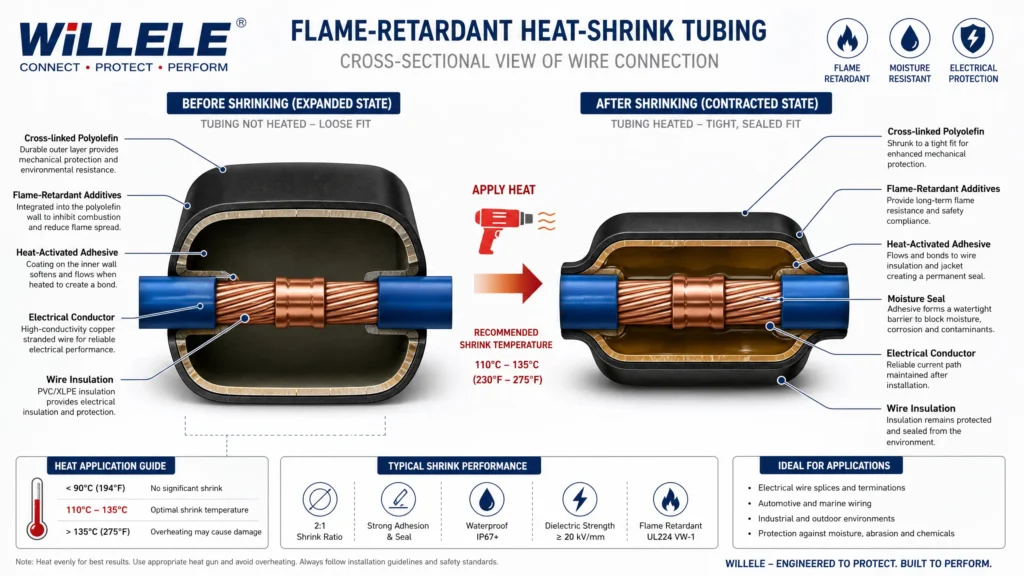
Professional-grade flame-retardant heat-shrink tubing for stage applications typically uses radiation cross-linked polyolefin as its base material. The cross-linking process, achieved through electron beam irradiation, creates molecular bonds that give the tubing its “memory” effect—the ability to shrink back to its original extruded dimensions when heated.
This cross-linked structure provides three essential benefits for entertainment venues:
- Thermal stability: The material maintains dimensional stability and insulating properties when exposed to the sustained elevated temperatures around stage lighting instruments
- Chemical resistance: Protects connections from theatrical fog fluids, cleaning solvents, and atmospheric contaminants common in venue environments
- Mechanical durability: Resists abrasion during cable pulls through truss structures and repeated load-in/load-out cycles for touring productions
Standards and Compliance for Entertainment Venues
Fire safety in entertainment venues is governed by a complex web of international, national, and local regulations. Understanding which standards apply to your specific installation ensures both legal compliance and genuine safety.
Primary Regulatory Standards
UL 224 (North America): The most widely recognized standard for flame-retardant heat-shrink tubing in the United States and Canada. UL 224 certification verifies that materials meet specific flame propagation, smoke generation, and toxicity thresholds through rigorous laboratory testing.
IEC 60684 (International): The European and international equivalent, specifying test methods for flexible insulating sleeving including heat-shrink tubing. Part 3 of this standard addresses individual material specifications, with Section 211 covering heat-shrinkable polyolefin sleeving.
ASTM D2671: Provides standardized test methods for heat-shrinkable tubing for electrical use, including dimensional requirements and performance after aging.
NFPA 70 (National Electrical Code): While primarily focused on electrical installation practices, Article 520 specifically addresses theaters, audience areas of motion picture and television studios, and similar locations, mandating flame-retardant materials for all wiring methods.
Venue-Specific Considerations
Different entertainment venues face unique regulatory requirements:
| Venue Type | Primary Standards | Additional Requirements |
|---|---|---|
| Permanent Theaters | NFPA 70 Article 520, Local Building Codes | Annual inspection documentation; permanent installation methods |
| Touring Productions | Multi-jurisdiction compliance (NFPA, IEC) | California Title 19 for CA venues; NYC Fire Code for NY performances |
| Outdoor Festivals | NFPA 70, Weather-resistance standards | UV stabilization; moisture ingress protection (IP ratings) |
| Broadcast Studios | NFPA 70 Article 520, FCC regulations | Low-smoke zero-halogen (LSZH) for enclosed control rooms |
| Houses of Worship | NFPA 70, Insurance carrier specifications | Often require higher flame-retardant ratings due to historic building materials |
California and New York maintain particularly stringent requirements. California’s Title 19 fire safety regulations and New York City’s fire code both exceed minimum NFPA standards, often requiring additional certification documentation for materials used in public assembly spaces.
Installation Best Practices for Stage Lighting Systems
Proper installation of flame-retardant heat-shrink tubing is as critical as material selection. Even the highest-quality tubing fails to provide adequate protection if incorrectly applied.
Pre-Installation Preparation
Size selection: Choose tubing with a recovered (shrunk) inner diameter 10-20% smaller than the cable or splice diameter. For irregular splice geometries common in multi-conductor repairs, 3:1 shrink ratio tubing provides better conformability than 2:1 ratios.
Surface preparation: Clean all surfaces with isopropyl alcohol to remove oils, dust, and residues from cable pulling lubricants. Contamination prevents proper adhesion and can create voids where moisture accumulates.
Length calculation: Cut tubing sections 25-40mm longer than the splice or connection area to ensure complete coverage with overlap onto intact insulation on both sides.
Heat Application Techniques
The heat source and application method significantly impact the final installation quality:
Heat guns (recommended): Industrial heat guns with temperature control provide the most consistent results. Set temperature to 120-150°C for polyolefin tubing. Apply heat evenly using a sweeping motion from the center outward to prevent air entrapment.
Propane torches (field repairs only): While portable, open flames risk overheating and material degradation. If a torch is necessary, use a diffuser tip and maintain constant motion. Never allow the flame to directly contact the tubing.
Heat tunnels (production environments): For shops preparing large quantities of cable assemblies, conveyor heat tunnels provide the most consistent and repeatable results.
Common Installation Errors to Avoid
- Overheating: Scorched or melted tubing loses its flame-retardant properties and mechanical strength. If the material bubbles, blisters, or changes color significantly, it has been overheated and must be replaced.
- Insufficient shrinkage: Tubing that hasn’t fully recovered leaves gaps where moisture can penetrate. Properly shrunk tubing should conform tightly to the substrate with no visible air pockets.
- Inadequate overlap: Terminating heat-shrink exactly at the splice edge exposes the connection to environmental contamination. Always extend coverage onto intact insulation.
- Wrong shrink ratio: Using 2:1 tubing on highly irregular splices results in bridging and incomplete coverage. Select shrink ratios appropriate to the geometry.
Flame-Retardant Heat-Shrink vs. Standard Alternatives
Entertainment venue managers often question whether the premium cost of flame-retardant heat-shrink justifies the investment compared to standard electrical insulation methods. The comparison reveals why industry professionals consider flame-retardant tubing non-negotiable for stage lighting applications.
Performance Comparison
| Feature | Flame-Retardant Heat-Shrink | Standard Heat-Shrink | Electrical Tape | Liquid Electrical Tape |
|---|---|---|---|---|
| Fire Resistance | Self-extinguishing (VW-1) | Continues burning | Continues burning | Variable; often flammable |
| Temperature Rating | -55°C to +135°C | -30°C to +105°C | -18°C to +80°C | -40°C to +90°C |
| Moisture Seal | Excellent (with adhesive liner) | Excellent | Poor (degrades over time) | Good initially; degrades |
| Abrasion Resistance | Excellent | Good | Poor | Fair |
| UV Stability | Excellent (stabilized formulations) | Variable | Poor (adhesive degrades) | Poor |
| Installation Time | 2-3 minutes per connection | 2-3 minutes | 5-8 minutes (multiple wraps) | 10-15 minutes (cure time) |
| Longevity | 20+ years | 10-15 years | 2-5 years | 3-7 years |
| Inspection Visibility | Clear visual confirmation | Clear visual confirmation | Difficult (hidden under wraps) | Difficult (opaque coating) |
Cost-Benefit Analysis for Venues
While flame-retardant heat-shrink tubing costs approximately 40-60% more than standard polyolefin tubing, the total cost of ownership favors the flame-retardant option:
Direct cost savings: Elimination of re-work due to insulation failure during load-in, reduced maintenance labor for connection repairs, and extended service life that outlasts standard alternatives by 5-10 years.
Risk mitigation: Insurance carriers increasingly require flame-retardant materials for coverage. A single fire incident—even without injuries—can result in hundreds of thousands in property damage, business interruption losses, and increased premiums that dwarf material cost differences.
Regulatory compliance: Using certified flame-retardant materials simplifies inspections and eliminates the risk of failed fire marshal inspections that can delay or cancel performances.
Real-World Applications in Entertainment Venues
Flame-retardant heat-shrink tubing serves multiple critical functions throughout entertainment venue electrical systems.
Stage Lighting Fixtures
DMX control wiring: The low-voltage control signals that coordinate lighting cues run through hundreds of meters of cable in typical theater installations. Flame-retardant heat-shrink protects DMX splices in overhead trusses where access for repairs during performances is impossible.
Power distribution: Theatrical fixtures drawing 15-20 amperes require robust electrical connections. Heat-shrink tubing insulates and mechanically reinforces these high-current splices, preventing the loose connections that generate dangerous resistive heating.
Moving light repairs: Automated lighting fixtures contain dozens of internal wire connections subject to constant mechanical stress from pan and tilt movements. Flame-retardant heat-shrink provides strain relief and insulation that withstands millions of movement cycles.
Permanent Installation vs. Touring Applications
Permanent installations benefit from flame-retardant heat-shrink’s longevity and low maintenance requirements. Once properly installed in fixed positions, connections remain protected for decades without requiring inspection or replacement.
Touring productions face different challenges. Cable assemblies endure repeated coiling, transport, and installation cycles. The mechanical durability and abrasion resistance of cross-linked polyolefin heat-shrink prevents the insulation failures that plague touring rigs using inferior materials. Additionally, the ability to perform field repairs with portable heat guns means technical crews can restore damaged cables without returning to a shop facility.
Architectural and Accent Lighting
Beyond traditional stage lighting, entertainment venues increasingly incorporate architectural LED systems, fiber optic installations, and specialty effects lighting. These systems present unique challenges:
LED driver connections: Compact LED drivers generate significant heat in small enclosures. Flame-retardant heat-shrink maintains insulation integrity in these elevated-temperature environments while providing strain relief for the fine-gauge wiring typical of LED systems.
Outdoor and weather-exposed installations: Venues with exterior lighting elements require heat-shrink with UV stabilization and moisture resistance. Dual-wall heat-shrink with adhesive inner layers creates waterproof seals that protect connections from rain, humidity, and temperature cycling.
Selecting the Right Flame-Retardant Heat-Shrink for Your Venue
Not all flame-retardant heat-shrink tubing performs equally in entertainment applications. Specifying the optimal product requires matching material properties to your specific installation requirements.
Decision Matrix
For permanent theater installations: Prioritize longevity and compliance documentation. Select UL 224 certified tubing with halogen-free formulation to meet insurance requirements. Standard wall thickness (0.7-1.0mm) provides adequate protection in fixed installations.
For touring productions: Emphasize mechanical durability and field repairability. Choose 3:1 shrink ratio tubing for maximum versatility in field repairs. Consider dual-wall adhesive-lined versions for critical connections requiring moisture sealing.
For outdoor venues: UV-stabilized formulations are non-negotiable. Verify that material specifications include accelerated weathering test data (ASTM G155 or equivalent). Dual-wall adhesive-lined tubing provides superior moisture protection for connections exposed to rain and humidity.
For broadcast and recording studios: Low-smoke zero-halogen (LSZH) formulations protect sensitive electronic equipment and personnel in enclosed control rooms. These materials generate minimal smoke and no corrosive gases during combustion.
Working with Suppliers
When sourcing flame-retardant heat-shrink tubing, demand comprehensive technical documentation:
- Complete certification documents (UL, IEC, or equivalent)
- Material safety data sheets (MSDS/SDS)
- Performance test reports including flame propagation, smoke generation, and toxicity data
- Application guidelines specific to your installation type
- Shelf life and storage requirement specifications
Reputable B2B electrical equipment manufacturers like Willele provide not just products but technical support to ensure proper material selection and installation practices. This partnership approach helps venue operators navigate the complex landscape of fire safety standards while optimizing both safety and cost-effectiveness.
Maintenance and Inspection Protocols
Even properly installed flame-retardant heat-shrink tubing requires periodic inspection to ensure continued protection.
Inspection Schedule
Permanent installations: Annual visual inspections during routine maintenance periods. Look for signs of mechanical damage, discoloration indicating overheating, or shrinkage exposing connection points.
Touring rigs: Pre-tour inspection of all cable assemblies, with particular attention to connections that showed wear during previous productions. Replace any tubing showing cracks, splits, or significant abrasion.
High-use fixtures: Quarterly inspection of moving lights and other fixtures subject to constant mechanical stress. The vibration and movement can work connections loose over time, requiring re-termination.
Failure Indicators
Replace heat-shrink tubing immediately if inspection reveals:
- Cracks, splits, or tears in the tubing surface
- Discoloration or charring indicating exposure to excessive heat
- Shrinkage or pulling away from the connection area
- Visible corrosion on underlying conductors (indicates moisture ingress)
- Hardening or brittleness (indicates UV degradation or chemical exposure)
Documentation Requirements
Many jurisdictions require documented inspection records for entertainment venue electrical systems. Maintain logs recording:
- Inspection dates and inspector identification
- Locations and descriptions of connections inspected
- Conditions found and corrective actions taken
- Material specifications for replacement components
This documentation serves multiple purposes: demonstrating due diligence to insurance carriers, providing evidence of compliance during fire marshal inspections, and creating a maintenance history that informs future system upgrades.
Environmental Considerations and Sustainability
The entertainment industry increasingly prioritizes environmental responsibility, and material selection plays a role in achieving sustainability goals.
Halogen-Free Formulations
Traditional flame-retardant materials often incorporated halogenated compounds (chlorine, bromine, fluorine) to achieve fire resistance. While effective, these materials release toxic, corrosive gases during combustion and pose environmental challenges during disposal.
Modern halogen-free flame-retardant heat-shrink tubing achieves equivalent fire performance through alternative chemistry—typically phosphorus-based or mineral-filled formulations. These materials offer several advantages:
Reduced toxicity: Combustion products contain no halogen acids that damage lungs and electronic equipment
Environmental compliance: Meet RoHS (Restriction of Hazardous Substances) and REACH regulations
Equipment protection: Non-corrosive smoke prevents secondary damage to lighting fixtures and control systems during fire incidents
Lifecycle Considerations
Flame-retardant heat-shrink tubing’s extended service life (20+ years in typical installations) reduces material consumption and waste generation compared to alternatives requiring frequent replacement. The energy required for manufacturing and the environmental impact of disposal are amortized over decades rather than years.
When installations reach end-of-life, cross-linked polyolefin materials can be recycled through specialized programs, though availability varies by region. Consult local waste management authorities for appropriate disposal methods.
Future Trends in Flame-Retardant Technology
The evolution of entertainment venue electrical systems drives ongoing innovation in flame-retardant heat-shrink technology.
Smart Materials
Research into heat-shrink tubing with embedded sensors could enable real-time monitoring of connection integrity. Temperature-sensitive indicators or RFID tags integrated into the tubing would alert technicians to developing problems before failures occur.
Enhanced Flame Retardancy
Next-generation formulations aim to achieve even higher fire resistance ratings while maintaining or improving mechanical properties. Materials that char rather than melt during fire exposure create insulating barriers that protect underlying conductors longer.
Sustainable Chemistry
Ongoing development of bio-based flame-retardant additives derived from renewable resources could reduce the environmental footprint of heat-shrink tubing production while maintaining performance standards.
Conclusion
Flame-retardant heat-shrink tubing represents a critical but often overlooked component of entertainment venue safety infrastructure. In environments where high-power lighting systems, combustible scenic materials, and large public gatherings converge, the difference between standard and flame-retardant materials can literally mean the difference between a minor electrical fault and a catastrophic fire.
For venue operators, lighting designers, and technical directors, specifying appropriate flame-retardant heat-shrink isn’t simply a compliance checkbox—it’s a fundamental responsibility to performers, crew, and audiences. The modest incremental cost of certified flame-retardant materials pales in comparison to the potential consequences of inadequate fire protection.
By understanding the technical specifications, regulatory requirements, and application best practices outlined in this guide, entertainment professionals can make informed decisions that prioritize safety without compromising performance or budget constraints. Whether designing a new performing arts center, upgrading an existing theater, or preparing a touring production, flame-retardant heat-shrink tubing from reputable manufacturers like Willele provides the foundation for electrical systems that protect lives and property for decades to come.
The stage may be where magic happens, but behind every successful performance lies meticulous attention to safety details—including the flame-retardant heat-shrink tubing that keeps the lights burning bright and the audience safe.
Frequently Asked Questions
Q: What’s the difference between flame-retardant and fire-proof heat-shrink tubing?
A: No heat-shrink tubing is truly “fire-proof.” Flame-retardant tubing is designed to resist ignition and self-extinguish when the heat source is removed, typically within 60 seconds per VW-1 standards. It slows fire propagation but will eventually burn if continuously exposed to flames. This distinction is critical for proper risk assessment.
Q: Can I use standard heat-shrink tubing if I apply flame-retardant spray coating?
A: No. Spray-on flame-retardant treatments are not equivalent to flame-retardant formulated materials. The flame-retardant properties in quality heat-shrink tubing are integral to the material composition, not surface treatments that can wear off or degrade. Only use tubing certified to recognized standards like UL 224.
Q: How do I verify that heat-shrink tubing is genuinely flame-retardant?
A: Request certification documentation from your supplier showing UL 224, IEC 60684, or equivalent test results. Legitimate manufacturers provide complete technical data sheets and certification numbers that can be verified with testing laboratories. Be wary of suppliers who cannot provide this documentation.
Q: What shrink ratio should I choose for stage lighting applications?
A: For most permanent installations, 2:1 shrink ratio tubing is adequate. For touring applications or field repairs where you need maximum versatility, 3:1 shrink ratio provides better conformability to irregular splice geometries. The higher ratio allows a single size to cover a wider range of cable diameters.
Q: Is halogen-free flame-retardant heat-shrink required, or is it optional?
A: Requirements vary by jurisdiction and venue type. While not universally mandated, halogen-free materials are increasingly preferred or required by insurance carriers, particularly in enclosed venues where toxic smoke poses evacuation risks. Many venues adopt halogen-free specifications as best practice even when not legally required.
Q: How long does flame-retardant heat-shrink tubing last in typical stage lighting installations?
A: Properly installed flame-retardant heat-shrink tubing typically lasts 20+ years in permanent installations and 10-15 years in touring applications with regular load-in/load-out cycles. Longevity depends on environmental factors (UV exposure, temperature cycling, mechanical stress) and proper installation techniques.
Q: Can flame-retardant heat-shrink tubing be reused if I need to access a connection?
A: No. Heat-shrink tubing is a one-time-use product. Once shrunk, the cross-linked molecular structure cannot be reversed. If you need to access a connection, cut away the existing tubing and install a new section after completing repairs.
Q: What’s the proper storage method for unused flame-retardant heat-shrink tubing?
A: Store tubing in a cool, dry location away from direct sunlight and heat sources. Keep it in sealed packaging until use to prevent contamination. Most flame-retardant heat-shrink tubing has an indefinite shelf life when stored properly, though manufacturers typically specify 5-10 years for warranty purposes.
