
Heat Shrink Sleeve Solutions for Underground Cable Splicing

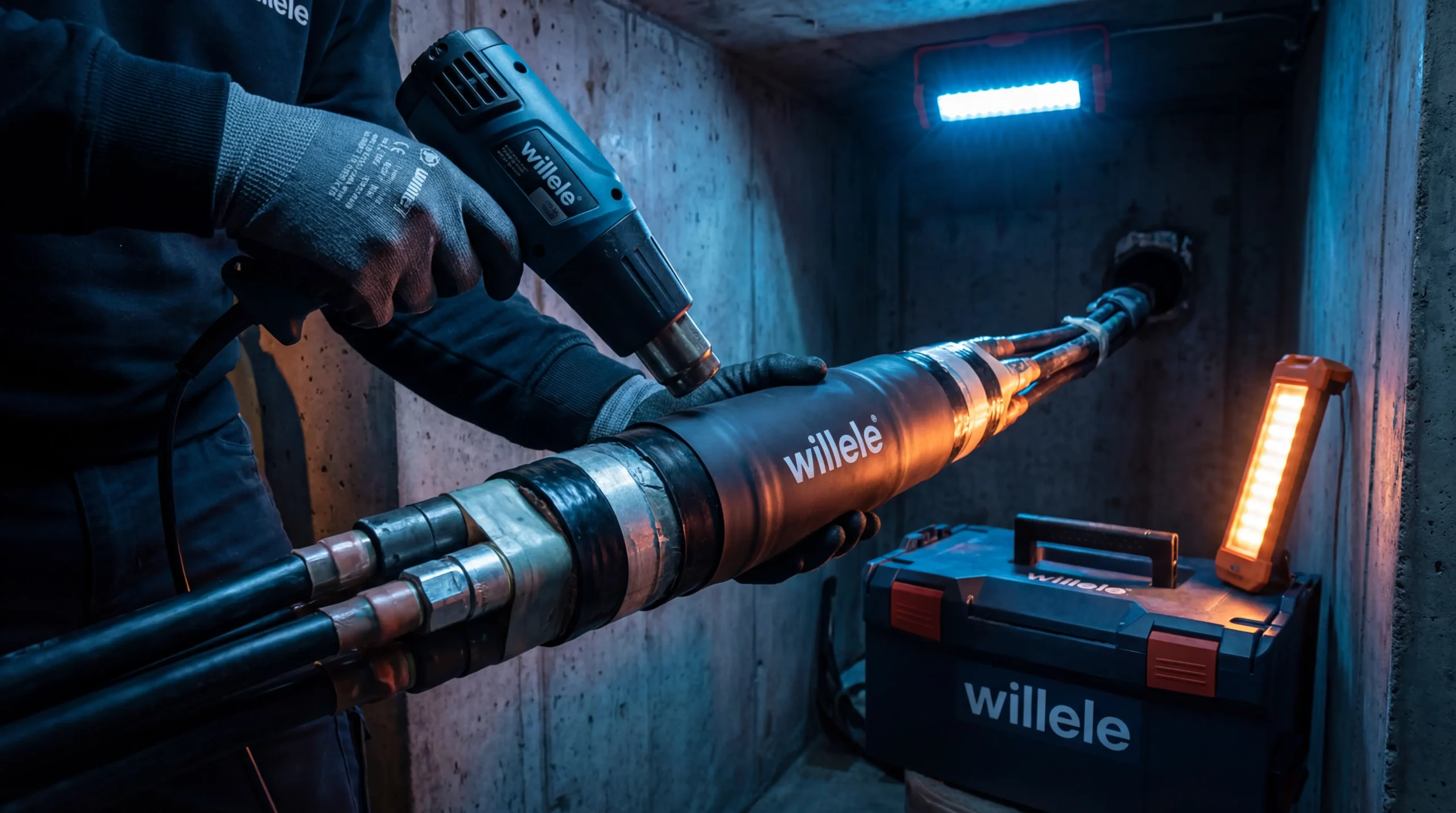
In the rapidly evolving landscape of power distribution and telecommunications, the integrity of underground infrastructure is paramount. As cities expand and utilities move increasingly below ground, the demand for robust, long-lasting connection protection has never been higher. Willele Electric stands at the forefront of this industry, engineering advanced Heat Shrink Sleeve Solutions for Underground Cable Splicing designed to withstand the harshest subterranean environments.
Ensuring the longevity of underground cable splices is not just about maintaining continuity; it is about preventing costly outages, reducing maintenance overhead, and ensuring safety. This guide explores the technical aspects, benefits, and application protocols of high-performance heat shrink solutions.
Understanding Heat Shrink Technology in Underground Applications
Heat shrink sleeves are engineered thermoplastic tubes that shrink radially when exposed to heat, conforming tightly to the underlying substrate. For underground cable splicing, these are not merely plastic covers; they are sophisticated, multi-layered protective systems.
At the core of Willele Electric’s technology is cross-linked polyolefin. Through radiation cross-linking, the molecular structure of the material is altered to provide “memory.” When heated, the material attempts to return to its original, smaller diameter, exerting significant pressure on the cable joint.
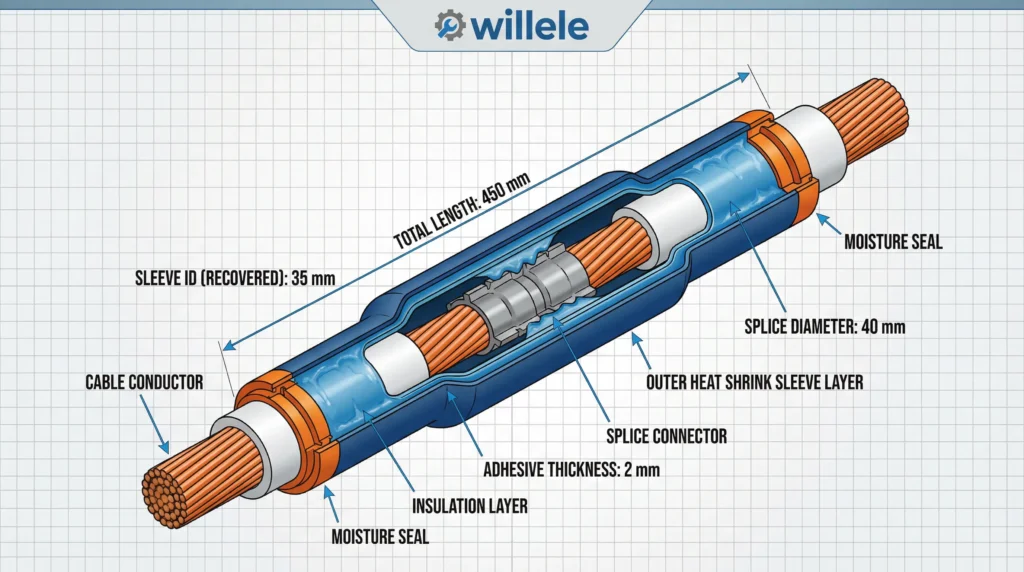
The Anatomy of a Heavy-Wall Heat Shrink Sleeve
For underground applications, standard thin-wall tubing is insufficient. Solutions typically require:
- Outer Layer: A rugged, semi-rigid polyolefin shell that provides mechanical protection against abrasion, impact, and soil stress.
- Inner Layer (Hot Melt Adhesive): A co-extruded sealant that melts during the shrinking process. This adhesive fills voids and bonds to the cable jacket, creating a moisture-proof barrier essential for preventing water ingress—the leading cause of underground cable failure.
Critical Benefits for Underground Infrastructure
Deploying high-quality Heat Shrink Sleeve Solutions for Underground Cable Splicing offers distinct advantages over alternative methods like resin casting or tape wrapping.
1. Superior Moisture Sealing
Underground cables are constantly subjected to groundwater, humidity, and flooding. The dual-wall construction of Willele sleeves ensures a hermetic seal. As the sleeve shrinks, the internal adhesive flows to seal the interface between the sleeve and the cable, effectively waterproofing the splice.
2. Mechanical Durability
Buried cables face significant physical stress from shifting soil, rocks, and backfilling operations. Heavy-wall heat shrink sleeves provide high impact resistance and strain relief, protecting the delicate splice connector inside.
3. Chemical and Environmental Resistance
Soil chemistry can be corrosive. Willele’s heat shrink materials are formulated to resist fungus, decay, UV radiation (for exposed risers), and common underground chemicals, ensuring a lifespan that matches or exceeds that of the cable itself.
Types of Heat Shrink Solutions for Cable Splicing
Selecting the right sleeve depends on voltage rating, cable type, and environmental conditions.
Comparison of Heat Shrink Sleeve Types
| Feature | Thin-Wall Tubing | Medium-Wall Tubing | Heavy-Wall Tubing |
|---|---|---|---|
| Primary Use | Wire identification, indoor insulation | Low voltage distribution, light mechanical protection | Underground splicing, direct burial, submersible applications |
| Wall Thickness | < 1mm | 1mm – 3mm | > 3mm (Recovered) |
| Adhesive Lining | Optional | Standard | Thick, High-Flow Adhesive |
| Impact Resistance | Low | Medium | High |
| Voltage Rating | < 600V | Up to 1kV – 36kV | Up to 36kV+ |
Wrap-Around vs. Tubular Sleeves
- Tubular Sleeves: Must be slid onto the cable before the connection is made. Ideal for new installations.
- Wrap-Around Sleeves: Can be installed after the connection is made or for repairing damaged cable jackets without disconnecting the circuit. These feature a metal channel or rail system to close the sleeve before shrinking.
Technical Specifications and Material Properties
Engineers specifying Heat Shrink Sleeve Solutions for Underground Cable Splicing must consider specific material properties to ensure compliance. Willele Electric products are tested rigorously against international standards.
Key Material Performance Metrics
| Property | Test Method (Typical) | Requirement for Underground Use |
|---|---|---|
| Tensile Strength | ASTM D638 | > 14 MPa |
| Ultimate Elongation | ASTM D638 | > 350% |
| Dielectric Strength | ASTM D149 | > 20 kV/mm |
| Water Absorption | ASTM D570 | < 0.1% |
| Volume Resistivity | ASTM D257 | > 10^14 Ohm-cm |
| Shrink Temperature | – | 120°C (248°F) |
Installation Process for Underground Splicing
Proper installation is as critical as the quality of the product. An improperly installed sleeve can lead to water ingress and catastrophic failure.
Step-by-Step Installation Guide
- Preparation: Clean and degrease the cable jacket for at least 6 inches on either side of the splice area. Abrade the surface slightly with sandpaper to improve adhesive bonding.
- Positioning: Slide the heat shrink sleeve over the cable (if tubular) before connecting conductors. Once spliced, center the sleeve over the joint.
- Heating Strategy: Using a propane torch or industrial heat gun, begin shrinking from the center of the sleeve working outwards towards the ends. This technique forces air out and prevents air pockets (voids) from forming inside the seal.
- Adhesive Flow: Continue heating until the sleeve fully conforms to the cable and a small bead of adhesive is visible squeezing out from the ends. This visual indicator confirms a proper moisture seal.
- Cooling: Allow the splice to cool naturally before applying any mechanical strain or backfilling the trench.
Industry Standards and Compliance
Willele Electric ensures that all Heat Shrink Sleeve Solutions for Underground Cable Splicing meet global regulatory standards. Adherence to these standards guarantees safety and interoperability.
- UL 486D: Standard for Insulated Wire Connector Systems for Use with Underground Conductors.
- ANSI C119.1: Sealed Insulated Underground Connector Systems Rated 600 Volts.
- IEC 60684: Specification for flexible insulating sleeving.
- RoHS & REACH: Compliance ensures materials are free from hazardous substances like lead or mercury.
Frequently Asked Questions (FAQ)
1. What is the shrink ratio, and which one should I choose for underground splicing?
The shrink ratio indicates the difference between the supplied diameter and the recovered (shrunk) diameter. For underground splicing, a high ratio (3:1 or 4:1) is often preferred. This allows the sleeve to pass over bulky connectors while still shrinking down tightly enough to seal against the thinner cable jacket.
2. Can heat shrink sleeves be used for direct burial?
Yes, but only specific “Heavy-Wall” or “Dual-Wall” sleeves designed for this purpose. These must have a thick outer wall for mechanical protection and a hot-melt adhesive liner for waterproofing. Standard single-wall tubing is not suitable for direct burial.
3. How do I know if the sleeve has been heated enough?
A properly installed sleeve will be smooth and conform tightly to the shape of the splice. The most reliable indicator is the appearance of a small bead of adhesive flowing out from both ends of the sleeve. Additionally, some Willele sleeves feature thermochromic paint that changes color when the correct installation temperature is reached.
4. Can I use a hair dryer to install these sleeves?
No. Industrial heat shrink sleeves for underground applications typically require temperatures around 120°C (248°F) to shrink fully and activate the adhesive. A propane torch (with a soft yellow flame) or a high-output industrial heat gun is required.
5. What is the lifespan of a heat shrink splice underground?
When installed correctly using high-quality materials like those from Willele Electric, a heat shrink splice can last 30 to 40 years, effectively matching the service life of the cable itself.
6. Do you offer solutions for repairing damaged cable jackets without cutting the cable?
Yes, Willele offers wrap-around heat shrink sleeves. These are supplied flat with a locking channel. You wrap them around the damaged section, install the locking rail, and shrink them down. They provide the same level of waterproofing and protection as tubular sleeves.
Conclusion
Reliable power distribution relies on the weakest link in the chain—often the cable splice. By utilizing advanced Heat Shrink Sleeve Solutions for Underground Cable Splicing, utilities and contractors can ensure waterproof, mechanically sound, and electrically insulated connections that stand the test of time.
Willele Electric is dedicated to providing top-tier insulation solutions that meet the rigorous demands of modern infrastructure. Whether for low-voltage distribution or high-voltage transmission, our engineered materials provide the security your network needs.
For more information on our product specifications or to request a quote for your next project, visit willele.com.
