
Heat Shrink Tubing in Electric Vehicle Battery Pack Assembly

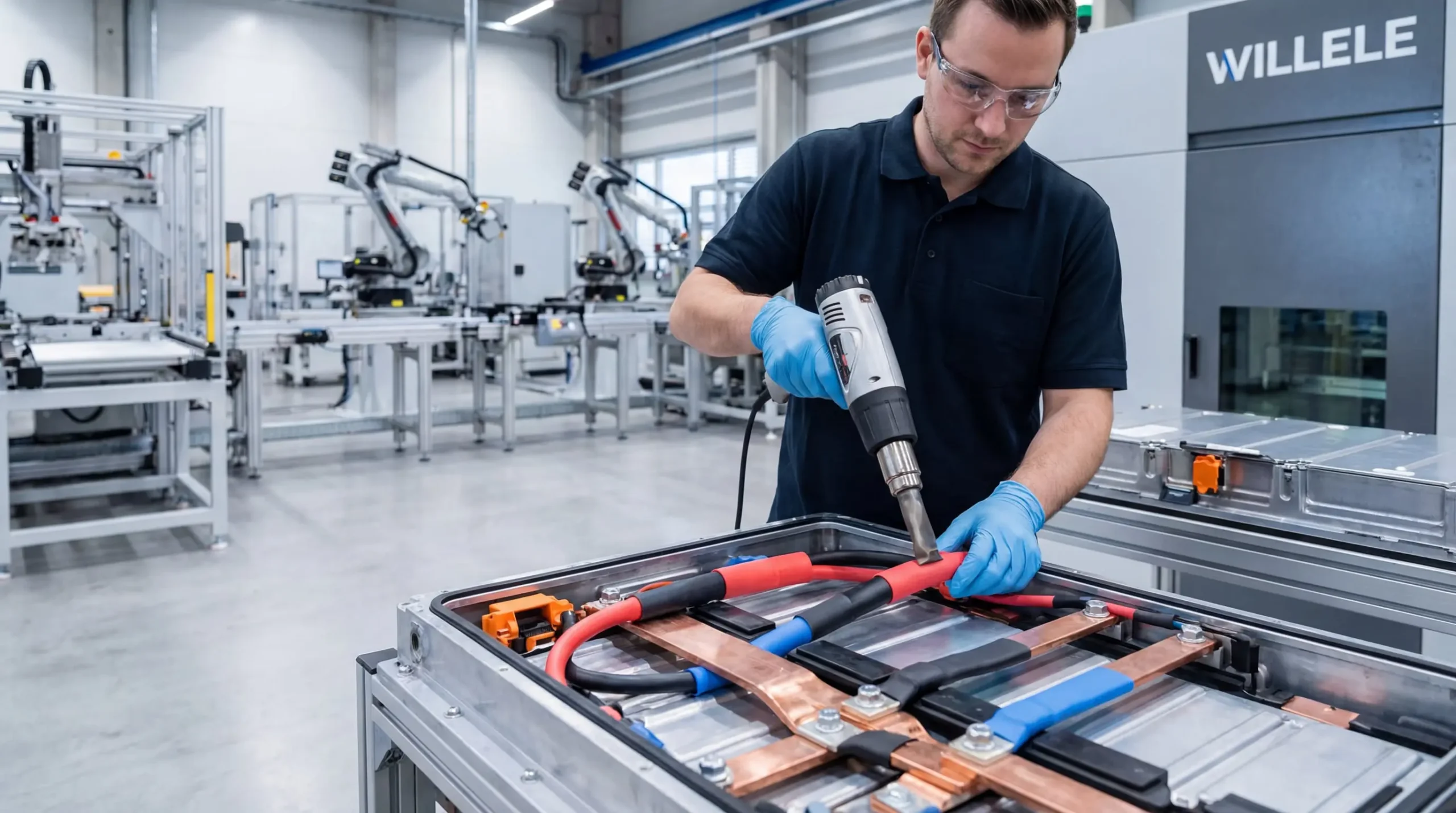
As the electric vehicle (EV) revolution gains momentum, efficiency and safety are at the forefront. While cell chemistry often takes center stage, the integrity of the pack’s internal connections is crucial for long-term reliability. Heat Shrink Tubing in Electric Vehicle Battery Pack Assembly plays a vital role in preventing catastrophic failures. Willele Electric collaborates with top-tier automotive OEMs to provide insulation solutions that withstand the unique thermal and mechanical stresses of modern drivetrains.
Engineering for Harsh Environments
Battery packs are sealed environments subject to extreme temperature fluctuations and constant vibration. Standard electrical insulation often becomes brittle or degrades under these conditions.
Thermal Management and Dielectric Strength
As manufacturers push towards 800V and higher architectures to enable fast charging, the dielectric strength requirements for insulation materials have doubled. Willele Electric’s specialized tubing provides high breakdown voltage resistance while maintaining thin walls to conserve valuable pack space. Furthermore, our materials are engineered to resist “cold flow”—the tendency of insulation to thin out under pressure from clamps or tight bends over time.
Strategic Material Selection by Zone
Choosing the correct polymer for Heat Shrink Tubing in Electric Vehicle Battery Pack Assembly is not a one-size-fits-all process. Different zones within the battery require specific properties.
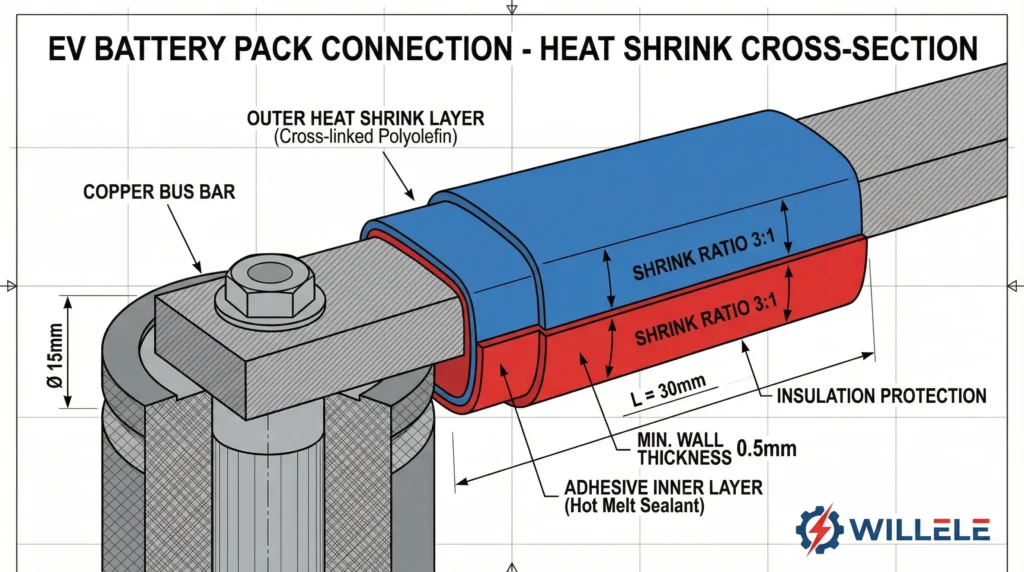
Table 1: Application Zone & Material Recommendations
| Application Zone | Recommended Material | Temp Rating | Key Performance Characteristic |
|---|---|---|---|
| Cell-to-Cell Busbars | Cross-linked Polyolefin | 125°C – 135°C | Flexibility for vibration absorption |
| High Voltage Main Lines | PVDF (Kynar) | 175°C | Extreme abrasion & cut-through resistance |
| BMS Sensing Lines | PTFE / FEP | 200°C+ | Chemical resistance (electrolyte) |
| Cooling System Pipes | Dual-Wall Polyolefin | 110°C | Moisture sealing & strain relief |
Anatomy of a Secure Connection
Reliability in assembly comes from layering protection correctly.
Advanced Sealing Technologies
For connections exposed to potential condensation or cooling fluid leaks, dual-wall tubing is non-negotiable. As shown in the diagram above, the inner adhesive layer bonds to the busbar or terminal, creating a hermetic seal that prevents corrosion. Willele Electric’s adhesive formulations are specifically tested against automotive fluids, including transmission oil and brake fluid, ensuring chemical stability.
Quality Control and ROI
Investing in premium heat shrink tubing yields significant returns by reducing warranty claims and safety recalls. A failure in a $2.00 piece of tubing can necessitate the replacement of a $15,000 battery pack.
Table 2: Production Risks vs. Willele Solutions
| Common Failure Mode | Cause | Financial Impact | Willele Quality Assurance |
|---|---|---|---|
| Longitudinal Splitting | Uneven wall thickness | High (Line stoppage) | Laser-measured concentricity >95% |
| Incomplete Sealing | Low adhesive flow | High (Field corrosion) | Optimized melt-viscosity adhesives |
| Color Fading | Poor pigment UV stability | Low (Service confusion) | UV-stabilized “EV Orange” pigments |
Sizing and Installation Guide
Proper sizing is critical for the performance of Heat Shrink Tubing in Electric Vehicle Battery Pack Assembly. Using a tube that is too large results in wrinkles; too small causes splitting.
Table 3: Quick Sizing Reference for Busbars
| Busbar Width (mm) | Busbar Thickness (mm) | Recommended Expanded ID (mm) | Recommended Shrink Ratio |
|---|---|---|---|
| 10 – 15 | 2 – 3 | 25.4 (1 inch) | 3:1 |
| 20 – 30 | 3 – 5 | 38.1 (1.5 inch) | 3:1 |
| 40 – 50 | 5 – 10 | 76.2 (3 inch) | 4:1 |
| Note: Always account for the “corners” of rectangular busbars when calculating required ID. |
Supply Chain & Customization
Willele Electric understands that automotive production lines run on Just-In-Time (JIT) principles. We offer customized supply chain solutions, including:
- Pre-cutting: Tubing cut to precise lengths with tolerances of ±0.5mm.
- Kitting: Grouping all necessary insulation for a specific battery module into one SKU.
- Printing: Laser marking QR codes or batch numbers directly on the tubing for full traceability.
Conclusion
The transition to electrification requires partners who understand the nuance of automotive standards. Willele Electric provides more than just product; we provide engineering expertise for Heat Shrink Tubing in Electric Vehicle Battery Pack Assembly. Ensure your battery packs are built to last with insulation that meets the highest safety standards.
Contact Willele Electric’s engineering team today to discuss your specific pack architecture and request validation samples.
Technical FAQ
1. How does Willele ensure concentricity in heat shrink tubing?
We use advanced extrusion monitoring systems that continuously measure wall thickness during production. High concentricity is vital for automated assembly equipment to handle the tubing effectively without jamming.
2. What is the shelf life of heat shrink products?
Standard polyolefin tubing has a shelf life of up to 5 years if stored below 40°C. However, adhesive-lined (dual-wall) products should ideally be used within 2-3 years to ensure the adhesive activates correctly at the specified temperature.
3. Can you print serialization on the tubing for battery tracking?
Yes. We offer permanent marking services. This allows manufacturers to print date codes, lot numbers, or data matrix codes directly on the insulation, aiding in cradle-to-grave traceability of the battery module.
4. How do I choose between 3:1 and 4:1 shrink ratios?
A 4:1 ratio is generally preferred for battery cables that have large terminal lugs. The high ratio allows the tube to slide over the large connector and still shrink down tightly onto the thinner cable jacket, ensuring a seal at both ends.
5. Does Willele tubing meet the UL 224 VW-1 flammability standard?
Yes, the majority of our EV-grade tubing is rated VW-1 or V-0 under UL 94. This flame retardancy is a critical safety layer to prevent fire propagation in the event of a thermal runaway.
6. Is it necessary to pre-heat busbars before applying heat shrink?
For very thick copper busbars, pre-heating is recommended. Copper is a massive heat sink; if it’s cold, it can “steal” heat from the tubing, leading to uneven shrinkage or “cold spots” where the adhesive doesn’t flow properly.
7. Do you offer halogen-free options?
Absolutely. We recognize the automotive industry’s push towards sustainability and lower toxicity. We offer a full range of halogen-free heat shrink tubing that meets high-voltage insulation requirements without using hazardous flame retardants.
