
How to Select Heat Shrink Tubing for Outdoor Applications

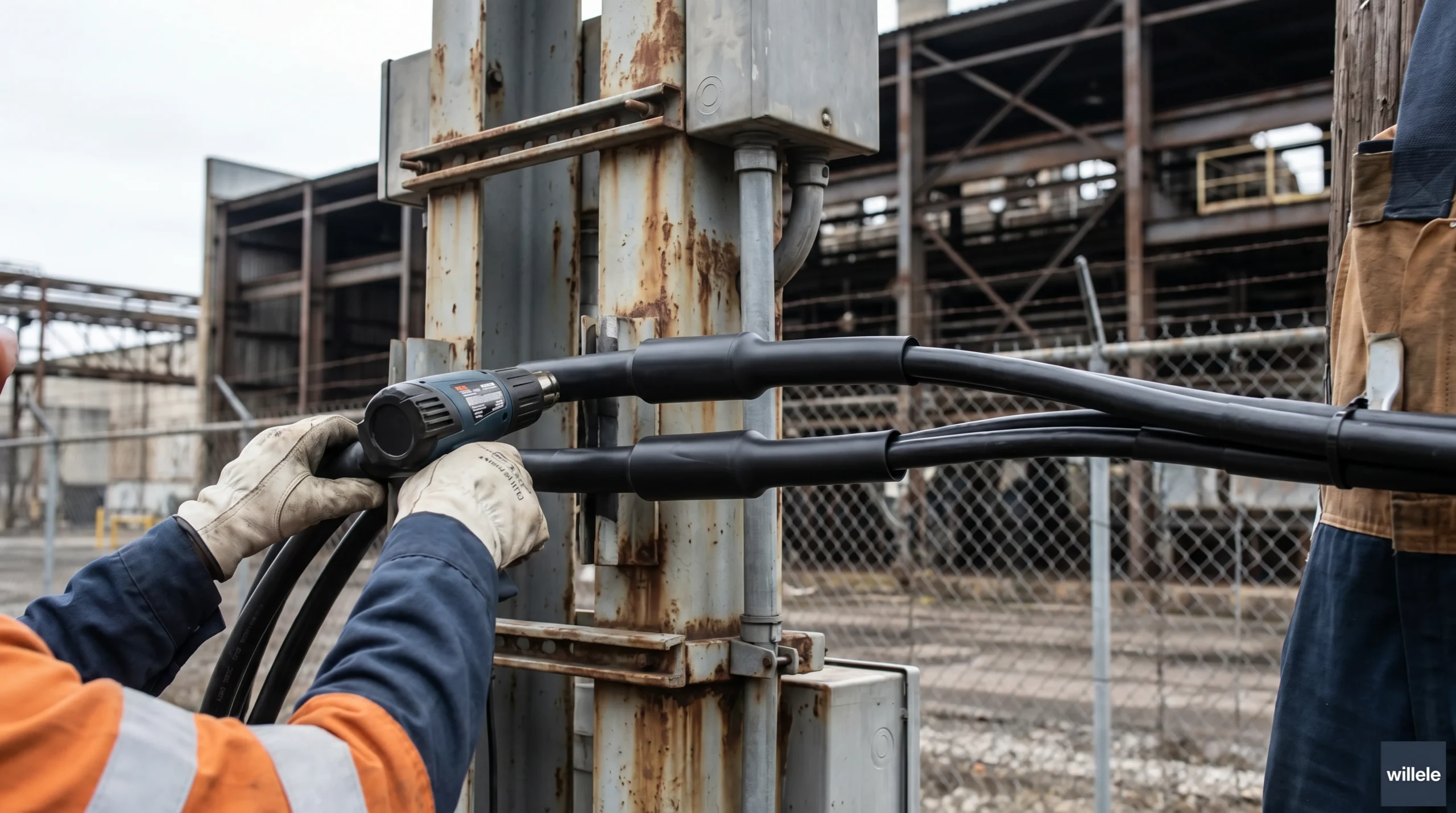
When it comes to protecting electrical connections in outdoor environments, heat shrink tubing serves as a critical component that can make or break the longevity and reliability of your installations. Outdoor applications present unique challenges that demand careful consideration of material properties, environmental factors, and performance specifications. This comprehensive guide will walk you through everything you need to know about selecting the right heat shrink tubing for outdoor use, ensuring your electrical systems remain protected against the elements for years to come.
Understanding the Outdoor Environment Challenge
Outdoor electrical installations face a relentless barrage of environmental stressors that indoor applications never encounter. Ultraviolet radiation from direct sunlight gradually breaks down polymer chains in standard materials, leading to brittleness and cracking. Temperature fluctuations between scorching summer heat and freezing winter cold cause expansion and contraction cycles that test the mechanical integrity of protective coverings. Moisture infiltration from rain, humidity, and condensation creates pathways for corrosion and electrical failure. Chemical exposure from industrial pollutants, salt spray in coastal areas, and automotive fluids adds another layer of complexity to the protection equation.
The consequences of choosing inadequate heat shrink tubing for outdoor applications extend far beyond simple aesthetic degradation. Failed insulation can lead to short circuits, equipment damage, and safety hazards. Moisture ingress accelerates corrosion of conductors and connectors, resulting in increased resistance, heat generation, and eventual connection failure. In critical applications such as telecommunications infrastructure, solar installations, and outdoor lighting systems, these failures translate directly into costly downtime, maintenance expenses, and potential liability issues.
Key Material Properties for Outdoor Performance
UV Resistance: The Primary Defense
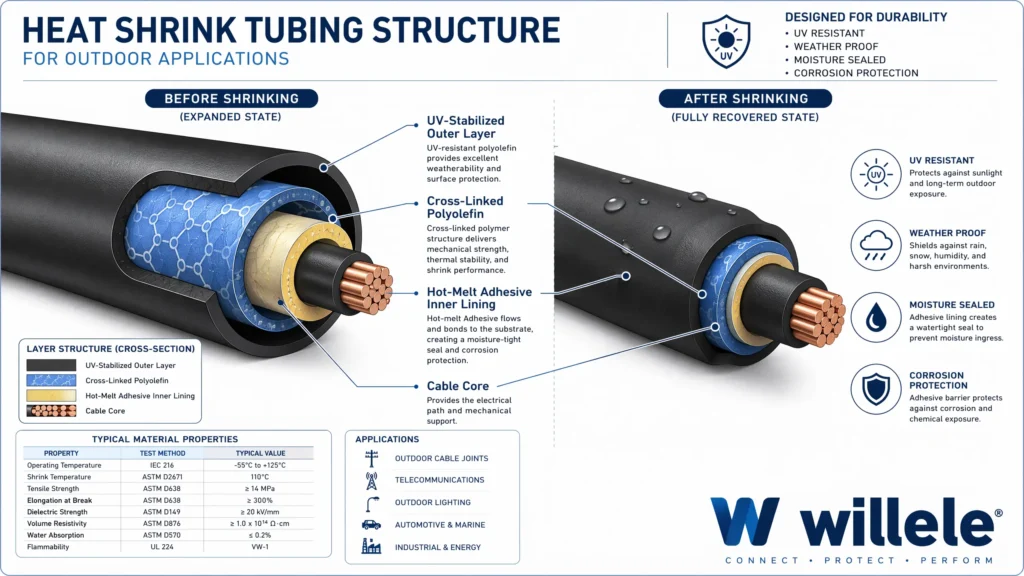
Ultraviolet resistance stands as the most critical property for outdoor heat shrink tubing applications. Standard polyolefin tubing without UV stabilization will degrade within months when exposed to direct sunlight, becoming brittle and losing its protective capabilities. UV-resistant heat shrink tubing incorporates specialized additives that absorb or reflect harmful ultraviolet radiation, preventing the photodegradation process that destroys polymer molecular structures. Cross-linked polyolefin formulations with UV stabilizers can maintain their mechanical properties and appearance for decades in full sun exposure, making them the gold standard for outdoor telecommunications, solar panel installations, and exterior lighting applications.
The effectiveness of UV protection varies significantly between manufacturers and product lines. Premium UV-resistant heat shrink tubing typically contains carbon black pigmentation combined with UV-absorbing compounds that provide dual-layer protection. The carbon black acts as a physical barrier that scatters UV radiation, while chemical stabilizers neutralize free radicals generated by photon impact. This combination enables tubing to withstand thousands of hours of accelerated weathering tests that simulate years of outdoor exposure. When evaluating UV resistance, look for products that specify ASTM G154 or similar accelerated weathering test compliance, as these standards provide quantifiable performance metrics rather than vague marketing claims.
Temperature Performance Range
Outdoor environments subject heat shrink tubing to temperature extremes that rarely occur in climate-controlled indoor settings. Summer surface temperatures on exposed equipment can exceed 80°C (176°F) in direct sunlight, while winter conditions in northern climates may plunge below -55°C (-67°F). The selected tubing must maintain flexibility, mechanical strength, and electrical insulation properties across this entire range without becoming brittle in cold or softening excessively in heat. Cross-linked polyolefin tubing typically offers an operating range of -55°C to 125°C, making it suitable for most outdoor applications. For extreme environments such as desert installations or arctic telecommunications equipment, specialized formulations with extended temperature ranges may be necessary.
Temperature cycling presents an additional challenge beyond static temperature extremes. Daily and seasonal temperature swings cause repeated expansion and contraction of both the tubing and the underlying components it protects. This cycling can lead to mechanical fatigue, particularly at the tubing edges where stress concentrations occur. Adhesive-lined heat shrink tubing provides superior performance in temperature cycling applications because the inner adhesive layer maintains continuous contact with the substrate throughout the expansion-contraction cycles, preventing moisture infiltration at the critical tubing-to-component interface.
Moisture and Chemical Resistance
Water resistance separates adequate outdoor heat shrink tubing from truly weatherproof solutions. Single-wall tubing provides basic moisture resistance through its polymer structure, but gaps at the tubing ends allow capillary action to draw water along cable surfaces and into connection points. Dual-wall adhesive-lined heat shrink tubing solves this problem by incorporating a hot-melt adhesive inner layer that flows and seals during the shrinking process, creating a continuous moisture barrier that prevents water ingress even when fully submerged. This environmental sealing capability proves essential for underground cable splices, marine applications, and any installation where direct water contact may occur.
Chemical resistance becomes critical in industrial outdoor environments where exposure to oils, fuels, solvents, and cleaning agents is common. Polyolefin-based heat shrink tubing offers excellent resistance to most petroleum products, hydraulic fluids, and mild acids, making it suitable for automotive, agricultural, and industrial equipment applications. However, some harsh chemicals may require specialized materials such as fluoropolymer heat shrink tubing, which provides superior chemical resistance at a higher cost. When selecting tubing for chemically aggressive environments, consult chemical compatibility charts specific to your exposure conditions and verify compatibility with actual field samples before committing to large-scale installations.
Types of Heat Shrink Tubing for Outdoor Use
Single-Wall UV-Resistant Polyolefin
Single-wall UV-resistant polyolefin tubing represents the most economical solution for outdoor applications where moisture sealing is not critical. This tubing type incorporates UV stabilizers and carbon black pigmentation to resist photodegradation while providing excellent electrical insulation and mechanical protection. The 2:1 or 3:1 shrink ratio allows easy installation over connectors and irregular shapes, while the thin wall construction maintains flexibility even at low temperatures. Single-wall UV-resistant tubing works well for wire bundling, strain relief, and identification applications in outdoor electrical panels, solar array wiring, and telecommunications equipment where the primary concern is UV protection rather than moisture exclusion.
The limitations of single-wall tubing become apparent in applications requiring environmental sealing. Without an adhesive inner layer, moisture can migrate along the cable surface beneath the tubing, potentially reaching sensitive connection points. Additionally, the thin wall provides less mechanical protection against abrasion and impact compared to heavy-wall alternatives. For these reasons, single-wall UV-resistant tubing is best suited for protected outdoor locations such as equipment enclosures, conduit entries, and overhead cable runs where direct water exposure is unlikely.
Dual-Wall Adhesive-Lined Tubing
Dual-wall adhesive-lined heat shrink tubing combines the UV resistance of cross-linked polyolefin with the environmental sealing capabilities of a hot-melt adhesive inner layer, creating the most versatile solution for demanding outdoor applications. During installation, heat application simultaneously shrinks the outer polyolefin layer and melts the inner adhesive, which flows to fill voids and create a continuous waterproof seal around the protected component. This dual-action protection prevents moisture infiltration, provides strain relief, and creates a robust mechanical barrier against abrasion and impact. The 3:1 or 4:1 shrink ratio accommodates a wide range of cable sizes and connector configurations, making it ideal for field installation where exact sizing may be uncertain.
The performance advantages of adhesive-lined tubing justify its higher cost in critical outdoor applications. Underground cable splices, marine electrical connections, and outdoor sensor wiring all benefit from the complete environmental seal that prevents corrosion and electrical failure. The adhesive layer also improves the tubing’s resistance to longitudinal movement, preventing the slippage that can occur with single-wall tubing under mechanical stress or temperature cycling. When specifying adhesive-lined tubing, verify that the adhesive formulation is compatible with your cable jacket material, as some adhesives may not bond effectively to certain plastics or rubber compounds.
Heavy-Wall and Military-Grade Options
Heavy-wall heat shrink tubing provides maximum mechanical protection for outdoor applications where physical abuse is expected. With wall thicknesses two to three times greater than standard tubing, heavy-wall products resist crushing, abrasion, and impact damage that would compromise thinner alternatives. This enhanced durability makes heavy-wall tubing the preferred choice for underground installations, vehicular applications, and industrial equipment where cables may be subjected to foot traffic, vehicle movement, or contact with sharp edges. The increased wall thickness also improves electrical insulation properties, providing higher dielectric strength and better resistance to tracking and arcing in high-voltage applications.
Military-grade heat shrink tubing meeting specifications such as MIL-DTL-23053 represents the highest performance tier for outdoor applications. These products undergo rigorous qualification testing including extended UV exposure, temperature cycling, fluid immersion, and mechanical stress tests that far exceed commercial standards. While the cost premium is substantial, military-grade tubing delivers proven reliability in the most demanding environments, from arctic military installations to desert combat vehicles. For critical infrastructure, aerospace ground support equipment, and applications where failure is not an option, military-grade specifications provide documented assurance of long-term outdoor performance.
Selection Criteria and Decision Matrix
Sizing and Shrink Ratio Considerations
Proper sizing represents the foundation of successful heat shrink tubing selection. The tubing’s expanded diameter must be large enough to slide easily over connectors, splices, or other bulky components, while the recovered diameter must shrink tightly enough to provide secure mechanical grip and environmental sealing. A general rule suggests selecting tubing with an expanded diameter 20-30% larger than the largest component it must pass over, ensuring easy installation without excessive force that could damage delicate connections. The recovered diameter should be 10-20% smaller than the smallest diameter being covered to ensure tight contact and proper sealing.
Shrink ratio directly impacts sizing flexibility and installation ease. A 2:1 shrink ratio means the tubing will shrink to half its supplied diameter, providing limited range for accommodating different component sizes. A 3:1 ratio offers greater versatility, shrinking to one-third of the expanded diameter and allowing a single tubing size to cover a wider range of cable diameters and connector configurations. For field installation where exact cable sizes may vary, 3:1 or 4:1 shrink ratios reduce inventory requirements and minimize the risk of having inadequate sizing on hand. However, higher shrink ratios typically require more heat energy and longer application times to achieve complete recovery, which may be a consideration for high-volume production environments.
Environmental Assessment Checklist
Systematic environmental assessment ensures selection of heat shrink tubing that will perform reliably throughout its intended service life. Begin by documenting the temperature range the installation will experience, including both ambient conditions and any heat generated by the electrical equipment itself. Identify all potential moisture exposure scenarios, from occasional rain to continuous immersion, as this determines whether single-wall or adhesive-lined tubing is required. Evaluate UV exposure levels, recognizing that southern latitudes and high-altitude installations receive more intense solar radiation than northern or shaded locations. Consider chemical exposure from industrial processes, vehicle fluids, or cleaning agents that may contact the tubing during operation or maintenance.
Mechanical stress factors require equal attention in the selection process. Will the installation be subjected to vibration from machinery or vehicle movement? Is abrasion from contact with sharp edges or moving parts a concern? Could the tubing experience crushing forces from foot traffic, equipment placement, or cable management practices? Does the application require flame resistance to meet building codes or safety standards? Each of these factors influences material selection, wall thickness requirements, and whether additional protective measures such as conduit or cable armor are necessary to supplement the heat shrink tubing’s capabilities.
Installation Best Practices for Outdoor Longevity
Surface Preparation and Cleaning
Thorough surface preparation before heat shrink tubing installation dramatically improves long-term outdoor performance. Contaminants such as oil, grease, dirt, and oxidation prevent proper adhesive bonding in dual-wall tubing and can trap moisture against metal surfaces, accelerating corrosion. Clean all surfaces with isopropyl alcohol or approved electrical contact cleaner, removing all visible contamination and allowing complete drying before tubing installation. For heavily oxidized copper or aluminum conductors, light abrasion with fine sandpaper or a wire brush removes the oxide layer and exposes fresh metal for optimal adhesive contact. In marine or industrial environments where salt deposits or chemical residues may be present, additional cleaning with appropriate solvents ensures a contamination-free surface.
The importance of surface preparation becomes particularly evident in adhesive-lined tubing applications. The hot-melt adhesive can only bond to clean surfaces, and any contamination layer creates a weak interface where moisture can penetrate. For critical outdoor connections, some installers apply a thin layer of electrical-grade sealant or corrosion inhibitor to metal surfaces before tubing installation, providing an additional moisture barrier and corrosion protection. However, verify compatibility between any applied coatings and the tubing adhesive to ensure proper bonding occurs during the heat shrinking process.
Heat Application Techniques
Proper heat application ensures complete tubing recovery and adhesive flow without damaging the underlying components or the tubing itself. Industrial heat guns with adjustable temperature control provide the most reliable results, with typical settings between 120°C and 150°C (250°F to 300°F) for polyolefin tubing. Begin heating at the center of the tubing and work toward both ends using smooth, sweeping motions that distribute heat evenly around the circumference. This technique prevents air pockets and ensures uniform shrinkage without creating wrinkles or folds that could compromise environmental sealing. For adhesive-lined tubing, continue heating until adhesive visibly flows from both tubing ends, confirming complete melting and sealing of the inner layer.
Avoid common heat application mistakes that reduce outdoor performance. Excessive heat concentration in one area can cause tubing degradation, bubbling, or even melting through the wall, while insufficient heat leaves the tubing incompletely recovered with poor mechanical grip and inadequate adhesive bonding. Never use open flames for heat shrink tubing installation, as the uncontrolled temperature and combustion products can damage both the tubing and underlying components. In cold weather outdoor installations, preheat the tubing and components to at least 10°C (50°F) before heat application, as cold materials require significantly more heat energy to achieve proper recovery and may never reach adequate adhesive flow temperatures if started from freezing conditions.
Quality Verification and Testing
Post-installation inspection and testing verify that the heat shrink tubing will provide the intended protection throughout its outdoor service life. Visual inspection should confirm complete tubing recovery with tight contact around all surfaces, no wrinkles or folds, and adhesive flow visible at both tubing ends for dual-wall products. Gently attempt to rotate or slide the tubing along the cable; properly installed tubing should resist movement, indicating good mechanical grip and adhesive bonding. For critical installations, perform a pull test by applying moderate force to verify that the tubing remains securely attached and does not separate from the underlying component.
Electrical testing provides additional assurance of proper installation and protection. Measure insulation resistance between conductors and from conductors to ground using a megohmmeter, verifying that values meet or exceed equipment specifications. For high-voltage applications, consider performing a high-potential (hipot) test to confirm adequate dielectric strength, though use caution to avoid damaging sensitive electronic components. In moisture-critical applications, some installers perform a temporary water immersion test on sample connections to verify complete environmental sealing before final installation. Document all inspection and test results for quality records and future reference during maintenance activities.
Comparison Table: Heat Shrink Tubing Types for Outdoor Use
| Tubing Type | UV Resistance | Moisture Sealing | Temperature Range | Typical Applications | Cost Level |
|---|---|---|---|---|---|
| Single-Wall UV Polyolefin | Excellent | Fair | -55°C to 125°C | Wire bundling, identification, protected outdoor locations | $ |
| Dual-Wall Adhesive-Lined | Excellent | Excellent | -55°C to 110°C | Cable splices, marine connections, underground installations | $$ |
| Heavy-Wall Polyolefin | Excellent | Good | -55°C to 135°C | Industrial equipment, vehicular applications, high-abuse environments | $$$ |
| Military-Grade (MIL-DTL-23053) | Superior | Excellent | -55°C to 175°C | Critical infrastructure, aerospace, defense applications | |
| Fluoropolymer (FEP/PTFE) | Superior | Excellent | -65°C to 200°C | Chemical processing, extreme temperature, high-voltage applications | $ |
Material Selection Guide by Application
| Application Environment | Recommended Material | Key Features Required | Shrink Ratio |
|---|---|---|---|
| Solar Panel Wiring | UV-Resistant Polyolefin | UV stabilization, flame retardant, -40°C to 125°C | 2:1 or 3:1 |
| Marine Electronics | Dual-Wall Adhesive-Lined | Waterproof seal, salt resistance, UV protection | 3:1 or 4:1 |
| Outdoor Lighting | Single-Wall UV Polyolefin | UV resistance, flame retardant, flexible at low temp | 2:1 |
| Telecommunications | Heavy-Wall UV Polyolefin | UV resistance, abrasion protection, wide temp range | 3:1 |
| Automotive Underhood | Dual-Wall Adhesive-Lined | Oil/fuel resistance, 125°C+ rating, moisture seal | 3:1 |
| Industrial Equipment | Heavy-Wall Polyolefin | Chemical resistance, mechanical protection, UV stable | 3:1 or 4:1 |
| Underground Splices | Dual-Wall Adhesive-Lined | Complete moisture barrier, corrosion protection | 3:1 or 4:1 |
Common Mistakes to Avoid
One of the most frequent errors in outdoor heat shrink tubing selection involves choosing standard indoor-grade tubing for exterior applications based solely on cost considerations. While standard polyolefin tubing may appear identical to UV-resistant versions and costs significantly less, it lacks the stabilizers necessary for outdoor longevity and will fail within months of sun exposure. The false economy of using inappropriate materials leads to premature replacement costs, equipment downtime, and potential safety hazards that far exceed the initial savings. Always verify that tubing specifications explicitly state UV resistance and outdoor suitability rather than assuming all polyolefin tubing provides adequate outdoor performance.
Undersizing heat shrink tubing represents another common mistake with serious consequences. Installers sometimes select tubing that barely fits over connectors, requiring excessive force during installation that can damage delicate components or the tubing itself. When the tubing is too small in its recovered state, it may not shrink sufficiently to create proper contact and sealing, leaving gaps where moisture can penetrate. Conversely, oversizing tubing results in loose fit after shrinking, providing inadequate mechanical support and environmental protection. Following manufacturer sizing guidelines and using the appropriate shrink ratio for your application ensures optimal performance without installation difficulties.
Neglecting to account for longitudinal shrinkage during installation causes problems in applications where precise tubing placement is critical. Heat shrink tubing typically contracts 5-7% in length during the shrinking process, which can pull the tubing away from critical sealing points if not anticipated. To compensate for longitudinal shrinkage, cut tubing slightly longer than the area to be covered and position it with equal excess on both ends before heat application. For long tubing runs, some installers secure both ends with low-temperature tape before heating the center section, preventing longitudinal movement and ensuring the tubing remains properly positioned over the protected area.
Maintenance and Inspection Protocols
Regular inspection of outdoor heat shrink tubing installations identifies potential problems before they lead to equipment failure. Establish an inspection schedule based on environmental severity, with quarterly inspections for harsh coastal or industrial environments and annual inspections for moderate climates. During inspections, look for signs of UV degradation such as surface chalking, color fading, or brittleness that indicates the tubing is approaching the end of its service life. Check for physical damage including cuts, abrasions, or crushing that may have compromised the protective barrier. Examine tubing ends for signs of moisture infiltration, corrosion, or adhesive separation that could allow water ingress into protected connections.
When inspection reveals degraded or damaged tubing, prompt replacement prevents more serious problems. In many cases, heat shrink tubing can be replaced without disconnecting the underlying electrical connections by carefully cutting away the old tubing and installing new tubing over the existing connection. For adhesive-lined tubing, residual adhesive on cable surfaces should be cleaned with isopropyl alcohol before installing replacement tubing to ensure proper bonding of the new adhesive layer. Document all inspection findings and replacement activities to track tubing performance over time and identify applications where more robust materials or additional protection may be necessary.
Why Choose Willele Heat Shrink Tubing
Willele specializes in manufacturing premium heat shrink tubing specifically engineered for demanding outdoor applications. Our UV-resistant polyolefin formulations incorporate advanced stabilizer packages that provide documented performance exceeding 10 years in accelerated weathering tests, ensuring your installations remain protected through decades of sun exposure. Every product undergoes rigorous quality testing including UV exposure chambers, temperature cycling, moisture resistance testing, and mechanical stress evaluation to verify compliance with international standards and real-world performance requirements.
Our technical support team works directly with customers to specify the optimal heat shrink tubing solution for each unique application. Whether you’re protecting solar installations in desert environments, securing marine electrical connections, or weatherproofing telecommunications infrastructure, Willele provides the expertise and product range to ensure long-term reliability. We maintain extensive inventory of single-wall, dual-wall adhesive-lined, and heavy-wall tubing in multiple sizes and shrink ratios, enabling rapid delivery for both production requirements and emergency field repairs. Contact Willele today to discuss your outdoor heat shrink tubing needs and discover why leading electrical contractors and equipment manufacturers trust our products for their most critical applications.
Frequently Asked Questions
Q: What is the difference between UV-resistant and standard heat shrink tubing?
A: UV-resistant heat shrink tubing contains specialized additives and stabilizers that protect the polymer from degradation caused by ultraviolet radiation in sunlight. Standard tubing without UV protection will become brittle, crack, and fail within months when exposed to outdoor conditions, while UV-resistant tubing maintains its properties for years or decades in the same environment.
Q: How long does outdoor heat shrink tubing last?
A: Properly selected and installed UV-resistant heat shrink tubing typically lasts 10-20 years or more in outdoor applications. Service life depends on factors including UV exposure intensity, temperature extremes, mechanical stress, and material quality. Premium products with advanced UV stabilizers can exceed 20 years in moderate climates.
Q: Do I need adhesive-lined tubing for all outdoor applications?
A: Adhesive-lined tubing is essential when moisture sealing is critical, such as underground installations, marine applications, or any location where water contact is likely. For protected outdoor locations like electrical enclosures or overhead cable runs where moisture exclusion is less critical, single-wall UV-resistant tubing may be sufficient and more economical.
Q: Can heat shrink tubing be installed in cold weather?
A: Yes, but special precautions are necessary. Preheat both the tubing and components to at least 10°C (50°F) before installation, as cold materials require more heat energy and may not achieve proper adhesive flow. Use higher heat gun settings and longer application times to ensure complete recovery and sealing.
Q: What shrink ratio should I choose for outdoor applications?
A: A 3:1 shrink ratio offers the best balance of sizing flexibility and installation ease for most outdoor applications. It accommodates a wide range of cable sizes and connector configurations, making it ideal for field installation where exact dimensions may vary. For simple wire bundling, 2:1 ratio is sufficient, while complex connector shapes may benefit from 4:1 ratio.
Q: How do I know if my heat shrink tubing is properly installed?
A: Properly installed tubing shows complete recovery with tight contact around all surfaces, no wrinkles or folds, and visible adhesive flow from both ends (for dual-wall products). The tubing should resist rotation or sliding when tested by hand, and electrical insulation resistance should meet equipment specifications when measured with a megohmmeter.
