How to Select the Right Busbar Insulator for Your Electrical System

Understanding Busbar Insulation in Modern Electrical Systems
Selecting the right busbar insulator for your electrical system is critical for ensuring operational safety, system reliability, and long-term performance. As electrical infrastructure becomes increasingly complex, the demand for high-quality insulation solutions has never been greater. At willele Electric, we specialize in advanced heat shrink tube technology designed to meet the stringent requirements of B2B electrical applications worldwide.
Busbar insulators serve as the protective barrier between energized conductors and grounding systems, preventing electrical faults, arc flash incidents, and equipment damage. The wrong insulator choice can lead to costly downtime, safety hazards, and premature system failure. This comprehensive guide will walk you through the essential factors for selecting the right busbar insulator for your electrical system, helping you make informed decisions that optimize both performance and budget.
Types of Busbar Insulators
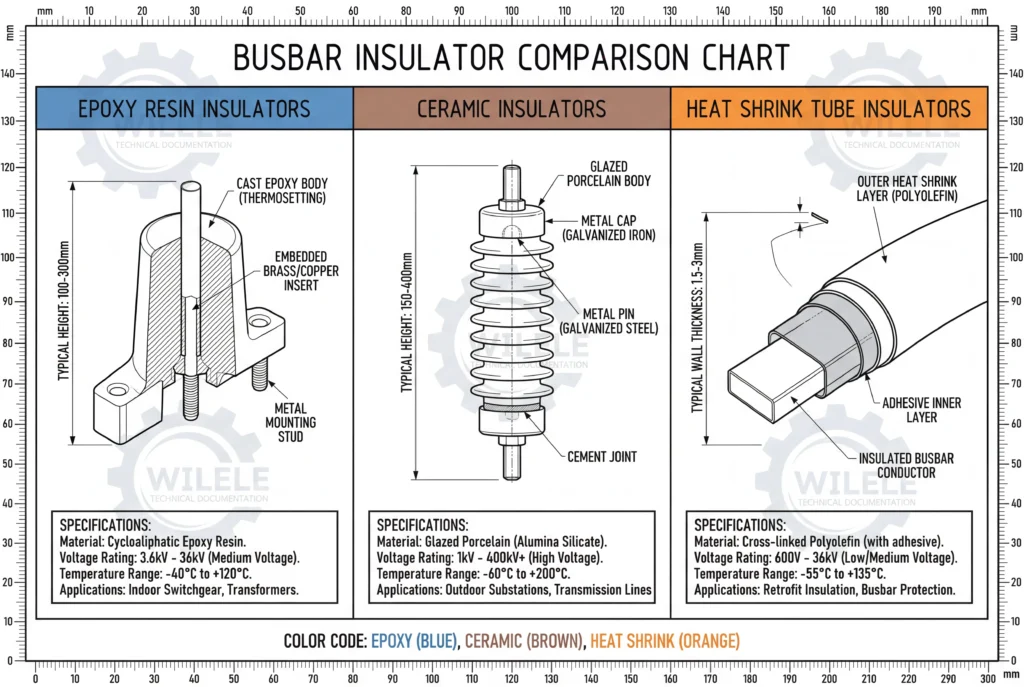
Understanding the different types of busbar insulators available is the first step in making the right selection. Each type offers distinct advantages depending on your application requirements.
Heat Shrink Tube Insulators
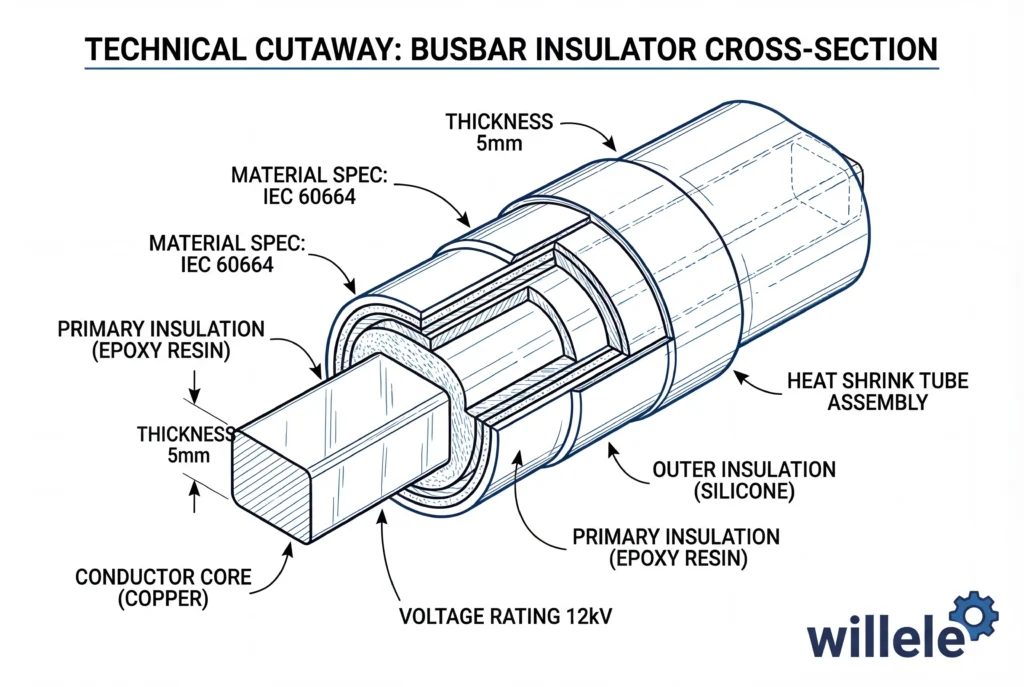
Heat shrink tube insulators represent the latest advancement in busbar insulation technology. willele Electric specializes in manufacturing premium heat shrink tubes that provide:
- Superior conformability to irregular busbar shapes and configurations
- Seamless protection without joints or weak points
- Chemical and moisture resistance for harsh environments
- Easy installation with heat application
- Excellent dielectric strength across voltage ranges
- Cost-effective solutions for both new installations and retrofits
Epoxy Resin Insulators
Epoxy resin insulators offer rigid protection and are commonly used in:
- Medium to high-voltage switchgear
- Indoor substations
- Applications requiring mechanical strength
- Environments with stable temperature conditions
Ceramic Insulators
Traditional ceramic insulators remain relevant for:
- High-voltage transmission applications
- Outdoor installations requiring UV resistance
- Extreme temperature environments
- Applications where mechanical impact is minimal
Polymer-Based Insulators
Modern polymer insulators combine:
- Lightweight construction
- Weather resistance
- Reduced maintenance requirements
- Improved safety characteristics
Key Selection Criteria for Busbar Insulators
Voltage Rating Requirements
The voltage rating is the most critical specification when selecting the right busbar insulator for your electrical system. Consider both nominal operating voltage and peak transient voltages.
| Voltage Class | Recommended Insulator Type | Typical Applications |
|---|---|---|
| Low Voltage (≤1kV) | Heat Shrink Tubes, Polymer Sleeves | Distribution panels, control systems |
| Medium Voltage (1-35kV) | Heat Shrink Tubes, Epoxy Resin | Industrial switchgear, substations |
| High Voltage (35-230kV) | Ceramic, Advanced Polymers | Transmission systems, power plants |
| Extra High Voltage (>230kV) | Specialized Ceramic, Composite | Main transmission lines, grid infrastructure |
Current Carrying Capacity
Current capacity directly affects heat generation, which impacts insulator performance:
- Low Current (≤600A): Standard heat shrink tubes with basic heat dissipation
- Medium Current (600-3000A): Enhanced heat shrink materials with thermal management
- High Current (>3000A): Specialized insulators with superior thermal conductivity
Environmental Conditions
Environmental factors significantly influence insulator longevity and performance.
| Environmental Factor | Impact on Selection | Recommended Solution |
|---|---|---|
| Temperature Range | Material thermal limits | Heat shrink tubes: -55°C to +135°C |
| Humidity | Moisture ingress risk | Sealed heat shrink with adhesive lining |
| Chemical Exposure | Material degradation | Chemically resistant polymers |
| UV Radiation | Material breakdown | UV-stabilized formulations |
| Pollution Level | Surface tracking | Hydrophobic coatings, increased creepage |
| Altitude | Reduced dielectric strength | Higher rated insulators |
Mechanical Requirements
Physical stress considerations include:
- Vibration resistance: Critical for transportation and industrial applications
- Impact strength: Important in high-traffic or accident-prone areas
- Flexural rigidity: Necessary for maintaining busbar alignment
- Weight constraints: Particularly relevant for retrofit applications
Material Properties Comparison
Understanding material characteristics helps in selecting the right busbar insulator for your electrical system based on specific performance requirements.
| Property | Heat Shrink Tubes | Epoxy Resin | Ceramic | Polymer Composite |
|---|---|---|---|---|
| Dielectric Strength | 20-25 kV/mm | 18-20 kV/mm | 10-15 kV/mm | 18-22 kV/mm |
| Temperature Range | -55°C to +135°C | -40°C to +130°C | -50°C to +200°C | -40°C to +120°C |
| Flexibility | Excellent | Poor | None | Good |
| Installation Ease | Excellent | Moderate | Difficult | Good |
| Weight | Very Light | Moderate | Heavy | Light |
| Cost Effectiveness | High | Moderate | Low | Moderate |
| Maintenance | Minimal | Low | Moderate | Low |
| Chemical Resistance | Excellent | Good | Excellent | Good |
Application-Specific Selection Guide
Industrial Manufacturing Facilities
Recommended: Heat shrink tube insulators from willele Electric
Reasons:
- Flexibility to accommodate equipment vibration
- Chemical resistance against industrial contaminants
- Easy installation minimizes production downtime
- Cost-effective for large-scale deployments
Data Centers and IT Infrastructure
Requirements:
- Low smoke, zero halogen (LSZH) materials
- Fire retardant properties
- Compact designs for space optimization
- High reliability standards
Solution: willele’s specialized heat shrink tubes with LSZH formulation
Renewable Energy Systems
Solar Installations:
- UV-resistant heat shrink tubes
- Wide temperature range capability
- Weather-sealed protection
Wind Power:
- Vibration-resistant solutions
- Flexible materials for dynamic loads
- Corrosion protection in marine environments
Transportation Systems
Rail Applications:
- Fire-resistant materials meeting EN standards
- Vibration and shock absorption
- Long service life requirements
Marine Electrical Systems:
- Saltwater corrosion resistance
- Moisture sealing capabilities
- Compact lightweight designs
Installation Best Practices
Proper installation is crucial for maximizing insulator performance:
Heat Shrink Tube Installation
- Surface Preparation: Clean and dry busbar surfaces thoroughly
- Sizing: Select proper diameter for 20-30% shrink ratio
- Positioning: Ensure complete coverage with appropriate overlap
- Heat Application: Apply even heat using industrial heat gun or oven
- Cooling: Allow adequate cooling time before energizing
- Inspection: Verify complete shrinkage and adhesion
Quality Assurance Checklist
- No air bubbles or voids in insulation
- Uniform thickness throughout
- Proper adhesion at termination points
- Complete coverage of conductive parts
- Adequate creepage and clearance distances maintained
Cost-Benefit Analysis
| Factor | Initial Cost | Lifecycle Cost | Performance Value |
|---|---|---|---|
| Heat Shrink Tubes | Medium | Very Low | Excellent |
| Epoxy Resin | Medium-High | Low | Good |
| Ceramic | High | Medium | Excellent |
| Basic Polymer | Low | High | Fair |
Heat shrink tube insulators from willele Electric offer the optimal balance of:
- Low total cost of ownership: Minimal maintenance and long service life
- Installation efficiency: Reduced labor costs and downtime
- Reliability: Proven performance across diverse applications
- Flexibility: Suitable for both new installations and upgrades
Standards and Compliance
Selecting the right busbar insulator for your electrical system requires adherence to relevant industry standards:
International Standards
- IEC 61439: Low-voltage switchgear and controlgear assemblies
- IEC 60694: Common specifications for high-voltage switchgear
- IEEE C37: Power switchgear standards
- UL 891: Switchboards standard
Regional Requirements
- North America: UL, CSA, NEMA specifications
- Europe: CE marking, EN standards
- Asia-Pacific: Local certification requirements
- Middle East: Specific environmental considerations
willele Electric manufactures insulators that meet or exceed international standards, ensuring global compatibility and compliance.
Frequently Asked Questions
What is the most important factor when selecting the right busbar insulator for your electrical system?
The voltage rating is the most critical factor, as it determines the insulator’s ability to prevent electrical breakdown. However, you must also consider current capacity, environmental conditions, and mechanical requirements for a comprehensive selection.
How long do heat shrink tube insulators typically last?
Quality heat shrink tube insulators from willele Electric typically last 20-30 years under normal operating conditions, with some installations exceeding 40 years when properly maintained and operated within specified parameters.
Can heat shrink insulators be used for high-voltage applications?
Yes, advanced heat shrink tube technology can handle medium to high-voltage applications up to 35kV. willele Electric offers specialized formulations for various voltage classes, providing excellent dielectric strength and long-term reliability.
What are the advantages of heat shrink tubes over traditional rigid insulators?
Heat shrink tubes offer superior flexibility, easier installation, seamless coverage, better conformability to irregular shapes, excellent chemical resistance, and lower total cost of ownership compared to rigid alternatives like epoxy or ceramic insulators.
How do I determine the correct size of heat shrink tube for my busbar?
Measure the busbar’s maximum dimension and select a heat shrink tube with a recovered (shrunk) diameter slightly smaller than the busbar, and an as-supplied diameter that allows easy installation. Typically, a 2:1 or 3:1 shrink ratio provides optimal coverage. willele Electric provides detailed sizing guides for all products.
Are heat shrink insulators suitable for outdoor applications?
Yes, when specified with UV-stabilized formulations and proper environmental ratings. willele Electric manufactures outdoor-rated heat shrink tubes with enhanced weather resistance, UV protection, and moisture sealing capabilities for harsh environments.
What maintenance is required for busbar insulators?
Heat shrink tube insulators require minimal maintenance—primarily periodic visual inspection for damage, discoloration, or degradation. Unlike ceramic insulators that need regular cleaning, or epoxy systems that may require surface treatment, heat shrink solutions offer significant maintenance advantages.
Conclusion
Selecting the right busbar insulator for your electrical system requires careful consideration of voltage ratings, environmental conditions, mechanical requirements, and long-term performance expectations. Heat shrink tube technology, particularly solutions from willele Electric, offers exceptional value through superior flexibility, ease of installation, comprehensive protection, and cost-effectiveness.
As a specialized B2B manufacturer of electrical equipment with expertise in heat shrink tube technology, willele Electric provides engineered solutions that meet the demanding requirements of modern electrical systems. Our products combine advanced materials science with practical application experience, delivering reliable insulation performance across diverse industries and applications.
Whether you’re designing a new electrical system, upgrading existing infrastructure, or seeking to improve safety and reliability, choosing the right busbar insulator is an investment in long-term operational success. Contact willele Electric today to discuss your specific requirements and discover how our heat shrink tube solutions can optimize your electrical system performance.
