
How to Select the Right Busbar Insulator


How to Select the Right Busbar Insulator
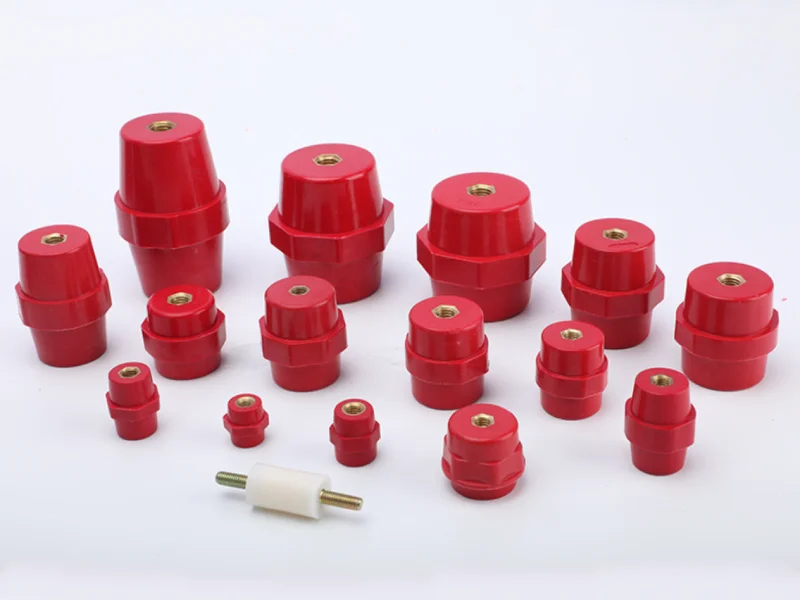
Busbar insulators are critical components in electrical systems, ensuring safety, efficiency, and longevity by preventing short circuits and managing electrical loads. With advancements in materials and design, selecting the right insulator can be overwhelming. Choosing the correct busbar insulator is critical for the safety, efficiency, and longevity of any electrical system. The insulator provides both electrical isolation and mechanical support for the busbar conductors. Misaligned selection can lead to system failure, short circuits, and safety hazards.
This guide breaks down the essential factors and material considerations to help you select the most suitable busbar insulator for your application.
How a busbar insulator made ?
⚡️ Key Selection Factors
Your choice must align with the specific demands of the electrical environment.
1. Electrical Performance
- Voltage Rating (Dielectric Strength): The insulator’s ability to withstand electrical stress without breakdown must be rated for the maximum system voltage (e.g., Low Voltage: 660V to 4500V; High Voltage: $>100$kV).
- Insulation Resistance: This is the resistance to current flow through the insulator body. High resistance prevents leakage currents.
- Tracking and Arc Resistance: The material must resist the formation of conductive carbon paths (tracking) on its surface when exposed to voltage and contamination.
2. Mechanical Requirements
- Mechanical Strength: The insulator must support the weight of the busbar and withstand dynamic forces from short-circuit currents, thermal expansion, and external stresses like wind load or seismic activity. Check the specified flexural strength in the datasheet.
- Busbar Size and Shape: Ensure the insulator slots or clamps are compatible with the busbar’s physical dimensions.
- Mounting Method: Consider the installation environment to choose between standoff (post) insulators, support insulators, or specialized types like suspension insulators.
3. Environmental Conditions
- Temperature Resistance (Thermal Stability): The insulator must perform reliably across the full range of ambient and operating temperatures. High-current heat must not cause the material to degrade or lose its dielectric properties.
- Moisture and Humidity: In high-humidity or outdoor environments, the insulator should possess hydrophobicity (water-repellent properties) and a low water absorption rate.
- UV Resistance: For outdoor installations, the material must be UV-resistant to prevent degradation, yellowing, and cracking.
- Chemical and Pollution Resistance: In industrial or coastal areas, the insulator must be resistant to corrosive chemicals, oils, and pollutants.
🛠️ Material and Type Comparison (Structural Insulators)
The choice of structural insulator material directly affects its electrical and mechanical properties.
| Insulator Material | Key Advantages | Key Disadvantages | Typical Application |
| Porcelain/Ceramic | High mechanical strength, excellent high-temperature resistance, UV-resistant, long lifespan. | Heavy, brittle (prone to cracking), less chemical resistance. | Traditional substations, high-stress, dry environments. |
| Epoxy Resin | Excellent electrical properties, lightweight, good mechanical strength, highly customizable. | Degrades under long-term UV exposure (if not formulated), moderate durability. | High-voltage systems, indoor switchgear, controlled environments. |
| DMC/BMC | Excellent electrical resistance, high heat tolerance (up to $140^\circ$C), good mechanical strength. | Moderate cost, can be less aesthetically pleasing. | Switchgear, panel boards, general industrial facilities (common LV standoff). |
| Composite Polymers | Lightweight, high strength, excellent environmental/UV resistance, good pollution performance. | Higher cost than some alternatives. | Renewable energy systems (solar/wind farms), contaminated or coastal environments. |
🛡️ Busbar Coating and Plating Options
Plating protects the conductor surface at the connection joint (improving contact), while Coating provides full electrical insulation along the conductor’s length (preventing accidental contact).
| Option | Type | Primary Purpose & Key Benefit | Limitations & Best Use |
| Epoxy Powder Coating | Insulation Coating | Superior dielectric strength, uniform insulation on complex shapes, fire-retardant (UL94 V-0). | More complex application (requires curing/baking), higher cost than heat-shrink. Best for High Voltage (>600V) and complex geometries. |
| Heat-Shrink Tubing (PVC/Polyolefin) | Insulation Coating | Simple, low-cost, easy to apply on straight busbars. | Uneven thickness, prone to air gaps (risk of partial discharge), lower operating temperature. Best for Low Voltage and straight busbars. |
| Tin Plating | Conductor Plating | Prevents oxidation of copper/aluminum, excellent corrosion resistance, high solderability. | Low melting point ($\approx 232^\circ$C) limits use in very high-temperature joints, susceptible to “whiskering.” Best for general electrical panels and connections. |
| Silver Plating | Conductor Plating | Lowest contact resistance (highest conductivity) for maximum efficiency and stable joint temperature. | Highest cost, prone to tarnishing (sulfidation) in contaminated air. Best for high-current applications and switchgear contacts. |
✅ Best Practices and Certification
To ensure quality and safety, always adhere to these best practices:
- Consult Technical Specifications: Always check the manufacturer’s data sheets for certified ratings on voltage, mechanical load, and temperature.
- Prioritize Certifications: Look for insulators that comply with major international standards to guarantee quality and safety. Key certifications include IEC, ANSI, UL, and CE Marking.
- Cost vs. Quality: Never compromise quality for cost. A premature system failure resulting from a sub-par insulator will always be more expensive than the initial saving.
The choice of busbar insulator depends on factors such as voltage level, mechanical stress, environmental conditions, and space constraints. For instance, gas-insulated designs are preferred for high-voltage scenarios with limited space, while air-insulated systems are more suitable for simpler configurations where cost-effectiveness is prioritized.
