
How to Weatherproof Your Outdoor Junction Box Connections Effectively

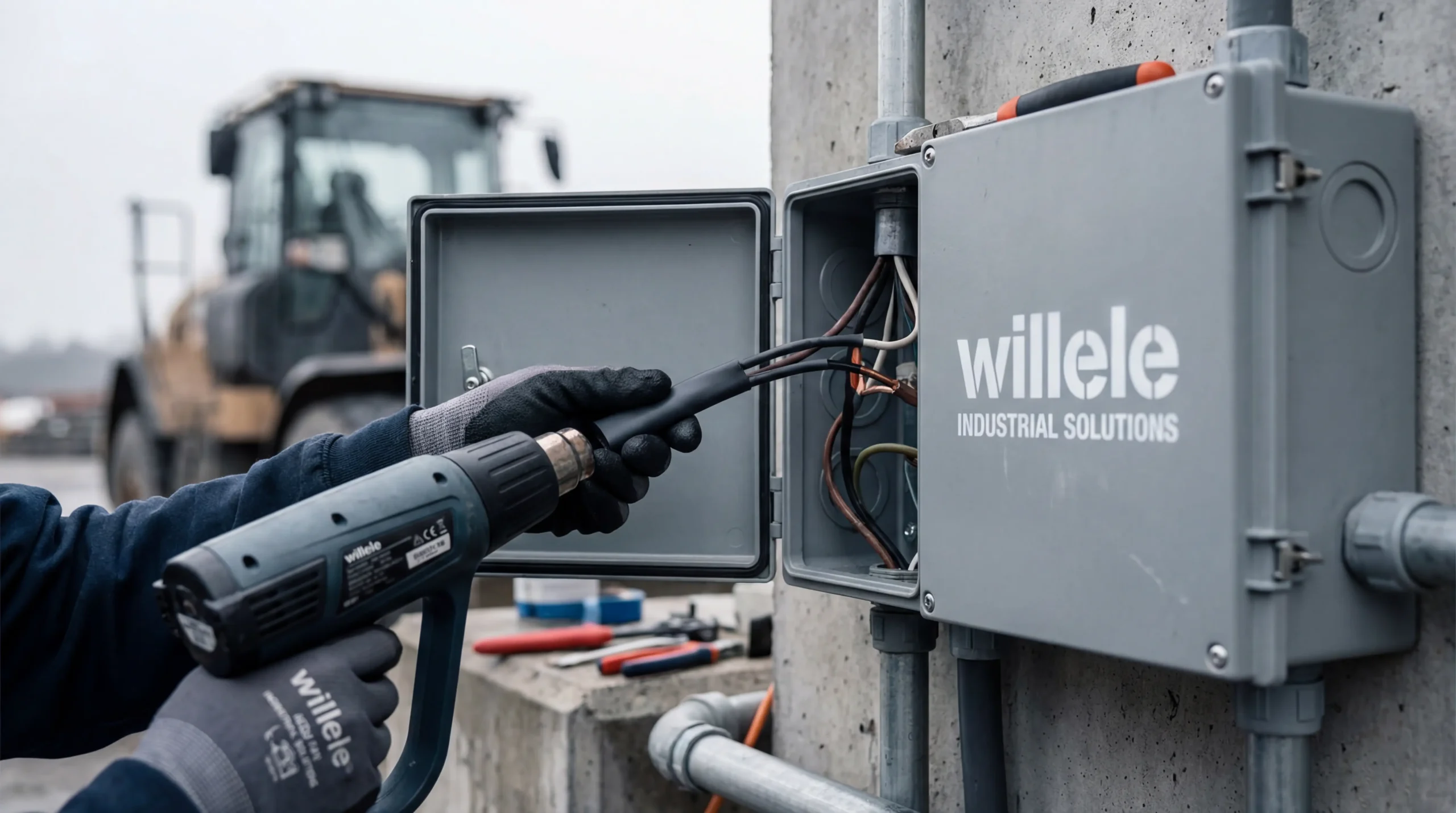
Ensuring the longevity and safety of outdoor electrical systems begins with one critical task: understanding how to weatherproof your outdoor junction box connections effectively. For electrical contractors, facility managers, and industrial installers, moisture intrusion is the silent enemy that leads to corrosion, short circuits, and costly system failures.
At Willele Electric, we understand that a robust connection is only as good as its protection. This guide explores the technical requirements, material selection, and professional techniques needed to secure outdoor electrical infrastructure against the elements, with a special focus on high-performance heat shrink solutions.
Why Weatherproofing Matters in Industrial Applications
Outdoor junction boxes are exposed to harsh environmental conditions, including rain, snow, UV radiation, and fluctuating temperatures. Without proper weatherproofing, moisture can penetrate the enclosure through cable entries, mounting holes, or compromised seals.
The consequences of poor weatherproofing include:
- Galvanic Corrosion: Moisture acts as an electrolyte, accelerating corrosion between dissimilar metals in wire connections.
- Arc Faults and Short Circuits: Water ingress bridges live conductors, leading to dangerous electrical faults.
- System Downtime: In industrial settings, a single failed connection can halt production lines or disable critical security systems.
- Safety Hazards: Compromised insulation increases the risk of electric shock to maintenance personnel.
Essential Materials for Weatherproof Connections
To achieve a watertight seal, you need the right combination of an IP-rated enclosure and connection protection. While the box itself provides the first line of defense, the internal connections require their own barrier against condensation and humidity.
Comparison of Common Weatherproofing Materials
| Material Type | Sealing Capability | Durability | Best Application |
|---|---|---|---|
| Dual-Wall Heat Shrink Tubing | High | Excellent | Permanent wire splices, cable transitions, and strain relief. |
| Electrical Tape | Low to Medium | Low | Temporary fixes or secondary mechanical protection. |
| Silicone Sealant | Medium | Medium | Sealing box edges or cable glands (messy for wire connections). |
| Resin/Gel Packs | High | High | Submersible connections (often non-reenterable). |
Willele’s recommendation: For most outdoor junction box wiring, adhesive-lined (dual-wall) heat shrink tubing offers the best balance of ease of installation, mechanical strength, and moisture resistance.
Step-by-Step Guide: How to Weatherproof Your Outdoor Junction Box Connections Effectively
Follow this professional protocol to ensure your connections meet industrial standards.
1. Select the Right Enclosure
Start with a junction box that meets the necessary Ingress Protection (IP) rating. For outdoor use, aim for IP65 (dust tight, water jets) or IP67 (dust tight, immersion) depending on the location.
2. Prepare the Cables and Glands
Never pass a cable through a raw hole. Always use properly rated cable glands (strain relief connectors).
- Drill holes to the exact size of the gland.
- Install the gland with its rubber O-ring on the outside of the box.
- Tighten the locknut firmly from the inside.
3. Create the Connection Using Heat Shrink Tubing
This is the most critical step for internal moisture protection. Even inside a waterproof box, condensation can form.
- Strip the Wire: Remove insulation cleanly without nicking the conductor.
- Slide the Tube: Slide a piece of Willele Dual-Wall Heat Shrink Tube over one wire before twisting or crimping. Ensure the tube is long enough to overlap the wire insulation by at least 1 inch on both sides.
- Connect: Join the wires using a crimp connector, solder, or twist-on wire nut (if rated for the voltage/current).
- Position the Tube: Center the heat shrink tubing over the connection.
- Apply Heat: Use a heat gun to shrink the tubing. Start from the center and work outwards to prevent air pockets. Watch for the internal adhesive to flow out slightly at the ends—this indicates a watertight seal.
4. Seal Unused Ports
Any open knockout holes must be plugged with IP-rated blanking plugs. Do not use tape or caulk to fill large holes, as these will degrade over time.
Understanding IP Ratings for Outdoor Enclosures
When specifying components, understanding the IP (Ingress Protection) rating system is vital. The first digit refers to solid objects (dust), and the second refers to liquids (water).
| IP Rating | Dust Protection (1st Digit) | Water Protection (2nd Digit) | Suitability |
|---|---|---|---|
| IP54 | Dust Protected | Splashing Water | Sheltered outdoor areas. |
| IP65 | Dust Tight | Water Jets | Exposed outdoor walls, industrial washdown areas. |
| IP67 | Dust Tight | Immersion (1m for 30 min) | Flood-prone areas, ground-level boxes. |
| IP68 | Dust Tight | Continuous Immersion | Underwater lighting, deep submersion applications. |
The Willele Advantage: Advanced Heat Shrink Technology
Standard electrical tape eventually unspools due to thermal cycling, and rigid enclosures can crack. Willele’s heat shrink technology provides a flexible, permanent seal that moves with the cables during thermal expansion and contraction.
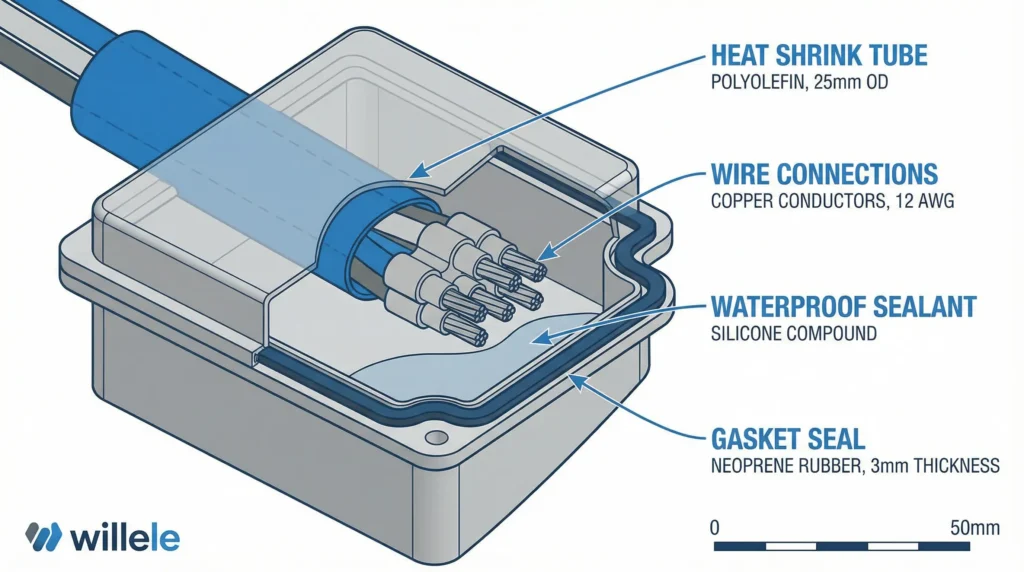
Our Willele Dual-Wall Series features an inner layer of hot-melt adhesive. When heated, this adhesive melts and flows into the voids between wire strands, creating a solid barrier that moisture cannot penetrate.
Willele Heat Shrink Specifications
| Feature | Standard Single-Wall | Willele Dual-Wall (Adhesive Lined) |
|---|---|---|
| Shrink Ratio | 2:1 | 3:1 or 4:1 (Accommodates large connectors) |
| Waterproofing | No | Yes (IP67 equivalent seal) |
| Strain Relief | Low | High |
| Operating Temp | -55°C to 125°C | -55°C to 125°C |
| UV Resistance | Variable | High (Black tubing) |
Common Mistakes to Avoid
Even with high-quality materials, installation errors can compromise the system. Avoid these common pitfalls:
- Bottom Entry Neglect: Always try to have cables enter from the bottom of the junction box. This creates a “drip loop” that prevents water from running down the cable and pooling at the gland seal.
- Overfilling the Box: Exceeding the box fill capacity generates heat and makes it difficult to verify seals.
- Ignoring Cable Diameter: Using a cable gland that is too large for the wire gauge results in a loose seal. Always check the clamping range of the gland.
- Insufficient Heating: Under-heating the shrink tube prevents the adhesive from bonding properly. Ensure the tube has fully recovered and the adhesive is visible.
FAQ: Weatherproofing Outdoor Connections
Q: Can I use standard electrical tape inside an outdoor junction box?
A: While permissible for color-coding, standard vinyl tape should not be relied upon for moisture protection. It loses adhesion over time due to temperature fluctuations. Use adhesive-lined heat shrink tubing for a permanent seal.
Q: Do I need to use a sealant on the cable gland threads?
A: Most high-quality cable glands come with a rubber O-ring or washer that provides the seal. However, adding a small amount of silicone to the threads can provide extra insurance in extreme environments.
Q: How do I choose the right size heat shrink tube?
A: Choose a tube with a recovered (shrunk) diameter slightly smaller than the cable/connector you are covering, and an expanded diameter large enough to slide over it easily. Willele’s 3:1 ratio tubes are excellent for covering bulky connectors.
Q: What is a drip loop and why is it important?
A: A drip loop is a U-shaped bend in the wire just before it enters the junction box. It ensures that water flows down to the bottom of the loop and drips off, rather than running down the wire and into the connection point.
Q: Can Willele heat shrink tubes be used underground?
A: Yes, our heavy-wall adhesive-lined tubing is designed for direct burial and submersible applications, offering superior resistance to soil moisture and abrasion.
Q: How often should outdoor junction boxes be inspected?
A: We recommend inspecting outdoor connections annually, or after severe weather events. Check for cracked seals, loose glands, or signs of condensation inside the box.
Secure Your Connections with Willele
Weatherproofing is an investment in reliability. By choosing the right enclosure and protecting every connection with Willele Heat Shrink Tubing, you ensure your outdoor electrical systems stand the test of time. Explore our full range of industrial insulation solutions today.
