
Industrial Motor Connections: Cable Lug Selection Guide

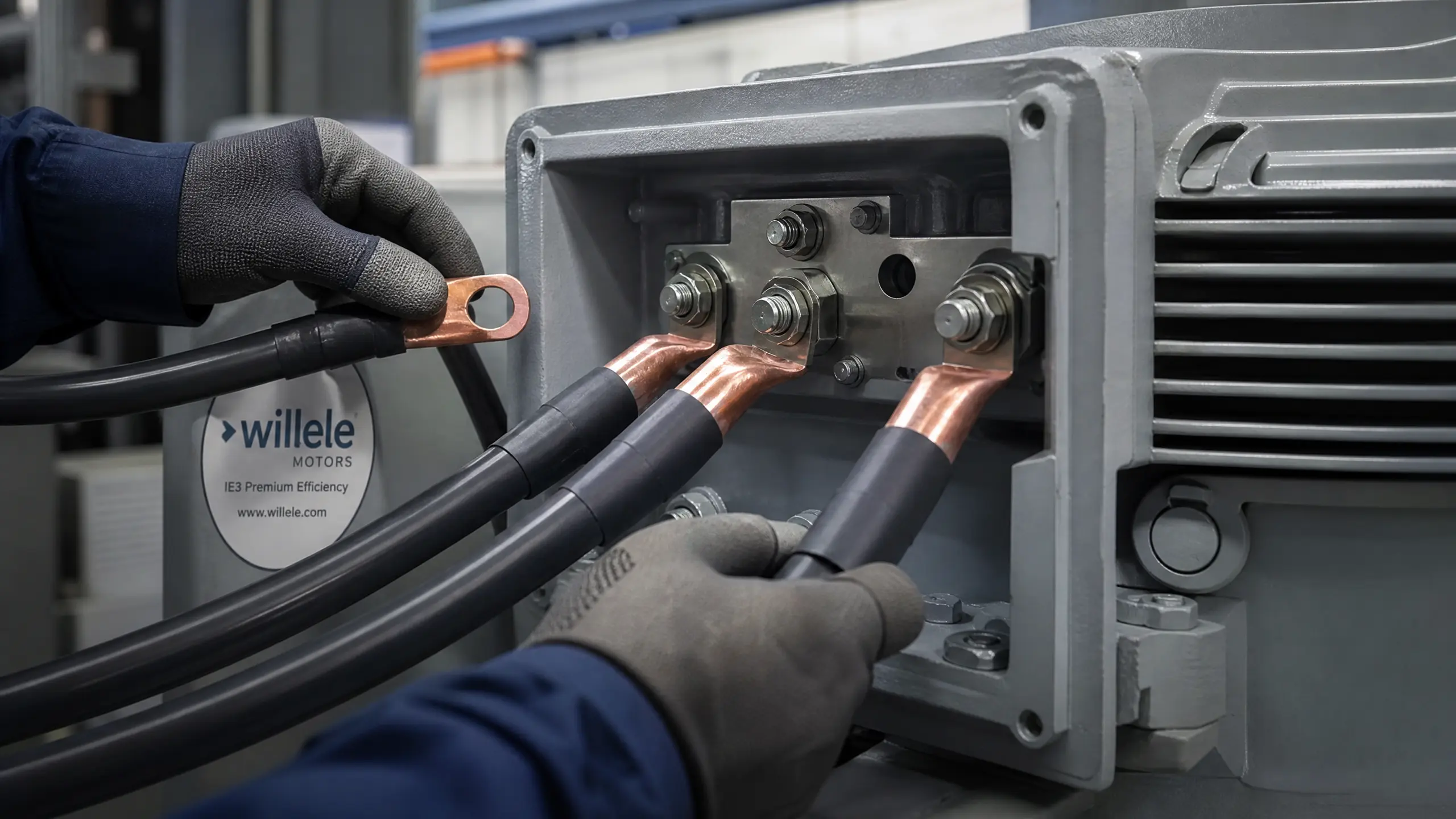
Selecting the right cable lug for industrial motor connections is critical for ensuring safe, reliable, and efficient electrical installations. This comprehensive guide from willele, a leading B2B electrical equipment manufacturer specializing in heat shrink solutions, provides essential insights into cable lug selection, installation best practices, and performance optimization for industrial motor applications.
Understanding Cable Lugs in Industrial Motor Applications
Cable lugs, also known as cable terminals or cable connectors, serve as the crucial interface between electrical cables and motor terminals. In industrial environments, where motors operate under demanding conditions with high currents and vibration, proper cable lug selection directly impacts system reliability, safety, and operational efficiency.
Industrial motors typically require robust connections capable of handling substantial current loads while maintaining low contact resistance. The cable lug acts as the mechanical and electrical bridge, ensuring secure attachment and optimal current transfer from supply cables to motor terminals.
Key Factors in Cable Lug Selection
Cable Size and Current Rating
The primary consideration in cable lug selection is matching the lug to your cable size and current requirements. Cable lugs are designed for specific conductor cross-sectional areas, typically measured in AWG (American Wire Gauge) or mm². Selecting a lug with inadequate current capacity leads to overheating, increased resistance, and potential failure.
Current capacity considerations:
- Continuous current rating must exceed motor full-load amperage
- Account for starting currents (typically 5-7 times running current)
- Consider ambient temperature and installation conditions
- Factor in voltage drop requirements for long cable runs
Material Selection
Cable lugs are manufactured from various conductive materials, each offering distinct advantages:
Copper lugs provide excellent conductivity (approximately 100% IACS) and are the industry standard for most applications. They offer superior current-carrying capacity and are compatible with copper conductors without galvanic corrosion concerns.
Aluminum lugs are lighter and more cost-effective but require larger cross-sections to match copper’s current capacity. They’re ideal for aluminum conductors and applications where weight reduction is beneficial.
Tin-plated copper lugs combine copper’s conductivity with enhanced corrosion resistance. The tin plating prevents oxidation, making them ideal for harsh environments, marine applications, and connections exposed to moisture or chemicals.
Bi-metallic lugs feature aluminum barrels with copper palms, designed specifically for connecting aluminum cables to copper busbars or terminals, preventing galvanic corrosion at dissimilar metal junctions.
Lug Configuration and Terminal Type
Motor terminals vary by manufacturer and motor size, requiring compatible lug configurations:
Ring terminal lugs feature closed circular ends and are the most common for motor connections. They provide secure attachment using bolts or studs and cannot accidentally disconnect during vibration.
Fork terminal lugs have open-ended U-shapes, allowing installation without complete bolt removal. However, they’re less suitable for high-vibration motor applications.
Pin lugs are used for insertion into terminal blocks or specific motor terminal designs, common in European motor standards.
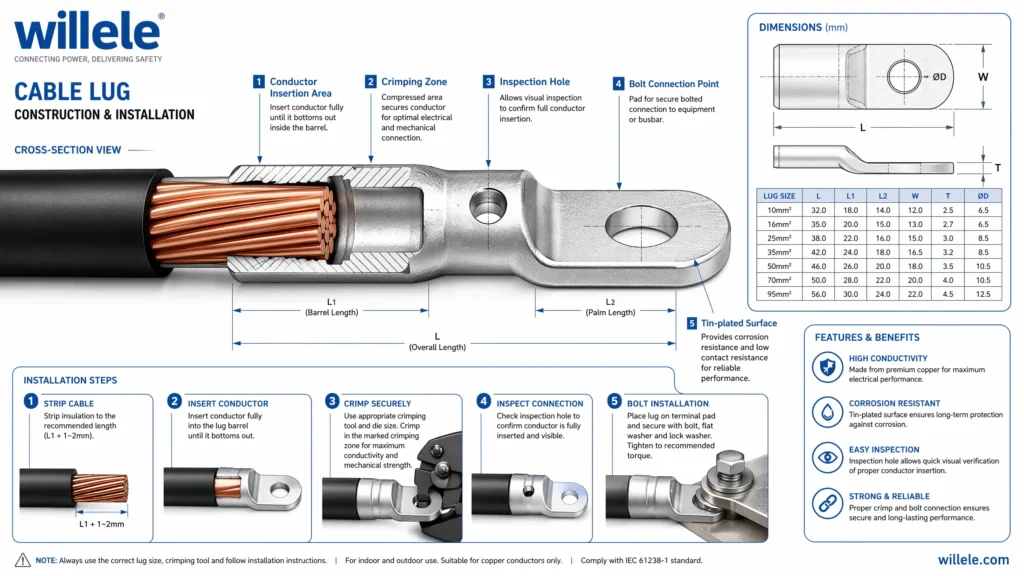
Compression lugs require crimping tools for installation, creating permanent, gas-tight connections with superior mechanical strength.
Mechanical lugs use set screws to secure conductors, allowing field installation without specialized crimping equipment, though they typically offer lower performance than crimped connections.
Cable Lug Selection Comparison Table
| Lug Type | Material | Best Application | Current Range | Installation Method | Vibration Resistance |
|---|---|---|---|---|---|
| Compression Ring | Copper | General industrial motors | 10-1000A | Hydraulic crimping | Excellent |
| Compression Ring | Tin-plated Copper | Harsh environments | 10-1000A | Hydraulic crimping | Excellent |
| Compression Ring | Aluminum | Large motors, weight-critical | 50-1500A | Hydraulic crimping | Excellent |
| Mechanical Ring | Copper | Field installations | 10-400A | Set screw | Good |
| Bi-metallic | Al barrel/Cu palm | Al cable to Cu terminal | 50-800A | Hydraulic crimping | Excellent |
| Pin Lug | Copper | Terminal block connections | 5-200A | Crimping | Good |
Technical Specifications and Standards
Industrial cable lugs must comply with relevant international standards to ensure safety and performance:
IEC 61238-1 specifies requirements for compression and mechanical connectors for power cables with copper or aluminum conductors.
UL 486A-486B covers wire connectors and soldering lugs for use with copper and aluminum conductors in North American installations.
DIN 46235 defines dimensions and specifications for cable lugs used in European electrical installations.
When selecting cable lugs for motor connections, verify compliance with applicable standards for your region and industry. Certified lugs undergo rigorous testing for:
- Current-carrying capacity and temperature rise
- Mechanical strength and pull-out resistance
- Corrosion resistance and environmental durability
- Short-circuit withstand capability
Installation Best Practices
Proper installation is as critical as correct selection. Follow these guidelines for optimal motor cable connections:
Cable Preparation
Strip cable insulation to the precise length specified by the lug manufacturer—typically 10-15mm for compression lugs. Remove oxidation from aluminum conductors immediately before installation. Ensure all conductor strands are intact and properly aligned within the lug barrel.
Crimping Technique
Use calibrated hydraulic crimping tools matched to your lug size and type. Hand crimpers are inadequate for industrial motor applications above 50A. Apply the crimp in the designated zone, typically marked on the lug barrel. Inspect the crimp for proper die impression depth and uniform compression around the entire circumference.
Torque Specifications
Tighten terminal bolts to manufacturer-specified torque values using calibrated torque wrenches. Under-torquing creates high-resistance connections prone to overheating; over-torquing can damage lugs or motor terminals. Typical torque ranges:
| Terminal Bolt Size | Torque Range (Nm) | Torque Range (lb-ft) |
|---|---|---|
| M6 | 5-7 | 3.7-5.2 |
| M8 | 10-14 | 7.4-10.3 |
| M10 | 20-25 | 14.8-18.4 |
| M12 | 35-45 | 25.8-33.2 |
| M16 | 70-90 | 51.6-66.4 |
Protection and Insulation
After connection, protect exposed conductors and terminals using heat shrink tubing or insulation boots. willele offers specialized heat shrink solutions designed for motor terminal protection, providing:
- Electrical insulation to prevent phase-to-phase or phase-to-ground faults
- Environmental sealing against moisture, dust, and contaminants
- Mechanical protection from abrasion and impact
- Color coding for phase identification
Common Selection Mistakes and How to Avoid Them
Undersizing Cable Lugs
Selecting lugs with insufficient current capacity is a frequent error. Always calculate total current requirements including motor starting conditions, not just running current. Consult motor nameplate data and apply appropriate safety factors (typically 125% of full-load current for continuous operation).
Material Mismatch
Connecting dissimilar metals without proper transitional lugs accelerates galvanic corrosion. When joining aluminum cables to copper motor terminals, always use bi-metallic lugs or apply anti-oxidant compounds specifically formulated for aluminum connections.
Improper Crimping
Using incorrect crimping tools or techniques compromises connection integrity. Invest in quality crimping equipment appropriate for your lug types and sizes. Verify crimp quality through visual inspection and periodic pull testing.
Neglecting Environmental Factors
Failing to account for installation environment leads to premature failure. In corrosive, marine, or chemical environments, specify tin-plated or stainless steel hardware. In outdoor installations, ensure adequate weather protection through proper enclosures and sealing.
Advanced Selection Considerations
Temperature Rating
Cable lugs must withstand operating temperatures generated by motor current and ambient conditions. Standard lugs are rated for 75°C or 90°C operation. High-temperature motors or tropical installations may require lugs rated for 105°C or higher.
Vibration and Mechanical Stress
Industrial motors generate significant vibration, particularly during starting. Use spring washers or locking mechanisms to prevent terminal loosening. Consider lugs with reinforced barrels for applications with severe vibration or frequent start-stop cycles.
Maintenance Accessibility
In installations requiring frequent disconnection for maintenance, mechanical lugs with set screws offer advantages over permanent crimped connections. However, implement regular inspection schedules to verify set screw tightness.
Future Expansion
When designing new installations, consider potential motor upgrades or increased load requirements. Selecting terminals and lugs with modest oversizing provides flexibility for future expansion without complete rewiring.
Quality Assurance and Testing
Reliable motor connections require quality components and verification testing:
Visual inspection should confirm proper crimp impression, absence of conductor strand damage, and correct positioning within the lug barrel.
Pull testing verifies mechanical strength, with properly crimped connections withstanding forces specified in relevant standards without slippage.
Thermal imaging during commissioning identifies high-resistance connections before they cause failures. Connections should not exhibit temperatures exceeding 10°C above ambient or adjacent properly-installed connections.
Contact resistance measurement using micro-ohmmeters provides quantitative verification of connection quality, with values typically below 10 microhms for properly installed compression lugs.
willele Solutions for Motor Connection Protection
As a specialized manufacturer of heat shrink tubing and electrical insulation products, willele provides comprehensive solutions for protecting motor cable connections:
Our heat shrink tubing portfolio includes heavy-wall adhesive-lined products that create waterproof seals over cable lugs and motor terminals. These products offer:
- Shrink ratios up to 4:1 for accommodating irregular connection geometries
- Operating temperature ranges from -55°C to +135°C
- Excellent chemical and UV resistance for outdoor installations
- Multiple color options for phase identification and safety marking
willele’s technical support team assists with product selection, installation guidance, and custom solutions for unique motor connection challenges.
Conclusion
Proper cable lug selection for industrial motor connections requires careful consideration of electrical requirements, environmental conditions, installation methods, and maintenance needs. By following the guidelines presented in this comprehensive selection guide, electrical engineers and maintenance professionals can ensure reliable, safe, and efficient motor installations.
Key takeaways for cable lug selection:
- Match lug size and current rating to motor requirements with appropriate safety margins
- Select materials compatible with conductors and environmental conditions
- Use proper installation techniques with calibrated tools and torque specifications
- Implement adequate protection using heat shrink tubing and environmental sealing
- Establish regular inspection and maintenance protocols
For technical assistance with cable lug selection or heat shrink protection solutions for your motor installations, contact willele’s engineering team. Our expertise in electrical connection protection ensures your critical motor systems operate reliably for years to come.
Frequently Asked Questions (FAQ)
Q: What’s the difference between compression and mechanical cable lugs?
A: Compression lugs require hydraulic crimping tools to permanently deform the lug barrel around the conductor, creating a gas-tight connection with superior electrical and mechanical performance. Mechanical lugs use set screws to secure conductors and can be installed with basic tools, but typically offer lower current capacity and require periodic retightening.
Q: Can I use aluminum cable lugs with copper motor terminals?
A: Direct connection of aluminum lugs to copper terminals creates galvanic corrosion. Use bi-metallic lugs with aluminum barrels and copper palms, or apply anti-oxidant compounds specifically designed for aluminum-copper junctions. Alternatively, use tin-plated copper lugs which reduce corrosion at dissimilar metal interfaces.
Q: How do I determine the correct cable lug size for my motor?
A: Check your motor nameplate for full-load amperage (FLA), then select lugs rated for at least 125% of FLA for continuous operation. Verify the lug’s conductor size range matches your cable cross-section (AWG or mm²). Consider starting current requirements for proper sizing.
Q: How often should motor cable connections be inspected?
A: Perform initial inspection within 30 days of commissioning to verify torque retention after thermal cycling. Subsequently, inspect connections annually or per manufacturer recommendations. High-vibration or critical applications may require quarterly inspections. Use thermal imaging to identify developing issues.
Q: What torque should I apply when tightening cable lugs to motor terminals?
A: Always follow motor manufacturer specifications when available. General guidelines range from 5-7 Nm for M6 bolts to 70-90 Nm for M16 bolts. Use calibrated torque wrenches and apply torque in a star pattern for multi-bolt connections. Re-torque after initial thermal cycling.
Q: Do cable lugs need additional protection after installation?
A: Yes, exposed connections should be protected with heat shrink tubing or insulation boots to prevent electrical faults, environmental contamination, and accidental contact. willele offers specialized heat shrink solutions providing electrical insulation, moisture sealing, and mechanical protection for motor terminal connections.
