
Manufacturing Equipment: Heat Shrink Tubing for Machine Wiring

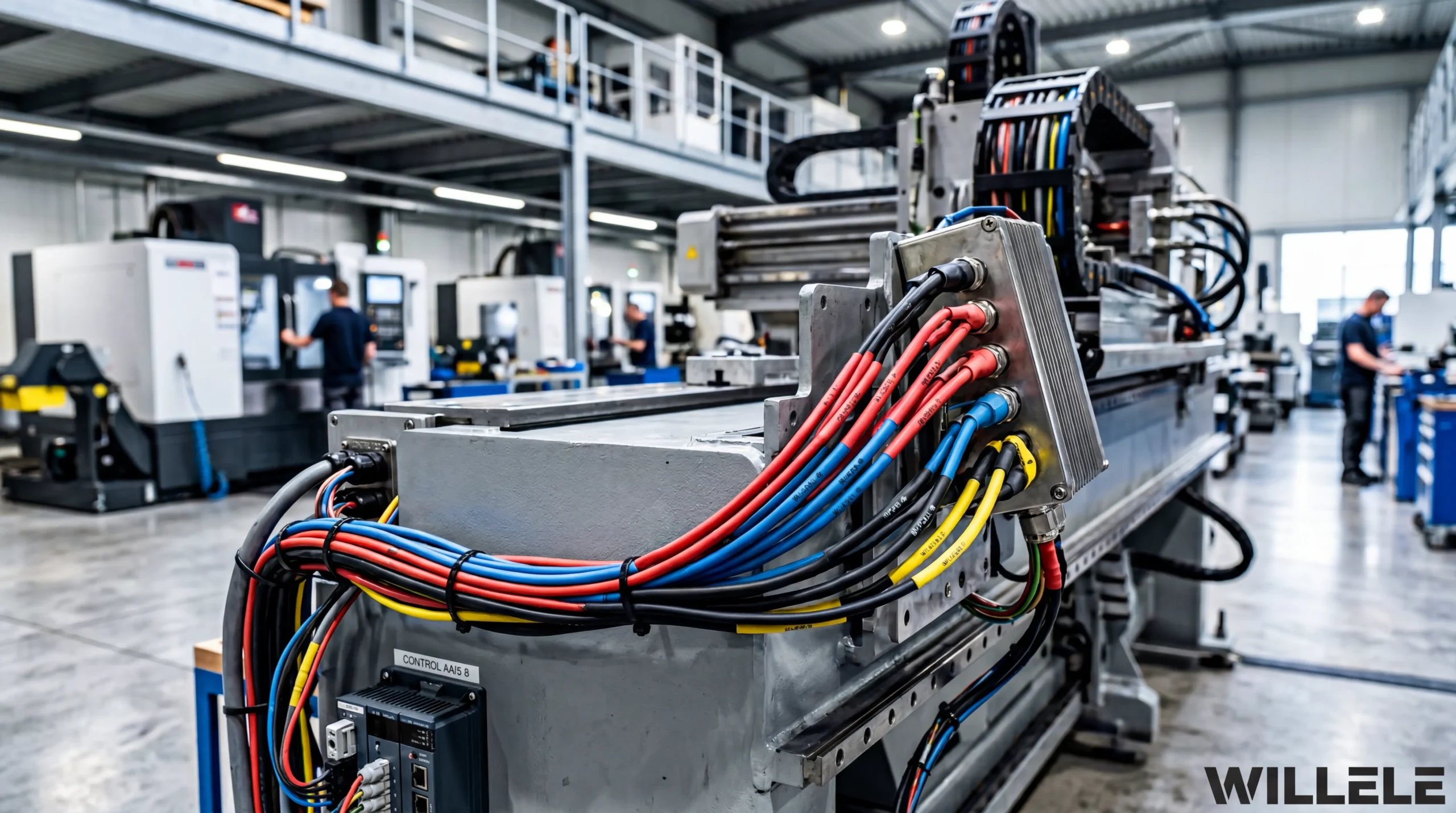
In modern manufacturing facilities, the reliability and safety of electrical systems directly impact production efficiency, equipment longevity, and workplace safety. Heat shrink tubing has emerged as an indispensable component in machine wiring applications, providing robust protection for electrical connections in demanding industrial environments. This comprehensive guide explores how heat shrink tubing enhances manufacturing equipment performance and why it has become the preferred solution for industrial wire management.
Understanding Heat Shrink Tubing in Manufacturing Applications
Heat shrink tubing is a thermoplastic tube that contracts radially when exposed to heat, creating a tight, protective seal around wires, cables, and connections. In manufacturing equipment, this technology serves multiple critical functions: electrical insulation, mechanical protection, strain relief, and environmental sealing. The tubing’s ability to conform precisely to irregular shapes makes it ideal for the complex wiring configurations found in industrial machinery.
Manufacturing environments present unique challenges that standard wire protection methods often fail to address adequately. Exposure to oils, coolants, solvents, abrasion from moving parts, temperature fluctuations, and vibration can rapidly degrade unprotected wiring. Heat shrink tubing provides a barrier against these hazards while maintaining flexibility and allowing for equipment maintenance and modifications.
The versatility of heat shrink tubing extends across various manufacturing sectors. In automotive assembly lines, it protects robotic arm wiring from welding sparks and grinding debris. Food processing equipment benefits from FDA-compliant tubing that withstands frequent washdowns with harsh cleaning chemicals. Semiconductor manufacturing facilities rely on static-dissipative variants to prevent electrostatic discharge damage to sensitive components.
Material Composition and Performance Characteristics
The performance of heat shrink tubing in manufacturing equipment depends heavily on its material composition. Polyolefin remains the most widely used material due to its excellent balance of properties and cost-effectiveness. It offers good chemical resistance, operates across a broad temperature range (-55°C to 135°C), and provides reliable electrical insulation with dielectric strength exceeding 600V per mil of wall thickness.
For applications involving higher temperatures or more aggressive chemicals, manufacturers turn to specialized materials. Fluoropolymers such as PTFE, FEP, and PVDF deliver exceptional performance in extreme conditions, withstanding temperatures up to 260°C and resisting virtually all industrial chemicals. These materials are essential for equipment in chemical processing plants, aerospace manufacturing, and high-temperature industrial ovens.
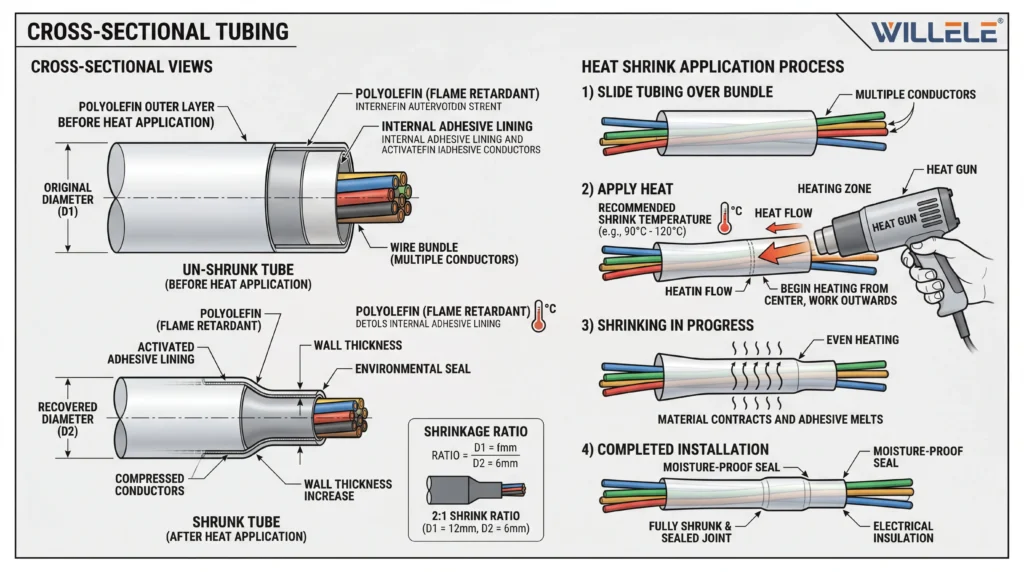
Adhesive-lined heat shrink tubing represents a significant advancement for manufacturing applications requiring environmental sealing. The inner adhesive layer melts during the shrinking process, flowing into gaps and creating a waterproof, airtight seal. This dual-wall construction is particularly valuable for outdoor equipment, food processing machinery, and any application where moisture ingress could cause electrical failures or corrosion.
Cross-linking during manufacturing significantly enhances the tubing’s mechanical and thermal properties. This molecular bonding process increases tensile strength, improves abrasion resistance, and allows the material to maintain its shape under stress. Cross-linked polyolefin tubing can withstand the constant flexing and vibration typical in manufacturing equipment without cracking or splitting.
Critical Applications in Manufacturing Equipment
Motor and Drive Systems
Electric motors form the heart of manufacturing equipment, and their wiring systems must endure continuous operation under challenging conditions. Heat shrink tubing protects motor lead connections from thermal cycling, vibration, and contamination. The tubing’s ability to provide strain relief at termination points reduces wire fatigue and prevents premature failures that could halt production lines.
Variable frequency drives (VFDs) present additional challenges due to electromagnetic interference and high-frequency switching. Specialized heat shrink tubing with conductive or semi-conductive properties helps manage EMI while protecting connections from environmental factors. Proper application of heat shrink tubing on VFD cables maintains signal integrity and extends equipment service life.
Control Panels and Junction Boxes
Manufacturing equipment control systems contain dense concentrations of wiring that must remain organized and protected. Heat shrink tubing serves as both an identification system and protective barrier in these applications. Color-coded tubing allows technicians to quickly trace circuits during troubleshooting, reducing downtime. The tubing also prevents accidental short circuits in crowded panel environments where bare wires might otherwise contact adjacent terminals.
In junction boxes exposed to dust, moisture, or corrosive atmospheres, adhesive-lined heat shrink tubing creates reliable environmental seals at cable entries. This protection is crucial for maintaining the integrity of control signals and preventing false readings that could disrupt automated manufacturing processes.
Sensor and Instrumentation Wiring
Modern manufacturing relies heavily on sensors for process control, quality assurance, and safety monitoring. These sensors often operate in harsh locations where their wiring faces constant exposure to contaminants, temperature extremes, and mechanical stress. Heat shrink tubing protects delicate sensor cables while maintaining the signal quality essential for accurate measurements.
Temperature sensors, pressure transducers, and proximity switches all benefit from properly applied heat shrink tubing. The protection extends sensor life, reduces maintenance costs, and improves measurement reliability. For applications requiring frequent sensor replacement or recalibration, clear heat shrink tubing allows visual inspection of connections without removal.
Selection Criteria for Manufacturing Applications
Choosing the appropriate heat shrink tubing for manufacturing equipment requires careful consideration of multiple factors. The operating temperature range must accommodate both normal operation and potential fault conditions. Equipment that generates significant heat or operates in temperature-controlled environments needs tubing rated well above expected maximums to ensure long-term reliability.
Shrink ratio significantly impacts installation efficiency and final performance. Standard 2:1 shrink ratio tubing suits most applications with regular wire bundles and connectors. However, 3:1 or 4:1 ratios provide better versatility when protecting irregular shapes, branched connections, or components with varying diameters. Higher shrink ratios also offer improved strain relief at termination points.
Wall thickness determines mechanical protection level and electrical insulation capability. Thin-wall tubing minimizes space requirements in compact assemblies but offers limited abrasion resistance. Medium and heavy-wall options provide superior mechanical protection for equipment subject to impact, crushing forces, or severe abrasion. The trade-off involves increased bulk and higher material costs.
Chemical resistance must match the specific contaminants present in the manufacturing environment. Standard polyolefin handles most oils, greases, and mild solvents, but specialized materials become necessary for strong acids, bases, or aggressive organic solvents. Reviewing the tubing manufacturer’s chemical resistance chart against actual exposure conditions prevents premature failures.
Comparison of Heat Shrink Tubing Materials
| Material | Temperature Range | Chemical Resistance | Flexibility | Relative Cost | Best Applications |
|---|---|---|---|---|---|
| Polyolefin | -55°C to 135°C | Good | Excellent | Low | General manufacturing equipment, control panels |
| PVC | -20°C to 105°C | Fair | Good | Very Low | Indoor equipment, low-temperature applications |
| Fluoropolymer (PTFE/FEP) | -65°C to 260°C | Excellent | Good | High | Chemical processing, high-temperature equipment |
| Polyester (PET) | -70°C to 150°C | Very Good | Fair | Medium | Abrasion-resistant applications, automotive |
| Silicone Rubber | -60°C to 200°C | Good | Excellent | Medium-High | High-flexibility requirements, medical equipment |
| Kynar (PVDF) | -55°C to 175°C | Excellent | Good | High | Chemical resistance, outdoor equipment |
Installation Best Practices for Manufacturing Equipment
Proper installation techniques maximize the protective benefits of heat shrink tubing and ensure long-term reliability. Surface preparation begins with cleaning wires and connections to remove oils, dust, and oxidation. Contaminated surfaces prevent proper adhesion of adhesive-lined tubing and can trap corrosive substances against conductors.
Sizing accuracy is critical for optimal performance. The tubing’s recovered (shrunk) inner diameter should create a snug fit without excessive compression that could damage wire insulation or restrict flexibility. Conversely, oversized tubing may not shrink sufficiently to provide mechanical support or environmental sealing. Most manufacturers recommend tubing with a recovered diameter 10-20% smaller than the substrate.
Heat application method affects installation quality and efficiency. Heat guns remain the most common tool for manufacturing equipment applications, offering portability and control. Maintaining proper distance and continuous movement prevents overheating that could damage the tubing or underlying components. For production environments requiring consistent results, bench-mounted hot air stations or conveyor ovens provide better temperature control and repeatability.
Shrinking should proceed from one end toward the other to allow trapped air to escape rather than creating bubbles. For adhesive-lined tubing, continuing heat application until adhesive flows from both ends ensures complete environmental sealing. Visual inspection confirms uniform shrinkage, proper adhesion, and absence of voids or wrinkles that could compromise protection.
Maintenance and Troubleshooting Considerations
Regular inspection of heat shrink tubing on manufacturing equipment helps identify potential failures before they cause downtime. Visual checks should look for discoloration indicating thermal stress, cracking from vibration fatigue, or swelling from chemical attack. Early detection allows preventive replacement during scheduled maintenance rather than emergency repairs during production.
When equipment modifications require wire changes, heat shrink tubing can often be removed and replaced without damaging conductors. Careful application of heat while gently pulling the tubing allows removal for access to connections. However, adhesive-lined variants typically require cutting for removal, necessitating complete replacement.
Troubleshooting electrical issues in manufacturing equipment sometimes requires accessing connections protected by heat shrink tubing. Clear or translucent tubing variants allow visual inspection and thermal imaging without removal. For opaque tubing, non-destructive testing methods such as insulation resistance testing can identify deterioration before removing protective covering.
Cost-Benefit Analysis for Manufacturing Operations
Implementing heat shrink tubing in manufacturing equipment represents an investment that delivers substantial returns through reduced downtime, extended equipment life, and improved safety. While material costs vary based on specifications, the expense remains modest compared to the cost of production interruptions or equipment damage from electrical failures.
Labor efficiency during installation affects overall project costs. Pre-cut tubing kits sized for specific equipment models reduce installation time and minimize waste. Bulk purchasing of commonly used sizes lowers material costs while ensuring consistent quality. Training maintenance personnel in proper application techniques prevents installation errors that could compromise protection or require rework.
Long-term cost benefits accumulate through multiple mechanisms. Protected wiring requires less frequent replacement, reducing both material and labor costs. Improved reliability decreases unplanned downtime, maintaining production schedules and delivery commitments. Enhanced safety reduces accident risks and associated costs. Environmental protection extends equipment service life, deferring capital expenditures for replacements.
Heat Shrink Tubing Size Selection Guide
| Wire Gauge / Bundle Diameter | Recommended Tubing Size (Before Shrinking) | Shrink Ratio | Wall Thickness | Typical Application |
|---|---|---|---|---|
| 18-16 AWG (1.0-1.3mm) | 3.2mm (1/8″) | 2:1 | Thin | Individual sensor wires, signal cables |
| 14-12 AWG (1.6-2.1mm) | 4.8mm (3/16″) | 2:1 | Medium | Control circuit wiring, small motor leads |
| 10-8 AWG (2.6-3.3mm) | 6.4mm (1/4″) | 2:1 | Medium | Power distribution, medium motor connections |
| 6-4 AWG (4.1-5.2mm) | 9.5mm (3/8″) | 3:1 | Heavy | Main power feeds, large motor terminations |
| 2-1/0 AWG (6.5-8.3mm) | 12.7mm (1/2″) | 3:1 | Heavy | High-current applications, bus bars |
| Cable bundles 10-15mm | 25.4mm (1″) | 3:1 | Medium | Wire harnesses, multi-conductor cables |
| Cable bundles 20-30mm | 38.1mm (1.5″) | 3:1 | Heavy | Large cable assemblies, junction protection |
Compliance and Safety Standards
Manufacturing equipment must meet various safety and performance standards, and heat shrink tubing selection should support compliance efforts. UL recognition ensures tubing meets established safety requirements for electrical insulation and flame resistance. UL 224 specifically addresses extruded insulating tubing, while UL 486D covers wire connectors and soldering lugs where heat shrink tubing often provides secondary insulation.
Military specifications such as MIL-DTL-23053 define performance requirements for heat shrink tubing in demanding applications. While primarily developed for aerospace and defense, these specifications provide useful benchmarks for critical manufacturing equipment. Compliance with these standards indicates superior quality and reliability suitable for harsh industrial environments.
International standards including IEC and CSA provide additional frameworks for heat shrink tubing performance evaluation. Equipment manufacturers serving global markets benefit from using tubing certified to multiple standards, ensuring acceptance across different regulatory jurisdictions. Documentation of compliance supports equipment certification processes and demonstrates due diligence in component selection.
Environmental and Sustainability Considerations
Modern manufacturing increasingly emphasizes environmental responsibility, and heat shrink tubing selection can support sustainability goals. Halogen-free formulations eliminate toxic emissions during fire conditions, improving workplace safety and reducing environmental impact. These materials meet stringent requirements for electronics manufacturing and other applications where fire safety is paramount.
Recyclability of heat shrink tubing materials varies by composition. Polyolefin-based products can potentially be recycled through appropriate channels, though contamination from adhesives and mixed materials complicates the process. End-of-life disposal should follow local regulations for plastic waste, with consideration for energy recovery through controlled incineration where recycling is impractical.
Durability and longevity represent the most significant sustainability contributions of heat shrink tubing. By extending the service life of manufacturing equipment wiring and reducing failure rates, the technology decreases resource consumption and waste generation over the equipment’s operational lifetime. This preventive approach aligns with circular economy principles and reduces the environmental footprint of manufacturing operations.
Future Trends in Heat Shrink Technology
Innovation continues to expand heat shrink tubing capabilities for manufacturing applications. Smart tubing incorporating condition monitoring sensors can provide real-time data on temperature, vibration, or chemical exposure, enabling predictive maintenance strategies. These developments integrate with Industrial Internet of Things (IIoT) platforms to optimize equipment reliability and performance.
Advanced materials research focuses on improving performance while reducing costs. New polymer formulations aim to match fluoropolymer chemical resistance at polyolefin prices, making premium protection accessible for broader applications. Enhanced flame retardancy without halogenated additives addresses both safety and environmental concerns.
Manufacturing process improvements increase production efficiency and consistency. Radiation cross-linking technology produces tubing with superior properties and tighter tolerances. Automated cutting and printing systems enable cost-effective customization for specific equipment models, reducing installation time and improving documentation.
Frequently Asked Questions
What is the primary purpose of heat shrink tubing in manufacturing equipment?
Heat shrink tubing provides electrical insulation, mechanical protection, and environmental sealing for wire connections in manufacturing equipment. It protects against abrasion, chemicals, moisture, and temperature extremes while organizing and identifying wiring systems. The tubing’s conforming fit offers strain relief that extends wire life and improves reliability in demanding industrial environments.
How do I determine the correct heat shrink tubing size for my application?
Measure the largest diameter of the object to be covered, then select tubing with a recovered (shrunk) inner diameter 10-20% smaller than this measurement. The tubing’s pre-shrunk diameter must be large enough to slide over connectors or components. Consider shrink ratio: 2:1 for uniform objects, 3:1 or 4:1 for irregular shapes or varying diameters.
Can heat shrink tubing be removed and reused?
Standard heat shrink tubing can sometimes be removed by carefully reheating and sliding it off, though this risks damaging the tubing or underlying wires. Adhesive-lined tubing cannot be removed intact and must be cut away. For applications requiring frequent access, consider using tubing slightly larger than optimal or implementing split/wrap-around alternatives designed for removability.
What temperature rating should I choose for manufacturing equipment?
Select tubing rated at least 20-30°C above the maximum expected operating temperature to ensure long-term reliability. Consider both ambient temperature and heat generated by equipment operation. For most general manufacturing applications, polyolefin rated to 135°C suffices. High-temperature equipment requires fluoropolymer or silicone materials rated to 200°C or higher.
Is heat shrink tubing resistant to industrial chemicals and oils?
Chemical resistance varies by material composition. Standard polyolefin tubing resists most oils, greases, and mild solvents but may degrade when exposed to strong acids, bases, or aggressive organic solvents. For chemical processing equipment, fluoropolymer tubing (PTFE, FEP, PVDF) offers excellent resistance to virtually all industrial chemicals. Always consult manufacturer chemical resistance charts for specific exposure conditions.
How does adhesive-lined heat shrink tubing differ from standard tubing?
Adhesive-lined tubing features an inner layer of hot-melt adhesive that melts during shrinking, creating a waterproof, airtight seal. This dual-wall construction provides superior environmental protection for outdoor equipment, food processing machinery, and applications where moisture ingress could cause failures. Standard tubing offers only mechanical protection and electrical insulation without environmental sealing.
