
Mining Industry Applications of Heavy-Duty Busbar Insulators

Introduction
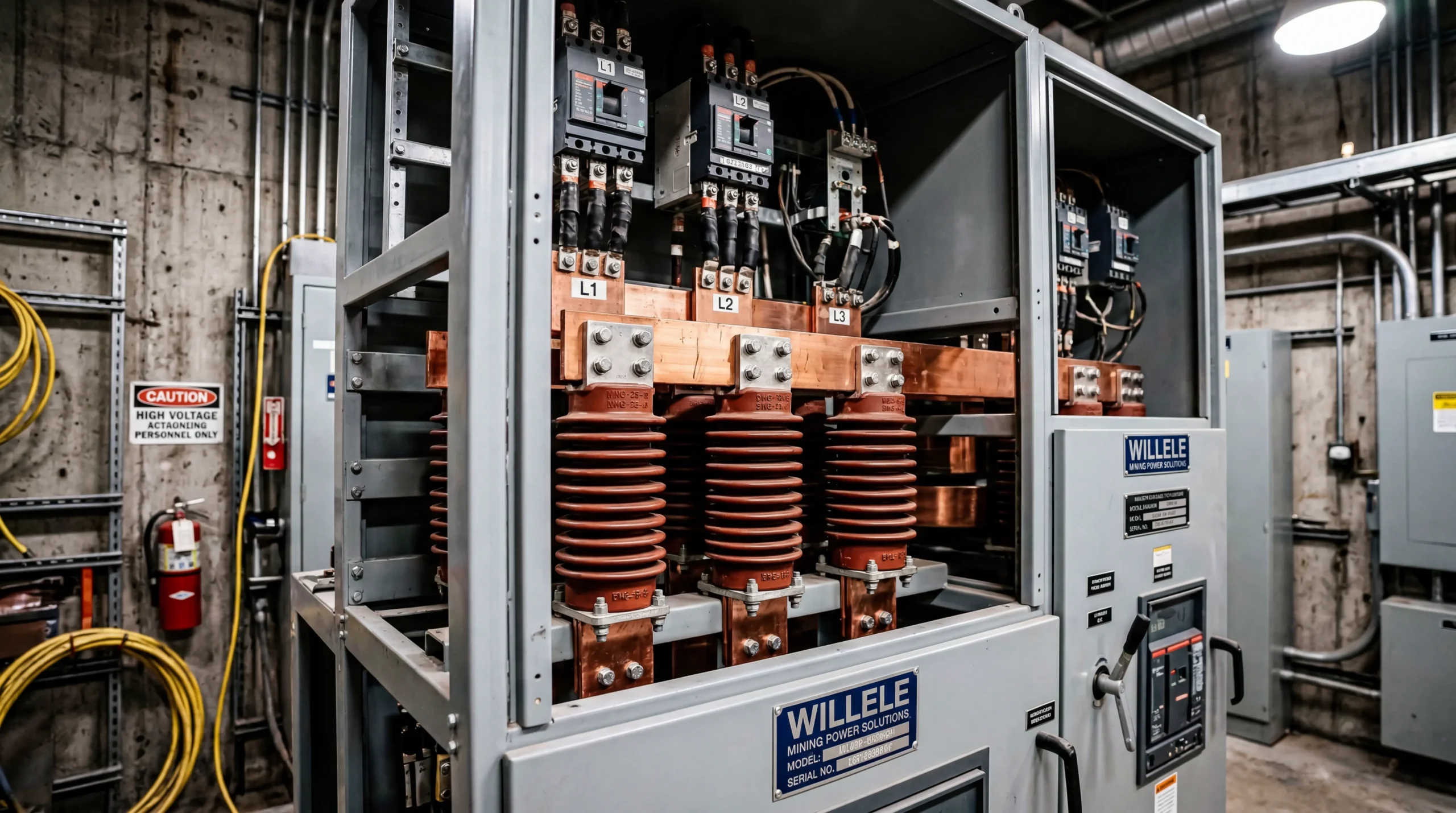
The mining industry operates in some of the most demanding electrical environments on the planet. From underground excavation sites to surface processing facilities, mining operations require robust electrical infrastructure capable of withstanding extreme conditions while maintaining uninterrupted power distribution. At the heart of this infrastructure lies a critical yet often overlooked component: heavy-duty busbar insulators.
Heavy-duty busbar insulators serve as the backbone of electrical safety and reliability in mining applications. These specialized components provide both mechanical support for high-current busbars and electrical isolation that prevents catastrophic failures in harsh mining environments. As mining operations continue to expand and modernize, the demand for advanced insulation solutions has never been greater.
This comprehensive guide explores the critical role of heavy-duty busbar insulators in mining applications, examining material technologies, installation best practices, and the latest innovations from manufacturers like WILLELE Electric that are transforming electrical safety standards across the global mining sector.
Understanding Heavy-Duty Busbar Insulators in Mining Context
What Are Heavy-Duty Busbar Insulators?
Heavy-duty busbar insulators are engineered components designed to support and electrically isolate copper or aluminum busbars in high-voltage, high-current electrical distribution systems. In mining applications, these insulators must perform under conditions that would quickly degrade standard electrical components: extreme temperatures ranging from -40°C in arctic mining operations to +130°C in tropical climates, constant vibration from heavy machinery, exposure to corrosive chemicals, and contamination from dust, moisture, and mineral particulates.
The term “heavy-duty” distinguishes these industrial-grade insulators from their lighter commercial counterparts. Mining-grade insulators feature reinforced construction, enhanced dielectric strength, superior mechanical load capacity, and materials specifically formulated to resist the unique environmental stressors present in mining operations.
Core Functions in Mining Electrical Systems
Heavy-duty busbar insulators fulfill three essential functions in mining electrical infrastructure. First, they provide mechanical support, securing busbars in fixed positions while withstanding the dynamic forces generated by short-circuit currents, equipment vibration, and seismic activity common in mining regions. Second, they ensure electrical isolation, preventing current leakage between busbars and grounded structures while maintaining safe creepage and clearance distances as mandated by international electrical codes. Third, they offer environmental protection, creating barriers against moisture ingress, chemical attack, and contamination that could compromise insulation integrity.
Material Technologies for Mining Applications
DMC and BMC Composite Materials
Dough Molding Compound (DMC) and Bulk Molding Compound (BMC) represent the gold standard for mining-grade busbar insulators. These thermoset materials combine unsaturated polyester resin with fiberglass reinforcement, creating a composite with exceptional mechanical strength and electrical properties. The fiberglass content, typically 15-30% by weight, provides structural rigidity while the resin matrix offers superior dielectric strength and arc resistance.
WILLELE Electric specializes in precision-molded DMC/BMC insulators engineered specifically for mining applications. The manufacturing process involves compression molding at controlled temperatures and pressures, ensuring consistent material density and eliminating voids that could compromise insulation performance. Each insulator undergoes rigorous deburring to create smooth, burr-free surfaces that facilitate safe handling during installation and prevent stress concentrations that could lead to premature failure.
Heat Shrink Insulation Systems
Heat shrink tubing represents a complementary insulation technology increasingly deployed in mining electrical systems. These thick-wall, cross-linked polyolefin tubes provide flexible insulation for both circular and rectangular busbars, offering voltage ratings from 1 kV to 72 kV depending on wall thickness and material formulation. When heat is applied using industrial ovens, gas torches, or hot air equipment, the tubing shrinks uniformly over the busbar profile, creating a conformal insulation layer that eliminates air gaps and provides enhanced protection against flashover and accidental discharge.
In mining applications, heat shrink systems excel in confined spaces where traditional rigid insulators prove difficult to install. The flexibility of heat shrink tubing accommodates curved and bent busbar configurations common in mobile mining equipment and compact switchgear cabinets. Modern formulations feature halogen-free chemistry that reduces toxic smoke generation in fire scenarios, a critical safety consideration for underground mining operations where ventilation is limited.
Material Performance Comparison
| Material Type | Dielectric Strength | Temperature Range | Mechanical Strength | Chemical Resistance | Mining Suitability |
|---|---|---|---|---|---|
| DMC/BMC Composite | 15-20 kV/mm | -40°C to +130°C | Excellent (high compressive) | Excellent | Optimal for fixed installations |
| Porcelain | 10-15 kV/mm | -40°C to +120°C | Very High (brittle) | Excellent | Traditional choice, impact-sensitive |
| Epoxy Resin | 16-20 kV/mm | -25°C to +130°C | Good | Excellent | Good for moderate environments |
| Cross-linked Polyolefin (Heat Shrink) | 12-18 kV/mm | -55°C to +200°C | Moderate (flexible) | Good | Ideal for confined spaces |
| Composite Polymer | 12-16 kV/mm | -40°C to +100°C | Good | Very Good | Lightweight applications |
Critical Mining Applications
Underground Mine Power Distribution
Underground mining operations present unique electrical challenges. Limited ventilation increases fire risk, making flame-retardant insulation materials essential. Confined spaces demand compact switchgear designs where insulated busbars reduce required clearances. Constant moisture from groundwater seepage and high humidity requires insulators with low water absorption characteristics to maintain dielectric integrity.
Heavy-duty busbar insulators in underground applications typically support main distribution busbars rated from 630A to 4000A at voltages ranging from 3.3 kV to 11 kV. These insulators must withstand short-circuit forces that can exceed 50 kN while maintaining electrical isolation under contaminated surface conditions. WILLELE’s DMC insulators feature extended creepage distances and ribbed profiles that prevent tracking paths even when surfaces are coated with conductive dust or moisture films.
Surface Processing Facilities
Surface mining facilities including crushing plants, grinding mills, flotation circuits, and smelting operations require electrical distribution systems capable of powering massive equipment loads. Busbar systems in these facilities often carry currents exceeding 6000A at medium voltage levels, with individual busbars measuring 10mm × 100mm or larger in cross-section.
The mechanical loads imposed on insulators in these applications are substantial. Short-circuit currents can generate electromagnetic forces between adjacent busbars exceeding 100 kN per meter of length. Heavy-duty insulators must provide rigid support to prevent busbar deflection that could lead to phase-to-phase faults or structural damage. WILLELE insulators incorporate hex standoffs that facilitate secure mounting and enable precise torque application during installation, ensuring mechanical stability under dynamic loading conditions.
Mobile Mining Equipment
Electric rope shovels, draglines, and haul trucks represent the mobile face of modern mining operations. These machines operate on voltages ranging from 4.16 kV to 13.8 kV, with power demands measured in megawatts. The electrical systems aboard these machines experience constant vibration, shock loading, and thermal cycling as equipment moves between operating zones and idle periods.
Busbar insulation in mobile equipment must accommodate flexure and movement while maintaining electrical integrity. Heat shrink insulation systems excel in these applications, providing flexible insulation that moves with the busbar during thermal expansion and mechanical vibration. The tracking resistance of modern heat shrink materials prevents surface degradation even when exposed to hydraulic fluids, lubricants, and mineral dust common in mobile equipment environments.
Substation and Switchgear Installations
Mining operations typically include multiple substations that step down transmission voltages to distribution levels suitable for mine equipment. These substations house metal-clad switchgear containing busbars rated for voltages up to 33 kV and continuous currents exceeding 3000A. The busbar support insulators in these installations must meet stringent international standards including IEC 60694 for common specifications and IEC 62271 for high-voltage switchgear.
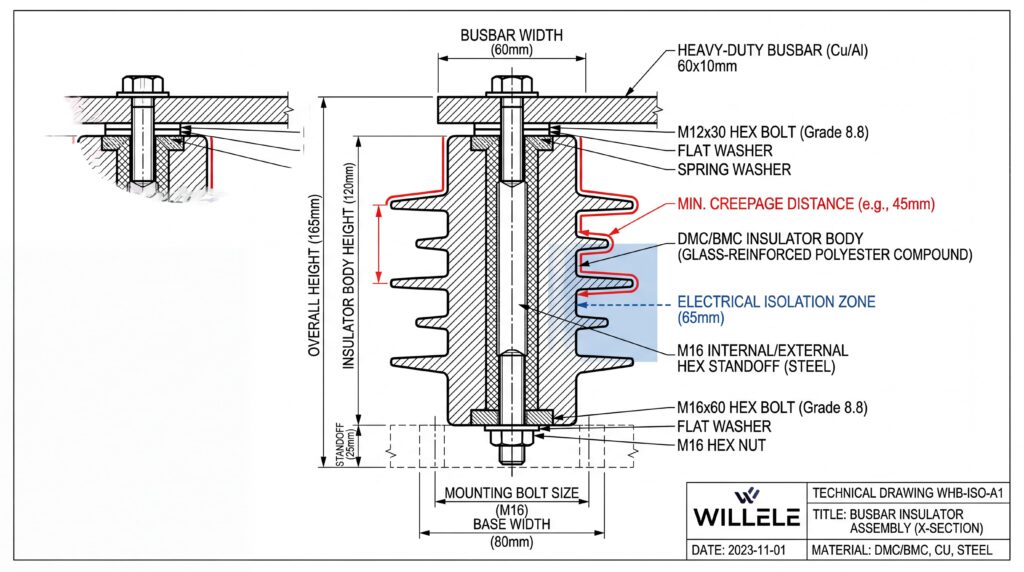
Figure 2: Technical cross-section schematic showing the construction details of a heavy-duty busbar insulator with annotated components and critical dimensions
Technical Specifications for Mining Environments
Voltage Rating and Dielectric Strength
Voltage rating represents the maximum system voltage at which an insulator can safely operate under specified conditions. Mining applications typically require insulators rated for low voltage (up to 1 kV), medium voltage (1 kV to 36 kV), or high voltage (above 36 kV) depending on the specific application. The dielectric strength of the insulation material must provide adequate safety margin above the system voltage to account for transient overvoltages caused by switching operations, lightning strikes, or fault conditions.
WILLELE manufactures busbar insulators with voltage ratings from 660V to 33 kV, covering the full spectrum of mining electrical systems. Each voltage class undergoes rigorous high-potential testing at voltages significantly exceeding rated values to verify dielectric integrity. For example, an 11 kV rated insulator typically withstands test voltages of 28 kV for one minute without breakdown or surface tracking.
Mechanical Load Capacity
The mechanical strength of busbar insulators encompasses several distinct parameters. Compressive strength indicates the maximum load the insulator can support along its axis without structural failure. Cantilever strength measures resistance to bending forces applied perpendicular to the insulator axis. Short-circuit withstand capability quantifies the ability to resist dynamic forces generated during fault conditions when electromagnetic forces between busbars can reach peak values in milliseconds.
Mining-grade insulators must provide mechanical strength sufficient to support busbar weight plus the additional forces imposed during short-circuit events. For a typical 11 kV switchgear installation with 100mm × 10mm copper busbars spaced 200mm apart, short-circuit forces can exceed 50 kN per meter during a 50 kA fault. Insulators supporting these busbars must withstand these forces without cracking, deforming, or allowing busbar displacement that could lead to phase-to-phase contact.
Environmental Performance Specifications
| Performance Parameter | Mining Requirement | WILLELE DMC/BMC Standard | Test Method |
|---|---|---|---|
| Operating Temperature Range | -40°C to +130°C | -40°C to +130°C | IEC 60068-2-1/2 |
| Water Absorption | <0.5% by weight | <0.3% by weight | IEC 60672-3 |
| Tracking Resistance (CTI) | >400V (Class 3A) | >600V (Class 1) | IEC 60112 |
| Flame Retardancy | UL94 V-0 minimum | UL94 V-0 | UL94 |
| UV Resistance | No degradation 2000 hrs | No degradation 3000 hrs | ASTM G154 |
| Chemical Resistance | Resistant to oils, acids, alkalis | Excellent | ISO 175 |
| Compressive Strength | >150 MPa | >180 MPa | ISO 604 |
| Flexural Strength | >200 MPa | >250 MPa | ISO 178 |
Creepage and Clearance Distances
Creepage distance refers to the shortest path along the insulator surface between conductive parts at different potentials. Clearance distance represents the shortest direct air path between these same conductors. Both parameters are critical for preventing flashover and surface tracking, especially in contaminated environments typical of mining operations.
International standards specify minimum creepage and clearance distances based on system voltage and pollution severity. Mining environments typically fall into pollution level 3 (heavy) or level 4 (very heavy) classifications, requiring significantly longer creepage distances than clean indoor installations. For example, an 11 kV system in a clean environment might require 170mm creepage distance, while the same voltage in a heavily polluted mining environment demands 280mm or more.
Installation Best Practices for Mining Applications
Pre-Installation Inspection and Preparation
Successful busbar insulator installation begins long before components arrive at the mine site. Procurement specifications must clearly define voltage ratings, mechanical load requirements, environmental conditions, and applicable standards. Upon delivery, each insulator should undergo visual inspection for cracks, chips, or surface defects that could compromise performance. DMC/BMC insulators should exhibit smooth, burr-free surfaces with no visible voids or delamination.
Storage conditions significantly impact insulator performance. Components should be stored in clean, dry environments protected from direct sunlight, extreme temperatures, and mechanical damage. Heat shrink tubing requires particular attention to storage conditions, as exposure to UV radiation or excessive heat can initiate premature cross-linking that prevents proper shrinkage during installation.
Mounting and Torque Specifications
Proper mounting technique ensures mechanical stability and electrical performance throughout the insulator’s service life. WILLELE insulators feature hex standoffs that facilitate controlled torque application using standard tools. Over-tightening can crack the insulator body or strip mounting threads, while under-tightening allows movement that leads to mechanical wear and potential electrical failure.
Recommended installation torque varies with insulator size and mounting hardware. For M12 mounting bolts common in medium-voltage applications, typical torque values range from 15 to 25 Nm. M16 hardware used in heavy-duty applications requires 40 to 60 Nm. Always consult manufacturer specifications for exact torque values, and use calibrated torque wrenches to ensure consistent installation quality across all mounting points.
Heat Shrink Installation Techniques
Heat shrink busbar insulation requires careful attention to installation technique to achieve optimal results. The busbar surface must be clean and free from sharp edges, burrs, or protrusions that could puncture the tubing during shrinkage. Surface preparation typically includes degreasing with isopropyl alcohol and filing sharp corners to a minimum radius of 1mm.
Tubing selection must account for the busbar dimensions and the required shrink ratio. Most busbar heat shrink products feature 2.5:1 or 3:1 shrink ratios, meaning the as-supplied diameter is 2.5 or 3 times the recovered diameter. For a 60mm wide rectangular busbar, tubing with an as-supplied diameter of 150mm would be appropriate for a 2.5:1 shrink ratio product.
Heat application requires uniform temperature distribution to achieve complete shrinkage without overheating that could degrade material properties. Industrial heat guns or propane torches work well for field installation, while production environments benefit from convection ovens that provide precise temperature control. Begin heating at the center of the tubing and work toward the ends, allowing the material to shrink progressively and eliminate trapped air.
Maintenance and Inspection Protocols
Routine Visual Inspection
Regular visual inspection represents the first line of defense against insulator failure. Inspection intervals depend on environmental severity and system criticality, but quarterly inspections are typical for mining applications. Trained personnel should examine insulators for visible cracks, chips, or surface tracking patterns that indicate electrical stress. Discoloration or carbon deposits suggest overheating or partial discharge activity requiring immediate investigation.
Surface contamination assessment is equally important. Accumulation of conductive dust, moisture films, or chemical deposits reduces effective creepage distance and can lead to tracking failure. Insulators showing heavy contamination should be cleaned using approved methods, typically involving dry compressed air, soft brushes, or mild detergent solutions. Never use high-pressure water jets that could force moisture into insulator interfaces or damage surface finishes.
Electrical Testing and Diagnostics
Periodic electrical testing verifies insulator integrity beyond what visual inspection can reveal. Insulation resistance testing using a megohmmeter (megger) measures the resistance between busbar and ground, with values typically exceeding 1000 megohms for healthy insulators. Declining resistance values over successive tests indicate progressive degradation requiring corrective action.
Advanced diagnostic techniques including partial discharge testing and infrared thermography provide early warning of developing problems. Partial discharge activity indicates localized electrical stress that can lead to complete breakdown if left unaddressed. Infrared imaging reveals hot spots caused by poor connections, overloading, or internal defects. These non-invasive techniques enable condition-based maintenance strategies that maximize equipment availability while minimizing failure risk.
Replacement Criteria and Service Life
Even properly installed and maintained insulators eventually require replacement due to aging, environmental exposure, or changing system requirements. Typical service life for DMC/BMC insulators in mining applications ranges from 15 to 25 years depending on environmental severity and loading conditions. Heat shrink insulation typically provides 10 to 15 years of reliable service before UV degradation, thermal cycling, or mechanical abrasion necessitates replacement.
Immediate replacement is warranted when insulators exhibit visible cracks, tracking damage, or mechanical deformation. Discoloration, surface erosion, or declining electrical test results indicate advanced degradation requiring prompt replacement to prevent catastrophic failure. When replacing individual insulators, consider the age and condition of adjacent components—often the most cost-effective approach involves replacing entire busbar sections to ensure uniform reliability across the system.
Comparative Analysis: Insulator Types for Mining
Support Insulators vs. Heat Shrink Systems
| Feature | DMC/BMC Support Insulators | Heat Shrink Insulation Systems |
|---|---|---|
| Installation Complexity | Moderate (requires mounting hardware) | Low (requires only heat source) |
| Space Requirements | Requires clearance for mounting | Minimal (conforms to busbar) |
| Mechanical Support | Excellent (rigid support structure) | None (requires separate support) |
| Voltage Range | 660V to 33 kV+ | 1 kV to 72 kV |
| Flexibility | Rigid (fixed installation) | Flexible (accommodates movement) |
| Inspection Accessibility | Excellent (visible mounting) | Limited (covers busbar surface) |
| Replacement Difficulty | Moderate (requires de-energization) | High (requires busbar removal) |
| Cost per Installation | Moderate to high | Low to moderate |
| Typical Service Life | 15-25 years | 10-15 years |
| Best Mining Application | Fixed switchgear, substations | Mobile equipment, confined spaces |
Material Selection Decision Matrix
Selecting the optimal insulator material for a specific mining application requires balancing multiple factors. DMC/BMC composites offer the best overall combination of mechanical strength, electrical performance, and environmental resistance for fixed installations in substations and switchgear. The rigid structure provides excellent mechanical support while the thermoset chemistry resists chemical attack and maintains properties across wide temperature ranges.
Porcelain insulators, while traditional, present disadvantages in mining applications. The brittle nature makes them vulnerable to impact damage during installation or maintenance. Weight considerations complicate handling and mounting in large installations. However, porcelain’s superior high-temperature performance and excellent pollution resistance maintain its relevance in specific applications such as outdoor substations in extreme climates.
Heat shrink systems excel where flexibility, space constraints, or ease of installation drive material selection. Mobile mining equipment benefits from the vibration tolerance and conformability of heat shrink insulation. Retrofit applications where existing equipment cannot accommodate rigid insulators find heat shrink an ideal solution. The ability to install heat shrink without disassembling busbar connections reduces outage time and installation cost.
WILLELE Electric: Engineering Excellence for Mining Applications
Specialized Manufacturing Capabilities
WILLELE Electric brings decades of experience in manufacturing precision electrical insulation components for demanding industrial applications. Our DMC/BMC busbar insulators are produced using advanced compression molding technology that ensures consistent material density, optimal fiber orientation, and complete resin cure. Each production lot undergoes rigorous quality control testing including dimensional verification, dielectric strength testing, and mechanical load testing to verify compliance with published specifications.
Our manufacturing process begins with carefully formulated DMC/BMC compounds that incorporate premium-grade unsaturated polyester resins, high-strength fiberglass reinforcement, and specialized additives that enhance tracking resistance, flame retardancy, and UV stability. The compression molding process occurs in temperature-controlled presses that apply precise pressure profiles to eliminate voids and ensure complete resin flow throughout the mold cavity.
Post-molding operations include precision deburring that removes flash and creates smooth, safe-to-handle surfaces. Threaded inserts are installed using controlled torque to prevent damage while ensuring secure mounting. Final inspection verifies dimensional accuracy, surface finish quality, and the absence of defects that could compromise field performance.
Custom Engineering for Unique Mining Requirements
Mining operations frequently encounter electrical distribution challenges that standard catalog components cannot address. WILLELE’s engineering team works directly with mining electrical contractors and equipment manufacturers to develop custom insulator solutions tailored to specific application requirements. Whether you need non-standard heights to accommodate unique busbar spacing, special thread configurations for proprietary mounting systems, or extended creepage distances for extremely polluted environments, our design and manufacturing capabilities can deliver solutions that meet your exact specifications.
Our custom engineering process begins with detailed application analysis. We examine system voltage, current loading, short-circuit duties, environmental conditions, and mechanical constraints to develop a comprehensive understanding of performance requirements. Our engineers then create preliminary designs using finite element analysis to verify mechanical strength and electrical field distribution. Prototype samples undergo rigorous testing to validate performance before full production begins.
Quality Assurance and Compliance
WILLELE maintains comprehensive quality management systems certified to ISO 9001 standards, ensuring consistent product quality and reliable delivery performance. Our testing laboratory is equipped with high-voltage test equipment, mechanical testing machines, environmental chambers, and dimensional inspection tools that verify compliance with international standards including IEC, ANSI, and GB specifications.
Each production batch is accompanied by detailed test reports documenting electrical, mechanical, and dimensional characteristics. Traceability systems link every insulator to its production batch, enabling rapid response in the unlikely event of field issues. Our commitment to quality extends beyond the factory floor—we provide responsive technical support to assist with product selection, installation guidance, and troubleshooting throughout the product lifecycle.
Future Trends in Mining Electrical Insulation
Advanced Material Development
Research into next-generation insulation materials promises enhanced performance for future mining applications. Nanocomposite materials incorporating ceramic nanoparticles in polymer matrices offer improved tracking resistance and thermal conductivity compared to conventional formulations. Self-healing polymers that automatically repair minor surface damage could extend service life in abrasive mining environments. Conductive polymer composites with controlled resistivity provide electrostatic discharge protection while maintaining bulk insulation properties.
Smart Insulation Systems
The integration of sensors and monitoring technology into electrical insulation represents an emerging trend with significant implications for mining operations. Embedded temperature sensors enable real-time thermal monitoring of busbar systems, providing early warning of overload conditions or poor connections. Partial discharge sensors detect incipient insulation failure before complete breakdown occurs. Wireless communication systems transmit monitoring data to centralized maintenance management platforms, enabling predictive maintenance strategies that optimize equipment availability.
Sustainability and Environmental Considerations
Environmental sustainability increasingly influences material selection and product design in the mining sector. Halogen-free insulation formulations eliminate toxic combustion products, improving safety in fire scenarios while reducing environmental impact. Recyclable thermoplastic insulators offer end-of-life disposal advantages compared to thermoset materials. Bio-based polymers derived from renewable resources provide sustainable alternatives to petroleum-based materials without compromising electrical or mechanical performance.
Conclusion
Heavy-duty busbar insulators represent critical infrastructure components that enable safe, reliable electrical power distribution throughout mining operations. From underground excavation sites to surface processing facilities, these specialized components withstand extreme environmental conditions while maintaining the electrical isolation and mechanical support essential for continuous operation.
Material selection, proper installation, and regular maintenance determine insulator performance and service life. DMC/BMC composite insulators from manufacturers like WILLELE Electric provide optimal performance for fixed installations in substations and switchgear, combining excellent mechanical strength with superior electrical properties and environmental resistance. Heat shrink insulation systems complement rigid insulators by addressing applications where flexibility, space constraints, or ease of installation drive material selection.
As mining operations continue to modernize and expand, the demand for advanced insulation solutions will grow. Manufacturers who invest in material development, custom engineering capabilities, and quality assurance systems will lead the industry forward. WILLELE Electric remains committed to engineering excellence, providing mining operations worldwide with the insulation components they need to maintain safe, efficient electrical infrastructure in the world’s most demanding industrial environments.
For mining operations seeking reliable busbar insulation solutions, partnering with experienced manufacturers who understand the unique challenges of mining electrical systems is essential. WILLELE Electric’s combination of advanced manufacturing capabilities, custom engineering expertise, and responsive technical support makes us the ideal partner for your mining electrical infrastructure needs.
Frequently Asked Questions (FAQ)
Q: What voltage ratings are available for mining busbar insulators?
A: Mining busbar insulators are available in voltage ratings from 660V (low voltage) up to 33 kV and higher (medium to high voltage). WILLELE manufactures insulators covering the complete range of mining electrical systems, with each voltage class tested to appropriate international standards. The specific voltage rating required depends on your system voltage and applicable electrical codes.
Q: How do I determine the correct mechanical strength for my application?
A: Mechanical strength requirements depend on busbar weight, spacing, and short-circuit current levels. Calculate the electromagnetic forces during fault conditions using the formula F = 2 × 10⁻⁷ × I² × L / d, where I is the short-circuit current in amperes, L is the busbar length between supports in meters, and d is the distance between busbar centers in meters. Select insulators with mechanical strength ratings exceeding calculated forces by a safety factor of at least 2.0.
Q: Can heat shrink insulation replace support insulators?
A: Heat shrink insulation provides electrical insulation but does not provide mechanical support. Busbars still require separate mechanical support structures (insulators or mounting brackets) to maintain proper spacing and withstand short-circuit forces. Heat shrink is best used as supplementary insulation in confined spaces or as primary insulation on mechanically supported busbars in mobile equipment.
Q: What maintenance is required for busbar insulators in mining environments?
A: Quarterly visual inspections should check for cracks, surface tracking, and contamination buildup. Annual electrical testing using insulation resistance measurements verifies continued performance. Clean heavily contaminated insulators using dry compressed air or soft brushes. Replace insulators showing visible damage, declining test results, or signs of tracking immediately.
Q: How does WILLELE ensure product quality for critical mining applications?
A: WILLELE maintains ISO 9001 certified quality management systems with comprehensive testing of every production batch. Each insulator undergoes high-voltage dielectric testing, dimensional inspection, and visual examination before shipment. Test reports document electrical and mechanical characteristics, and traceability systems link every product to its production batch for complete accountability.
Q: What is the typical service life of DMC/BMC insulators in mining environments?
A: Properly installed and maintained DMC/BMC insulators typically provide 15-25 years of reliable service in mining applications. Actual service life depends on environmental severity, loading conditions, and maintenance quality. Regular inspection and testing enable condition-based replacement strategies that maximize service life while maintaining reliability.
Q: Can WILLELE provide custom insulators for unique mining requirements?
A: Yes, WILLELE specializes in custom engineering for applications requiring non-standard dimensions, special mounting configurations, or enhanced environmental resistance. Our engineering team works directly with customers to develop solutions meeting exact specifications, with prototype testing validating performance before production begins.
