
Mining Industry Cable Protection Using Heat Shrinkable Tubes

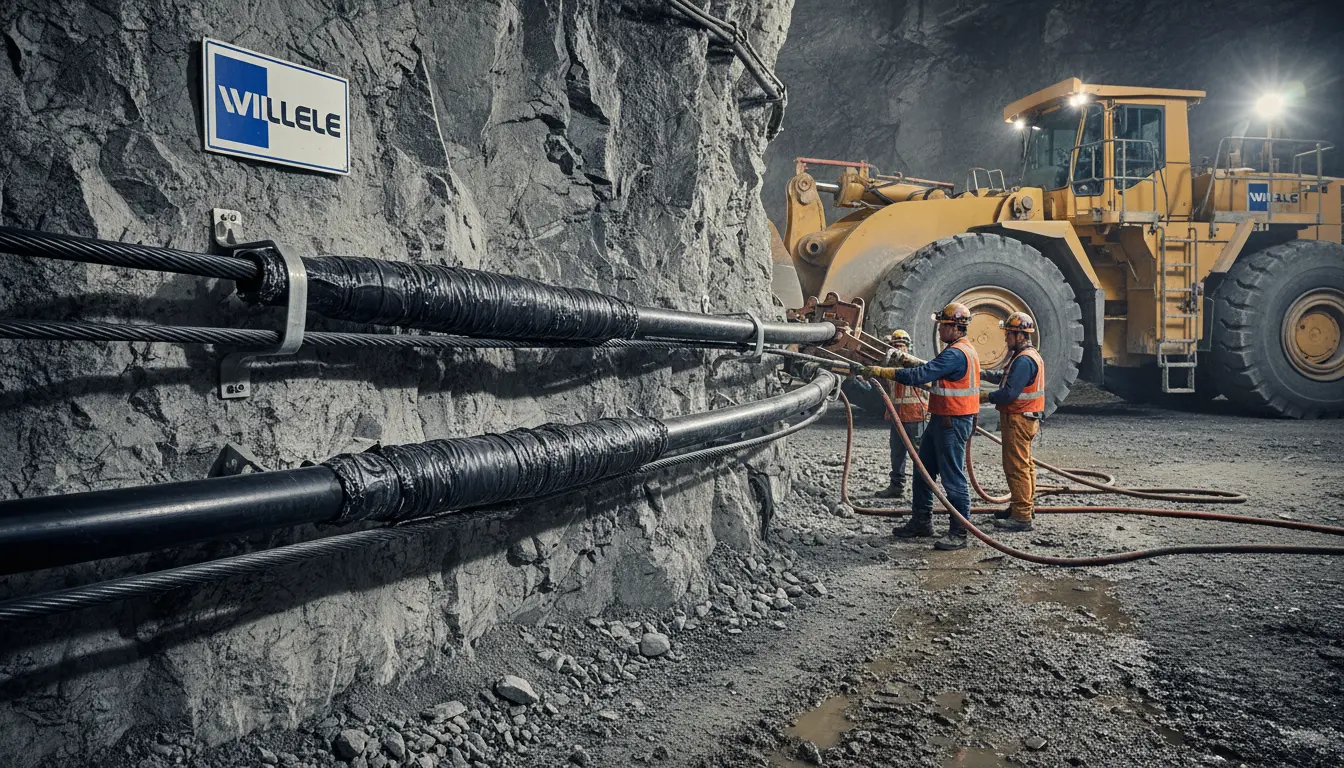
The mining industry operates in some of the most demanding environments on Earth, where electrical infrastructure faces constant threats from moisture, abrasion, chemical exposure, and extreme temperatures. Cable failures in these settings don’t just cause inconvenience—they result in costly downtime, safety hazards, and production losses that can reach thousands of dollars per hour. Heat shrinkable tubes have emerged as a critical solution for protecting mining cables, offering a combination of durability, reliability, and cost-effectiveness that traditional protection methods simply cannot match.
Understanding the Harsh Realities of Mining Cable Environments
Mining operations present a perfect storm of cable-damaging conditions. Underground mines expose cables to constant moisture, rock dust, and corrosive minerals, while surface operations subject them to UV radiation, temperature extremes, and mechanical stress from heavy equipment. Trailing cables that power mobile machinery endure continuous flexing, dragging across rough surfaces, and impacts from falling debris. Conveyor systems generate vibration and abrasion that gradually wear through cable jackets, while exposure to diesel fumes, hydraulic fluids, and chemical agents accelerates material degradation.
The consequences of cable failure in mining environments extend beyond simple equipment malfunction. When a critical power cable fails in an underground operation, it can strand workers, halt production across multiple zones, and require expensive emergency repairs in confined, hazardous spaces. Surface mining operations face similar challenges, with cable failures potentially disabling massive excavators, haul trucks, or processing equipment that represents millions of dollars in capital investment.
Why Heat Shrinkable Tubes Excel in Mining Applications
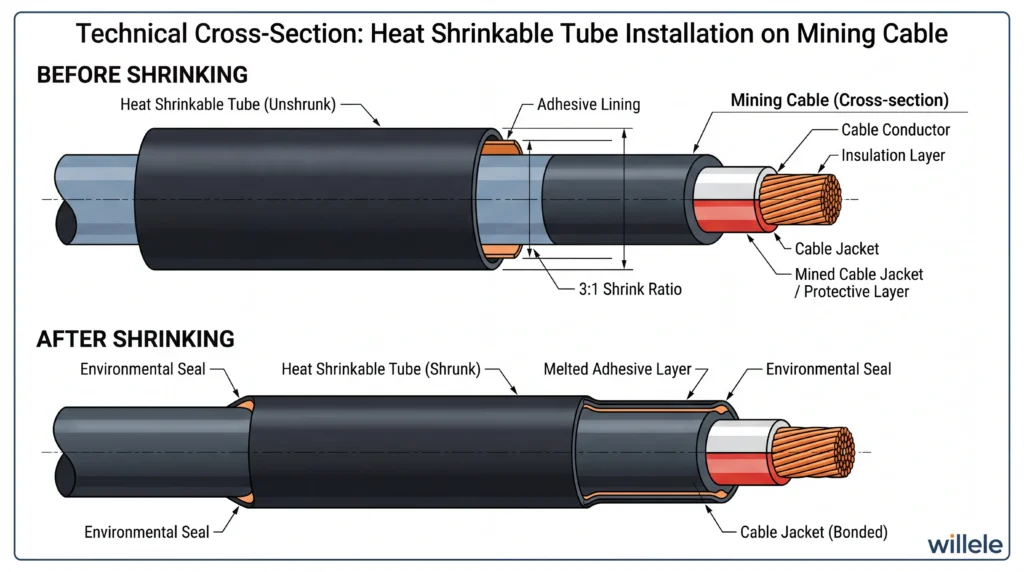
Heat shrinkable tubes provide a level of protection that addresses the specific challenges mining cables face. Unlike tape wrapping or mechanical conduits, heat shrink technology creates a seamless, conforming barrier that moves with the cable rather than restricting it. The shrinking process, activated by controlled heat application, causes the tube to tightly conform to the cable’s contours, creating an integrated protective layer that resists separation even under severe mechanical stress.
The material science behind modern heat shrinkable tubes makes them particularly suited to mining conditions. Cross-linked polyolefin formulations offer excellent resistance to oils, solvents, and chemicals commonly found in mining operations, while maintaining flexibility across temperature ranges from -60°F to 230°F (-51°C to 110°C). Heavy-wall variants provide enhanced mechanical protection for high-wear applications, and dual-wall designs with adhesive linings create moisture barriers that prevent water ingress even when cables are submerged or exposed to constant spray.
Key Applications in Mining Operations
Trailing Cable Protection
Mobile mining equipment relies on trailing cables that must withstand extraordinary abuse. Draglines, shovels, and continuous miners drag these cables across rock, through mud, and around obstacles hundreds of times per day. Heat shrinkable tubes provide critical protection at cable terminations, splice points, and areas prone to jacket damage. Heavy-wall heat shrink with 3:1 or 4:1 shrink ratios can accommodate the large diameter cables used in mining while providing substantial mechanical reinforcement.
Splice and Joint Sealing
Cable splices represent vulnerable points where moisture and contaminants can enter and cause failures. Dual-wall heat shrinkable tubes with adhesive linings create watertight seals around splices, effectively restoring the cable’s environmental protection to original specifications. This capability is particularly valuable in underground mining where cables may be submerged in mine water or exposed to constant humidity. The adhesive lining melts during heat application and flows around the splice components, filling gaps and creating a seal that prevents corrosion and electrical tracking.
Conveyor System Cables
Conveyor systems throughout mining operations require extensive cable networks for motors, sensors, and control systems. These cables experience constant vibration and are often routed in areas where they contact moving parts or are exposed to falling material. Heat shrinkable tubes protect cable jackets from abrasion while providing strain relief at termination points, significantly extending cable service life in these high-wear applications.
Hazardous Area Installations
Many mining operations include areas classified as hazardous due to explosive dust or gas concentrations. Halogen-free, flame-retardant heat shrinkable tubes meet stringent fire safety requirements while maintaining their protective properties. These specialized tubes produce minimal smoke and toxic fumes if exposed to fire, a critical safety feature in confined underground spaces where smoke accumulation can trap workers.
Comparison: Heat Shrinkable Tubes vs. Traditional Protection Methods
| Protection Method | Installation Time | Flexibility | Moisture Seal | Abrasion Resistance | Temperature Range | Reusability | Cost Efficiency |
|---|---|---|---|---|---|---|---|
| Heat Shrinkable Tubes | Fast (5-10 min) | Excellent | Superior (with adhesive) | High to Very High | -60°F to 230°F | Limited | High |
| Electrical Tape | Moderate | Good | Poor | Low | -10°F to 180°F | No | Low |
| Mechanical Conduit | Slow (30+ min) | Poor | Moderate | Very High | Varies | Yes | Moderate |
| Cable Glands | Moderate | Limited | Good | Moderate | -40°F to 200°F | Yes | Moderate |
| Potting Compounds | Very Slow | None | Excellent | High | -40°F to 250°F | No | Low |
The comparison reveals why heat shrinkable tubes have become the preferred choice for mining cable protection. They offer the best balance of performance, installation efficiency, and cost-effectiveness, particularly when considering the total lifecycle costs including installation labor, maintenance requirements, and expected service life.
Material Selection for Mining Environments
Standard Polyolefin Heat Shrink
Cross-linked polyolefin represents the workhorse material for general mining cable protection. It offers good chemical resistance, excellent electrical insulation properties, and adequate mechanical protection for most applications. Standard polyolefin tubes work well for indoor installations, control cabinets, and areas with moderate environmental exposure. They provide shrink ratios of 2:1 or 3:1, making them suitable for cables ranging from small control wires to medium-power conductors.
Heavy-Wall Polyolefin
When mechanical protection becomes paramount, heavy-wall polyolefin tubes deliver substantially greater impact and abrasion resistance. These tubes feature wall thicknesses two to three times greater than standard versions, making them ideal for trailing cables, mobile equipment connections, and any application where cables face repeated mechanical stress. The increased wall thickness also provides better strain relief and can help prevent cable jacket damage from sharp edges or pinch points.
Dual-Wall Adhesive-Lined Tubes
Mining operations frequently require waterproof cable protection, making dual-wall adhesive-lined heat shrink tubes essential. The inner adhesive layer melts during heat application and flows around the cable and any connectors or splices, creating a moisture barrier that maintains its integrity even when submerged. These tubes excel in underground mining applications, wet processing areas, and outdoor installations exposed to rain or snow.
Halogen-Free Flame-Retardant Tubes
Safety regulations in many mining jurisdictions require halogen-free, low-smoke materials for underground electrical installations. Specialized heat shrinkable tubes meeting these requirements provide the same protective benefits as standard tubes while producing minimal toxic fumes and smoke if exposed to fire. These tubes typically meet international standards including IEC 61034 for smoke density and various flame-retardancy specifications.
Installation Best Practices for Mining Applications
Surface Preparation
Proper cable surface preparation ensures optimal heat shrink adhesion and performance. Clean the cable jacket thoroughly to remove dirt, oil, grease, and moisture. In mining environments where cables may be coated with rock dust or hydraulic fluid, this step becomes particularly critical. Use isopropyl alcohol or approved cleaning solvents, and allow the surface to dry completely before applying heat shrink tubing.
Sizing and Selection
Select heat shrink tubing with an expanded diameter that easily slides over the cable and any connectors, but a recovered diameter that will shrink tightly against the cable jacket. For most mining applications, a shrink ratio of 3:1 or 4:1 provides the flexibility to accommodate variations in cable diameter while ensuring a tight final fit. When protecting splices or connectors, ensure the tube length extends at least two inches beyond the splice on each side to provide adequate environmental sealing.
Heat Application Techniques
Apply heat evenly using an industrial heat gun, starting from the center and working toward the ends to prevent air entrapment. In mining field installations where electrical power may be limited, propane or butane heat tools provide reliable alternatives. Maintain the heat source in constant motion to avoid overheating any single area, which can cause material degradation or bubbling. For adhesive-lined tubes, continue heating until you observe adhesive flowing from the tube ends, confirming complete seal formation.
Quality Verification
After installation, inspect the heat shrink tube for complete shrinkage, uniform appearance, and proper adhesive flow (for dual-wall tubes). The tube should conform tightly to the cable without wrinkles, gaps, or areas of incomplete shrinkage. In critical applications, perform electrical testing to verify that the heat shrink installation has not compromised cable performance and that insulation resistance meets specifications.
Performance Specifications for Mining Cable Protection
| Specification | Standard Polyolefin | Heavy-Wall Polyolefin | Dual-Wall Adhesive | Halogen-Free FR |
|---|---|---|---|---|
| Wall Thickness | 0.5-1.0 mm | 1.5-3.0 mm | 1.0-2.0 mm + adhesive | 1.0-2.0 mm |
| Shrink Ratio | 2:1 or 3:1 | 3:1 or 4:1 | 3:1 or 4:1 | 2:1 or 3:1 |
| Operating Temp | -55°C to +135°C | -55°C to +110°C | -55°C to +110°C | -40°C to +105°C |
| Dielectric Strength | 15-20 kV/mm | 12-15 kV/mm | 15-20 kV/mm | 15-18 kV/mm |
| Tensile Strength | 10-15 MPa | 15-20 MPa | 10-15 MPa | 12-16 MPa |
| Water Resistance | Good | Good | Excellent | Good |
| Abrasion Resistance | Good | Excellent | Good | Good |
| Flame Rating | UL 224 VW-1 | UL 224 VW-1 | UL 224 VW-1 | IEC 61034 |
Understanding these specifications helps mining engineers select the appropriate heat shrink tube for specific applications. The data demonstrates that no single tube type excels in all categories—selection requires balancing the specific environmental challenges, safety requirements, and performance expectations for each installation.
Cost-Benefit Analysis: Heat Shrink vs. Cable Replacement
Mining operations often face decisions between protecting existing cables with heat shrinkable tubes or replacing damaged cables entirely. The economics strongly favor protection in most scenarios. A typical mining trailing cable costs between $15 and $40 per foot, with installation labor adding substantially to total replacement costs. In contrast, protecting a splice or damaged section with heat shrinkable tubes typically costs $50 to $200 in materials and requires one to two hours of labor.
Consider a 500-foot trailing cable serving an underground continuous miner. Complete cable replacement might cost $10,000 to $25,000 in materials plus $5,000 to $15,000 in labor, and require eight to sixteen hours of equipment downtime. Protecting multiple splice points and wear areas with heat shrink tubing costs $500 to $2,000 in materials and $1,000 to $3,000 in labor, with downtime measured in hours rather than days. The protected cable can then deliver years of additional service, often approaching the lifespan of a new cable at a fraction of the cost.
Maintenance and Inspection Protocols
Establishing regular inspection protocols for heat shrink protected cables maximizes their service life and prevents unexpected failures. Visual inspections should occur monthly in high-wear applications, checking for signs of mechanical damage, heat shrink separation, or environmental degradation. Pay particular attention to areas where cables flex repeatedly or contact moving equipment, as these locations experience accelerated wear.
Thermal imaging provides valuable insights into cable condition beneath heat shrink protection. Hot spots may indicate developing electrical faults, moisture ingress, or insulation breakdown that requires attention before complete failure occurs. Many mining operations incorporate thermal scanning into quarterly maintenance routines, particularly for critical power distribution cables and high-current applications.
When inspection reveals heat shrink damage, prompt repair prevents minor issues from escalating into cable failures. Small tears or separations can often be repaired by cleaning the area and applying an additional layer of heat shrink tubing over the damaged section. More extensive damage may require removing the compromised heat shrink, repairing or replacing the affected cable section, and installing new heat shrink protection.
Environmental and Safety Considerations
Modern mining operations increasingly prioritize environmental responsibility and worker safety, factors that influence cable protection choices. Halogen-free heat shrinkable tubes eliminate the release of corrosive and toxic gases if exposed to fire, protecting both personnel and sensitive electronic equipment. These materials also reduce environmental impact during manufacturing and disposal compared to PVC-based alternatives.
The durability that heat shrinkable tubes provide translates directly into environmental benefits by extending cable service life. Each cable that remains in service for additional years represents raw materials not consumed, manufacturing energy not expended, and waste not generated. In large mining operations with thousands of feet of cable installed, the cumulative environmental impact of extended cable life becomes substantial.
Future Developments in Heat Shrink Technology
The heat shrink tube industry continues developing innovations specifically targeting mining and heavy industry applications. Smart heat shrink tubes incorporating embedded sensors can monitor cable temperature, moisture levels, and mechanical stress, providing early warning of developing problems. These intelligent protection systems integrate with mine-wide monitoring networks, enabling predictive maintenance strategies that prevent failures before they occur.
Advanced material formulations promise even greater performance in extreme conditions. Research into graphene-enhanced polymers suggests future heat shrink tubes may offer dramatically improved thermal conductivity, helping dissipate heat from high-current cables while maintaining superior mechanical protection. Nano-particle additives show potential for creating self-healing heat shrink materials that automatically seal minor punctures or tears, further extending protection system life.
Willele’s Commitment to Mining Industry Excellence
As a specialized B2B electrical equipment manufacturer, Willele understands the critical role that reliable cable protection plays in mining operations. Our heat shrinkable tube product line addresses the full spectrum of mining cable protection needs, from standard polyolefin tubes for general applications to specialized heavy-wall and halogen-free variants for the most demanding environments. Each product undergoes rigorous testing to ensure it meets or exceeds industry standards for mechanical protection, environmental sealing, and electrical performance.
Willele’s technical support team brings decades of combined experience in mining electrical systems, providing application engineering assistance to help customers select optimal protection solutions for their specific challenges. We recognize that mining operations cannot afford cable failures, and our products deliver the reliability and durability that keep production moving safely and efficiently.
Frequently Asked Questions
Q: How long do heat shrinkable tubes last in mining environments?
A: Properly installed heat shrinkable tubes typically provide 5-10 years of protection in mining applications, often matching or exceeding the service life of the cable itself. Actual lifespan depends on specific environmental conditions, cable flexing frequency, and the tube material selected. Heavy-wall tubes in high-abrasion applications may require inspection and possible replacement after 3-5 years, while tubes protecting stationary installations in controlled environments can last 15+ years.
Q: Can heat shrink tubing be applied to damaged cable jackets?
A: Yes, heat shrinkable tubes excel at repairing damaged cable jackets, provided the cable conductors and insulation remain intact. Clean the damaged area thoroughly, ensure it’s dry, and apply appropriately sized heat shrink tubing that extends well beyond the damaged section. Dual-wall adhesive-lined tubes provide the best results for jacket repair, creating a moisture seal that prevents further deterioration.
Q: What’s the difference between single-wall and dual-wall heat shrink tubes?
A: Single-wall tubes provide mechanical protection and electrical insulation but offer limited moisture sealing. Dual-wall tubes feature an inner adhesive layer that melts during heat application, flowing around the cable to create a waterproof seal. Mining applications requiring moisture protection—including underground installations, outdoor cables, and splice protection—benefit significantly from dual-wall tubes despite their higher cost.
Q: Can heat shrink tubes be removed and reused?
A: Heat shrinkable tubes cannot be reused once installed. The cross-linking process that occurs during heating permanently sets the tube’s shrunken shape. Removal requires cutting the tube lengthwise and peeling it away from the cable. However, the low cost of heat shrink tubing compared to cable replacement makes single-use application economically viable.
Q: What temperature is required to shrink heat shrink tubing?
A: Most polyolefin heat shrinkable tubes begin shrinking at approximately 90°C (194°F) and fully recover at 120-150°C (248-302°F). Industrial heat guns typically operate at 300-500°C (572-932°F), allowing rapid shrinking when held at appropriate distances. Adhesive-lined tubes require slightly higher temperatures to ensure complete adhesive melting and flow, typically 110-130°C (230-266°F) at the tube surface.
Q: Are there color options for heat shrink tubing, and why would I need them?
A: Heat shrinkable tubes are available in various colors including black, red, blue, green, yellow, and clear. Color coding helps identify different cable types, voltage levels, or circuits during installation and maintenance. In mining operations with extensive cable networks, color-coded protection simplifies troubleshooting and reduces the risk of working on the wrong circuit. Black remains the most popular choice for outdoor applications due to superior UV resistance.
