
Oil and Gas Industry: Flame-Retardant Heat-Shrink Tubing for Hazardous Areas

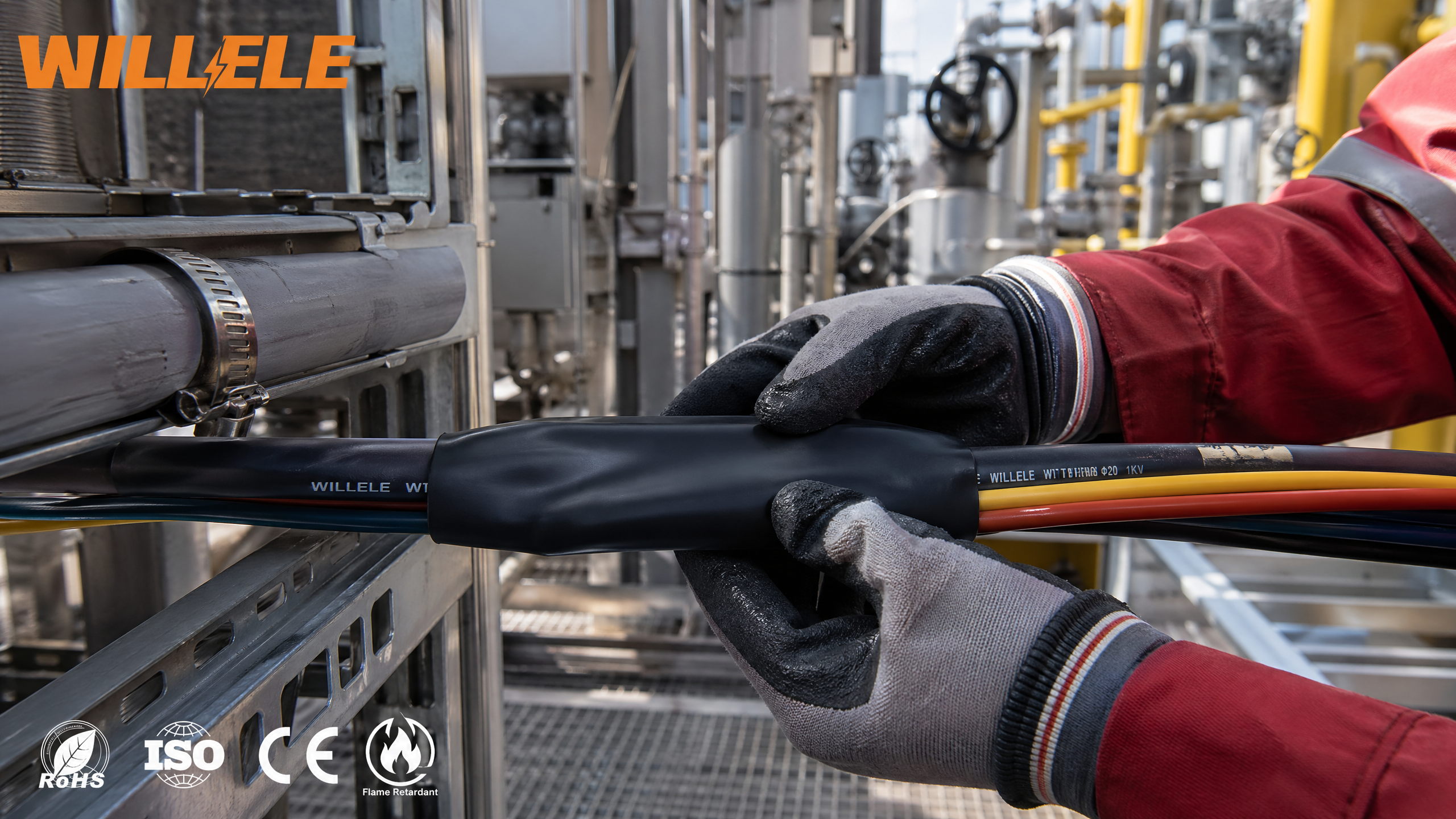
The oil and gas industry operates in some of the world’s most challenging and hazardous environments. From offshore drilling platforms to refinery processing units, electrical systems face constant exposure to flammable gases, extreme temperatures, and corrosive substances. In these critical applications, flame-retardant heat-shrink tubing serves as an essential protective barrier that can mean the difference between safe operations and catastrophic failure.
As a specialized B2B electrical equipment manufacturer, Willele understands that selecting the right flame-retardant heat-shrink tubing for hazardous areas requires more than just meeting basic specifications. It demands a comprehensive understanding of industry standards, material properties, and the unique challenges of oil and gas environments.
Understanding Hazardous Area Classifications
Before selecting flame-retardant heat-shrink tubing, engineers must understand how hazardous areas are classified. Different regions employ distinct classification systems, though they share common safety principles.
NEC Classification System (North America)
The National Electric Code (NEC) classifies hazardous locations using a Class/Division/Group system. Class I locations involve flammable gases and vapors—the primary concern in oil and gas facilities. Division 1 areas are where ignitable concentrations exist under normal operating conditions, while Division 2 areas see such concentrations only under abnormal conditions. Groups A through D categorize specific gas types, with Group D covering common petroleum gases like propane and butane.
ATEX and IECEx Zone Systems (International)
The European ATEX directive and international IECEx standards use a zone-based classification. Zone 0 indicates continuous presence of explosive atmospheres, Zone 1 indicates likely presence during normal operations, and Zone 2 indicates infrequent or short-duration presence. This granular approach provides more detailed risk assessment than the Division system.
Comparison of Classification Systems
| Standard | Region | Classification Method | Risk Levels | Gas Groups |
|---|---|---|---|---|
| NEC (NFPA 70) | North America | Class/Division/Group | Division 1, Division 2 | Groups A-D |
| ATEX | European Union | Zone/Category | Zone 0, 1, 2 | IIA, IIB, IIC |
| IECEx | International | Zone/EPL | Zone 0, 1, 2 | IIA, IIB, IIC |
| CSA | Canada | Class/Division/Zone | Division 1, 2 / Zone 0, 1, 2 | Groups A-D |
Understanding these classifications is crucial because flame-retardant heat-shrink tubing must be specified according to the applicable standard for each installation location.
Critical Properties of Flame-Retardant Heat-Shrink Tubing
Flame-retardant heat-shrink tubing designed for oil and gas applications must deliver multiple protective functions simultaneously. The material composition and manufacturing process determine whether the tubing can withstand the harsh realities of hazardous environments.
Flame Retardancy Standards
True flame-retardant heat-shrink tubing must meet rigorous testing standards. The UL VW-1 rating indicates that the material will self-extinguish within 30 seconds of flame removal, preventing fire propagation along cable runs. The limiting oxygen index (LOI) measures the minimum oxygen concentration required to sustain combustion—quality flame-retardant materials typically achieve an LOI of 28 or higher.
Chemical Resistance
Oil and gas facilities expose electrical components to a hostile chemical environment. Flame-retardant heat-shrink tubing must resist degradation from crude oil, refined petroleum products, hydraulic fluids, and cleaning solvents. Advanced polyolefin formulations provide excellent resistance to diesel fuel, aviation fuel, and lubricating oils while maintaining flexibility and mechanical strength.
Temperature Performance
The temperature extremes in oil and gas operations demand heat-shrink tubing with exceptional thermal stability. Continuous operating temperatures typically range from -55°C to +135°C for standard grades, with specialized formulations capable of withstanding +175°C or higher for applications near hot process equipment. The material must maintain its protective properties across this entire temperature range without becoming brittle in cold environments or softening in high-heat areas.
Mechanical Protection
Beyond thermal and chemical resistance, flame-retardant heat-shrink tubing must provide robust mechanical protection. The tubing shields cables from abrasion, impact damage, and cut-through hazards common in industrial environments. Thick-wall formulations offer enhanced protection for cables subject to mechanical stress, while thin-wall versions provide space-efficient protection for densely packed cable bundles.
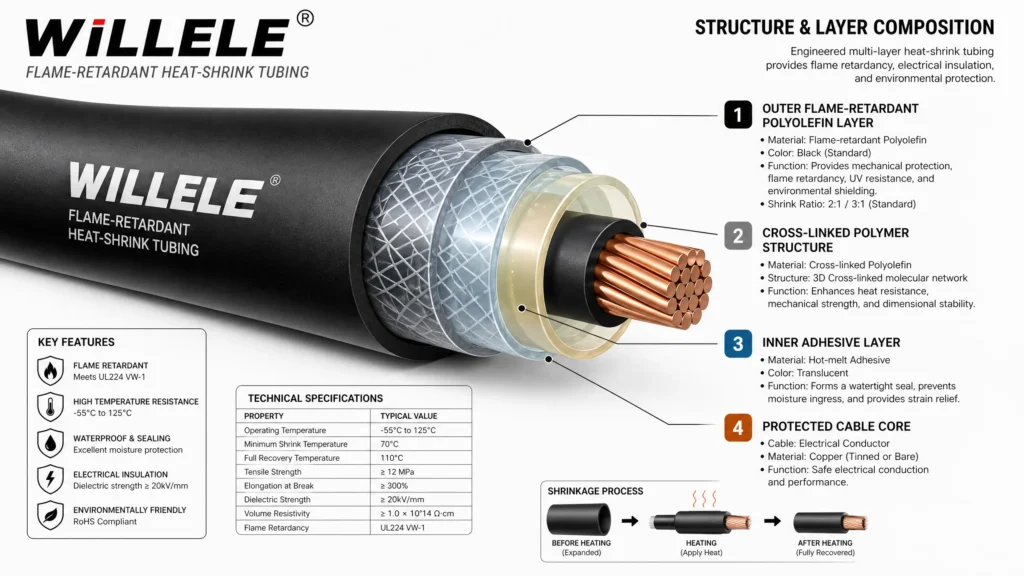
Material Technologies for Hazardous Environments
Different material formulations offer distinct advantages for specific oil and gas applications. Understanding these material technologies enables engineers to select the optimal solution for each installation.
Cross-Linked Polyolefin
Cross-linked polyolefin represents the most widely used material for flame-retardant heat-shrink tubing in oil and gas applications. The cross-linking process creates molecular bonds that enhance thermal stability, chemical resistance, and mechanical strength. These materials typically offer 2:1 or 3:1 shrink ratios, providing reliable conformance to irregular cable geometries.
Halogen-Free Formulations
Environmental and safety concerns have driven increased adoption of halogen-free flame-retardant materials. Traditional flame retardants often contained halogens that produce toxic and corrosive gases when burned. Modern halogen-free formulations achieve excellent flame retardancy through alternative additive systems while generating minimal smoke and non-corrosive combustion products—critical advantages for enclosed spaces like offshore platforms.
Adhesive-Lined Options
Adhesive-lined flame-retardant heat-shrink tubing incorporates a thermoplastic adhesive inner layer that melts during heat application, creating a moisture-proof seal. This dual-wall construction provides superior environmental protection for cable splices and terminations exposed to humidity, salt spray, and water ingress—common challenges in offshore and coastal oil and gas facilities.
Specialized High-Performance Materials
Certain applications demand materials beyond standard polyolefin capabilities. Fluoropolymer-based heat-shrink tubing offers exceptional chemical resistance and can operate continuously at temperatures up to 200°C or higher. These premium materials suit applications involving aggressive chemicals or extreme thermal conditions, though at significantly higher cost than standard flame-retardant polyolefin.
Application-Specific Requirements in Oil and Gas
Different areas within oil and gas operations present unique challenges that influence flame-retardant heat-shrink tubing selection.
Upstream Production Facilities
Wellhead equipment and production platforms operate in harsh outdoor environments with exposure to crude oil, formation water, and hydrogen sulfide. Flame-retardant heat-shrink tubing in these applications must resist UV degradation, maintain flexibility in cold weather, and provide reliable protection against petroleum product exposure. Zone 1 and Division 1 classifications are common, requiring materials that meet the highest flame-retardancy standards.
Midstream Pipeline and Storage
Pipeline monitoring systems and tank farm instrumentation require flame-retardant heat-shrink tubing that can withstand long-term outdoor exposure and temperature cycling. These applications often involve long cable runs where flame propagation resistance becomes particularly critical. The tubing must maintain its protective properties over decades of service life with minimal maintenance.
Downstream Refining and Processing
Refineries present the most demanding environment for electrical protection materials. Process areas contain multiple hazardous gas groups simultaneously, with temperatures ranging from cryogenic to extremely hot. Flame-retardant heat-shrink tubing must resist exposure to a wide range of refined products, from light naphtha to heavy fuel oils, while meeting stringent flame-retardancy requirements for densely populated industrial facilities.
Offshore Platforms
Offshore installations combine all the challenges of oil and gas operations with additional marine environment stressors. Salt spray, humidity, and limited space for cable routing demand flame-retardant heat-shrink tubing with excellent moisture resistance and compact profiles. The enclosed nature of platform structures makes smoke generation and toxic gas production during fire events particularly critical concerns, favoring halogen-free materials.
Performance Comparison: Standard vs. Flame-Retardant Tubing
| Property | Standard Heat-Shrink | Flame-Retardant Heat-Shrink | Significance for Oil & Gas |
|---|---|---|---|
| Flame Resistance | Burns continuously | Self-extinguishing (30 sec) | Prevents fire propagation in hazardous areas |
| Oxygen Index (LOI) | 18-20 | 28+ | Higher resistance to ignition |
| Flammability Rating | None | UL VW-1, CSA OFT | Required for hazardous location certification |
| Smoke Generation | High | Low (halogen-free) | Critical for enclosed spaces |
| Toxic Gas Emission | Significant | Minimal (halogen-free) | Personnel safety during fire events |
| Temperature Range | -30°C to +105°C | -55°C to +135°C or higher | Withstands extreme operating conditions |
| Chemical Resistance | Moderate | Excellent | Resists petroleum products and solvents |
| Cost | Lower | 20-40% premium | Justified by safety requirements |
The performance advantages of flame-retardant heat-shrink tubing justify the cost premium in hazardous oil and gas environments where failure consequences are severe.
Installation Best Practices
Proper installation is essential to ensure flame-retardant heat-shrink tubing delivers its full protective capability.
Surface Preparation
Clean cable surfaces thoroughly before applying heat-shrink tubing. Remove oil, grease, and contaminants that could interfere with adhesion or create voids beneath the tubing. For adhesive-lined products, surface preparation becomes even more critical to achieve reliable moisture sealing.
Sizing and Fit
Select tubing with appropriate recovered diameter for the cable size. The tubing should shrink snugly without excessive stress that could cause splitting or inadequate conformance that leaves gaps. For irregular shapes or cable bundles, higher shrink ratios (3:1 or 4:1) provide better conformance than standard 2:1 ratios.
Heat Application
Apply heat evenly using appropriate tools—typically a heat gun for field installations or an oven for shop assembly. Start from one end and work systematically to avoid trapping air. For adhesive-lined tubing, ensure the adhesive melts completely and flows to seal all gaps, indicated by adhesive appearance at the tubing ends.
Quality Verification
Inspect completed installations for proper shrinkage, absence of voids or bubbles, and complete adhesive flow for lined products. Document installations in hazardous areas to maintain compliance with safety regulations and facilitate future maintenance.
Compliance and Certification Requirements
Oil and gas facilities must maintain rigorous documentation of materials used in hazardous areas. Flame-retardant heat-shrink tubing should carry appropriate certifications for the applicable standards—UL recognition for NEC applications, ATEX certification for European installations, or IECEx certification for international projects.
Manufacturers like Willele provide comprehensive technical documentation including test reports, material safety data sheets, and compliance declarations. This documentation proves essential during facility inspections and safety audits.
Maintenance and Service Life Considerations
While flame-retardant heat-shrink tubing provides long-term protection, periodic inspection ensures continued reliability. Visual inspection should identify signs of degradation such as cracking, discoloration, or loss of adhesion. In critical applications, establish inspection intervals based on environmental severity and operational importance.
Quality flame-retardant heat-shrink tubing typically delivers 20+ years of service life in oil and gas applications when properly selected and installed. However, exposure to extreme conditions may necessitate more frequent replacement in specific high-stress locations.
Frequently Asked Questions
Q: What is the difference between flame-retardant and fire-resistant heat-shrink tubing?
A: Flame-retardant heat-shrink tubing self-extinguishes when the ignition source is removed, preventing fire spread. It is not fireproof—it will burn when exposed to flame but stops burning quickly after flame removal. Fire-resistant materials can withstand direct flame exposure for extended periods, a higher performance level rarely required for cable protection applications.
Q: Can I use standard heat-shrink tubing in non-classified areas of oil and gas facilities?
A: While technically permissible in non-hazardous areas, many facilities specify flame-retardant heat-shrink tubing throughout to maintain consistent safety standards and prevent installation errors. The cost difference is modest compared to the safety benefits.
Q: How do I determine the correct shrink ratio for my application?
A: Standard 2:1 shrink ratio suits most cable protection applications with regular geometries. Use 3:1 or 4:1 ratios for irregular shapes, cable bundles, or applications requiring better conformance. Higher ratios provide more flexibility but typically cost more.
Q: What temperature rating do I need for typical oil and gas applications?
A: Most applications are adequately served by tubing rated for -55°C to +135°C continuous operation. Areas near hot process equipment may require +175°C or higher ratings. Consider both ambient temperature and heat generated by electrical current in the cable.
Q: Are halogen-free flame-retardant materials as effective as traditional formulations?
A: Modern halogen-free flame-retardant heat-shrink tubing achieves equivalent flame retardancy to traditional materials while offering superior safety through reduced smoke and non-toxic combustion products. Performance is comparable, with the added benefit of environmental compliance.
Q: How often should flame-retardant heat-shrink tubing be inspected in oil and gas facilities?
A: Inspection frequency depends on environmental severity and criticality. Typical recommendations range from annual visual inspection in moderate environments to quarterly inspection in harsh conditions. Include heat-shrink tubing in regular electrical system maintenance programs.
