
Outdoor Lighting: Why You Need High-Quality Waterproof Junction Boxes

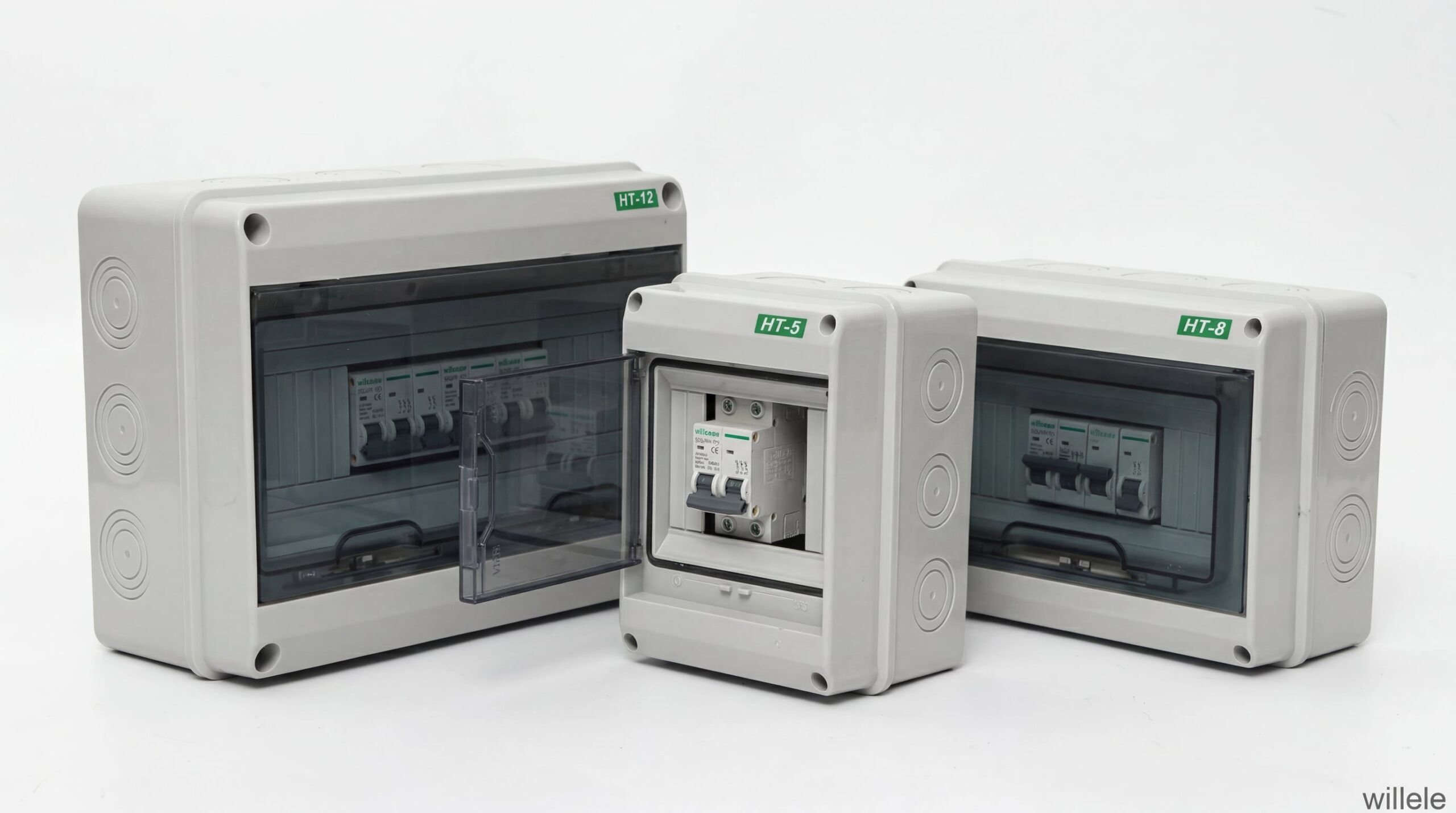
When designing outdoor lighting systems, whether for residential gardens, commercial landscapes, or industrial facilities, one critical component often determines the difference between a reliable installation and a maintenance nightmare: the waterproof junction box. These unassuming enclosures serve as the protective guardians of your electrical connections, shielding them from moisture, dust, temperature fluctuations, and environmental contaminants that can compromise system integrity and safety.
The outdoor lighting industry has witnessed substantial growth in recent years, driven by advances in LED technology, smart lighting controls, and increased emphasis on architectural illumination and security systems. Yet despite these technological leaps, the fundamental challenge remains unchanged: protecting electrical connections from the elements. A single point of moisture ingress can cascade into system-wide failures, creating safety hazards, costly repairs, and operational downtime. This is precisely where high-quality waterproof junction boxes become indispensable, transforming vulnerable connection points into fortified nodes that ensure long-term performance and compliance with international safety standards.
Understanding the Critical Role of Waterproof Junction Boxes in Outdoor Applications
Outdoor electrical installations face environmental stresses that indoor systems never encounter. Rain, snow, humidity, temperature swings, UV radiation, and airborne contaminants create a hostile environment for electrical connections. Without adequate protection, these factors accelerate corrosion, compromise insulation integrity, and create pathways for electrical faults that can lead to equipment failure or dangerous short circuits.
Waterproof junction boxes address these challenges by providing a sealed environment that maintains the electrical integrity of connections regardless of external conditions. They serve multiple essential functions: housing wire splices and terminal connections, providing strain relief for cables entering and exiting the enclosure, facilitating future maintenance access, and ensuring compliance with electrical codes and safety standards. In outdoor lighting applications specifically, junction boxes become the critical interface points where main power feeds branch to individual fixtures, where control signals distribute to multiple zones, and where system modifications can be implemented without compromising the entire installation.
The consequences of inadequate junction box protection extend beyond simple equipment failure. Moisture infiltration can create ground faults that trip protective devices, leaving areas without illumination and potentially compromising security. Corrosion at connection points increases resistance, generating heat that can degrade insulation and create fire hazards. In commercial and industrial settings, these failures translate directly into liability concerns, maintenance costs, and operational disruptions that far exceed the initial investment in quality enclosures.
Decoding IP Ratings: Selecting the Right Protection Level
The Ingress Protection (IP) rating system, standardized under IEC 60529 and BS EN 60529, provides a universal language for specifying the degree of protection an enclosure offers against solid objects and liquids. Understanding this rating system is fundamental to selecting appropriate junction boxes for outdoor lighting applications.
The IP rating consists of two digits, each conveying specific protection information. The first digit indicates protection against solid particles, ranging from 0 (no protection) to 6 (complete dust-tight protection). The second digit addresses liquid ingress protection, spanning from 0 (no protection) to 8 (protection against continuous immersion). For outdoor lighting installations, the second digit becomes particularly critical, as it directly determines how well the enclosure will perform when exposed to rain, snow, and moisture.
| IP Rating | Dust Protection | Water Protection | Typical Applications |
|---|---|---|---|
| IP54 | Protected against dust (limited ingress) | Protected against water splashing from any direction | Indoor damp locations, covered outdoor areas |
| IP65 | Dust-tight (no ingress) | Protected against water jets from any direction | General outdoor lighting, garden installations |
| IP66 | Dust-tight (no ingress) | Protected against powerful water jets | Exposed outdoor locations, coastal areas |
| IP67 | Dust-tight (no ingress) | Protected against temporary immersion (up to 1m depth) | Ground-level installations, flood-prone areas |
| IP68 | Dust-tight (no ingress) | Protected against continuous immersion (depth specified by manufacturer) | Underwater lighting, pond installations, severe weather zones |
For standard outdoor lighting applications, IP65 represents the minimum acceptable rating, providing complete dust protection and defense against water jets from any direction, which effectively covers rain, snow, and cleaning operations. This rating ensures that connections remain protected during normal weather conditions and routine maintenance activities. However, installations in particularly exposed locations—such as coastal environments with salt spray, areas subject to pressure washing, or regions experiencing severe weather—benefit significantly from IP66 or IP67 ratings.
It’s crucial to recognize that achieving the rated IP protection requires proper installation practices. The junction box itself may carry an IP65 rating, but this protection is only realized when cable glands are correctly sized and installed, sealing gaskets are properly positioned, and cover screws are adequately tightened. A common installation error involves drilling unauthorized entry points or using incorrect cable glands, which immediately compromises the enclosure’s IP rating regardless of its design specifications.
Material Selection: The Foundation of Long-Term Reliability
The material composition of waterproof junction boxes directly influences their durability, chemical resistance, UV stability, and overall service life in outdoor environments. Three primary materials dominate the market, each offering distinct advantages for specific applications.
ABS (Acrylonitrile Butadiene Styrene) engineering plastic represents the most common material for general-purpose outdoor junction boxes. ABS offers excellent impact resistance, maintaining structural integrity even when subjected to physical stress from installation activities or accidental impacts. Its dimensional stability across temperature ranges prevents warping and seal degradation, while its processing characteristics allow for precise molding of complex features like integrated cable entry points and mounting bosses. ABS performs reliably in most outdoor environments, though extended exposure to intense UV radiation can eventually cause surface degradation and brittleness. For this reason, quality manufacturers incorporate UV stabilizers into their ABS formulations, significantly extending service life in direct sunlight applications.
Polycarbonate (PC) provides superior properties for demanding applications. This material exhibits exceptional impact resistance—substantially higher than ABS—and maintains this toughness across a wider temperature range, from extreme cold to elevated heat. Polycarbonate’s inherent UV resistance surpasses that of ABS, making it the preferred choice for installations in high-altitude locations, desert environments, or tropical regions where solar radiation intensity remains consistently high. Additionally, polycarbonate offers excellent transparency when used for inspection covers, allowing visual verification of internal connections without opening the enclosure. The primary trade-off is cost, as polycarbonate junction boxes typically command a premium over equivalent ABS models.
Fiberglass-reinforced polyester and other composite materials serve specialized industrial applications where chemical exposure, extreme temperatures, or mechanical stress exceed the capabilities of standard thermoplastics. These materials offer exceptional chemical resistance, making them suitable for installations near pools with chlorine exposure, coastal environments with salt spray, or industrial facilities with chemical processing operations.
Beyond the base material, attention to gasket composition proves equally important. Silicone gaskets provide excellent temperature stability and UV resistance, maintaining their sealing properties across the widest environmental range. EPDM (ethylene propylene diene monomer) rubber offers good general-purpose performance with superior resistance to ozone and weathering. Lower-quality junction boxes may use generic rubber or foam gaskets that degrade rapidly under UV exposure or temperature cycling, leading to premature seal failure and moisture ingress.
Critical Design Features That Distinguish Quality Junction Boxes
While IP rating and material selection establish the foundation, several design features separate premium waterproof junction boxes from basic commodity products. These details directly impact installation efficiency, long-term reliability, and maintenance accessibility.
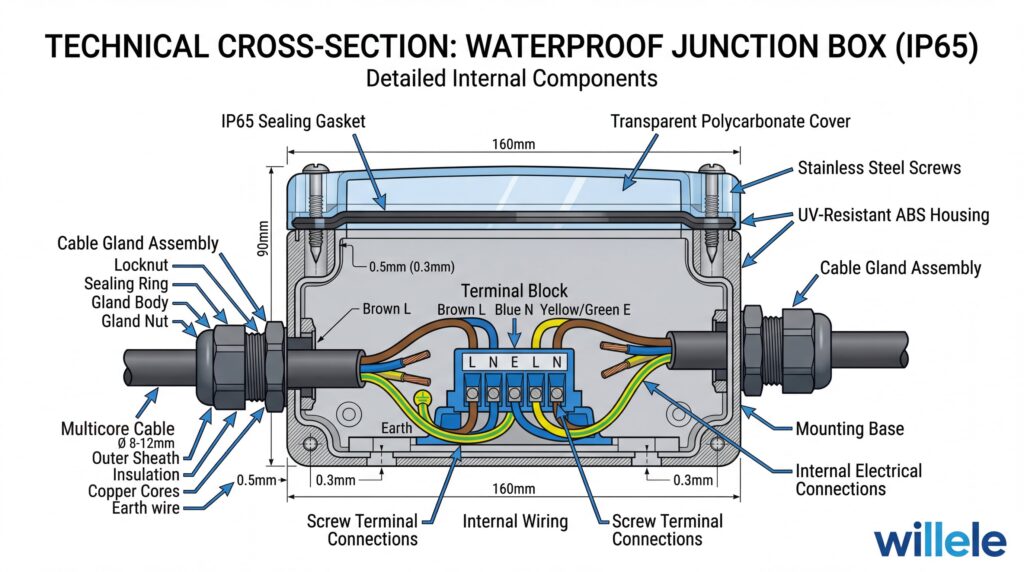
Cable entry systems represent the most critical design element, as cable glands constitute the primary vulnerability point where the IP rating can be compromised. High-quality junction boxes incorporate multiple pre-formed cable entry points with appropriate sizing for common cable diameters, eliminating the need for field drilling that often results in rough edges and improper sealing. These entry points should accommodate standard cable gland sizes (typically PG and metric threading standards) and include removable knockout plugs that maintain the IP rating when entries remain unused. The entry point design should also consider the minimum bending radius requirements for the cables being used, providing adequate internal space for proper cable routing without forcing sharp bends that stress conductors and insulation.
Internal terminal arrangements significantly affect installation quality and future maintenance. Junction boxes designed specifically for lighting applications often include pre-installed terminal blocks with appropriate current ratings, eliminating the need for wire nuts or other connection methods that may not provide optimal reliability in outdoor environments. These terminal blocks should offer tool-free or captive-screw designs that prevent small parts from being dropped during installation, and they should provide clear labeling or color coding to facilitate proper phase identification and circuit organization.
Sealing technology extends beyond the primary gasket to include multiple layers of protection. Premium designs incorporate a dual-seal system where both the cover and the cable entries provide independent sealing barriers. Some advanced models include a secondary internal seal that creates a protected chamber around the terminal connections, providing additional insurance against moisture ingress even if the primary seal is temporarily compromised during maintenance access. The cover attachment mechanism itself deserves attention—external screw designs that compress the gasket evenly around the entire perimeter provide more reliable sealing than clip-closure systems, though they require tools for access.
Venting elements address a frequently overlooked phenomenon in sealed enclosures. As electrical components generate heat during operation and ambient temperatures fluctuate between day and night, the air inside a hermetically sealed junction box expands and contracts. This “breathing effect” creates pressure differentials that can gradually compromise seals or, in extreme cases, draw moisture into the enclosure through microscopic pathways. Properly designed venting elements incorporate hydrophobic membranes that allow air pressure equalization while blocking liquid water and maintaining the enclosure’s IP rating. This feature proves particularly valuable in installations experiencing significant temperature swings or in junction boxes housing higher-current connections that generate appreciable heat.
Sizing and Capacity Considerations for Outdoor Lighting Systems
Proper junction box sizing ensures adequate space for wire connections while meeting electrical code requirements for conductor bending radius and fill capacity. Undersized enclosures force installers to compress connections into inadequate space, creating several problems: excessive bending stress on conductors that can damage insulation, difficulty achieving proper terminal connections, and challenges during future maintenance when connections must be accessed and potentially modified.
Electrical codes, including NEC Article 314 in North America and BS 7671 in the UK, specify minimum box volumes based on the number and size of conductors, devices, and fittings contained within the enclosure. These calculations account for each conductor entering the box, internal clamps, fixture studs, and devices like terminal blocks. For outdoor lighting applications, a practical approach involves selecting junction boxes that provide at least 25-30% additional capacity beyond the minimum code requirement, accommodating future circuit additions or modifications without requiring box replacement.
The conductor bending radius requirement deserves particular attention when working with larger cable sizes common in outdoor lighting main feeds. Cables should not be bent more sharply than their minimum bending radius specification (typically 6-8 times the cable diameter for most types), as excessive bending creates stress points where insulation can crack over time, particularly when subjected to temperature cycling. Junction boxes must provide sufficient internal depth and width to accommodate these bending radius requirements while still allowing the cover to close properly without compressing the conductors.
For outdoor lighting systems serving multiple fixtures, junction boxes often function as distribution points where a main feed branches to several outgoing circuits. In these applications, consider models with higher terminal block capacities or multiple terminal strips that allow organized separation of different circuits. Some manufacturers offer junction boxes with removable internal mounting plates that can be pre-wired off-site, then installed as a complete assembly, significantly reducing installation time and improving connection quality.
Installation Best Practices for Maximum Protection and Longevity
Even the highest-quality waterproof junction box will fail to provide adequate protection if installation practices compromise its design features. Several critical procedures ensure that the enclosure achieves its rated IP protection and delivers long-term reliability.
Mounting location selection should prioritize positions that minimize direct water exposure even though the enclosure is rated for such conditions. While an IP65 or IP66 box can withstand rain and water jets, mounting it under an eave or in a location where it’s not subjected to constant direct rainfall reduces the stress on sealing systems and extends service life. Avoid locations where standing water can accumulate around the base of the enclosure, and ensure that the mounting orientation allows any condensation that might form internally to drain toward cable entry points rather than pooling around terminals. Position junction boxes at heights that facilitate maintenance access while remaining protected from lawn equipment, vehicle traffic, or other mechanical hazards.
Cable gland installation requires meticulous attention to detail, as this represents the most common point of IP rating failure. Select cable glands specifically rated for the same IP level as the junction box itself, and ensure that the gland size matches the cable outer diameter—glands that are too large will not seal properly, while oversized cables forced into undersized glands can damage the sealing elements. When installing glands, follow the manufacturer’s torque specifications; over-tightening can distort the seal or crack the enclosure, while insufficient tightening leaves gaps for moisture ingress. For unused cable entry points, install blanking plugs with appropriate sealing washers rather than leaving knockouts open or attempting improvised sealing methods.
Connection quality inside the junction box directly affects long-term reliability. Strip conductor insulation to the minimum length necessary for the connection method being used, avoiding excess exposed conductor that increases the risk of accidental shorts. When using terminal blocks, ensure that conductors are fully inserted and that terminal screws are tightened to the manufacturer’s specified torque—loose connections create high-resistance points that generate heat and accelerate corrosion. For applications in particularly corrosive environments (coastal areas, industrial facilities), consider applying dielectric grease to connections before assembly, providing an additional moisture barrier.
Sealing verification should occur before final cover installation. Inspect the gasket for any damage, deformation, or contamination that could compromise sealing. Ensure the gasket is properly seated in its groove around the entire perimeter, with no twisted sections or gaps. Clean both the gasket and the mating surface on the cover to remove any dust, debris, or installation residue that could prevent proper sealing. When securing the cover, tighten screws in a cross-pattern (similar to wheel lug nuts) to ensure even gasket compression, and verify that the cover sits flush against the enclosure body around its entire perimeter.
Comparing Waterproof Junction Box Standards and Certifications
| Standard/Certification | Region | Key Requirements | Relevance to Outdoor Lighting |
|---|---|---|---|
| IEC 60529 (IP Rating) | International | Defines ingress protection testing methods and rating system | Universal standard for specifying water and dust protection levels |
| NEMA 250 | North America | Enclosure type classifications (3R, 4, 4X, 6, 6P) | Alternative rating system common in US market; NEMA 4 ≈ IP66 |
| BS 7671 (18th Edition) | United Kingdom | Wiring regulations including outdoor enclosure requirements | Mandates minimum IP ratings for specific outdoor applications |
| UL 50 / UL 50E | North America | Safety standards for enclosures for electrical equipment | Required for many commercial installations in US/Canada |
| CE Marking | European Union | Indicates conformity with EU safety, health, environmental requirements | Required for products sold in EU market |
Understanding these standards helps specify appropriate products for different markets and applications. For international projects or products intended for global distribution, selecting junction boxes that carry multiple certifications (IEC, NEMA, UL, CE) ensures broad compatibility and simplifies compliance verification. When evaluating suppliers, request copies of actual test reports and certifications rather than relying solely on marketing claims—legitimate manufacturers readily provide documentation from accredited testing laboratories.
Maintenance and Inspection Protocols for Outdoor Junction Boxes
Even properly installed waterproof junction boxes require periodic inspection and maintenance to ensure continued protection and performance. Establishing a routine inspection schedule prevents minor issues from developing into system failures.
Annual visual inspections should examine the enclosure exterior for signs of physical damage, UV degradation (indicated by chalking, discoloration, or surface crazing), and seal integrity. Check that all cable glands remain properly tightened and that no gaps have developed around cable entries. Verify that mounting hardware remains secure and that the enclosure has not shifted or loosened. Look for evidence of water staining or corrosion around the cover perimeter, which may indicate seal compromise.
Periodic internal inspections (recommended every 2-3 years for critical installations, or after severe weather events) involve opening the enclosure to examine connections and internal conditions. Before opening, disconnect power to the circuit and verify de-energization with appropriate test equipment. Upon opening, look for any signs of moisture ingress, corrosion on terminals or conductors, or degradation of internal components. Check that all terminal connections remain tight, as thermal cycling can cause gradual loosening over time. Inspect the gasket for compression set, cracking, or hardening that indicates replacement is needed.
Gasket replacement should occur whenever inspection reveals degradation, typically every 5-7 years in normal conditions or more frequently in harsh environments. Use only manufacturer-specified replacement gaskets, as generic substitutes may not provide the correct compression characteristics or material compatibility. Clean both gasket surfaces thoroughly before installing the new gasket, and apply a thin film of silicone grease to the gasket to aid sealing and prevent adhesion to the cover.
Documentation practices support effective maintenance programs. Record inspection dates, findings, and any corrective actions taken. For commercial and industrial installations, maintain a junction box inventory that includes location, IP rating, circuit identification, and installation date. This documentation facilitates systematic inspection scheduling and helps identify patterns that may indicate environmental conditions requiring upgraded enclosures or modified installation practices.
Why Willele Waterproof Junction Boxes Deliver Superior Performance
As a specialized B2B electrical equipment manufacturer with deep expertise in protective solutions including heat shrink tubing, Willele brings a comprehensive understanding of environmental protection to our waterproof junction box designs. Our products incorporate advanced materials engineering, precision manufacturing, and rigorous quality control to deliver enclosures that exceed industry standards.
Willele junction boxes feature UV-stabilized polycarbonate and ABS formulations specifically developed for long-term outdoor exposure, maintaining structural integrity and appearance even after years of direct sunlight. Our multi-stage sealing systems incorporate premium silicone gaskets that resist compression set and maintain sealing effectiveness across temperature ranges from -40°C to +85°C. Each cable entry point is precision-molded to exact specifications, ensuring proper cable gland fit and seal integrity.
Manufacturing quality control includes 100% pressure testing of completed assemblies, verifying that each unit achieves its rated IP protection before leaving our facility. This comprehensive testing approach, combined with material traceability and process documentation, ensures consistent performance across production runs. For B2B customers, this reliability translates directly into reduced warranty claims, lower installation costs, and enhanced reputation for delivering dependable outdoor lighting systems.
Our technical support team assists with product selection, providing guidance on appropriate IP ratings, sizing, and accessories for specific applications. We understand that outdoor lighting projects vary dramatically in scope and requirements, from residential landscape lighting to large-scale commercial and industrial installations, and we offer product lines tailored to these diverse needs.
Common Failure Modes and How to Prevent Them
Understanding how waterproof junction boxes fail helps implement preventive measures that extend system life and reliability. Several failure modes occur with sufficient frequency to warrant specific attention.
Gasket degradation represents the most common long-term failure mechanism. UV exposure, ozone, temperature cycling, and chemical exposure gradually harden and crack gasket materials, creating pathways for moisture ingress. Prevention involves selecting junction boxes with high-quality gasket materials (silicone or EPDM rather than generic rubber), positioning enclosures to minimize direct UV exposure when possible, and implementing gasket replacement as part of routine maintenance rather than waiting for failure symptoms to appear.
Cable gland loosening occurs due to thermal cycling and vibration, gradually creating gaps that compromise IP protection. This issue particularly affects installations on poles or structures subject to wind-induced movement. Prevention requires using cable glands with locking features or secondary retention mechanisms, applying thread-locking compounds appropriate for outdoor use, and including gland tightness verification in inspection protocols.
Condensation accumulation can occur even in properly sealed enclosures due to the breathing effect and temperature differentials. While the enclosure prevents external moisture from entering, air trapped inside during installation contains water vapor that can condense on cool internal surfaces. Prevention involves installing venting elements that allow pressure equalization while blocking liquid water, and using junction boxes with internal drainage features or positioning that allows any condensation to exit through cable entries rather than pooling around terminals.
Physical damage from lawn equipment, vehicle contact, or vandalism compromises even the most robust enclosures. Prevention requires thoughtful location selection, protective barriers where appropriate, and using enclosures with impact ratings (IK ratings) suitable for the exposure level. For high-risk locations, consider junction boxes with IK08 or IK09 impact ratings that resist significant mechanical stress.
Frequently Asked Questions
What IP rating do I need for outdoor lighting junction boxes?
For general outdoor lighting applications, IP65 is the minimum recommended rating, providing complete dust protection and defense against water jets from any direction. Exposed locations, coastal areas, or installations subject to pressure washing benefit from IP66 or IP67 ratings. Ground-level installations in flood-prone areas should use IP67 or IP68 rated enclosures.
Can I use indoor junction boxes outdoors if I protect them from direct rain?
No. Indoor junction boxes lack the sealing systems, UV-resistant materials, and environmental protection necessary for outdoor use. Even under eaves or in covered locations, outdoor environments expose enclosures to humidity, temperature cycling, and UV radiation that indoor-rated products cannot withstand. Always use properly rated outdoor junction boxes for any exterior installation.
How often should I inspect outdoor junction boxes?
Perform visual external inspections annually, checking for physical damage, seal integrity, and mounting security. Conduct internal inspections every 2-3 years for critical installations, or after severe weather events. Replace gaskets every 5-7 years or whenever inspection reveals degradation, regardless of whether moisture ingress has occurred.
What’s the difference between IP and NEMA ratings?
IP (Ingress Protection) ratings, defined by IEC 60529, use a two-digit system specifying dust and water protection levels. NEMA ratings, common in North America, use type designations (3R, 4, 4X, etc.) that encompass broader environmental factors including corrosion resistance and ice formation. As a rough equivalence, NEMA 4 approximates IP66, though the testing methods differ.
Do I need special cable glands for waterproof junction boxes?
Yes. Cable glands must be rated for the same IP level as the junction box and must match the cable outer diameter precisely. Standard cable glands designed for indoor use or lower IP ratings will not maintain the enclosure’s protection level. Always use IP-rated cable glands from reputable manufacturers, and install blanking plugs with proper seals in unused entry points.
Can I drill additional holes in a waterproof junction box?
Drilling additional holes immediately voids the IP rating and compromises protection. If additional cable entries are needed, select a junction box with sufficient pre-formed entry points, or use a larger model. Field modifications to waterproof enclosures are not recommended and may violate electrical codes and product warranties.
