
Preventing Water Ingress in Wire Nut Connections: Solutions That Work

Water ingress in electrical connections represents one of the most critical challenges facing electrical contractors, maintenance engineers, and facility managers. When moisture penetrates wire nut connections, it initiates a cascade of problems: corrosion, increased resistance, heat generation, and ultimately, connection failure. For B2B professionals seeking reliable, long-term solutions, understanding and implementing proper water ingress prevention is not optional—it’s essential.
Understanding the Water Ingress Problem
Why Wire Nut Connections Are Vulnerable
Wire nut connections, while convenient and widely used, present inherent vulnerabilities to moisture penetration. The threaded interior design that makes wire nuts effective for securing conductors also creates pathways for water entry. Even in indoor applications, condensation, humidity, and occasional water exposure can compromise these connections over time.
Key vulnerability factors include:
- Capillary action drawing moisture along wire strands
- Thermal cycling creating pressure differentials
- Incomplete fill of the wire nut cavity
- Degradation of the wire nut’s insulating material
- Poor initial installation technique
Consequences of Water Ingress
The impact of water penetration extends far beyond simple connection failure:
| Problem | Immediate Effect | Long-term Consequence | Safety Risk |
|---|---|---|---|
| Corrosion | Increased resistance | Connection failure | Fire hazard |
| Electrolysis | Material degradation | Wire breakage | Shock hazard |
| Tracking | Current leakage | Insulation breakdown | Arc flash |
| Oxidation | Heat generation | Thermal runaway | Equipment damage |
| Contamination | Reduced conductivity | Intermittent faults | System downtime |
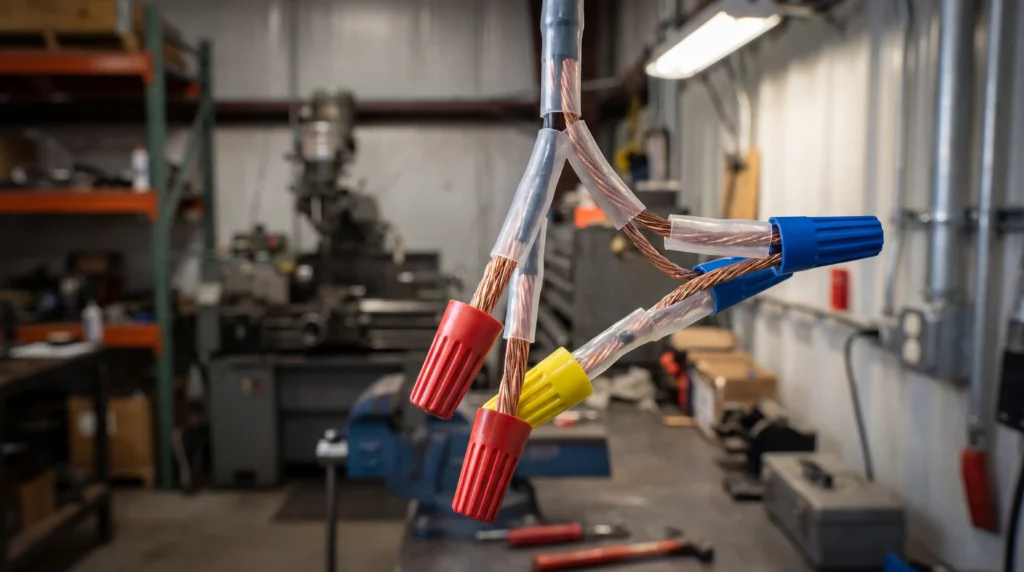
Alt text: Professional wire nut connections protected with heat shrink tubes in industrial electrical installation
Proven Solutions for Water Ingress Prevention
1. Heat Shrink Tube Protection (Primary Solution)
Heat shrink tubing represents the gold standard for waterproofing wire nut connections. Willele Electric specializes in manufacturing industrial-grade heat shrink tubes specifically engineered for electrical connection protection.
Advantages of heat shrink tube protection:
- Complete encapsulation: Forms a continuous barrier around the entire connection
- Adhesive-lined options: Creates hermetic seal when heated
- Mechanical protection: Shields against physical damage and abrasion
- Chemical resistance: Protects against oils, solvents, and corrosive environments
- Temperature stability: Maintains integrity across wide temperature ranges (-55°C to +135°C)
- UV resistance: Prevents degradation in outdoor applications
Application procedure:
- Select appropriate diameter heat shrink tube (3:1 or 4:1 shrink ratio recommended)
- Slide tube over wire before making connection
- Complete wire nut connection using proper technique
- Position heat shrink tube to cover entire wire nut and extend 25mm beyond on wire side
- Apply heat evenly using heat gun (recommended temperature: 120-150°C)
- Verify complete shrinkage and adhesive flow at both ends
2. Silicone Sealant Application
For applications requiring removable connections or where heat application is impractical, high-grade silicone sealants provide effective moisture barriers.
Best practices:
- Use only electrical-grade, non-corrosive silicone
- Apply generously to cover all entry points
- Allow full cure time (typically 24 hours) before energizing
- Reapply after any connection maintenance
Limitations:
- Less durable than heat shrink solutions
- Requires periodic inspection and reapplication
- Can be messy and time-consuming
- May not withstand high-vibration environments
3. Liquid Electrical Tape
Liquid electrical tape offers a brush-on or spray-on solution that cures to form a flexible, waterproof coating.
Application considerations:
| Aspect | Details |
|---|---|
| Cure time | 4-6 hours for handling, 24 hours for full cure |
| Thickness | Multiple coats required (minimum 3 layers) |
| Temperature range | -30°C to +90°C (lower than heat shrink) |
| Removal | Peels off for connection access |
| Reusability | New application required after removal |
| Cost | Moderate; higher labor cost than heat shrink |
4. Waterproof Wire Nut Enclosures
Pre-manufactured enclosures designed specifically for wire nut protection offer convenience for standard applications.
Features:
- Gel-filled or grease-filled cavities
- Snap-together or threaded designs
- Integrated strain relief
- Transparent options for visual inspection
Drawbacks:
- Limited size options
- Higher per-unit cost
- Bulkier than heat shrink solutions
- May not fit in tight spaces
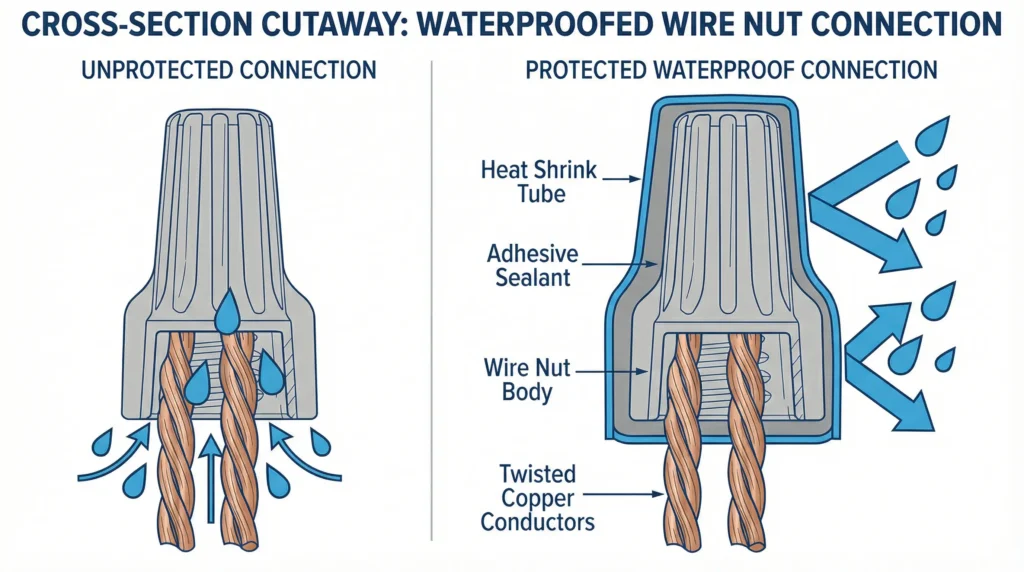
Alt text: Technical schematic diagram showing cross-section of waterproofed wire nut connection with heat shrink tube protection layers
Comparative Analysis: Choosing the Right Solution
Solution Comparison Table
| Method | Water Protection | Durability | Installation Time | Cost | Removability | Best Application |
|---|---|---|---|---|---|---|
| Heat Shrink Tube | Excellent | 20+ years | 5-10 minutes | Low-Medium | Destructive | Permanent installations, outdoor, harsh environments |
| Silicone Sealant | Good | 3-5 years | 10-15 minutes + cure | Low | Easy | Indoor, temporary, low-vibration |
| Liquid Tape | Good | 2-4 years | 15-20 minutes + cure | Medium | Easy | Indoor, accessible locations |
| Enclosures | Very Good | 10-15 years | 2-5 minutes | High | Easy | Standard sizes, frequent access needed |
| Combination Method | Excellent | 20+ years | 15-20 minutes | Medium-High | Difficult | Critical applications, extreme environments |
Environmental Considerations
Different environments demand different protection strategies:
Outdoor/Exposed Locations:
- Primary: Adhesive-lined heat shrink tube
- Secondary: UV-resistant enclosure
- Inspection frequency: Annual
Underground/Buried Applications:
- Primary: Heavy-wall heat shrink with adhesive
- Secondary: Waterproof junction box
- Inspection frequency: Every 5 years (if accessible)
Marine/High-Humidity Environments:
- Primary: Marine-grade heat shrink tube
- Secondary: Corrosion inhibitor compound
- Inspection frequency: Semi-annual
Industrial/Chemical Exposure:
- Primary: Chemical-resistant heat shrink tube
- Secondary: Protective enclosure rated for environment
- Inspection frequency: Quarterly
Installation Best Practices
Pre-Installation Checklist
Before waterproofing any wire nut connection, ensure:
- ✓ Wires are properly stripped (no insulation under wire nut)
- ✓ Conductors are clean and free from oxidation
- ✓ Wire nut size matches conductor gauge and count
- ✓ Connection is mechanically secure before protection
- ✓ Appropriate protection method selected for environment
- ✓ All materials are rated for voltage and temperature requirements
Common Installation Mistakes to Avoid
- Insufficient coverage: Heat shrink must extend beyond wire nut on all sides
- Overheating: Excessive heat damages wire insulation and heat shrink properties
- Wrong shrink ratio: Insufficient shrinkage leaves gaps for moisture entry
- Skipping wire preparation: Oxidized or dirty wires compromise connection quality
- Inadequate overlap: Minimum 25mm overlap on wire insulation required
- Using non-electrical materials: Standard heat shrink lacks necessary properties
Quality Verification
After installation, verify protection effectiveness:
- Visual inspection: No gaps, complete adhesive flow visible at ends
- Mechanical test: Gentle pull test confirms connection integrity
- Thermal imaging: Identifies hot spots indicating poor connections (for energized circuits)
- Continuity test: Confirms electrical integrity maintained
- Documentation: Record protection method, date, and inspector for maintenance tracking
Willele Electric Heat Shrink Solutions
Alt text: Willele Electric logo and brand identity – Leading B2B manufacturer of heat shrink tubes for electrical applications
As a specialized B2B manufacturer, Willele Electric produces industrial-grade heat shrink tubes engineered specifically for electrical connection protection. Our product line addresses the full spectrum of waterproofing requirements:
Product Categories
Standard Heat Shrink Tubes:
- Shrink ratios: 2:1, 3:1, 4:1
- Temperature range: -55°C to +135°C
- Available diameters: 3mm to 150mm
- Colors: Black, red, yellow, blue, green, white, clear
Adhesive-Lined Heat Shrink:
- Dual-wall construction with hot-melt adhesive inner layer
- Creates hermetic seal upon heating
- Superior moisture barrier performance
- Ideal for outdoor and underground applications
Heavy-Wall Heat Shrink:
- Extra-thick walls for mechanical protection
- Abrasion and impact resistant
- Chemical and UV resistant formulations
- Perfect for harsh industrial environments
Specialty Formulations:
- Flame-retardant (meets UL224 standards)
- Low-smoke zero-halogen (LSZH)
- High-temperature resistant (up to 200°C)
- Chemical-resistant variants
Maintenance and Inspection Protocols
Inspection Schedule Recommendations
| Environment | Initial Inspection | Routine Inspection | Key Indicators |
|---|---|---|---|
| Indoor/Dry | 1 year | Every 3 years | Discoloration, cracking |
| Outdoor/Exposed | 6 months | Annually | UV damage, seal integrity |
| Underground | 1 year | Every 5 years | Moisture presence, corrosion |
| Marine/Coastal | 3 months | Semi-annually | Salt deposits, degradation |
| Industrial/Chemical | 6 months | Annually | Chemical attack, brittleness |
Warning Signs Requiring Immediate Attention
- Visible moisture inside protection
- Heat shrink tube cracking or splitting
- Discoloration indicating overheating
- Loose or separated protection
- Corrosion visible at connection points
- Intermittent electrical faults
- Unusual warmth at connection location
Cost-Benefit Analysis
Investment vs. Failure Costs
Proper waterproofing represents a minimal investment compared to failure consequences:
Average Protection Costs (per connection):
- Heat shrink tube: $0.50-$2.00
- Installation labor: $5.00-$15.00
- Total investment: $5.50-$17.00
Average Failure Costs:
- Emergency service call: $150-$500
- Downtime (industrial): $500-$5,000/hour
- Equipment damage: $1,000-$50,000+
- Safety incidents: Incalculable
ROI Calculation:
Even in low-criticality applications, proper waterproofing pays for itself by preventing a single failure. In critical infrastructure, the return on investment is immediate and substantial.
Industry Standards and Compliance
Relevant Standards
- UL 486C: Wire connectors and soldering lugs for use with copper conductors
- NEMA WC 27500: Aerospace and industrial electrical cable
- IEC 60684: Flexible insulating sleeving
- MIL-DTL-23053: Military specification for heat shrink tubing
- NEC Article 110.14: Electrical connections requirements
Certification Considerations
For critical applications, specify heat shrink products with:
- UL recognition or listing
- CSA certification
- RoHS compliance
- Flame-retardant ratings
- Temperature ratings matching application requirements
Future-Proofing Your Installations
Design Considerations for Long-Term Reliability
- Oversizing protection: Use next size up heat shrink for easier installation and better coverage
- Redundant protection: Combine methods for critical connections
- Accessibility planning: Design for future inspection and maintenance
- Documentation: Maintain records of protection methods and installation dates
- Material selection: Choose protection rated beyond expected environmental extremes
Emerging Technologies
The electrical connection protection industry continues to evolve:
- Smart heat shrink: Embedded sensors monitor connection temperature and moisture
- Self-healing materials: Polymers that repair minor damage automatically
- Nanotechnology coatings: Ultra-thin, highly effective moisture barriers
- Rapid-cure systems: Reduced installation time with equivalent performance
Frequently Asked Questions (FAQ)
Q: Can I reuse heat shrink tubing after removing it from a connection?
A: No. Once heat shrink tubing has been heated and shrunk, it cannot be reused. The molecular structure changes during heating are permanent. Always use new heat shrink when reconnecting or servicing connections.
Q: How do I know what size heat shrink tube to use for my wire nut?
A: Measure the widest diameter of your wire nut (including wires), then select a heat shrink tube with a recovered (shrunk) diameter slightly smaller than this measurement and an expanded diameter at least 25% larger. A 3:1 or 4:1 shrink ratio provides the best flexibility for wire nut applications.
Q: Is it safe to use a lighter or torch to shrink heat shrink tubing?
A: While possible, it’s not recommended. Open flames create uneven heating, can damage wire insulation, and may over-shrink or burn the heat shrink tube. Use a proper heat gun with temperature control (120-150°C) for consistent, safe results.
Q: How long does heat shrink tube protection last?
A: Quality heat shrink tubing from manufacturers like Willele Electric typically lasts 20+ years in normal conditions. Lifespan depends on environmental factors: UV exposure, temperature extremes, chemical exposure, and mechanical stress. Adhesive-lined heat shrink provides the longest service life.
Q: Can I waterproof wire nut connections in an already-energized circuit?
A: No. Always de-energize circuits before working on connections. Waterproofing requires accessing and potentially disturbing the connection, which must never be done on live circuits. Follow proper lockout/tagout procedures.
Q: What’s the difference between standard and adhesive-lined heat shrink?
A: Standard heat shrink provides mechanical protection and basic moisture resistance. Adhesive-lined (dual-wall) heat shrink includes an inner layer of hot-melt adhesive that flows when heated, creating a complete hermetic seal. For waterproofing applications, adhesive-lined is strongly recommended.
Q: Do I need to waterproof indoor wire nut connections?
A: It depends on the environment. In climate-controlled indoor spaces with no moisture exposure, waterproofing may not be necessary. However, basements, crawl spaces, mechanical rooms, and areas with potential condensation or water exposure should have protected connections. When in doubt, protect—the minimal cost is worthwhile insurance.
Q: Can I use electrical tape instead of heat shrink for waterproofing?
A: Electrical tape alone does not provide adequate waterproofing. It can absorb moisture, degrades over time, and adhesive can dry out. While tape can supplement other methods, it should never be the primary waterproofing solution. Heat shrink provides far superior long-term protection.
Conclusion
Preventing water ingress in wire nut connections is not merely a best practice—it’s a fundamental requirement for reliable, safe electrical installations. Heat shrink tube protection, particularly adhesive-lined variants, provides the most effective, durable, and cost-efficient solution for the vast majority of applications.
Willele Electric’s specialized heat shrink products deliver the performance characteristics demanded by B2B professionals: consistent quality, reliable protection, and long-term durability. By implementing proper waterproofing techniques using industrial-grade materials, electrical contractors and facility managers can virtually eliminate water-related connection failures.
The investment in proper connection protection is minimal compared to the costs of failure, downtime, and safety incidents. Whether you’re working on new installations or upgrading existing systems, prioritizing water ingress prevention will pay dividends in reliability, safety, and peace of mind.
For technical specifications, product selection guidance, or bulk ordering information, contact Willele Electric—your trusted partner in electrical connection protection solutions.
