
Railway Industry Applications: Heat Shrinkable Tube for Train Electrical Systems

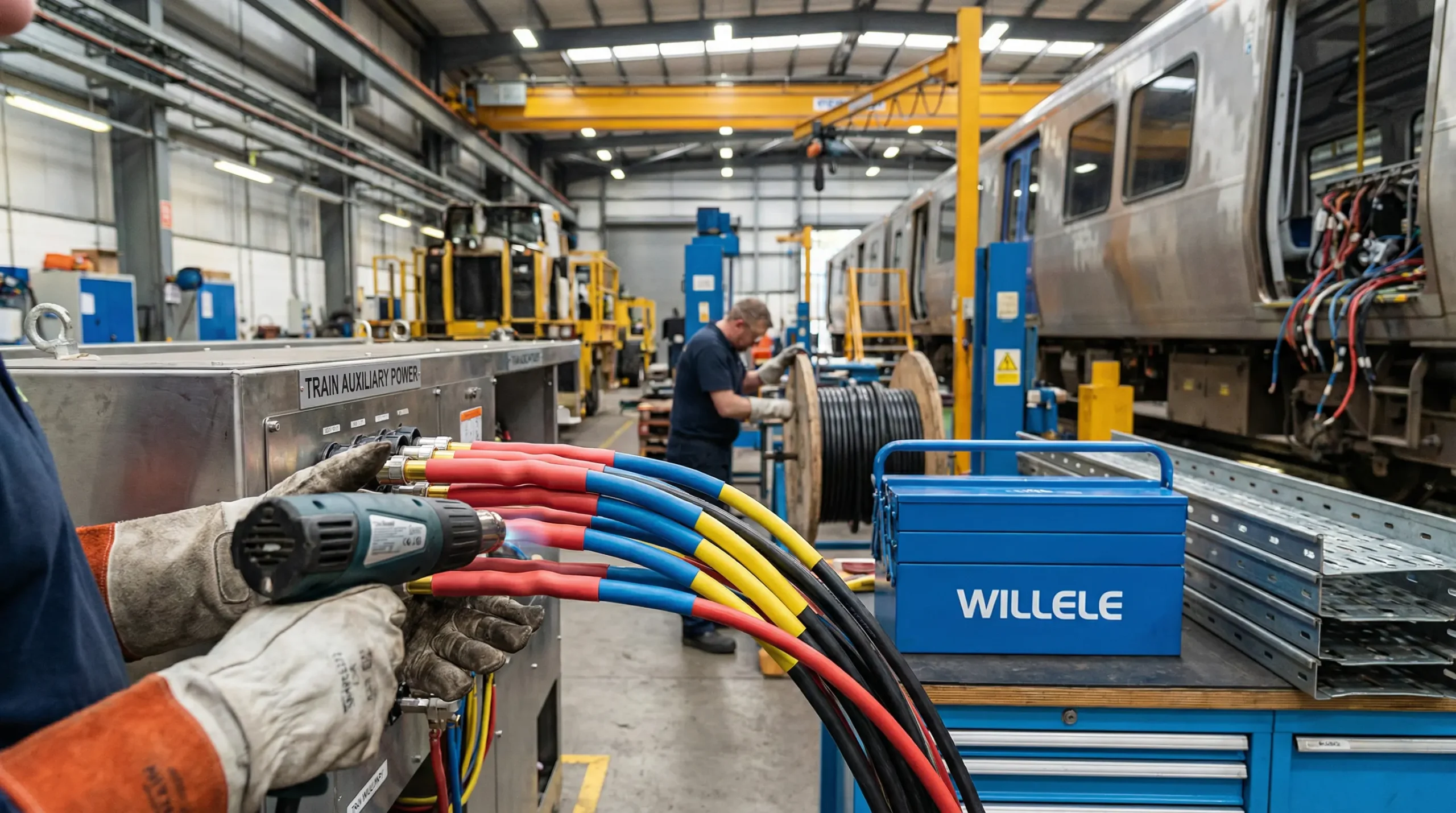
In the high-stakes world of modern rail transport, the reliability of electrical systems is paramount. From high-speed bullet trains to urban metro systems, every connection counts. At WILLELE Electric, we understand that ensuring the safety and longevity of these connections requires superior insulation and protection solutions. This comprehensive guide explores Railway Industry Applications: Heat Shrinkable Tube for Train Electrical Systems, detailing how these components serve as the backbone of electrical safety in rolling stock and trackside infrastructure.
The Critical Role of Heat Shrink Technology in Railways
Modern trains are essentially data centers on wheels, powered by complex high-voltage networks. These systems operate in harsh environments characterized by constant vibration, extreme temperature fluctuations, and exposure to moisture and contaminants. Without adequate protection, electrical faults can lead to signal failures, power outages, or catastrophic fires.
Heat shrinkable tubes provide a versatile, robust solution for insulating, sealing, and protecting wires and cables. By utilizing advanced polymer technology, these tubes ensure that railway electrical systems maintain integrity throughout their operational lifecycle, meeting the rigorous safety standards demanded by the industry.
Understanding Heat Shrinkable Tubes: Mechanism and Function
Heat shrinkable tubing is a thermoplastic tube that shrinks radially when exposed to heat. The manufacturing process involves cross-linking the polymer chains and then expanding the tube. When heated during installation, the material “remembers” its original state and shrinks back, creating a tight, protective seal around the underlying cable or connector.
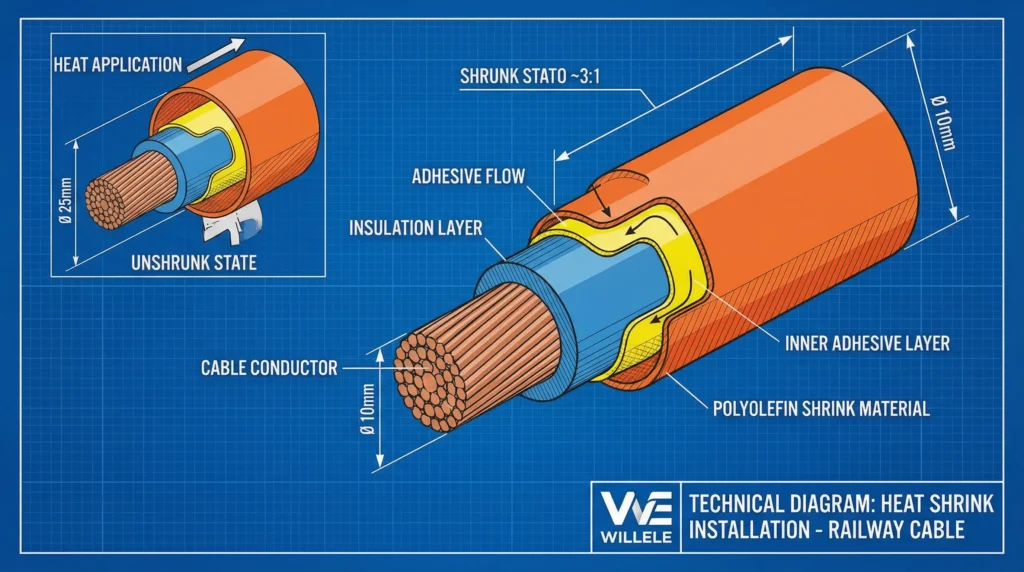
For railway applications, these tubes are often engineered with specific properties such as flame retardancy, low smoke emission, and resistance to diesel, oil, and hydraulic fluids.
Key Functional Layers
- Outer Jacket: Provides mechanical protection (abrasion resistance) and electrical insulation.
- Inner Adhesive (Dual-Wall): Melts during shrinking to flow into voids, creating a moisture-proof seal essential for preventing corrosion in train undercarriages.
Key Applications in Train Electrical Systems
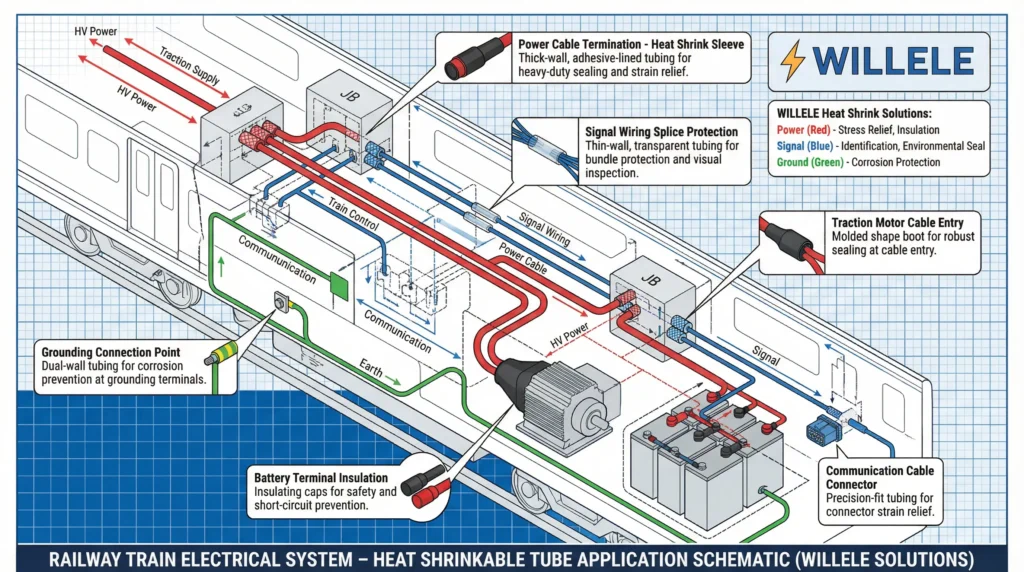
The Railway Industry Applications: Heat Shrinkable Tube for Train Electrical Systems are vast, covering everything from the driver’s console to the traction motors.
1. Power Distribution Systems
High-voltage cables transferring power from the pantograph to the transformer and traction motors require heavy-duty insulation. Thick-wall heat shrink tubes provide the necessary dielectric strength and track resistance to prevent arcing and short circuits.
2. Signaling and Communication
Signal integrity is vital for train control systems (TCMS). Thin-wall, shielded heat shrink tubes are used to terminate shielded cables, ensuring proper grounding and protection against Electromagnetic Interference (EMI), which is common in the railway environment.
3. Cable Management and Identification
With kilometers of cabling inside a single carriage, identification is crucial for maintenance. Printable heat shrink marker sleeves allow technicians to label wire bundles clearly, resisting fading from solvents or friction.
4. Splice and Terminal Protection
Every connection point is a potential weak link. Heat shrink tubes reinforce these joints, providing strain relief that prevents the wire from pulling out of the terminal due to the train’s constant vibration.
Application Areas and Recommended Specifications
| Application Area | Recommended Tube Type | Key Requirement |
|---|---|---|
| Traction Motors | Heavy-Wall, High Voltage | High dielectric strength, abrasion resistance |
| Undercarriage Wiring | Dual-Wall (Adhesive Lined) | Waterproofing, salt spray resistance |
| Control Panels | Thin-Wall, Zero Halogen | Flexibility, flame retardancy (LSZH) |
| Sensors & Brakes | High-Temperature (PVDF/PTFE) | Extreme heat and fluid resistance |
| Cable Marking | Printable Sleeves | UV resistance, smudge resistance |
Technical Specifications and Standards
In the railway industry, compliance is not optional. WILLELE Electric’s heat shrink products are designed to meet stringent international standards, primarily focusing on fire safety and toxicity.
Fire Safety Standards (EN 45545-2)
The European standard EN 45545-2 is the benchmark for fire protection on railway vehicles. Heat shrink tubes must meet specific Hazard Levels (HL1, HL2, HL3) based on the train’s operating category.
- Low Smoke Zero Halogen (LSZH): In the event of a fire, the tubing must not emit toxic fumes or dense smoke that could hinder passenger evacuation.
Standards Compliance Table
| Standard | Description | Relevance to Heat Shrink |
|---|---|---|
| EN 45545-2 | Fire protection on railway vehicles | Mandatory for all materials used in EU rolling stock. |
| DIN 5510-2 | Preventive fire protection (Germany) | Flammability and smoke density requirements. |
| NF F 16-101 | Railway rolling stock fire behavior (France) | Classification of materials (I/F rating). |
| BS 6853 | Code of practice for fire precautions (UK) | Toxicity and smoke emission limits. |
| ASTM D 2671 | Standard test methods for heat shrink tubing | Defines testing procedures for physical properties. |
Material Types and Selection Criteria
Choosing the right material is critical for the longevity of Railway Industry Applications: Heat Shrinkable Tube for Train Electrical Systems.
Material Properties Comparison
| Material | Shrink Ratio | Operating Temp | Primary Benefit | Best For |
|---|---|---|---|---|
| Polyolefin (Standard) | 2:1 or 3:1 | -55°C to +135°C | Cost-effective, flexible | General purpose insulation inside cabins |
| Polyolefin (LSZH) | 2:1 | -40°C to +125°C | No toxic fumes, flame retardant | Passenger areas, tunnels, underground metros |
| Fluoropolymer (Kynar/PVDF) | 2:1 | -55°C to +175°C | High heat & chemical resistance | Engine compartments, fuel line proximity |
| Elastomer (Diesel Resistant) | 2:1 | -75°C to +150°C | Oil/Fluid resistance, rugged | Undercarriage, hydraulic systems |
Installation Best Practices
Even the highest quality heat shrink tube can fail if installed incorrectly. Proper installation ensures the seal is watertight and the insulation is uniform.
- Clean the Surface: Ensure cables and connectors are free of grease, oil, and dust.
- Select Correct Size: The “Recovered ID” (diameter after shrinking) should be slightly smaller than the cable diameter to ensure a tight fit.
- Heat Application: Use a heat gun or infrared oven. Start shrinking from the center moving outwards (or one end to the other) to prevent air entrapment.
- Temperature Control: Do not exceed the material’s shrink temperature to avoid charring or splitting.
- Cooling: Allow the assembly to cool completely before applying mechanical stress.
Benefits and Advantages
Implementing high-quality heat shrink solutions from WILLELE Electric offers tangible benefits for railway operators and OEMs:
- Enhanced Safety: Reduces fire risks through LSZH materials and prevents short circuits.
- Durability: Extends the life of cabling by protecting against mechanical wear and environmental corrosion.
- Cost-Effectiveness: Reduces maintenance frequency and downtime caused by electrical failures.
- Vibration Resistance: Provides mechanical support to terminals, preventing fatigue breaks in conductors.
Heat Shrink Tube Types Comparison
| Feature | Single Wall Tubing | Dual Wall (Adhesive Lined) | Heavy Wall Tubing |
|---|---|---|---|
| Wall Thickness | Thin | Medium to Thick | Very Thick |
| Waterproofing | No | Yes (Excellent) | Yes (Excellent) |
| Flexibility | High | Medium | Low (Rigid) |
| Mechanical Strength | Moderate | High | Very High |
| Typical Use | Color coding, bundling, basic insulation | Environmental sealing, connector protection | Direct burial, high voltage joints, trackside |
Conclusion
As the railway industry pushes for higher speeds, greater efficiency, and enhanced passenger safety, the components comprising these systems must evolve. Railway Industry Applications: Heat Shrinkable Tube for Train Electrical Systems represent a small but critical investment in the reliability of rail transport. WILLELE Electric remains committed to providing certified, high-performance heat shrink solutions that keep the world’s trains moving safely.
Frequently Asked Questions (FAQ)
1. What is the most important standard for heat shrink tubes in European railways?
The most critical standard is EN 45545-2, which governs fire safety on railway vehicles. Tubing used in passenger trains must typically meet Hazard Level 2 (HL2) or HL3 requirements regarding flammability, smoke density, and toxicity.
2. Why is Low Smoke Zero Halogen (LSZH) tubing required for trains?
In the confined space of a train carriage or tunnel, a fire can quickly become deadly due to smoke inhalation. LSZH tubing ensures that if the material burns, it produces very little smoke and no toxic halogen gases (like chlorine), allowing safer evacuation.
3. Can standard heat shrink tubing be used for trackside applications?
Generally, no. Trackside applications require heavy-wall tubing with high UV resistance, moisture sealing (adhesive lining), and often resistance to rodent damage. Standard polyolefin tubing may degrade quickly in these outdoor conditions.
4. How do I choose the right size heat shrink tube for a railway cable?
Follow the “80:20 rule.” The tube should be large enough to slide over the component easily but have a recovered (shrunk) diameter smaller than the cable. Ideally, the cable size should be about 20% larger than the tube’s fully shrunk diameter to ensure a tight grip.
5. Are WILLELE heat shrink tubes resistant to diesel and hydraulic fluids?
Yes, WILLELE offers specific elastomer and fluoropolymer tubing grades designed specifically for resistance to diesel fuel, hydraulic oils, and cleaning solvents commonly found in railway maintenance depots.
6. What is the difference between single-wall and dual-wall tubing?
Single-wall tubing provides insulation and mechanical protection. Dual-wall tubing has an inner layer of hot-melt adhesive. When heated, this adhesive melts and flows, bonding to the cable and creating a waterproof environmental seal, which is crucial for under-frame railway applications.
7. Can heat shrink tubes be used for high-voltage pantograph cables?
Yes, but specialized heavy-wall, anti-tracking heat shrink tubes are required. These are designed to handle high voltage stress and prevent “tracking” (carbon path formation) on the surface, ensuring safe power transmission from the catenary.
