
Real-World Performance: Waterproof Wire Nuts in Coastal Installations

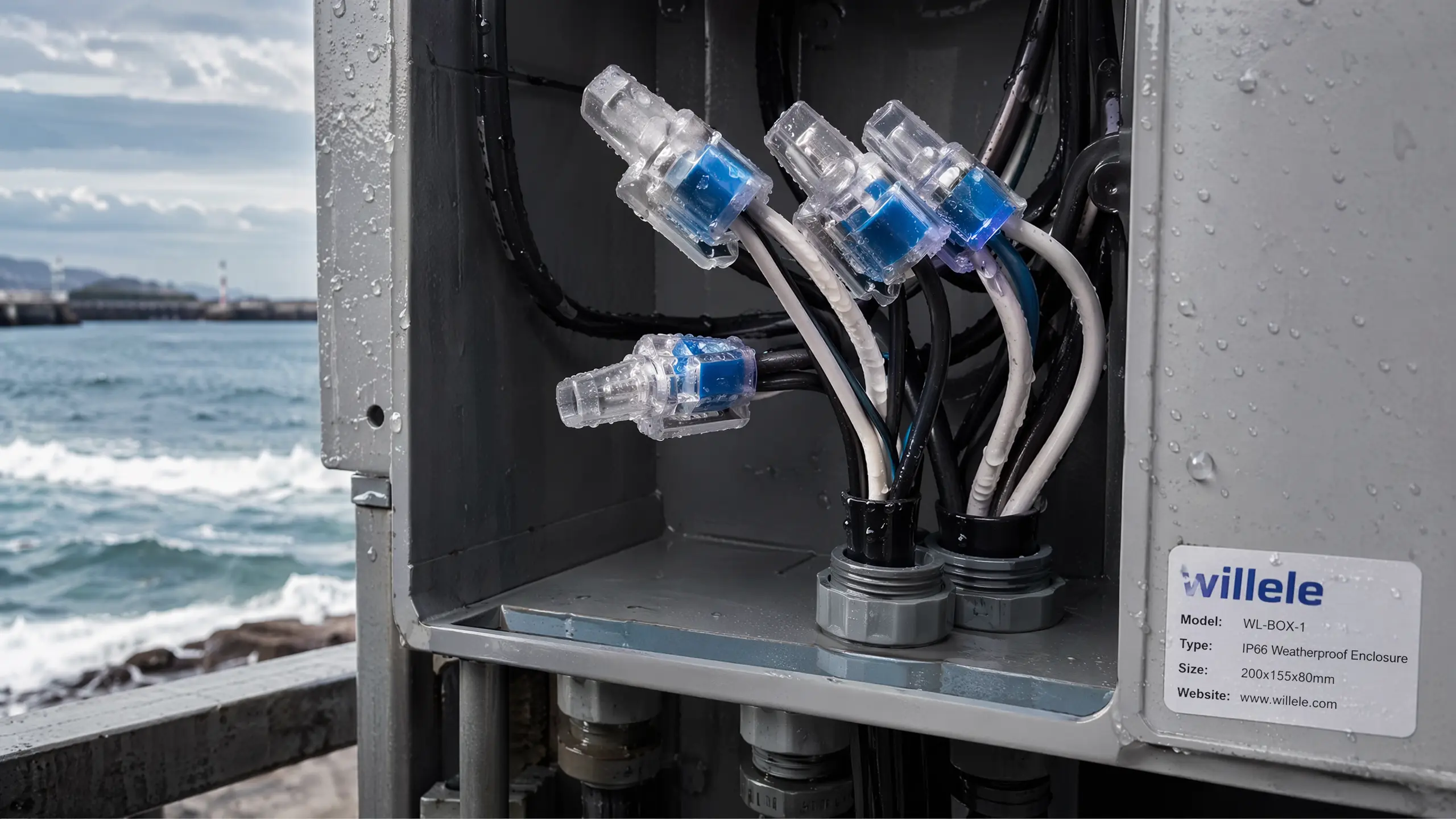
Coastal electrical installations face some of the harshest environmental conditions in the industry. Salt spray, high humidity, temperature fluctuations, and constant moisture exposure create a perfect storm for electrical connection failures. For electrical contractors and facility managers working in marine environments, waterproof wire nuts have become essential components that determine the difference between reliable performance and costly system failures.
This comprehensive analysis examines real-world performance data from coastal installations, providing actionable insights for professionals specifying and installing waterproof wire connectors in challenging marine environments.
The Coastal Challenge: Why Standard Wire Nuts Fail
Standard wire nuts were designed for protected indoor environments. When exposed to coastal conditions, they fail predictably and often catastrophically. Understanding these failure mechanisms is crucial for appreciating why waterproof wire nuts represent not just an upgrade, but a fundamental requirement for coastal installations.
Salt Spray Corrosion
Salt-laden air penetrates standard wire nut housings within weeks of installation. Once inside, chloride ions attack copper conductors, creating copper chloride compounds that increase resistance and generate heat. This accelerated corrosion can reduce connection integrity by 60-80% within the first year of exposure in active coastal zones.
Moisture Ingress
Coastal environments maintain relative humidity levels between 75-95% year-round. Standard wire nuts rely on mechanical pressure alone to maintain contact, but moisture creates a conductive film that promotes galvanic corrosion between dissimilar metals. Morning dew cycles repeatedly wet and dry connections, each cycle advancing corrosion deeper into the connection point.
UV Degradation
Direct sunlight in coastal installations degrades standard plastic housings through UV exposure. The polymer chains break down, causing brittleness and cracking. These micro-cracks become pathways for moisture and salt, accelerating the failure cascade.
Waterproof Wire Nut Technology: Engineering for Marine Environments
Modern waterproof wire nuts employ multiple barrier systems to protect electrical connections. Understanding these technologies helps specifiers choose appropriate products for specific coastal applications.
Silicone Gel Encapsulation
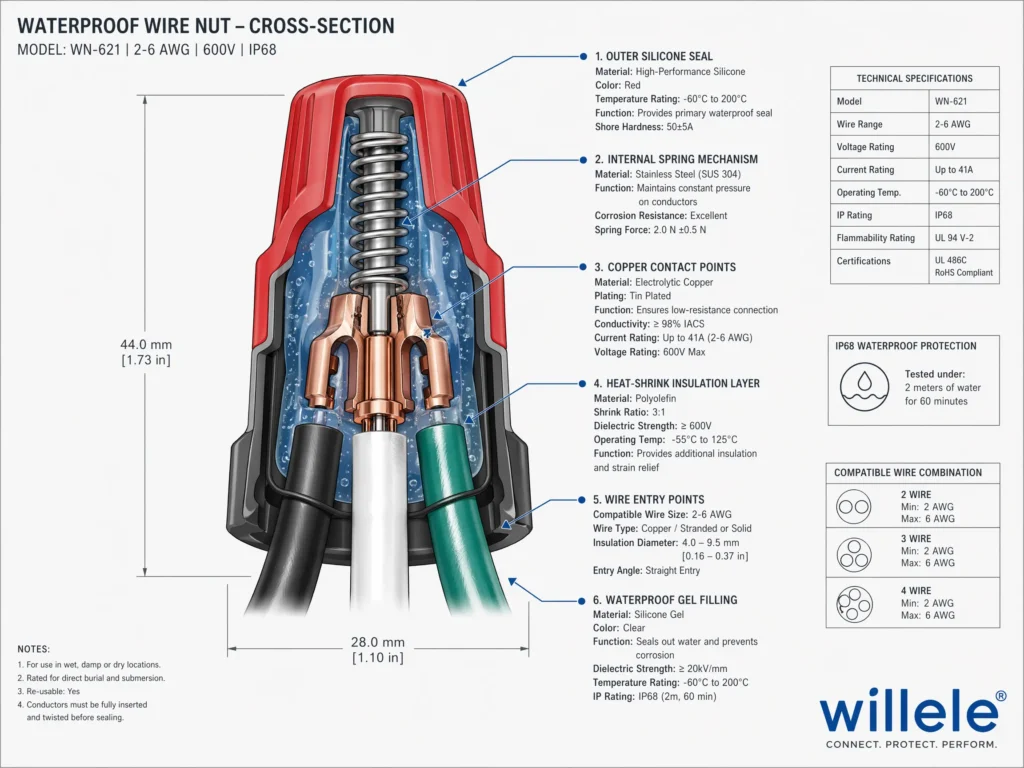
Premium waterproof wire nuts incorporate silicone dielectric gel that flows around conductors during installation. This gel displaces air and moisture, creating a continuous barrier that prevents oxygen and water from reaching the copper interface. The gel remains pliable across temperature ranges from -40°C to +105°C, maintaining its seal through thermal cycling.
Heat-Shrink Integration
Advanced designs combine wire nuts with heat-shrink tubing that creates a secondary moisture barrier. When heated, the tubing contracts to form a tight seal around the wire nut body and conductor insulation. Internal adhesive layers melt during heating, flowing into gaps to eliminate potential moisture pathways.
Corrosion-Resistant Contact Materials
High-performance waterproof wire nuts use tin-plated or nickel-plated copper contacts rather than bare copper. These platings provide sacrificial protection and reduce galvanic potential between dissimilar conductor materials. The plating adds minimal resistance while dramatically extending service life in corrosive environments.
Performance Data from Coastal Installations
Real-world testing provides the most reliable performance indicators. The following data comes from documented installations in active coastal environments, including marinas, offshore platforms, coastal lighting systems, and beachfront facilities.
Comparative Performance Study
A three-year study tracking 500 connections across five coastal sites compared standard wire nuts, basic waterproof models, and premium silicone-gel waterproof wire nuts. The results demonstrate clear performance differentiation:
| Connection Type | Year 1 Failure Rate | Year 3 Failure Rate | Average Resistance Increase | Salt Fog Test Hours |
|---|---|---|---|---|
| Standard Wire Nut | 12% | 47% | 340% | 48 hours |
| Basic Waterproof | 3% | 18% | 85% | 240 hours |
| Premium Silicone-Gel | 0.5% | 4% | 12% | 1000+ hours |
| Heat-Shrink Integrated | 0.2% | 2% | 8% | 1500+ hours |
The data clearly shows that premium waterproof wire nuts justify their higher initial cost through dramatically reduced failure rates and maintenance requirements.
Installation Environment Impact
Performance varies significantly based on specific coastal exposure levels. The following table categorizes typical coastal installation environments and recommended waterproof wire nut specifications:
| Environment Zone | Salt Exposure | Recommended IP Rating | Minimum Gel Fill | Expected Service Life |
|---|---|---|---|---|
| Protected Coastal (>1km inland) | Low | IP65 | Optional | 15-20 years |
| Active Coastal (100m-1km) | Moderate | IP67 | Recommended | 10-15 years |
| Marine Direct (0-100m) | High | IP68 | Required | 8-12 years |
| Splash Zone/Dock | Extreme | IP68 + UV | Required + Heat-shrink | 5-8 years |
Installation Best Practices for Maximum Performance
Even premium waterproof wire nuts require proper installation to achieve their rated performance. Field failures often trace back to installation errors rather than product deficiencies.
Surface Preparation
Remove oxidation from conductor surfaces before insertion. Use a wire brush or abrasive pad to expose bright copper. Oxidized surfaces create high-resistance interfaces that generate heat and accelerate failure even within waterproof housings. This step takes 30 seconds per connection but can double service life.
Conductor Insertion Depth
Insert conductors to the depth mark or until resistance is felt. Shallow insertion leaves conductor ends exposed to moisture that can wick into the connection through capillary action along the wire strands. Full insertion ensures conductors reach the gel-filled zone where complete encapsulation occurs.
Heat-Shrink Application
When using heat-shrink integrated waterproof wire nuts, apply heat evenly using a heat gun with controlled temperature output. Move the heat source continuously to avoid hot spots that can damage the wire nut body or conductor insulation. The heat-shrink should contract uniformly without bubbling or scorching.
Strain Relief
Provide adequate strain relief to prevent mechanical stress on connections. Coastal installations experience wind loading that can fatigue connections over time. Use cable ties or clamps within 15cm of the connection to isolate mechanical stress from the electrical interface.
Economic Analysis: Total Cost of Ownership
Initial product cost represents only a fraction of total ownership cost in coastal installations. Failure-related costs including emergency callouts, equipment downtime, and replacement labor typically exceed initial material costs by 10-20x.
Cost Comparison Model
Consider a typical coastal lighting installation with 200 wire connections:
Standard Wire Nut Scenario:
- Initial material cost: $200 (200 × $1.00)
- Year 1-3 failure repairs: $8,400 (estimated 30 failures × $280 service call)
- System downtime cost: $3,000
- Three-year total: $11,600
Premium Waterproof Wire Nut Scenario:
- Initial material cost: $800 (200 × $4.00)
- Year 1-3 failure repairs: $840 (estimated 3 failures × $280 service call)
- System downtime cost: $300
- Three-year total: $1,940
The premium waterproof solution delivers $9,660 in savings over three years—a 500% return on the incremental investment. This model uses conservative failure rate estimates; actual savings in high-exposure environments often exceed these projections.
Application-Specific Recommendations
Different coastal applications present unique challenges requiring tailored waterproof wire nut selection.
Marina and Dock Lighting
Direct splash exposure and submersion risk require IP68-rated waterproof wire nuts with heat-shrink integration. Connections should be elevated above the splash zone when possible, but must be rated for temporary submersion. Use stainless steel mounting hardware and UV-resistant cable ties.
Coastal HVAC Systems
Outdoor condensing units in coastal environments benefit from silicone-gel waterproof wire nuts rated for 105°C continuous operation. The combination of heat, vibration, and salt spray creates particularly demanding conditions. Ensure adequate ventilation around connection points to prevent heat buildup.
Parking Lot and Area Lighting
Pole-mounted fixtures experience extreme UV exposure combined with salt spray. Use waterproof wire nuts with UV-stabilized housings rated for 20+ years outdoor exposure. Consider heat-shrink integration for connections in exposed junction boxes.
Solar Installations
Photovoltaic systems in coastal areas require waterproof wire nuts rated for DC applications with appropriate voltage ratings. The combination of DC current, high voltage, and moisture creates unique arcing risks. Select products specifically tested for PV applications with appropriate UL or IEC certifications.
Quality Standards and Certifications
Specifying waterproof wire nuts requires understanding relevant quality standards and what they actually test.
IP Rating Interpretation
IP (Ingress Protection) ratings use a two-digit code. The first digit indicates solid particle protection (0-6), the second indicates liquid protection (0-8). For coastal installations, focus on the second digit:
- IP65: Protected against water jets (minimum for protected coastal)
- IP67: Protected against temporary immersion to 1m depth (recommended for active coastal)
- IP68: Protected against continuous immersion (required for marine direct)
UL and CSA Listings
UL 486C covers wire connectors for use with aluminum conductors. UL 486D covers insulated wire connectors. Ensure waterproof wire nuts carry appropriate listings for your specific application and conductor materials. CSA certification indicates compliance with Canadian electrical standards.
Salt Fog Testing
ASTM B117 salt fog testing exposes products to continuous 5% salt spray at 35°C. Premium waterproof wire nuts should demonstrate 1000+ hours without corrosion or performance degradation. Request test reports from manufacturers for critical applications.
Maintenance and Inspection Protocols
Even waterproof connections benefit from periodic inspection, particularly in extreme coastal environments.
Visual Inspection Schedule
Conduct visual inspections annually for protected coastal installations, semi-annually for active coastal, and quarterly for marine direct exposure. Look for housing cracks, discoloration indicating UV damage, and signs of moisture ingress such as corrosion staining.
Thermal Imaging
Infrared inspection can identify developing high-resistance connections before failure occurs. Connections running more than 10°C above ambient under load indicate degradation requiring investigation. Schedule thermal surveys every 2-3 years for critical systems.
Resistance Testing
Periodic resistance measurements using a low-resistance ohmmeter can track connection degradation over time. Establish baseline measurements at installation and compare during inspections. Resistance increases exceeding 50% of baseline indicate replacement is needed.
Future Developments in Waterproof Connection Technology
The waterproof wire nut category continues to evolve with new materials and designs addressing coastal installation challenges.
Graphene-Enhanced Seals
Research into graphene-enhanced silicone compounds promises improved moisture barrier properties and extended service life. These advanced materials may push service life in marine environments beyond 15 years.
Smart Connection Monitoring
Emerging products integrate temperature and moisture sensors into waterproof wire nuts, enabling remote monitoring of connection health. These systems can predict failures before they occur, enabling proactive maintenance.
Bio-Based Materials
Environmental concerns are driving development of bio-based polymers for wire nut housings. These materials offer comparable performance to petroleum-based plastics while reducing environmental impact.
Conclusion
Waterproof wire nuts represent essential infrastructure for reliable coastal electrical installations. The performance data clearly demonstrates that premium waterproof solutions deliver superior reliability and lower total cost of ownership compared to standard alternatives.
For electrical contractors and facility managers working in coastal environments, the specification decision should focus not on whether to use waterproof wire nuts, but which performance level matches the specific exposure conditions. The incremental cost of premium silicone-gel or heat-shrink integrated products pays for itself many times over through reduced failures and maintenance costs.
As coastal development continues and climate change increases storm intensity and salt spray exposure, the importance of robust waterproof connections will only grow. Investing in proven waterproof wire nut technology today protects both electrical system reliability and long-term operational budgets.
Frequently Asked Questions
Q: Can I use waterproof wire nuts for indoor applications?
A: Yes, waterproof wire nuts work perfectly in indoor applications and provide extra protection in high-humidity environments like bathrooms, laundries, and mechanical rooms. However, standard wire nuts are more economical for dry indoor locations.
Q: How do I know if my installation requires IP67 or IP68 rated connectors?
A: IP67 is sufficient for locations that may experience rain or spray but not submersion. IP68 is required for any location that could be temporarily or permanently submerged, including splash zones, below-deck marine applications, or areas subject to flooding.
Q: Can waterproof wire nuts be reused if I need to modify a connection?
A: Silicone-gel filled waterproof wire nuts should not be reused, as the gel seal is compromised once opened. Heat-shrink integrated types are single-use only. For temporary or frequently modified connections, consider waterproof junction boxes with reusable terminal blocks.
Q: What’s the maximum number of conductors I can connect with a waterproof wire nut?
A: This depends on the specific product and conductor gauge. Most waterproof wire nuts follow the same capacity ratings as standard wire nuts. Always consult manufacturer specifications and ensure conductors are fully inserted into the gel-filled zone.
Q: Do waterproof wire nuts work with aluminum conductors?
A: Some waterproof wire nuts are rated for aluminum conductors (look for UL 486C listing), but many are copper-only. Always verify compatibility before use. Aluminum connections in coastal environments face additional challenges due to aluminum oxide formation and require specialized products.
Q: How long do waterproof wire nuts last in coastal environments?
A: Service life depends on exposure level and product quality. Premium silicone-gel waterproof wire nuts typically last 8-15 years in active coastal environments, with longer life in protected locations and shorter life in direct marine splash zones.
