
Size Selection Guide: Matching Wire Nuts to Wire Gauge

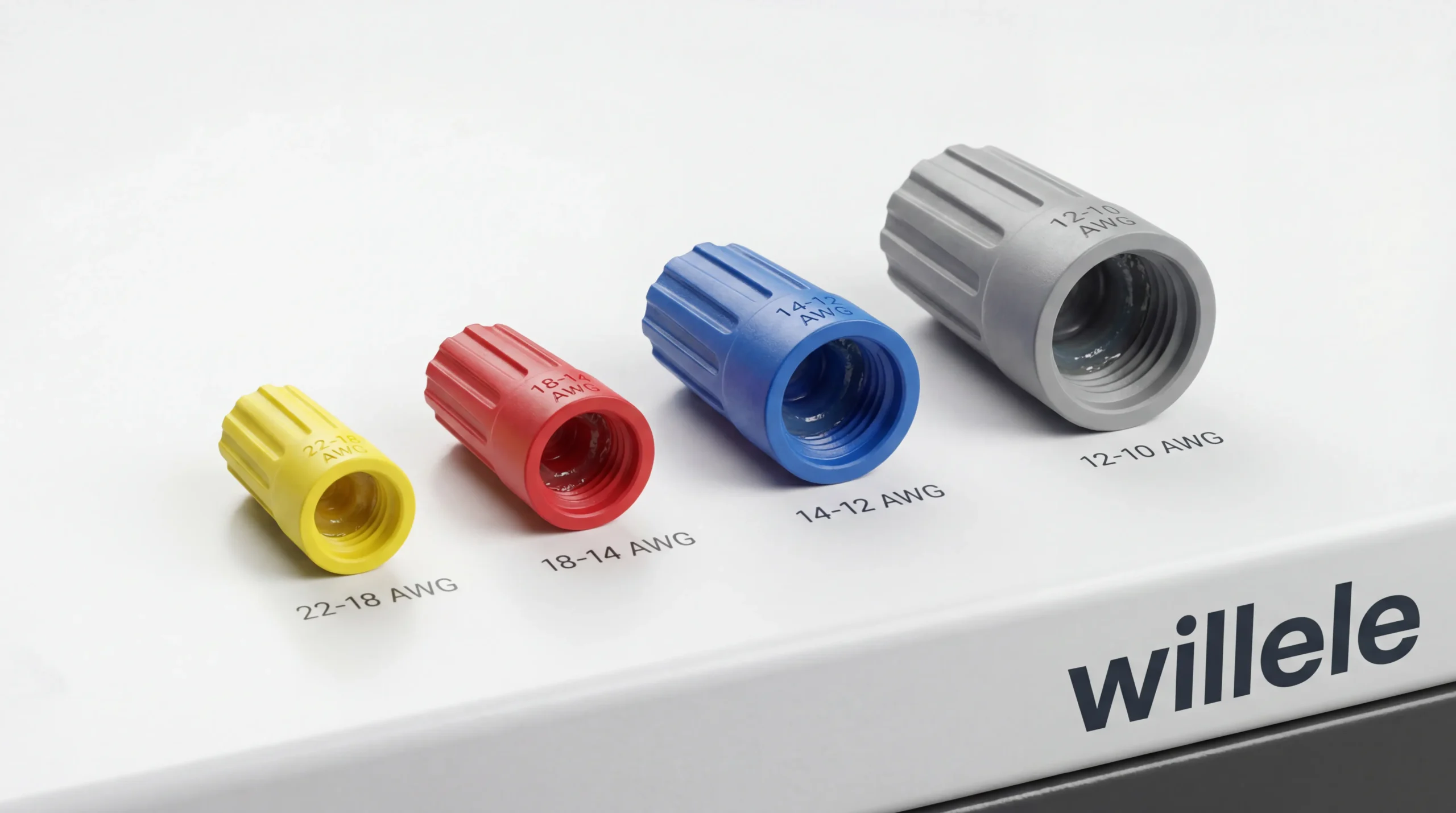
In the world of electrical installations, the integrity of a circuit is often defined by its weakest link: the connection point. For professional electricians, contractors, and procurement managers, understanding proper wire nut sizing is not merely a matter of convenience—it is a critical safety protocol. A loose connection caused by an improperly sized connector can lead to arcing, overheating, and potentially catastrophic electrical fires.
At Willele Electric, we understand that selecting the right components is the foundation of reliable electrical infrastructure. This guide provides a comprehensive B2B overview of wire connector selection, helping you match the correct wire nut to your specific wire gauge requirements.
Understanding Wire Gauge and the AWG System
Before diving into connector specifics, it is essential to have a firm grasp of the American Wire Gauge (AWG) system. The AWG system is a logarithmic stepped wire gauge standard used predominantly in North America.
- The Inverse Rule: The most important rule to remember is that the gauge number is inversely proportional to the wire diameter. A 10 AWG wire is significantly thicker than a 22 AWG wire.
- Current Capacity: Thicker wires (lower AWG numbers) carry more current and require larger connectors to accommodate their bulk and the heat they may generate.
- Solid vs. Stranded: While the gauge might be the same, stranded wire has a slightly larger diameter than solid wire of the same AWG. High-quality wire nuts, like those manufactured by Willele Electric, are designed to grip both types securely.
Wire Nut Color Coding Standards
The electrical industry relies on a standard color-coding system to streamline wire nut sizing. While there can be slight variations between manufacturers, the general hierarchy from smallest to largest capacity follows a predictable pattern.
Color Coding Reference Table
| Color Code | Size Category | Typical Wire Range (AWG) | Common Usage |
|---|---|---|---|
| Grey | Small | 22 – 16 AWG | Low-voltage wiring, doorbells, thermostats |
| Blue | Small-Medium | 22 – 14 AWG | Ballasts, control wiring, light fixtures |
| Orange | Medium | 22 – 14 AWG | Light fixtures, outlets, ceiling fans |
| Yellow | Medium-Large | 18 – 10 AWG | General residential/commercial wiring (outlets, switches) |
| Red | Large | 18 – 8 AWG | Heavy-duty wiring, 240V circuits, sub-panels |
| Big Blue/Grey | Extra Large | 14 – 6 AWG | Service entrance, large commercial feeders |
Comprehensive Sizing Guide
Selecting the right connector involves more than just matching a single wire to a color. You must calculate the aggregate size of the wire combination. The internal spring mechanism of the wire nut must be able to expand enough to accept the wires while contracting enough to bite into the copper for a secure low-resistance path.
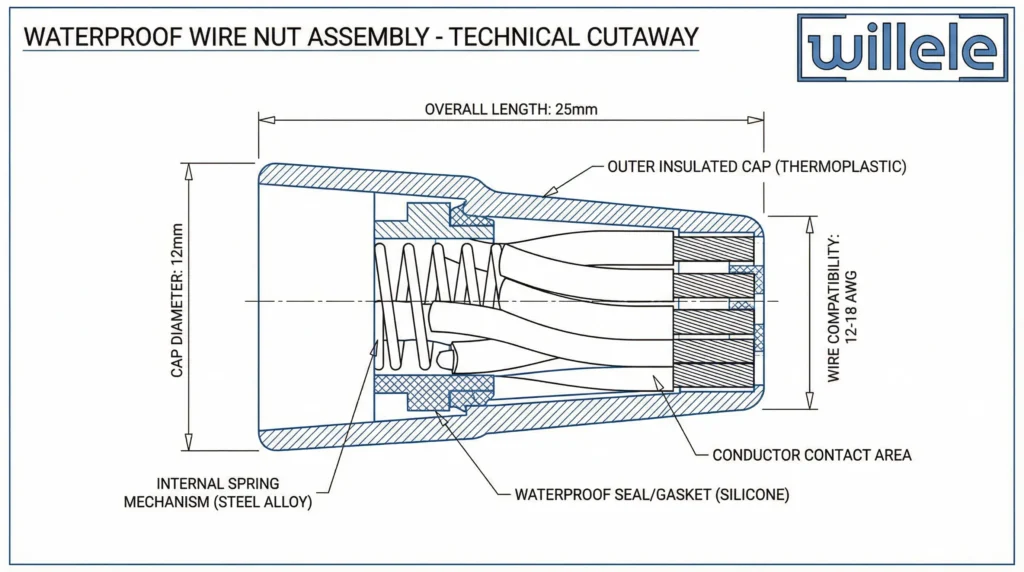
As shown in the technical diagram above, the internal tapered spring is the heart of the connector. If the wire bundle is too small, the spring won’t grip; if it is too large, the structural integrity of the cap may fail.
Wire Nut Size to Wire Gauge Compatibility Chart
This chart outlines the minimum and maximum capacity for standard connectors.
| Connector Color | Minimum Combination | Maximum Combination |
|---|---|---|
| Grey | 2 x #22 AWG | 2 x #16 AWG |
| Blue | 2 x #22 AWG | 3 x #16 AWG |
| Orange | 2 x #18 AWG | 4 x #16 AWG or 2 x #14 AWG |
| Yellow | 2 x #18 AWG | 3 x #12 AWG or 2 x #10 AWG |
| Red | 2 x #14 AWG | 4 x #10 AWG or 2 x #8 AWG |
Capacity Comparison Table (Wire Count)
To further assist in wire connector selection, consider how many wires of a specific gauge fit into common nuts.
| Wire Gauge | Orange Nut Capacity | Yellow Nut Capacity | Red Nut Capacity |
|---|---|---|---|
| #14 AWG | 2 to 3 wires | 2 to 4 wires | 2 to 6 wires |
| #12 AWG | Not Recommended | 2 to 3 wires | 2 to 5 wires |
| #10 AWG | Incompatible | 2 wires | 2 to 3 wires |
Application-Specific Recommendations
Different environments require different approaches to sizing and connector type. Willele Electric recommends the following pairings for common B2B and industrial applications.
| Application | Recommended Connector | Notes |
|---|---|---|
| Commercial Lighting | Orange or Yellow | Orange is ideal for connecting fixture leads (usually #18) to supply lines (#12 or #14). |
| HVAC Controls | Blue or Grey | Low voltage thermostat wires require smaller nuts for a tight grip. |
| Residential Receptacles | Yellow | The industry standard for tying together #12 or #14 Romex wiring. |
| Outdoor/Damp Locations | Waterproof (Aqua/Blue) | Crucial: Standard nuts are not waterproof. Use silicone-filled nuts for irrigation or landscape lighting. |
| Heavy Machinery | Red or Big Blue | High vibration environments require the strong spring tension of larger nuts. |
Installation Best Practices
Even the correctly sized wire nut can fail if installed incorrectly. Follow these professional standards to ensure longevity.
- Strip Length: Strip wires to the length recommended by the manufacturer (usually 1/2 inch to 3/4 inch). Too short, and the connection is weak; too long, and you risk exposed live copper.
- Alignment: Align the frayed strands of stranded wire or the ends of solid wire so they are even.
- The Twist: Insert wires into the connector and twist clockwise.
- Pro Tip: There is debate about “pre-twisting” wires. Most modern wire nuts, including Willele’s premium line, are designed to twist the wires themselves as you tighten the nut.
- The Pull Test: Once connected, hold the nut and gently pull on each individual wire. If any wire comes loose, the connection is failed and must be redone.
- Strain Relief: Ensure wires are not under tension pulling away from the nut.
Common Mistakes to Avoid
- Overfilling: Forcing too many wires into a nut can split the plastic shell or push the spring out of position. If you have too many wires, use a larger nut or create a “pigtail” connection.
- Underfilling: Using a large Red nut for two thin #18 wires will result in a loose connection that can spark.
- Mixing Metals: Never use standard wire nuts to connect aluminum wire to copper wire unless the connector is specifically rated for Al/Cu bonding (usually purple).
- Ignoring Environment: Using standard indoor nuts for outdoor applications is a leading cause of failure. For moisture-prone areas, always utilize waterproof connectors or supplement with Willele Electric’s high-grade heat shrink tubes for an impenetrable seal.
Safety Considerations
The primary goal of strict wire nut sizing protocols is fire prevention. An undersized connector creates high resistance, which generates heat. Over time, this heat cycles the plastic, causing it to become brittle and crack, exposing live parts.
Furthermore, in industrial settings, vibration is a constant factor. A properly sized wire nut acts as a lock washer, using the spring tension to prevent the connection from vibrating loose. For critical infrastructure, consider using specialized connectors or supplementary insulation products available through Willele Electric’s catalog.
Frequently Asked Questions (FAQ)
Can you reuse wire nuts?
Generally, it is not recommended to reuse wire nuts, especially in professional B2B applications. The internal spring stretches and deforms to fit the specific wire combination of the first installation. Reusing it on a different combination may result in a loose grip.
What happens if you use the wrong size?
Using a wire nut that is too large will result in loose wires that can arc and cause fires. Using one that is too small can crack the insulation cap or damage the wire strands, also leading to potential shorts and failure.
How tight should wire nuts be?
Wire nuts should be tightened until they are snug and you cannot twist them further by hand. For solid wires, a good indicator is when the wires outside the nut begin to twist around each other.
Are wire nuts waterproof?
Standard wire nuts are not waterproof. For damp or wet locations (like landscape lighting or outdoor pumps), you must use specific waterproof wire nuts that are pre-filled with silicone sealant.
How many wires can fit in a wire nut?
This depends entirely on the size of the nut and the gauge of the wire. A Yellow nut might fit four #14 wires but only two #10 wires. Always refer to the manufacturer’s compatibility chart (like the one provided above) rather than guessing.
Partner with Willele Electric
Ensuring the safety and efficiency of your electrical projects starts with the right components. From precision-engineered wire nuts to industrial-grade heat shrink tubes, Willele Electric provides the reliability that contractors and industry leaders trust.
Don’t compromise on connection quality. Explore our full range of electrical solutions and secure your supply chain with Willele Electric today.
