
Specialist manufacturer of flame-retardant heat-shrink tubing

In the modern electrical and electronics industry, protecting wiring systems from environmental hazards, mechanical stress, and thermal damage is paramount. Heat-shrink tubing has emerged as an indispensable solution for insulation, strain relief, and cable management across diverse applications. Among the various types available, flame-retardant heat-shrink tubing stands out as a critical component for safety-conscious installations, particularly in high-risk environments where fire prevention is non-negotiable.
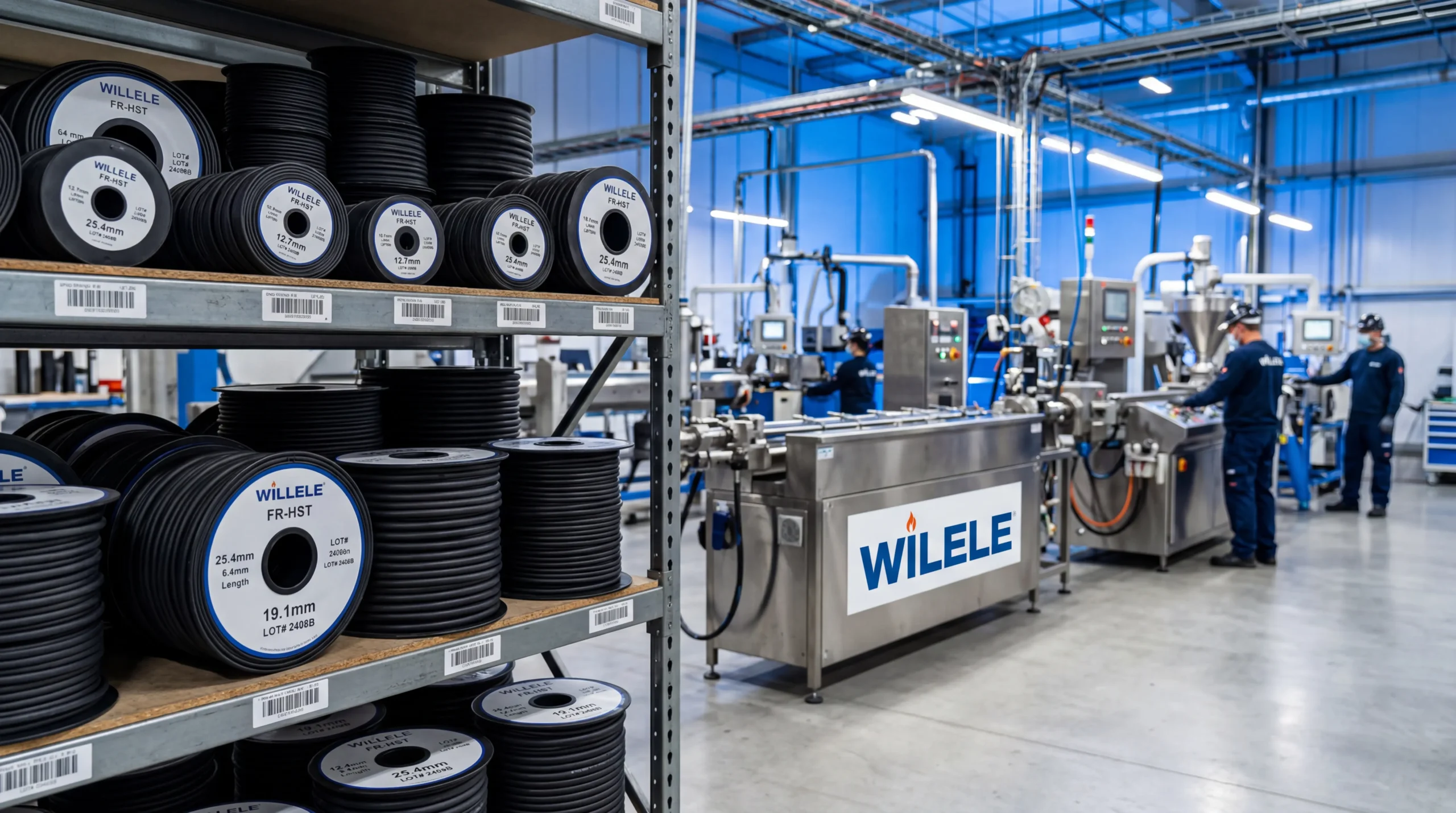
Willele Electrical specializes in manufacturing premium flame-retardant heat-shrink tubing designed to meet the rigorous demands of B2B clients worldwide. With advanced production facilities, stringent quality control processes, and a deep understanding of industry standards, Willele delivers solutions that combine superior performance with reliable fire safety characteristics.
Understanding Heat-Shrink Tubing Technology
Heat-shrink tubing is a thermoplastic tube that contracts radially when exposed to heat, creating a tight, protective seal around cables, wires, and connectors. The shrinkage process is triggered by applying controlled heat through tools such as heat guns, ovens, or infrared heaters. Once shrunk, the tubing provides mechanical protection, electrical insulation, and environmental sealing.
The fundamental principle behind heat-shrink technology involves polymer memory. During manufacturing, the tubing is cross-linked and expanded at elevated temperatures. When reheated during application, the molecular structure returns to its original, smaller diameter, conforming tightly to the substrate beneath.
Key Material Compositions
Flame-retardant heat-shrink tubing is manufactured from specialized polymer compounds engineered to resist ignition and limit flame propagation. Common materials include:
Polyolefin: The most widely used base material, offering excellent electrical insulation, flexibility, and cost-effectiveness. When formulated with flame-retardant additives, polyolefin tubing achieves UL VW-1 or CSA FT2 ratings.
Fluoropolymers: Including PTFE (polytetrafluoroethylene), FEP (fluorinated ethylene propylene), and PVDF (polyvinylidene fluoride), these materials provide exceptional chemical resistance, high-temperature performance (up to 260°C), and inherent flame resistance.
Elastomers: Silicone rubber and fluorosilicone offer superior flexibility at extreme temperatures (-55°C to 200°C) while maintaining flame-retardant properties, ideal for aerospace and military applications.
Halogen-Free Compounds: Increasingly popular due to environmental regulations, these formulations use phosphorus-based or mineral-filled additives instead of halogenated compounds, producing minimal toxic smoke during combustion.
Flame-Retardant Properties and Certifications
The flame-retardant characteristics of heat-shrink tubing are quantified through standardized testing protocols that evaluate ignition resistance, flame spread, and smoke generation. Understanding these certifications is essential for specifying appropriate products for specific applications.
International Fire Safety Standards
| Standard | Region | Key Requirements | Typical Applications |
|---|---|---|---|
| UL 224 VW-1 | North America | Self-extinguishing within 60 seconds, no flaming drips | General industrial wiring |
| CSA C22.2 | Canada | Similar to UL VW-1, Canadian compliance | Canadian installations |
| IEC 60332-1 | International | Single vertical wire test, flame extinction | Global electrical systems |
| BS EN 45545 | Europe | Railway fire protection, toxicity limits | Rail transportation |
| MIL-DTL-23053 | Military | Military specification for heat-shrink tubing | Defense applications |
| ASTM D2671 | USA | Heat shrinkability and physical properties | Industrial quality control |
Willele’s flame-retardant heat-shrink tubing consistently meets or exceeds these stringent standards, with comprehensive testing documentation available for every product batch. Our quality assurance laboratory conducts regular verification testing using calibrated equipment traceable to international standards.
Halogen-Free vs. Traditional Formulations
The choice between halogen-free and traditional flame-retardant formulations involves balancing performance characteristics, environmental impact, and regulatory compliance:
Traditional Halogenated Formulations: Contain chlorine or bromine-based additives that effectively interrupt combustion reactions. While highly effective at flame suppression, these materials produce corrosive and toxic gases (hydrogen chloride, hydrogen bromide) when burned, posing risks in enclosed spaces.
Halogen-Free Alternatives: Utilize metal hydroxides (aluminum hydroxide, magnesium hydroxide) or phosphorus compounds that release water vapor or form protective char layers during heating. These materials generate significantly less smoke and toxic gas, making them preferable for public buildings, transportation systems, and data centers where evacuation time and equipment protection are critical.
Manufacturing Excellence at Willele
Willele Electrical operates state-of-the-art production facilities equipped with advanced extrusion lines, electron beam cross-linking systems, and automated quality inspection stations. Our manufacturing process ensures consistent product quality, precise dimensional control, and reliable flame-retardant performance.
Production Process Overview
Compound Formulation: Raw polymers are blended with flame-retardant additives, stabilizers, colorants, and processing aids according to proprietary formulations developed through extensive R&D. Each batch undergoes rheological testing to verify processing characteristics.
Extrusion: The compound is melted and forced through precision dies to create tubes with exact wall thickness and diameter specifications. Multi-layer co-extrusion capabilities allow production of specialized constructions with distinct inner and outer layers.
Cross-Linking: Tubes pass through electron beam accelerators or chemical cross-linking systems that create three-dimensional molecular networks, enhancing thermal stability, chemical resistance, and mechanical strength.
Expansion: Cross-linked tubes are heated above their glass transition temperature and mechanically expanded to the desired diameter, creating the “memory” that enables heat-shrink functionality.
Quality Control: Every production lot undergoes comprehensive testing including shrink ratio verification, tensile strength measurement, dielectric strength testing, and flame-retardant performance validation.
Quality Assurance Protocols
Willele maintains ISO 9001:2015 certification and implements rigorous quality management systems throughout the production cycle. Statistical process control monitors critical parameters in real-time, while automated optical inspection systems detect dimensional variations and surface defects.
Our testing laboratory is equipped with:
- Universal testing machines for mechanical property evaluation
- High-voltage dielectric test equipment
- Vertical flame chambers compliant with UL 224 and IEC 60332-1
- Smoke density chambers for toxicity assessment
- Thermal aging ovens for long-term stability verification
- Precision measurement systems with ±0.01mm resolution
Technical Specifications and Performance Characteristics
Selecting appropriate heat-shrink tubing requires careful consideration of multiple performance parameters. Willele offers comprehensive product lines tailored to specific application requirements.
Dimensional Parameters
| Property | Standard Range | High-Performance Range |
|---|---|---|
| Supplied Diameter | 1.0mm – 150mm | 0.5mm – 300mm |
| Shrink Ratio | 2:1, 3:1 | 4:1, 6:1 |
| Wall Thickness | 0.2mm – 3.0mm | 0.15mm – 5.0mm |
| Shrink Temperature | 90°C – 120°C | 135°C – 175°C |
| Operating Temperature | -55°C to +125°C | -75°C to +260°C |
Electrical Properties
Flame-retardant heat-shrink tubing must provide reliable electrical insulation throughout its service life. Key electrical specifications include:
Dielectric Strength: Typically 15-25 kV/mm for polyolefin formulations, ensuring adequate insulation for voltage ratings up to 600V. High-performance fluoropolymer versions achieve 30+ kV/mm for medium-voltage applications.
Volume Resistivity: Exceeds 10¹⁴ Ω·cm, preventing leakage currents and maintaining insulation integrity in humid environments.
Dielectric Constant: Low values (2.3-2.6) minimize capacitive coupling and signal distortion in high-frequency applications.
Mechanical Properties
Tensile Strength: 10-25 MPa depending on material composition, providing resistance to mechanical stress during installation and service.
Elongation at Break: 200-500% for flexible formulations, allowing accommodation of cable movement and thermal expansion.
Abrasion Resistance: Superior surface hardness protects against mechanical wear in harsh environments.
Application Sectors and Use Cases
Flame-retardant heat-shrink tubing serves critical functions across numerous industries where electrical safety and fire prevention are paramount.
Aerospace and Aviation
Aircraft wiring systems operate in extreme conditions with zero tolerance for failure. Willele’s aerospace-grade heat-shrink tubing meets stringent specifications including:
- FAA and EASA certification requirements
- Fluid resistance (jet fuel, hydraulic oil, de-icing fluids)
- Extreme temperature cycling (-65°C to +200°C)
- Low outgassing for pressurized cabin environments
- Flame propagation resistance per FAR 25.853
Rail Transportation
Railway systems require materials that minimize fire hazard and toxic smoke generation in passenger compartments. Our rail-certified products comply with:
- EN 45545-2 (European railway fire protection standard)
- NFPA 130 (North American transit systems)
- Oxygen index >28% for limited flame spread
- Low smoke density and toxicity ratings
Renewable Energy Systems
Solar photovoltaic installations and wind turbine generators demand heat-shrink tubing with exceptional UV resistance, weatherability, and long-term stability. Specialized formulations provide:
- 25+ year outdoor service life
- UV stabilization preventing degradation
- Wide temperature range for diverse climates
- Moisture sealing for junction box protection
Industrial Automation
Manufacturing facilities, process control systems, and robotics applications benefit from heat-shrink tubing that withstands:
- Chemical exposure (oils, solvents, cleaning agents)
- Mechanical abrasion from moving equipment
- Electromagnetic interference shielding (metallized versions)
- Color coding for circuit identification
Marine and Offshore
Shipboard electrical systems and offshore platforms face corrosive saltwater environments requiring:
- Excellent moisture resistance
- Fungus and mildew prevention
- Flame retardancy for confined spaces
- Compliance with maritime safety regulations (IEC 60092)
Comparative Analysis: Willele vs. Standard Products
| Feature | Standard Market Products | Willele Premium Products |
|---|---|---|
| Flame Retardancy | UL VW-1 basic compliance | Multiple certifications (UL, CSA, IEC, BS) |
| Shrink Ratio Tolerance | ±15% variation | ±5% precision control |
| Wall Thickness Uniformity | ±0.15mm | ±0.05mm |
| Color Stability | Fading after 1-2 years | UV-stabilized, 5+ year retention |
| Temperature Rating | -40°C to +105°C | -55°C to +135°C standard, up to +260°C available |
| Batch Traceability | Limited documentation | Full lot tracking with test certificates |
| Custom Formulations | Standard catalog only | Tailored compounds for specific requirements |
| Lead Time | 6-8 weeks | 3-4 weeks standard, expedited available |
Installation Best Practices
Proper installation techniques ensure optimal performance and longevity of flame-retardant heat-shrink tubing.
Preparation Steps
Surface Cleaning: Remove contaminants, oils, and oxidation from substrates using appropriate solvents (isopropyl alcohol for most applications). Clean surfaces ensure proper adhesion and prevent trapped moisture.
Sizing Selection: Choose tubing with recovered diameter 20-30% smaller than the substrate for tight fit without excessive stress. Oversized tubing may not provide adequate mechanical grip; undersized tubing risks splitting during shrinkage.
Length Calculation: Cut tubing 10-15% longer than the coverage area to account for longitudinal shrinkage (typically 5-10% depending on formulation).
Heat Application Techniques
Heat Gun Method: Most common for field installations. Use temperature-controlled guns (recommended 120-150°C for polyolefin) with circular motion to ensure uniform heating. Maintain 10-15cm distance to prevent localized overheating.
Oven Method: Ideal for batch processing. Convection ovens provide consistent temperature distribution. Typical cycle: 5-10 minutes at 120-140°C depending on tubing size.
Infrared Heating: Rapid processing for production environments. Precisely controlled radiant heat minimizes thermal stress on sensitive components.
Common Installation Errors
- Overheating: Causes material degradation, discoloration, and reduced flame retardancy
- Incomplete Shrinkage: Results in loose fit and compromised protection
- Trapped Air: Creates voids that reduce dielectric strength
- Mechanical Damage: Nicks or abrasions during installation compromise insulation integrity
Environmental Considerations and Sustainability
Modern flame-retardant heat-shrink tubing development increasingly focuses on environmental responsibility without compromising safety performance.
Halogen-Free Advantages
Willele’s halogen-free product lines address growing environmental and health concerns:
- Reduced Toxicity: Minimal HCl and dioxin generation during fire events
- Lower Smoke Density: Improved visibility for evacuation
- Equipment Protection: Non-corrosive combustion products prevent secondary damage
- Regulatory Compliance: Meets RoHS, REACH, and similar environmental directives
Recycling and End-of-Life
Cross-linked thermoplastics present recycling challenges, but Willele actively participates in industry initiatives for:
- Material reclamation programs for production scrap
- Development of recyclable formulations
- Extended product lifespan reducing replacement frequency
- Biodegradable alternatives for non-critical applications (under development)
Custom Solutions and Technical Support
Willele’s engineering team collaborates with B2B clients to develop customized heat-shrink tubing solutions for unique application challenges.
Customization Capabilities
- Specialized Formulations: Tailored polymer blends for specific chemical resistance, temperature ranges, or mechanical properties
- Dual-Wall Constructions: Outer flame-retardant layer with inner adhesive lining for environmental sealing
- Printed Tubing: Permanent marking with company logos, part numbers, or safety warnings
- Non-Standard Dimensions: Custom diameters, wall thicknesses, and lengths
- Color Coding Systems: Circuit identification schemes per customer specifications
Technical Consultation Services
Our applications engineers provide:
- Material selection guidance based on operating conditions
- Compliance documentation for regulatory submissions
- Installation training and troubleshooting support
- Failure analysis and corrective action recommendations
- Prototyping and validation testing
Quality Certifications and Compliance
Willele maintains comprehensive certification portfolios ensuring products meet global market requirements:
- ISO 9001:2015: Quality management systems
- ISO 14001:2015: Environmental management
- UL Recognition: File number available for flame-retardant ratings
- CSA Certification: Canadian electrical safety compliance
- RoHS Compliance: Restriction of hazardous substances
- REACH Registration: European chemical regulations
- Military Specifications: QPL listing for defense applications
Future Developments in Flame-Retardant Technology
The heat-shrink tubing industry continues evolving with emerging technologies and materials science advances.
Smart Materials Integration
Research into conductive polymers and embedded sensors may enable heat-shrink tubing that:
- Monitors insulation resistance in real-time
- Detects mechanical damage or moisture ingress
- Provides visual indicators of thermal stress
- Integrates with IoT-enabled maintenance systems
Advanced Flame Retardants
Next-generation additives under development include:
- Nanoparticle-based systems for improved efficiency
- Bio-based flame retardants from renewable resources
- Intumescent formulations creating protective char layers
- Synergistic combinations reducing additive loading
Sustainable Manufacturing
Willele invests in green manufacturing technologies:
- Solvent-free processing methods
- Energy-efficient electron beam cross-linking
- Closed-loop water recycling systems
- Solar-powered production facilities
Frequently Asked Questions
Q: What is the difference between flame-retardant and flame-resistant heat-shrink tubing?
A: Flame-retardant tubing is formulated to resist ignition and self-extinguish when the flame source is removed, meeting standards like UL VW-1. Flame-resistant tubing (often fluoropolymer-based) has inherent properties that prevent combustion even under prolonged flame exposure. Flame-retardant products are suitable for most commercial applications, while flame-resistant materials are specified for extreme fire hazard environments.
Q: How do I determine the correct shrink ratio for my application?
A: The shrink ratio indicates how much the tubing will contract (e.g., 2:1 means it shrinks to half its supplied diameter). For simple wire insulation, 2:1 is typically sufficient. Applications involving connectors, splices, or irregular shapes benefit from 3:1 or 4:1 ratios that accommodate larger diameter variations. Measure the largest diameter to be covered and select tubing with recovered diameter 20-30% smaller.
Q: Can flame-retardant heat-shrink tubing be used outdoors?
A: Yes, but UV-stabilized formulations are essential for outdoor longevity. Standard polyolefin tubing degrades under prolonged UV exposure, becoming brittle and discolored within 1-2 years. Willele’s outdoor-rated products incorporate UV inhibitors and carbon black pigmentation, providing 10+ year service life in direct sunlight. For maximum durability, consider fluoropolymer options rated for 25+ years outdoor exposure.
Q: What temperature should I use when shrinking the tubing?
A: Recommended shrink temperatures vary by material: polyolefin (90-120°C), PVDF (170-180°C), PTFE (327°C minimum). Using temperature-controlled heat guns prevents overheating, which can degrade flame-retardant properties and mechanical strength. The tubing should shrink smoothly without bubbling, discoloration, or burning. If unsure, start at lower temperatures and increase gradually.
Q: Are halogen-free flame-retardant products as effective as traditional formulations?
A: Modern halogen-free formulations achieve equivalent flame-retardant performance (UL VW-1, IEC 60332-1 ratings) while offering superior smoke and toxicity characteristics. The primary trade-offs are slightly higher cost and, in some cases, reduced flexibility or higher shrink temperatures. For applications where toxic smoke generation is a concern—such as public buildings, transportation, or data centers—halogen-free products provide superior overall safety.
Q: How long can heat-shrink tubing be stored before use?
A: When stored properly (cool, dry conditions away from direct sunlight, typically 15-25°C and <60% relative humidity), heat-shrink tubing remains usable for 2-3 years. Fluoropolymer materials have indefinite shelf life. Check for signs of degradation before use: discoloration, surface tackiness, or cracking indicate the material has aged beyond usability. Willele products include manufacturing date codes for inventory management.
Q: Can I use heat-shrink tubing for high-voltage applications?
A: Standard polyolefin heat-shrink tubing is rated for up to 600V. Medium-voltage applications (1kV-35kV) require specialized products with increased wall thickness, enhanced dielectric strength, and often stress-control features. Willele offers medium-voltage heat-shrink solutions with appropriate electrical testing and certification. Always verify voltage rating matches or exceeds your application requirements, and consult with our engineering team for critical high-voltage installations.
