
Thin Film vs Thick Film Heat Shrinkable Tube Performance

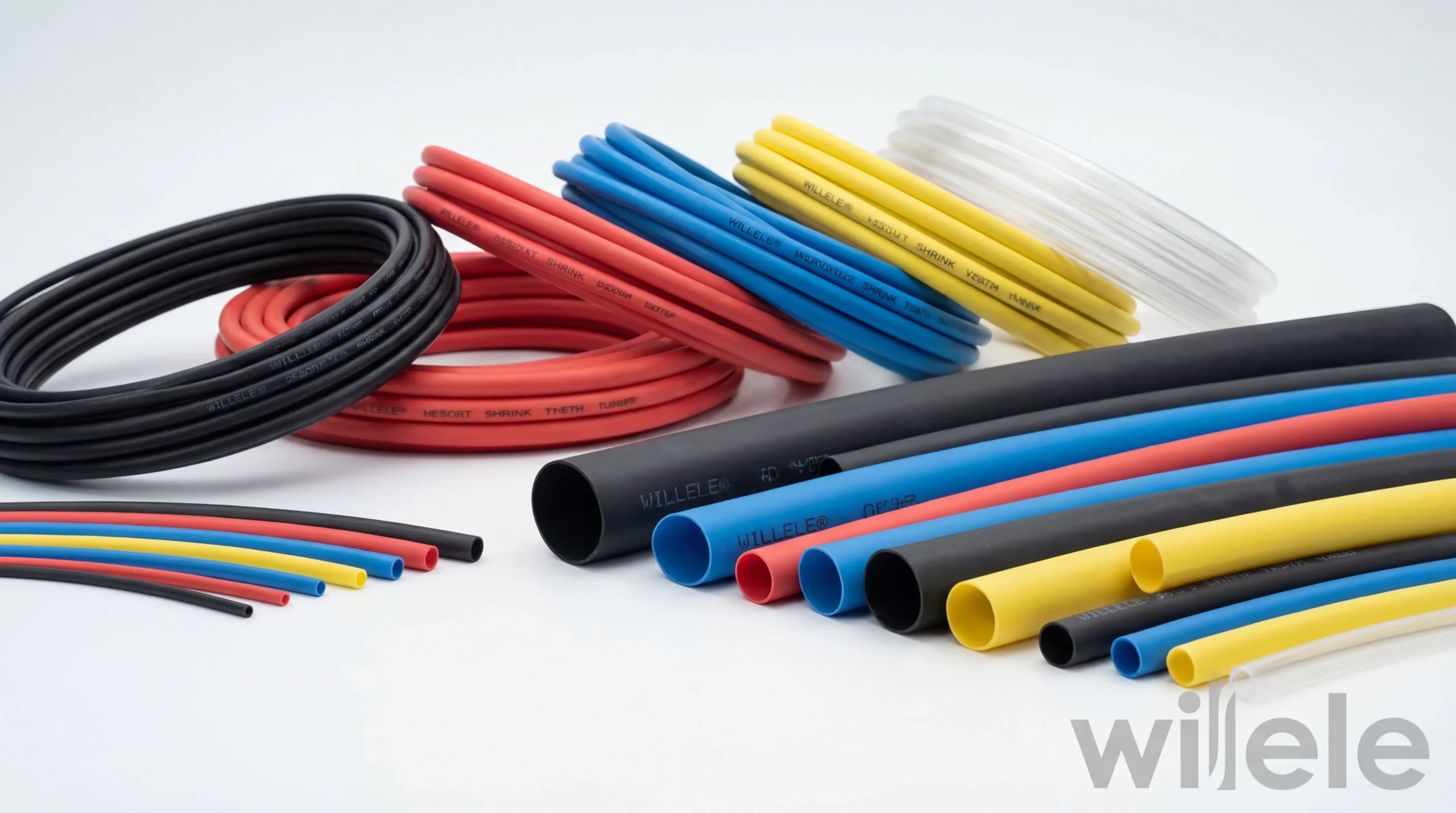
In the world of electrical insulation and cable protection, selecting the correct heat shrink tubing is critical for ensuring the longevity and safety of your connections. Understanding the nuances of Thin Film vs Thick Film Heat Shrinkable Tube Performance is essential for engineers, procurement officers, and technicians alike. As a leading B2B manufacturer, Willele Electric is dedicated to providing high-quality solutions tailored to specific industrial needs, ranging from delicate electronic components to rugged underground infrastructure.
Understanding the Basics: Thin Film vs. Thick Film
Heat shrink tubing is not a one-size-fits-all product. The terminology “thin film” (often referred to as thin-wall) and “thick film” (medium or heavy-wall) denotes significant differences in wall thickness, material density, and intended application environments.
What is Thin Film Heat Shrink Tubing?
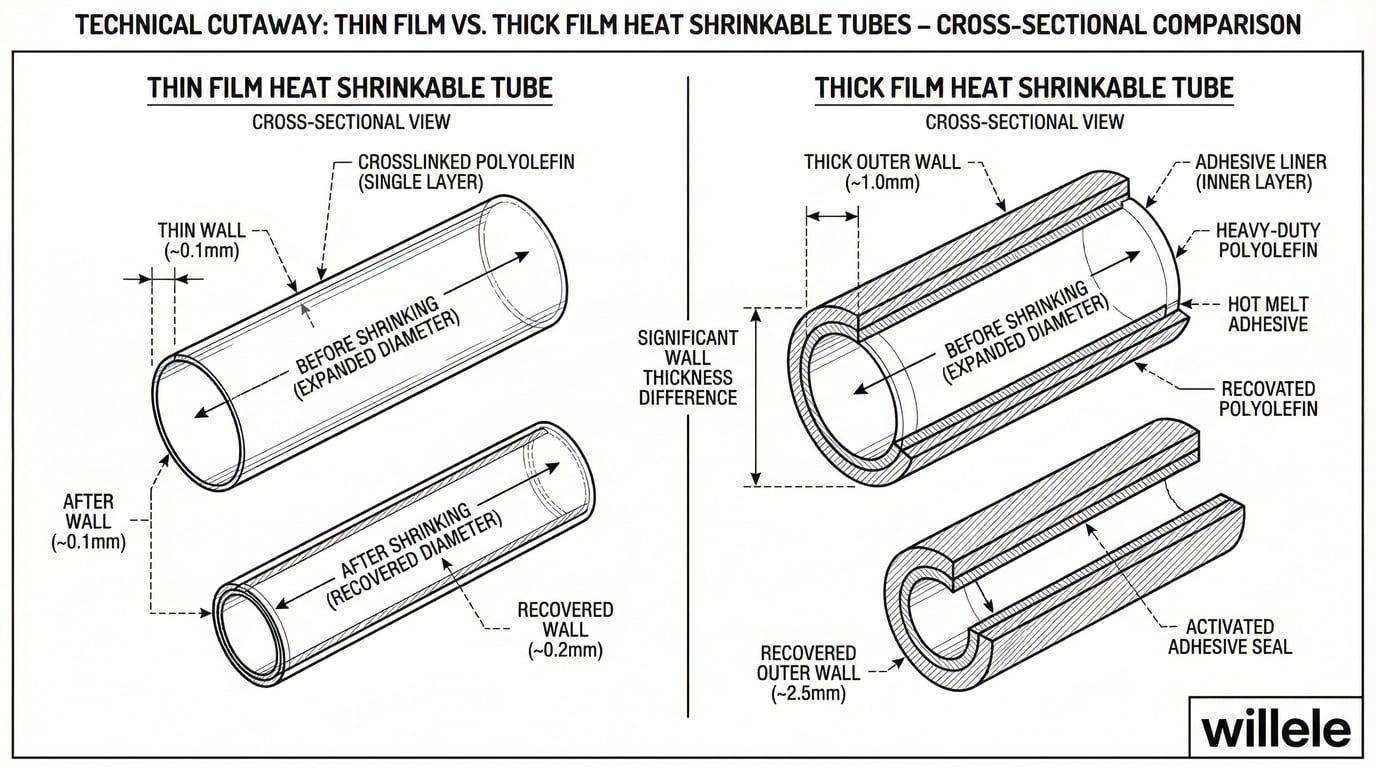
Thin film heat shrink tubing is characterized by its flexibility, low shrink temperature, and relatively thin wall thickness after recovery. It is primarily designed for electrical insulation, wire bundling, color coding, and strain relief in environments where mechanical impact is minimal. It is the standard choice for general-purpose electronics and automotive wiring harnesses.
What is Thick Film Heat Shrink Tubing?
Thick film heat shrink tubing, often known as heavy-wall or dual-wall tubing, is engineered for durability. It features a significantly thicker outer wall and often includes an inner adhesive liner (hot melt glue). This robust construction provides superior resistance to abrasion, impact, and environmental factors like moisture and chemicals, making it ideal for outdoor, underground, and heavy industrial applications.
Material Composition and Structure
While both types are commonly manufactured from cross-linked polyolefin, their formulation and structural design differ to meet their performance goals.
Thin Film Composition
- Base Material: Standard flame-retardant polyolefin.
- Structure: Single layer.
- Focus: Flexibility and ease of installation.
- Additives: Colorants for coding and flame retardants to meet UL VW-1 standards.
Thick Film Composition
- Base Material: High-density cross-linked polyolefin.
- Structure: Often dual-layer (co-extruded).
- Outer Layer: Rugged, abrasion-resistant polymer.
- Inner Layer: Hot melt adhesive or sealant that melts during shrinking to create a waterproof bond.
- Focus: Mechanical strength and environmental sealing.
Performance Characteristics Comparison
When evaluating Thin Film vs Thick Film Heat Shrinkable Tube Performance, three main categories define their utility: electrical isolation, mechanical protection, and environmental resistance.
1. Electrical Performance
Both types provide excellent electrical insulation. However, thick film tubes typically offer higher dielectric strength simply due to the increased volume of insulation material. Thin film is sufficient for low-voltage applications (up to 600V or 1kV), while thick film is often rated for low to medium voltage applications (1kV to 36kV depending on the specific product grade).
2. Mechanical Durability
This is the primary differentiator. Thin film tubing offers minimal protection against physical abuse. It can prevent wire chafing but will not withstand heavy impact or cutting forces. Thick film tubing is designed to resist significant abrasion, impact, and cut-through forces, simulating the protection of a cable jacket.
3. Environmental Resistance
Thick film tubing excels in harsh environments. The thick walls and adhesive liners prevent moisture ingress, making them submersible and suitable for direct burial. Thin film tubing is generally weather-resistant but is not designed for permanent submersion or extreme environmental exposure.
Comprehensive Comparison Tables
To help you select the right product for your specific needs, we have compiled detailed comparisons of specifications and performance metrics.
Table 1: Technical Specifications Comparison
| Feature | Thin Film (Thin Wall) | Thick Film (Heavy Wall) |
|---|---|---|
| Shrink Ratio | Typically 2:1 or 3:1 | High ratios: 3:1, 4:1, or up to 6:1 |
| Wall Thickness (Recovered) | 0.45mm – 1.0mm | 2.0mm – 4.5mm+ |
| Shrink Temperature | Low (~70°C – 90°C) | High (~110°C – 135°C) |
| Adhesive Liner | Usually None | Standard (Hot Melt Adhesive) |
| Flexibility | High / Very Flexible | Rigid / Semi-Rigid |
| Voltage Rating | Typically 600V | 1kV – 36kV |
Table 2: Performance Metrics Comparison
| Performance Metric | Thin Film Tubing | Thick Film Tubing |
|---|---|---|
| Abrasion Resistance | Low to Medium | Excellent |
| Impact Resistance | Low | High |
| Moisture Sealing | Fair (Dust/Splash) | Superior (Waterproof/Submersible) |
| UV Resistance | Good (Black color) | Excellent (Carbon black reinforced) |
| Chemical Resistance | Good | Excellent |
| Strain Relief | Moderate | Superior |
Table 3: Application Suitability
| Application Scenario | Recommended Type | Why? |
|---|---|---|
| Control Panel Wiring | Thin Film | Requires flexibility and space-saving. |
| Underground Cable Splices | Thick Film | Needs waterproofing and crush resistance. |
| Color Coding Wires | Thin Film | Cost-effective and available in many colors. |
| Submersible Pump Connections | Thick Film | Must be 100% watertight. |
| Automotive Harnessing | Thin Film | Flexibility for routing through chassis. |
| Battery Terminal Insulation | Thick Film | Protection against acid and accidental shorting. |
Advantages and Disadvantages
Thin Film Heat Shrink
Advantages:
- Cost-Effective: Lower material cost per meter.
- Fast Installation: Low shrink temperature requires less energy and time.
- Flexibility: Does not stiffen the cable significantly.
- Space-Saving: Adds minimal bulk to wire bundles.
Disadvantages:
- Low Protection: Susceptible to cuts and heavy abrasion.
- No Waterproofing: Lacks the adhesive liner needed for complete sealing.
Thick Film Heat Shrink
Advantages:
- Robust Protection: withstands rough handling, rocks, and soil pressure.
- Waterproof: Adhesive liner creates a hermetic seal against moisture.
- High Shrink Ratio: Can cover large connectors and shrink down to the cable diameter (up to 6:1).
Disadvantages:
- Rigidity: Makes the cable splice stiff and hard to bend.
- Higher Cost: More material and complex manufacturing process.
- Installation Time: Requires more heat and time to fully recover and activate the adhesive.
Frequently Asked Questions (FAQ)
Q1: Can I use thin film tubing for outdoor applications?
A: Yes, provided it is UV resistant (usually black). However, it is not recommended for applications where it will be exposed to standing water, burial, or physical abuse. For those scenarios, thick film is necessary.
Q2: Does thick film tubing always come with adhesive?
A: Most thick film or heavy-wall tubing is manufactured with an internal adhesive liner to ensure environmental sealing, as this is its primary use case. However, versions without adhesive are available for specific mechanical protection needs.
Q3: Which tubing shrinks faster?
A: Thin film tubing shrinks significantly faster because it has less mass to heat up. Thick film tubing requires a heat gun or torch to be applied for a longer period to ensure the heat penetrates the thick wall and melts the internal adhesive.
Q4: Can Willele Electric customize the wall thickness?
A: Yes. As a manufacturer, Willele Electric can customize heat shrink tubing specifications, including wall thickness, shrink ratios, and colors, to meet specific industrial requirements.
Q5: How do I choose the right size?
A: The “Rule of 80/20” is a good standard. The tubing should be large enough to slide over the component easily (at least 20% larger than the object) but small enough to shrink tight (the object should be at least 20% larger than the tubing’s fully recovered diameter).
Conclusion
Choosing between thin film and thick film heat shrinkable tubes ultimately depends on the environment your cables will face. If your priority is organization, basic insulation, and flexibility inside a control cabinet, thin film is the efficient choice. If your project involves direct burial, outdoor exposure, or heavy industrial machinery where failure is not an option, thick film provides the necessary armor.
At Willele Electric, we specialize in manufacturing high-performance heat shrink solutions for the global B2B market. Whether you need precise thin-wall tubing for electronics or rugged heavy-wall tubing for infrastructure, our factory ensures consistent quality and competitive pricing.
Ready to secure your connections? Contact Willele Electric today for a quote or to request samples of our premium heat shrink tubing products.
