
Understanding Modular Busbar Systems


Understanding Modular Busbar Systems? As any experienced engineer knows, power distribution panels can quickly devolve into a “spaghetti” of cables. This traditional approach, while familiar, introduces a host of challenges: inefficient power delivery, complex and time-consuming installation, and significant maintenance headaches. Every additional cable run creates another potential point of failure, complicates future upgrades, and consumes valuable space. In today’s high-demand environments like data centers and advanced manufacturing facilities, this method is simply not sustainable.

This is where modular busbar systems present an elegant, engineered solution. By replacing bundles of cables with rigid, prefabricated conductors, busbars offer a streamlined and highly efficient method for power distribution. Think of it as upgrading from a network of winding country roads to a multi-lane superhighway for your electrical power.
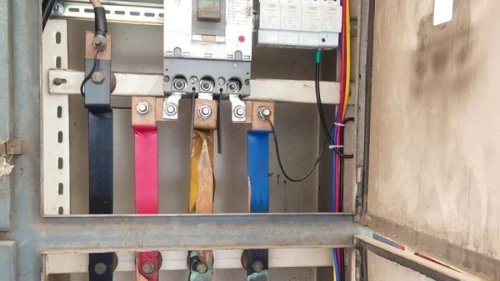
The Core Advantages of Modular Busbars
Transitioning to a busbar system isn’t just about tidying up a panel; it’s about fundamentally improving performance, safety, and long-term value.
- Efficiency & Performance: Busbars have significantly lower electrical impedance compared to cables of the same rating. This results in minimal voltage drop and reduced energy loss, delivering power more efficiently. With their large, flat surfaces, busbars also offer superior heat dissipation, allowing them to handle high current loads without the need for derating that often plagues bundled cables.
- Flexibility & Scalability: The true beauty of a modular busbar is its adaptability. Think of it like Lego blocks for your power infrastructure. Need to add a new machine or circuit? Simply install a “tap-off box” at any point along the busway, often without needing to shut down the entire system. This plug-and-play flexibility makes facility expansions or reconfigurations incredibly simple compared to the extensive rewiring required for cable-based systems.
- Space Optimization: In modern facilities, space is a premium. Busbar systems are exceptionally compact. Their slim, organized profile can reduce the physical footprint of your power distribution system, freeing up valuable floor or wall space and allowing for better airflow and cooling within enclosures.
- Enhanced Safety & Reliability: Fewer connection points mean fewer potential points of failure. A busbar system replaces countless individual cable terminations with solid, bolted connections, dramatically increasing system reliability. Furthermore, many busbar systems are enclosed in fire-retardant materials that do not release toxic fumes, a critical safety advantage over traditional PVC-insulated cables.
A Structured 4-Step Selection Method
Selecting the right busbar system requires a methodical approach. By breaking it down into these four steps, you can ensure the solution you choose is optimized for performance, cost, and longevity.
Step 1: Define Power Requirements
First, classify your application’s power level. Are you dealing with low, medium, or high power demands?
- Low Power (under 100A): Typically found in residential or small commercial settings.
- Medium Power (100A – 1000A): Common in commercial buildings, data centers, and light industrial plants.
- High Power (over 1000A): Reserved for large industrial facilities, utility grids, and heavy manufacturing.
Correctly identifying your power bracket is the first step to narrowing down suitable products and avoiding over- or under-engineering the system.
Step 2: Assess the Operating Environment
Next, analyze the conditions where the busbar will operate. Will it be exposed to moisture, corrosive chemicals, vibration, or extreme temperatures? The environment dictates the required level of protection and material resilience. For instance, a busbar in a marine environment will need a much higher degree of corrosion resistance than one in a climate-controlled data center.
Step 3: Select the Right Conductor and Finish
The choice of conductor material and surface plating is crucial for long-term performance.
- Conductor: The primary choice is between copper and aluminum. Copper offers superior conductivity and durability but comes at a higher cost and weight. Aluminum is a lighter, more cost-effective alternative, but requires a larger cross-sectional area to achieve the same conductivity as copper.
- Surface Plating: While silver offers the highest conductivity, it is prone to tarnishing, which can make new equipment look aged. Tin plating provides an excellent balance of conductivity, long-term durability, and corrosion resistance, making it the preferred choice for most modern applications.
Step 4: Plan for Future Scalability
One of the most significant advantages of modular busbars is scalability. Before finalizing your layout, think about the future. Where might you need to add equipment in two, five, or ten years? Planning for future tap-off points during the initial design phase is far more cost-effective than retrofitting them later. Ensure your design includes sufficient capacity and physical space for easy expansion.
Actionable Recommendations & Conclusion
While the initial material cost of a busbar system can be higher than traditional cables, the long-term benefits in efficiency, safety, and maintenance often lead to a lower Total Cost of Ownership (TCO).
As you implement modular busbar systems, keep these best practices in mind:
- Always Adhere to Torque Specifications: Improperly tightened connections are a primary cause of overheating and failure. Use a calibrated torque wrench for all bolted connections.
- Prioritize TCO over Upfront Cost: Evaluate the lifecycle savings from reduced energy loss, faster installation, and minimized downtime.
- Conduct Post-Installation Testing: Always perform thermal imaging inspections on the energized system to identify any potential hot spots before they become problems.
Modular busbar systems represent a critical evolution in power distribution. By moving beyond the limitations of traditional cabling, we can build electrical systems that are not only more efficient and reliable but are also inherently safer and ready for the demands of the future.
