
Using Busbar Insulators in Renewable Energy Systems

Introduction
As the global transition to renewable energy accelerates, the demand for reliable electrical infrastructure has never been more critical. Busbar insulators play a pivotal role in ensuring the safe, efficient operation of renewable energy systems, from solar farms to wind power installations. These specialized components provide essential electrical isolation while maintaining structural integrity in high-voltage environments.
Willele Electric, a leading B2B manufacturer specializing in heat shrink tubes and electrical insulation solutions, offers comprehensive busbar insulator products designed specifically for the unique challenges of renewable energy applications. This article explores the critical role of busbar insulators in modern renewable energy systems and how proper selection and implementation can enhance system performance and longevity.
Understanding Busbar Insulators in Renewable Energy Context
What Are Busbar Insulators?
Busbar insulators are specialized electrical components designed to support and isolate conductive busbars from grounded structures while maintaining mechanical stability. In renewable energy systems, these insulators must withstand extreme environmental conditions, voltage fluctuations, and mechanical stresses while providing consistent electrical isolation.
The primary functions include:
- Electrical Isolation: Preventing current leakage between conductors and grounded equipment
- Mechanical Support: Providing structural stability for heavy busbar assemblies
- Environmental Protection: Resisting moisture, UV radiation, temperature extremes, and chemical exposure
- Arc Resistance: Preventing electrical arcing and flashover events
- Thermal Management: Dissipating heat generated by high-current applications
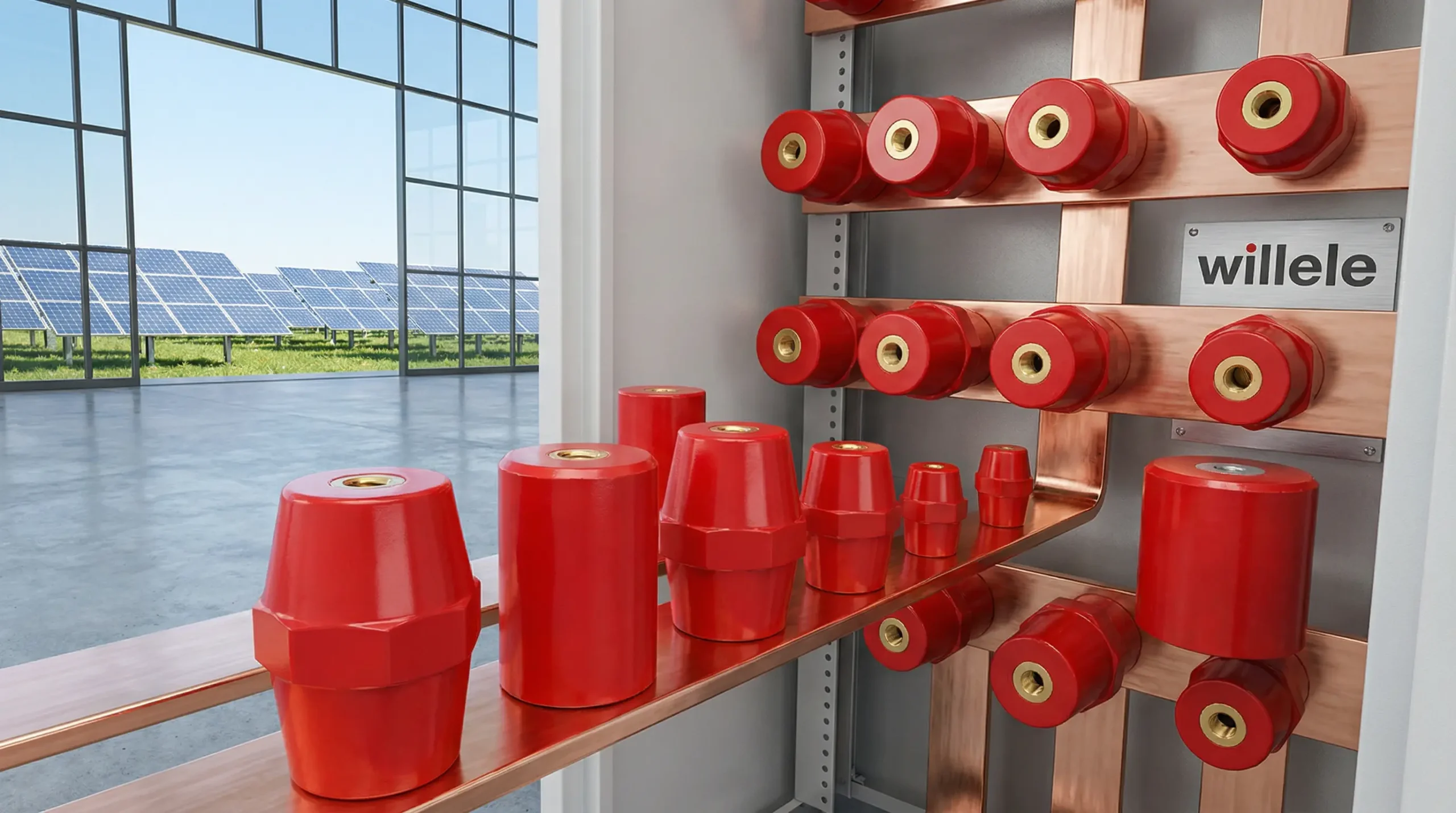
Alt text: Professional industrial installation of Willele red busbar insulators in a modern renewable energy facility with solar panels, demonstrating real-world application in clean energy infrastructure
Material Composition and Heat Shrink Technology
Modern busbar insulators utilize advanced materials engineered for optimal performance:
Core Insulation Materials:
- Epoxy resin compounds (high dielectric strength)
- Polyurethane formulations (excellent mechanical properties)
- Silicone rubber (superior temperature resistance)
- Cross-linked polyethylene (XLPE) for enhanced durability
Heat Shrink Tube Integration:
Willele Electric’s expertise in heat shrink tube technology provides additional advantages:
- Conformable Protection: Heat shrink tubes create seamless, moisture-resistant barriers
- Customizable Fit: Precise sizing for various busbar geometries
- Enhanced Dielectric Properties: Additional insulation layers increase voltage ratings
- Color Coding: Easy phase identification and safety compliance
- Repair Capability: Quick field repairs without complete insulator replacement
Applications in Renewable Energy Systems
Solar Power Installations
Solar photovoltaic (PV) systems require busbar insulators at multiple critical points:
Inverter Connections:
- High-current DC busbars connecting solar arrays to inverters
- Voltage ratings: 600V-1500V DC
- Current capacity: 100A-3000A depending on system size
Combiner Boxes:
- Multiple string connections requiring compact insulation solutions
- Space-constrained environments demanding high performance-to-size ratios
Outdoor Junction Points:
- UV-resistant insulators for exposed connections
- Weatherproof designs withstanding temperature ranges from -40°C to +85°C
Wind Energy Systems
Wind turbines present unique challenges for busbar insulation:
Nacelle Electrical Systems:
- High-vibration environments requiring robust mechanical anchoring
- Generator output connections handling variable frequency AC power
- Voltage levels: 690V-3300V AC
Tower Base Switchgear:
- Step-up transformer connections
- Lightning protection integration
- Moisture and condensation resistance
Offshore Applications:
- Salt fog and corrosion resistance
- Enhanced creepage distances for marine environments
- Hydrophobic surface treatments
Energy Storage Systems (ESS)
Battery energy storage systems demand specialized busbar insulation:
Battery Management Systems:
- Low-voltage DC connections (48V-800V)
- High current density (500A-6000A)
- Thermal management critical due to battery heat generation
Power Conversion Systems:
- AC/DC converter busbar connections
- Rapid voltage switching requiring superior dielectric properties
- Compact designs for containerized installations
Hydroelectric Facilities
Modernized hydroelectric plants utilize busbar insulators for:
- Generator output connections
- Switchyard equipment
- Control panel busbar systems
- High-humidity environment applications
Technical Specifications and Selection Criteria
Key Performance Parameters
| Parameter | Solar PV | Wind Energy | Energy Storage | Hydroelectric |
|---|---|---|---|---|
| Voltage Rating | 600-1500V DC | 690-3300V AC | 48-1000V DC | 3.3-35kV AC |
| Current Rating | 100-3000A | 500-5000A | 500-6000A | 1000-10000A |
| Operating Temp | -40°C to +85°C | -40°C to +70°C | -20°C to +60°C | -20°C to +80°C |
| Insulation Class | Class F/H | Class F/H | Class E/F | Class H |
| IP Rating | IP65-IP67 | IP65-IP67 | IP54-IP65 | IP54-IP65 |
| UV Resistance | Critical | Critical | Moderate | Low |
| Vibration Resistance | Moderate | Critical | Moderate | Low |
| Creepage Distance | 25-35mm/kV | 30-40mm/kV | 20-30mm/kV | 35-50mm/kV |
Material Selection Guide
Comparison of Insulator Materials for Renewable Applications:
| Material | Dielectric Strength | Temperature Range | UV Resistance | Cost Factor | Best Application |
|---|---|---|---|---|---|
| Epoxy Resin | Excellent (20-30 kV/mm) | -40°C to +130°C | Good | Medium | Indoor switchgear, ESS |
| Polyurethane | Very Good (15-25 kV/mm) | -50°C to +110°C | Moderate | Medium-High | Wind turbines, vibration-prone |
| Silicone Rubber | Good (12-20 kV/mm) | -60°C to +200°C | Excellent | High | Outdoor solar, extreme temps |
| XLPE | Very Good (18-28 kV/mm) | -40°C to +90°C | Excellent | Low-Medium | Solar PV, cost-sensitive |
| Ceramic | Excellent (25-40 kV/mm) | -50°C to +300°C | Excellent | High | High-voltage hydro, critical |
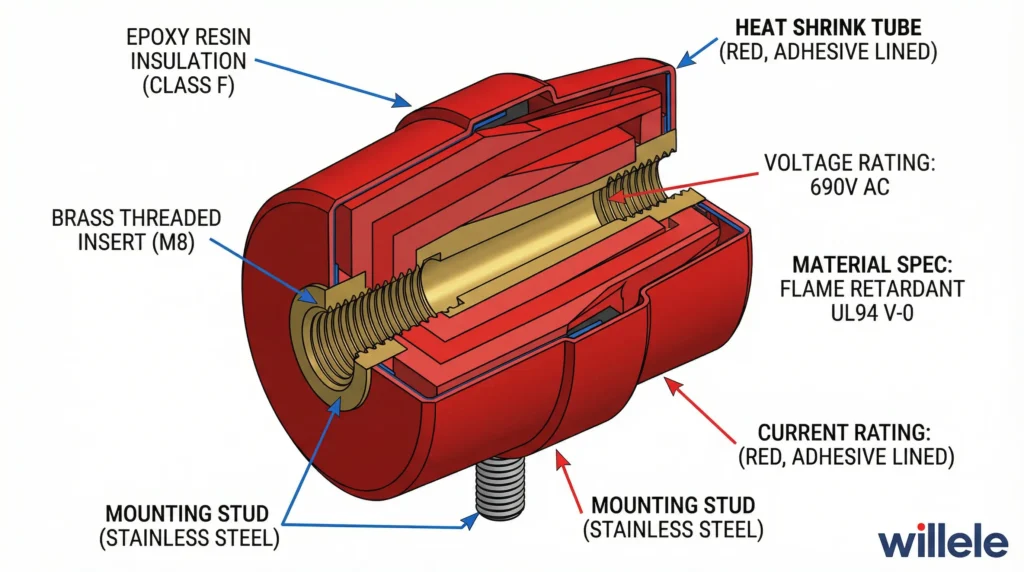
Alt text: Detailed technical cutaway diagram of Willele busbar insulator showing cross-section with labeled internal components, insulation layers, heat shrink tube application, and engineering specifications
Electrical Performance Standards
Busbar insulators for renewable energy must comply with international standards:
- IEC 61439: Low-voltage switchgear and controlgear assemblies
- IEC 62271: High-voltage switchgear and controlgear
- UL 891: Switchboards (North American markets)
- IEEE C37: Switchgear standards for power systems
- IEC 60529: IP rating classifications
- IEC 60664: Insulation coordination for low-voltage systems
Installation Best Practices
Pre-Installation Considerations
- Environmental Assessment
- Measure ambient temperature ranges
- Evaluate humidity and condensation potential
- Assess UV exposure levels
- Identify vibration sources and frequencies
- Electrical Design Verification
- Confirm voltage and current ratings
- Calculate required creepage and clearance distances
- Verify short-circuit withstand capability
- Plan for thermal expansion
- Mechanical Planning
- Determine mounting orientations
- Calculate mechanical loads and stresses
- Plan for maintenance accessibility
- Consider future expansion requirements
Installation Procedures
Step-by-Step Process:
- Surface Preparation
- Clean mounting surfaces thoroughly
- Remove oxidation from busbar contact areas
- Apply appropriate contact compounds
- Insulator Positioning
- Align insulators according to manufacturer specifications
- Ensure proper spacing for voltage rating
- Verify mechanical stability before busbar installation
- Busbar Mounting
- Torque fasteners to specified values
- Use calibrated torque wrenches
- Follow tightening sequences to prevent stress concentration
- Heat Shrink Tube Application (Willele Specialty)
- Select appropriate tube diameter and length
- Clean busbar surface with isopropyl alcohol
- Position tube with adequate overlap
- Apply heat evenly using industrial heat gun (recommended 120-150°C)
- Verify complete shrinkage and adhesion
- Inspect for air gaps or incomplete coverage
- Final Inspection
- Perform visual inspection for damage
- Conduct insulation resistance testing (megger test)
- Verify mechanical stability
- Document installation with photographs
Common Installation Errors to Avoid
- Insufficient creepage distance: Can lead to tracking and flashover
- Over-torquing fasteners: May crack insulator material
- Improper heat shrink application: Creates weak points in insulation
- Inadequate surface cleaning: Reduces adhesion and electrical performance
- Ignoring thermal expansion: Causes mechanical stress and premature failure
Maintenance and Lifecycle Management
Inspection Schedules
Routine Inspections (Quarterly):
- Visual examination for cracks, discoloration, or contamination
- Thermal imaging to identify hot spots
- Tightness verification of mechanical connections
- Cleaning of accumulated dust and debris
Comprehensive Inspections (Annual):
- Insulation resistance testing
- Partial discharge testing for high-voltage applications
- Mechanical integrity assessment
- Replacement of heat shrink tubes showing degradation
Predictive Maintenance:
- Trending of insulation resistance values
- Thermal pattern analysis
- Vibration monitoring in wind applications
- UV degradation assessment for outdoor installations
Troubleshooting Common Issues
| Problem | Symptoms | Likely Causes | Solutions |
|---|---|---|---|
| Tracking/Flashover | Visible carbon paths, tripped breakers | Contamination, insufficient creepage | Clean surfaces, apply silicone coating, replace if severe |
| Overheating | Discoloration, thermal alarms | Loose connections, overloading | Re-torque connections, verify current ratings, improve ventilation |
| Mechanical Failure | Cracks, looseness | Vibration, thermal cycling | Replace insulator, improve mounting, add damping |
| Heat Shrink Degradation | Cracking, peeling | UV exposure, excessive heat | Replace heat shrink tube, consider UV-resistant material |
| Moisture Ingress | Low insulation resistance | Seal failure, condensation | Improve sealing, add drainage, apply conformal coating |
Expected Lifespan and Replacement Criteria
Typical Service Life:
- Indoor applications: 20-30 years
- Outdoor solar installations: 15-25 years
- Wind turbine applications: 15-20 years
- Marine/offshore environments: 10-15 years
Replacement Indicators:
- Insulation resistance below 1 MΩ (for low-voltage systems)
- Visible cracks or material degradation
- Recurring thermal issues
- Failed dielectric testing
- Physical damage from external sources
Cost-Benefit Analysis
Initial Investment Considerations
Cost Components:
| Component | Typical Cost Range (per unit) | Factors Affecting Price |
|---|---|---|
| Standard Busbar Insulator | $15-$150 | Size, voltage rating, material |
| High-Performance Insulator | $100-$500 | Specialized materials, certifications |
| Heat Shrink Tubes | $5-$50 | Diameter, length, material grade |
| Installation Labor | $50-$200 | Complexity, accessibility |
| Testing Equipment | $500-$5000 | Megger, thermal camera (one-time) |
Long-Term Value Proposition
Reliability Benefits:
- Reduced unplanned downtime (estimated 2-5% increase in availability)
- Lower maintenance costs (15-25% reduction over lifecycle)
- Extended equipment lifespan (5-10 year increase)
- Improved safety compliance (reduced liability)
Energy Production Impact:
For a 10 MW solar farm:
- 1% availability improvement = ~$50,000-$100,000 annual revenue increase
- Proper insulation reduces electrical losses by 0.5-1%
- ROI on premium insulators: typically 2-4 years
Risk Mitigation:
- Prevention of catastrophic failures (potential $100,000+ losses)
- Reduced fire risk and associated insurance costs
- Regulatory compliance avoiding penalties
- Brand reputation protection
Willele Electric’s Busbar Insulator Solutions
Product Range Overview
Willele Electric offers comprehensive busbar insulator solutions specifically engineered for renewable energy applications:
Standard Product Lines:
- Low-voltage DC insulators (up to 1500V) for solar applications
- Medium-voltage AC insulators (up to 36kV) for wind and hydro
- High-current designs (up to 6000A) for energy storage systems
- Compact configurations for space-constrained installations
Specialized Heat Shrink Solutions:
- UV-resistant heat shrink tubes for outdoor solar installations
- Flame-retardant formulations meeting UL94 V-0 standards
- Color-coded options for phase identification
- Custom-sized tubes for non-standard busbar geometries
- Dual-wall designs with adhesive inner layers for superior sealing
Technical Support and Customization
Willele Electric provides comprehensive technical support:
- Application Engineering: Custom design assistance for unique projects
- Material Selection Guidance: Optimization for specific environmental conditions
- Installation Training: On-site or virtual training programs
- Testing Services: Pre-shipment testing and certification
- Lifecycle Support: Maintenance recommendations and troubleshooting assistance
Quality Assurance
All Willele products undergo rigorous quality control:
- 100% electrical testing before shipment
- Material certification and traceability
- ISO 9001:2015 certified manufacturing
- Compliance with international electrical standards
- Environmental testing (temperature cycling, UV exposure, salt fog)
Future Trends and Innovations
Emerging Technologies
Smart Insulation Systems:
- Embedded sensors for real-time condition monitoring
- IoT connectivity for predictive maintenance
- Temperature and humidity sensing capabilities
- Integration with SCADA systems
Advanced Materials:
- Nanocomposite insulators with enhanced dielectric properties
- Self-healing polymers for extended lifespan
- Graphene-enhanced materials for superior thermal management
- Bio-based insulation materials for sustainability
Manufacturing Innovations:
- 3D printing for custom geometries
- Automated quality inspection using AI
- Sustainable manufacturing processes
- Reduced material waste through precision engineering
Regulatory Developments
Anticipated changes affecting busbar insulator specifications:
- Stricter fire safety requirements for energy storage systems
- Enhanced environmental resistance standards for offshore wind
- Harmonization of international electrical codes
- Increased focus on recyclability and lifecycle environmental impact
Conclusion
Busbar insulators represent a critical yet often overlooked component in renewable energy systems. Proper selection, installation, and maintenance of these insulators directly impact system reliability, safety, and long-term performance. As renewable energy installations continue to grow in scale and complexity, the importance of high-quality insulation solutions becomes increasingly apparent.
Willele Electric’s expertise in heat shrink tube technology and electrical insulation provides renewable energy developers and operators with reliable, cost-effective solutions tailored to the unique challenges of clean energy infrastructure. By combining advanced materials, rigorous quality control, and comprehensive technical support, Willele ensures that busbar insulators perform optimally throughout the entire system lifecycle.
Investing in quality busbar insulators and following best practices for installation and maintenance delivers substantial returns through improved system availability, reduced maintenance costs, and enhanced safety. As the renewable energy sector continues its rapid expansion, partnering with experienced manufacturers like Willele Electric ensures your electrical infrastructure meets the demanding requirements of modern clean energy systems.
Frequently Asked Questions (FAQ)
Q: What is the typical lifespan of busbar insulators in solar installations?
A: In outdoor solar applications, quality busbar insulators typically last 15-25 years when properly installed and maintained. Factors affecting lifespan include UV exposure, temperature cycling, and environmental contamination. Regular inspections and protective measures like UV-resistant heat shrink tubes can extend service life.
Q: How do I determine the correct voltage rating for my renewable energy system?
A: Select insulators rated for at least 125% of your system’s maximum operating voltage. For example, a 1000V DC solar system should use insulators rated for minimum 1250V. Consider transient overvoltages and altitude derating factors. Consult with Willele Electric’s technical team for specific application guidance.
Q: Can heat shrink tubes be applied to existing busbar insulators in the field?
A: Yes, heat shrink tubes are ideal for field applications and retrofits. They provide additional insulation, environmental protection, and can repair minor surface damage. Ensure proper surface preparation and use industrial-grade heat guns for uniform application. Willele offers field-application kits with detailed instructions.
Q: What maintenance is required for busbar insulators in wind turbines?
A: Wind turbine insulators require quarterly visual inspections and annual comprehensive testing due to high vibration environments. Check for mechanical looseness, cracks, and contamination. Verify torque specifications annually and perform insulation resistance testing. Thermal imaging helps identify developing issues before failure.
Q: Are there special considerations for offshore wind applications?
A: Offshore environments require insulators with enhanced creepage distances (30-40mm/kV), hydrophobic surface treatments, and superior salt fog resistance. Use marine-grade materials and increase inspection frequency. Willele offers specialized formulations designed specifically for offshore renewable energy applications.
Q: How do busbar insulators for energy storage systems differ from solar applications?
A: Energy storage systems typically operate at lower voltages but much higher currents (500-6000A), requiring insulators with superior thermal management. ESS applications also involve more frequent charge/discharge cycles and potential DC arc flash hazards. Compact designs are often necessary for containerized installations.
Q: What testing should be performed after installing new busbar insulators?
A: Perform insulation resistance testing (megger test) with minimum 1 MΩ reading for low-voltage systems. Conduct visual inspection for proper alignment and mechanical stability. Verify torque specifications on all connections. Thermal imaging during initial energization helps identify installation issues. Document baseline measurements for future comparison.
About Willele Electric: Willele Electric is a leading B2B manufacturer specializing in heat shrink tubes and electrical insulation solutions for renewable energy and industrial applications. With decades of experience and commitment to quality, Willele provides innovative products that ensure the safety and reliability of electrical systems worldwide.
Contact: For technical specifications, custom solutions, or application support, visit willele.com or contact our engineering team.
