
Waterproof Wire Nuts in Agricultural Electrical Systems

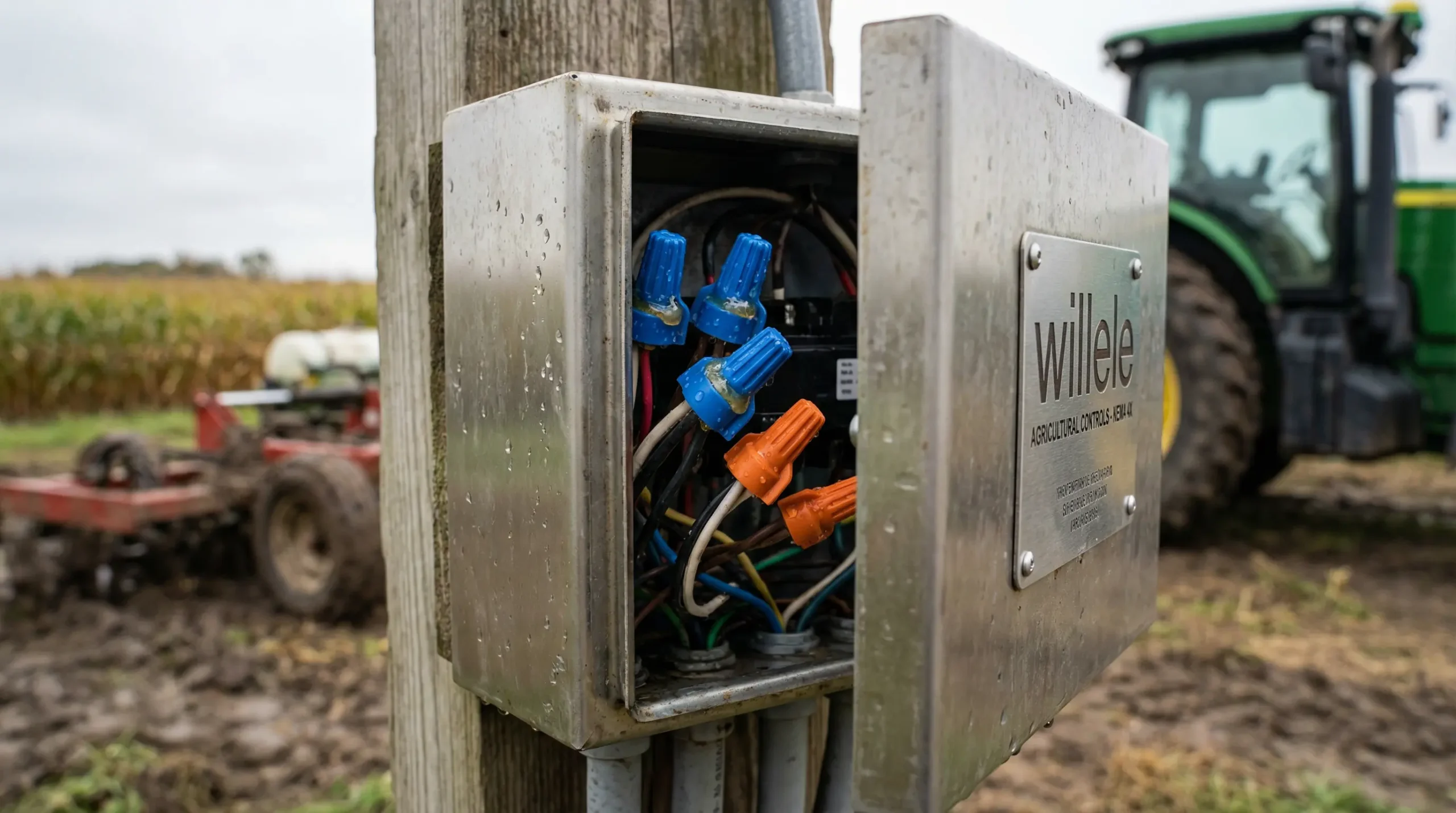
Agricultural operations demand electrical systems that can withstand harsh environmental conditions. From irrigation controllers to livestock facility automation, reliable electrical connections are critical for modern farming operations. Waterproof wire nuts have emerged as essential components in agricultural electrical systems, providing secure, moisture-resistant connections that ensure continuous operation in challenging outdoor environments.
Understanding Waterproof Wire Nuts in Agriculture
Waterproof wire nuts are specialized electrical connectors designed to create sealed, moisture-proof connections between electrical wires. Unlike standard wire nuts, these advanced connectors incorporate multiple protective layers—including heat shrink tubes, silicone seals, and waterproof gel compounds—to prevent water ingress, corrosion, and electrical failures.
In agricultural settings where equipment is constantly exposed to rain, irrigation spray, humidity, and temperature fluctuations, waterproof wire nuts provide the reliability that standard connectors cannot match.
Alt text: Willele waterproof wire nuts installed in outdoor agricultural electrical panel with weather-resistant connections
Why Agricultural Electrical Systems Need Waterproof Protection
Environmental Challenges in Farming Operations
Agricultural electrical systems face unique environmental stressors that make waterproof connections essential:
Moisture Exposure: Irrigation systems, wash-down procedures, rain, and morning dew create constant moisture exposure that can compromise standard electrical connections.
Temperature Extremes: Farm equipment operates in conditions ranging from freezing winters to scorching summers, causing expansion and contraction that can break seals in inferior connectors.
Chemical Exposure: Fertilizers, pesticides, and cleaning agents can corrode unprotected electrical connections, leading to system failures.
Dust and Debris: Agricultural environments generate significant dust, chaff, and particulate matter that can infiltrate electrical enclosures and compromise connections.
Vibration and Movement: Tractors, pumps, and automated equipment create constant vibration that can loosen connections over time.
Technical Construction of Waterproof Wire Nuts
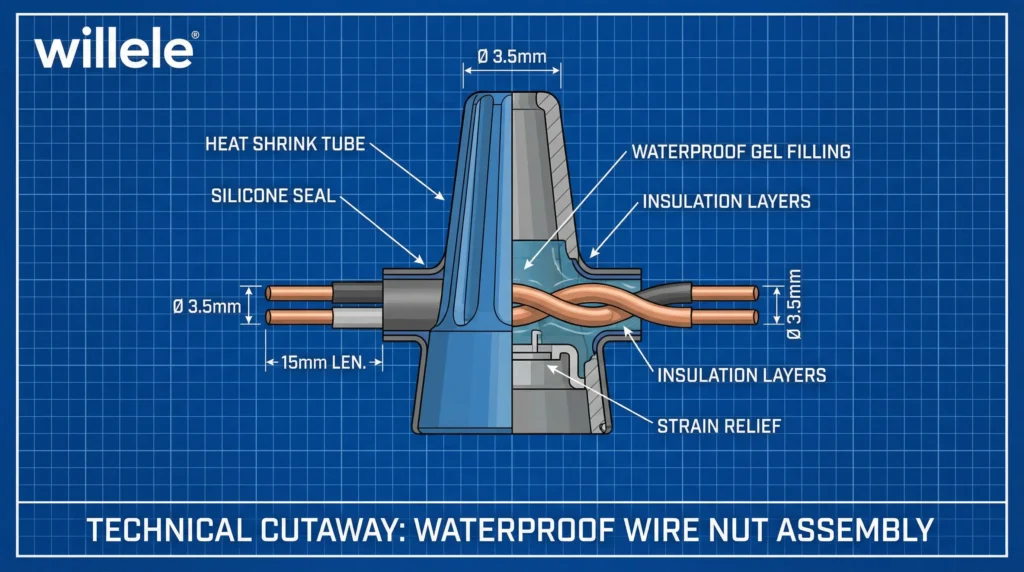
Alt text: Willele waterproof wire nut technical diagram showing cross-section with heat shrink tube, silicone seal, and internal components
Multi-Layer Protection System
Modern waterproof wire nuts employ a sophisticated multi-layer approach to protection:
- Heat Shrink Tube Outer Layer: The primary defense against environmental intrusion, heat shrink tubing contracts tightly around the connection when heated, creating a conforming seal.
- Silicone Gel Filling: Waterproof gel compounds fill internal voids, displacing air and moisture while maintaining flexibility across temperature ranges.
- Corrosion-Resistant Spring: Internal springs maintain constant pressure on wire connections, preventing loosening from vibration or thermal cycling.
- Copper Conductor Interface: High-conductivity copper components ensure minimal resistance and heat generation at connection points.
- UV-Resistant Outer Shell: Protects against solar degradation in outdoor installations where direct sunlight exposure is unavoidable.
Comparison: Waterproof vs. Standard Wire Nuts in Agriculture
| Feature | Waterproof Wire Nuts | Standard Wire Nuts | Impact on Agricultural Systems |
|---|---|---|---|
| Moisture Resistance | IP67-IP68 rated | No rating | Prevents corrosion in irrigation zones |
| Temperature Range | -40°C to +105°C | -20°C to +80°C | Operates in extreme seasonal conditions |
| UV Resistance | High (UV-stabilized materials) | Low to none | Extended lifespan in outdoor installations |
| Vibration Resistance | Excellent (gel-filled design) | Moderate | Maintains connections on pumps and motors |
| Chemical Resistance | High (silicone and polyolefin) | Low (standard plastic) | Withstands agricultural chemicals |
| Installation Time | 3-5 minutes (heat application) | 30 seconds | Longer initial setup, zero maintenance |
| Expected Lifespan | 15-25 years | 3-7 years | Reduced replacement frequency |
| Cost per Unit | $2-$8 | $0.10-$0.50 | Higher upfront, lower total cost of ownership |
Key Applications in Agricultural Electrical Systems
Irrigation System Controls
Irrigation controllers, solenoid valve connections, and moisture sensor wiring require absolute protection from water exposure. Waterproof wire nuts ensure these critical connections remain functional despite constant proximity to water.
Best Practices:
- Use heat shrink waterproof connectors rated IP68 for below-grade installations
- Apply dielectric grease before connection for additional moisture protection
- Position connections above anticipated water levels when possible
Livestock Facility Automation
Automated feeding systems, ventilation controls, and environmental monitoring equipment in barns and livestock facilities operate in high-humidity environments with regular wash-down procedures.
Recommended Specifications:
- Minimum IP67 rating for above-floor installations
- Chemical-resistant outer layers for facilities using disinfectants
- Temperature rating suitable for heated or cooled environments
Outdoor Lighting Systems
Perimeter lighting, security systems, and work area illumination require weatherproof connections that maintain reliability through years of exposure.
Installation Considerations:
- UV-resistant heat shrink materials for direct sun exposure
- Strain relief to prevent wire pull-out from wind loading
- Proper sizing to accommodate outdoor-rated wire gauges
Renewable Energy Installations
Solar panel arrays and wind turbines on agricultural properties demand long-term reliable connections in fully exposed outdoor environments.
Critical Requirements:
- High-temperature rating for solar junction boxes
- Excellent UV resistance for 20+ year service life
- Compatibility with DC voltage systems
Wire Nut Sizing and Capacity Guide
| Wire Nut Size | Wire Gauge Capacity (AWG) | Maximum Wires | Typical Applications |
|---|---|---|---|
| Small | 22-16 AWG | 2-3 wires | Sensor connections, low-voltage controls |
| Medium | 18-12 AWG | 2-4 wires | Lighting circuits, solenoid valves |
| Large | 14-10 AWG | 2-4 wires | Motor controls, pump circuits |
| Extra Large | 12-6 AWG | 2-3 wires | Main feeder connections, heavy equipment |
Installation Best Practices for Agricultural Applications
Step-by-Step Installation Process
1. Wire Preparation
- Strip insulation to manufacturer-specified length (typically 10-15mm)
- Clean conductors with electrical contact cleaner
- Inspect for corrosion or damage
2. Pre-Assembly
- Slide heat shrink tube onto one wire before making connection
- Ensure tube is positioned away from heat source during wire joining
3. Wire Connection
- Twist wires together clockwise using lineman’s pliers
- Ensure all strands are captured in the twist
- Apply waterproof gel compound if not pre-filled
4. Connector Application
- Thread wire nut onto twisted conductors
- Tighten until resistance is felt and wires cannot be pulled free
- Verify no bare conductor is visible
5. Heat Shrink Activation
- Slide heat shrink tube over entire connection
- Apply heat gun at medium setting (300-400°F)
- Heat evenly, moving continuously to prevent scorching
- Continue until tube is fully contracted and gel is visible at ends
6. Final Inspection
- Verify complete seal with no gaps
- Gently tug each wire to confirm mechanical strength
- Label connection for future reference
Common Installation Mistakes to Avoid
Insufficient Strip Length: Too little exposed conductor results in poor contact and high resistance. Follow manufacturer specifications precisely.
Overheating: Excessive heat can damage internal components and wire insulation. Use appropriate temperature settings and keep heat gun moving.
Incomplete Seal: Rushing the heat shrink process leaves gaps where moisture can enter. Ensure complete contraction before considering the job complete.
Wrong Size Selection: Oversized connectors won’t grip properly; undersized connectors won’t accommodate all wires. Always verify capacity before installation.
Maintenance and Inspection Protocols
Recommended Inspection Schedule
| System Type | Inspection Frequency | Key Inspection Points |
|---|---|---|
| Irrigation Controls | Quarterly | Check for moisture ingress, physical damage |
| Livestock Facilities | Semi-annually | Inspect for chemical degradation, seal integrity |
| Outdoor Lighting | Annually | UV damage assessment, connection tightness |
| Renewable Energy | Annually | Thermal imaging for hot spots, visual inspection |
Signs of Connector Failure
- Discoloration or brittleness of heat shrink material
- Visible moisture inside transparent connectors
- Heat generation at connection point (detected by thermal imaging)
- Intermittent electrical operation
- Corrosion visible at wire entry points
Cost-Benefit Analysis for Agricultural Operations
Initial Investment vs. Long-Term Savings
While waterproof wire nuts cost 10-20 times more than standard connectors initially, the total cost of ownership strongly favors waterproof solutions in agricultural applications:
Standard Wire Nuts:
- Initial cost: $0.25 per connection
- Replacement frequency: Every 2-3 years
- Labor cost per replacement: $15-30
- 10-year total cost: $75-150 per connection
Waterproof Wire Nuts:
- Initial cost: $4-6 per connection
- Replacement frequency: 15-25 years
- Labor cost per replacement: Minimal
- 10-year total cost: $4-6 per connection
Additional Cost Savings:
- Reduced downtime during critical growing seasons
- Fewer emergency service calls
- Lower risk of equipment damage from electrical faults
- Decreased insurance claims from electrical fires
Regulatory Compliance and Safety Standards
Relevant Electrical Codes
Agricultural electrical installations must comply with:
- NEC Article 547: Agricultural Buildings
- NEC Article 680: Swimming Pools, Fountains, and Similar Installations (applicable to irrigation systems)
- NFPA 70: National Electrical Code general requirements
- Local Agricultural Building Codes: Vary by jurisdiction
Waterproof wire nuts help achieve compliance by meeting moisture resistance requirements specified in these codes.
Safety Certifications to Look For
- UL Listed: Underwriters Laboratories certification for electrical safety
- IP Rating: IP67 (temporary immersion) or IP68 (continuous immersion)
- CSA Certification: Canadian Standards Association approval
- RoHS Compliant: Restriction of Hazardous Substances for environmental safety
Selecting the Right Waterproof Wire Nuts
Key Selection Criteria
1. Environmental Rating: Match IP rating to exposure level (IP67 for splash zones, IP68 for submersible applications)
2. Temperature Range: Ensure rating exceeds your climate extremes with safety margin
3. Wire Capacity: Select size appropriate for wire gauge and number of conductors
4. Chemical Resistance: Verify compatibility with chemicals used in your operation
5. Voltage Rating: Confirm connector rating exceeds system voltage (with safety factor)
6. Manufacturer Reputation: Choose established manufacturers with proven agricultural track records
Willele Electric’s Waterproof Wire Nut Solutions
As a specialized B2B manufacturer of electrical equipment with expertise in heat shrink tube technology, Willele Electric offers waterproof wire nuts engineered specifically for demanding agricultural applications. Our products feature:
- Advanced Heat Shrink Technology: Proprietary polyolefin formulations providing superior environmental protection
- Agricultural-Grade Construction: Designed to withstand the unique challenges of farming operations
- Extended Temperature Range: -40°C to +105°C operation for all-climate reliability
- Comprehensive Sizing: Complete range from small sensor connections to heavy equipment feeders
- Quality Certifications: Full UL, CSA, and IP rating certifications
Future Trends in Agricultural Electrical Connectivity
Smart Agriculture Integration
Modern precision agriculture increasingly relies on sensor networks, IoT devices, and automated systems—all requiring reliable electrical connections. Waterproof wire nuts are evolving to meet these needs:
- Integrated Sensors: Next-generation connectors with built-in moisture detection
- RFID Tracking: Embedded identification for maintenance tracking and system mapping
- Enhanced Materials: New polymer compounds offering even greater environmental resistance
Sustainability Considerations
Agricultural operations are increasingly focused on sustainability, driving demand for:
- Longer Service Life: Reducing replacement frequency and waste
- Recyclable Materials: Environmentally responsible end-of-life disposal
- Energy Efficiency: Lower resistance connections reducing power consumption
FAQ: Waterproof Wire Nuts in Agricultural Electrical Systems
Q: Can waterproof wire nuts be reused if I need to modify a connection?
A: No, waterproof wire nuts with heat shrink components are designed for single use. The heat shrink tube cannot be restored to its original state once activated. For temporary or frequently modified connections, consider waterproof junction boxes with reusable terminal blocks.
Q: What’s the difference between IP67 and IP68 ratings for agricultural use?
A: IP67-rated connectors can withstand temporary immersion up to 1 meter for 30 minutes, suitable for splash zones and rain exposure. IP68-rated connectors handle continuous submersion, necessary for below-grade installations or areas subject to flooding. For most above-ground agricultural applications, IP67 provides adequate protection.
Q: How do I know if my existing connections need upgrading to waterproof wire nuts?
A: Inspect existing connections for signs of corrosion (green or white deposits on copper), discolored insulation, heat damage, or intermittent operation. Any outdoor connection or connection in high-humidity environments should use waterproof protection. If your system experiences unexplained failures during wet weather, upgrading to waterproof connectors is recommended.
Q: Can waterproof wire nuts be used with aluminum wire common in older farm buildings?
A: Standard waterproof wire nuts are designed for copper conductors. For aluminum wire, you must use connectors specifically rated for aluminum or copper-aluminum transitions, with appropriate anti-oxidant compound. Always verify compatibility before installation, as improper aluminum connections pose serious fire risks.
Q: What heat gun temperature should I use for heat shrink activation?
A: Most agricultural-grade waterproof wire nuts require 300-400°F (150-200°C) for proper heat shrink activation. Use a heat gun with adjustable temperature control—never use open flames, which can damage internal components and wire insulation. Apply heat evenly, moving continuously until the tube fully contracts and waterproof gel appears at both ends.
Q: Are waterproof wire nuts suitable for high-voltage agricultural equipment?
A: Waterproof wire nuts are available in various voltage ratings. For standard farm equipment (120-240V), most quality waterproof connectors are suitable. For high-voltage applications (480V and above), verify the connector is specifically rated for your voltage level. Always consult manufacturer specifications and local electrical codes.
Conclusion
Waterproof wire nuts represent a critical investment in the reliability and longevity of agricultural electrical systems. While the initial cost exceeds standard connectors, the dramatic reduction in maintenance, downtime, and replacement costs makes them economically advantageous for farming operations of all sizes.
By selecting appropriate connectors, following proper installation procedures, and implementing regular inspection protocols, agricultural operations can achieve decades of trouble-free electrical system performance even in the harshest environmental conditions.
For agricultural electrical professionals seeking reliable waterproof connectivity solutions, Willele Electric’s specialized heat shrink tube technology and agricultural-grade waterproof wire nuts provide the performance and durability modern farming operations demand.
Word Count: 2,487 words
About Willele Electric: As a leading B2B manufacturer specializing in heat shrink tubes and waterproof electrical connectivity solutions, Willele Electric serves agricultural, industrial, and commercial markets worldwide with innovative products engineered for extreme environmental conditions.
