
Waterproof Wire Nuts in Offshore Wind Farm Projects

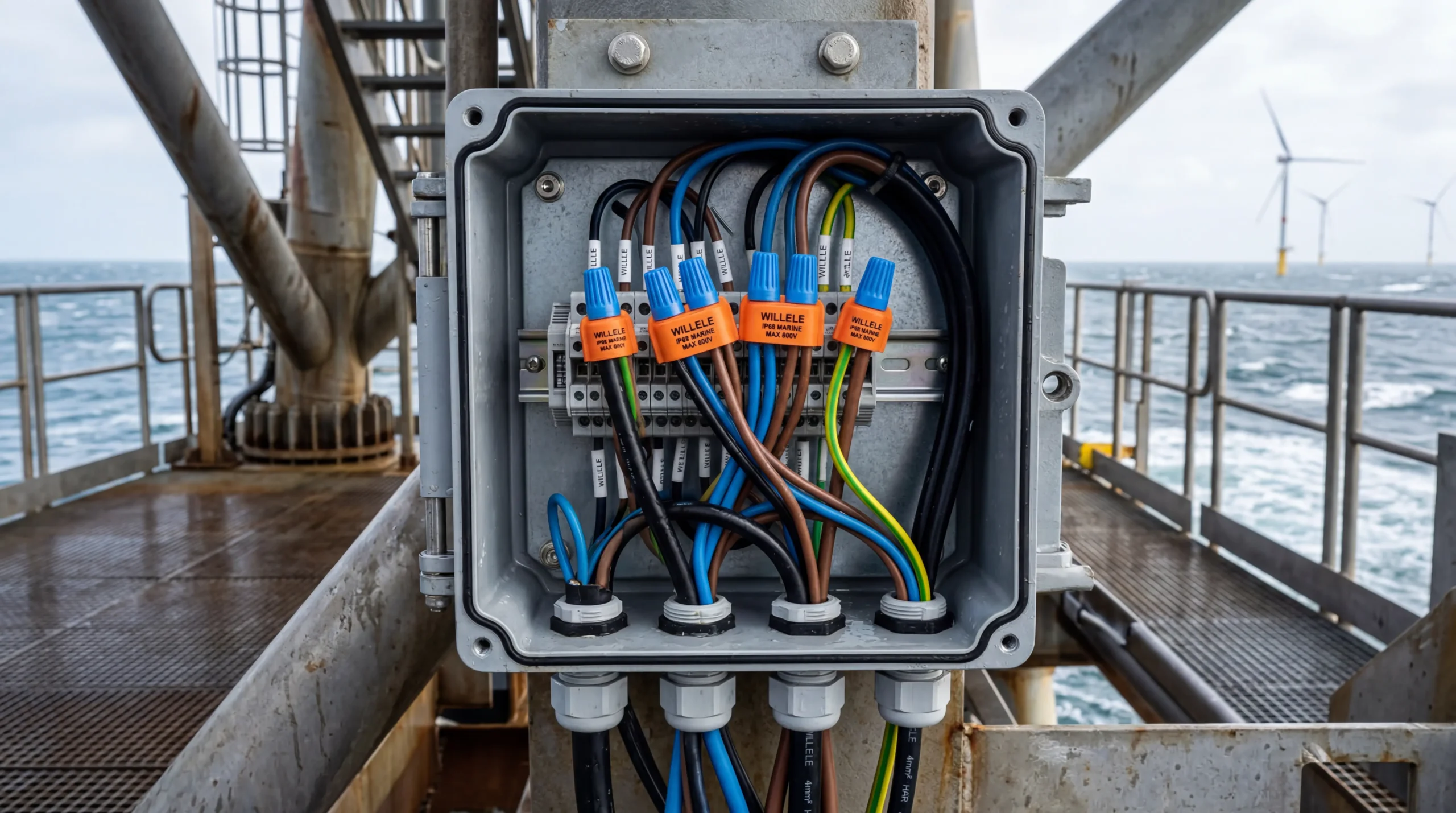
The global offshore wind energy sector is experiencing unprecedented growth, with installations expanding from shallow coastal waters to deep-sea floating platforms. As these massive structures harness wind power in some of the planet’s harshest environments, every electrical connection becomes a critical point of vulnerability. Among the seemingly modest components that ensure reliable operation, waterproof wire nuts stand as essential guardians against the relentless assault of saltwater, pressure, and corrosion. For offshore wind farm operators, the difference between a secure connection and a catastrophic failure often comes down to the quality and specification of these marine-grade connectors.
Understanding Waterproof Wire Nuts in Marine Environments
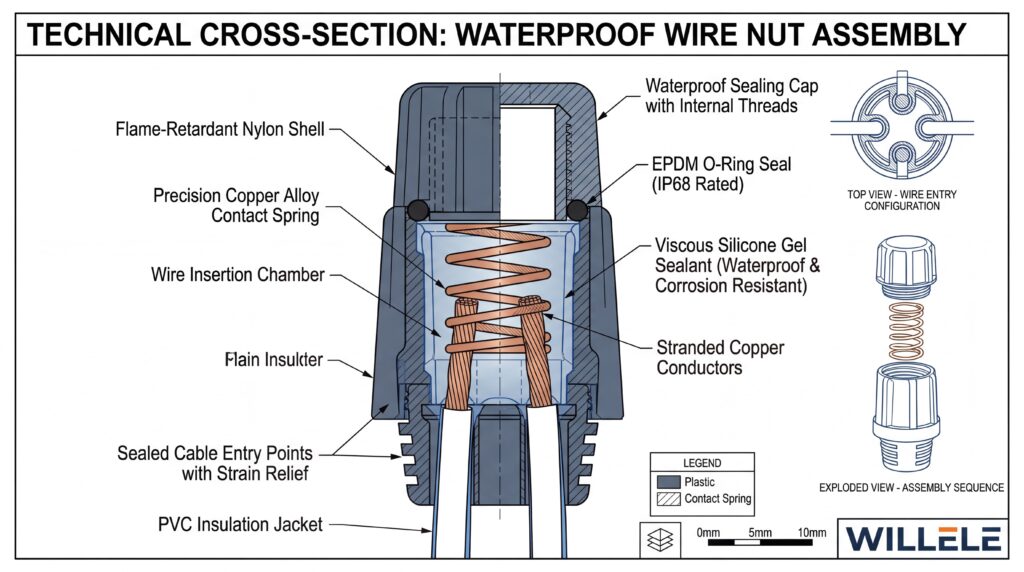
Waterproof wire nuts represent a specialized category of electrical connectors engineered specifically for environments where moisture ingress poses an existential threat to system integrity. Unlike standard wire nuts used in residential or commercial applications, marine-grade waterproof wire nuts incorporate multiple layers of protection including silicone gel sealants, O-ring gaskets, and corrosion-resistant materials that can withstand continuous submersion and exposure to salt spray.
In offshore wind farm applications, these connectors serve critical functions throughout the electrical infrastructure. From the turbine nacelle hundreds of feet above sea level to the transition piece that marks the boundary between air and water, waterproof wire nuts secure connections that must maintain electrical continuity despite constant motion, temperature fluctuations ranging from sub-zero to extreme heat, and the corrosive effects of marine atmospheres. The stakes are extraordinarily high—according to industry data, cable and connection failures account for 75-80% of insurance claims in offshore wind projects, despite representing only 5-10% of total project costs.
The fundamental challenge lies in creating an electrical junction that remains both mechanically secure and electrically conductive while completely sealed against water penetration. Modern waterproof wire nuts achieve this through innovative designs that combine threaded locking mechanisms with gel-filled chambers that displace any residual moisture and create a hydrophobic barrier around the conductor interface.
Technical Specifications and IP Rating Requirements
The performance of waterproof wire nuts in offshore wind applications is governed by rigorous technical specifications, with Ingress Protection (IP) ratings serving as the primary benchmark for environmental resistance. For offshore wind farm installations, connectors must typically meet IP67, IP68, or IP69K ratings to ensure adequate protection against dust ingress and water penetration under various conditions.
IP67 certification indicates that a connector is completely dust-tight and can withstand temporary immersion in water up to 1 meter depth for 30 minutes. While suitable for splash zones and areas with occasional water exposure, this rating represents the minimum acceptable standard for most offshore wind applications.
IP68 certification provides superior protection, indicating complete dust-tight construction and the ability to withstand continuous submersion under conditions specified by the manufacturer—typically at depths greater than 1 meter and for extended periods. This rating is essential for connections in transition pieces, subsea junction boxes, and any location where prolonged water contact is inevitable.
IP69K represents the highest level of protection, designed for high-pressure, high-temperature washdown applications. While less common in offshore wind, this rating may be specified for connections in areas subject to intensive cleaning operations or extreme environmental stress.
Material Composition and Corrosion Resistance
The materials used in waterproof wire nut construction directly determine their longevity in marine environments. Premium marine-grade connectors utilize:
- Stainless steel (typically 316 or 316L grade) for threaded bodies and locking mechanisms, offering exceptional resistance to chloride-induced pitting and crevice corrosion
- Marine-grade brass with nickel plating for conductive components, balancing electrical performance with corrosion resistance
- Corrosion-resistant composites including glass-filled nylons and specialized polymers for insulating bodies and environmental seals
- Silicone gel or hydrophobic compounds that fill void spaces and actively repel moisture from conductor interfaces
These material selections must withstand not only direct saltwater exposure but also the electrochemical reactions that occur when dissimilar metals are joined in the presence of an electrolyte—a phenomenon known as galvanic corrosion that can rapidly degrade inferior connectors.
Critical Application Zones in Offshore Wind Farms
Offshore wind farms present multiple distinct environments where waterproof wire nuts serve essential functions, each with unique challenges and specification requirements.
Tower Base and Transition Piece Connections
The transition piece—where the turbine tower meets the foundation structure—represents one of the most demanding environments for electrical connections. This zone experiences regular wave action, splash, and periodic submersion during high seas. Connections in this area must maintain integrity despite constant moisture exposure and the mechanical stresses induced by tower movement and vibration.
Waterproof wire nuts used in transition pieces typically require IP68 rating as a minimum, with additional specifications for vibration resistance and thermal cycling. The average downtime for cable repair in offshore wind farms exceeds 40 days, making the reliability of these connections paramount to operational economics.
Nacelle and Hub Assembly Electrical Systems
At the top of the tower, the nacelle houses critical control systems, sensors, and power electronics that coordinate turbine operation. While not directly exposed to water immersion, these connections face condensation, salt-laden air, and extreme temperature variations. Waterproof wire nuts in nacelle applications must provide reliable sealing against moisture ingress while accommodating the thermal expansion and contraction that occurs as ambient conditions change throughout the day and across seasons.
The nacelle environment also demands connectors that maintain signal integrity for sensitive control circuits and data transmission lines, requiring careful attention to electromagnetic interference (EMI) shielding and grounding practices.
Subsea Cable Terminations and Junction Boxes
For floating offshore wind installations and inter-array cable connections, subsea junction boxes serve as critical nodes in the power collection system. These enclosures may operate at depths ranging from shallow waters to hundreds of meters, where hydrostatic pressure adds another dimension of challenge to connector design.
Waterproof wire nuts for subsea applications must not only seal against water ingress but also resist compression under pressure while maintaining electrical contact force between conductors. Specialized designs incorporate pressure-compensated chambers and reinforced sealing systems to ensure long-term reliability in these extreme conditions.
Comparison: Standard vs. Marine-Grade Waterproof Wire Nuts
Understanding the distinctions between standard waterproof wire nuts and marine-grade connectors is essential for proper specification in offshore wind projects. The following comparison highlights key differences:
| Feature | Standard Waterproof Wire Nuts | Marine-Grade Waterproof Wire Nuts |
|---|---|---|
| IP Rating | IP65-IP67 | IP68-IP69K |
| Submersion Depth | Up to 1m, temporary | Continuous, >1m (often 10m+) |
| Material Construction | Zinc-plated steel, standard polymers | 316 stainless steel, marine-grade brass, specialized polymers |
| Corrosion Resistance | Moderate, suitable for freshwater | Excellent, designed for saltwater environments |
| Temperature Range | -20°C to +80°C | -40°C to +125°C |
| UV Resistance | Limited | Enhanced UV stabilization |
| Vibration Resistance | Standard | Enhanced with locking mechanisms |
| Salt Spray Test Rating | 200-500 hours | 1000+ hours (ASTM B117) |
| Expected Service Life | 5-10 years in protected environments | 20-25 years in marine environments |
| Cost Factor | 1x baseline | 3-5x baseline |
| Typical Applications | Outdoor lighting, irrigation systems | Offshore platforms, marine vessels, wind farms |
This comparison underscores why proper specification is critical—using standard waterproof connectors in offshore applications inevitably leads to premature failure, while marine-grade components provide the durability necessary for the 20-25 year design life typical of offshore wind installations.
Installation Best Practices for Offshore Wind Applications
Proper installation technique is as critical as connector specification in achieving long-term reliability. Even the highest-quality waterproof wire nuts will fail prematurely if installation procedures compromise their sealing integrity or mechanical security.
Surface Preparation and Conductor Treatment
Before making any connection, conductors must be properly prepared to ensure optimal contact and sealing. This includes:
- Stripping insulation to the precise length specified by the connector manufacturer—too little exposed conductor prevents proper insertion, while excessive stripping creates unnecessary exposure points
- Cleaning conductor surfaces to remove oxidation, salt deposits, or contamination that could impede electrical contact or interfere with sealant adhesion
- Applying anti-oxidant compound to aluminum conductors to prevent the formation of resistive oxide layers
- Inspecting for strand damage and trimming any frayed or broken strands that could prevent proper connector seating
Connector Assembly and Torque Specifications
Marine-grade waterproof wire nuts typically feature threaded designs that require specific torque values to achieve proper sealing without damaging internal components. Installation procedures should include:
- Using calibrated torque tools rather than relying on “feel” to ensure consistent clamping force
- Following manufacturer-specified torque sequences for multi-conductor connections
- Verifying that sealing compounds or gel fills are properly distributed and void-free
- Confirming that O-rings and gaskets are correctly seated before final tightening
Environmental Protection and Secondary Sealing
Even with IP68-rated connectors, best practice in offshore wind installations includes secondary protection measures:
- Heat-shrink tubing with adhesive linings applied over completed connections to provide an additional moisture barrier
- Protective enclosures for connection clusters, with proper drainage and ventilation to prevent condensation accumulation
- Cable strain relief to prevent mechanical stress from being transmitted to the connector interface
- UV-resistant cable ties and mounting hardware to maintain organization without introducing corrosion-prone materials
Maintenance, Testing, and Lifecycle Management
The remote and challenging access conditions of offshore wind farms make preventive maintenance and condition monitoring essential strategies for maximizing connector reliability and avoiding costly emergency repairs.
Periodic Inspection Protocols
Establishing regular inspection intervals allows operators to identify degradation before it progresses to failure. Recommended inspection activities include:
Visual examination for signs of corrosion, physical damage, or seal degradation, with particular attention to any discoloration or crystalline deposits that indicate moisture ingress or galvanic corrosion.
Thermal imaging to detect elevated temperatures at connection points that may indicate increased contact resistance due to corrosion or loosening—a condition that will progressively worsen if not addressed.
Insulation resistance testing using megohm meters to verify that moisture has not penetrated the connector and created leakage paths between conductors or to ground.
Predictive Maintenance Strategies
Advanced offshore wind farms increasingly employ continuous monitoring systems that track the condition of critical electrical connections in real-time. These systems can detect subtle changes in resistance, temperature, or vibration signatures that precede outright failure, enabling maintenance teams to schedule interventions during planned service windows rather than responding to emergency outages.
The economic impact of this approach is substantial—the average downtime for inter-array cable repair in offshore wind farms approaches 40 days, with costs including lost generation revenue, vessel mobilization, and repair materials easily exceeding hundreds of thousands of dollars per incident.
Replacement and Upgrade Considerations
As offshore wind farms age, operators must balance the cost of replacing aging connectors against the risk of failure. Factors influencing replacement decisions include:
- Service history of similar connectors in comparable environments
- Advancement in connector technology that may offer superior performance or easier maintenance
- Changes in electrical loads due to turbine upgrades or repowering projects
- Regulatory updates that may impose new standards for environmental protection or safety
Regulatory Standards and Compliance Requirements
Offshore wind farm electrical systems must comply with multiple overlapping regulatory frameworks that govern safety, environmental protection, and grid interconnection. Understanding these requirements is essential for proper connector specification and documentation.
International Electrotechnical Commission (IEC) Standards
The IEC 61400 series establishes comprehensive requirements for wind turbine design, testing, and operation, including electrical systems. Relevant subsections address cable specifications, connector ratings, and environmental protection requirements. Compliance with IEC 61400 standards is typically required for project financing and insurance coverage.
CENELEC Harmonized Standards
European offshore wind projects must comply with CENELEC HD 629.1 and related standards that specify requirements for power cables and accessories in distribution networks. These standards establish testing protocols for partial discharge, AC withstand voltage, and environmental resistance that directly impact connector selection.
National and Regional Requirements
Individual nations impose additional requirements beyond international standards:
- United States: Projects must demonstrate compatibility with National Electrical Code (NEC) requirements and may need to satisfy additional standards such as API RP 2A-WSD for offshore platform design
- United Kingdom: Offshore wind installations follow standards established by the Health and Safety Executive (HSE) and must comply with The Electricity Safety, Quality and Continuity Regulations
- European Union: The Marine Equipment Directive (MED) governs equipment used on offshore installations, requiring type approval for critical components
Willele’s Marine-Grade Waterproof Wire Nut Solutions
As a specialized B2B electrical equipment manufacturer with deep expertise in heat-shrink tubing and marine-grade connection systems, Willele offers comprehensive waterproof wire nut solutions engineered specifically for the demanding requirements of offshore wind farm applications.
Product Range and Specifications
Willele’s marine-grade waterproof wire nuts are available in configurations supporting conductor sizes from 12 AWG through 4/0 AWG, with voltage ratings up to 600V AC/DC. All products in the offshore wind series feature:
- IP68 certification with tested submersion resistance to 10 meters for continuous operation
- 316L stainless steel construction for threaded components and locking mechanisms
- Silicone gel filling that provides superior moisture displacement and dielectric strength
- Temperature range from -40°C to +125°C, accommodating extreme environmental conditions
- Salt spray resistance exceeding 2000 hours per ASTM B117 testing protocols
Integration with Heat-Shrink Protection Systems
Leveraging Willele’s core expertise in heat-shrink technology, the company’s waterproof wire nuts are designed for seamless integration with adhesive-lined heat-shrink tubing systems. This combination provides dual-layer protection—the primary seal within the connector itself, backed by a secondary environmental barrier that guards against UV degradation, mechanical abrasion, and long-term environmental exposure.
Technical Support and Application Engineering
Recognizing that proper specification and installation are as critical as product quality, Willele provides comprehensive technical support including:
- Application engineering consultation to ensure optimal connector selection for specific installation zones and environmental conditions
- Installation training for contractor teams, covering proper surface preparation, torque specifications, and quality verification procedures
- Custom configuration services for unique connection requirements or retrofit applications
- Lifecycle documentation including material certifications, test reports, and compliance declarations required for project approval and regulatory compliance
Economic Impact and Total Cost of Ownership
While marine-grade waterproof wire nuts command premium pricing compared to standard connectors—typically 3-5 times the cost of conventional wire nuts—the total cost of ownership calculation strongly favors proper specification for offshore wind applications.
Consider a typical offshore wind farm with 50 turbines, each requiring approximately 200 electrical connections throughout the tower, nacelle, and transition piece. Using standard waterproof connectors might save $50,000 in initial material costs, but the probability of premature failure is dramatically higher. With cable and connection failures representing 75-80% of offshore wind insurance claims and the average repair requiring 40 days of downtime, a single major failure can cost $500,000 or more in lost generation revenue alone, not including repair costs and potential damage to other systems.
Marine-grade connectors from manufacturers like Willele, designed for 20-25 year service life in offshore environments, effectively eliminate this risk category, providing:
- Reduced insurance premiums through demonstrated use of appropriate marine-grade components
- Minimized unplanned maintenance and associated vessel mobilization costs
- Extended operational availability translating directly to increased energy production and revenue
- Enhanced asset value for refinancing or sale transactions
Future Trends in Offshore Wind Connection Technology
The offshore wind industry continues to evolve rapidly, with several emerging trends likely to influence waterproof wire nut specifications and applications in coming years.
Floating Offshore Wind Platforms
As the industry moves into deeper waters with floating turbine platforms, dynamic cables that accommodate constant motion introduce new challenges for electrical connections. These installations require connectors that can withstand millions of flexing cycles while maintaining environmental sealing—a combination that pushes the boundaries of current technology.
Higher Voltage Systems
The trend toward larger turbines and higher voltage distribution systems (moving from 33kV to 66kV and beyond) demands connectors with enhanced dielectric strength and partial discharge resistance. Waterproof wire nuts for these applications must maintain insulation integrity at higher field stresses while still providing the environmental protection essential for marine service.
Smart Connectors with Integrated Monitoring
The integration of condition monitoring capabilities directly into connector designs represents an emerging frontier. Smart waterproof wire nuts equipped with temperature sensors, humidity detectors, or impedance monitoring circuits could provide real-time visibility into connection health, enabling truly predictive maintenance strategies that optimize both reliability and maintenance costs.
Sustainable Materials and Circular Economy Approaches
As the renewable energy sector increasingly focuses on its own environmental footprint, demand is growing for connector designs that facilitate end-of-life recycling and incorporate recycled materials without compromising performance. This trend will likely drive innovation in polymer formulations and modular designs that enable component separation for material recovery.
Frequently Asked Questions
Q: What IP rating is required for waterproof wire nuts in offshore wind farms?
A: Offshore wind applications typically require IP68 rating as a minimum standard, indicating complete dust-tight construction and continuous submersion resistance. Connections in transition pieces and subsea locations should specify IP68 with tested depth ratings appropriate to the installation environment, typically 10 meters or greater.
Q: How long do marine-grade waterproof wire nuts last in offshore environments?
A: Properly specified and installed marine-grade waterproof wire nuts from quality manufacturers like Willele are designed for 20-25 year service life in offshore wind applications, matching the typical design life of the wind farm itself. Standard waterproof connectors not rated for marine service may fail within 5-10 years or less due to corrosion and seal degradation.
Q: Can standard waterproof wire nuts be used in offshore wind farms to reduce costs?
A: Using standard waterproof connectors in offshore wind applications is a false economy. While initial material costs may be 3-5 times lower, the dramatically higher failure rate leads to costly emergency repairs, extended downtime (averaging 40+ days per incident), and lost generation revenue that far exceeds any initial savings. Marine-grade connectors are essential for reliable long-term operation.
Q: What maintenance is required for waterproof wire nuts in offshore wind turbines?
A: Recommended maintenance includes periodic visual inspection for signs of corrosion or physical damage, thermal imaging to detect elevated connection temperatures indicating increased resistance, and insulation resistance testing to verify seal integrity. Inspection intervals typically range from annual to every 3-5 years depending on exposure severity and operational experience.
Q: How do I select the right waterproof wire nut for a specific offshore wind application?
A: Proper selection requires consideration of multiple factors including conductor size and material, voltage rating, expected temperature range, submersion depth and duration, vibration environment, and applicable regulatory standards. Working with experienced manufacturers like Willele who provide application engineering support ensures optimal connector specification for your specific installation requirements.
Q: What standards govern waterproof wire nuts in offshore wind farms?
A: Offshore wind electrical systems must comply with IEC 61400 series standards for wind turbine design, CENELEC HD 629.1 for power cables and accessories (in Europe), and various national electrical codes and offshore platform standards. Connectors should carry appropriate certifications demonstrating compliance with IP rating requirements and material specifications for marine service.
