
What Is a Wire Nut?

🔍What Is a Wire Nut? Introduction: The Unsung Hero of Electrical Connections
In every electrical project, from home renovation to industrial installation, one small yet crucial component ensures reliable wiring safety — the wire nut.
Also known as a twist-on wire connector, a wire nut provides a secure and insulated connection between two or more electrical conductors. Its simple design and high reliability make it one of the most widely used wire-joining tools in the world.
If U are an engineer, contractor, or distributor seeking high-quality wiring accessories, understanding how a wire nut works, its advantages, and selection standards will help U make the right procurement decision.
What Is a Wire Nut?
A wire nut is a cone-shaped electrical connector made from insulating thermoplastic with an internal metal spring or thread.
When twisted onto the stripped ends of wires, the internal spring grips, compresses, and holds them together, forming:
- A mechanically tight joint
- A low-resistance electrical path
- Full insulation protection
Wire nuts are designed for copper and aluminum wires in low- and medium-voltage systems (usually up to 600V).
🧠 How Does a Wire Nut Work?
The operation principle is simple but highly effective:
- Strip the insulation from each wire (typically 10–12 mm).
- Align the bare wires evenly.
- Twist on the wire nut clockwise until resistance increases.
- The metal spring inside compresses the conductors, holding them securely.
- The insulated shell prevents contact and short circuits.
When properly installed, a wire nut provides a durable, vibration-resistant, and corrosion-protected connection.
🧩 Structure of a Wire Nut
| Component | Function |
|---|---|
| Plastic Shell | Provides insulation and color coding |
| Metal Spring (Thread) | Creates secure electrical contact |
| Color Code | Defines compatible wire range |
| Ribbed Exterior | Enhances grip for twisting |
This simple construction enables fast, tool-free connections trusted by professionals worldwide.
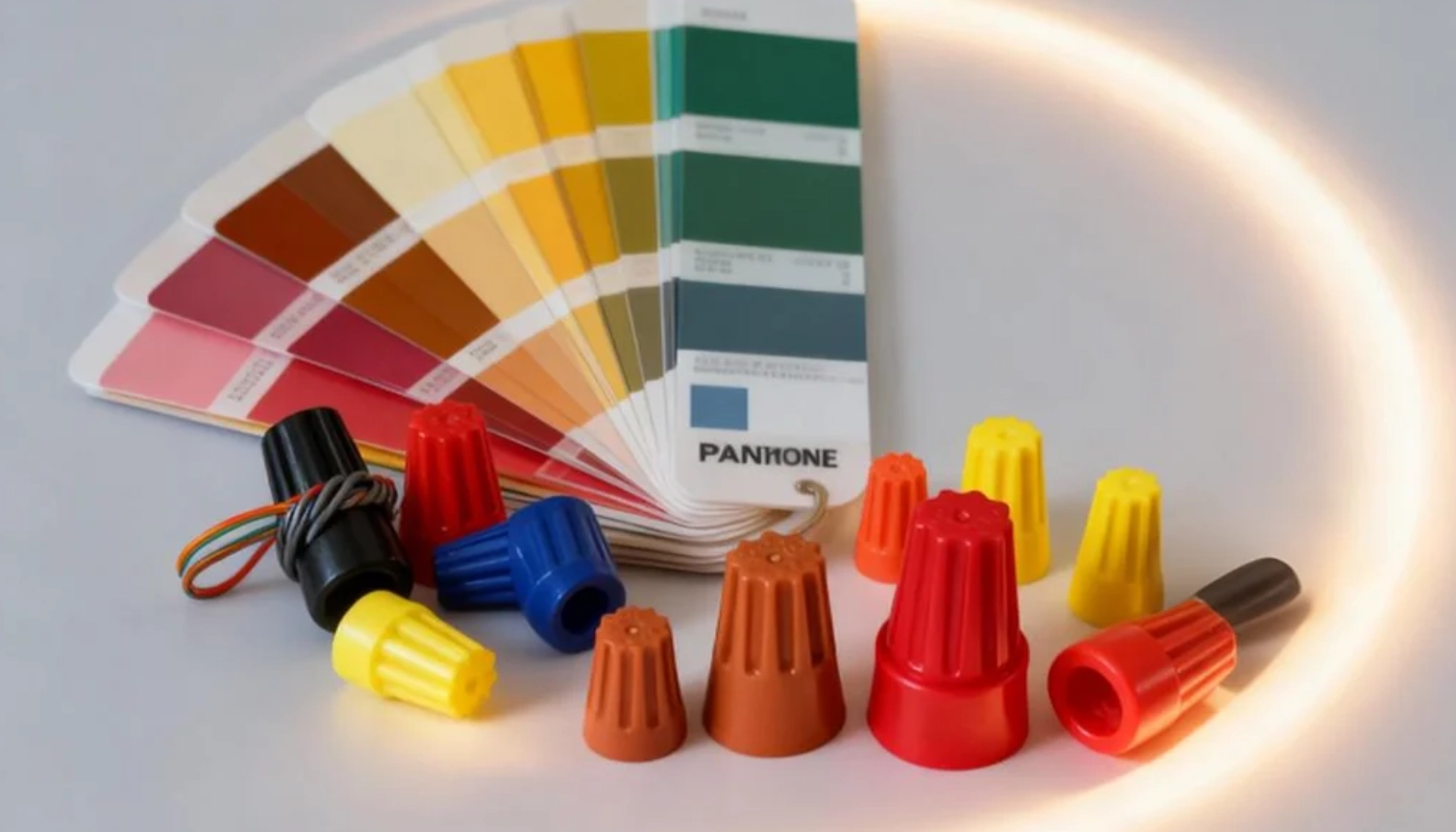
🎨 Wire Nut Color Coding and Size Guide
| Color | Typical Wire Range | Common Usage |
|---|---|---|
| Gray | 22–16 AWG | Small control wires |
| Blue | 22–14 AWG | Lighting circuits |
| Orange | 18–12 AWG | General purpose wiring |
| Yellow | 18–10 AWG | Residential and industrial |
| Red | 18–8 AWG | Heavy-duty applications |
| Tan | 14–8 AWG | Multi-wire bundles |
| Green | Ground only | Grounding connections |
Always follow the manufacturer’s specifications to ensure proper current-carrying capacity and safety.
🔌 Applications of Wire Nuts
Wire nuts are essential in both residential and industrial wiring systems:
- Lighting fixture wiring
- Electrical outlet and switch connections
- Appliance wiring
- Junction boxes
- Motor terminals
- Control panels and distribution boards
Depending on material and certification, they can be used in dry, damp, or even outdoor environments.
✅ Advantages of Wire Nuts
- No crimping tools required — install by hand.
- Reusable for maintenance and inspection.
- Handles multiple wire sizes easily.
- Economical and widely available.
- Approved by UL, CE, and CSA for safety compliance.
For OEM and wholesale distributors, wire nuts are high-demand consumables with broad application coverage.
⚠️ Professional Installation Tips
To ensure safe and long-lasting connections:
- Match wire size with the nut’s rated range.
- Strip wires properly (no overexposed conductors).
- Twist until snug — avoid over-tightening.
- Conduct a pull test to verify secure grip.
- Use dielectric grease for damp or outdoor setups.
💡 Wire Nut vs. Other Electrical Connectors
| Connector Type | Features | Typical Use |
|---|---|---|
| Wire Nut | Twist-on, reusable, insulated | General electrical wiring |
| Push-in Connector | Tool-free, compact | Residential or fast installations |
| Crimp Connector | Permanent, vibration-proof | Automotive & machinery |
| Terminal Block | Screw-fixed, modular | Control panels & industrial systems |
While each connector has its purpose, wire nuts remain the most cost-efficient and versatile choice for everyday wiring.
🌍 Safety and Environmental Compliance
Modern wire nuts are built from flame-retardant thermoplastics to ensure insulation integrity under high heat or overload conditions.
Compliance standards include:
- UL 486C (USA)
- CSA C22.2 (Canada)
- CE / RoHS (Europe)
At Willele, every connector undergoes strict quality inspection to meet both international electrical codes and OEM branding requirements.
🔚 Conclusion
The wire nut may be small, but its importance in electrical safety and connection reliability cannot be overstated. Whether U are designing a residential wiring system or building industrial equipment, a well-made wire nut connector ensures every connection stays safe, tight, and efficient.
Partner with Willele today — and power your projects with professional-grade wiring solutions that perform with precision.
