
Wind Turbine Electrical Systems: Flame-Retardant Heat-Shrink Tubing

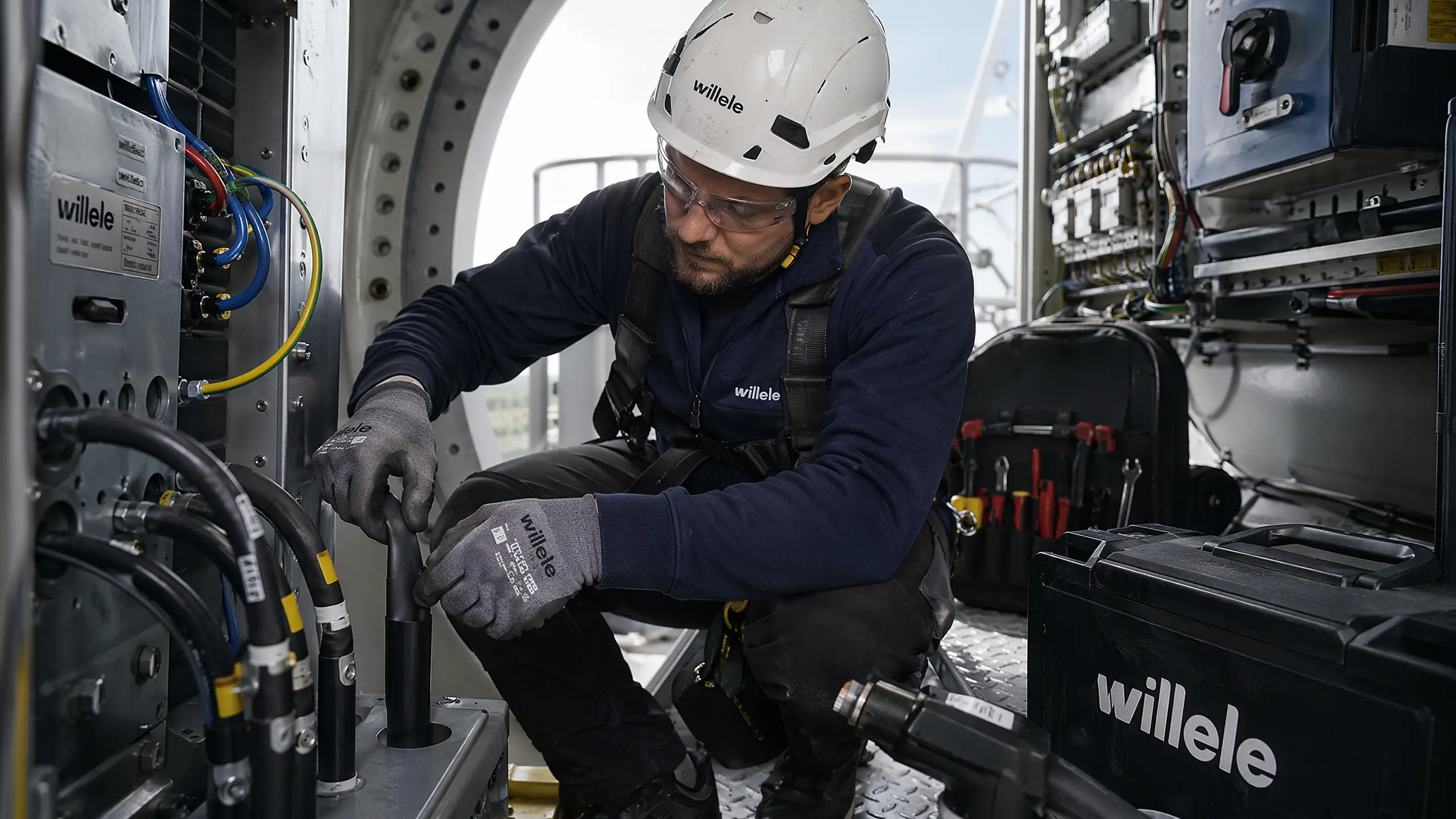
Wind turbines represent one of the most demanding environments for electrical components. Operating at heights exceeding 100 meters, exposed to extreme temperature fluctuations, UV radiation, moisture, and constant mechanical stress from vibration, these renewable energy giants require electrical protection solutions that can withstand decades of harsh conditions. Among the critical components ensuring reliable operation, flame-retardant heat-shrink tubing has emerged as an indispensable safeguard for wind turbine electrical systems.
The Critical Role of Flame-Retardant Heat-Shrink Tubing in Wind Energy
Wind turbines house complex electrical systems that convert mechanical energy into electricity. These systems include generator connections, power cables, control wiring, sensor networks, and communication lines—all of which require robust insulation and protection. The consequences of electrical failure in wind turbines extend beyond simple downtime; they can result in catastrophic fires that are notoriously difficult to extinguish at such heights.
Flame-retardant heat-shrink tubing serves multiple critical functions in wind turbine applications. First, it provides primary electrical insulation that prevents short circuits and arc faults in high-voltage connections. Second, it creates a moisture barrier that protects against the corrosive effects of humidity, rain, and coastal salt spray—particularly important for offshore wind installations. Third, and perhaps most critically, it acts as a fire suppression element that self-extinguishes when exposed to flame, preventing the spread of electrical fires within the confined spaces of turbine nacelles and towers.
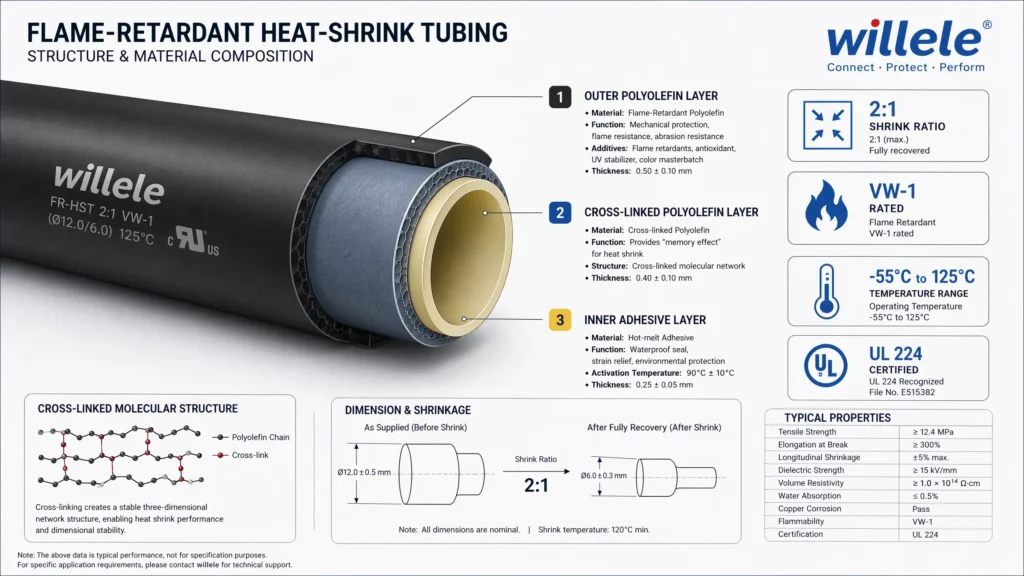
The material composition of flame-retardant heat-shrink tubing typically consists of radiation cross-linked polyolefin with specialized flame-retarding additives. This engineering ensures that the tubing will not sustain combustion and will extinguish itself within 30 to 60 seconds of being removed from a flame source. The cross-linking process creates a molecular structure that maintains dimensional stability across extreme temperature ranges while providing superior mechanical strength compared to non-cross-linked alternatives.
Technical Specifications and Standards for Wind Turbine Applications
Selecting appropriate flame-retardant heat-shrink tubing for wind turbine electrical systems requires understanding the rigorous technical specifications and international standards that govern these components. The performance parameters directly impact system reliability, safety, and longevity.
Key Performance Parameters
| Parameter | Specification | Significance for Wind Turbines |
|---|---|---|
| Operating Temperature Range | -55°C to 125°C | Accommodates extreme weather from Arctic to desert installations |
| Shrink Ratio | 2:1 to 5.6:1 | Higher ratios accommodate cable connectors and irregular geometries |
| Flame Retardant Rating | UL 224 VW-1 | Self-extinguishes within 60 seconds, prevents fire propagation |
| Dielectric Strength | ≥15 kV/mm | Prevents electrical breakdown in high-voltage applications |
| Wall Thickness | 0.5mm to 3.0mm | Thicker walls provide enhanced mechanical protection |
| UV Resistance | ASTM G154 compliant | Essential for outdoor cable runs and tower-mounted components |
| Shrink Temperature | Initial: ≥84°C / Full: ≥120°C | Allows controlled installation without cable damage |
The flame retardant rating deserves particular attention. The UL 224 VW-1 (Vertical Wire) standard represents the industry benchmark for electrical insulation materials. To achieve this rating, heat-shrink tubing must demonstrate that it will self-extinguish within a specified timeframe when the ignition source is removed, and it must not produce flaming drips that could ignite materials below. This characteristic is absolutely critical in wind turbines, where any fire can quickly become uncontrollable due to limited access for firefighting equipment.
International Standards and Certifications
Wind turbine manufacturers and operators must comply with multiple international standards depending on their geographic markets and specific applications:
UL 224 (United States): The Underwriters Laboratories standard for extruded insulating tubing covers flame resistance, dielectric strength, and physical properties. This certification is mandatory for wind turbines installed in North American markets.
IEC 60684 (International): The International Electrotechnical Commission standard specifies requirements for flexible insulating sleeving, including heat-shrinkable types. IEC 60332-1 specifically addresses flame retardancy testing methods.
CSA C22.2 No. 198 (Canada): Canadian Standards Association requirements for industrial control equipment often reference this standard for insulation materials used in renewable energy installations.
ASTM D2671 (United States): American Society for Testing and Materials standard for heat-shrinkable tubing for electrical use provides test methods for shrink ratio, physical properties, and thermal aging.
AS23053 (Aerospace/Military): While primarily for aerospace applications, this specification is sometimes referenced for premium wind turbine installations requiring the highest reliability standards, particularly for offshore platforms where maintenance access is severely limited.
For wind energy applications, compliance with RoHS (Restriction of Hazardous Substances) and REACH (Registration, Evaluation, Authorization, and Restriction of Chemicals) regulations is increasingly important, particularly in European markets. These directives ensure that flame-retardant additives do not contain prohibited heavy metals or halogenated compounds that produce toxic smoke during combustion.
Application Areas Within Wind Turbine Systems
Wind turbines contain numerous electrical subsystems, each presenting unique challenges for cable protection and insulation. Understanding these application areas helps engineers specify the appropriate heat-shrink tubing characteristics for each location.
Generator and Power Transmission Cables
The generator represents the heart of the wind turbine’s electrical system, converting rotational mechanical energy into three-phase electrical power. Generator output cables typically carry voltages ranging from 690V to 3.3kV and currents exceeding 1,000 amperes. These cables experience significant thermal cycling as turbine output varies with wind conditions, creating expansion and contraction stresses on insulation materials.
Flame-retardant heat-shrink tubing protects generator cable terminations, splice points, and phase separators. The tubing must accommodate the large cable diameters—often 25mm to 95mm—requiring products with shrink ratios of 3:1 or higher. Adhesive-lined dual-wall tubing is particularly valuable in these applications, as the inner adhesive layer flows during heat application to create a hermetic seal that prevents moisture ingress and provides strain relief at cable terminations.
Control and Sensor Wiring
Modern wind turbines incorporate sophisticated control systems with hundreds of sensors monitoring blade pitch, yaw position, vibration, temperature, and electrical parameters. These control cables typically operate at lower voltages (24V to 48V DC) but are equally critical to turbine operation. A single sensor failure can trigger emergency shutdown procedures, resulting in lost power generation revenue.
Heat-shrink tubing for control wiring emphasizes flexibility and small diameters (1mm to 6mm) to accommodate the compact wire gauges used in instrumentation circuits. The constant motion of the nacelle during yaw adjustments and the flexing of cables in the tower create fatigue stresses that can compromise insulation over time. Flame-retardant tubing with enhanced flexibility ratings prevents cracking and maintains electrical integrity through millions of movement cycles.
Lightning Protection and Grounding Systems
Wind turbines are inherently vulnerable to lightning strikes due to their height and exposed locations. A comprehensive lightning protection system includes down conductors, equipotential bonding, and surge protection devices. The connections within these systems must maintain low resistance and high current-carrying capacity to safely dissipate lightning energy—often exceeding 200,000 amperes—into the ground.
Heavy-wall flame-retardant heat-shrink tubing protects critical grounding connections and bonding jumpers. These applications require tubing with exceptional mechanical strength and abrasion resistance, as grounding conductors are often routed along tower walls where they may contact structural elements during installation or maintenance. The flame-retardant properties become especially important here, as lightning strikes can generate localized heating that might otherwise ignite conventional insulation materials.
Offshore Wind Turbine Considerations
Offshore wind installations present the most demanding environment for electrical components. The combination of salt spray, 100% humidity, temperature extremes, and limited maintenance access requires heat-shrink tubing with enhanced environmental resistance. UV-stabilized formulations prevent degradation from constant sun exposure on external cable runs. Halogen-free flame-retardant materials are often specified for offshore applications to minimize corrosive smoke production in the event of fire, protecting sensitive electronic equipment in adjacent turbines connected through the offshore substation network.
Comparative Analysis: Flame-Retardant vs. Standard Heat-Shrink Tubing
Understanding the performance differences between flame-retardant and standard heat-shrink tubing helps justify the investment in premium materials for wind turbine applications.
| Characteristic | Standard Heat-Shrink Tubing | Flame-Retardant Heat-Shrink Tubing |
|---|---|---|
| Combustion Behavior | Continues burning after ignition | Self-extinguishes within 30-60 seconds |
| Flame Rating | None or minimal | UL 224 VW-1, IEC 60332-1 certified |
| Smoke Production | High, potentially toxic | Reduced, halogen-free options available |
| Material Cost | Lower (baseline) | 15-30% premium over standard |
| Temperature Resistance | -40°C to 105°C typical | -55°C to 125°C or higher |
| UV Stability | Limited, degrades in sunlight | Enhanced stabilizers for outdoor use |
| Mechanical Strength | Adequate for indoor use | Superior abrasion and impact resistance |
| Moisture Resistance | Basic | Enhanced with adhesive lining options |
| Regulatory Compliance | Limited certifications | Meets UL, IEC, CSA, ASTM standards |
| Application Lifespan | 5-10 years indoor | 20-25 years outdoor/industrial |
The cost differential between standard and flame-retardant tubing—typically 15% to 30%—represents a minimal investment when considered against the total cost of wind turbine ownership. A single turbine fire can result in total loss of a multi-million-dollar asset, extended downtime affecting power purchase agreements, environmental remediation costs, and potential liability for damage to adjacent turbines or property. The insurance industry increasingly requires flame-retardant materials in wind turbine electrical systems as a condition of coverage.
Installation Best Practices for Wind Turbine Environments
Proper installation of flame-retardant heat-shrink tubing is essential to achieve the intended protection and longevity. Wind turbine environments present unique challenges that require modified installation procedures compared to conventional electrical work.
Surface Preparation: Cable surfaces must be thoroughly cleaned and dried before tubing application. Offshore installations may have salt deposits or moisture that compromise adhesion. Use isopropyl alcohol or approved cleaning solvents to remove contaminants, oils, and oxidation. For adhesive-lined tubing, surface preparation is particularly critical, as any contamination will prevent the adhesive from bonding properly.
Sizing Selection: Choose tubing with a recovered (shrunk) inner diameter that is 15% to 20% smaller than the cable diameter to ensure adequate compression and sealing. For irregular shapes such as cable connectors or splice areas, select tubing with higher shrink ratios (3:1 or 4:1) to accommodate the dimensional variation. Undersized tubing may split during shrinking, while oversized tubing will not provide adequate mechanical grip or environmental sealing.
Heat Application: Industrial heat guns with temperature control are essential for wind turbine installations. Apply heat evenly using a circular motion, starting from the center and working toward the ends to prevent air entrapment. For adhesive-lined tubing, continue heating until adhesive flows from the tubing ends—this visual confirmation ensures complete activation. In cold weather installations (below 0°C), pre-warm the tubing and cables to prevent incomplete shrinking or adhesive activation.
Environmental Considerations: Wind turbine installations often occur in challenging weather conditions. Avoid installing heat-shrink tubing in rain, snow, or when relative humidity exceeds 85%, as moisture trapped beneath the tubing will compromise insulation resistance. For offshore installations, schedule electrical work during low-wind periods to prevent contamination from salt spray during the vulnerable period between surface preparation and tubing installation.
Quality Verification: After installation, perform visual inspection for complete shrinkage, absence of air pockets or wrinkles, and adhesive flow at tubing ends (for dual-wall products). Electrical testing should include insulation resistance measurement (typically ≥100 MΩ at 500V DC) and high-potential (hi-pot) testing at voltages appropriate to the system operating voltage. Documentation of installation dates and materials used facilitates future maintenance planning.
Willele’s Flame-Retardant Heat-Shrink Tubing Solutions for Wind Energy
As a specialized B2B electrical equipment manufacturer, Willele has developed a comprehensive range of flame-retardant heat-shrink tubing products specifically engineered for the demanding requirements of wind turbine electrical systems. Our product portfolio addresses the full spectrum of wind energy applications, from compact control wiring to heavy-duty power cable protection.
Product Range: Willele offers flame-retardant heat-shrink tubing in diameters from 1mm to 180mm (recovered), with shrink ratios of 2:1, 3:1, and 4:1 to accommodate diverse cable geometries. All products meet or exceed UL 224 VW-1 flame retardant standards and are certified to IEC 60684 specifications. Our standard operating temperature range of -55°C to 125°C ensures reliable performance across all global wind energy markets, from Arctic installations to desert environments.
Material Technology: Willele utilizes radiation cross-linked polyolefin formulations with proprietary flame-retardant additive packages that achieve superior fire resistance without compromising flexibility or mechanical properties. Our halogen-free formulations eliminate the production of corrosive gases during combustion, protecting sensitive electronic equipment and reducing environmental impact. UV-stabilized compounds maintain physical properties and appearance through decades of outdoor exposure, essential for tower-mounted cable runs and external connections.
Quality Assurance: Every production lot undergoes rigorous testing including flame retardancy verification (UL 224 vertical flame test), shrink ratio measurement, tensile strength testing, and dielectric strength validation. Willele maintains ISO 9001 quality management certification and provides full material traceability documentation to support wind turbine manufacturers’ quality requirements and regulatory compliance obligations.
Technical Support: Willele’s engineering team provides application-specific consultation for wind turbine projects, including material selection guidance, installation procedure development, and custom product development for unique requirements. We understand that wind energy projects operate on demanding timelines and offer expedited production for critical path components.
Future Trends in Heat-Shrink Tubing for Wind Energy
The wind energy industry continues to evolve toward larger turbines, higher voltages, and more challenging installation environments. These trends drive ongoing innovation in flame-retardant heat-shrink tubing technology.
Higher Voltage Systems: Modern offshore wind turbines increasingly utilize 66kV collection systems and direct HVDC transmission, requiring heat-shrink tubing with enhanced dielectric strength and corona resistance. Next-generation products incorporate semi-conductive layers and field-grading materials to manage electrical stress concentrations at cable terminations.
Smart Monitoring Integration: Emerging heat-shrink tubing products incorporate embedded sensors for real-time monitoring of temperature, moisture ingress, and mechanical stress. These “intelligent” insulation systems provide early warning of developing problems, enabling predictive maintenance strategies that prevent failures before they occur.
Sustainability Focus: The wind energy industry’s commitment to environmental sustainability extends to component materials. Future flame-retardant heat-shrink tubing will increasingly utilize bio-based polyolefins and recyclable formulations that maintain performance while reducing carbon footprint. Willele actively participates in industry initiatives to develop circular economy solutions for electrical insulation materials.
Floating Offshore Wind: The emerging floating offshore wind sector presents unprecedented challenges for electrical systems, including dynamic cable connections that experience constant motion. Specialized heat-shrink tubing with enhanced fatigue resistance and self-healing properties is under development to address these extreme applications.
Frequently Asked Questions
Q: What is the typical lifespan of flame-retardant heat-shrink tubing in wind turbine applications?
A: When properly selected and installed, high-quality flame-retardant heat-shrink tubing should last 20 to 25 years in wind turbine environments, matching the typical major maintenance interval for turbine electrical systems. UV-stabilized formulations are essential for outdoor applications to achieve this lifespan. Regular inspection during scheduled maintenance allows early identification of any degradation.
Q: Can flame-retardant heat-shrink tubing be used in both onshore and offshore wind installations?
A: Yes, but offshore applications require tubing with enhanced environmental resistance. Specify products with halogen-free flame retardant additives, superior UV stabilization, and adhesive-lined construction for maximum moisture protection. Salt spray resistance testing (ASTM B117) verification is recommended for coastal and offshore installations.
Q: What shrink ratio should I specify for wind turbine generator cable connections?
A: Generator cables typically require 3:1 or 4:1 shrink ratio tubing to accommodate the large diameter variations between cable bodies and termination lugs or connectors. For standard cable repairs or straight runs, 2:1 shrink ratio is usually sufficient and more economical.
Q: How do I verify that heat-shrink tubing meets UL 224 VW-1 flame retardant requirements?
A: Request certification documentation from your supplier showing UL 224 listing or third-party test reports demonstrating compliance with the VW-1 vertical flame test. Reputable manufacturers like Willele provide certificates of compliance with each shipment. Be cautious of suppliers who cannot provide independent verification of flame retardant performance.
Q: Is special equipment required to install heat-shrink tubing in wind turbine nacelles?
A: Industrial heat guns with temperature control (typically 300°C to 400°C output) are essential. Cordless battery-powered heat guns offer greater mobility in confined nacelle spaces. For large-diameter power cables, propane torch heating may be necessary, but requires careful technique to avoid overheating. Willele provides installation guidelines specific to each product
