
Elevator Control Systems: Fire Safety Heat-Shrink Tubing Standards

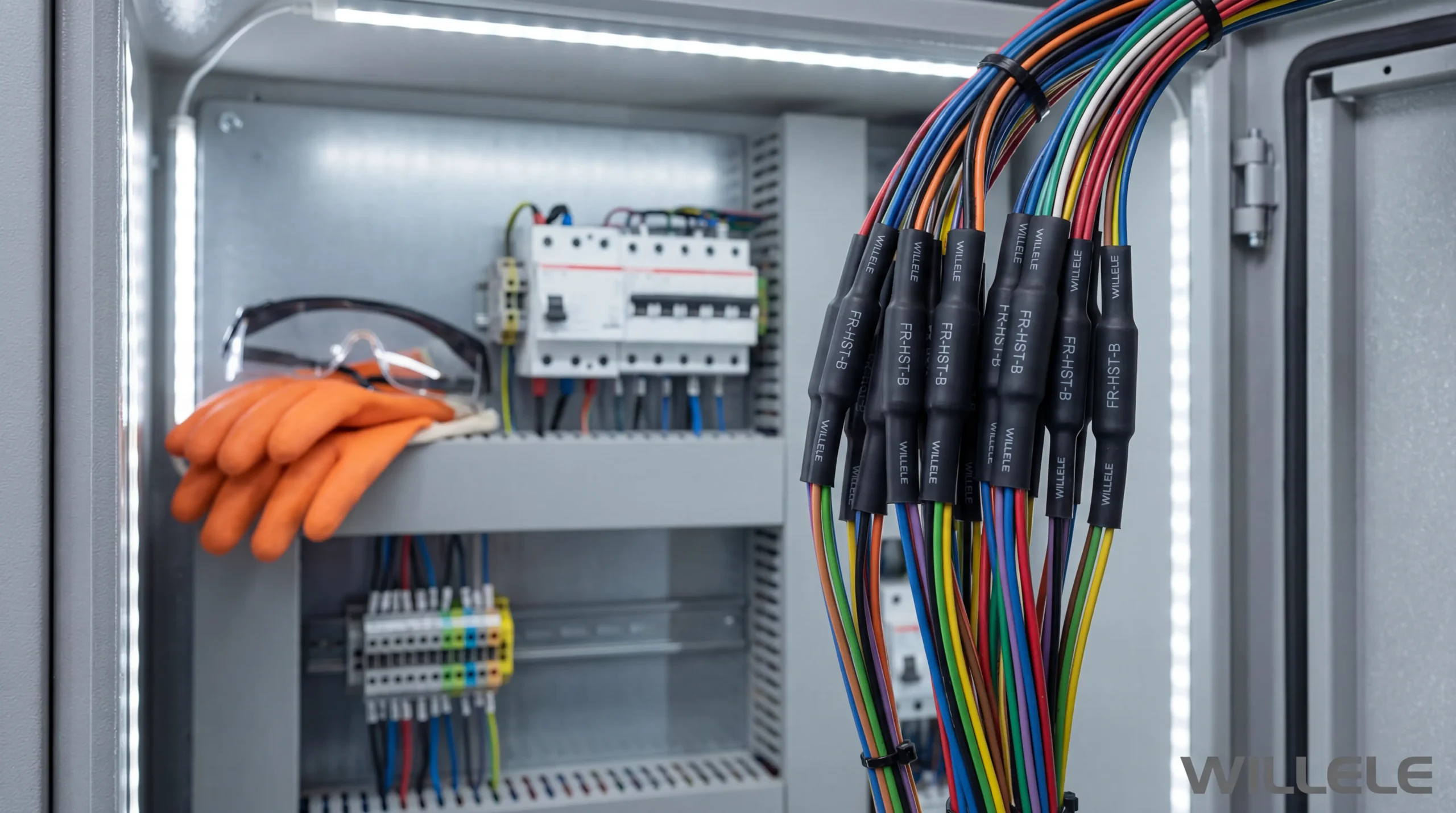
Elevator control systems represent one of the most critical safety infrastructures in modern buildings, with approximately 900,000 installed elevator systems operating across the United States. Within these complex systems, heat-shrink tubing serves as an essential protective component, providing electrical insulation, mechanical protection, and fire safety compliance for control wiring and connections. As fire safety regulations become increasingly stringent, understanding and implementing proper fire safety heat-shrink tubing standards has become paramount for elevator manufacturers, maintenance providers, and building operators.
This comprehensive guide examines the fire safety standards governing heat-shrink tubing applications in elevator control systems, providing B2B professionals with the technical knowledge necessary to ensure compliance, safety, and optimal system performance.
Understanding Heat-Shrink Tubing in Elevator Applications
Heat-shrink tubing consists of thermoplastic or elastomeric polymer tubes that contract when heated, creating a tight protective seal around electrical connections, wire splices, and components. In elevator control systems, these tubes serve multiple critical functions: electrical insulation of inadequately insulated conductors, mechanical protection against abrasion and environmental factors, strain relief at termination points, and fire safety compliance through flame-retardant properties
Elevator environments present unique challenges that demand specialized heat-shrink solutions. Control rooms and hoistways experience temperature fluctuations ranging from -20°C to 105°C depending on climate and heating systems. The equipment generates significant heat from hydraulic units and controllers, requiring materials with stable performance across wide temperature ranges. Additionally, elevator systems must comply with strict fire safety codes including ASME A17.1/CSA B44 (Safety Code for Elevators and Escalators) and Article 620 of the National Electric Code (NFPA 70), making flame-retardant heat-shrink tubing not merely preferable but mandatory in many applications. citation citation
Primary Fire Safety Standards for Heat-Shrink Tubing
UL 224 / CSA C22.2 No. 198.1 Standard
The harmonized UL 224 and CSA C22.2 No. 198.1 standard represents the cornerstone certification for extruded insulating tubing in North America. This unified standard, which became effective in December 2001, establishes comprehensive requirements for both heat-shrink and non-heat-shrink electrical insulating tubing across various polymer materials. The standard defines critical performance parameters including dimensional tolerances, physical properties, electrical characteristics, and flammability resistance. citation citation
Products certified under UL 224 undergo rigorous testing to verify their suitability for internal wiring applications, particularly for insulating inadequately insulated conductors, bus bars, motor leads, and transformer lugs. The standard accommodates tubing constructed from thermosetting, elastomeric, or thermoplastic polymers, including cross-linked and shrinkable variants with optional meltable inner liners.
VW-1 Flame Rating
The VW-1 (Vertical Wire) flame rating, derived from UL 1581 (Reference Standard for Electrical Wires, Cables, and Flexible Cords), has become the industry benchmark for flame-retardant heat-shrink tubing. This rating verifies that tubing materials can withstand vertical flame testing without propagating fire beyond specified limits. During VW-1 testing, a sample is subjected to a controlled flame source for a defined period; to pass, the material must self-extinguish within 60 seconds after flame removal, with burn length not exceeding specified limits. citation citation
For elevator control systems operating in environments rated at 90°C to 105°C, VW-1 certified tubing provides essential fire safety protection. It’s crucial to understand that flame-retardant does not mean non-combustible; rather, it indicates the material’s ability to resist flame propagation and self-extinguish when the ignition source is removed, thereby preventing fire spread throughout the control system.
UL 94 Flammability Classification
The UL 94 Standard for Safety of Flammability of Plastic Materials provides an additional classification system widely referenced in component selection. This standard establishes multiple flammability classes based on burning rate, drip characteristics, and self-extinguishing properties. The most common classifications include V-0 (most flame resistant, self-extinguishes within 10 seconds), V-1 (self-extinguishes within 30 seconds), V-2 (similar to V-1 but permits burning drips), and HB (horizontal burn rating, slowest burning rate). citation
The “5V” classification represents the most severe testing condition, employing a flame source approximately five times more intense than standard ratings, making it suitable for applications requiring exceptional fire resistance. While UL 94 is not explicitly aerospace-specific, its results provide valuable insight for selecting heat-shrink tubing in demanding elevator applications where fire safety is paramount.
ASME A17.1/CSA B44 Compliance
The Safety Code for Elevators and Escalators (ASME A17.1/CSA B44) establishes comprehensive safety requirements for elevator systems, including specifications for electrical components and fire safety measures. This code mandates that all electrical insulation materials, including heat-shrink tubing, meet specific flame-resistance and smoke-generation criteria. Elevator control rooms and hoistways must maintain fire-rated integrity, requiring all penetrations and electrical components to use UL fire-resistant rated materials. citation
For occupant evacuation elevators and fire service access elevators, even more stringent requirements apply, including smoke and draft control compliance tested according to UL 1784. Heat-shrink tubing used in these critical systems must not only provide electrical insulation but also contribute to overall fire safety by minimizing flame propagation and toxic smoke generation during fire events.
Material Standards and Specifications
Polyolefin Heat-Shrink Tubing
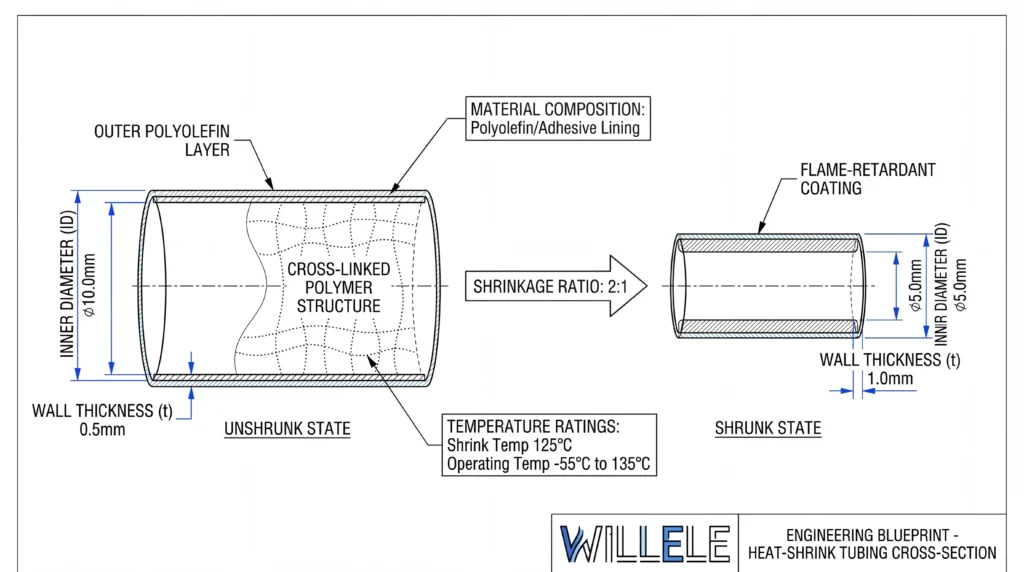
Polyolefin represents the most widely specified material for flame-retardant heat-shrink tubing in elevator applications. This cross-linked polymer offers an optimal balance of electrical insulation properties, mechanical flexibility, flame retardancy, and cost-effectiveness. Standard polyolefin tubing operates reliably across temperature ranges from -55°C to 125°C, making it suitable for the demanding thermal environments found in elevator control rooms and hoistways. citation
Flame-retardant polyolefin tubing meeting UL 224 and VW-1 specifications achieves a limiting oxygen index (LOI) of approximately 28, meaning it requires at least 28% oxygen concentration to sustain combustion—significantly higher than the 21% oxygen present in normal air. This characteristic ensures the material will self-extinguish in typical atmospheric conditions once the ignition source is removed.
PVC (Polyvinyl Chloride) Heat-Shrink Tubing
PVC heat-shrink tubing offers inherent flame-retardant properties due to its chlorine content, making it a popular choice for applications requiring excellent fire resistance without additional flame-retardant additives. Clear PVC heat-shrink tubing, such as UL-recognized 105°C rated products, provides the added benefit of visual inspection capability, allowing technicians to verify die index embossments on installed connectors and detect any corrosion that may develop over time. citation
PVC tubing typically operates within temperature ranges of -20°C to 105°C, with shrink activation temperatures around 135°C. Its self-extinguishing properties and excellent electrical insulation characteristics make it particularly suitable for elevator control panel applications where both fire safety and inspection visibility are priorities.
Specialty High-Temperature Materials
For elevator applications involving elevated temperature exposure or requiring enhanced chemical resistance, specialty materials provide superior performance. PVDF (Polyvinylidene Fluoride) heat-shrink tubing offers semi-rigid protection suitable for wire termination strain relief at elevated temperatures, with continuous operating capabilities up to 175°C. Fluoroelastomer heat-shrink tubing extends temperature resistance even further, accommodating applications up to 200°C while providing exceptional resistance to solvents and chemicals. citation
PTFE (Polytetrafluoroethylene) heat-shrink tubing represents the premium option for extreme environments, offering continuous operation up to 260°C (500°F), superior dielectric strength, minimal friction coefficient, and outstanding chemical resistance. While these specialty materials command higher costs, their performance characteristics prove essential in specific elevator applications such as machine room equipment operating at elevated temperatures or control systems exposed to hydraulic fluids and cleaning chemicals.
Comparative Analysis of Fire Safety Standards
| Standard | Scope | Key Requirements | Temperature Rating | Flame Test | Application Focus |
|---|---|---|---|---|---|
| UL 224 / CSA C22.2 No. 198.1 | Extruded insulating tubing (heat-shrink and non-heat-shrink) | Dimensional, physical, electrical, and flammability properties | 90°C, 105°C, 125°C (material dependent) | VW-1 (optional) | General electrical insulation in equipment |
| VW-1 (UL 1581) | Vertical wire flame test for electrical wires and cables | Self-extinguish within 60 seconds; limited burn length | 90°C – 105°C | Vertical flame exposure | Wire and cable components |
| UL 94 | Flammability of plastic materials in devices | V-0, V-1, V-2, 5V classifications based on burn time and drip | Varies by material | Horizontal and vertical flame tests | Plastic components in devices |
| ASME A17.1/CSA B44 | Elevator and escalator safety code | Fire-rated materials; smoke control compliance | System-dependent | Requires UL-listed/recognized components | Elevator systems and components |
| IEC 60684 (International) | Flexible insulating sleeving | Thermal, electrical, and mechanical properties | Multiple classes | Flame propagation tests | International markets |
Technical Requirements for Elevator Applications
Shrinkage Ratio and Dimensional Specifications
Heat-shrink tubing is classified by its shrinkage ratio, which defines the relationship between its expanded (as-supplied) diameter and its fully recovered (shrunk) diameter. The most common ratios include 2:1 (tubing shrinks to half its original diameter), 3:1 (shrinks to one-third original diameter), and 4:1 (shrinks to one-quarter original diameter). For elevator control systems, 2:1 ratio tubing provides adequate coverage for most standard wire gauges and connections, while 3:1 and 4:1 ratios offer greater versatility when a single size must accommodate multiple conductor diameters or irregular shapes. citation
Proper sizing selection ensures complete coverage without excessive material, which could interfere with panel layout or create unnecessary bulk. The largest tubing size that shrinks down tightly onto the substrate should be selected, providing secure mechanical retention while maintaining compact installation profiles essential in space-constrained elevator control cabinets.
Voltage and Dielectric Strength
Elevator control systems typically operate at voltages ranging from 24V DC for control circuits to 600V AC for power distribution. Heat-shrink tubing must provide adequate dielectric strength to prevent electrical breakdown and ensure safe insulation. UL 224 certified tubing undergoes dielectric voltage-withstand testing at specified voltages based on wall thickness and material composition, typically ranging from 600V to 2500V test voltages for common constructions.
For low-voltage control circuits (under 50V), standard thin-wall tubing provides sufficient insulation. Medium-voltage applications (50V to 600V) require medium-wall constructions with enhanced dielectric properties. Specialty applications involving higher voltages or harsh environmental conditions may necessitate heavy-wall or adhesive-lined constructions that provide both electrical insulation and environmental sealing.
Operating Temperature Range
Elevator control environments subject heat-shrink tubing to significant temperature variations. Hoistways in unheated buildings may experience temperatures as low as -20°C in winter, while machine rooms with hydraulic equipment and electronic controllers can reach 60°C to 80°C during operation. The selected heat-shrink material must maintain its physical, electrical, and flame-retardant properties throughout this entire temperature range. citation
Standard polyolefin tubing rated for -55°C to 125°C provides adequate performance for most elevator applications. However, applications involving direct contact with heat-generating components or exposure to elevated ambient temperatures may require PVC (up to 105°C), PVDF (up to 175°C), or fluoropolymer materials (up to 260°C) to ensure long-term reliability and safety compliance.
Wall Thickness Classifications
Heat-shrink tubing is available in multiple wall thickness classifications, each suited to specific application requirements:
Thin-wall tubing offers minimal bulk and maximum flexibility, ideal for wire identification, color coding, and light-duty insulation in control panels where space is limited. These constructions typically provide wall thicknesses of 0.2mm to 0.5mm after shrinking.
Medium-wall tubing provides enhanced mechanical protection and improved electrical insulation, suitable for general-purpose applications including wire splices, terminal insulation, and component protection. Wall thicknesses range from 0.5mm to 1.5mm, offering a balance between protection and flexibility.
Heavy-wall tubing delivers maximum mechanical protection and environmental sealing, particularly when constructed with adhesive inner liners. These dual-wall constructions create waterproof, corrosion-resistant seals essential for elevator pit applications or outdoor installations where moisture ingress could compromise electrical integrity.
Installation and Compliance Best Practices
Proper Installation Procedures
Correct installation technique is essential to achieve the fire safety performance and electrical protection that certified heat-shrink tubing is designed to provide. The tubing must be cut to appropriate length, allowing sufficient overlap beyond the connection or splice being protected—typically 6mm to 12mm on each side for standard applications. Before installation, the substrate must be clean and dry, free from oils, dirt, or contaminants that could interfere with adhesion or create insulation defects.
Heat application should be uniform and controlled, using appropriate tools such as heat guns, ovens, or flameless heat sources. The recommended heat source temperature typically ranges from 120°C to 150°C for polyolefin materials, though this varies by product specification. Overheating can damage the tubing’s flame-retardant properties and physical integrity, while insufficient heating results in incomplete shrinkage and poor mechanical retention. The tubing should be heated evenly, working from the center outward to prevent air entrapment, until complete recovery is achieved with smooth, wrinkle-free appearance.
Documentation and Traceability
Maintaining comprehensive documentation of heat-shrink tubing specifications and certifications is essential for elevator system compliance and inspection readiness. All tubing products used in elevator control systems should be accompanied by UL recognition or listing documentation, including file numbers (e.g., UL File E137759), material specifications, and flame rating certifications. This documentation must be readily available for inspection by authorities having jurisdiction (AHJ) and elevator safety inspectors.
Project specifications should clearly identify the required standards (UL 224, VW-1, ASME A17.1 compliance), material types, temperature ratings, and flame classifications for each application within the elevator system. Installation records should document the specific products used, installation dates, and installer qualifications, creating a traceable record that supports ongoing maintenance and future modifications.
Inspection and Verification
Regular inspection of heat-shrink tubing installations helps identify potential issues before they compromise safety or system performance. Visual inspection should verify complete shrinkage with no gaps, splits, or areas of incomplete recovery. The tubing should fit snugly without excessive looseness or tension that could indicate improper sizing or installation. For critical connections, electrical testing may be performed to verify insulation resistance and dielectric integrity.
Clear or transparent heat-shrink tubing offers significant advantages for inspection purposes, allowing visual verification of underlying connections, die index markings, and early detection of corrosion or degradation without removing the protective covering. This capability reduces maintenance time and costs while improving reliability through proactive identification of developing issues.
Material Performance Comparison
| Material Type | Temperature Range | Flame Rating | Shrink Ratio | Key Advantages | Typical Applications |
|---|---|---|---|---|---|
| Polyolefin (Standard) | -55°C to 125°C | VW-1, UL 94 V-0 | 2:1, 3:1, 4:1 | Cost-effective, flexible, excellent electrical properties | General control wiring, wire splices, terminal insulation |
| PVC (Clear) | -20°C to 105°C | Inherently flame retardant | 2:1 | Visual inspection capability, self-extinguishing | Connector insulation, inspectable connections |
| Polyolefin (Adhesive-lined) | -55°C to 125°C | VW-1 | 2:1, 3:1, 4:1 | Environmental sealing, moisture protection | Cable joints, outdoor installations, pit applications |
| PVDF | -55°C to 175°C | Excellent | 2:1 | High temperature, chemical resistance, semi-rigid | Machine room equipment, elevated temperature zones |
| Fluoroelastomer | -55°C to 200°C | Excellent | 2:1 | Extreme temperature, solvent resistance | Hydraulic system proximity, chemical exposure areas |
| PTFE | -55°C to 260°C | Excellent | 1.3:1 to 2:1 | Highest temperature, superior dielectric, chemical inert | Extreme environment applications, critical connections |
Regulatory Compliance and Market Requirements
North American Requirements
In the United States and Canada, elevator control systems must comply with ASME A17.1/CSA B44 safety code requirements, which mandate the use of UL-listed or UL-recognized components meeting applicable electrical and fire safety standards. Article 620 of the National Electric Code (NFPA 70) establishes specific requirements for elevator electrical installations, including conductor insulation, overcurrent protection, and fire safety measures. citation
Heat-shrink tubing used in these applications must carry appropriate UL recognition (typically under category YDPU2 for extruded insulating tubing) or be part of a UL-listed assembly. Canadian installations require CSA certification or recognition, though the harmonization of UL 224 and CSA C22.2 No. 198.1 has simplified compliance for manufacturers serving both markets.
International Standards
For elevator systems destined for international markets, compliance with IEC (International Electrotechnical Commission) standards becomes necessary. IEC 60684 series standards cover flexible insulating sleeving, including heat-shrinkable types, establishing requirements for thermal endurance, electrical properties, and flame propagation resistance. European markets may additionally require CE marking and compliance with EU directives such as RoHS (Restriction of Hazardous Substances) and REACH (Registration, Evaluation, Authorization and Restriction of Chemicals). citation
Manufacturers serving global markets must navigate these varying requirements, often seeking products with multiple certifications to simplify specification and procurement across different regions. Working with heat-shrink tubing suppliers who maintain comprehensive certification portfolios ensures compliance regardless of installation location.
WILLELE Electric: Your Partner for Fire Safety Compliance
As a specialized B2B manufacturer of heat-shrink tubing solutions, WILLELE Electric understands the critical importance of fire safety compliance in elevator control systems. Our comprehensive product portfolio includes UL 224/CSA C22.2 No. 198.1 certified heat-shrink tubing in multiple materials, sizes, and flame ratings specifically engineered for demanding elevator applications.
WILLELE Electric’s flame-retardant polyolefin heat-shrink tubing meets VW-1 flame rating requirements and operates reliably from -55°C to 125°C, providing the versatility needed for diverse elevator environments. Our clear PVC heat-shrink tubing enables visual inspection while maintaining excellent flame-retardant properties, supporting proactive maintenance programs. For specialized applications, we offer PVDF and fluoropolymer options that deliver exceptional performance in elevated temperature and chemical exposure conditions.
Every WILLELE Electric heat-shrink tubing product is manufactured under rigorous quality control procedures and backed by comprehensive certification documentation, ensuring your elevator systems meet all applicable fire safety standards and regulatory requirements. Our technical support team works directly with elevator manufacturers, contractors, and maintenance providers to specify the optimal heat-shrink solutions for each unique application, supporting both new installations and retrofit projects.
For technical specifications, compliance documentation, or custom solutions tailored to your elevator control system requirements, contact WILLELE Electric’s B2B sales team. We’re committed to providing the fire safety heat-shrink tubing standards compliance you need with the quality and reliability your reputation demands.
Frequently Asked Questions (FAQ)
Q: What is the difference between flame-retardant and non-flame-retardant heat-shrink tubing?
A: Flame-retardant heat-shrink tubing is formulated with additives or constructed from inherently flame-resistant materials that cause it to self-extinguish within a specified time (typically 30-60 seconds) after the ignition source is removed. Non-flame-retardant tubing, such as standard polyethylene (PE) clear tubing, will continue to burn once ignited. For elevator control systems, flame-retardant tubing meeting VW-1 or UL 94 standards is required to comply with fire safety codes.
Q: How do I determine the correct heat-shrink tubing size for my elevator control application?
A: Select tubing with an as-supplied (expanded) inner diameter slightly larger than the object being covered, and a fully recovered (shrunk) inner diameter smaller than the object. The shrinkage ratio (2:1, 3:1, or 4:1) determines how much size variation the tubing can accommodate. As a general rule, choose the largest size that will shrink down tightly onto your substrate to ensure proper mechanical retention without excessive bulk.
Q: Can heat-shrink tubing be used in elevator pit applications where moisture is present?
A: Yes, but standard single-wall tubing may not provide adequate moisture protection. For elevator pit applications and other moisture-prone environments, specify adhesive-lined (dual-wall) heat-shrink tubing. When properly installed with complete heat activation, the adhesive inner layer creates a waterproof seal that prevents moisture ingress and provides corrosion protection for underlying connections.
Q: What documentation is required to demonstrate fire safety compliance for heat-shrink tubing in elevator systems?
A: Elevator inspectors and authorities having jurisdiction typically require UL recognition or listing documentation, including the UL file number, product specifications showing flame rating (VW-1, UL 94), temperature rating, and voltage rating. Manufacturers should provide certification documents confirming compliance with UL 224/CSA C22.2 No. 198.1 and any other applicable standards. Maintain these documents as part of your elevator system compliance records.
Q: How often should heat-shrink tubing in elevator control systems be inspected or replaced?
A: Heat-shrink tubing should be visually inspected during routine elevator maintenance intervals, typically annually or as specified by the elevator manufacturer. Look for signs of physical damage, cracking, discoloration, or loosening. Replacement is necessary if the tubing shows signs of degradation, has been damaged during maintenance activities, or no longer provides adequate coverage. Properly installed quality heat-shrink tubing in controlled environments can provide reliable protection for 10-20 years or more.
