
Busbar Insulators for Marine and Offshore Applications

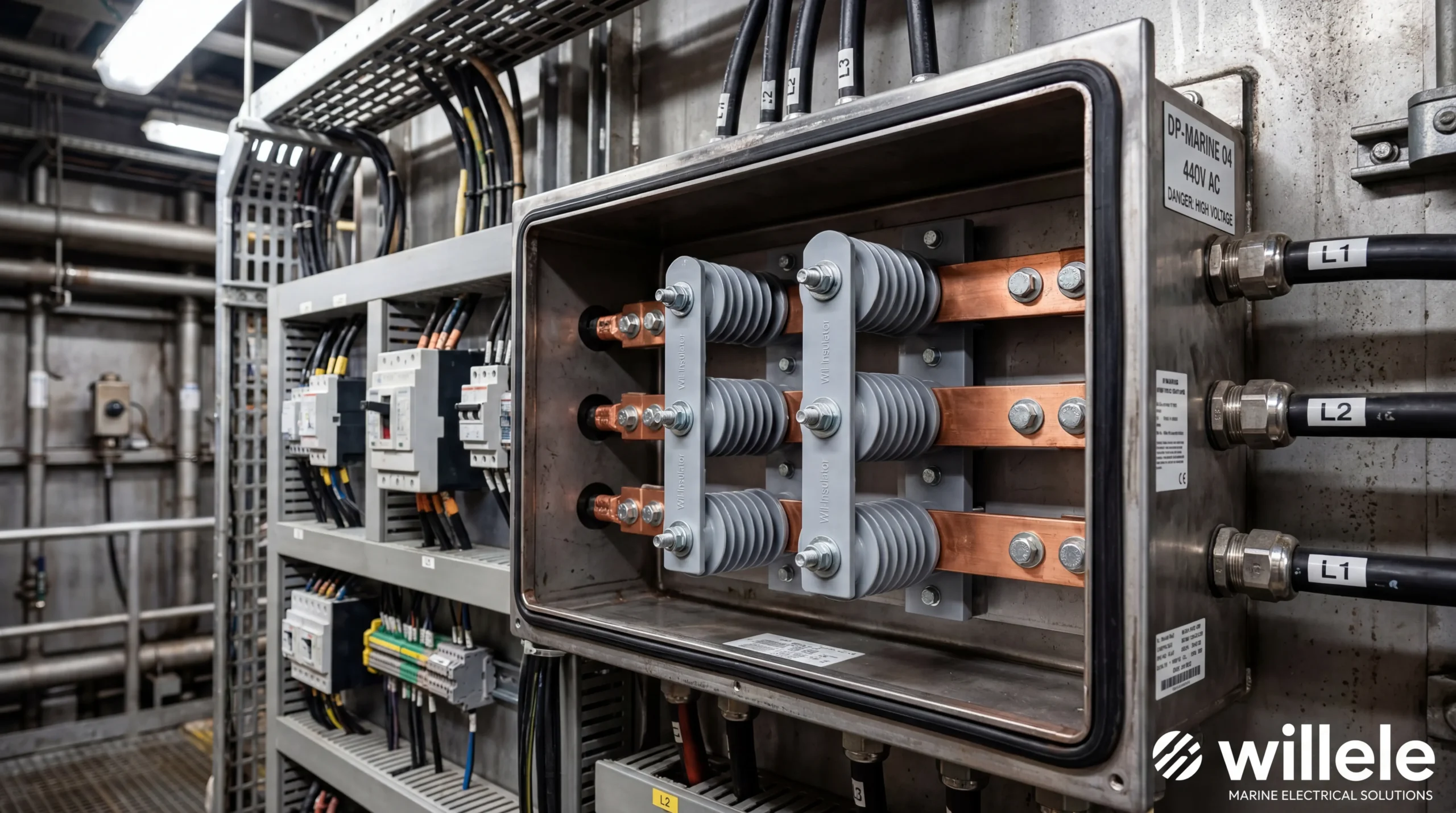
The maritime and offshore industries present some of the most demanding environments for electrical infrastructure. Saltwater corrosion, extreme temperature fluctuations, constant vibration, and high humidity create unique challenges that require specialized electrical components. Among these critical components, busbar insulators play an essential role in ensuring safe, reliable power distribution across marine vessels, offshore platforms, and coastal installations.
As a leading B2B manufacturer specializing in heat shrink tubes and electrical insulation solutions, Willele Electric understands the rigorous demands of marine and offshore applications. This comprehensive guide explores the specifications, materials, standards, and best practices for selecting and implementing busbar insulators in maritime environments.
Understanding Busbar Insulators in Marine Environments
Busbar insulators are specialized components designed to provide electrical isolation while mechanically supporting busbars—the conductive strips or bars that distribute electrical power throughout a system. In marine and offshore applications, these insulators must withstand conditions that would quickly degrade standard electrical components.
The harsh realities of maritime environments include constant exposure to salt spray, which accelerates corrosion and creates conductive surface films; temperature extremes ranging from sub-zero conditions in Arctic operations to intense heat in engine rooms; mechanical stress from wave-induced motion, vibration from machinery, and structural flexing; and moisture ingress from humidity, condensation, and direct water contact. citation
These factors make the selection of appropriate busbar insulators not merely a technical consideration but a critical safety imperative that directly impacts operational reliability and personnel protection.
Material Selection for Marine Busbar Insulators
The choice of insulating material fundamentally determines the performance and longevity of busbar insulators in marine applications. Different materials offer distinct advantages and limitations that must be carefully evaluated against specific operational requirements.
Polymer Composites
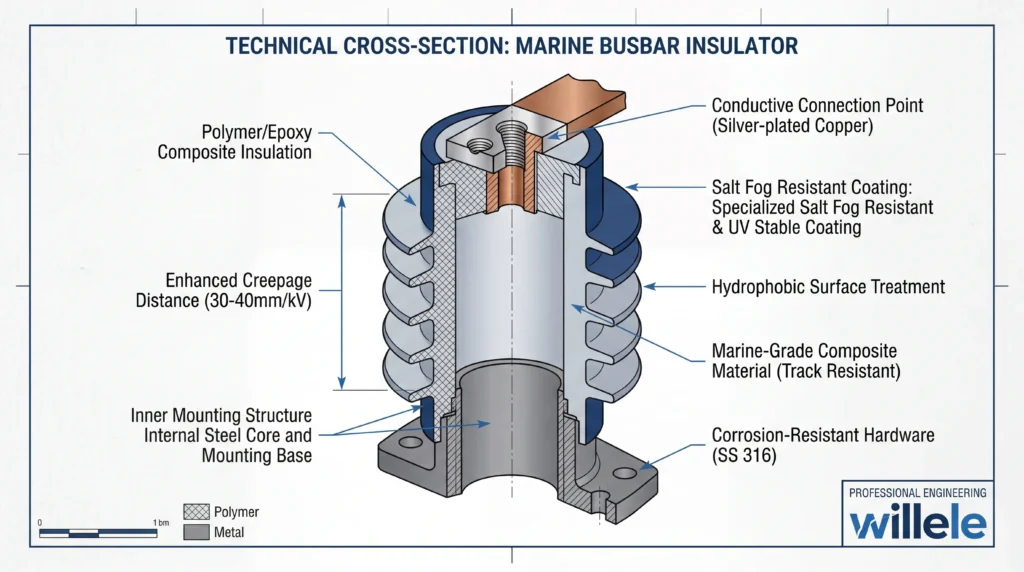
Modern polymer-based insulators have become increasingly popular in marine applications due to their excellent resistance to environmental degradation. These materials typically incorporate hydrophobic surface treatments that repel water and prevent the formation of conductive surface films—a critical feature in salt-laden atmospheres.
Polymer composites offer superior pollution performance compared to traditional materials, maintaining their insulating properties even when contaminated with salt deposits. Their lighter weight simplifies installation and reduces structural loading, particularly important on offshore platforms where weight considerations affect overall design. Additionally, polymer insulators demonstrate excellent resistance to UV radiation, preventing the surface degradation that can compromise electrical performance over time. citation
Epoxy Resin Systems
Epoxy resin insulators, often reinforced with glass fibers, provide exceptional mechanical strength combined with outstanding electrical insulation properties. These composite materials excel in applications requiring high dimensional stability and resistance to mechanical stress.
The molecular structure of epoxy resins creates a dense, non-porous surface that resists moisture absorption—a crucial characteristic in marine environments where humidity levels frequently approach saturation. Epoxy systems also offer excellent chemical resistance, protecting against the various oils, fuels, and cleaning agents commonly encountered in maritime operations.
Glass-Reinforced Polymer (GRP)
GRP insulators combine fiberglass embedded in a polymer matrix, creating a material that balances high mechanical strength with excellent electrical insulation. This combination makes GRP particularly suitable for applications involving significant mechanical loads or vibration.
The fiber reinforcement provides exceptional tensile and compressive strength, allowing GRP insulators to support heavy busbars while maintaining precise alignment under dynamic loading conditions. The polymer matrix protects the fibers from environmental attack while contributing to the overall insulating performance.
Critical Specifications for Marine Applications
Selecting appropriate busbar insulators for marine and offshore installations requires careful attention to several critical specifications that directly impact safety and performance.
Enhanced Creepage Distance
Creepage distance—the shortest path along the insulator surface between conductive parts—becomes particularly critical in marine environments. Salt deposits and moisture create conductive films that can lead to tracking and eventual insulation failure.
For offshore environments, industry best practices recommend enhanced creepage distances of 30-40mm per kilovolt, significantly exceeding standard requirements. This increased distance provides a safety margin against surface contamination and ensures reliable performance even under severe pollution conditions. citation
Voltage Ratings and Dielectric Strength
Marine electrical systems typically operate at voltages ranging from low-voltage DC systems (12V, 24V, 48V) in smaller vessels to medium-voltage AC systems (up to 15kV) in large commercial ships and offshore platforms. Busbar insulators must be rated for the system voltage with appropriate safety margins.
Dielectric strength—the maximum electric field the material can withstand without breakdown—should significantly exceed operational requirements. Marine-grade insulators typically demonstrate dielectric strengths exceeding 20kV/mm, providing robust protection against voltage surges and transient overvoltages common in maritime electrical systems.
Temperature Performance
Marine and offshore environments subject electrical components to extreme temperature variations. Engine rooms may reach temperatures exceeding 60°C, while Arctic operations expose equipment to temperatures well below -40°C.
Busbar insulators must maintain their mechanical and electrical properties across this entire temperature range. Material selection should consider the glass transition temperature (Tg) for polymers and the thermal expansion coefficients to prevent mechanical stress at temperature extremes.
Comparative Analysis of Insulator Types
Understanding the relative performance characteristics of different insulator types helps inform selection decisions for specific marine applications.
| Insulator Type | Mechanical Strength | Salt Fog Resistance | UV Resistance | Weight | Installation Complexity | Cost |
|---|---|---|---|---|---|---|
| Polymer Composite | High | Excellent | Excellent | Low | Easy | Moderate |
| Epoxy Resin (GRP) | Very High | Excellent | Good | Moderate | Moderate | Moderate-High |
| Porcelain | Very High | Good | Excellent | High | Complex | Low-Moderate |
| Silicone Rubber | Moderate | Excellent | Excellent | Very Low | Very Easy | High |
This comparison reveals that polymer composites and epoxy resin systems offer the best overall performance profile for marine applications, balancing excellent environmental resistance with practical installation considerations. While porcelain insulators provide exceptional mechanical strength and longevity, their weight and fragility during installation make them less suitable for offshore platforms where logistics and installation conditions present additional challenges.
International Standards and Compliance
Marine electrical installations must comply with rigorous international standards that ensure safety, reliability, and interoperability across global maritime operations.
IEC 60092 Series
The IEC 60092 series represents the primary international standard for electrical installations in ships. This comprehensive standard covers all aspects of marine electrical systems, including specific requirements for insulation materials, creepage distances, and environmental testing. citation citation
IEC 60092-101 establishes fundamental definitions and general requirements, while IEC 60092-302 addresses low-voltage switchgear and controlgear assemblies where busbar insulators play a critical role. Compliance with these standards ensures that electrical installations meet minimum safety requirements recognized by classification societies and maritime authorities worldwide.
IEEE Std 45
The Institute of Electrical and Electronics Engineers (IEEE) Standard 45 provides recommended practices for electrical installations on shipboard. While primarily focused on larger commercial vessels, IEEE 45 offers valuable guidance on material selection, installation practices, and testing procedures applicable to all marine electrical systems.
ABYC Standards
For recreational marine vessels, the American Boat and Yacht Council (ABYC) establishes standards that govern electrical system design and installation. ABYC standards specify requirements for busbar insulation, including mandatory insulating covers for exposed busbars to prevent accidental contact and short circuits. citation
Classification Society Requirements
Major classification societies including Lloyd’s Register, DNV-GL, American Bureau of Shipping (ABS), and Bureau Veritas maintain their own requirements for marine electrical systems. These requirements often exceed minimum statutory standards and must be satisfied for vessel certification and insurance purposes.
Design Considerations for Offshore Platforms
Offshore oil and gas platforms, wind farms, and other marine structures present unique design challenges that influence busbar insulator selection and installation.
Corrosion Resistance
The combination of salt spray, high humidity, and industrial chemicals creates an extremely corrosive environment. Busbar insulators must incorporate corrosion-resistant hardware, typically manufactured from marine-grade stainless steel (316L) or specialized alloys that resist pitting and crevice corrosion.
Surface treatments such as hydrophobic coatings further enhance corrosion resistance by preventing moisture accumulation and salt deposit formation. These treatments must be periodically renewed as part of preventive maintenance programs to maintain their effectiveness.
Vibration and Mechanical Stress
Offshore platforms experience constant vibration from wave action, machinery operation, and wind loading. Busbar insulators must provide secure mechanical support while accommodating this dynamic environment.
Design features such as anti-vibration mounting systems, flexible interfaces that absorb mechanical stress, and robust fastening mechanisms prevent loosening and maintain electrical contact integrity. Regular torque verification of mounting hardware should be incorporated into maintenance schedules to ensure continued mechanical reliability.
Explosion-Proof Requirements
Many offshore installations include hazardous areas where flammable gases or vapors may be present. In these zones, electrical equipment must meet explosion-proof (ATEX, IECEx) or intrinsically safe requirements.
While busbar insulators themselves do not typically require explosion-proof certification, they must be compatible with certified enclosures and contribute to the overall system’s hazardous area protection. Material selection should consider flame propagation characteristics and smoke generation in the event of electrical faults.
Installation Best Practices
Proper installation of busbar insulators directly impacts long-term performance and safety. Following industry best practices ensures optimal results and minimizes the risk of premature failure.
Surface Preparation
Before installing busbar insulators, all mounting surfaces must be thoroughly cleaned and treated to prevent corrosion. Remove any existing corrosion, scale, or contamination using appropriate mechanical or chemical methods. Apply corrosion-inhibiting primers or coatings to bare metal surfaces, allowing adequate curing time before proceeding with installation.
Torque Specifications
Busbar connections require precise torque application to ensure adequate electrical contact while avoiding mechanical damage to insulators or conductors. Under-torquing results in high-resistance connections that generate excessive heat, while over-torquing can crack insulators or deform conductors.
Always use calibrated torque wrenches and follow manufacturer specifications. Document torque values during installation and verify them during commissioning and periodic maintenance inspections.
Clearance Requirements
Maintain specified clearances between busbars and surrounding structures to allow for thermal expansion, prevent accidental contact, and ensure adequate cooling. In marine environments, increased clearances may be necessary to accommodate the enhanced creepage distances required for pollution resistance.
Consider the effects of ship motion and structural flexing when establishing clearance requirements. Dynamic loading can temporarily reduce clearances, so static measurements must include appropriate safety margins.
Environmental Protection
Even marine-grade insulators benefit from additional environmental protection. Install busbar systems in weatherproof enclosures that prevent direct water ingress while allowing adequate ventilation to prevent condensation accumulation.
Ensure that enclosure seals and gaskets remain in good condition and replace them at recommended intervals. Drainage provisions should be incorporated to remove any water that does penetrate the enclosure, preventing pooling that could compromise insulation.
Maintenance and Inspection Protocols
Proactive maintenance and regular inspection are essential for ensuring the continued reliability of busbar insulators in marine applications.
Visual Inspection Schedule
Implement quarterly visual inspections for critical systems and annual inspections for general installations. During these inspections, examine insulators for visible cracks, surface tracking, discoloration indicating overheating, contamination from salt deposits or oil, and mechanical looseness or misalignment.
Document all findings with photographs and maintain inspection records that allow trending of degradation over time. This data enables predictive maintenance strategies that address developing issues before they result in failures.
Electrical Testing
Periodic insulation resistance testing verifies the electrical integrity of busbar insulators. Using a megohmmeter (insulation tester), measure resistance between busbars and ground, and between adjacent phases. Compare results against baseline measurements taken during commissioning and manufacturer specifications.
Significant decreases in insulation resistance indicate contamination, moisture ingress, or material degradation requiring corrective action. Thermal imaging surveys can identify hot spots indicating high-resistance connections or overloaded circuits before they cause failures.
Cleaning Procedures
In marine environments, regular cleaning removes salt deposits and contamination that compromise insulator performance. Use appropriate cleaning agents that do not attack insulator materials—typically mild detergents or specialized electrical contact cleaners.
Avoid abrasive cleaning methods that damage surface treatments or create microscopic cracks where moisture can accumulate. After cleaning, allow insulators to dry completely before returning systems to service.
Replacement Criteria
Establish clear criteria for insulator replacement based on inspection findings. Replace insulators immediately if they exhibit visible cracks or mechanical damage, evidence of tracking or surface flashover, significant degradation of surface treatments, or insulation resistance below acceptable thresholds.
Maintain an inventory of critical spare parts to minimize downtime when replacement becomes necessary. Ensure that replacement insulators meet or exceed the specifications of original components.
Willele Electric: Your Partner for Marine Insulation Solutions
As a specialized B2B manufacturer of heat shrink tubes and electrical insulation products, Willele Electric brings deep expertise in marine and offshore applications. Our comprehensive product line includes busbar insulators specifically engineered for the demanding conditions of maritime environments.
Product Features
Willele’s marine-grade busbar insulators incorporate advanced materials formulated for maximum salt fog resistance, enhanced creepage distances exceeding 35mm/kV for superior pollution performance, temperature ratings from -40°C to +125°C, and UV-stabilized formulations preventing surface degradation.
Our products comply with IEC 60092, IEEE 45, and major classification society requirements, ensuring global acceptance and regulatory compliance.
Technical Support
Willele’s engineering team provides comprehensive technical support throughout the product lifecycle, including application engineering assistance for optimal product selection, custom solutions for unique requirements, installation guidance and training, and ongoing technical consultation for maintenance and troubleshooting.
Quality Commitment
Every Willele product undergoes rigorous testing to verify performance under real-world conditions. Our quality management systems maintain ISO 9001 certification, and our environmental commitment is demonstrated through ISO 14001 compliance and halogen-free product formulations.
Frequently Asked Questions
Q: What is the typical service life of busbar insulators in marine environments?
A: With proper selection, installation, and maintenance, high-quality marine-grade busbar insulators typically provide 15-25 years of reliable service. However, service life varies significantly based on environmental severity, maintenance practices, and operational conditions. Offshore platforms in harsh environments may require more frequent replacement cycles (10-15 years), while protected shipboard installations may exceed 25 years.
Q: How do I determine the appropriate creepage distance for my application?
A: Creepage distance requirements depend on system voltage, pollution severity, and applicable standards. For marine and offshore applications, use enhanced creepage distances of 30-40mm/kV as a baseline. Consult IEC 60092 and classification society rules for specific requirements. When in doubt, select insulators with greater creepage distances to provide additional safety margins.
Q: Can standard industrial busbar insulators be used in marine applications?
A: No. Standard industrial insulators lack the enhanced environmental resistance required for marine service. Marine environments demand specialized materials with superior salt fog resistance, hydrophobic surface treatments, and enhanced creepage distances. Using non-marine-rated components significantly increases failure risk and may violate safety regulations and insurance requirements.
Q: What maintenance is required for busbar insulators on offshore platforms?
A: Offshore installations require quarterly visual inspections checking for contamination, damage, and mechanical looseness; annual comprehensive testing including insulation resistance measurements and thermal imaging; regular cleaning to remove salt deposits using appropriate non-abrasive methods; and verification of mounting hardware torque specifications. Document all maintenance activities and maintain trending data to enable predictive maintenance strategies.
Q: How do I select between polymer composite and epoxy resin insulators?
A: Both materials perform well in marine applications. Choose polymer composites for applications prioritizing light weight, ease of installation, and maximum pollution resistance. Select epoxy resin (GRP) insulators for applications requiring maximum mechanical strength, high vibration environments, or where dimensional stability under load is critical. Consider total cost of ownership including installation labor and long-term maintenance requirements.
Q: Are there special considerations for DC systems on electric or hybrid vessels?
A: Yes. DC systems, particularly high-voltage DC (HVDC) systems on electric vessels, present unique challenges including potential for electrolytic corrosion, different failure modes compared to AC systems, and requirements for isolation monitoring. Ensure insulators are rated for DC voltage (which requires higher insulation levels than equivalent AC voltage) and implement appropriate monitoring systems to detect insulation degradation before failures occur.
